
Leathery Polypody (Polypodium scouleri)
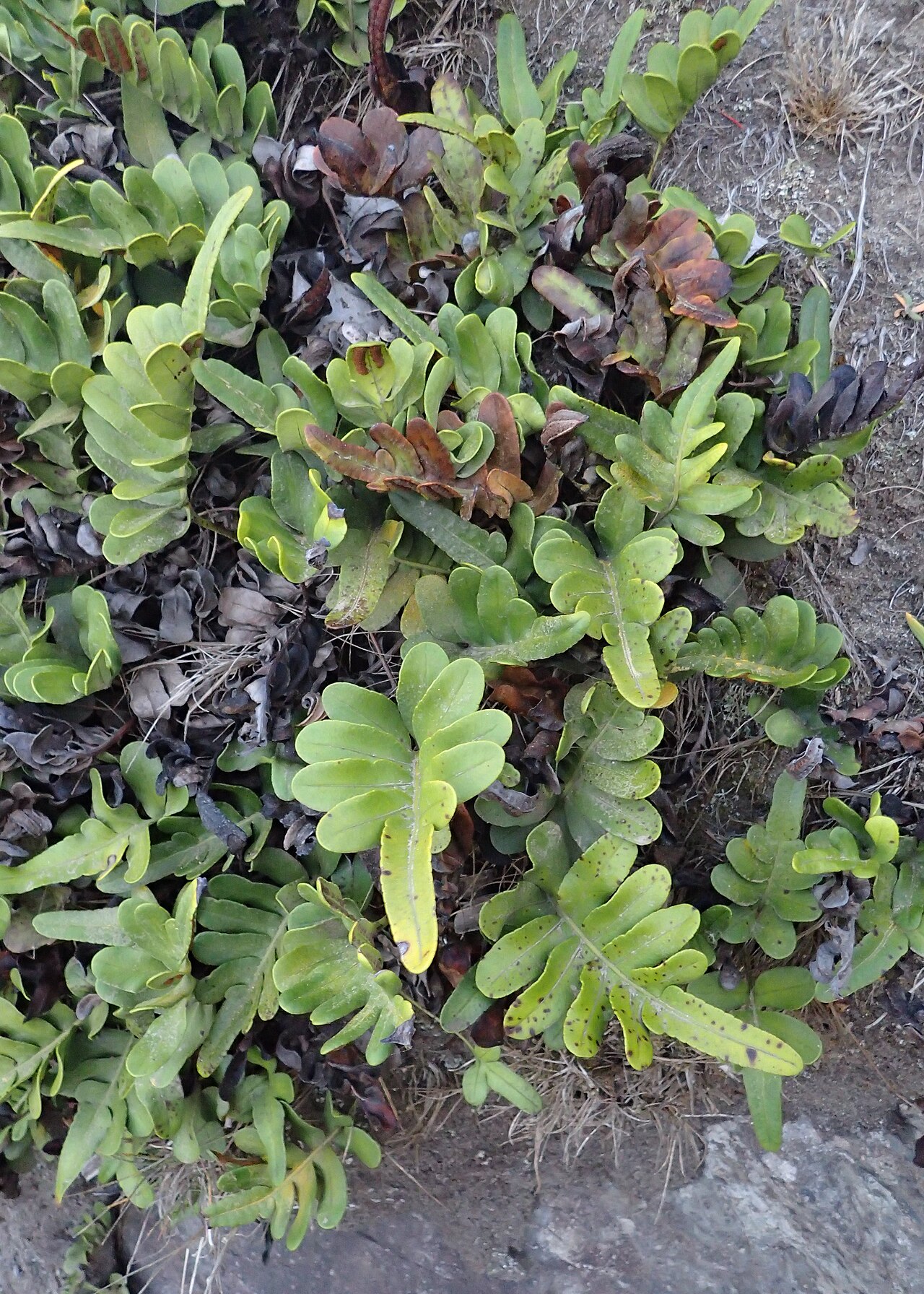
Polypodium scouleri, known as Leathery Polypody, Scouler’s polypody, coast polypody or leather-leaf fern, is an evergreen fern of the Pacific Coast fog belt. It belongs to the polypody family (Polypodiaceae) and grows in a narrow strip along the ocean from British Columbia to California and Guadalupe Island off Baja California.
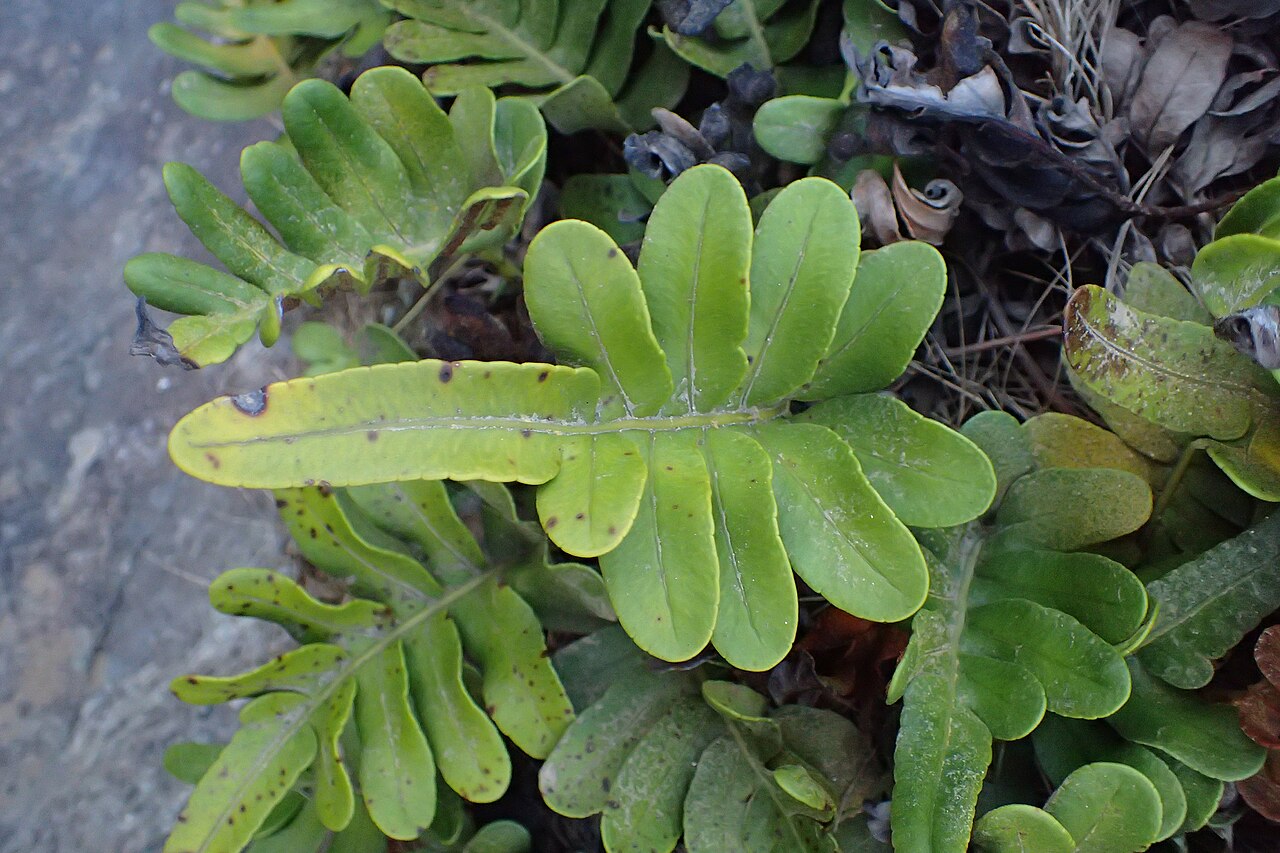
It is easy to recognize once you have seen it: the fronds are thick, stiff and glossy, almost like plastic, and divided into a few broad, round-tipped segments. On the undersides, large round clusters of spore cases (sori) stand out in bold rows, turning golden brown as they ripen. A creeping, scaly rhizome anchors the plant to rock, soil, logs or tree bark.
Leathery polypody grows in cracks on sea cliffs, on coastal bluffs and stabilized dunes, and on the trunks and branches of spruce and other trees in seaside forests, where it is bathed in fog and salt spray. In gardens it makes a striking, tough little fern for shady rock walls, stumps and containers in mild, coastal climates.
Identification
Look for a low fern near the ocean with stiff, thick, glossy fronds cut into a few broad, round-tipped lobes, and big, round, golden-brown sori on the back.
Growth Habit
Leathery polypody spreads by a creeping rhizome about the thickness of a pencil, covered in brown scales and often with a whitish, waxy coating. Fronds arise one by one along the rhizome, forming loose colonies or dense mats on rock faces, mossy logs and tree trunks. Most fronds are 4 to 16 inches long, occasionally longer in sheltered spots. The plant is evergreen and keeps its fronds through the summer dry season along the foggy coast.
Fronds
The blade is oblong to triangular in outline and deeply cut (pinnatifid) almost to the midrib into usually 2 to about 12 pairs of broad segments. Each segment is oblong with a rounded tip and a finely scalloped edge. The texture is the key feature: the fronds are thick, stiff and leathery, smooth and shiny on top, and the veins are hard to see. The stalk is straw-colored and smooth.
Sori & Spores
Polypodies have no flowers or seeds; they reproduce by spores. The round sori are unusually large, up to about 1/5 inch across, and sit in a single row on each side of the midrib of each segment. They have no protective cover (indusium) and turn from yellowish green to rich orange-brown as the spores mature, mainly from late summer to winter.
Look-alikes
Licorice fern (Polypodium glycyrrhiza) is the most common polypody in the same region. Its fronds are thin and soft, with more numerous, narrower, pointed segments, and it often dies back in summer; its rhizome tastes of licorice. California polypody (Polypodium californicum) also has thinner, more pointed and toothed segments and goes dormant in summer drought. Leathery polypody stands apart by its thick, glossy, round-lobed fronds and large sori.
Safety Notes
Leathery polypody is not known to be toxic, but it is not a food plant. Leave wild plants in place: colonies on cliffs and tree trunks grow slowly and rarely survive being pulled off their rock or bark.
Quick Facts
| Scientific Name | Polypodium scouleri |
| Family | Polypodiaceae (polypody family) |
| Plant Type | Evergreen fern (on rock, soil or tree bark) |
| Mature Height | 4–16 in |
| Mature Spread | 1–2 ft (slowly spreading colonies) |
| Growth Rate | Slow |
| Sun Exposure | Partial shade to shade |
| Water Needs | Low to moderate; humid, foggy air, sharp drainage |
| Soil Type | Rock crevices, humus, rotting wood or moss; well drained |
| Soil pH | About 5.0–7.0 |
| Bloom Time | None (fern); spores mature late summer–winter |
| Flower Color | None; orange-brown sori |
| Fall Color | Evergreen; glossy deep green |
| Fruit | None; spores in large round sori |
| Deer Resistant | Yes; rarely browsed |
| USDA Hardiness Zones | 8–10 |
Native Range
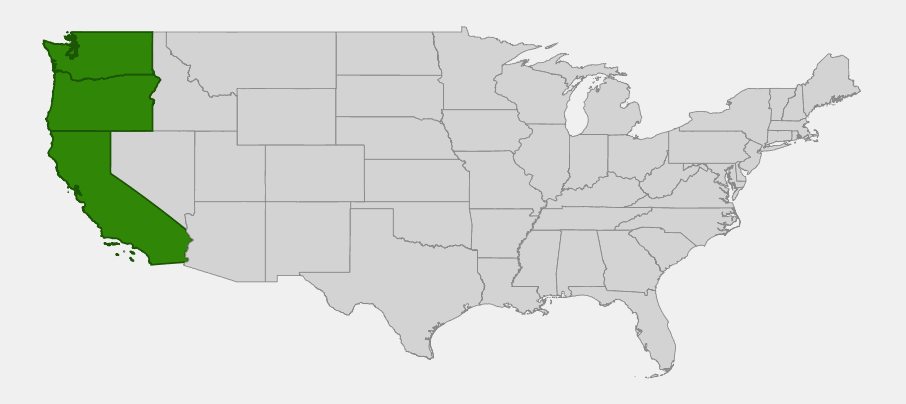
Leathery polypody is native to the Pacific Coast of North America, from southern British Columbia south through Washington, Oregon and California to Guadalupe Island off Baja California, Mexico. USDA PLANTS lists it as native in California, Oregon and Washington.
It is truly a coastal fern and seldom grows more than a few miles from salt water. In Washington and Oregon it occurs on the outer coast, well west of the Cascades. In California it is most common from the Oregon border through the North Coast and the San Francisco Bay Area, and it continues more locally down the Central Coast and onto offshore islands.
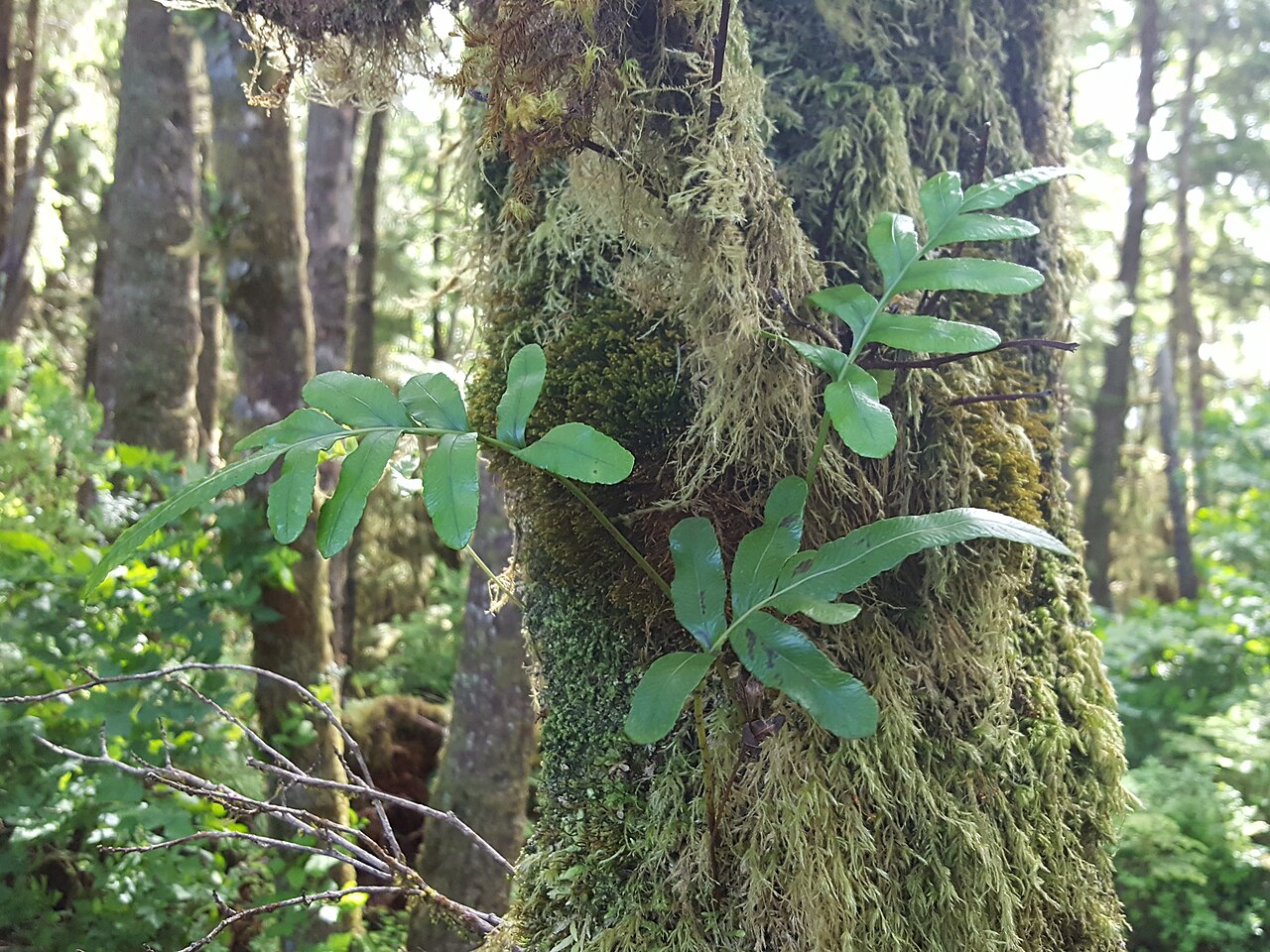
Typical habitats are crevices and ledges of sea cliffs, coastal bluffs and rocky headlands, stabilized dunes, and coastal forests of Sitka spruce, redwood and other conifers, where it often grows on trunks, branches and fallen logs. It is regularly exposed to fog and salt spray and tolerates both.
📋 Regional plant lists featuring Leathery Polypody: Western Oregon & Western Washington · California & Nevada
Growing & Care Guide
Leathery polypody is offered by some native plant nurseries in coastal California and the Pacific Northwest. It is a slow, tidy fern for mild-winter gardens near the coast, best grown where it can creep over rock or wood rather than in ordinary garden soil.
Light
Give it bright shade or morning sun. On the foggy coast it tolerates more sun, but inland it scorches in hot afternoon light and does best in full or partial shade.
Soil & Water
Plant the rhizome shallowly in a fast-draining, humus-rich mix with grit or bark, or tuck it into a rock crevice or onto a mossy log. It hates soggy soil. Water regularly while it settles in. Along the coast it needs little extra water once established; in drier inland gardens give it occasional summer water and a sheltered, humid spot.
Planting Tips
Use it on shady rock walls, in stumperies, on top of old logs, in crevices between stones, or in pots and hanging baskets. Keep the rhizome at or just below the surface, pinned in place until the roots grip, and do not bury it deeply.
Pruning & Maintenance
Remove old, tattered fronds in spring if you like. Do not fertilize heavily; a light top-dressing of leaf mold is enough. Protect plants from hard frost inland, as it is a plant of mild coastal climates.
Propagation
The easiest method is dividing the rhizome in spring or fall: cut a piece with several fronds and roots and replant it at the same depth. It can also be grown from spores sown on sterile, moist medium, but this is slow. Buy nursery plants rather than taking them from the wild.
Landscape Uses
- Coastal shade gardens: evergreen texture for rock walls and shady corners
- Stumperies and log gardens: creeps over rotting wood and moss
- Containers and baskets: thick fronds hold up well in pots
- Seaside landscapes: tolerates fog, wind and salt spray
- Restoration: coastal bluffs and spruce or redwood forest edges
Wildlife & Ecological Value
Leathery polypody is a small part of the “hanging gardens” of moss and ferns on coastal trees and cliffs.
For Pollinators
As a fern it has no flowers, so it does not feed pollinators. Its leafy mats shelter small insects, spiders and other invertebrates.
For Birds
Mats of polypody and moss on trunks and cliffs give foraging spots to wrens, creepers and other small birds that pick insects from bark and rock.
For Mammals
It is seldom eaten by deer. Small mammals may use the mats on rocks and logs for cover.
Ecosystem Role
On tree trunks and branches, leathery polypody is part of the epiphyte community that traps moisture and organic matter in coastal forests. On sea cliffs it helps hold thin pockets of soil in crevices.
Cultural & Historical Uses
The species was named by William Jackson Hooker and Robert Kaye Greville in honor of John Scouler, a Scottish physician and naturalist who visited the Pacific Northwest coast in 1825 with the botanist David Douglas aboard a Hudson’s Bay Company ship. Scouler collected plants around the mouth of the Columbia River and along the coast.
Early botanists working at the University of Minnesota’s seaside station on Vancouver Island in the early 1900s photographed leathery polypody covering spruce trunks and described it as a common fern epiphyte there.
The name “polypody” comes from Greek words meaning “many feet,” for the knobby rhizome. The name “leather-leaf fern” is sometimes used for this species, but it is also used in the florist trade for an unrelated fern, so the scientific name is the surest way to buy the right plant.
Frequently Asked Questions
How can I tell leathery polypody from licorice fern?
Leathery polypody has thick, stiff, glossy fronds with a few broad, round-tipped segments. Licorice fern has thinner, softer fronds with more numerous, narrow, pointed segments.
Does leathery polypody grow on trees?
Yes. Along the coast it often grows as an epiphyte on mossy trunks and branches of Sitka spruce and other trees, as well as on rocks and logs.
Is leathery polypody evergreen?
Yes. Unlike licorice fern and California polypody, which often go dormant in summer, it usually keeps its fronds all year in its foggy coastal habitat.
Can I grow it away from the coast?
It can be grown inland in mild climates with shade, humidity, sharp drainage and some summer water, but it is happiest near the coast.
Where does leathery polypody grow?
It grows along the Pacific Coast from British Columbia through Washington, Oregon and California to Guadalupe Island, on sea cliffs, bluffs, dunes and coastal forest trees.

Looking for a nursery that carries Leathery Polypody?
Browse our native plant nursery directory: California · Oregon · Washington

