Lindheimer Hackberry (Celtis lindheimeri)
Celtis lindheimeri, known as Lindheimer Hackberry or Lindheimer’s Hackberry, is a tough little evergreen-to-semi-evergreen tree of the limestone hill country and brush country of south-central Texas. Named for Ferdinand Lindheimer, the German-born botanist often called the “father of Texas botany” who collected extensively around New Braunfels in the 1840s, this hackberry is a member of the Cannabaceae (hemp family) — the same family that includes the far more common sugarberry and netleaf hackberry. It is one of the lesser-known Texas hackberries, overshadowed in cultivation by its widespread cousins, yet it is a dependable, low-water tree for anyone gardening on caliche or limestone soils within its native range.
Unlike the large, fast-growing sugarberry (Celtis laevigata) that shades creek bottoms across the eastern half of the state, Lindheimer hackberry stays modest in size — usually 15 to 30 feet tall — with small, thick, rounded-to-ovate leaves that have a rough, sandpapery upper surface and coarsely toothed margins. It typically holds its foliage through much of the winter in the southern part of its range, giving it a semi-evergreen character that is unusual among the hackberries. Small, inconspicuous flowers in spring give way to tiny orange-to-reddish-brown drupes that ripen in fall, feeding a long list of birds and mammals through the lean months.
Lindheimer hackberry is a plant of rocky, well-drained ground — limestone outcrops, caliche hillsides, and the thorny brush country of the Rio Grande Plains — and it thrives on neglect once established. For restoration plantings, wildlife hedgerows, or a tough specimen tree on a dry, rocky lot from San Antonio south through the Rio Grande Plains, it fills a niche that few other native trees can match.
Identification
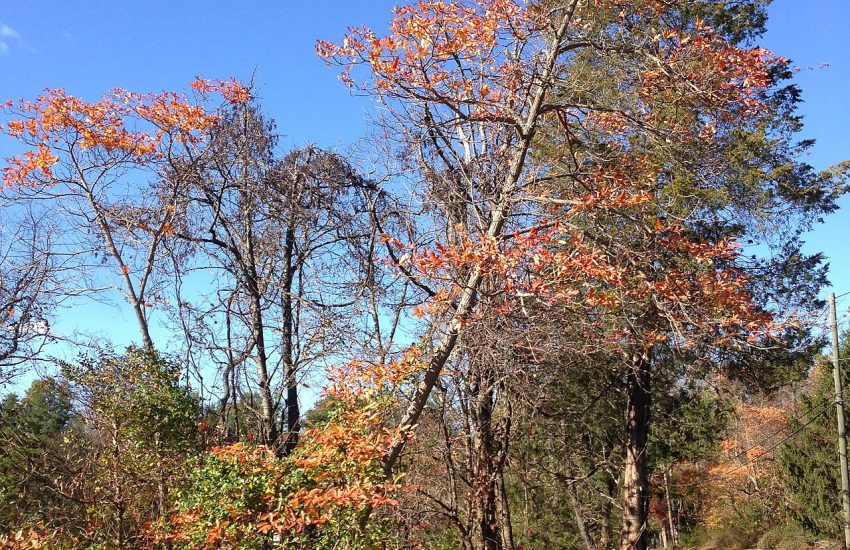
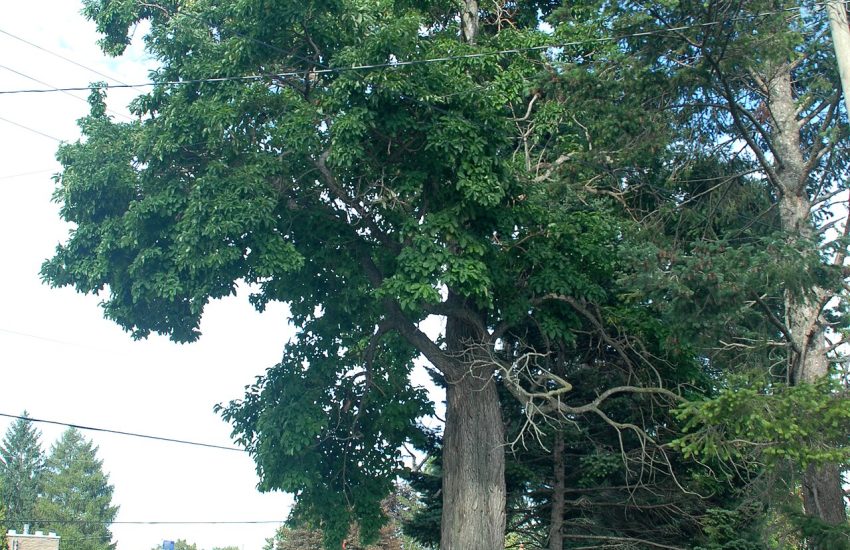
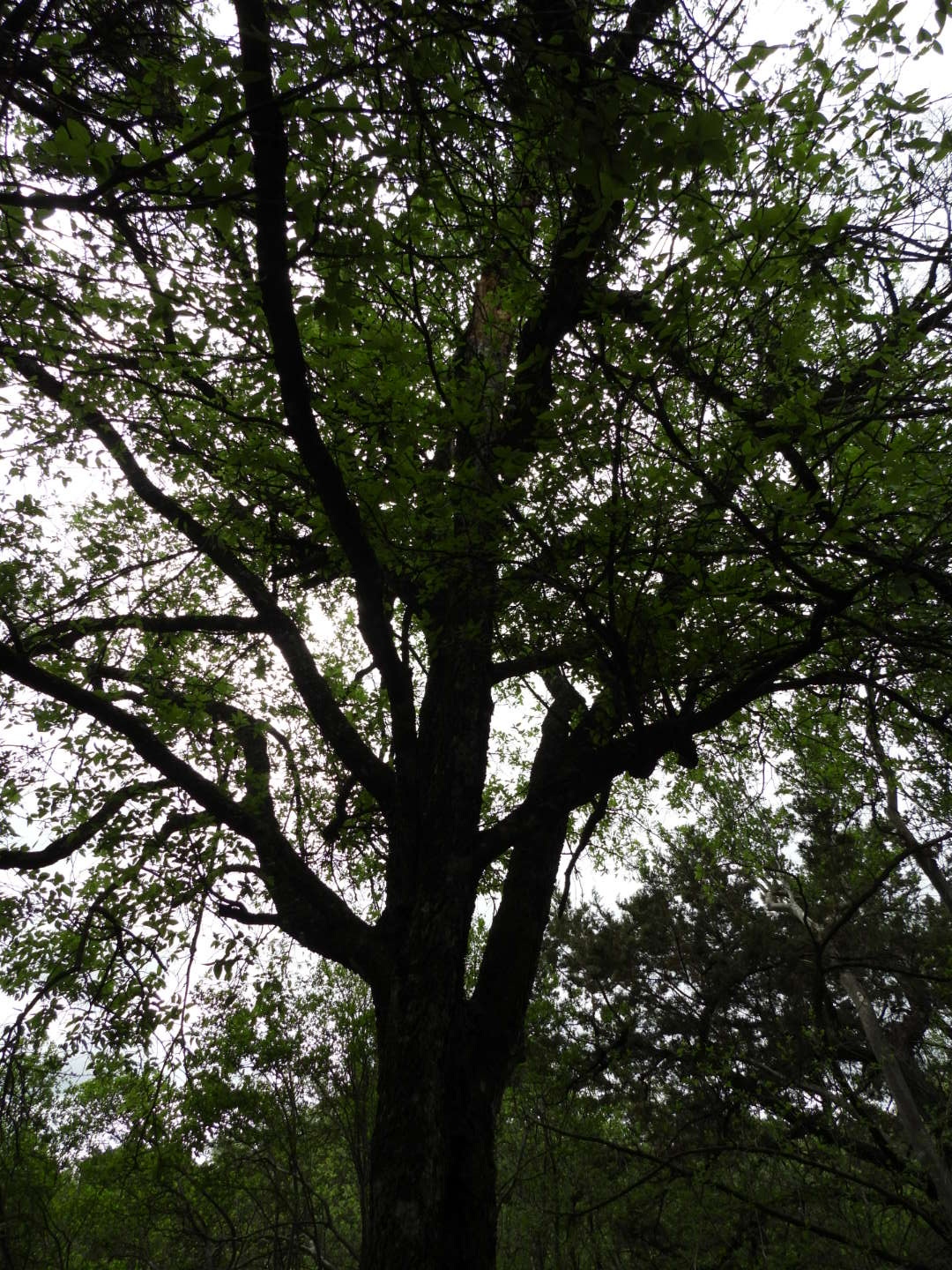
Lindheimer hackberry is usually a single- or multi-trunked small tree 15 to 30 feet tall, occasionally reaching higher in sheltered canyons, with a rounded, dense crown. Young plants often grow as a large shrub before a dominant leader emerges. Like other hackberries, it can be confused with its relatives, but its smaller, thicker, more rounded leaves and compact stature set it apart from sugarberry and the larger common hackberry (Celtis occidentalis).
Bark & Stems
Bark on young stems is smooth and gray-brown; on older trunks it develops the warty, corky ridges typical of hackberries, though usually less pronounced than on sugarberry. Twigs are slender and gray, sometimes slightly zigzag, with small leaf scars. The wood is tough and resists wind damage well, an asset in the brushy, exposed habitats where the species grows.
Leaves
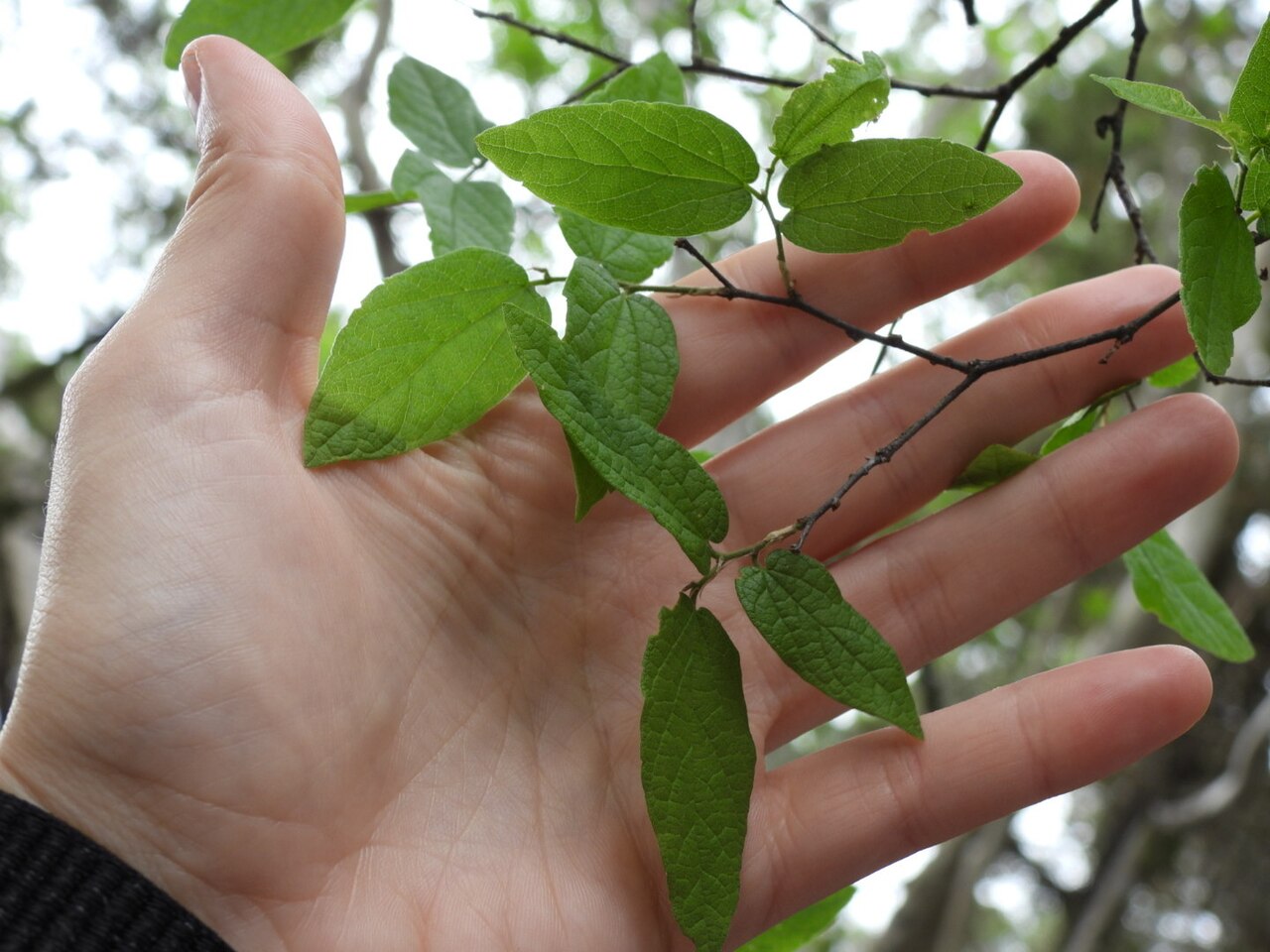
Leaves are alternate, simple, and noticeably smaller and thicker than those of sugarberry — typically 1 to 2.5 inches long, ovate to nearly round, with an asymmetrical base (one side longer than the other, a hallmark of the genus) and a short-pointed tip. Margins are coarsely toothed above the middle, sometimes nearly entire toward the base. The upper leaf surface has a rough, sandpapery texture from tiny stiff hairs, while the lower surface is paler and softly pubescent. In much of its South Texas range the tree holds green or yellow-green leaves well into winter before a partial leaf drop, rather than dropping all its foliage at once like northern hackberries.
Flowers
Flowers appear in early spring with or just before the new leaves. They are small, greenish, and wind-pollinated, lacking showy petals — male and female flowers are borne separately on the same tree (monoecious), typical of the hackberry genus. They are easy to overlook but are an early-season nectar and pollen source for small native bees.
Fruit & Seeds
The fruit is a small drupe, about ¼ inch across, orange to reddish-brown when ripe in fall, with a thin, sweetish pulp over a hard stone. A single tree can produce a heavy crop in good years, and the fruit often persists into winter, making it a reliable late-season food source for birds when little else is available.
Quick Facts
| Scientific Name | Celtis lindheimeri |
| Family | Cannabaceae (Hemp family) |
| Plant Type | Semi-evergreen Small Tree / Large Shrub |
| Mature Height | 15–30 ft |
| Mature Spread | 12–20 ft |
| Growth Rate | Slow to moderate |
| Sun Exposure | Full Sun to Partial Shade |
| Water Needs | Low once established |
| Soil Type | Rocky, caliche, or limestone-derived; well-drained |
| Soil pH | Neutral to alkaline |
| Bloom Time | March – April |
| Flower Color | Greenish, inconspicuous |
| Fall Color | Yellow-green; largely semi-evergreen in South Texas |
| Fruit | Small orange-brown drupes, fall through winter |
| Deer Resistant | Moderate (young growth may be browsed) |
| USDA Hardiness Zones | 8–9 |
Native Range
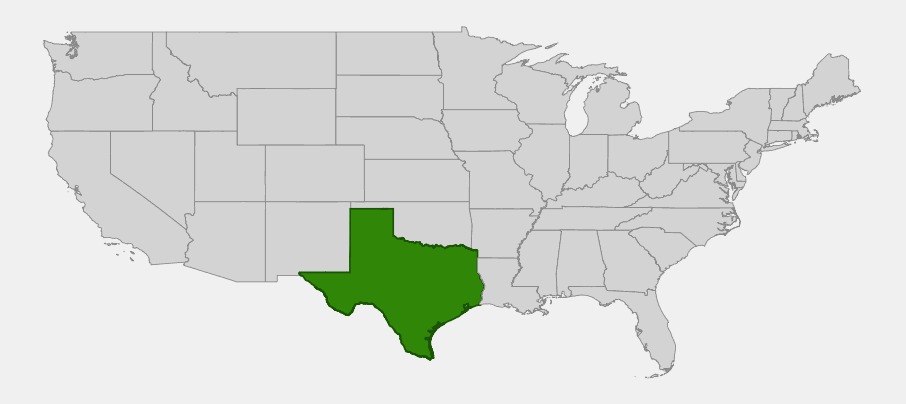
Lindheimer hackberry is native to south-central and southern Texas, from the Edwards Plateau and Balcones Canyonlands around San Antonio and New Braunfels southward through the Rio Grande Plains (brush country) to the Lower Rio Grande Valley, and across the border into adjacent northeastern Mexico (Nuevo León, Tamaulipas, and Coahuila). It is a Texas-Mexico borderland species and does not occur naturally outside this region; it is not found in the piney woods, coastal plain, or Panhandle.
Within this range it favors dry, rocky ground — limestone ledges and canyon slopes on the Edwards Plateau, and caliche ridges and thorny brush (mesquite-acacia shrubland) on the South Texas plains. It is often found growing alongside other hardy, drought-adapted woody species rather than in the moist bottomlands preferred by sugarberry.
Because it is adapted to thin, rocky, alkaline soils and extended dry spells, Lindheimer hackberry is an excellent choice for restoring native cover on difficult sites within its home range, and it is sometimes confused with — or sold loosely as — “hackberry” generically by nurseries that do not distinguish it from sugarberry or netleaf hackberry. Gardeners outside its native Texas-Mexico borderland range should choose a hackberry species native to their own region instead.
📋 Regional plant lists featuring Lindheimer Hackberry: South and West Texas
Growing & Care Guide
Lindheimer hackberry is an easy-care, low-input tree for gardeners within its native range who want a tough, drought-tolerant small tree without the rapid growth and brittle wood of larger hackberries.
Light
Plant in full sun to light, dappled shade. Full sun produces the densest, most compact form; in partial shade the tree grows slightly more open as it reaches for light. It handles the intense Texas summer sun without difficulty once established.
Soil & Water
This species is built for rocky, shallow, alkaline soils — exactly the limestone caliche that frustrates many other landscape trees. Good drainage is essential; it does not tolerate standing water or heavy, poorly drained clay. Water regularly during the first one to two growing seasons to establish a deep root system, then taper off — established trees handle extended South Texas dry spells with little or no supplemental water.
Planting Tips
Plant from container stock in fall or early spring to take advantage of cooler weather for root establishment. Choose a well-drained site; if your soil is heavy clay, consider a raised or mounded planting area. Because the species is uncommon in the nursery trade, it may take some searching through Texas native-plant specialty growers to find stock — seek sources collecting from local, in-range populations when possible.
Pruning & Maintenance
Prune in late winter to remove dead, crossing, or low branches and to establish a single leader if a tree form (rather than a multi-stemmed shrub) is desired. The tree is naturally well-behaved and rarely needs corrective pruning once a framework is established. It is generally free of serious pest and disease problems.
Landscape Uses
Within its native range, Lindheimer hackberry fits a number of practical landscape roles:
- Dry, rocky sites where few other trees will establish
- Wildlife hedgerows and thickets in South Texas brush country restoration
- Small specimen or patio tree for limited-water landscapes
- Screening and windbreaks when planted in groups
- Habitat restoration on disturbed caliche or limestone sites
Wildlife & Ecological Value
Like its better-known relatives, Lindheimer hackberry punches well above its weight as wildlife habitat for a small tree.
For Birds
The persistent fall and winter fruit crop is eaten by mockingbirds, cardinals, robins, waxwings, and numerous other songbirds, as well as game birds such as quail where the species grows near brushland. Because the fruit often hangs on the tree into winter, it provides food during the season when other resources are scarce.
For Mammals
Raccoons, foxes, and other small mammals eat the fruit and help disperse the seed. The dense, thorny-adjacent brush communities the tree grows within provide excellent cover for javelina, deer, and smaller mammals typical of South Texas thornscrub.
For Pollinators
Though wind-pollinated and not a major nectar source, the early spring flowers offer pollen to small native bees emerging in late winter, and hackberries as a group are important larval host plants for several butterflies, including hackberry emperor and snout butterflies, whose caterpillars feed on the foliage.
Ecosystem Role
As a component of Edwards Plateau canyon woodlands and South Texas thornscrub, Lindheimer hackberry helps stabilize thin, rocky soils with its root system and adds structural diversity to brush communities dominated by mesquite and acacia. Its tolerance of poor, alkaline soils allows it to colonize sites where more demanding trees cannot establish.
Cultural & Historical Uses
Lindheimer hackberry carries the name of Ferdinand Jacob Lindheimer (1801–1879), a German immigrant naturalist who settled in New Braunfels, Texas, and is remembered as the “Father of Texas Botany” for the thousands of plant specimens he collected and sent to botanists in the United States and Europe during the 1840s and 1850s. Dozens of Texas plants bear his name, and this hackberry is among them, reflecting its discovery in the Hill Country landscape Lindheimer called home.
Like other hackberries, the small sweet-fleshed fruits were eaten in small quantities by Indigenous peoples and early settlers across its range, though they were never a staple food given the large stone and thin pulp. The wood, while not commercially significant for this smaller species, shares the toughness of its relatives and has seen informal local use for fence posts and small projects on ranches within its native range.
Today, Lindheimer hackberry remains primarily of interest to native-plant gardeners, restoration practitioners, and Texas naturalists rather than the general nursery trade, where it is far less commonly offered than sugarberry. Growing it is, in a small way, a nod to the state’s botanical history and to a plant still closely tied to the dry limestone country Lindheimer himself explored on foot and horseback nearly two centuries ago.
Frequently Asked Questions
How is Lindheimer hackberry different from sugarberry?
Lindheimer hackberry is smaller in every dimension — a 15–30 foot tree versus sugarberry’s 60-plus feet — with smaller, thicker, more rounded leaves and a rough rather than smooth upper leaf surface. It also prefers dry, rocky, alkaline ground rather than the moist bottomland soils sugarberry favors, and it tends to hold more of its foliage through a mild South Texas winter.
Is Lindheimer hackberry edible?
The small fall fruits are technically edible and were eaten in small amounts historically, with a thin, sweetish pulp over a hard central stone. They are far more valuable as wildlife food than as a human food source and are best left for the birds.
Will Lindheimer hackberry grow outside Texas?
It is adapted to USDA zones 8–9 and the specific limestone and caliche soils of south-central and south Texas. Gardeners outside that native range — including other parts of the Southwest — should choose a hackberry species native to their own region rather than planting this one out of range.
How fast does it grow, and how big does it get?
Growth is slow to moderate, especially on the thin rocky soils it favors. Expect a mature height of about 15 to 30 feet with a somewhat narrower spread, reached over one to two decades rather than in a handful of years.
Is Lindheimer hackberry easy to find at nurseries?
Not generally — it is far less common in the trade than sugarberry or the widely planted cedar elm and live oak. Native-plant specialty nurseries in the Texas Hill Country and South Texas are the most likely sources, and seed or seedlings collected from local, in-range populations are preferable for restoration work.

Looking for a nursery that carries Lindheimer Hackberry?
Browse our native plant nursery directory: Texas
Related reading: Best Shade Trees to Grow in San Antonio · Best Trees for Privacy to Grow in Austin, Texas · Do Hackberry Trees Produce Good Firewood?