
Mapleleaf Grape (Vitis acerifolia)
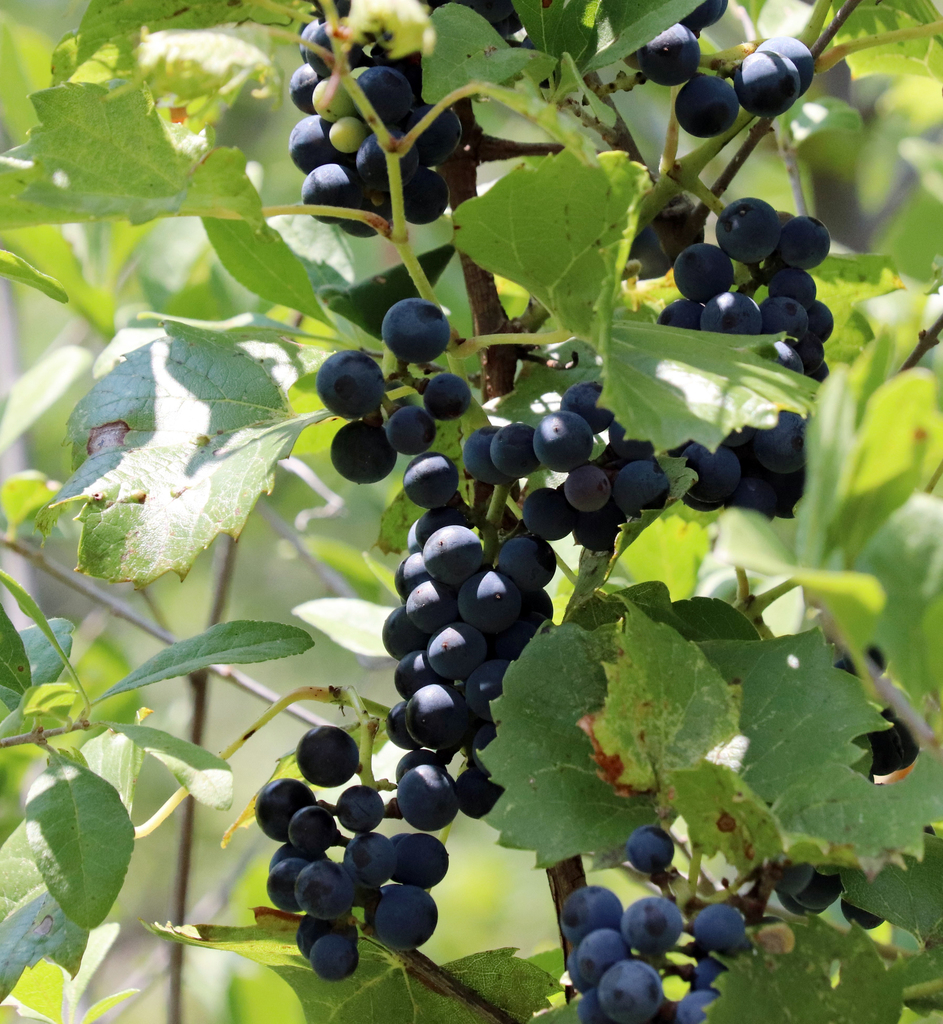
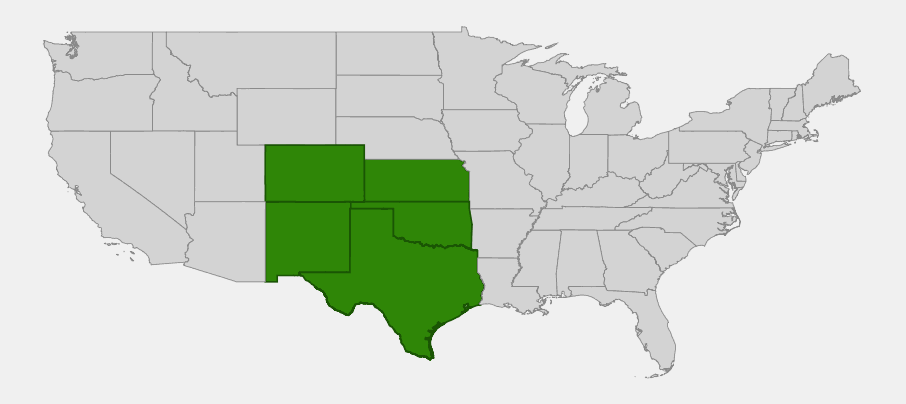
Vitis acerifolia, the Mapleleaf Grape, also widely known by its synonym Vitis longii (Long’s grape or bush grape), is a wild grape of the southern Great Plains. It grows in Kansas, Oklahoma, northern and western Texas, eastern Colorado and northeastern New Mexico, along sandy riverbanks, canyons, ravines and the edges of plains woodlands.
It is often a low, bushy, sprawling vine rather than a high climber, with broad, coarsely toothed leaves that are often shallowly three-lobed, a bit like a maple leaf. In late summer it bears small clusters of blue-black grapes that are sweet and well-colored for a wild grape.
Grape breeders value it for its great cold hardiness, drought tolerance and disease resistance. This guide covers how to identify it, where it grows, how to grow it and its value to birds and other wildlife.
Identification
Mapleleaf grape is a deciduous, often shrubby vine with forked tendrils, broad, coarsely toothed and shallowly lobed leaves that are hairy when young, and small clusters of black grapes.
Growth Habit
Stems are often 6 to 15 feet long, sometimes climbing to about 30 feet in trees, but on open slopes and sand hills it commonly sprawls over shrubs or the ground. Young twigs are hairy and angled, older bark shreds in strips, and forked tendrils grow opposite some of the leaves.
Leaves
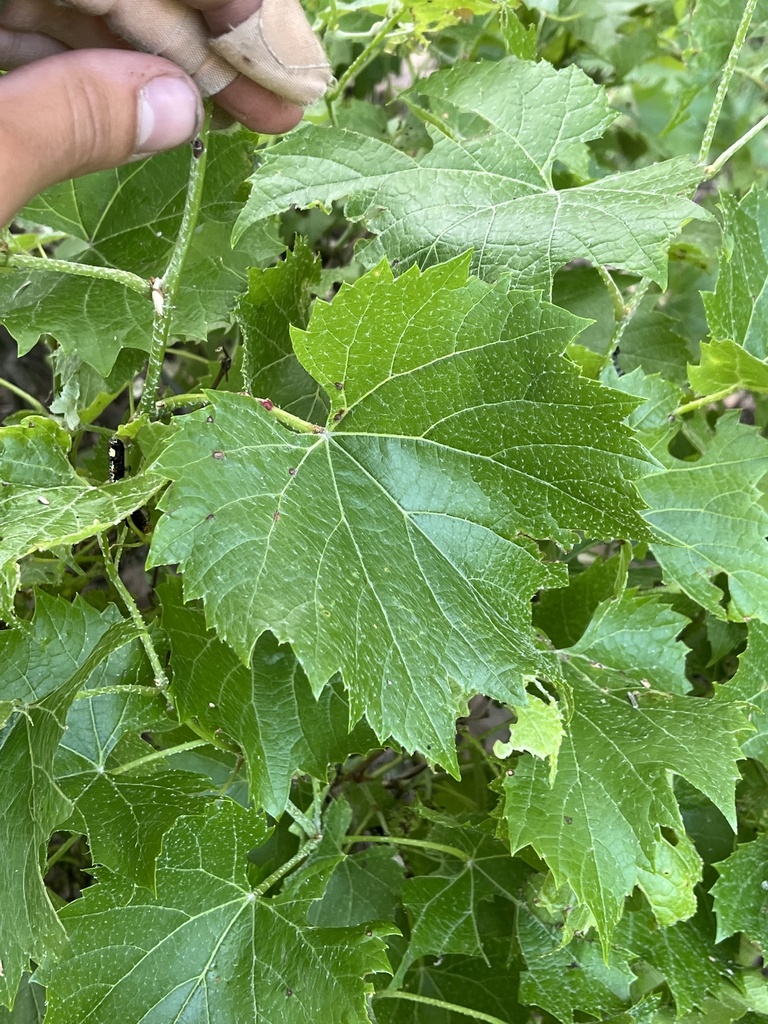
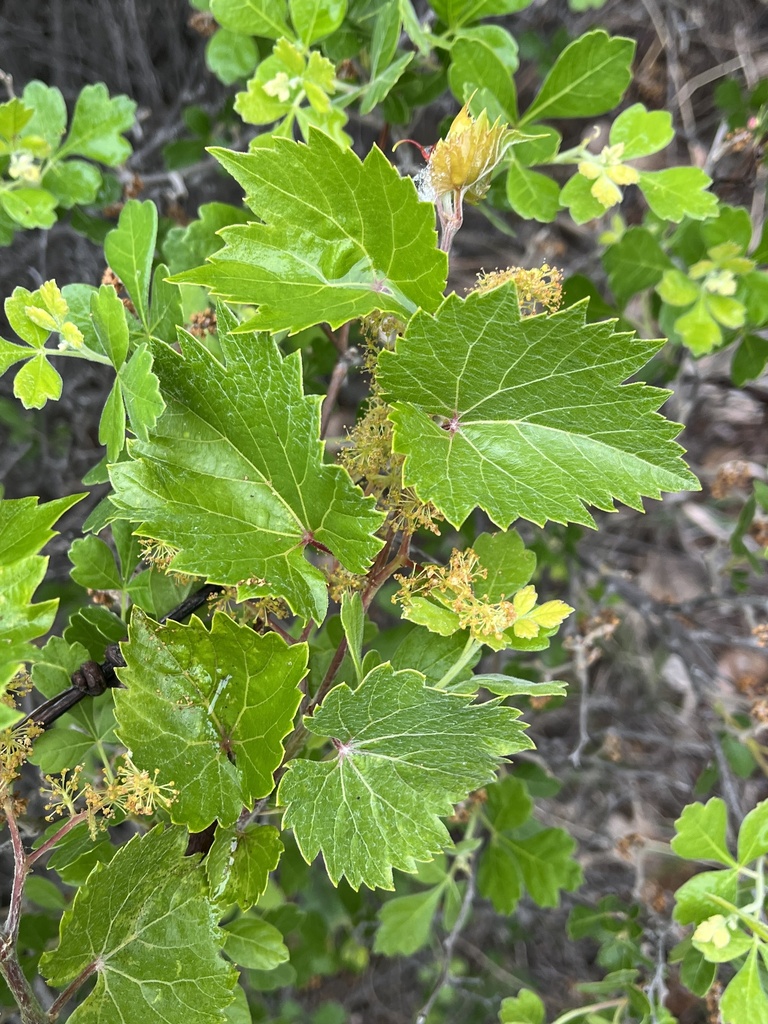
The leaves are alternate, roughly heart-shaped to kidney-shaped, about 3 to 5 inches wide, with coarse, sharp teeth and often three shallow lobes. They are covered in cobwebby hairs when young, becoming smoother on top while staying somewhat hairy along the veins beneath. They turn yellow in fall.
Flowers
In April to June, small clusters of tiny, fragrant, greenish-yellow flowers appear opposite the leaves. As in most wild grapes, male and female flowers are usually on separate plants, so only female vines bear fruit.
Fruit & Look-alikes
The grapes are about ⅓ to ½ inch across, black with a whitish bloom, in small, compact clusters that ripen from July to September. Sand grape has smaller, kidney-shaped, nearly hairless leaves. Riverbank grape has smooth, sharply lobed leaves. Mustang grape has leaves with dense white felt underneath and larger, pungent grapes. Grape relatives such as heartleaf peppervine have pith that is white throughout rather than brown and interrupted at the nodes.
Quick Facts
| Scientific Name | Vitis acerifolia Raf. |
| Family | Vitaceae (grape family) |
| Plant Type | Deciduous woody vine, often shrubby |
| Mature Height | Vines 6–15 ft, occasionally to 30 ft |
| Mature Spread | 6–15 ft |
| Growth Rate | Moderate to fast |
| Sun Exposure | Full sun to partial shade |
| Water Needs | Low to moderate; drought tolerant |
| Soil Type | Sandy, loamy, rocky or limestone soils; well-drained |
| Soil pH | About 6.5–8.5 |
| Bloom Time | April–June |
| Flower Color | Greenish-yellow (small, fragrant) |
| Fall Color | Yellow |
| Fruit | Small black grapes with a bloom; edible |
| Deer Resistant | No; browsed by deer |
| USDA Hardiness Zones | 4–9 |
Native Range
Mapleleaf grape is a plant of the southern Great Plains. USDA PLANTS lists it as native to Kansas, Oklahoma, Texas, Colorado and New Mexico. It is most common in western Oklahoma, southwestern Kansas and the Texas Panhandle and Rolling Plains, and reaches its western limits in southeastern Colorado and northeastern New Mexico.
In Texas it grows mainly in the Panhandle, the Rolling Plains and north-central Texas, including the canyons of the Caprock Escarpment such as Palo Duro and Caprock Canyons.
It grows on sandy riverbanks and floodplains, sand hills and dunes, in canyons and ravines, on rocky hillsides and along the edges of plains woodlands and thickets, often on limestone, caliche or sandy soils.
📋 Regional plant lists featuring Mapleleaf Grape: Nebraska, Kansas & Eastern Colorado · South & West Texas
Growing & Care Guide
Mapleleaf grape is offered by a few native nurseries and grape-breeding enthusiasts on the Plains, and it is easy to grow from cuttings. It is a tough, low-maintenance native vine for fences, arbors and wildlife plantings in dry, cold-winter climates, and female plants yield small, sweet grapes for jelly or juice.
Light
Full sun to partial shade. It fruits best in full sun.
Soil & Water
Well-drained sandy, loamy or rocky soil, including alkaline and limestone soils. Once established it is very drought tolerant; water deeply during long dry spells for better fruit.
Planting Tips
Plant in spring or fall next to a fence, arbor, trellis or sturdy shrub. Plant both male and female vines, or a known self-fertile selection, if you want fruit. Space vines 8 to 10 feet apart.
Pruning & Maintenance
Prune in late winter to keep it within bounds, removing tangled or dead canes. It is resistant to many grape diseases and to phylloxera, and needs no spraying in most gardens.
Propagation
It roots easily from hardwood cuttings taken in winter. Seed sown in fall, or cold-stratified for about two to three months, germinates readily and evenly in spring.
Landscape Uses
- Wildlife plantings: fruit and cover for birds and mammals
- Fences and arbors: a tough, drought-tolerant native vine
- Edible landscaping: small sweet grapes for jelly and juice
- Grape breeding: a cold-hardy, disease-resistant parent
Wildlife & Ecological Value
Like all wild grapes, mapleleaf grape is a valuable food and cover plant, especially in the open, dry country where it grows.
For Pollinators
The fragrant flowers attract small bees, flies and beetles. Wild grapes are larval host plants for several sphinx moths, including the Pandorus and Achemon sphinx, and for grapevine epimenis and other moths.
For Birds
Wild turkeys, quail, mockingbirds, thrashers, cardinals, robins and many other birds eat the grapes, and the tangled vines provide nesting cover.
For Mammals
Raccoons, opossums, foxes, coyotes and deer eat the fruit, and deer browse the leaves and tender shoots.
Ecosystem Role
Its sprawling stems help stabilize sandy riverbanks and dunes, and its fruit is an important late-summer food in the dry southern Plains.
Cultural & Historical Uses
Constantine Rafinesque named Vitis acerifolia in 1830. For much of the 20th century the species was better known as Vitis longii, named in honor of the explorer Major Stephen H. Long, and many grape books still use that name or call it “bush grape.”
Grape breeders have used it to develop cold-hardy wine grapes, such as the Canadian red wine variety ‘Vincent’. It hardens off quickly in a cold snap, resists drought and phylloxera, and yields strongly colored juice without the foxy flavor of some wild grapes.
It is seldom affected by Pierce’s disease, apparently because the glassy-winged sharpshooter, the insect that spreads the disease, rarely feeds on it.
Frequently Asked Questions
Are mapleleaf grapes edible?
Yes. The small black grapes are sweet and well-colored when ripe in late summer, and are good for jelly, juice or fresh eating. Be certain of the identification before eating any wild fruit.
Is Vitis acerifolia the same as Vitis longii?
Yes. Vitis longii is a synonym, and the plant is also called Long’s grape or bush grape.
How do I recognize mapleleaf grape?
Look for a low, often shrubby grape vine with broad, coarsely toothed, shallowly three-lobed leaves that are hairy when young, forked tendrils and small clusters of black grapes.
Where does mapleleaf grape grow?
In the southern Great Plains: Kansas, Oklahoma, northern and western Texas, eastern Colorado and northeastern New Mexico, on sandy riverbanks, canyons and woodland edges.
Is it a good grape for cold climates?
Yes. It is one of the most cold-hardy wild grapes and very drought tolerant, which is why grape breeders use it as a parent.

Looking for a nursery that carries Mapleleaf Grape?
Browse our native plant nursery directory: Colorado · Kansas · New Mexico & Oklahoma · Texas

