Mustang Grape (Vitis mustangensis)
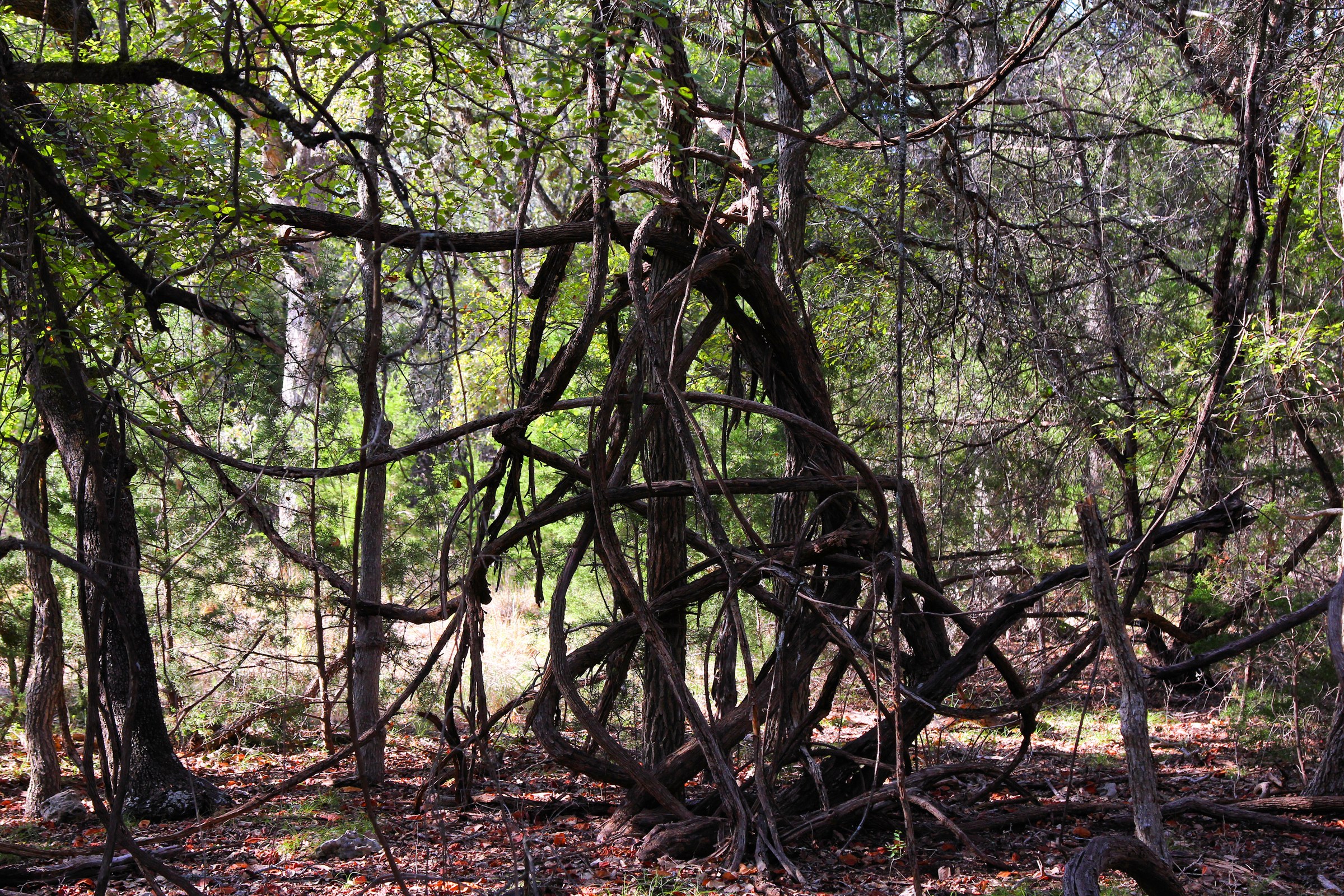
Vitis mustangensis, commonly known as Mustang Grape, is the toughest and most conspicuous wild grape of the south-central United States. A member of the Vitaceae (grape family), it is a vigorous, high-climbing woody vine that drapes itself over fences, trees and thickets, instantly recognizable by the dense white-woolly underside of its leaves. Named for its abundance along the old mustang horse trails of Texas, this grape has supplied settlers, Texans and wildlife alike with fruit for more than two centuries.
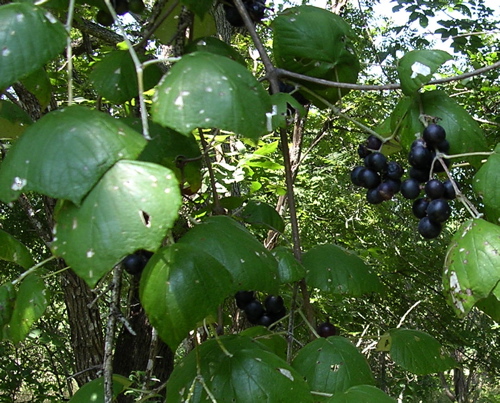
Mustang Grape is a large, aggressive vine capable of climbing 30 feet or more into the forest canopy, using forked tendrils to hoist itself over anything in reach. Its thick, lobed leaves — dark green above and startlingly white-felted below — flash silver in the wind, making a mustang-grape thicket easy to spot from a distance. In late summer, the vines hang heavy with grape-sized, deep purple-black berries that are intensely tart and skin-irritating when handled raw, but prized for jelly, juice and the historic “mustang wine” of early Texas.
Because it is dioecious — male and female flowers occur on separate plants — only female vines bear the fruit that gives the species its reputation. Mustang Grape thrives on forest edges, fence lines and disturbed ground throughout its native range, where its dense cover provides outstanding food and shelter for birds and mammals, making it a valuable, if assertive, addition to wildlife plantings and naturalized woodland edges.
Identification
Mustang Grape is a woody, deciduous, high-climbing vine with stems that can reach 4 to 6 inches in diameter on old specimens, supported by forked tendrils opposite most leaves. It is dioecious, so individual vines are either male (non-fruiting) or female (fruiting); only female vines should be expected to produce the grapes the species is known for.
Bark & Stems
Young stems are green to reddish-brown and covered in loose, cottony white hairs that wear off with age. Older vines develop thin, shaggy, gray-brown bark that peels in long strips, a trait shared with many wild North American grapes. The pith is continuous through the nodes, and tendrils fork into two or three prongs that coil tightly around any available support.
Leaves
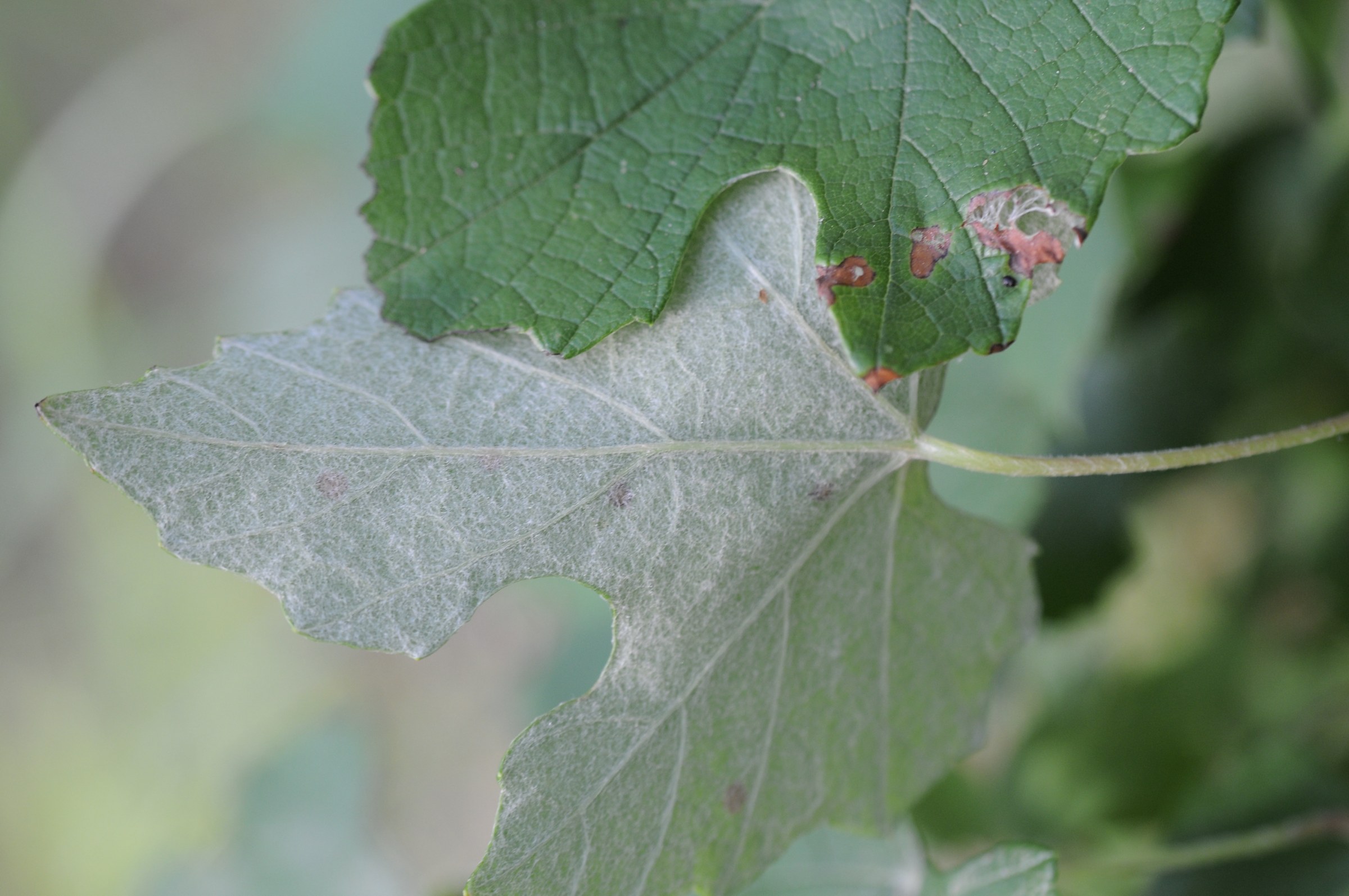
Leaves are simple, alternate and broadly heart-shaped to shallowly three-lobed, 3 to 6 inches across, with coarsely toothed margins. The most distinctive field mark is the leaf’s underside: it is covered in a dense, white to rust-colored woolly felt (tomentum) that contrasts sharply with the smooth, dark green upper surface. This white-backed leaf is the single best way to separate Mustang Grape from the region’s other wild grapes at a glance.
Flowers & Fruit
Small, fragrant, greenish-yellow flowers appear in branched clusters (panicles) in spring, male and female flowers on separate vines. Female vines set grape-like berries ¾ to 1 inch across that ripen from green to deep purple-black between July and September, typically in loose clusters of 6 to 20 fruits. The skin is thick and tough, and the juice can irritate bare skin and eyes, so most harvesters wear gloves when picking. Inside, the tart, musky pulp surrounds a few hard seeds.
Quick Facts
| Scientific Name | Vitis mustangensis (syn. Vitis candicans) |
| Family | Vitaceae (Grape) |
| Plant Type | Deciduous Woody Vine |
| Mature Height | 20–30+ ft (climbing) |
| Mature Spread | 10–20 ft |
| Growth Rate | Fast |
| Sun Exposure | Full Sun to Part Shade |
| Water Needs | Low to Moderate |
| Soil Type | Adaptable; sandy, loamy or clay |
| Soil pH | 6.0–8.0 (neutral to alkaline) |
| Bloom Time | April – May |
| Flower Color | Greenish-yellow |
| Fall Color | Yellow |
| Fruit | Dark purple-black grapes, ¾–1 in, July–September (female vines only) |
| Deer Resistant | No (foliage browsed) |
| USDA Hardiness Zones | 7–9 |
Native Range
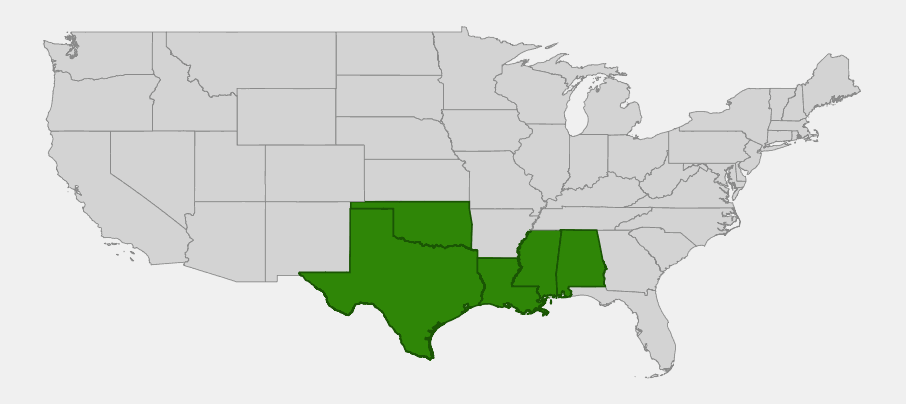
Mustang Grape is native to the south-central United States, with its heaviest concentration across central, southern and eastern Texas, where it is often the most common wild grape encountered. Its range extends north into Oklahoma, east through Louisiana, and into scattered counties of Mississippi and Alabama, generally following the warm, humid lower South.
Within this range, Mustang Grape favors forest edges, fence rows, stream margins, old fields and other disturbed or semi-open ground where it can climb into full sun. It is notably drought-tolerant once established, a trait that lets it persist on thin, rocky soils of the Texas Hill Country as readily as on the richer bottomland soils of East Texas and Louisiana.
The species is less common and more localized toward the eastern edge of its range in Mississippi and Alabama, where it occurs in scattered populations rather than the dense thickets typical of central Texas. It should not be confused with the related muscadine grape (Vitis rotundifolia), which dominates the wetter forests further east and has smooth, non-felted leaves.
📋 Regional plant lists featuring Mustang Grape: South and West Texas · Arkansas, Louisiana, Eastern Oklahoma & Eastern Texas · Georgia, Alabama & Mississippi
Growing & Care Guide
Mustang Grape is a vigorous, low-maintenance native vine best suited to large properties, fence lines and naturalized plantings where it has room to climb and spread.
Light
Full sun produces the heaviest fruit set on female vines and the densest, healthiest foliage. The vine tolerates part shade at a forest edge but climbs toward the sun and flowers and fruits more sparsely in shaded sites.
Soil & Water
Mustang Grape is remarkably adaptable, growing in sandy, loamy or clay soils and tolerating both the thin limestone soils of the Hill Country and the heavier clays of the Blackland Prairie. Established vines are drought-tolerant and need no supplemental irrigation once their deep roots are in place; young plants benefit from regular watering through their first growing season.
Planting Tips
Plant container-grown vines in fall or early spring near a sturdy fence, arbor or mature tree that can support its eventual weight and spread. Because the species is dioecious, a single volunteer vine may be male and never fruit; where fruit is the goal, plant or select for known female vines, or simply let a thicket establish naturally so both sexes are represented.
Pruning & Maintenance
Mustang Grape grows fast and can overwhelm small trees or structures if left unchecked, so annual dormant-season pruning is the main maintenance task — cut back unwanted growth hard in winter to control size and keep it off desirable trees. The vine resprouts vigorously from old wood, so hard pruning rarely harms it.
Landscape Uses
This tough native vine fits several practical roles:
- Wildlife plantings along fence lines and woodland edges for food and cover
- Erosion control on slopes and disturbed ground where its roots stabilize soil
- Screening for fences, sheds or unsightly structures
- Naturalized woodland-edge restoration in Texas and the western Gulf South
- Foraging gardens for jelly, juice and historic mustang-wine production
Wildlife & Ecological Value
Few native Texas vines match Mustang Grape for the sheer volume of food and shelter it provides across the growing season.
For Birds
Ripe grapes are a major late-summer and fall food source for mockingbirds, cardinals, robins, waxwings and many migrating songbirds, which also use the dense tangled growth for nesting and cover. The thick canopy a mature vine creates offers some of the best predator-protected nesting structure available in brushy habitats.
For Mammals
Raccoons, opossums, foxes and white-tailed deer all feed on the fruit, while deer and rabbits browse the foliage and young shoots. Small mammals use dense mustang-grape thickets for cover from predators and weather alike.
For Pollinators
The small, fragrant spring flowers attract native bees and other insects, and because the species is dioecious, cross-pollination between male and female vines is essential for fruit set, making healthy populations of both sexes important for a reliable crop.
Ecosystem Role
By blanketing fence lines, thickets and forest edges, Mustang Grape adds vertical structure to otherwise open habitat, creating shaded microhabitat beneath its canopy and a protein-rich fruit resource that helps sustain wildlife through late summer, when many other food plants have finished fruiting.
Cultural & Historical Uses
Mustang Grape has a long and colorful history in Texas foodways. Early Texan settlers and the Spanish colonists before them made wine from the fruit; “mustang wine” was a common homemade beverage on the Texas frontier before and during the Civil War era, valued because the grape grew wild in such abundance along the trails used by mustang horses, which gave the plant its common name.
Because the raw fruit’s thick, acidic skin and juice can irritate skin and eyes, traditional preparation methods relied on cooking: the tart pulp was simmered into jelly, syrup and pie filling, and the juice was pressed and sweetened for drinking or fermented into wine. The leaves and tendrils have also been used, cooked, as a tart addition to regional dishes, and historically the fruit and leaves have been used to dye wool.
Today Mustang Grape remains a favorite of Texas foragers each late summer, and old thickets along country fence lines are still sought out for home jelly-making, carrying the plant’s frontier-era reputation forward into modern kitchens.
Frequently Asked Questions
Can you eat Mustang Grapes raw?
Yes, but most people find them unpleasantly tart and acidic straight off the vine, and the juice can irritate skin and eyes during harvest. The sweet inner pulp can be eaten apart from the sour skin, but most foragers cook the fruit into jelly, juice or wine.
Why didn’t my Mustang Grape vine produce fruit?
The species is dioecious, meaning individual vines are either male or female, and only female vines bear fruit. A male vine will flower normally but never set grapes, regardless of growing conditions.
How can I tell Mustang Grape from other wild grapes?
Look at the underside of the leaf: Mustang Grape has a dense, white to rust-colored woolly felt on the leaf’s lower surface, a trait most other Texas-area wild grapes lack.
Is Mustang Grape invasive?
No, it is a native species within its range, though it is a vigorous climber that can overtop small trees and structures if not pruned, so site it where it has room to grow or plan on annual maintenance.
How fast does Mustang Grape grow?
Very fast. Established vines can add many feet of new growth in a single season, especially when climbing into full sun, which is why annual dormant-season pruning is recommended to keep it in bounds.

Looking for a nursery that carries Mustang Grape?
Browse our native plant nursery directory: Texas · Oklahoma · Louisiana & Mississippi · Alabama