
Marsh Jaumea (Jaumea carnosa)
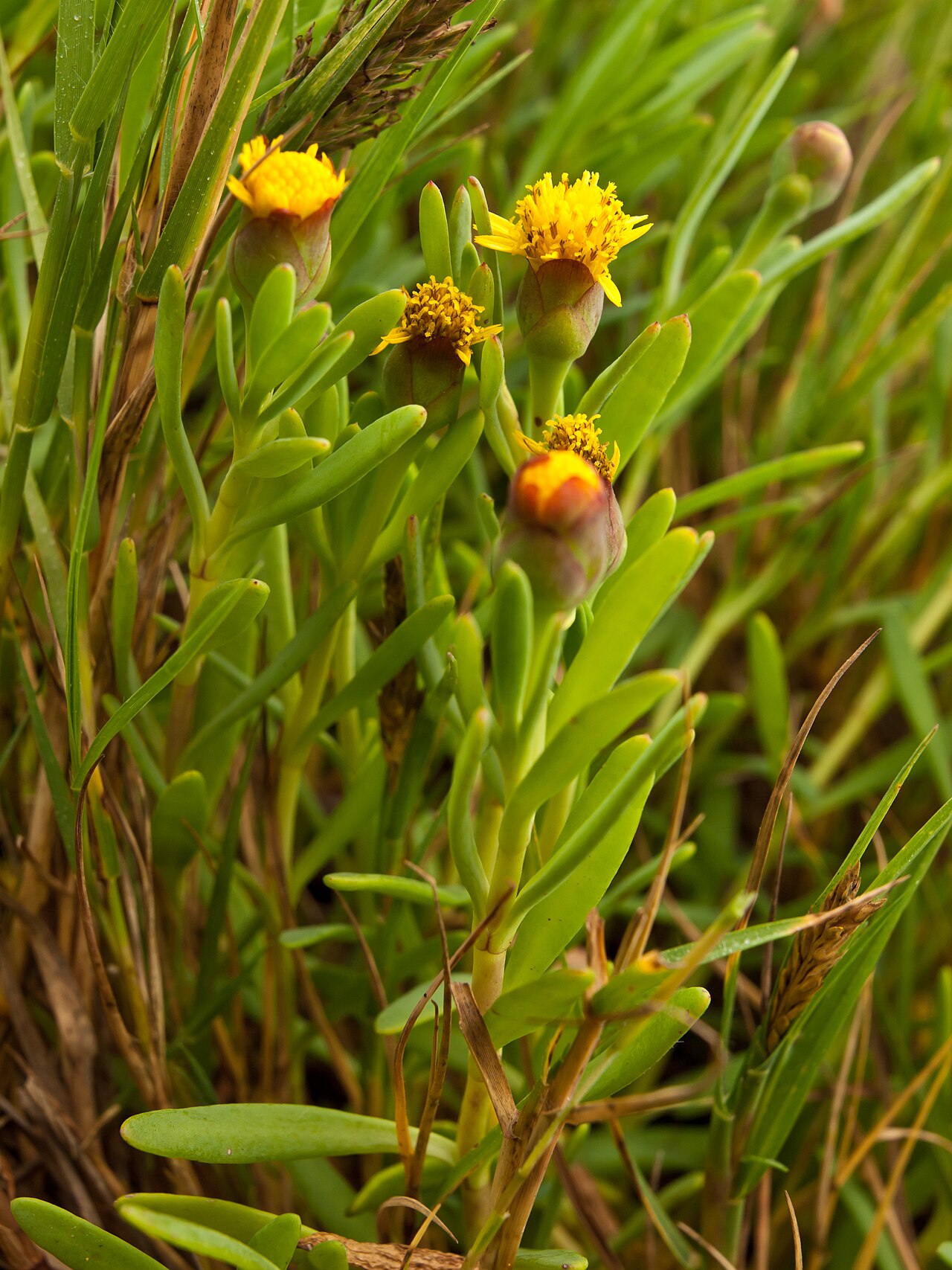
Jaumea carnosa, Marsh Jaumea, also called fleshy jaumea, is a low, succulent perennial of the aster family that grows in coastal salt marshes, estuaries and wet sea cliffs along the Pacific coast from British Columbia to northern Baja California.
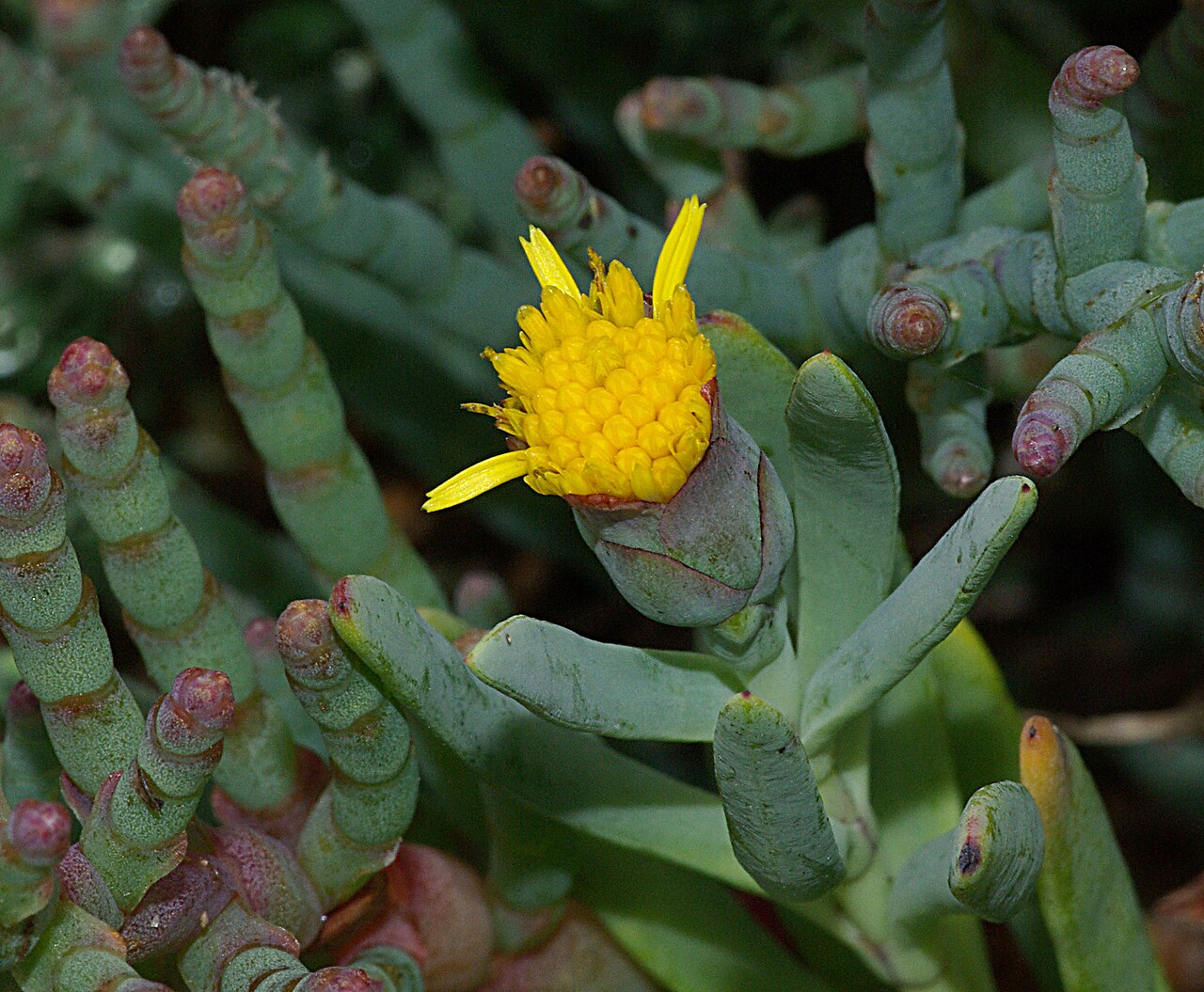
It spreads by creeping rhizomes into soft mats of weak, pinkish-green stems and thick, fleshy, narrow leaves that look a little like ice plant. From late spring to fall, small yellow daisy-like flower heads open singly at the stem tips, each sitting on a swollen stalk.
Marsh jaumea is one of the characteristic plants of the Pacific coast high marsh, where it helps hold mud and sand in place and shelters marsh wildlife. It is used in tidal marsh restoration and in salt-tolerant coastal gardens, bioswales and rain gardens.
Identification
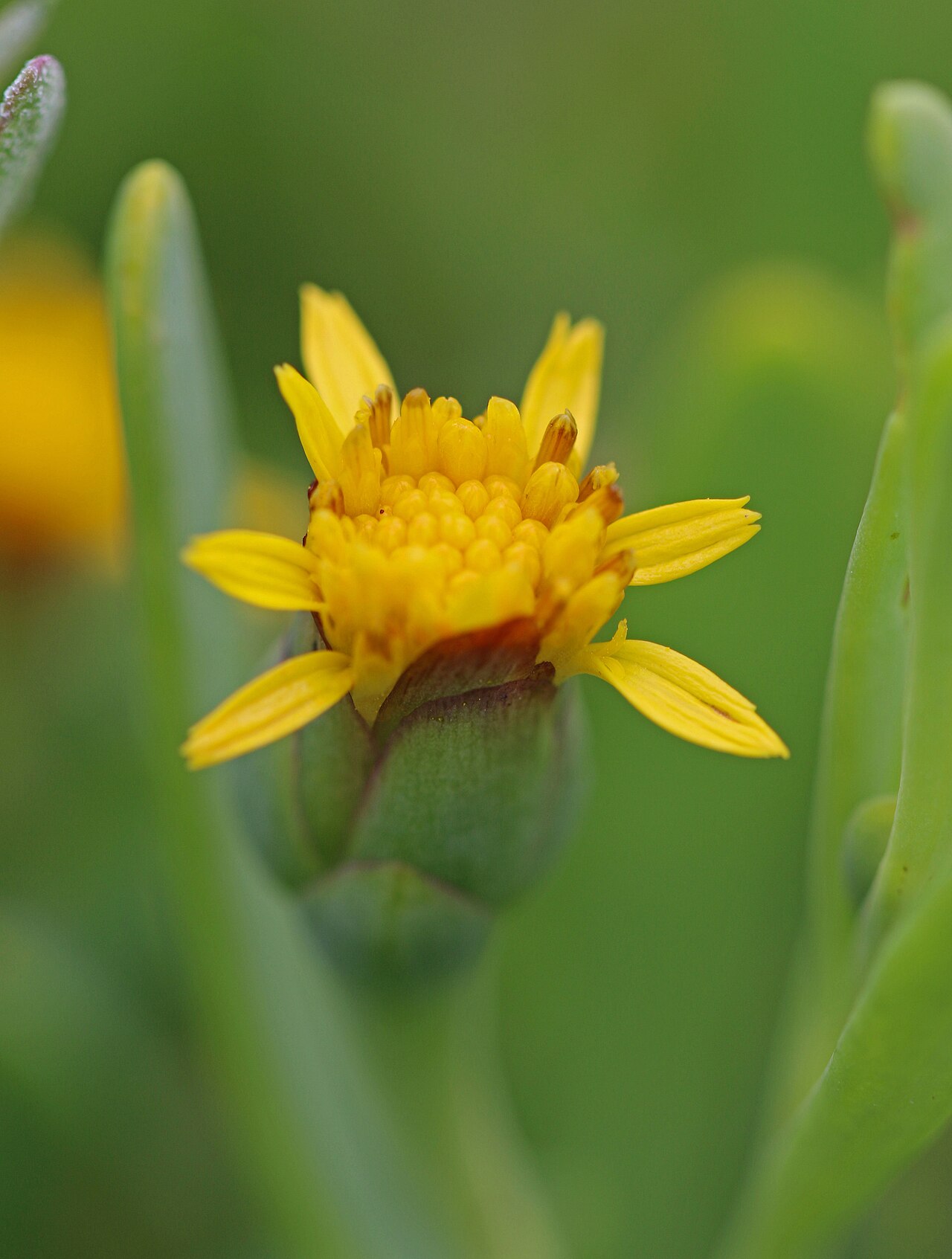
Look in the middle and upper parts of Pacific coast salt marshes for low mats of fleshy, narrow, gray-green leaves on soft, sprawling stems, often mixed with pickleweed and saltgrass, dotted with small yellow flower heads in summer.
Growth Habit
A low, mat-forming perennial 4 to 12 inches tall, with weak, trailing to upright stems that root along the ground and spread by rhizomes into patches several feet across. Stems are soft, smooth and often pink or reddish.
Leaves
Leaves are opposite, thick and succulent, narrow and somewhat flattened, about 1 to 2 inches long, smooth and gray-green. They store water and help the plant cope with salty soils.
Flowers
Flower heads are about 1/2 to 3/4 inch across, borne singly at the stem tips on a stalk that is noticeably swollen just below the head. Each head has a few short yellow ray flowers around a yellow center of disk flowers, surrounded by fleshy green bracts. Bloom runs mainly from about May to October.
Fruit
The fruits are small, ribbed achenes, usually without a pappus, released as the heads dry.
Look-alikes
Pickleweed has jointed, leafless green stems and no showy flowers. Coastal gumplant is taller, with sticky, gummy, larger flower heads. Iceplants (Carpobrotus) are non-native, have three-angled leaves and large pink or yellow flowers with many thin petals.
Quick Facts
| Scientific Name | Jaumea carnosa |
| Family | Asteraceae (aster family) |
| Plant Type | Succulent perennial groundcover |
| Mature Height | 4–12 in |
| Mature Spread | 2–4 ft or more, spreading by rhizomes |
| Growth Rate | Moderate |
| Sun Exposure | Full sun |
| Water Needs | High; moist to wet, salty or brackish soil |
| Soil Type | Wet sandy, silty or muddy soil; tolerates salt |
| Soil pH | Neutral to alkaline (about 6.5–8.5) |
| Bloom Time | Late spring to fall (May–October) |
| Flower Color | Yellow |
| Fall Color | None notable |
| Fruit | Small ribbed achene |
| Deer Resistant | Yes; rarely browsed |
| USDA Hardiness Zones | 7–10 |
Native Range
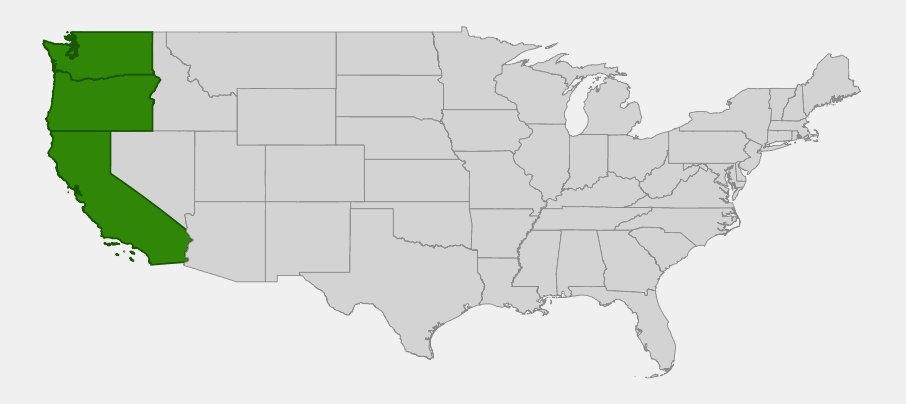
Marsh jaumea grows along the Pacific coast of North America from southern British Columbia to northern Baja California, Mexico. USDA PLANTS records it in Washington, Oregon and California.
In Washington it grows in salt marshes of Puget Sound, the Strait of Juan de Fuca and the outer coast, including Willapa Bay and Grays Harbor. It continues through the estuaries of the Oregon coast and the whole California coast, from Humboldt Bay and San Francisco Bay to Morro Bay and the lagoons of southern California, with some populations on the Channel Islands.
It grows in coastal salt marshes, especially the middle and upper marsh flooded only by higher tides, as well as brackish marsh edges, wet sea cliffs and seeps near the shore, always close to sea level.
📋 Regional plant lists featuring Marsh Jaumea: Western Oregon & Western Washington · California & Nevada
Growing & Care Guide
Marsh jaumea is mostly planted in tidal marsh restoration and in coastal gardens with wet, salty or brackish soil. In the right spot it spreads into an attractive, low succulent groundcover.
Light
Full sun. It grows sparse and leggy in shade.
Soil & Water
It needs constantly moist to wet soil and tolerates salt and periodic flooding by brackish or salt water. It grows in sand, silt or mud. In freshwater gardens it can be grown in a regularly watered, sunny bog or rain garden near the coast, but it is best suited to naturally salty sites.
Planting Tips
Plant plugs or rooted divisions about 1 to 2 feet apart in spring or fall. In marsh restoration, plant it in the upper part of the tidal zone, above pickleweed-dominated low areas. Combine it with saltgrass, alkali heath and gumplant.
Pruning & Maintenance
Little care is needed. Remove weeds while plants are spreading. Stems may die back partly in winter and regrow in spring.
Propagation
Easily propagated by division or by rooting stem pieces in moist sand. Seed can be sown in moist, salty-tolerant mixes, but division is quicker. Collect plant material only with permission, as many salt marshes are protected.
Landscape Uses
- Tidal marsh restoration: a key species of the Pacific coast high marsh
- Coastal gardens: low succulent groundcover for salty sites
- Bioswales and rain gardens: tolerates wet, salty runoff near the coast
- Erosion control: rhizomes bind marsh mud and sand
- Wildlife habitat: cover for marsh insects, birds and small animals
Wildlife & Ecological Value
Marsh jaumea is part of the dense plant cover that makes Pacific coast salt marshes so productive for wildlife.
For Pollinators
Small bees, flies and butterflies visit the yellow flower heads, which bloom over a long season from late spring into fall.
For Birds
Marsh birds such as song sparrows, savannah sparrows and rails forage and shelter in high marsh vegetation that includes jaumea, and shorebirds feed along nearby channels.
For Mammals
Salt marsh rodents and other small mammals use the dense cover. In California, the endangered salt marsh harvest mouse lives in the pickleweed-dominated marshes where jaumea grows.
Ecosystem Role
Its creeping rhizomes help stabilize marsh sediments, and the plant contributes to the detritus that feeds invertebrates at the base of the estuary food web. It is an important species in the high marsh zone.
Cultural & Historical Uses
The genus Jaumea honors the French botanist Jean Henri Jaume Saint-Hilaire. The species name carnosa means “fleshy,” for its succulent leaves.
It was first described as Coinogyne carnosa in 1831 and was moved to Jaumea by Asa Gray in 1874.
Because so much Pacific coast salt marsh has been diked, filled or developed, marsh jaumea is now widely planted in restoration projects around San Francisco Bay, Puget Sound and other estuaries.
Frequently Asked Questions
Where does marsh jaumea grow?
In coastal salt marshes, estuaries and wet sea cliffs from British Columbia to northern Baja California, mostly in the middle and upper marsh.
Is marsh jaumea a succulent?
Yes. Its thick, fleshy leaves store water, helping it survive salty soils, much like other salt marsh plants.
When does marsh jaumea bloom?
Mainly from about May to October, with small yellow daisy-like flower heads.
Can I grow marsh jaumea in my garden?
Yes, if you have a sunny, constantly moist spot, ideally near the coast with salty or brackish soil. It spreads into a low groundcover.
Why is marsh jaumea used in restoration?
It is a native high-marsh plant that spreads by rhizomes, stabilizes sediments and provides cover for marsh wildlife.

Looking for a nursery that carries Marsh Jaumea?
Browse our native plant nursery directory: California · Oregon · Washington

