
Oakland Mariposa Lily (Calochortus umbellatus)
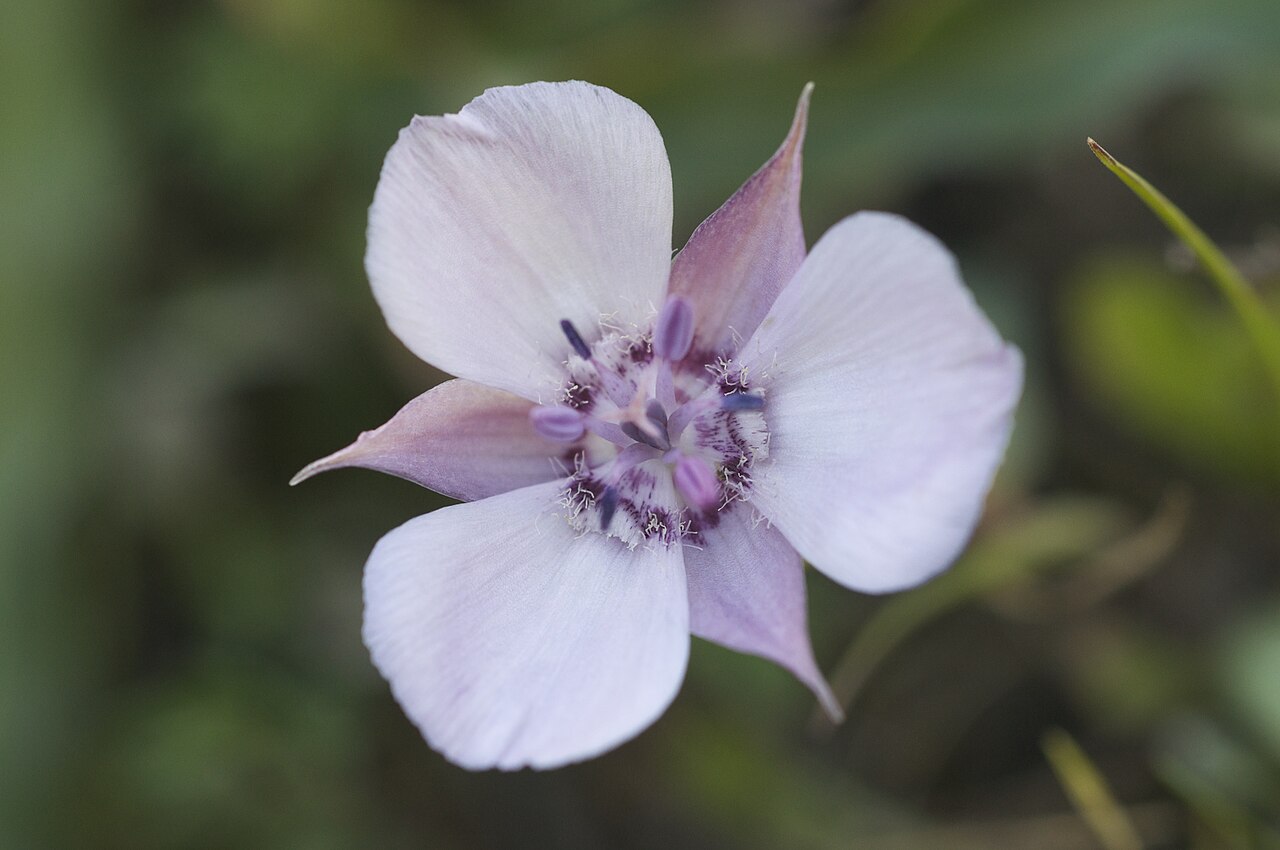
Calochortus umbellatus, known as Oakland Mariposa Lily or Oakland star tulip, is a small, delicate spring wildflower found only in California. It grows mainly in the hills around San Francisco Bay, often on serpentine soils, with a few isolated populations farther north and in the Sierra Nevada foothills. In spring it produces small clusters of open, upward-facing, white to pale pink flowers on slender stems usually less than 10 inches tall.
It belongs to Calochortus, a western North American genus of bulbs in the lily family (Liliaceae) that includes the mariposa lilies, star tulips and fairy lanterns. Despite its common name, this species is in the star tulip group: its flowers are smaller and more open than those of the large, cup-shaped mariposa lilies. The species name umbellatus refers to the flowers, which are borne in a loose, umbrella-like cluster at the top of the stem.
The California Native Plant Society includes Oakland mariposa lily on its Rare Plant Inventory at rank 4.2, a watch list for plants of limited distribution in California. It is not listed under state or federal endangered species laws. Like all wild Calochortus, it should never be dug up: the bulbs rarely survive, and digging damages fragile serpentine and grassland communities. This guide covers how to identify it, where to see it, and how to grow it from seed or nursery bulbs.
Identification
Oakland mariposa lily is easy to overlook when it is not in flower, since it has only one grass-like leaf. In bloom, look for small, open, white to pinkish flowers held upright in a cluster, with petals that are mostly smooth rather than densely hairy.
Bulb & Growth Habit
Each plant grows from a small, deep, egg-shaped bulb. A single slender stem, often branched, rises usually 4 to 10 inches tall, and the plant dies back to the bulb after flowering and seed set in late spring.
Leaves
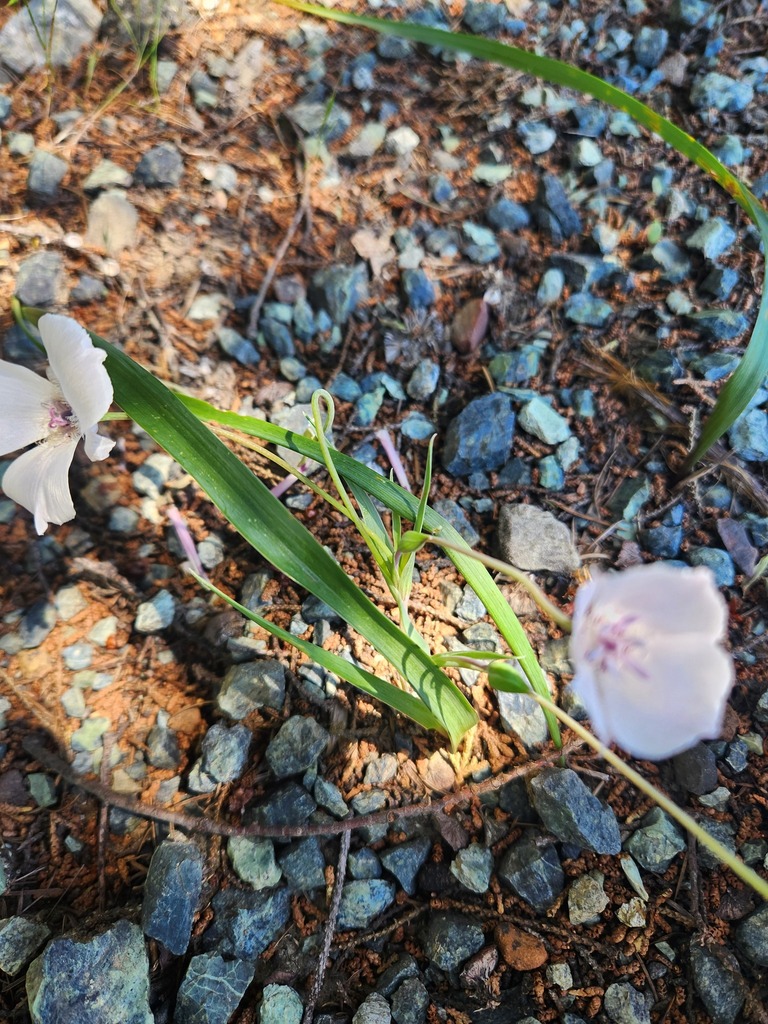
There is one long, narrow, grass-like basal leaf, often as long as or longer than the flowering stem. It is usually green and somewhat channeled and has often begun to wither by the time the plant is in full bloom. A few small, bract-like leaves occur higher on the stem.
Flowers
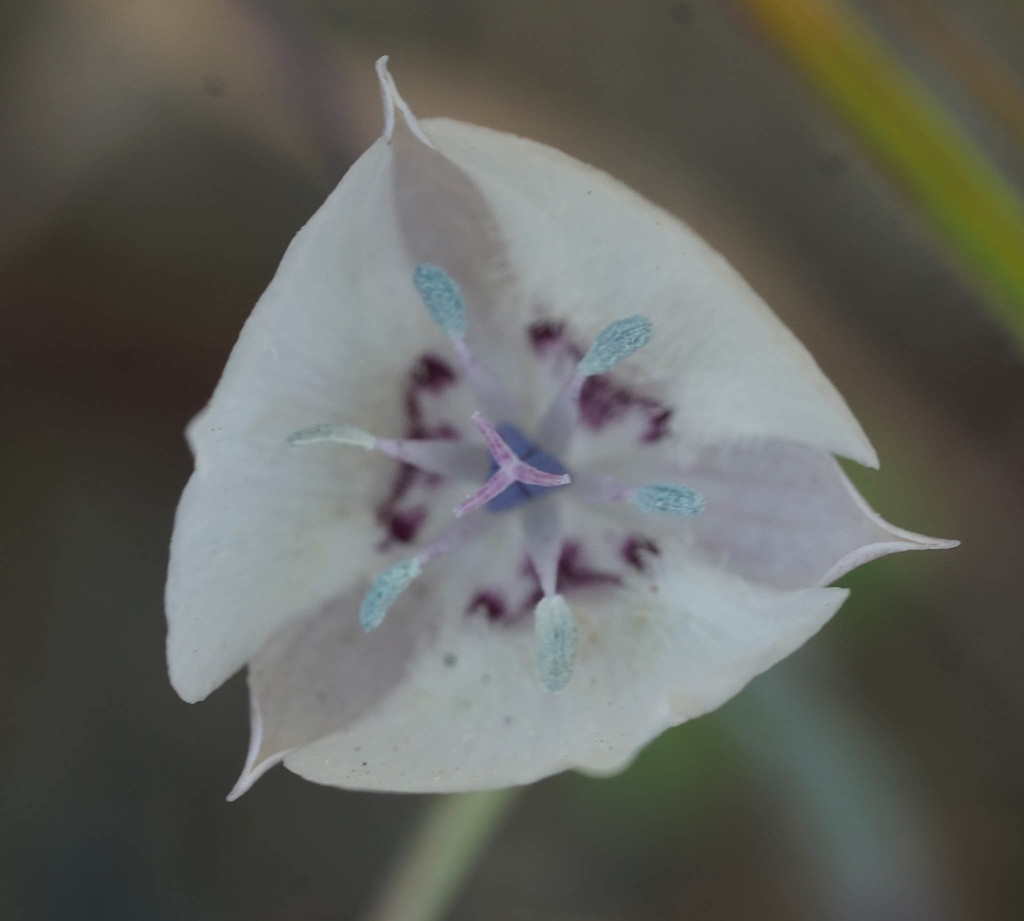
The flowers are borne in a loose, umbel-like cluster of about 3 to 10 at the top of the stem. Each flower is open and upward-facing, about 1 inch across, with three broad white to pale pink or lavender-tinged petals and three narrower sepals. The petals often have purple markings near the base around a small nectar gland, and they are smooth or have only a few hairs near the gland. Bloom time is mainly March to May.
Fruit & Seeds
After flowering, each flower develops an upright, three-angled capsule that dries and splits open in late spring to release many small, flat seeds. The capsules often stand on the dry stems after the leaf has withered.
Look-alikes
Several other star tulips and cat’s ears grow in Northern California. Tolmie’s star tulip (Calochortus tolmiei) has petals densely covered in long hairs, giving the flowers a fuzzy look, while Oakland mariposa lily’s petals are smooth or nearly so. The large mariposa lilies, such as butterfly mariposa lily and superb mariposa lily, have much bigger, deep cup-shaped flowers, and fairy lanterns such as white fairy lantern have nodding, globe-shaped flowers. Hybrids with other Calochortus are occasionally reported.
Quick Facts
| Scientific Name | Calochortus umbellatus Alph. Wood |
| Family | Liliaceae (lily family) |
| Plant Type | Perennial bulb; summer-dormant |
| Mature Height | 4–10 in |
| Mature Spread | 2–4 in |
| Growth Rate | Slow (several years from seed to flower) |
| Sun Exposure | Full sun to part shade |
| Water Needs | Low; dry summer dormancy |
| Soil Type | Rocky, well-drained soils, often serpentine or clay-loam on grassy slopes |
| Soil pH | About 6.0–7.5; tolerant of serpentine |
| Bloom Time | March–May |
| Flower Color | White to pale pink or lavender, with purple markings |
| Fall Color | None; dormant from late spring to the winter rains |
| Fruit | Upright, three-angled capsule with flat seeds |
| Deer Resistant | No; flowers and buds are browsed |
| USDA Hardiness Zones | 8–10 |
Native Range
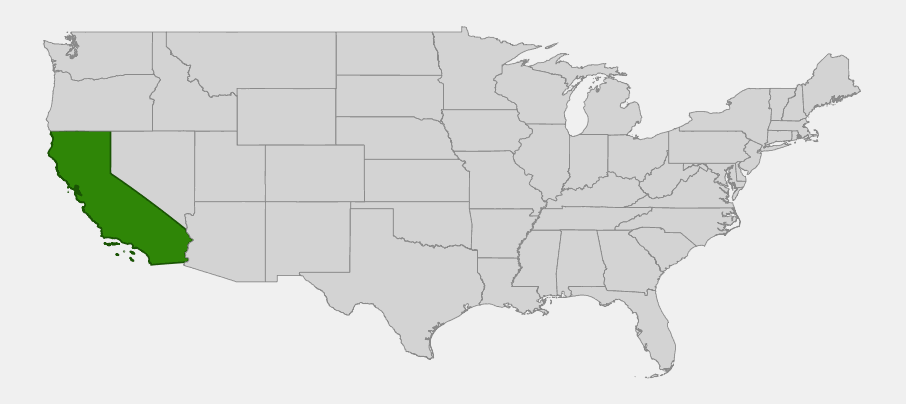
Oakland mariposa lily is endemic to California, meaning it grows wild nowhere else in the world. USDA PLANTS lists it only from California, and it is a species of limited distribution, which is why the California Native Plant Society tracks it on its watch list (California Rare Plant Rank 4.2).
Most populations are in the San Francisco Bay Area, in the hills of Marin, Contra Costa, Alameda and nearby counties, including the Oakland and Berkeley Hills. Ring Mountain in Marin County and the regional parks of the East Bay hills are some of the best-known places to see it. A few isolated populations are reported farther north in Humboldt and Mendocino Counties and in Nevada County in the Sierra Nevada foothills.
It grows on open, grassy or rocky slopes, in openings in chaparral and oak woodland, and along ridgetops, often on thin serpentine soils where competition from taller grasses is reduced. It generally grows at low to moderate elevations, mostly below about 2,500 feet.
📋 Regional plant lists featuring Oakland Mariposa Lily: California & Nevada
Growing & Care Guide
Oakland mariposa lily is a plant for dedicated California native gardeners and bulb growers. It is offered by only a few native nurseries and seed suppliers. Buy only nursery-propagated bulbs or seed; never dig bulbs from the wild. Wild bulbs are deep, easily damaged and rarely survive transplanting, and the plant is a CNPS watch-list species.
Light
Give it full sun or light, bright shade. In the wild it grows on open slopes and in gaps in chaparral and woodland, where it gets plenty of winter and spring sun.
Soil & Water
Sharp drainage is essential. Use a gritty, mineral soil, such as a mix of sandy loam with pumice or crushed rock, on a slope, in a raised bed or in a deep pot. Water from fall through spring if winter rains are lacking, then stop watering completely once the leaf yellows in late spring. Summer water causes the bulbs to rot.
Planting Tips
Plant bulbs in fall, about 2 to 3 inches deep. Many Calochortus growers keep them in deep pots or bulb frames so they can control summer dryness and protect them from gophers; a wire basket helps in the ground. Pair it with low bunchgrasses and other spring annuals that share its dry-summer cycle.
Pruning & Maintenance
No pruning is needed. Let the foliage and seed capsules ripen and dry naturally, since the leaf feeds the bulb for next year. Keep potted bulbs dry in summer and resume watering with the first fall rains. Watch for gophers, slugs and deer, which eat bulbs, leaves and flower buds.
Propagation
Grow it from seed sown in fall, outdoors or in deep pots of gritty mix, where winter cold and rain prepare it to sprout. Seedlings produce a single grass-like leaf for the first few years and usually take three to five years to reach flowering size. Some plants form small offset bulbs that can be separated during dormancy.
Landscape Uses
- Rock gardens and serpentine gardens: a small spring bulb for thin, rocky, well-drained soils
- Containers and bulb frames: easy to keep dry during the summer dormancy
- Native grassland plantings: a spring wildflower among bunchgrasses in coastal hills
- Pollinator gardens: open flowers visited by native bees and beetles
- Habitat restoration: a characteristic wildflower of Bay Area serpentine grasslands
Wildlife & Ecological Value
Oakland mariposa lily is a small plant, but its open spring flowers and its bulbs are part of the food web of California’s coastal grasslands and serpentine barrens.
For Pollinators
The open, upward-facing flowers offer easy access to pollen and nectar at the petal bases. Native bees, including small solitary bees, and beetles visit Calochortus flowers, and beetles are often seen resting and feeding inside the open flowers of star tulips.
For Birds
Seed-eating birds may take the small seeds when capsules open, but the plant is not a major food source for birds.
For Mammals
Pocket gophers, ground squirrels and other rodents dig and eat Calochortus bulbs, and deer browse the buds and flowers. The plant’s deep bulb helps it survive both grazing and summer drought.
Ecosystem Role
As a summer-dormant bulb on thin, nutrient-poor serpentine soils, Oakland mariposa lily is part of the distinctive wildflower communities that make serpentine grasslands some of the richest wildflower habitats in the Bay Area. These communities are threatened by development, invasive grasses and trampling.
Cultural & Historical Uses
The genus name Calochortus comes from the Greek kalos, beautiful, and chortos, grass, a reference to the plants’ grass-like leaves. Mariposa is Spanish for butterfly, a name given to the large-flowered species. The species was described in 1868 by Alphonso Wood, and Calochortus collinus is a synonym.
The common name refers to the Oakland Hills, one of the places where the plant grows. Many Indigenous peoples of California, including Ohlone and Coast Miwok communities in the Bay Area, harvested Calochortus bulbs as food, digging them in spring and eating them roasted or raw. With so many species now rare, wild bulbs should be left in the ground.
Because it grows close to a large metropolitan area, Oakland mariposa lily is a favorite of Bay Area wildflower walkers. Spring hikes at Ring Mountain, in the East Bay Regional Parks and on other serpentine hills are the best way to enjoy it, ideally from established trails so the plants and their fragile habitat are not trampled.
Frequently Asked Questions
Is Oakland mariposa lily rare?
It has a limited distribution, mostly in the San Francisco Bay Area, and the California Native Plant Society lists it at California Rare Plant Rank 4.2, a watch list. It is not listed as threatened or endangered under state or federal law.
Where can I see Oakland mariposa lily?
Look in spring on open, grassy and serpentine slopes in the Bay Area hills, such as Ring Mountain in Marin County and parks in the Oakland and Berkeley Hills. Stay on trails and do not pick the flowers.
When does Oakland mariposa lily bloom?
Mainly from March to May, depending on the year and the site.
Can I grow Oakland mariposa lily in my garden?
Yes, with sharp drainage and a completely dry summer. Grow it from seed or nursery-propagated bulbs in gritty soil or deep pots. Never dig bulbs from the wild.
Why is it called a mariposa lily if it looks like a star tulip?
“Mariposa lily” is a common name used for many Calochortus species. Botanically it belongs with the smaller, open-flowered star tulips, and it is also called Oakland star tulip.

Looking for a nursery that carries Oakland Mariposa Lily?
Browse our native plant nursery directory: California

