
Mullein Foxglove (Dasistoma macrophylla)
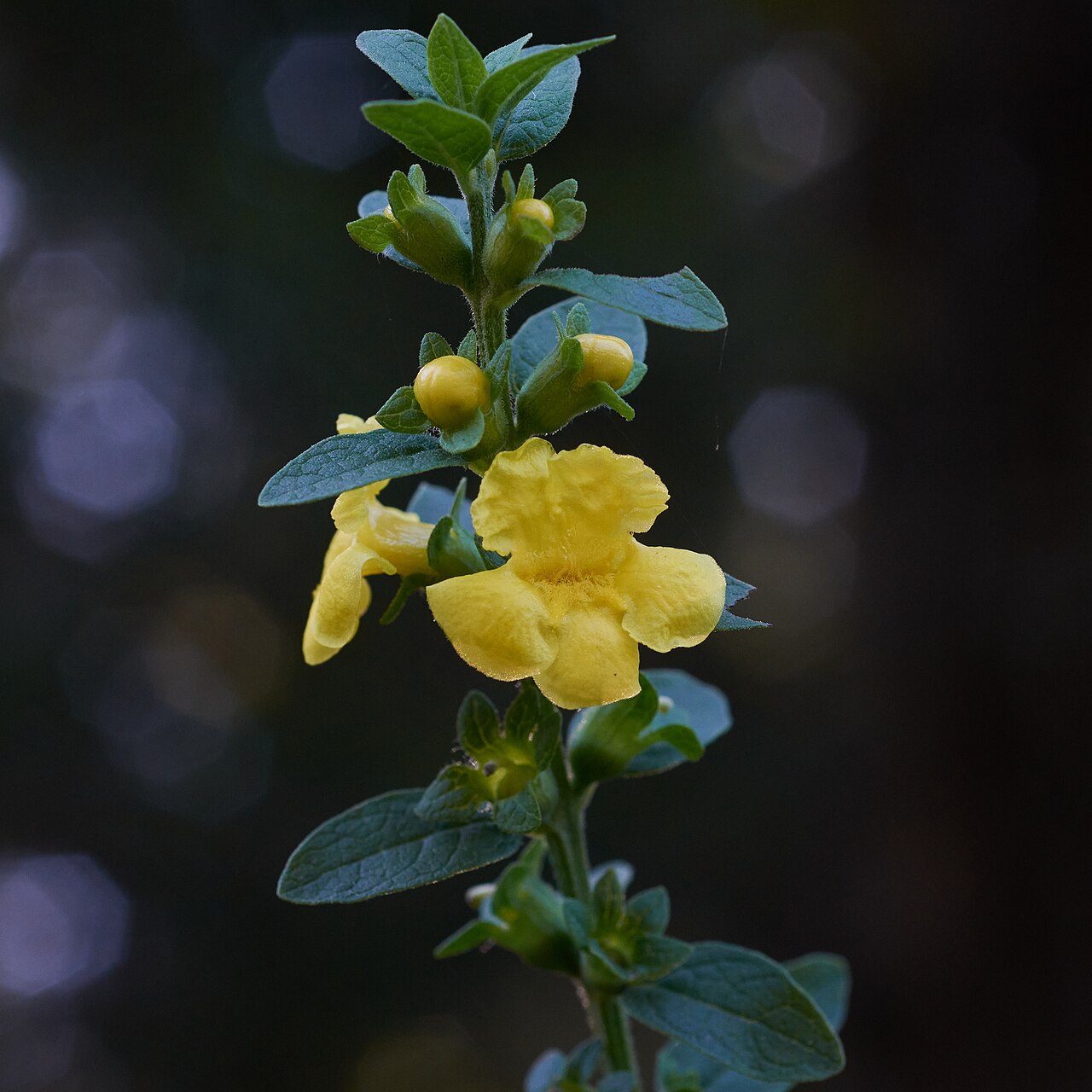
Dasistoma macrophylla, known as Mullein Foxglove, is a tall wildflower of open woods, woodland edges and wooded slopes in the eastern and central United States. It is the only species in its genus and belongs to the broomrape family (Orobanchaceae), which includes the false foxgloves and paintbrushes. Despite its name, it is not related to the European foxglove or mulleins; the name refers to its large, mullein-like basal leaves and foxglove-like flowers.
Plants grow 3 to 6 feet tall and carry pairs of large leaves, the lower ones deeply lobed. From June into September small, yellow, bell-shaped flowers with a hairy throat open in the axils of the upper leaves. USDA PLANTS lists it as an annual; many plants spend a first year as a leafy rosette and flower the next, so it often behaves as a biennial.
Mullein foxglove is a root hemiparasite. It has green leaves and makes its own food, but it also attaches to the roots of nearby trees, especially oaks, and takes water and minerals from them. It does not seriously harm its hosts. In gardens it can be grown only from seed sown near suitable trees, never as a transplanted plant in an open bed.
Identification
Look for a tall, stiff, leafy plant at a woodland edge with large opposite leaves, the lower ones deeply cut, and small yellow bells tucked against the stem in midsummer.
Growth Habit
A single, stout, erect stem 3 to 6 feet tall, often branched in the upper part and finely hairy. First-year plants form a low rosette of lobed leaves, often tinged red or purple.
Leaves
The leaves are opposite and large. The lower leaves are up to about 1 foot long and deeply cut into a few broad, toothed lobes. Upward on the stem the leaves become smaller, ovate to lance-shaped and simply toothed or entire. They are soft-hairy, somewhat like mullein leaves. Like many of its relatives, the plant turns black when it dries.
Flowers
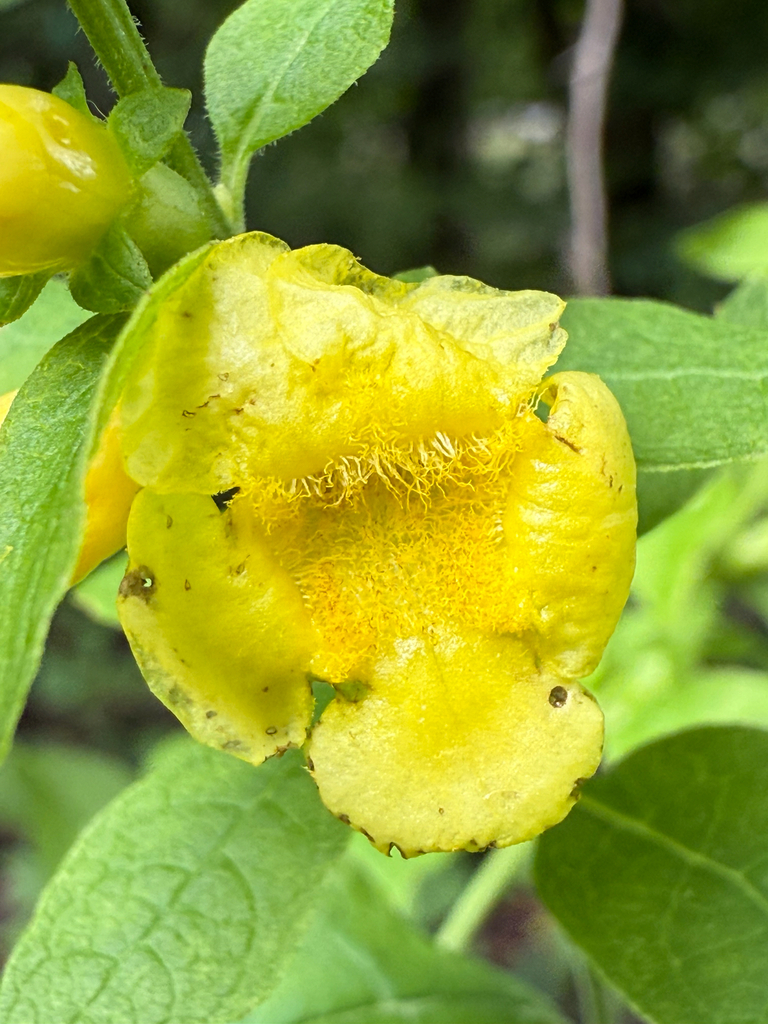
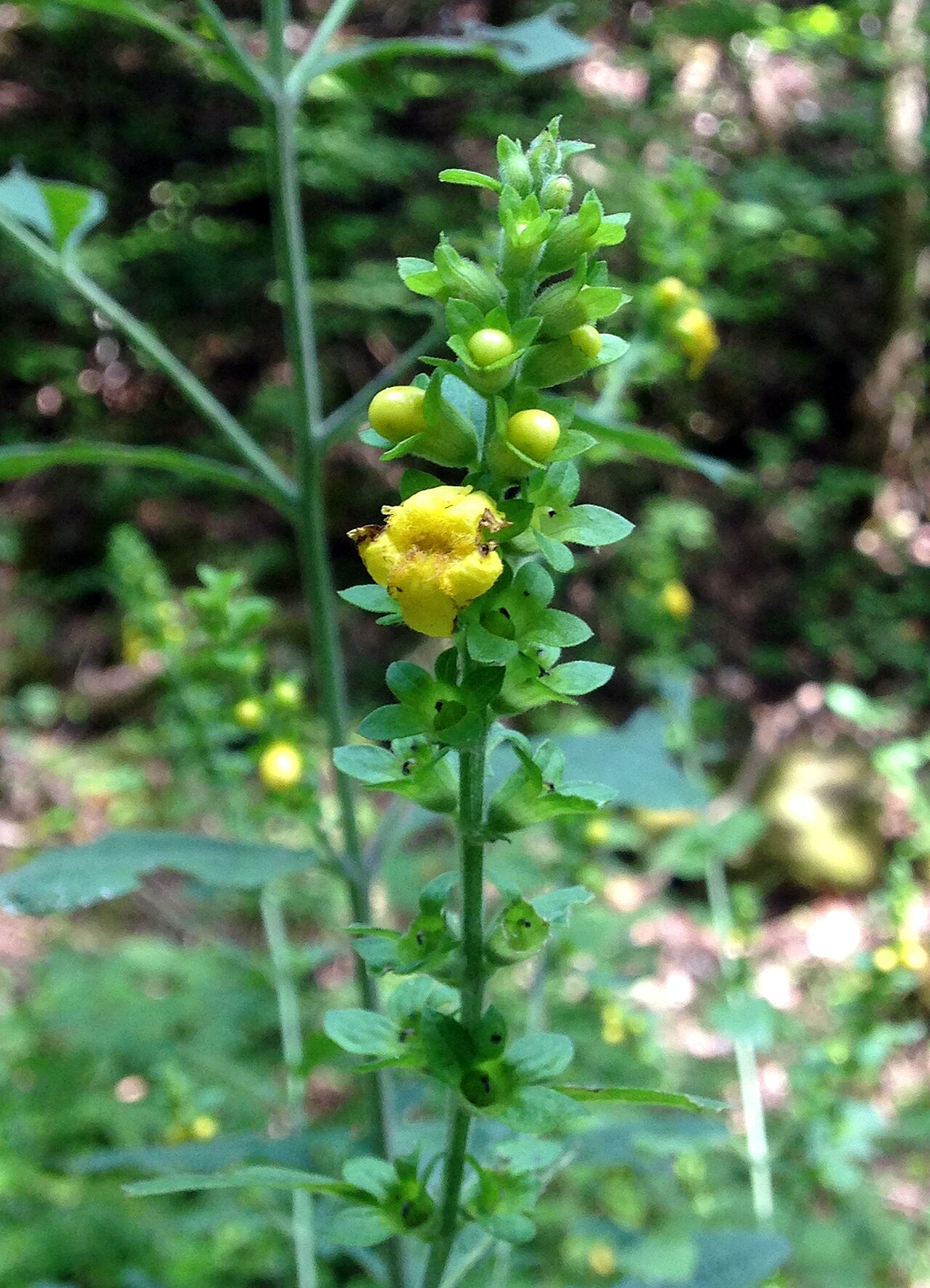
The flowers are about 3/4 inch long, bright yellow and broadly bell-shaped, with five short, rounded, spreading lobes. The throat is densely woolly inside, and four short stamens are hidden in it. They sit nearly stalkless, singly or in pairs, in the axils of the upper leaves and bracts, opening a few at a time from about June to September.
Fruit & Seeds
The fruit is a rounded to egg-shaped, hairy capsule about 1/2 inch long that splits to release many small, winged seeds in fall. The dead stalks with their open capsules often remain standing into winter.
Look-alikes
Yellow false foxgloves (Aureolaria) are also oak hemiparasites with yellow flowers, but their flowers are much larger, about 1 1/2 inches long, on short stalks. Purple false foxglove (Agalinis purpurea) has pink flowers and very narrow leaves. Common mullein (Verbascum thapsus), an introduced weed, has alternate, woolly gray leaves and a dense spike of flat yellow flowers.
Quick Facts
| Scientific Name | Dasistoma macrophylla |
| Family | Orobanchaceae (broomrape family) |
| Plant Type | Annual or biennial hemiparasitic herb |
| Mature Height | 3–6 ft |
| Mature Spread | 1–2 ft |
| Growth Rate | Fast |
| Sun Exposure | Part shade to part sun |
| Water Needs | Medium; tolerates dry spells |
| Soil Type | Loamy or rocky woodland soils, often over limestone |
| Soil pH | Slightly acidic to neutral or alkaline (about 6.0–7.5) |
| Bloom Time | June–September |
| Flower Color | Yellow |
| Fall Color | None notable; plant blackens when dry |
| Fruit | Hairy, rounded capsule with winged seeds |
| Deer Resistant | Moderate; seldom heavily browsed |
| USDA Hardiness Zones | 4–8 |
Native Range
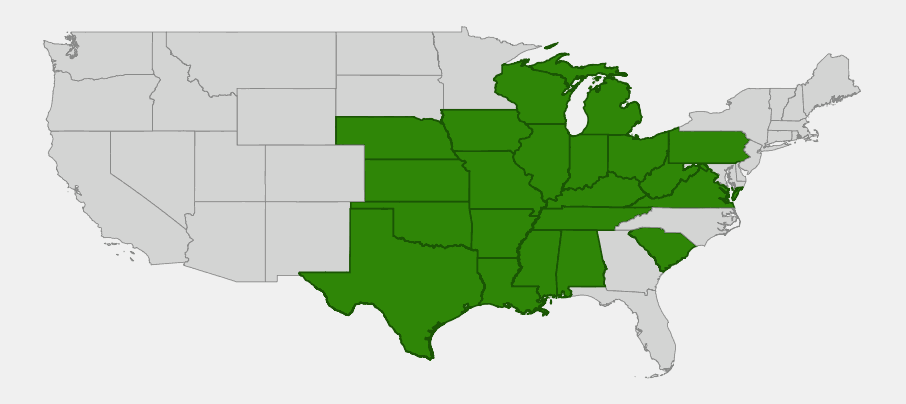
Mullein foxglove is native to the eastern and central United States. USDA PLANTS lists it from Pennsylvania and southern Michigan and Wisconsin west to Iowa, Nebraska and Kansas, and south to Alabama, Mississippi, Louisiana and Texas. It is most common in the Ohio and middle Mississippi valleys, the Ozarks and the Interior Low Plateaus of Kentucky and Tennessee.
It becomes rare toward the edges of its range. In Pennsylvania, Michigan and Wisconsin it reaches its northern and eastern limits, and the South Carolina record is an outlying one well east of its main range. In Texas it grows in the northeastern and north-central part of the state, and in Oklahoma mainly in the east. It does not occur in Canada.
Typical habitats are open, deciduous woods, woodland borders, wooded slopes and bluffs, ravines, savannas, thickets and roadside banks at forest edges, often on limestone or other fairly rich soils. It needs nearby trees as hosts, so it is seldom found far from oaks or other woody plants.
📋 Regional plant lists featuring Mullein Foxglove: New York, Pennsylvania & Northern New Jersey · Ohio & Indiana · Michigan, Wisconsin & Eastern Minnesota · Kentucky & Tennessee · Nebraska, Kansas & Eastern Colorado · Maryland, Virginia & West Virginia · Illinois, Iowa & Missouri · Alabama, Georgia & Mississippi · North & South Carolina · Arkansas, Louisiana, Eastern Oklahoma & Eastern Texas
Growing & Care Guide
Mullein foxglove is not a typical garden perennial. Because it is a hemiparasite that relies on the roots of nearby trees, it is best grown by sowing seed in a woodland or woodland-edge garden that already has oaks or other trees. Seed is occasionally offered by native seed suppliers; potted plants are rarely available and do not transplant well.
Light
Part shade to part sun, such as the edge of a woodland, a gap in the canopy or the dappled shade under oaks. It grows taller and flowers more freely with some direct sun.
Soil & Water
Average to rich, well-drained loam or rocky soil. It tolerates some dryness once established, and its tree hosts help supply water. Avoid wet, poorly drained sites.
Planting Tips
Sow fresh seed in fall on the soil surface or lightly raked in, within a few yards of oaks, hickories or other trees and shrubs. The seeds need winter cold to germinate. Seedlings must connect to host roots to thrive, so expect some to fail. Do not dig plants from the wild.
Pruning & Maintenance
Leave plants standing after flowering so the capsules can scatter seed, which keeps a colony going from year to year. Keep aggressive groundcovers and invasive shrubs from crowding the seedlings. No fertilizer is needed.
Propagation
Only by seed. Collect ripe capsules in fall as they turn brown and split, and sow outdoors right away near suitable hosts. Plants usually bloom in their first or second summer and then die after setting seed.
Landscape Uses
- Woodland edges: a tall, late-summer wildflower for the border between trees and open ground
- Oak savanna restoration: part of the native herb layer under open oaks
- Pollinator gardens: its yellow bells feed bumble bees in mid to late summer
- Naturalistic plantings: reseeds in suitable spots near trees
- Educational gardens: an easy-to-see example of a green plant that is also a root parasite
Wildlife & Ecological Value
Mullein foxglove is part of the native herb layer of eastern oak and hickory woods and adds late-summer flowers along their edges.
For Pollinators
The flowers are visited mainly by bumble bees, which push into the hairy throat to reach nectar and pollen. Smaller bees also collect pollen.
For Birds
It is of minor value to birds, although seed-eating birds may pick seeds from the open capsules, and the tall stems give cover at woodland edges.
For Mammals
It is seldom browsed heavily by deer. Small mammals may use the dense stands for cover.
Ecosystem Role
As a hemiparasite, it draws water and minerals from the roots of oaks and other trees and shrubs. Hemiparasites can slightly reduce the vigor of their hosts and of nearby dominant plants, which helps other plants grow and can increase diversity in woodland edges and savannas. It is often a sign of healthy, open oak woodland.
Cultural & Historical Uses
The genus name Dasistoma comes from the Greek for “hairy mouth,” for the woolly throat of the flower, and macrophylla means “large-leaved.” The plant was long placed in the genus Seymeria as Seymeria macrophylla, a name still found in older books.
It was once included in the figwort family (Scrophulariaceae), along with snapdragons and penstemons. DNA studies moved it and other hemiparasites, such as false foxgloves and paintbrushes, to the broomrape family (Orobanchaceae), which also includes fully parasitic plants like beechdrops and cancer-root.
Because it is common in the Ohio Valley and the Ozarks but scarce at the edges of its range, it is listed as rare in some border states, such as Pennsylvania. It has no well-documented uses as food or medicine, and like many of its relatives it should not be eaten.
Frequently Asked Questions
Is mullein foxglove a parasite?
Yes, partly. It is a hemiparasite: it has green leaves and makes its own food, but it also attaches to the roots of nearby trees, especially oaks, to take water and minerals.
Does mullein foxglove harm oak trees?
No serious harm has been reported. It takes only small amounts from its hosts, and mature trees are not noticeably affected.
Is mullein foxglove related to foxglove or mullein?
No. The name describes its mullein-like leaves and foxglove-like flowers. It belongs to the broomrape family, not the plantain family (true foxglove) or figwort family (mullein).
How do I grow mullein foxglove?
Sow fresh seed in fall near oaks or other trees in part shade. Seedlings must attach to the roots of a host, so it is not suited to open garden beds or containers.
Is mullein foxglove an annual or a biennial?
USDA lists it as an annual, but many plants form a rosette in their first year and flower the next, so it often behaves as a biennial. Plants die after setting seed.

Looking for a nursery that carries Mullein Foxglove?
Browse our native plant nursery directory: Alabama & Arkansas · Illinois, Indiana, Iowa & Kansas · Kentucky, Louisiana, Michigan, Mississippi & Missouri · Nebraska, Ohio & Oklahoma · Pennsylvania, South Carolina, Tennessee, Texas & Virginia · West Virginia & Wisconsin

