
Mohr’s Coneflower (Rudbeckia mohrii)
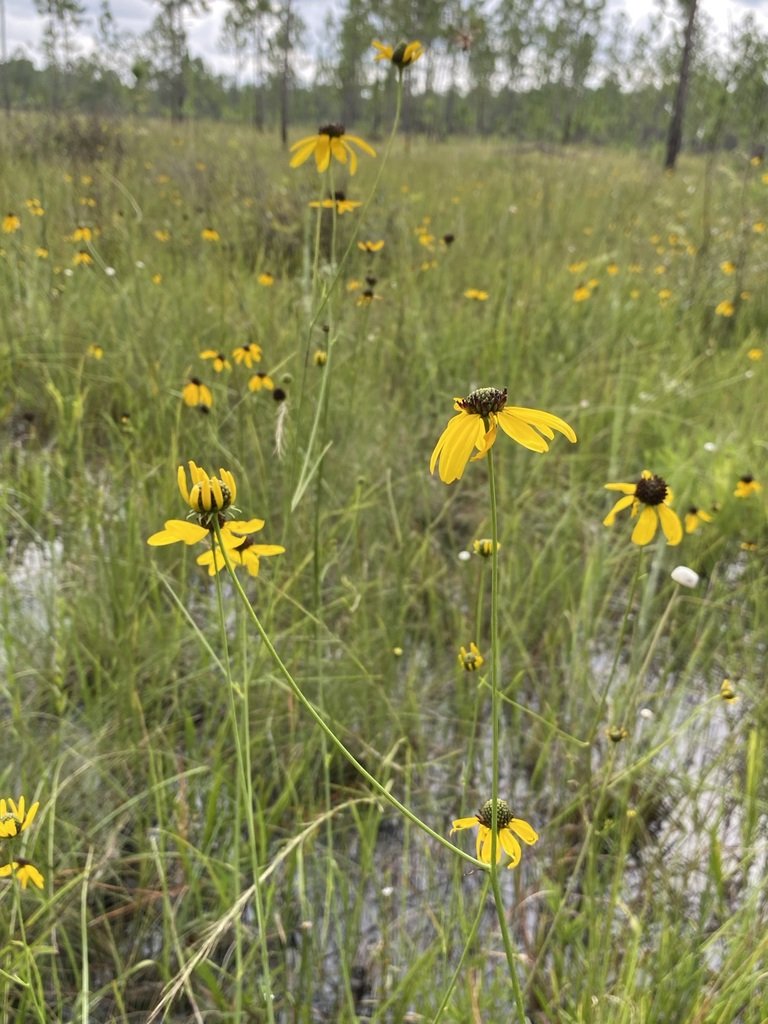
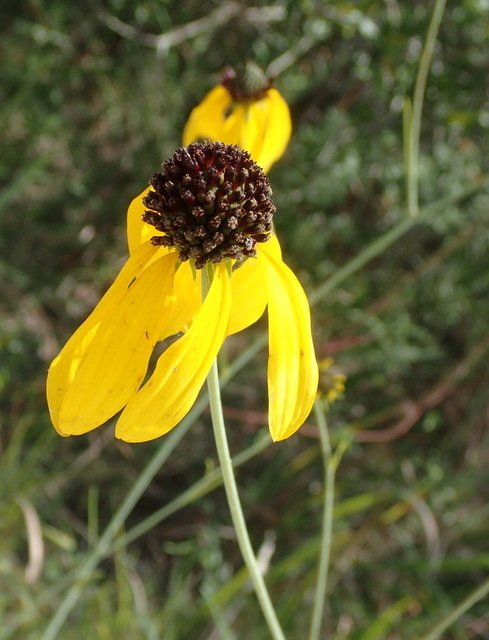
Rudbeckia mohrii, called Mohr’s Coneflower, is a slender perennial coneflower of the southeastern Coastal Plain that looks almost nothing like the familiar black-eyed Susans of dry meadows. Its leaves are narrow and grass-like, gathered near the base of the plant, and the flowering stems rise two to four feet with few or no leaves on them. At the top sit small, elegant heads: a compact, chocolate-brown dome of disk florets surrounded by thin yellow rays that droop backward as the head matures.
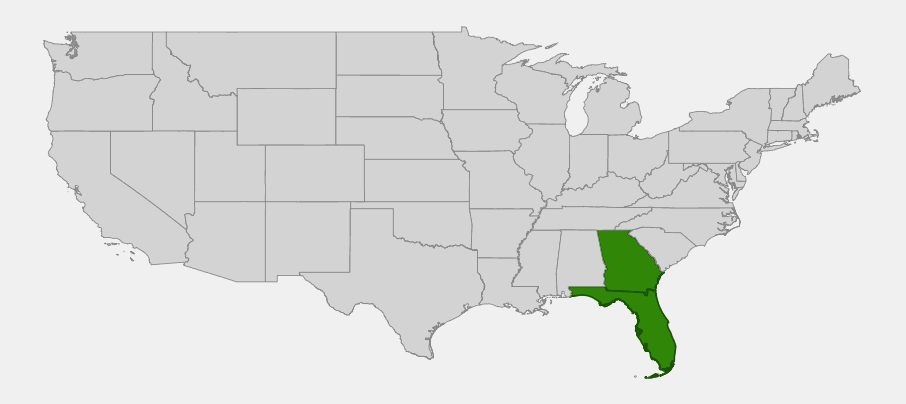
This is a wetland specialist. The national wetland plant list rates Mohr’s coneflower OBL, meaning it almost always occurs in wetlands, and in the field it is confined to wet pine savannas, wet flatwoods, moist prairies, roadside ditches and the upper edges of marshes and cypress ponds. It will not persist on ground that dries out in summer. The Lady Bird Johnson Wildflower Center records it only from Florida and Georgia, and Florida botanists treat it as a near-endemic, locally common in a handful of Panhandle counties and in a small part of south Georgia.
For gardeners it is a specialty plant rather than a border perennial. Give it a rain garden, pond edge, ditch or restored wet flatwood and it is easy; try it in an ordinary bed and it will fade. This guide covers how to recognize it among Florida’s other yellow coneflowers, where it grows naturally, and how to keep it happy in a wet planting.
Identification
Florida has roughly nine species of Rudbeckia, and most of them are broad-leaved plants with hairy stems. Mohr’s coneflower is the easy one. As the Florida wildflower grower Craig Huegel puts it, it is the only yellow-flowered black-eyed Susan in the state with grass-like leaves and a tall, nearly leafless flowering stalk.
Leaves
The basal leaves are linear and grass-like, smooth-edged, without teeth or lobes, and up to about 12 inches long. They form a tuft at ground level and are easy to overlook among the sedges and wiregrass of a wet savanna when the plant is not in bloom. The few leaves carried on the flowering stem are much smaller and widely spaced, so the stalk looks bare from a distance. The foliage and stems are smooth rather than bristly, another break from the hairy black-eyed Susans.
Stems & Habit
Plants die back to the ground in winter and resprout in spring from a stout central crown. A slender, upright flowering stem reaches 2 to 4 feet by midsummer, often branching near the top so that several heads are carried on one plant. Growth is upright and narrow, never bushy, and plants are usually found scattered or in loose colonies rather than in dense clumps.
Flowers
Each head has a compact, rounded central disk about half an inch across, dark chocolate brown to deep maroon, ringed by thin yellow ray florets roughly an inch long. The rays spread at first and then droop backward, giving the head a shuttlecock shape that is very characteristic of this species. The Lady Bird Johnson Wildflower Center records flowering from June through November; in the Florida Panhandle the main show is mid-summer into early fall.
Fruit & Seeds
After flowering, the disk ripens into a cluster of small dry fruits. Botanically each one is a cypsela, though gardeners and most field guides call it an achene. The seeds are small, dark and unadorned, and they ripen as the heads dry and darken on the stem in fall.
Quick Facts
| Scientific Name | Rudbeckia mohrii |
| Family | Asteraceae (aster family) |
| Plant Type | Herbaceous perennial wildflower (short-lived perennial) |
| Mature Height | 2–4 ft in flower |
| Mature Spread | 1–2 ft |
| Growth Rate | Moderate; dies back each winter |
| Sun Exposure | Full sun to light partial shade |
| Water Needs | High; obligate wetland plant that needs saturated or shallowly flooded soil |
| Soil Type | Sandy or peaty wetland soils; tolerates seasonal shallow flooding |
| Soil pH | Acidic |
| Bloom Time | June–November; peak mid-summer to early fall |
| Flower Color | Yellow rays with a chocolate-brown to maroon disk |
| Fall Color | None; foliage dies back in winter |
| Fruit | Small dry cypselae (commonly called achenes) in a compact brown head |
| Deer Resistant | Not especially; wet sites limit browsing more than the plant does |
| USDA Hardiness Zones | 8A–9B |
Native Range
Mohr’s coneflower is native to Florida and Georgia and grows nowhere else. USDA PLANTS lists it as native to the lower 48 states, and the Lady Bird Johnson Wildflower Center gives its distribution as Florida and Georgia only. Within that small range it is concentrated in the Florida Panhandle, where Florida wildflower growers describe it as a near-endemic known from roughly nine counties, with a smaller set of populations across the line in south Georgia.
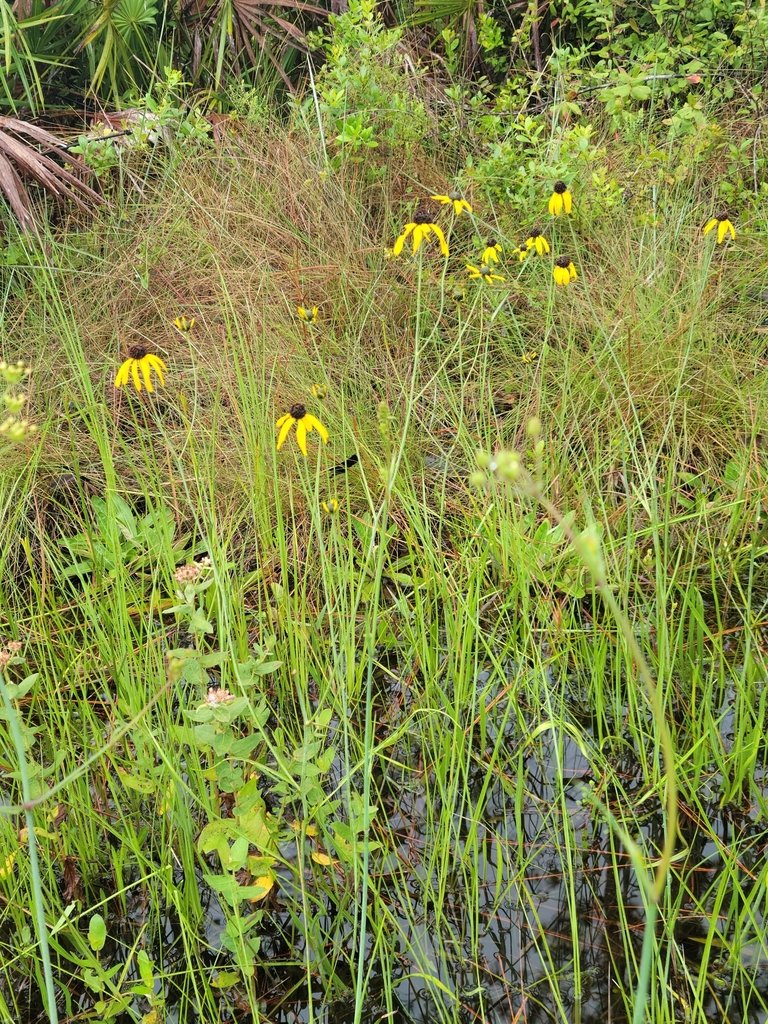
Its habitat is consistently wet. The Florida Native Plant Society lists its native habitats as marshes and moist prairies, and field observers find it in wet pine savannas, wet flatwoods, roadside ditches, seepage slopes and the upper margins of marshes and cypress ponds. The 2022 National Wetland Plant List rates it OBL, the strongest wetland rating, meaning it almost always occurs in wetlands. Plants do not persist where the ground dries out through the summer rainy season.
That dependence on wet, open, frequently burned ground is also its main vulnerability. Wet pine savannas in the Panhandle have been reduced by drainage, conversion to pine plantation and fire suppression, and the species’ entire world range sits inside that one region. Where it still occurs it can be locally abundant, forming showy scatterings of yellow across a flooded savanna in August.
📋 Regional plant lists featuring Mohr’s Coneflower: North & South Florida · Alabama, Georgia & Mississippi
Growing & Care Guide
Mohr’s coneflower is not difficult, but it is particular: it wants sun and it wants wet feet. Given a site that stays saturated or shallowly flooded through the growing season, it grows and flowers freely with no further attention. The main obstacle for gardeners is availability. The Florida Native Plant Society notes that it is rarely planted, mostly because it is hard to find in the trade and because it needs wet sites; only a handful of growers have offered it.
Light
Full sun produces the sturdiest stems and the most flower heads. The plant will take light shade at the edge of a pond or ditch, but in deeper shade the stems lean and flowering drops off. In the wild it is a plant of open, treeless or sparsely treed savanna, usually kept open by periodic fire.
Soil & Water
Give it acidic, sandy or peaty soil that stays wet. It tolerates standing water a few inches deep during the summer rainy season and is at home on the shallow shelf of a pond or in the bottom of a rain garden. It is not drought tolerant: if the root zone dries out for long in summer, the plant declines and often does not return. The Florida Native Plant Society rates it as not tolerant of inundation by salt or brackish water, and as having little or no tolerance for salt spray, so keep it away from the coast and from road salt or saline irrigation.
Planting Tips
Plant it where water naturally collects: a rain garden, a swale, a ditch bank, the margin of a retention pond or a restored wet flatwood. Set plants out in spring so they can root before the summer rains, and group five or more together, since single plants are easy to lose among taller wetland grasses. It is hardy through roughly zones 8A to 9B, which covers its natural range and the rest of north and central Florida.
Pruning & Maintenance
Very little is needed. Leave the seed heads standing into fall for small seed-eating birds, then cut the old stems to the ground in late winter before new growth appears. In a planting that mimics a savanna, an occasional winter mow or prescribed burn keeps shrubs from shading the coneflowers out. Do not fertilize; these are low-nutrient wetland soils and extra feeding mostly helps competitors.
Propagation
Seed is the standard method, and the Florida Native Plant Society lists seed as the propagation route for this species. Collect heads when they are brown and dry, clean the seed, and sow on the surface of a wet, sandy-peaty mix; keep it saturated and warm. Established crowns can also be divided in early spring. Collect seed only with the landowner’s permission, and never dig plants from wild savannas.
Landscape Uses
- Rain gardens: a tall, late-season yellow accent for the wettest zone, where many perennials fail
- Pond and ditch edges: reliable on the saturated shelf above the open water line
- Wetland and savanna restoration: a Coastal Plain native for wet pine savanna and flatwood projects within its range
- Pollinator plantings in wet ground: long bloom season from early summer into fall
- Naturalistic meadows: mixes well with wetland grasses, sedges and pitcher plants rather than with dry-land perennials
Wildlife & Ecological Value
Like other coneflowers, Mohr’s coneflower offers an open, easily worked flower head at a time of year when many wetland plants have finished blooming, and it does so in habitats that support a specialized insect fauna.
For Pollinators
The Florida Native Plant Society notes that this species has not been studied directly, but that based on insects attracted to related coneflowers it is expected to draw butterflies and moths, tachinid flies, bee flies, syrphid flies, solitary and social wasps, blister and soldier beetles, and bees. The flat, shallow disk is accessible to short-tongued insects, and the long bloom season from June into November keeps nectar and pollen available into fall.
For Birds
Small seed-eating birds are likely to work the ripening heads, as they do on other Rudbeckia species. Leaving the stems standing through fall and winter makes that food available and also provides perches in otherwise open, low wetland vegetation.
For Mammals
It is not an important mammal food. Its wet, often flooded habitat keeps most browsers away for much of the growing season, and the plant is too sparse and slender to provide meaningful cover.
Ecosystem Role
Mohr’s coneflower is a component of one of the richest plant communities in North America, the wet pine savanna of the Gulf Coastal Plain, which it shares with pitcher plants, orchids, sundews, beaksedges and dozens of other specialists. Plants like this one are indicators of a savanna that still floods and still burns; where drainage ditches or fire suppression change the hydrology, the coneflower disappears along with the rest of the community. Including it in restoration work helps rebuild the full flowering season of those savannas.
Cultural & Historical Uses
The species was described by the botanist Asa Gray and named for Charles Theodore Mohr, a German-born pharmacist and botanist who settled in Mobile, Alabama, and spent decades documenting the plants of the Gulf states. His Plant Life of Alabama, published in 1901, remains a landmark of southeastern botany, and several Coastal Plain plants carry his name.
Mohr’s coneflower has no recorded history of food or medicinal use, which is unsurprising for a plant restricted to a small area of remote wet savanna. Its cultural interest is mostly recent: it is one of the species that native plant enthusiasts in the Florida Panhandle photograph and record each August, and a marker of the wildflower-rich savannas of the Apalachicola National Forest and the surrounding region.
In horticulture it is still almost unknown. A small number of specialty southeastern nurseries have grown it, and the Florida Native Plant Society reports that at least one nursery has attempted production. Gardeners who want it should ask native nurseries rather than collect it, and anyone gathering seed in the wild needs the landowner’s permission.
Frequently Asked Questions
How is Mohr’s coneflower different from a black-eyed Susan?
The leaves. Black-eyed Susan and most other coneflowers have broad, rough, hairy leaves scattered up the stem. Mohr’s coneflower has smooth, narrow, grass-like basal leaves up to a foot long and a tall, nearly leafless flowering stalk. Its flower heads are also smaller, with a compact half-inch disk and thin rays that droop backward.
Where does Mohr’s coneflower grow?
Only in Florida and Georgia. It is concentrated in the Florida Panhandle, with a smaller set of populations in south Georgia, always in wet pine savannas, wet flatwoods, moist prairies, ditches and marsh edges.
Can I grow it in a normal garden bed?
Usually not. It is rated OBL on the national wetland plant list, meaning it almost always grows in wetlands, and it does not persist where the soil dries out in summer. Plant it in a rain garden, a swale or a pond edge instead.
When does it bloom?
From June through November, with the heaviest flowering from mid-summer into early fall. In the Panhandle, August is the classic month to see it in bloom.
Where can I buy Mohr’s coneflower?
It is rarely offered. A few specialty southeastern native nurseries have grown it, so ask Florida native plant nurseries and Florida Native Plant Society chapter sales. Buy nursery-propagated plants rather than digging from the wild, and get the landowner’s permission before collecting any seed.

Looking for a nursery that carries Mohr’s Coneflower?
Browse our native plant nursery directory: Florida & Georgia