Montezuma Cypress (Taxodium mucronatum)
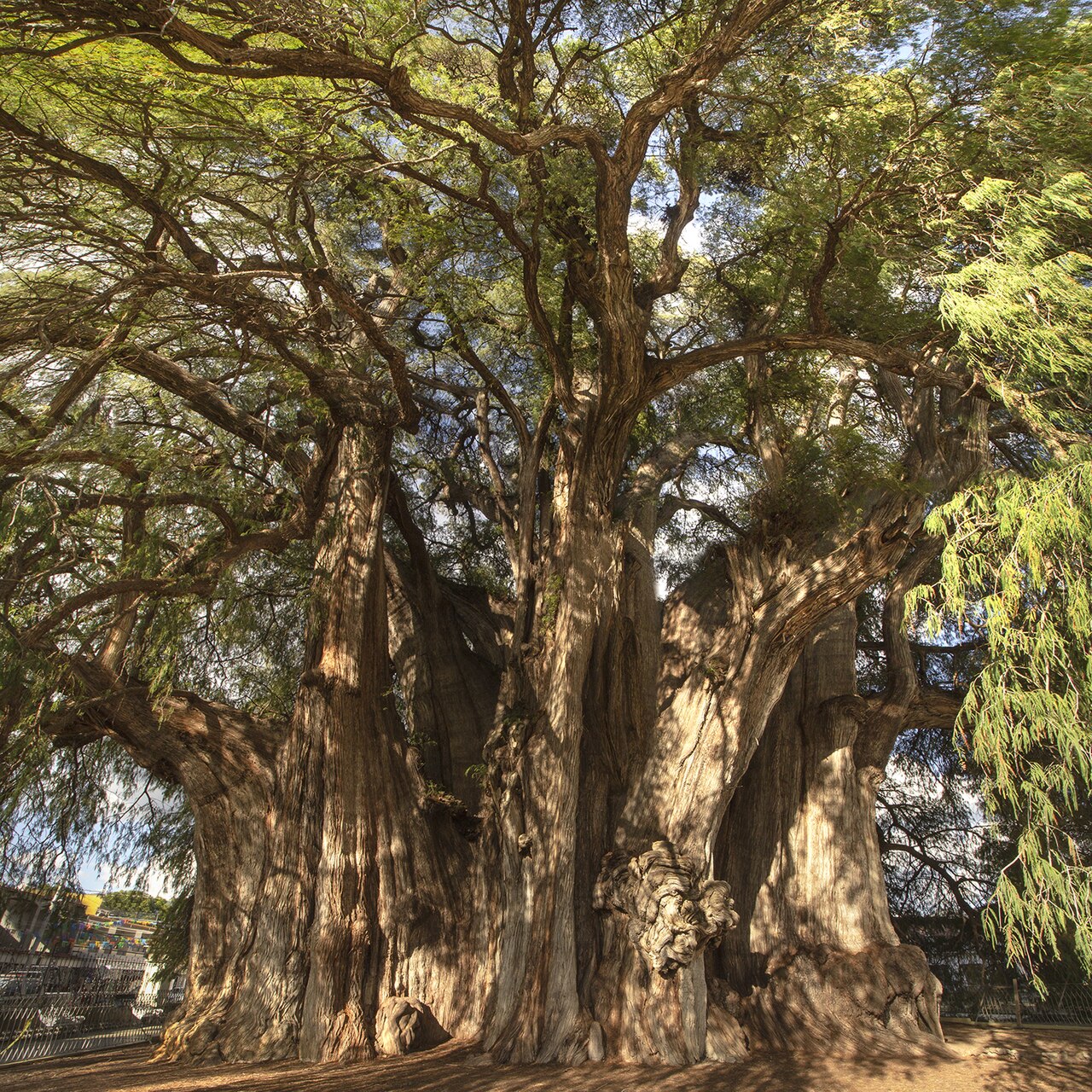
Taxodium mucronatum, the Montezuma Cypress — also called sabino or ahuehuete — is a massive, long-lived, streamside conifer that is overwhelmingly a tree of Mexico and Central America but reaches the United States in a narrow strip of far south Texas along the Rio Grande. Closely related to bald cypress (Taxodium distichum), it shares that species’ love of wet feet and swollen, buttressed trunks, but it is more evergreen, more heat-tolerant, and capable of growing into some of the most massive tree trunks on Earth — the Árbol del Tule in Oaxaca, a Montezuma cypress, has the stoutest trunk of any tree species known.
Botanists disagree about exactly how distinct Montezuma cypress is from bald cypress. Some taxonomists have treated the U.S. Rio Grande populations as Taxodium distichum var. mexicanum rather than as full species-level Taxodium mucronatum, reflecting how closely the two intergrade where their ranges meet in Texas and Mexico. USDA PLANTS and most modern floras recognize T. mucronatum as a distinct species, and this page follows that treatment, describing it separately from our Bald Cypress page — but gardeners and naturalists in south Texas should know the two cypresses are closely related, naturally hybridize, and are sometimes difficult to tell apart without mature cones in hand.
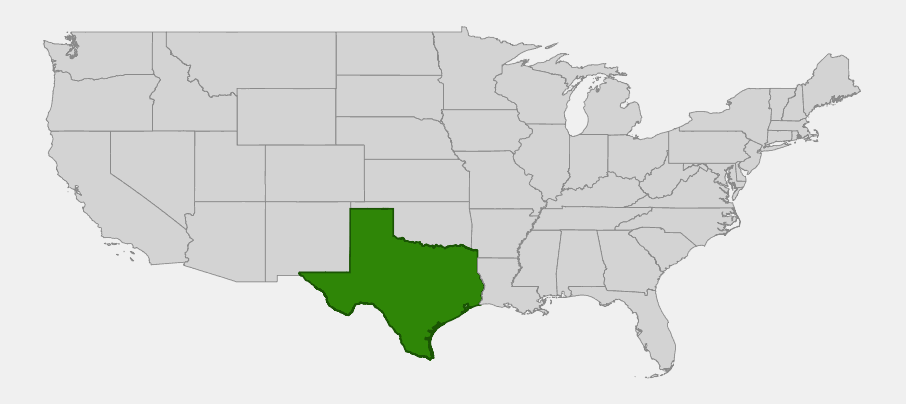
In the United States, Montezuma cypress is known natively only from a handful of sites along the Rio Grande in far south Texas — Starr, Webb and Zapata counties — where it grows as a streamside giant feeding on the river’s permanent water. It is semi-evergreen to evergreen in the warm Rio Grande Valley climate, unlike the strongly deciduous bald cypress further north and east, and it is increasingly planted as a durable, drought-tolerant shade tree once it is established near a reliable water source.
Identification
Montezuma cypress is a large, long-lived conifer, typically 40 to 70 feet tall in Texas but capable of reaching well over 100 feet with trunks of extraordinary girth in old age in its Mexican range — the Árbol del Tule measures over 36 feet in diameter. The crown is broad, rounded and often weeping, with fine, feathery, light green foliage that gives mature trees a soft, almost willow-like silhouette.
Bark & Stems
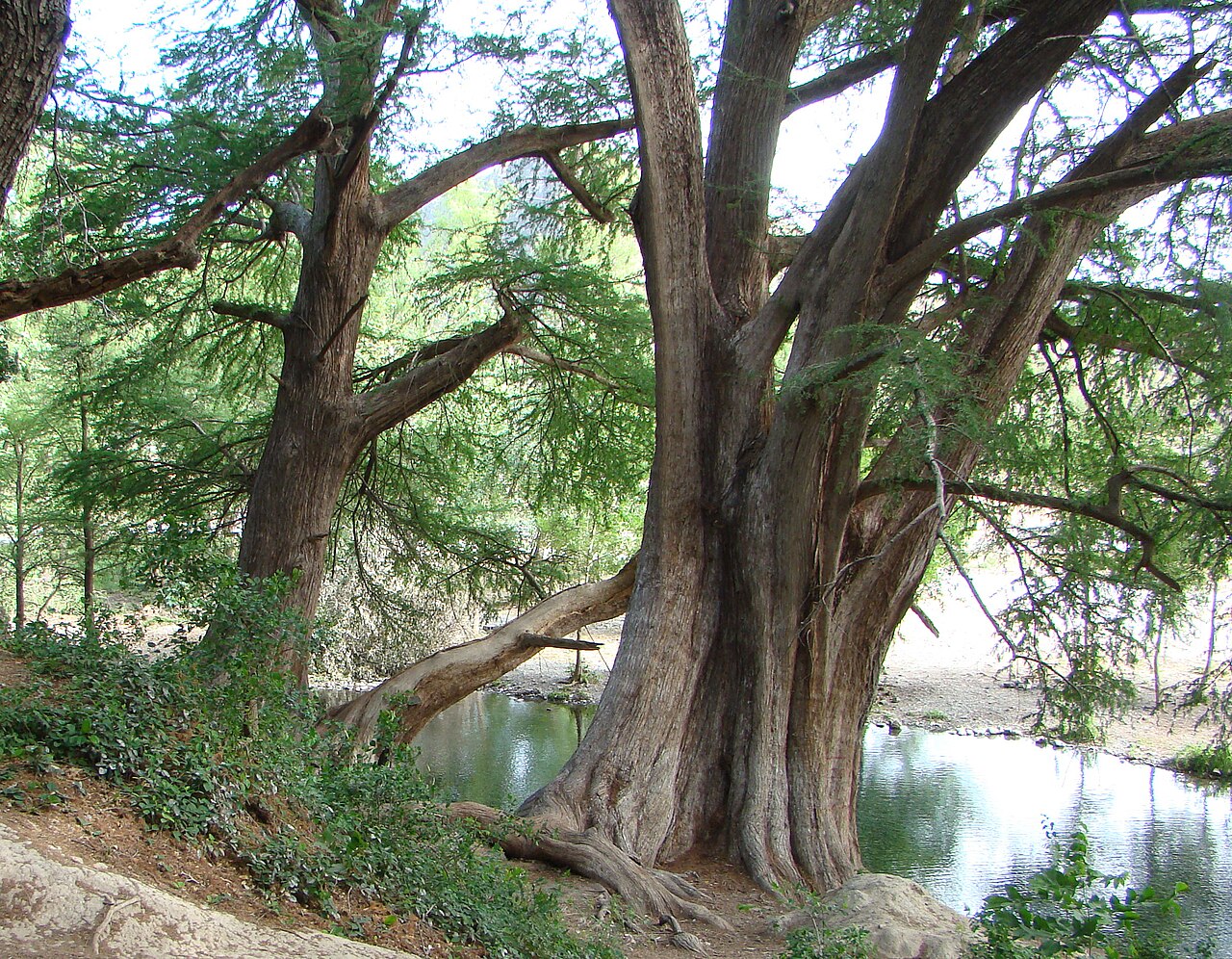
The trunk is deeply fluted and buttressed at the base, especially on trees growing directly in or beside water, developing the same swollen, flared form familiar from bald cypress but often even more pronounced with age. Bark is reddish-brown to gray-brown, fibrous and shallowly ridged, peeling in long vertical strips on older trees. Unlike bald cypress, Montezuma cypress rarely produces prominent “knees” (the woody root projections bald cypress is known for), though some knee-like root swellings can appear in consistently flooded sites.
Leaves
Foliage consists of small, soft, needle-like leaves about ½ inch long, arranged in flat, feathery sprays along slender branchlets. In the warm Rio Grande Valley climate the tree holds its foliage through most or all of winter, turning a tawny bronze before new growth flushes out — a key field difference from bald cypress, which drops its needles completely each fall. In colder parts of its cultivated range further from the coast, it behaves more deciduously.
Flowers
Like other cypresses, Montezuma cypress is monoecious, with small, inconspicuous male and female cones on the same tree. Pollen cones are slender and catkin-like, maturing and releasing pollen in late winter to early spring (roughly February to March), slightly earlier than bald cypress further north.
Fruit & Seeds
Seed cones are small, rounded, woody structures about ¾ to 1 inch across, green maturing to brown, each made up of irregularly shaped, wrinkled scales. Cones open and shed their seeds in autumn, typically around October, and the winged seeds disperse on wind and water — a useful trait for a tree that often grows directly over a river.
Quick Facts
| Scientific Name | Taxodium mucronatum (sometimes treated as T. distichum var. mexicanum) |
| Family | Cupressaceae (Cypress) |
| Plant Type | Semi-evergreen to evergreen conifer tree |
| Mature Height | 40–70 ft in Texas (much larger in Mexico) |
| Mature Spread | 30–60 ft |
| Growth Rate | Fast with reliable water |
| Sun Exposure | Full Sun |
| Water Needs | High; thrives with consistent moisture or standing water |
| Soil Type | Moist alluvial soils; tolerates clay and periodic flooding |
| Soil pH | Wide tolerance, neutral to alkaline |
| Bloom Time | February – March |
| Flower Color | Yellow-brown (inconspicuous cones) |
| Fall Color | Bronze; largely evergreen in warm climates |
| Fruit | Small woody seed cones, ripening in fall |
| Deer Resistant | Yes, generally |
| USDA Hardiness Zones | 8 – 11 |
Native Range
Montezuma cypress is primarily a Mexican and Central American tree, found through the highlands and lowlands of Mexico from the northern border states south through Guatemala, where it is a beloved and culturally significant species — it is Mexico’s national tree. In the United States, its native range is limited to a narrow corridor of far south Texas along the Rio Grande, in Starr, Webb and Zapata counties, where it grows as a riverside giant drawing on the river’s permanent flow.
Across this small U.S. range, Montezuma cypress typically grows directly along the active floodplain of the Rio Grande and its larger tributaries, often forming a fringing gallery of massive trees along the immediate riverbank — a habitat it shares in places with bald cypress further upstream and inland, where the two species’ ranges approach one another and occasional natural hybrids occur.
Because the Rio Grande corridor has been heavily altered by damming, channelization and agricultural diversion over the past century, wild Montezuma cypress populations in Texas are limited and closely tied to remaining stretches of natural river hydrology. The species is increasingly planted well beyond this native range as an ornamental and shade tree across south and central Texas, where it performs well with irrigation but should not be mistaken for a naturally occurring population outside the Rio Grande counties.
📋 Regional plant lists featuring Montezuma Cypress: South and West Texas
Growing & Care Guide
Montezuma cypress is a dramatic, long-lived shade tree for south and central Texas landscapes with reliable irrigation, offering faster growth and a more evergreen habit than bald cypress while sharing that species’ tolerance for heavy, wet soils.
Light
Plant Montezuma cypress in full sun. It develops its best form and densest foliage with at least six hours of direct sun daily and tends toward a thin, open crown in significant shade.
Soil & Water
This is fundamentally a riverside tree and performs best with consistently moist to wet soil; it tolerates periodic flooding and standing water far better than most landscape trees, and unlike many conifers it is not fussy about soil texture, growing in heavy clay as readily as sandy alluvium. It is more drought tolerant than bald cypress once well established with a deep root system, but young trees need regular, generous watering and should not be allowed to dry out for extended periods, especially in Texas heat.
Planting Tips
Plant in spring after the last frost so roots have the growing season to establish before winter. Choose a site near a reliable water source — a pond edge, low spot, or an area that can be irrigated deeply and regularly — and allow generous room for the eventual trunk flare and 30- to 60-foot spread. Container-grown nursery stock establishes more reliably than bare-root trees.
Pruning & Maintenance
Prune in late winter while dormant or semi-dormant to remove dead, crossing or storm-damaged branches, and to establish a strong central leader while the tree is young. Established trees need little regular maintenance beyond monitoring water needs during drought, since their biggest vulnerability in cultivation is insufficient moisture rather than pests or disease.
Propagation
Propagate from seed collected from mature cones in fall; seeds benefit from a period of cold-moist stratification before spring sowing, and germination is improved by keeping the growing medium consistently moist, mimicking the species’ natural riverside habitat. Cuttings are difficult and seed propagation remains the standard method.
Landscape Uses
Montezuma cypress rewards a site with ample water and room to grow:
- Specimen and shade tree for large properties, parks and campuses with irrigation
- Pond and water feature plantings, where its roots tolerate saturated soil
- Riparian restoration along south Texas rivers and streams within its native range
- Street and avenue tree in warm-climate Texas cities, prized for its evergreen habit
- Erosion control on stabilized riverbanks and floodplain edges
Wildlife & Ecological Value
As a dominant streamside tree, Montezuma cypress anchors riparian wildlife communities on both sides of the border, providing structure, shelter and food along rivers that often have little other tall woody cover.
For Birds
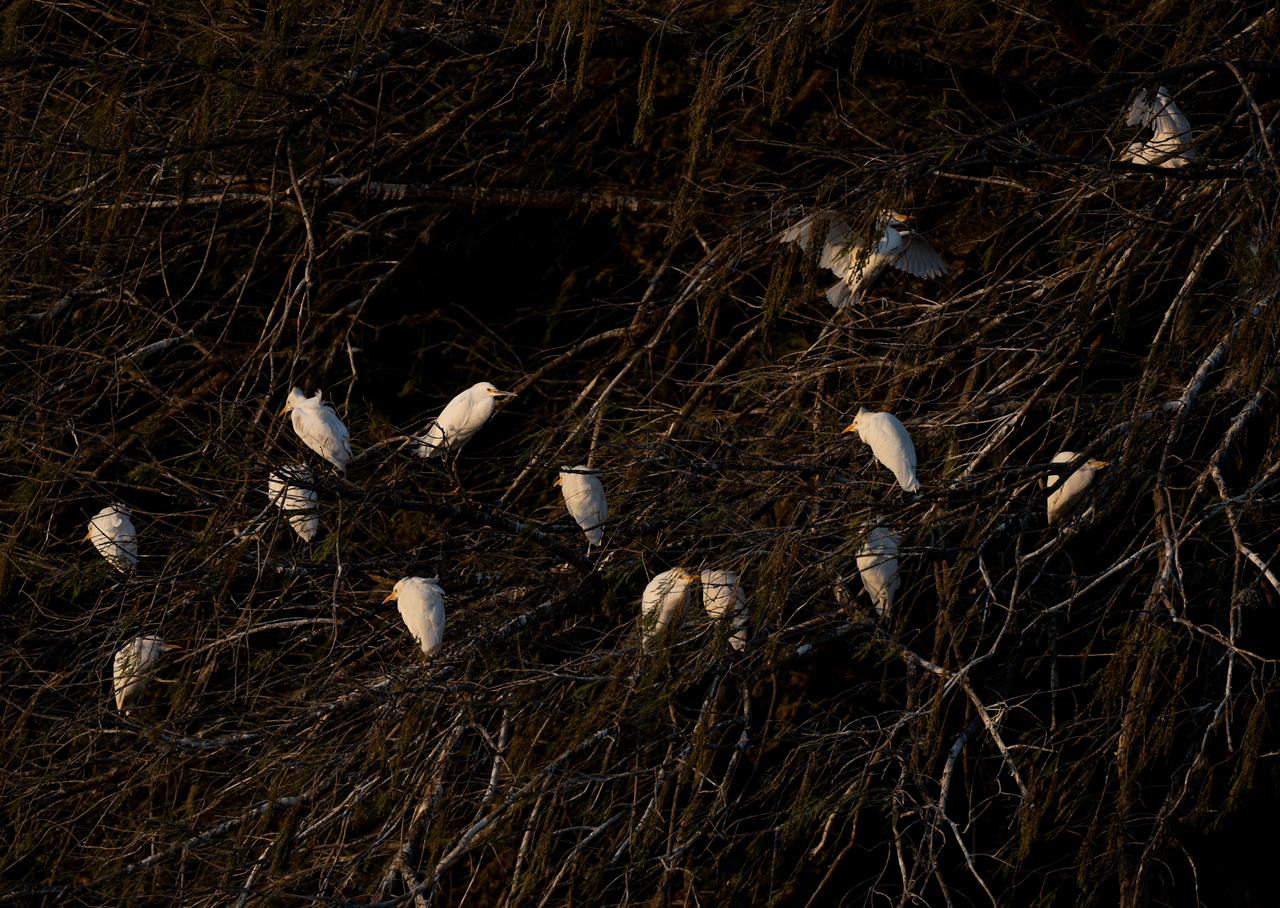
The dense crown provides important roosting and nesting habitat for herons, egrets and other colonial wading birds, which frequently gather in large numbers in riverside cypress trees; the fine foliage also shelters smaller songbirds, while the seed cones provide modest fall and winter forage.
For Mammals
The permanent shade and cover along riverbanks support a range of mammals that depend on riparian corridors for movement and shelter, including raccoons and other small to medium mammals common along the lower Rio Grande; the deep shade also helps keep adjacent water cooler, benefiting aquatic life.
For Pollinators
Like other conifers, Montezuma cypress is wind-pollinated rather than insect-pollinated and offers limited direct forage for pollinators, though the extensive canopy supports a range of insects that in turn feed insectivorous birds along the riparian corridor.
Ecosystem Role
Montezuma cypress is a keystone riparian species where it occurs, stabilizing riverbanks with extensive root systems, shading and cooling the water for fish and aquatic invertebrates, and creating structurally complex gallery forest habitat along rivers that might otherwise have sparse woody cover. Its tolerance for periodic flooding makes it particularly well suited to the naturally fluctuating hydrology of the Rio Grande and similar rivers.
Cultural & Historical Uses
Montezuma cypress holds deep cultural and historical significance in Mexico, where it is recognized as the national tree. Its Nahuatl-derived name, ahuehuete, means roughly “old man of the water,” reflecting both its riverside habitat and its extraordinary longevity — some individual trees are estimated to be well over a thousand years old. The most famous example, the Árbol del Tule in Santa María del Tule, Oaxaca, has the stoutest trunk girth of any tree in the world and remains a major cultural landmark and pilgrimage site.
The species has long been planted around plazas, churches and important civic sites throughout Mexico, a tradition dating to pre-Columbian times and continued through the colonial era, when ahuehuetes were often planted to mark significant settlements — the famous “Noche Triste” tree in Mexico City, under which Hernán Cortés reportedly wept after a military defeat in 1520, was a Montezuma cypress. In Texas, the species has a much shorter documented history, known mainly from botanical surveys of the Rio Grande corridor in the twentieth century, though it has since become a valued, if still relatively uncommon, addition to south Texas horticulture.
In Mexico, the durable, rot-resistant wood has traditionally been used in construction and for dugout canoes in riverside communities, though large old-growth individuals are now generally protected rather than harvested given their ecological and cultural value.
Frequently Asked Questions
Is Montezuma Cypress native to the United States?
Yes, but only in a narrow range: it occurs natively in the U.S. solely along the Rio Grande in Starr, Webb and Zapata counties, Texas. It is primarily a Mexican and Central American species, where it is far more widespread.
What is the difference between Montezuma Cypress and Bald Cypress?
They are closely related and sometimes treated as varieties of the same species, but Montezuma cypress is generally more evergreen, more heat tolerant, rarely forms the knee-like root projections typical of bald cypress, and is native to a warmer, more southerly range. Where their ranges approach each other in Texas, natural hybrids can occur.
Does Montezuma Cypress need to grow in standing water?
Not necessarily — it tolerates standing or periodically flooded soil very well, which is unusual among trees, but it also grows successfully in ordinary moist, well-irrigated landscape soil as long as it is not allowed to dry out for long periods.
How old can a Montezuma Cypress get?
Individual trees can live well over a thousand years. The Árbol del Tule in Oaxaca, Mexico, a single ancient specimen with the widest trunk girth of any tree species on Earth, is estimated at well over a thousand years old.
Can I grow Montezuma Cypress outside of south Texas?
It is hardy roughly in zones 8–11 and is increasingly planted as an ornamental across central and even parts of north Texas with irrigation, though it is not native outside the Rio Grande counties and may show more deciduous, less evergreen behavior in cooler areas.

Looking for a nursery that carries Montezuma Cypress?
Browse our native plant nursery directory: Texas
For its close relative with a much wider range across the eastern U.S., see our page on Bald Cypress. If you’re planning riverside or shade plantings in Texas, check out our guide to shade trees for Austin.