
Monterrey Oak (Quercus polymorpha)
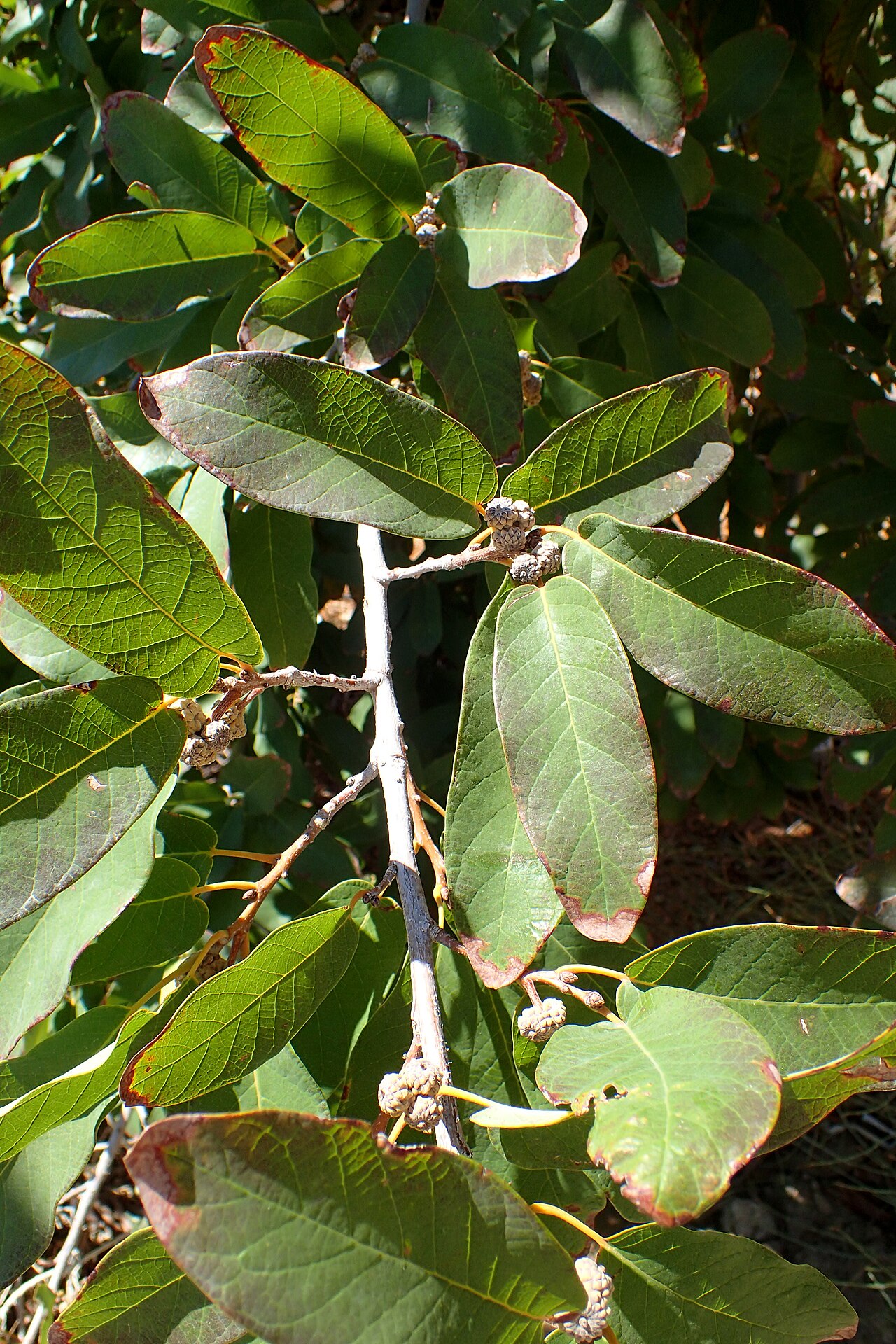
Quercus polymorpha, the Monterrey Oak (also sold as Mexican White Oak or Netleaf White Oak), is a handsome, fast-growing member of the white oak group that is overwhelmingly a Mexican tree but just barely crosses into the United States. Within this country it is known from only one native population, tucked into limestone canyons along the Devils River in Val Verde County, Texas, roughly 30 kilometers north of the Rio Grande. Everywhere else you see it growing in Texas — and it has become a popular street and shade tree from San Antonio to Dallas to El Paso — it has been planted.
The species is semi-evergreen to evergreen across most of its Texas plantings, holding leathery, glossy, netted-vein leaves through winter and dropping them only briefly in late winter as new growth pushes out. Mature trees develop a dense, rounded canopy on a single trunk, reaching 40 to 50 feet with a similar spread under cultivation — considerably larger than the gnarled, canyon-bound individuals that make up its wild Texas population. Because it belongs to the white oak group, Monterrey Oak is also far less susceptible to oak wilt than red oaks, a real advantage in parts of Texas where that disease has devastated live oaks and Spanish oaks.
For gardeners in the southern half of Texas, Monterrey Oak offers a rare combination: a native (if barely so) oak that behaves like a well-mannered shade tree, tolerates heat, limestone soils and drought once established, and keeps its leaves most of the year. It is not a tree for naturalistic restoration outside Val Verde County, since it was never part of the native flora anywhere else — but as a durable, regionally appropriate shade and street tree for Texas landscapes, it has earned its growing popularity.
Identification
Monterrey Oak is a medium-to-large tree, 40 to 60 feet tall in cultivation (the wild Devils River trees are often smaller and more wind-sculpted), with a trunk that can exceed 2 feet in diameter on old specimens. The crown is rounded to oval and dense, and the tree typically holds a strong central leader with wide-angled branching, giving it a tidier silhouette than many native Texas oaks.
Bark & Stems
Young bark is smooth and pale gray, darkening and developing shallow, blocky ridges and furrows with age — similar in texture to bur oak or chinkapin oak bark. Twigs are slender, gray-brown, and hairless to finely hairy, with small clustered buds at the tips typical of the white oak group.
Leaves
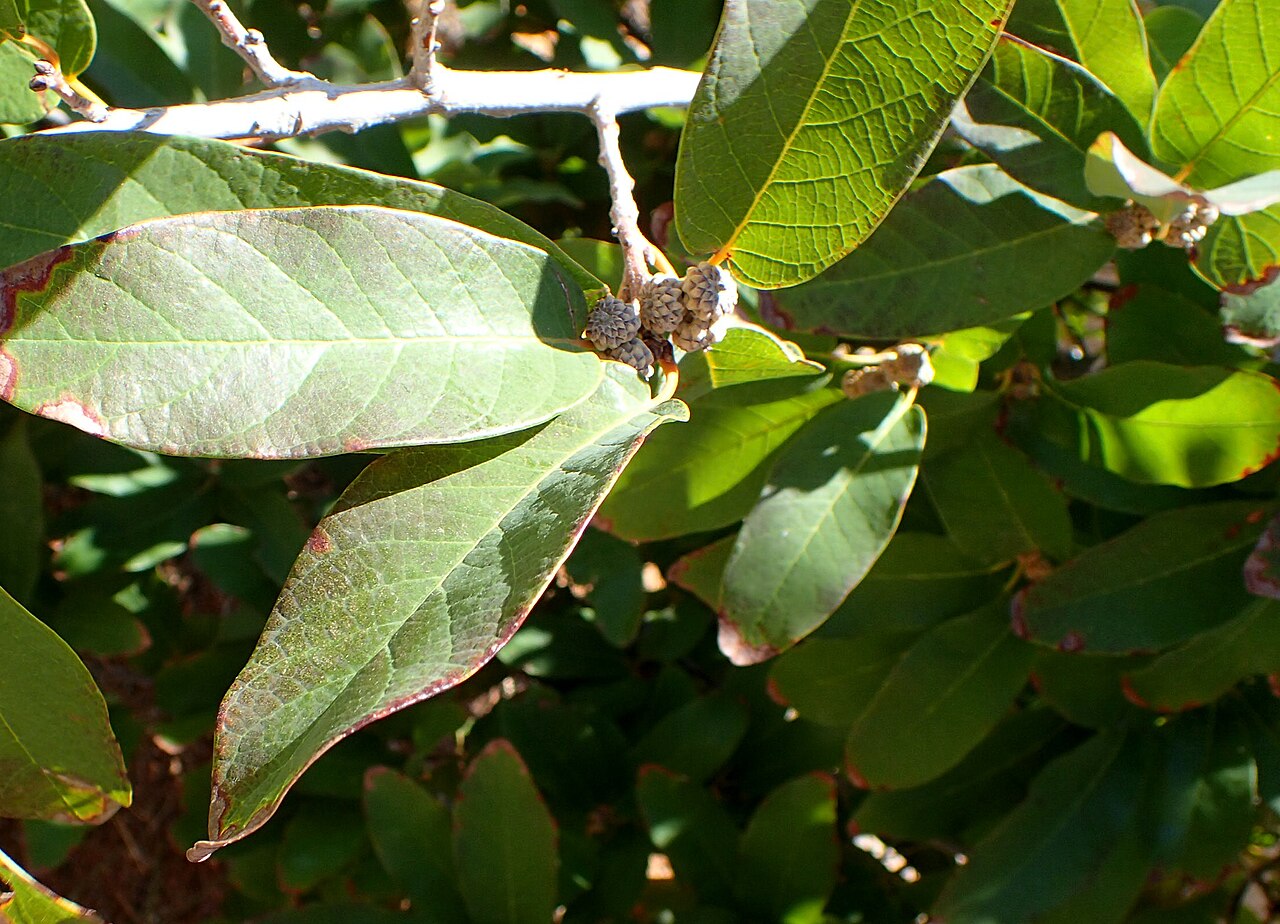
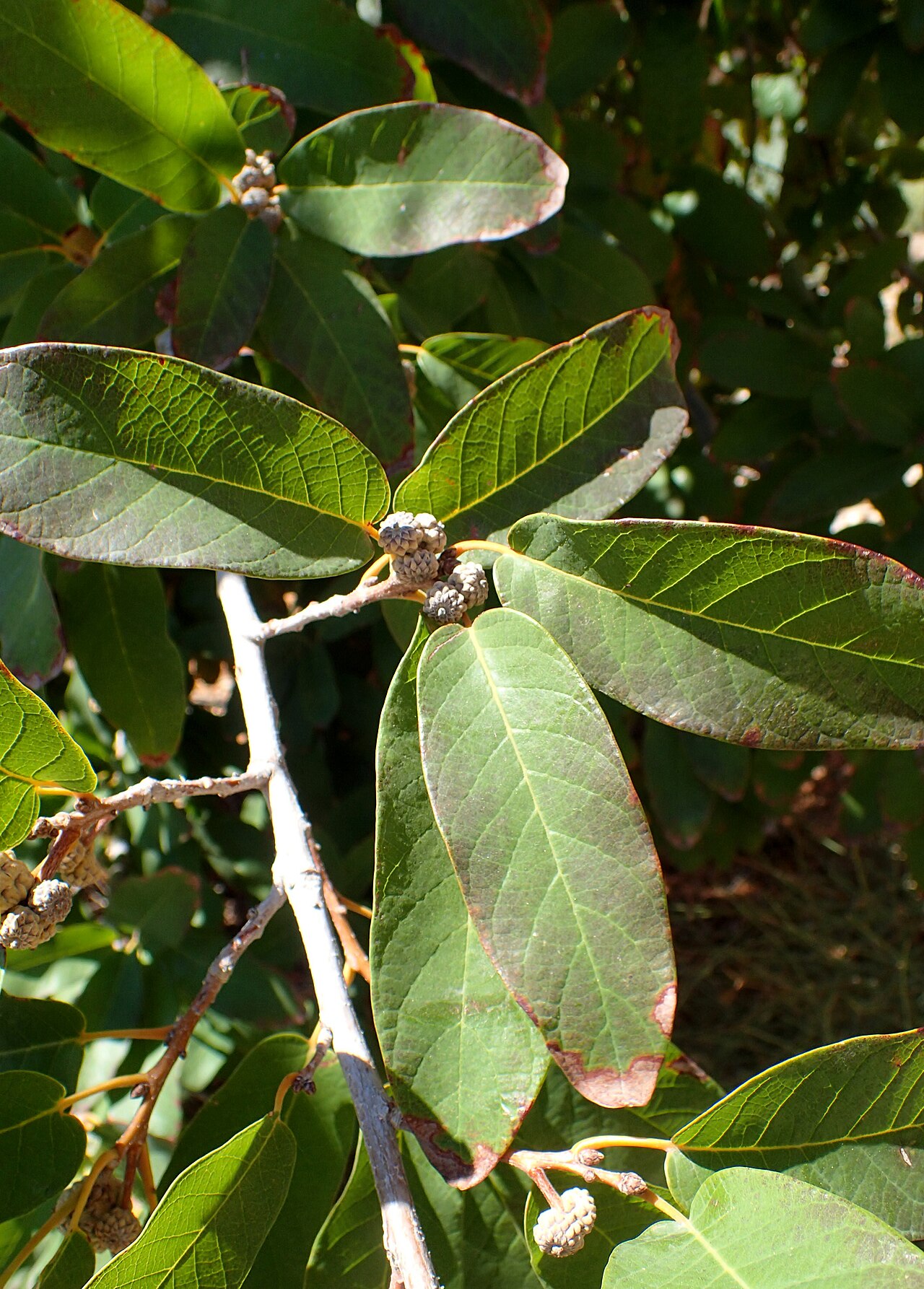
The leaves are what give the tree its scientific name — polymorpha means “many forms” — because leaf shape varies considerably even on the same branch. Most leaves are oblong to elliptic, 3 to 6 inches long, leathery and glossy dark green above with a strongly netted pattern of secondary veins visible on the lower surface (the source of the “netleaf” common name). Margins may be smooth, wavy, or bear a few shallow, rounded teeth near the tip, especially on vigorous young growth or sprouts. Unlike deciduous Texas oaks, Monterrey Oak holds most of its leaves through winter in all but the coldest parts of its planted range, dropping them for only two or three weeks in late winter before new leaves emerge.
Flowers
Like all oaks, Monterrey Oak is wind-pollinated, with inconspicuous male catkins dangling from the previous year’s twigs in early spring, appearing alongside the new leaves. Female flowers are tiny and borne separately on the same tree, maturing into acorns by autumn of the following year.
Fruit & Seeds
Acorns are oval, about ½ to ¾ inch long, borne singly or in small clusters on short stalks, and enclosed for roughly a third of their length in a shallow, bowl-shaped cap with tightly appressed, finely hairy scales — a classic white-oak acorn. Because the species belongs to the white oak group, acorns mature in a single growing season (not two, as in red oaks) and germinate the same fall they drop, with comparatively low tannin content.
Quick Facts
| Scientific Name | Quercus polymorpha |
| Family | Fagaceae (Beech) |
| Plant Type | Semi-evergreen to evergreen tree |
| Mature Height | 40–60 ft |
| Mature Spread | 35–50 ft |
| Growth Rate | Fast for an oak (1.5–2+ ft/year when young) |
| Sun Exposure | Full Sun |
| Water Needs | Low to Moderate once established |
| Soil Type | Adaptable; limestone, clay or sandy loam |
| Soil pH | Neutral to alkaline, tolerates high pH |
| Bloom Time | March – April |
| Flower Color | Yellow-green catkins (inconspicuous) |
| Fall Color | Minimal; mostly evergreen |
| Fruit | Small white-oak acorns, single-season maturation |
| Deer Resistant | Moderate (young trees may be browsed) |
| USDA Hardiness Zones | 7b – 9b |
Native Range
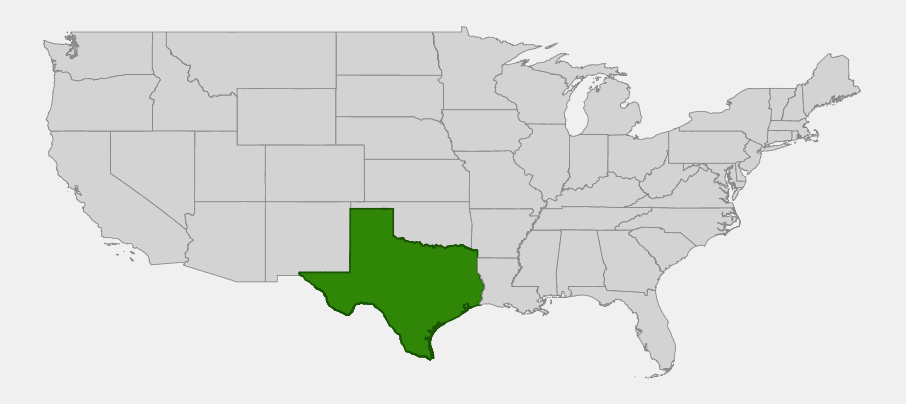
Monterrey Oak is, first and foremost, a Mexican tree. Its natural range runs from the eastern Sierra Madre Oriental south through the highlands of Nuevo León, Tamaulipas and Coahuila, and on through central Mexico into Guatemala and Honduras, where it grows as a common component of oak-pine and tropical montane forests. In the United States, by contrast, it is known from a single wild population in Val Verde County, Texas, growing in limestone canyons along the Devils River roughly 30 kilometers north of the Rio Grande — a disjunct outpost of the much larger Mexican range, likely a relict from a wetter, cooler climatic period.
Because that one Texas population is small, remote and on private and protected land, almost every Monterrey Oak you will ever see growing in a Texas yard, park or parking lot was planted — it has become one of the most widely recommended oaks for Texas street-tree and shade-tree plantings over the past two decades, prized for its tidy evergreen habit, drought tolerance, and resistance to oak wilt. This page describes and maps only the confirmed native Val Verde County population; the tree’s broad popularity as a landscape species across Texas and the Gulf South should not be mistaken for native status in those areas.
In its canyon habitat, Monterrey Oak grows on rocky limestone slopes and along intermittent drainages, often alongside Texas persimmon, cedar elm and various sumacs, in a landscape of thin alkaline soils, intense summer heat and highly seasonal rainfall — conditions that explain why the species performs so well in cultivated limestone soils across central and southern Texas.
📋 Regional plant lists featuring Monterrey Oak: South and West Texas
Growing & Care Guide
Monterrey Oak has become a go-to shade tree across southern and central Texas precisely because it is so easy to grow. Give it full sun, reasonably well-drained soil and a little patience while it establishes a deep taproot, and it rewards you with years of low-maintenance, nearly evergreen shade.
Light
Plant Monterrey Oak in full sun. It will tolerate light shade when young but develops its characteristic dense, rounded canopy best with at least six to eight hours of direct sun a day.
Soil & Water
This is one of the more soil-adaptable oaks available for Texas gardens, tolerating everything from thin, rocky limestone soils to heavier clay, and performing well at neutral to alkaline pH — a real asset in a state where high-pH soils limit many landscape trees. Water newly planted trees deeply and regularly for the first two to three years to encourage a strong root system; established trees are quite drought tolerant and need supplemental water only during extended dry spells. Good drainage matters more than soil texture — avoid sites that stay waterlogged.
Planting Tips
Plant in fall or early spring to give roots time to establish before summer heat arrives. Choose a site with enough room for the tree’s eventual 35- to 50-foot spread, well away from foundations, driveways and utility lines. Stake young trees only if necessary, and remove stakes within the first year. Monterrey Oak is available from Texas-area native and adapted-plant nurseries, usually as container stock.
Pruning & Maintenance
Prune young trees to establish a single dominant leader and well-spaced scaffold branches, then limit later pruning to removing dead, crossing or storm-damaged wood during the dormant season. Because it belongs to the white oak group, Monterrey Oak is considerably less vulnerable to oak wilt than red oak species, but as with any oak, avoid pruning during the warm months when beetles that can spread the disease are most active, and seal any wounds promptly if pruning cannot wait.
Propagation
Monterrey Oak is propagated from acorns, which should be collected fresh in fall and planted promptly since, like other white oaks, they germinate quickly and do not store well. Acorns need no cold stratification. Seedlings grow quickly in their first few years and develop a deep taproot early, so they establish best when planted directly or transplanted from containers while still young.
Landscape Uses
Monterrey Oak’s clean form and nearly evergreen habit make it a versatile choice for Texas landscapes:
- Street and shade tree for residential and commercial plantings across central and southern Texas
- Specimen tree where year-round structure and canopy are wanted
- Replacement for oak-wilt-susceptible red oaks in areas where that disease is active
- Drought-tolerant landscaping on alkaline, limestone-derived soils
- Privacy and screening when planted in groups, thanks to its dense, persistent foliage
Wildlife & Ecological Value
Although its U.S. range is tiny, Monterrey Oak provides the same broad wildlife benefits that make oaks some of the most valuable trees in North America, both in its native Devils River canyons and in the Texas landscapes where it is now widely planted.
For Birds
Acorns provide fall and winter food for jays, woodpeckers and wild turkeys, while the dense, long-held canopy offers excellent nesting cover and shelter from Texas summer heat — a resource that is especially valuable because so few other broadleaf trees in the region hold their leaves through winter.
For Mammals
White-tailed deer, squirrels, and small mammals readily eat the low-tannin, single-season acorns, which are more palatable than the acorns of many red oaks. Javelina in South Texas also forage on fallen acorns where the tree has naturalized near its native range.
For Pollinators
Like other oaks, Monterrey Oak is primarily wind-pollinated rather than insect-pollinated, but its spring catkins and foliage support oak-dependent moth and butterfly caterpillars, which in turn are a critical food source for nesting songbirds.
Ecosystem Role
In its native canyon habitat, Monterrey Oak is part of a specialized Edwards Plateau plant community adapted to thin limestone soils and flash-flood-prone drainages, helping stabilize canyon slopes and providing shade that moderates summer soil temperatures for understory species. As a widely planted landscape tree, it now also contributes urban canopy cover, stormwater interception and heat mitigation across much of central and southern Texas.
Cultural & Historical Uses
Monterrey Oak takes its common name from Monterrey, the major city in the Mexican state of Nuevo León at the heart of its natural range, where it has long been a familiar component of the surrounding oak-pine forests. In Mexico, its wood — like that of other white oaks — has traditionally been valued for fuel, charcoal and general construction timber in rural areas, though it has never been a major commercial species.
In the United States, the species has no deep cultural history, since its native presence is limited to one remote canyon population discovered by botanists only in the late twentieth century. Its modern significance here is horticultural rather than historical: nurseries began propagating and promoting Monterrey Oak heavily starting in the 1990s and 2000s as arborists and municipalities in Texas searched for oak-wilt-resistant, drought-tolerant shade trees, and it has since become a staple of Texas urban forestry.
The Devils River canyon where the native Texas population grows lies within a landscape long significant to regional ranching and conservation efforts, and the river corridor itself is protected in part through the Devils River State Natural Area, helping preserve this disjunct population and the broader canyon ecosystem it belongs to.
Frequently Asked Questions
Is Monterrey Oak really native to the United States?
Yes, but just barely. It has one confirmed wild population in the U.S., growing in limestone canyons along the Devils River in Val Verde County, Texas. Everywhere else it grows in this country, it has been planted.
Is Monterrey Oak the same as Mexican White Oak?
Yes — “Mexican White Oak” and “Netleaf White Oak” are both common trade names for Quercus polymorpha, reflecting its membership in the white oak group and its strongly netted leaf veins.
Does Monterrey Oak lose its leaves in winter?
In most of its Texas planting range it is semi-evergreen to evergreen, holding leaves through winter and shedding them for only a few weeks in late winter before new growth emerges. In colder parts of its hardiness range it behaves more deciduously.
Is Monterrey Oak resistant to oak wilt?
It is considerably less susceptible than red oaks such as live oak and Texas red oak, since it belongs to the white oak group, which generally resists the fungus far better. It is not entirely immune, so normal precautions around pruning timing still apply.
How fast does Monterrey Oak grow?
It is notably fast for an oak, often adding 1.5 to 2 feet or more per year while young under good conditions, which is one of the main reasons it has become popular as a Texas shade tree.

Looking for a nursery that carries Monterrey Oak?
Browse our native plant nursery directory: Texas
For other Texas-native oaks that pair well with Monterrey Oak in the landscape, see our pages on Live Oak, Texas Red Oak, and Cedar Elm. If you’re comparing shade tree options for your area, check out our guides to shade trees for Austin, shade trees for El Paso, and privacy trees for Austin.

