
Moralón (Coccoloba pubescens)
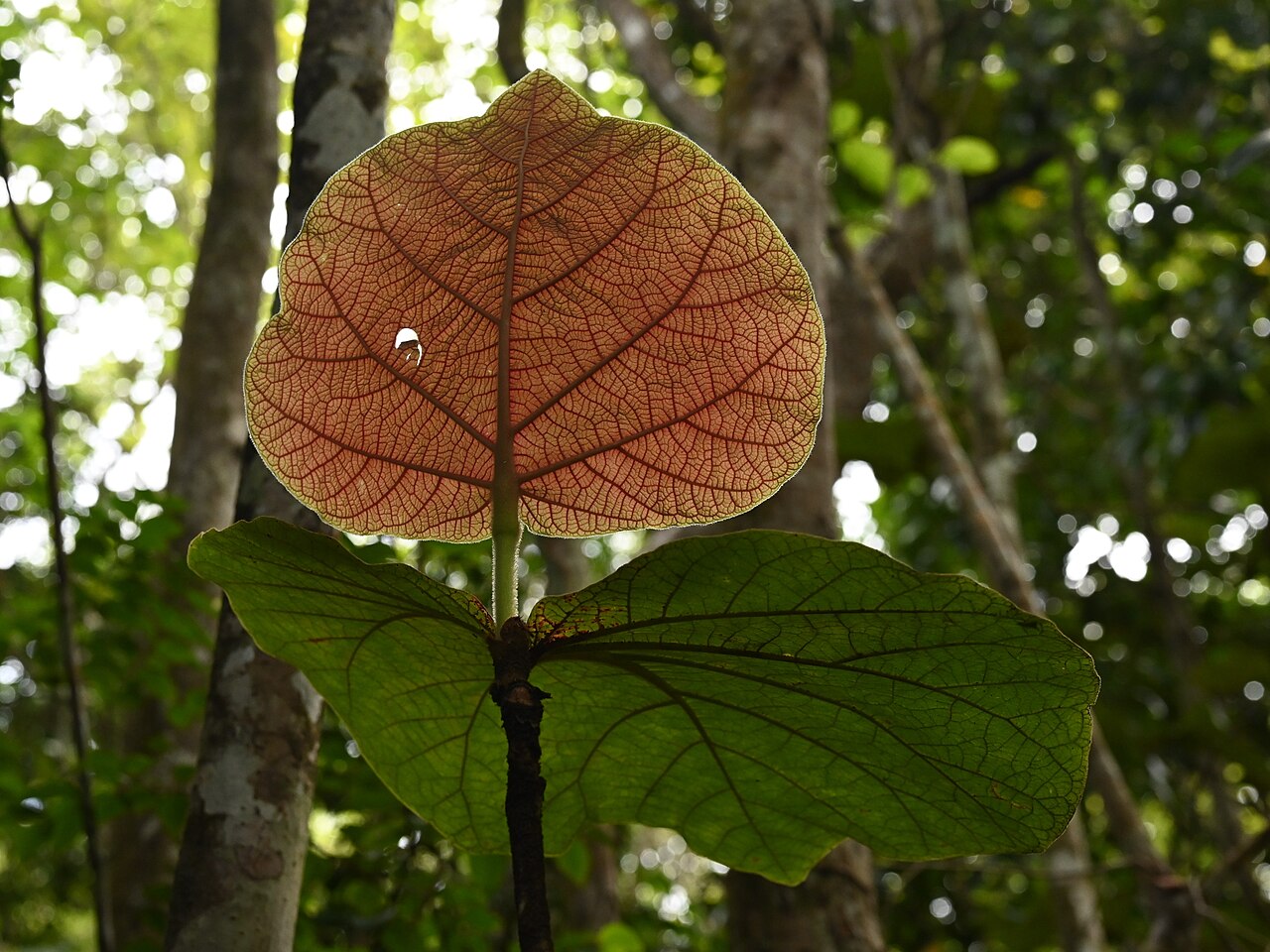
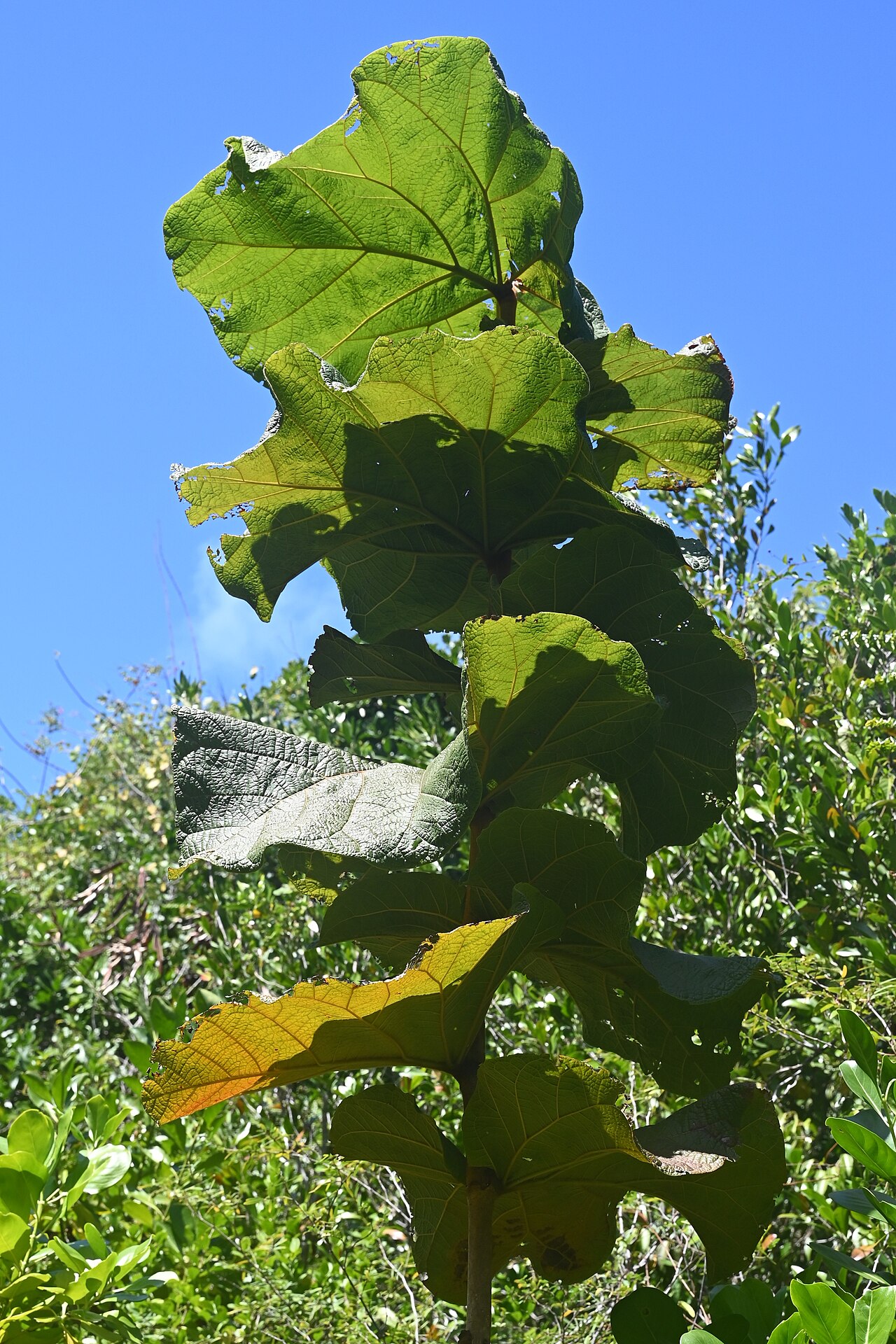
Coccoloba pubescens, known in Puerto Rico as Moralón, is a native tree of the buckwheat family (Polygonaceae) and a close relative of the familiar sea grape. USDA PLANTS calls it grandleaf seagrape, and elsewhere it goes by largeleaf, mountain-grape and Eve’s umbrella. Its round, stiff, finely hairy leaves are its signature: on young trees they can reach about 3 feet (90 cm) across, making moralón one of the most striking foliage trees of the Caribbean.
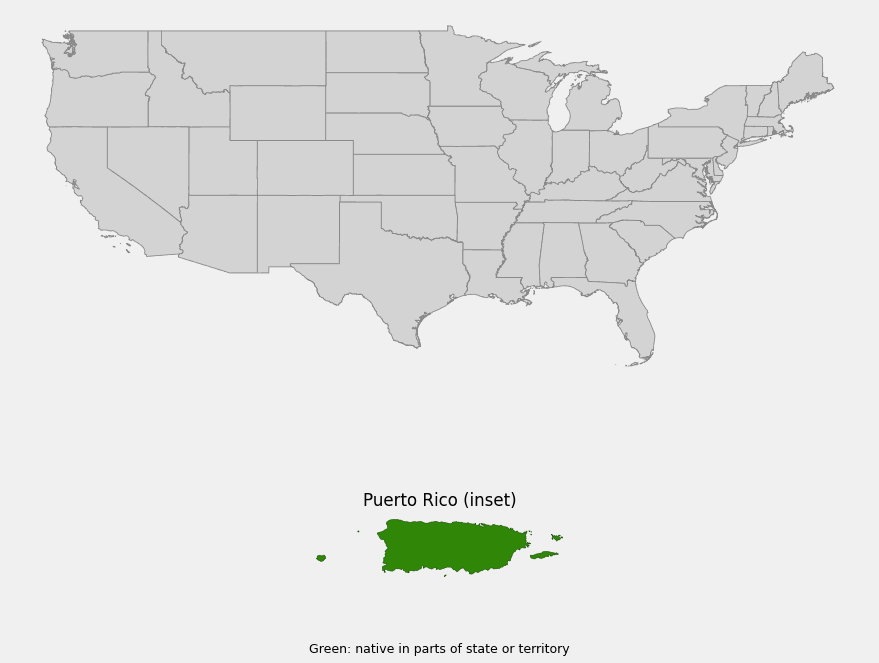
Moralón is endemic to the West Indies, from Hispaniola through Puerto Rico to the Lesser Antilles. USDA PLANTS lists it as native in Puerto Rico, where it grows mainly in the moist northern limestone (karst) region and in the western mountains, especially the Maricao forest. As it matures it becomes a medium-sized tree with an open crown and a heavy, reddish-brown wood that was once prized for beams, columns and railroad ties.
This guide covers how to tell moralón from its look-alikes, where it grows on the island, how to grow it, the birds that eat its sweet fruits, and the history of its wood.
Identification
No other Puerto Rican tree has leaves quite like moralón’s. Look for very large, nearly round leaves that are stiff, dull rather than glossy, covered with fine hairs, and strongly veined beneath. Leaf size shrinks as the tree ages, so young saplings look far more dramatic than old trees.
Form & Bark
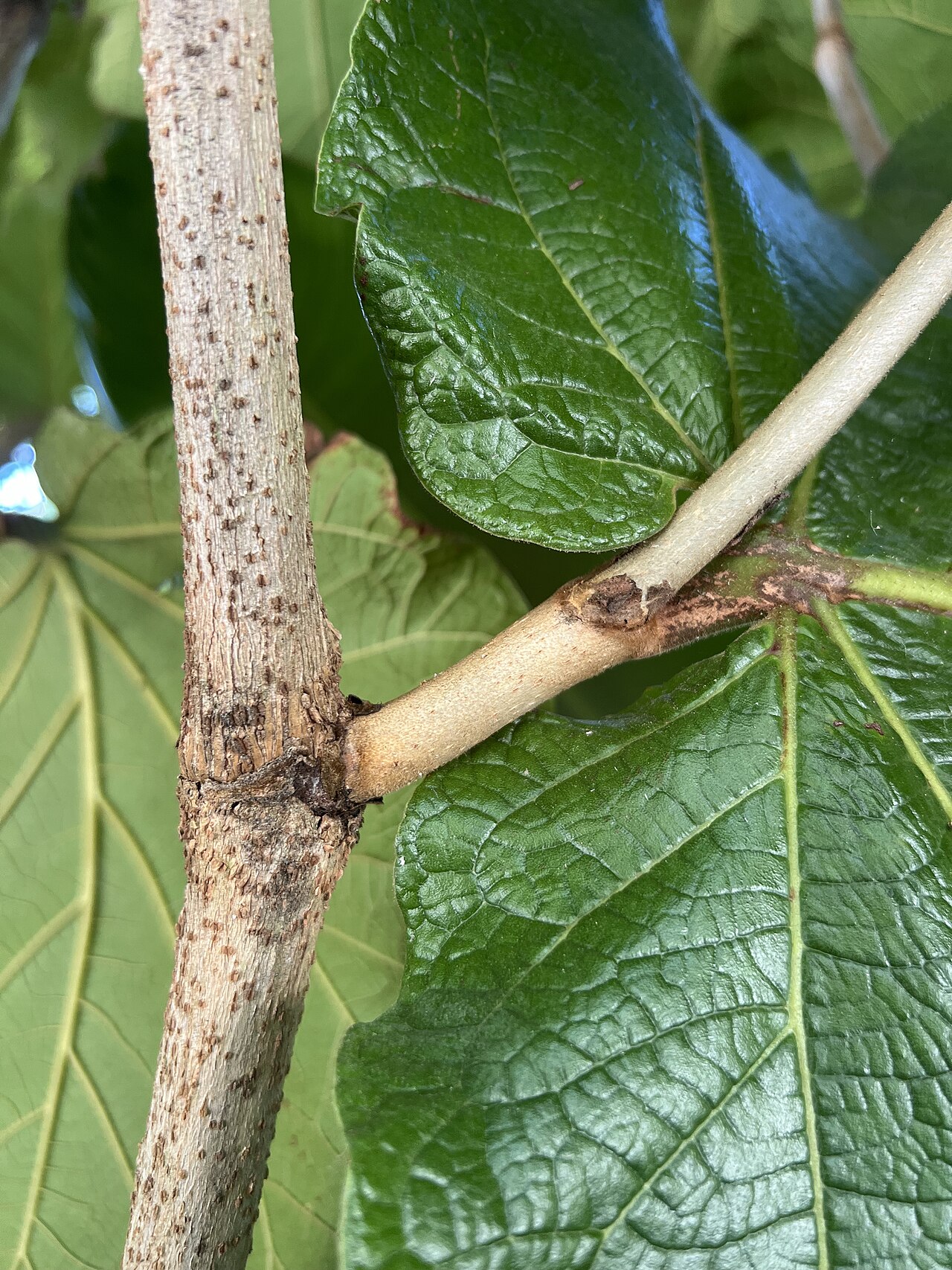
Moralón is a medium-sized tree, recorded to about 70 feet (21 m) in Puerto Rico and up to about 80 feet (24 m) elsewhere, with a trunk 2 feet (60 cm) or more in diameter. The crown is open and sparsely branched. The bark is rough and grayish brown. The tree keeps its leaves in moist areas but can drop them during the dry season in drier places.
Leaves
The leaves are alternate, nearly round and extremely variable in size, from about 1 inch to 18 inches (2.5–45 cm) across and, on vigorous young trees, as much as 3 feet (90 cm). They are stiff, bright to dull green above and paler beneath, with prominent yellowish to reddish veins on the underside and a smooth, wavy edge. The surface is covered with fine hairs, which gives the species its name pubescens (“downy”). Where each leaf stalk meets the stem there is an ocrea, a sheath typical of the buckwheat family.
Flowers
Moralón is dioecious: male and female flowers grow on separate trees. The tiny greenish to greenish-white flowers are crowded along long, upright spikes that grow from the leaf bases; Maderas de Puerto Rico gives lengths up to about 8 inches (20 cm), and other references describe spikes up to 2 feet (60 cm) long. At the Cambalache nursery in Puerto Rico, trees have been recorded flowering in April.
Fruit & Seeds
Female trees bear clusters of small, sweet fruits, each with a single seed, which ripened in July at the Cambalache nursery. Look-alike: moralón is often confused with ortegón (Coccoloba rugosa), another Puerto Rican tree with large leaves. Ortegón leaves are glossy and hairless and its flower spikes are red, while moralón leaves are dull and finely hairy and its spikes are green. Moralón’s trunk can exceed 2 feet across, while ortegón stays under about 1 foot.
Quick Facts
| Scientific Name | Coccoloba pubescens L. |
| Family | Polygonaceae (buckwheat family) |
| Plant Type | Medium-sized tree; evergreen in moist areas, deciduous in dry areas |
| Mature Height | 40–70 ft; up to about 80 ft |
| Mature Spread | Open, sparsely branched crown |
| Growth Rate | Moderate |
| Sun Exposure | Full sun to partial shade |
| Water Needs | Moderate; tolerates a dry season once established |
| Soil Type | Well-drained soils, including limestone (karst) and serpentine |
| Soil pH | Adaptable; grows on alkaline limestone soils |
| Bloom Time | Spring (April at a Puerto Rico nursery) |
| Flower Color | Greenish to greenish-white, on long spikes |
| Fall Color | None |
| Fruit | Small, sweet, one-seeded fruits in clusters on female trees |
| Deer Resistant | Not rated (no deer in Puerto Rico) |
| USDA Hardiness Zones | Frost-free tropics only (about zones 10b–12) |
Native Range
Moralón is found only in the West Indies. Its native range runs from Hispaniola (including Beata Island) through Puerto Rico to the Lesser Antilles, including Antigua, Barbuda, Montserrat, Nevis, Dominica, Martinique, St. Lucia and Barbados. USDA PLANTS lists it as native in Puerto Rico. It has been introduced as an ornamental in Cuba and Florida, where it is grown in botanical gardens and collector landscapes but is not native.
In Puerto Rico, moralón is a tree of low to middle elevations, up to about 3,300 feet (1,000 m). It grows mainly in the humid northern limestone belt, the karst region of haystack hills (mogotes) and sinkholes, and in the mountains of the west, particularly the Maricao State Forest. The Institute for Regional Conservation records it from the Río Abajo, Guajataca, Maricao and Susúa state forests and on Mona Island, on limestone, karst and serpentine soils.
Maricao and Susúa are known for their serpentine soils, which are poor in nutrients and high in metals, while Río Abajo and Guajataca sit in the northern karst. Moralón’s ability to grow on both kinds of rock helps explain why it turns up in such different forests across the western half of the island.
📋 Regional plant lists featuring Moralón: Puerto Rico
Growing & Care Guide
Moralón is grown mostly for its spectacular leaves, which are largest on young, vigorous plants. It suits large gardens, parks and native-plant collections in Puerto Rico and other frost-free areas.
Light
Young plants grow naturally in the forest understory and edges, where their huge leaves catch the light, and do well in partial shade. Older trees take full sun. In the open, give young plants some shelter from strong wind, which can tear the large leaves.
Soil & Water
Plant in well-drained soil. In the wild moralón grows on limestone and on serpentine, so it does not need rich soil, and it tolerates alkaline conditions. Water regularly until established. Established trees cope with a dry season; in drier places they may drop their leaves until rain returns.
Planting Tips
Allow plenty of room: this becomes a sizable tree with a trunk up to 2 feet or more across. Because male and female flowers grow on separate trees, plant several if you want fruit for birds. Site it where the fallen leaves, which are large and slow to break down, will not be a nuisance on paths or patios.
Pruning & Maintenance
Little pruning is needed. Remove dead or damaged branches and, if you prefer the giant juvenile leaves, keep a young plant vigorous with good light and water. Rake fallen leaves from lawns or use them as mulch in shrub beds.
Propagation
Grow from fresh seed collected from ripe fruits on female trees; clean off the pulp and sow promptly. Puerto Rico’s Cambalache nursery has grown the species, recording flowering in April and ripe fruit in July. Buy plants from nurseries that grow native trees from local seed.
Landscape Uses
- Specimen tree: dramatic foliage for parks and large gardens
- Native forest restoration: karst and serpentine sites in western and northern Puerto Rico
- Bird gardens: sweet fruits on female trees attract fruit-eating birds
- Shade: a large, open crown on mature trees
- Woodworking (traditional): heavy wood for turned objects and carving
Wildlife & Ecological Value
Moralón is part of the native tree community of the northern karst and western mountain forests, two of Puerto Rico’s most distinctive forest regions.
For Pollinators
The many tiny flowers on each spike offer nectar and pollen to small insects. Because the species is dioecious, pollen must travel from male to female trees for fruit to form.
For Birds
The sweet fruits are eaten by the ruiseñor (northern mockingbird) and other wild birds, which spread the seeds, according to Maderas de Puerto Rico. Female trees in fruit are a good food source in mid-summer.
For Mammals
Puerto Rico’s native mammals are almost all bats. Fruit-eating bats feed on many native fruits, but specific records for moralón are lacking; its main seed dispersers are birds.
Ecosystem Role
Moralón is one of the canopy and subcanopy trees of the moist limestone forests and the serpentine forests of Maricao and Susúa. Its large leaves create a thick litter layer on the forest floor, and its bird-dispersed seeds help it move between forest patches across the karst.
Cultural & Historical Uses
Carl Linnaeus gave Coccoloba pubescens its name. The genus name comes from Greek words meaning “berry” and “lobe”, referring to the lobed fruits of the sea grapes, and pubescens refers to the fine hairs on the leaves. Jacquin later described the same plant as Coccoloba grandifolia, a name that is now a synonym.
Moralón wood has a pale sapwood that is easy to tell from the reddish-brown heartwood. It is very heavy, fine-textured and takes a high polish. Until the early twentieth century it was used in Puerto Rico for furniture and heavy construction, including columns, beams and railroad ties. Today it is used for turned articles and carvings, and the wood that artisans obtain comes mostly from old buildings being demolished or restored.
The common names moralón and ortegón are often used interchangeably in Puerto Rico, though they belong to different species. Moralón’s giant leaves have also earned it fanciful English names such as Eve’s umbrella.
Frequently Asked Questions
Is moralón native to Puerto Rico?
Yes. USDA PLANTS lists Coccoloba pubescens as native in Puerto Rico, and it is endemic to the West Indies, from Hispaniola to the Lesser Antilles. It is introduced, not native, in Florida and Cuba.
How big do moralón leaves get?
Leaf size varies enormously. Leaves on mature trees may be only a few inches across, while young, vigorous trees can produce leaves about 3 feet (90 cm) wide.
How is moralón different from sea grape?
Both are Coccoloba species with round leaves. Sea grape (Coccoloba uvifera) is a salt-tolerant beach plant with smooth, leathery leaves and hanging clusters of purple fruit. Moralón has much larger, finely hairy leaves and grows inland, in limestone and mountain forests.
Does moralón need a partner tree to fruit?
Yes. Moralón is dioecious, so only female trees bear fruit, and a male tree must be nearby to pollinate them.
What other native Coccoloba trees can I grow?
Pigeon plum (Coccoloba diversifolia) is a smaller, tidier native tree with dark fruits loved by birds, and sea grape is ideal near the coast. For another large native timber tree of Puerto Rico’s forests, see capá prieto (Cordia alliodora).

Looking for a nursery that carries Moralón?
Our nursery directory does not yet include Puerto Rico. Browse the native plant nursery directory by state: Alabama–Arkansas · California · Colorado–Hawaii · Idaho–Kansas · Kentucky–Montana · Nebraska–Oklahoma · Oregon · Pennsylvania–Virginia · Washington · West Virginia–Wyoming