Mountain Sage (Salvia regla)
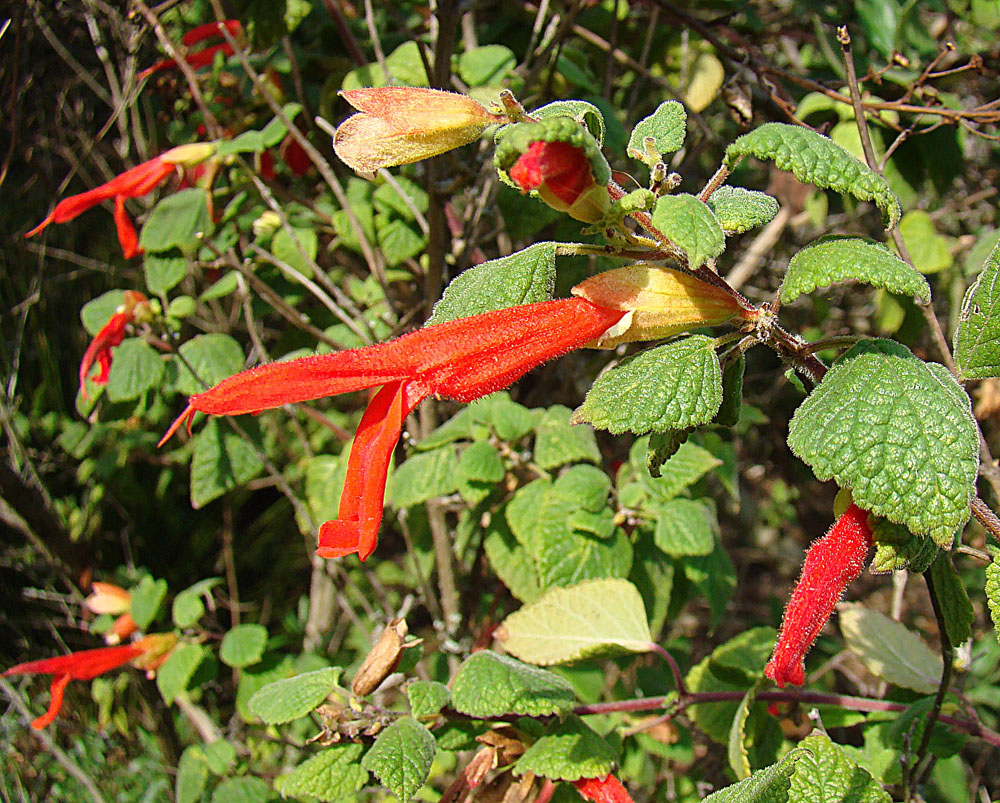
Salvia regla, commonly called Mountain Sage, is a woody, deciduous subshrub in the mint family (Lamiaceae) native to a small corner of far West Texas and the mountains of northern Mexico. In the United States it is found only in the Chisos and Davis Mountains of the Trans-Pecos region, where it grows on rocky, wooded slopes and in canyon bottoms at moderate elevation. The plant forms an open, airy mound of slender branches lined with rounded, crinkled leaves, and in late summer and fall it erupts with clusters of brilliant orange-red, tubular flowers that are among the showiest of any native Texas salvia.
Mountain Sage is best known as a late-season hummingbird magnet. It flowers from late August into October — later than most other Texas salvias — right when migrating Rufous and Black-chinned Hummingbirds are moving through the Trans-Pecos on their way south, making the plant an important late-fall fuel stop. The leaves are pleasantly fragrant when crushed, with a resinous, sage-like scent, and the whole plant has a loose, naturalistic habit that suits dry, rocky gardens.
Though its wild range is tiny, Mountain Sage has become a popular xeriscape and hummingbird-garden plant well beyond the Chisos and Davis Mountains, grown as far as Austin and even outside Texas. It is not native to those wider areas — gardeners there are growing it as an adapted, drought-tolerant ornamental rather than a local native — but within the Trans-Pecos it remains a true native of the sky-island mountain ranges.
Identification
Mountain Sage is a multi-stemmed subshrub or small shrub, usually 3 to 6 feet tall and somewhat wider, with an open, arching growth habit rather than a dense, rounded form. In its native canyon habitat it can reach the larger end of that range; in cultivation it is often more compact.
Stems & Leaves
Young stems are square in cross-section, as in all mints, and covered in fine hairs; older growth becomes woody and brown at the base. The leaves are opposite, broadly ovate to triangular, 1 to 3 inches long, with a coarsely toothed margin and a deeply wrinkled, sandpapery upper surface. Leaf color is a soft gray-green, and the foliage releases a resinous, aromatic scent when brushed or crushed. The plant is deciduous, dropping its leaves with the first hard freeze.
Flowers
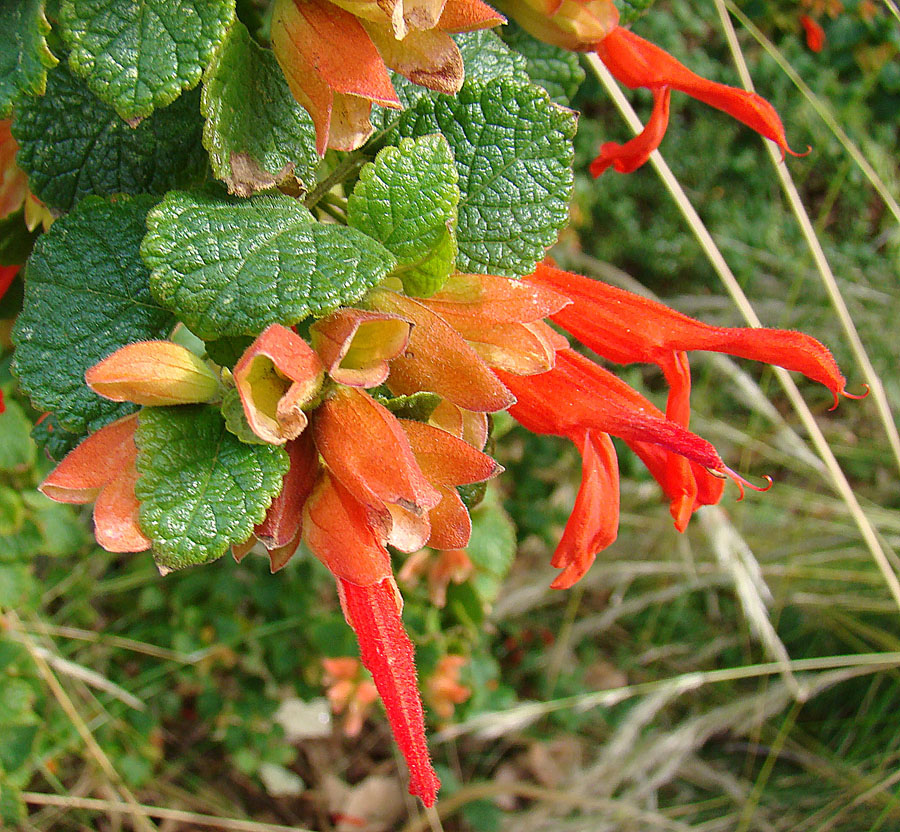
Flowers appear in whorled spikes at the branch tips, each individual bloom a narrow, curved tube 1.5 to 2 inches long in an intense orange-red to scarlet. The calyx (the cup behind the petals) is often tinged apricot or salmon, adding a second color note to the flower cluster. Bloom is concentrated from late summer through fall, typically late August into October, later than most Texas sages, which makes it valuable for extending nectar supply into the fall hummingbird migration.
Fruit & Seeds
Like other salvias, Mountain Sage produces small, dry nutlets contained within the persistent calyx after the flower fades. The seed is not a significant ornamental or wildlife feature; the plant is grown almost entirely for its flowers and foliage.
Quick Facts
| Scientific Name | Salvia regla |
| Family | Lamiaceae (Mint) |
| Plant Type | Deciduous subshrub |
| Mature Height | 3–6 ft |
| Mature Spread | 3–5 ft |
| Growth Rate | Moderate to fast |
| Sun Exposure | Part Shade to Full Sun |
| Water Needs | Low once established |
| Soil Type | Rocky, well-drained; limestone or caliche tolerant |
| Soil pH | Neutral to alkaline |
| Bloom Time | Late August – October |
| Flower Color | Orange-red to scarlet |
| Fall Color | Foliage drops green to tan after frost |
| Fruit | Small dry nutlets, not ornamentally significant |
| Deer Resistant | Yes (aromatic foliage generally avoided) |
| USDA Hardiness Zones | 8–10 |
Native Range
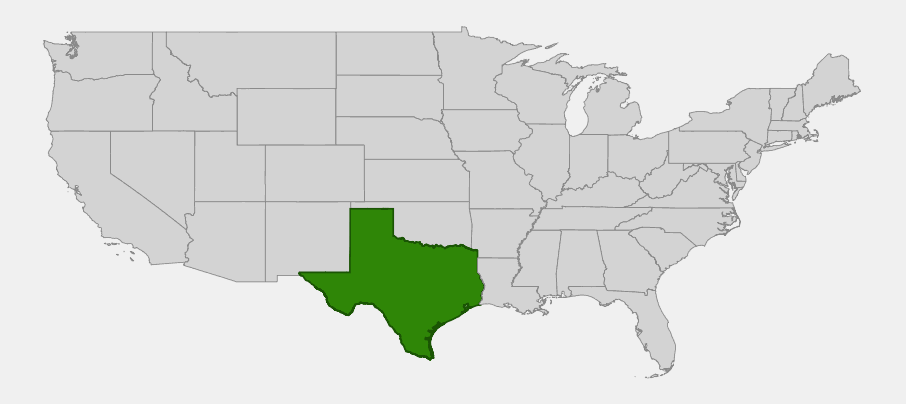
In the United States, Mountain Sage is known only from the Trans-Pecos region of far West Texas, specifically the Chisos Mountains of Big Bend National Park and the Davis Mountains of Jeff Davis and Presidio Counties. It grows on rocky, often north-facing slopes and in shaded canyon bottoms in oak-juniper woodland and pine-oak forest, typically at elevations above 4,500 feet where cooler, moister mountain conditions prevail. Its much larger range continues south into the Sierra Madre of Mexico, through Coahuila and Chihuahua and on into Durango and Oaxaca.
Within its native mountains, Mountain Sage grows alongside Gray Oak, Emory Oak, Alligator Juniper, and Texas Madrone, usually tucked into the partial shade of canyon walls or beneath a broken tree canopy. These sky-island ranges act as cool, moist refuges surrounded by much drier desert basins, and Mountain Sage is one of a distinctive group of plants restricted to that narrow habitat band.
Because of its striking flowers and drought tolerance, Mountain Sage is now planted well outside its native range, including in Central Texas gardens around Austin and San Antonio and in xeriscape plantings elsewhere in the Southwest. It is not native to those areas, and gardeners there should think of it as a well-adapted regional ornamental rather than a local native plant.
📋 Regional plant lists featuring Mountain Sage: South and West Texas
Growing & Care Guide
Outside its tiny native range, Mountain Sage has earned a strong following among Texas gardeners for being tough, fast to establish, and exceptionally attractive to hummingbirds through the fall. It asks for very little once it is in the ground.
Light
Mountain Sage flowers best with at least a half day of sun, though in its native canyon habitat it often grows in dappled or partial shade. In hot, low-elevation gardens, afternoon shade helps keep the foliage from scorching and reduces water needs; in cooler or higher-elevation sites, full sun produces a denser, more floriferous plant.
Soil & Water
This plant wants sharply drained, rocky or gravelly soil and is very much at home on limestone or caliche. It is drought tolerant once established, needing supplemental water only during extended dry spells or in its first year while roots establish. Soggy or poorly drained soil, especially in winter, is the most common cause of failure.
Planting Tips
Set out container plants in spring after the last frost so roots have a full growing season to establish before winter. Choose a site with excellent drainage — a slope, raised bed, or rock garden works well. Space plants 3 to 4 feet apart to allow for their open, spreading habit. A light mulch of gravel rather than organic material better matches the plant’s native rocky-slope conditions.
Pruning & Maintenance
Cut the woody stems back by about a third to a half in late winter or early spring, after the last hard freeze, to encourage bushy new growth and more flowers. Because the plant blooms on new wood, this timing does not sacrifice flowers. Deadheading is not necessary. In colder gardens near the edge of its hardiness range, the top growth may freeze back; it typically resprouts from the base if the roots are protected with mulch.
Landscape Uses
Mountain Sage fits naturally into dry, sunny plantings:
- Hummingbird gardens — one of the best late-season nectar sources for fall migrants
- Xeriscape and rock gardens on slopes or raised beds with sharp drainage
- Mixed borders paired with other Trans-Pecos natives such as Beargrass and agaves
- Screening or informal hedge when planted in groups 3 to 4 feet apart
- Containers on a sunny patio, where its fall color draws hummingbirds up close
Wildlife & Ecological Value
Mountain Sage punches well above its small native range in ecological value, especially for one critical group of pollinators.
For Pollinators
Hummingbirds are the primary pollinators and the main reason gardeners grow this plant. Its long, tubular, orange-red flowers are a classic hummingbird-pollination shape, and the late bloom period — running into October — coincides with peak fall hummingbird migration through the Trans-Pecos, making it an important refueling stop for Rufous, Black-chinned, and other migrating species. Native bees and butterflies also visit the flowers, though less frequently than hummingbirds.
For Birds
Beyond hummingbirds, the dense branching structure provides cover for small songbirds, and the seed heads offer minor forage for seed-eating birds in winter.
Ecosystem Role
In its native sky-island canyons, Mountain Sage is part of a narrow band of moisture-loving understory plants that depend on the cooler microclimate created by elevation and canyon shading. Its late, abundant bloom extends the nectar season in these mountain habitats well past the point when most desert and grassland wildflowers have finished for the year, supporting pollinators during a time of otherwise scarce resources.
Cultural & Historical Uses
Mountain Sage has no major documented history of use by Indigenous peoples of the Trans-Pecos region, likely reflecting its very restricted and remote native distribution in high, hard-to-reach canyon habitat. Its historical significance is primarily botanical: it was described to science from specimens collected in the mountains of Mexico, and the Chisos Mountains population was recognized later as part of the same species’ range extending north into Texas.
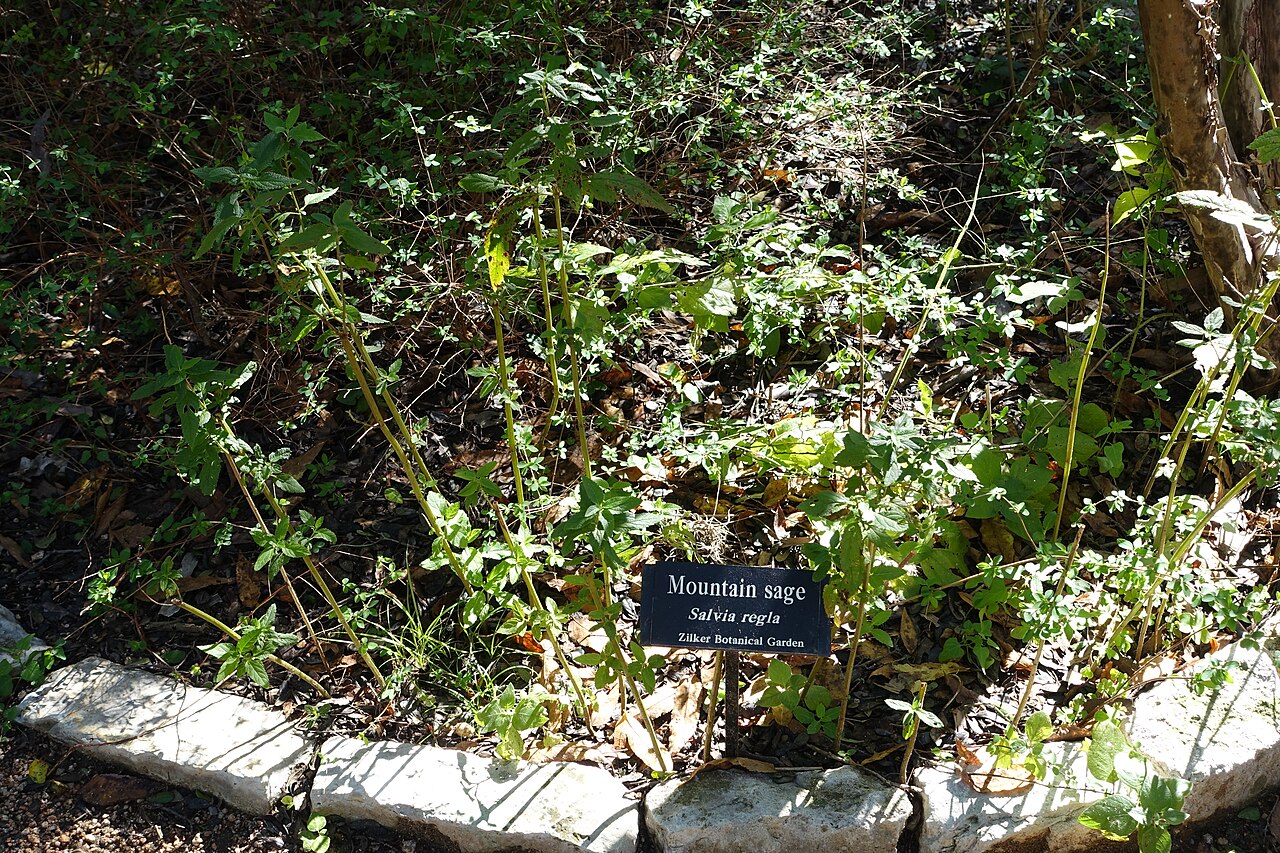
In more recent decades, the plant’s horticultural reputation has grown considerably. Texas native-plant nurseries and botanical gardens — including plantings at Zilker Botanical Garden in Austin and the Chihuahuan Desert Gardens in Fort Davis — helped popularize Mountain Sage as a garden plant well beyond its native canyons, prized specifically for its unusually late bloom time and hummingbird appeal.
Today Mountain Sage is grown primarily as an ornamental and wildlife plant rather than for any traditional practical use, valued by Texas Hill Country and Trans-Pecos gardeners as a low-water way to support fall hummingbird migration.
Frequently Asked Questions
Is Mountain Sage native to all of Texas?
No. In the wild it is native only to the Chisos and Davis Mountains of far West Texas. It is widely planted elsewhere in Texas, including Central Texas, as an adapted ornamental, but it is not native outside the Trans-Pecos.
Why does Mountain Sage bloom so late?
Its late-summer to fall bloom period is a natural trait of the species, and it happens to line up well with fall hummingbird migration through Texas, which is part of why gardeners value it so highly — most other salvias have already finished blooming by the time Mountain Sage gets started.
How cold-hardy is Mountain Sage?
It is reliably hardy in USDA zones 8 through 10 and tolerates occasional light freezes. In colder winters the top growth can die back, but established plants typically resprout from the base in spring if the roots are protected with mulch.
Does Mountain Sage need a lot of water?
No. Once established, it is quite drought tolerant and prefers to dry out between waterings. It performs best in rocky, fast-draining soil and can suffer from root rot if kept consistently wet, especially in winter.
Will Mountain Sage attract hummingbirds?
Yes, reliably. Its tubular orange-red flowers are shaped specifically for hummingbird pollination, and its late bloom time makes it one of the best fall nectar sources for migrating hummingbirds in Texas gardens.

Looking for a nursery that carries Mountain Sage?
Browse our native plant nursery directory: Texas