Giant Rain Lily (Zephyranthes drummondii)
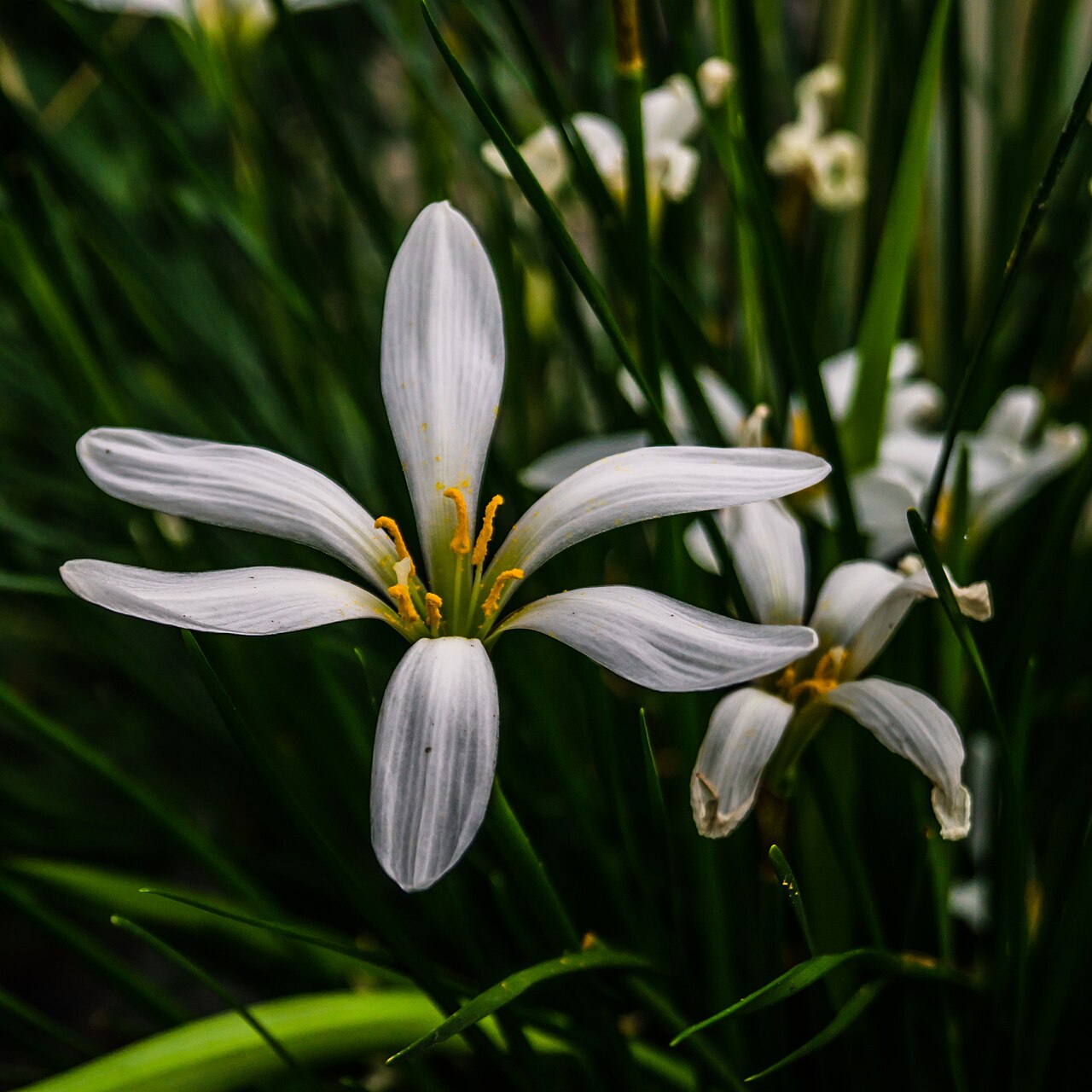
Zephyranthes drummondii (long known in older references as Cooperia pedunculata), commonly called Giant Rain Lily or prairie rain-lily, is a bulbous perennial native to the prairies, rocky glades, and open woodlands of Central and South Texas, with populations extending into New Mexico and Mexico. It produces the largest flowers of the Texas rain-lilies — big, fragrant, funnel-shaped white blooms that seem to appear out of nowhere on bare ground within a day or two of a good rain, especially in spring.
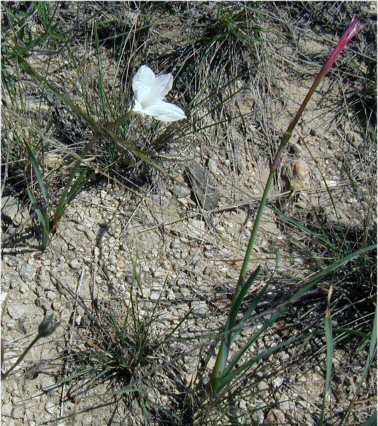
The rest of the year, Giant Rain Lily is easy to overlook: a low tuft of narrow, grass-like leaves rising from an underground bulb, blending in with lawn grass or prairie turf. Then a warm rain triggers a flush of leafless flower stalks, each topped by a single large white flower that opens in late afternoon or evening and often takes on a soft pink blush as it ages over the next day or two.
Because the bulbs tolerate mowing, drought, and heavy clay or rocky caliche soils, Giant Rain Lily has long been a favorite of Texas Hill Country and South Texas gardeners for naturalizing in lawns, meadows, and rock gardens, where its surprise blooms are a welcome signal after rain.
Identification
Giant Rain Lily grows from an underground bulb, typically 1 to 2 inches across, that persists year-round even though the above-ground foliage can die back in winter or during extended drought.
Leaves
The leaves are narrow, flat, grass-like, ¼ to ½ inch wide and up to a foot long, emerging in a low tuft directly from the bulb. They are a deep glossy green and can be mistaken for coarse turf grass when not in flower, which is part of why the plant naturalizes so well in lawns.
Flowers
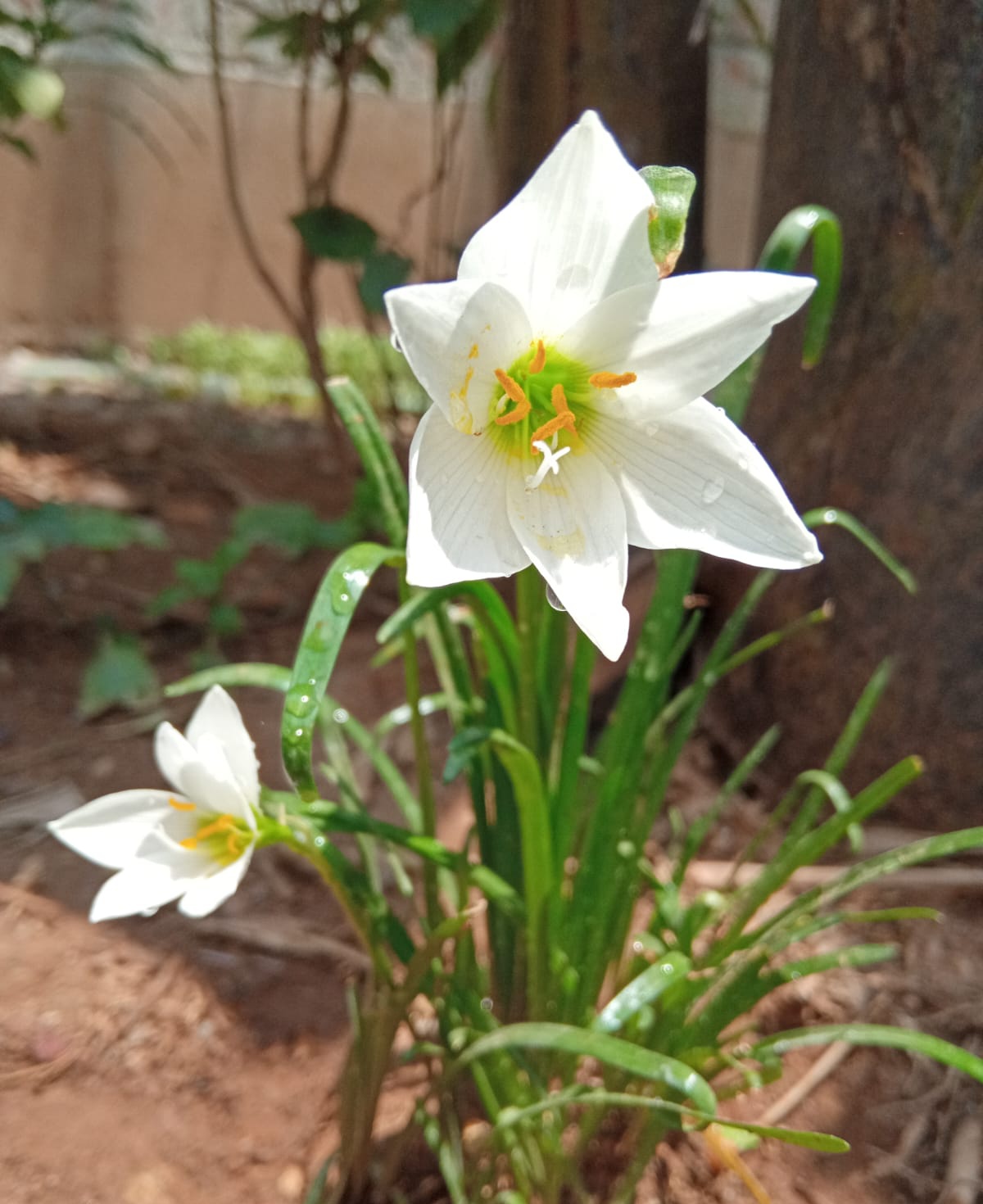
The flowers are the plant’s standout feature: large for a rain-lily, 2 to 4 inches across, funnel- to star-shaped with six white petal-like tepals, each often showing faint pink or maroon striping on the outside that intensifies as the bloom ages. Flowers are borne singly atop a leafless, hollow stalk 6 to 12 inches tall and open in late afternoon or evening, lasting a day or two before fading to pink and withering. Bloom is triggered by rainfall following a dry spell, most heavily in spring but possible into summer and fall after any substantial rain.
Fruit & Seeds
After flowering, a three-chambered seed capsule develops at the stalk’s tip, splitting open to release flat, black, papery seeds. The bulb itself also multiplies by offsets, so established colonies spread gradually into dense patches over years.
Quick Facts
| Scientific Name | Zephyranthes drummondii (syn. Cooperia pedunculata) |
| Family | Amaryllidaceae (Amaryllis) |
| Plant Type | Bulbous perennial forb |
| Mature Height | 6–12 in (in bloom) |
| Mature Spread | 4–8 in per clump; spreads by offsets |
| Growth Rate | Slow (bulb offsets form colonies over years) |
| Sun Exposure | Full Sun to Part Shade |
| Water Needs | Low; tolerates drought, blooms after rain |
| Soil Type | Rocky, clay, or caliche; well-drained |
| Soil pH | Neutral to alkaline |
| Bloom Time | Spring, with repeat flushes after summer or fall rain |
| Flower Color | White, aging to pink |
| Fall Color | None; foliage may die back in drought or cold |
| Fruit | Small three-chambered seed capsule |
| Deer Resistant | Yes (bulb is toxic, generally avoided) |
| USDA Hardiness Zones | 7–10 |
Native Range
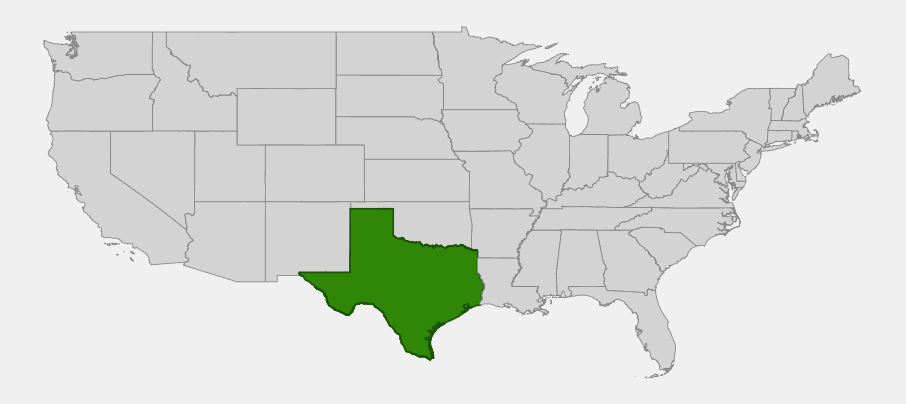
Giant Rain Lily is native to Central and South-Central Texas, with its core range concentrated across the Texas Hill Country, Blackland Prairie, and South Texas Plains, extending west toward the Edwards Plateau. It grows in open prairies, rocky limestone glades, roadsides, and open woodland edges, typically on well-drained, often rocky or clayey soils.
Within its native range, Giant Rain Lily grows in open grassland and savanna settings alongside prairie grasses such as little bluestem and sideoats grama, and is a familiar sight blooming in pastures and roadside ditches across Central Texas after a soaking rain. It is not reliably documented with county-level native records outside Texas, so this page lists Texas as its confirmed native range.
Giant Rain Lily is a popular garden plant well beyond its native Hill Country and South Texas range, grown throughout Texas and the Gulf South for naturalizing in lawns and beds. Gardeners outside its core Central and South Texas range should consider it a well-adapted regional plant rather than a true local native.
📋 Regional plant lists featuring Giant Rain Lily: South and West Texas
Growing & Care Guide
Giant Rain Lily is one of the easiest Texas native bulbs to grow, asking for little beyond good drainage and patience for that first post-rain bloom flush.
Light
Full sun gives the heaviest flowering, though plants tolerate light to part shade, especially in the hottest parts of Texas, where some afternoon shade can extend bloom quality. In deep shade, flowering drops off noticeably.
Soil & Water
This bulb is remarkably adaptable to soil type — from rocky caliche to heavy clay — as long as drainage is adequate, since bulbs can rot in constantly soggy ground. It is drought tolerant and actually depends on dry-then-wet cycles to trigger its signature bloom flush; regular irrigation isn’t necessary, though an occasional deep watering during a dry spring can encourage blooming if rain hasn’t come.
Planting Tips
Plant bulbs in fall, 2 to 3 inches deep and about 4 to 6 inches apart, in a sunny to lightly shaded spot with decent drainage. Giant Rain Lily naturalizes well in lawns that aren’t mowed too short or too often during the bloom season, as well as in meadows, borders, and rock gardens. Established colonies can be left undisturbed for years, as the bulbs multiply on their own.
Pruning & Maintenance
No pruning is needed. Allow foliage to die back naturally after blooming, since the leaves recharge the bulb for next season’s flowers. In lawn settings, mowing can resume once the leaves have yellowed; mowing too soon after bloom reduces future flowering. The plant needs no fertilizer and has no significant pest or disease issues.
Landscape Uses
Giant Rain Lily fits naturally into a range of low-water Texas plantings:
- Naturalized lawns and meadows — blooms unexpectedly after rain, even in mowed turf
- Rock gardens and xeriscapes on rocky or caliche soil
- Prairie restoration plantings alongside native bunchgrasses
- Border edging for a surprise seasonal bloom
- Naturalistic drifts massed under trees or along pathways
Wildlife & Ecological Value
Giant Rain Lily’s brief but dramatic bloom flushes make it a useful, if modest, contributor to pollinator resources in Central Texas prairies and gardens.
For Pollinators
The large, fragrant white flowers attract night-flying moths as well as bees active in the evening and early morning hours when the blooms are freshest. The scent and pale color are classic adaptations for moth pollination, though generalist bees also visit during the day.
For Birds & Mammals
The plant has limited direct wildlife food value; its main ecological contribution is as a nectar source during its bloom flushes and as part of the structural diversity of native Texas prairie and glade communities.
Ecosystem Role
As a geophyte (bulb-forming perennial) adapted to Texas’s unpredictable rainfall, Giant Rain Lily is part of a community of drought-dormant prairie wildflowers that conserve resources underground between rain events, then respond quickly when conditions allow — a bloom strategy well matched to the boom-and-bust rainfall patterns of Central and South Texas.
Cultural & Historical Uses
Giant Rain Lily has no significant documented history of traditional or practical use; like most Amaryllidaceae bulbs, the plant contains alkaloids that make it unpalatable and potentially toxic if eaten, so it was not used as a food source by Indigenous peoples of the region.
Its cultural significance in Texas is primarily as a beloved seasonal signal: generations of Texans have come to recognize the sudden appearance of its large white flowers in pastures, roadsides, and lawns as a reliable marker that a good rain has just fallen, especially in spring. This “rain lily” behavior gives the whole genus its common name and has made Giant Rain Lily a familiar and welcome sight across Central and South Texas.
The species has also become a mainstay of Texas native-plant horticulture, promoted by native plant societies and nurseries for its low maintenance and reliable naturalizing habit in home landscapes.
Frequently Asked Questions
Why do rain lilies only bloom after it rains?
Giant Rain Lily’s bulb responds to the sudden change in soil moisture after a dry spell is broken by rain, triggering a rapid flush of flower stalks, often within a day or two. This adaptation lets the plant make the most of unpredictable Texas rainfall.
Is Giant Rain Lily toxic?
Yes, like most Amaryllidaceae bulbs, the bulb contains alkaloids that are toxic if ingested. This is part of why the plant is deer resistant, but it also means the bulbs should be kept away from children and pets who might be tempted to dig and chew on them.
Can Giant Rain Lily grow in a lawn?
Yes, it’s one of the best native bulbs for naturalizing in Texas lawns. Just avoid mowing too soon after bloom, since the foliage needs time to recharge the bulb for next year’s flowers.
How long do the flowers last?
Individual flowers typically last one to two days, opening in late afternoon or evening and fading to pink before withering. A single rain event can trigger a flush of many flowers that bloom in sequence over a week or more.
Is Giant Rain Lily the same as Cooperia pedunculata?
Yes. Cooperia pedunculata is the older scientific name still used in many references and in the USDA PLANTS database; current taxonomy places the species in the genus Zephyranthes as Zephyranthes drummondii.

Looking for a nursery that carries Giant Rain Lily?
Browse our native plant nursery directory: Texas