
Mt. Kaala Cyanea (Cyanea superba)
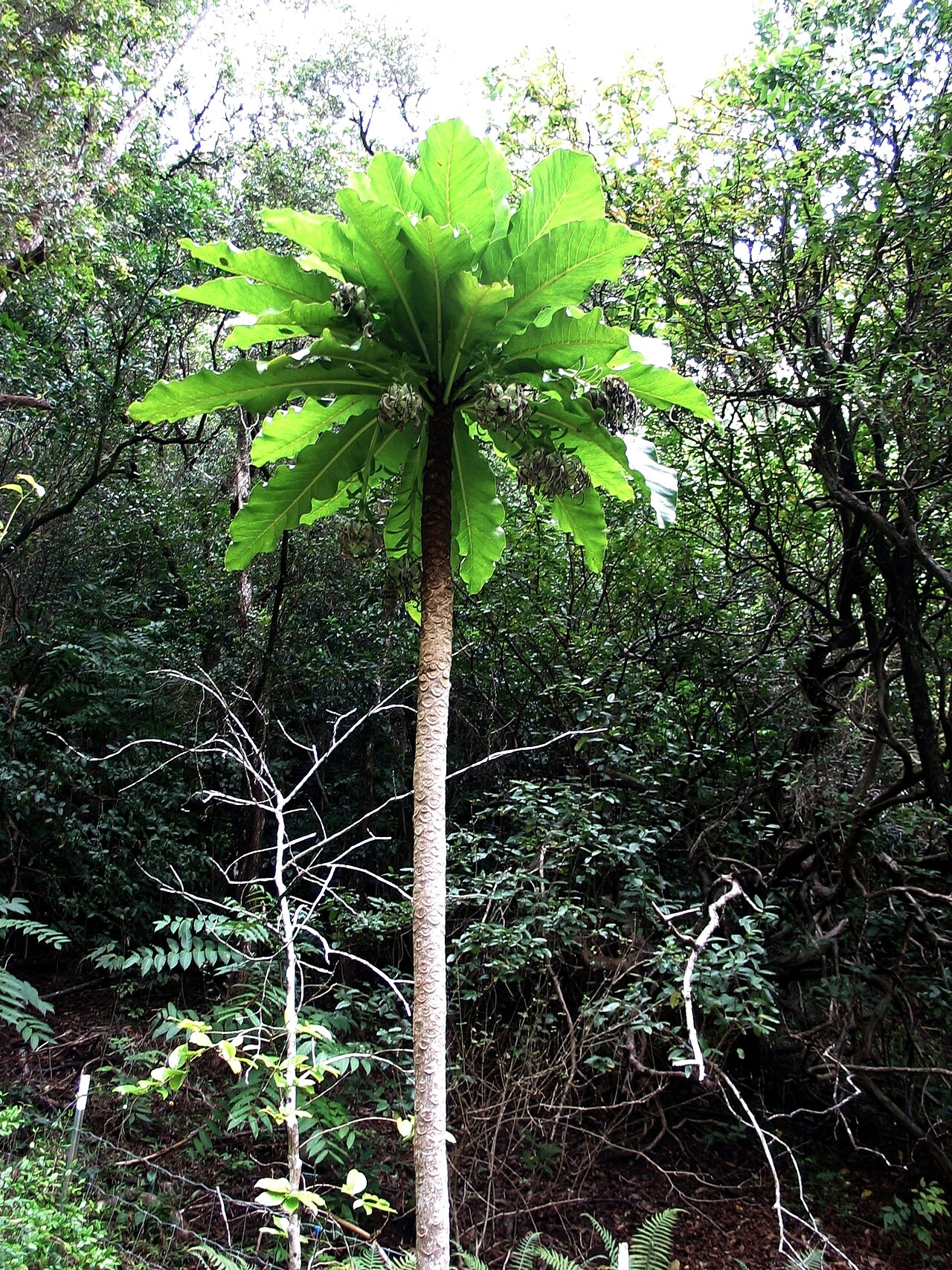
Cyanea superba, known as Mt. Kaala Cyanea, superb cyanea or hāhā in Hawaiian, is one of the most striking and most endangered plants in the United States. It is a slender, unbranched tree that looks like a small palm: a single straight trunk topped with a crown of long, wavy-edged leaves, with clusters of curved white flowers hanging beneath them. It grew only on the island of Oʻahu, in the lowland and mesic forests of the Waiʻanae and Koʻolau Mountains.
Today it no longer grows wild anywhere. The last naturally occurring plant died in 2002, and the species survives only because botanists collected seeds before it vanished. Plants raised from those seeds now grow in nurseries, seed banks and fenced, managed sites on Oʻahu, where many have flowered and set seed. It is a federally listed endangered species, and it belongs to the Hawaiian lobelioids, a spectacular group of more than 100 species in the bellflower family (Campanulaceae) that evolved only in Hawaii.
You cannot buy this plant, and you should not try to grow it. This page is an identification and appreciation guide: how to recognize it, where it lived, why it disappeared, and how conservation programs are bringing it back. Gardeners who want to support Hawaiian lobelioids can do so by planting other native Hawaiian species and supporting the organizations that care for the rarest ones.
Identification
Mt. Kaala cyanea is unmistakable when mature. No other plant in the forests of Oʻahu combines a tall, unbranched, palm-like trunk with huge soft leaves and pendant clusters of white, curved, tubular flowers.
Trunk & Form
Mature plants are single-stemmed trees, usually unbranched, that can grow to about 20 feet tall. The trunk is straight and slender, marked by the scars of fallen leaves, and the plant carries all its leaves in a dense crown at the top, like a palm or a tree fern. Young plants are a low rosette of large leaves on a short stem, and they gradually lift that crown upward as the trunk lengthens.
Leaves
The leaves are very large, simple and soft, often 2 to 3 feet long, oblong to lance-shaped with wavy or shallowly toothed edges and a pale midrib. They spread out in a radiating rosette, so from below the crown looks like a green umbrella. Older leaves fall cleanly from the trunk as new ones form.
Flowers
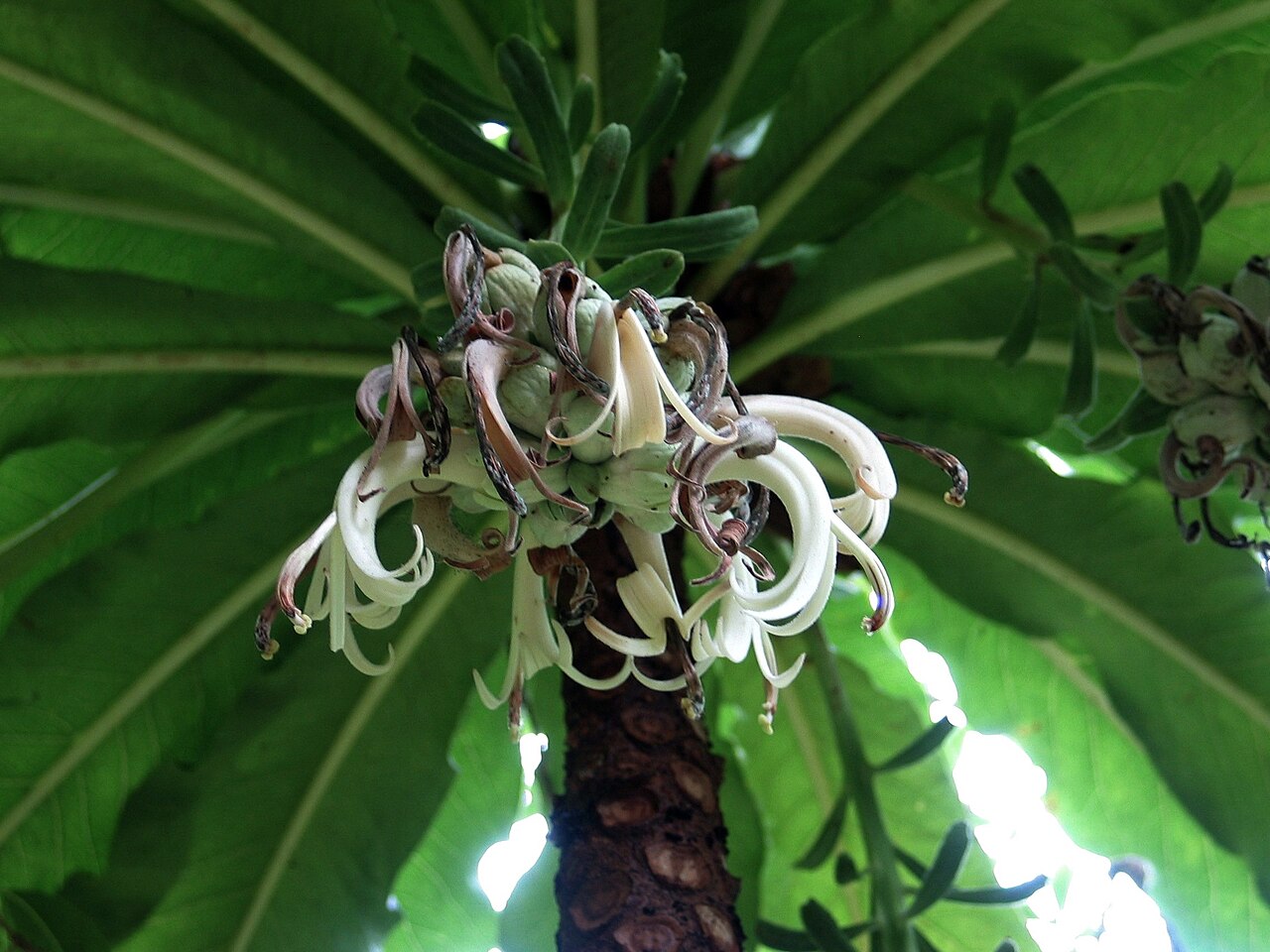
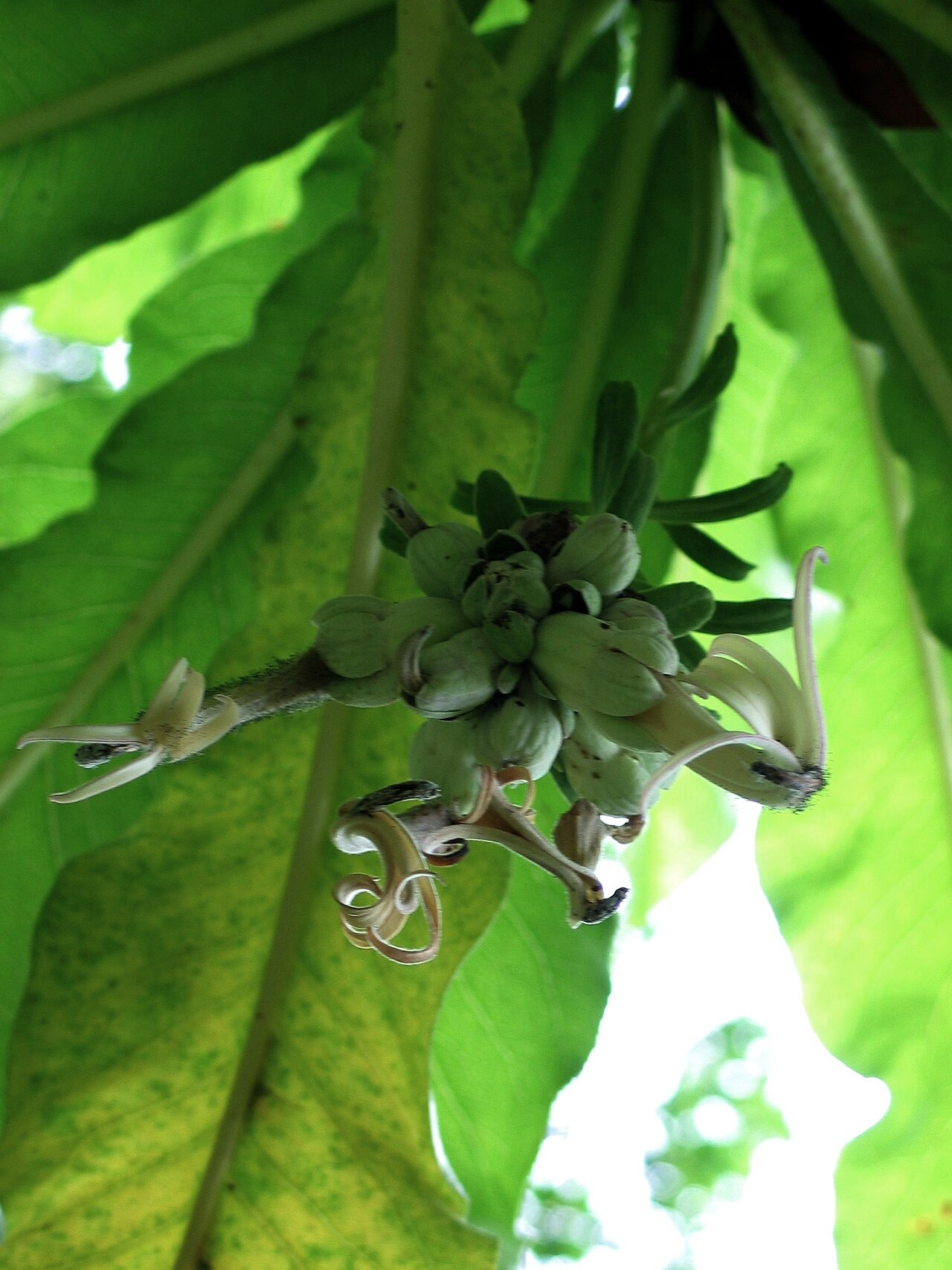
The flowers are borne in short, hanging clusters that grow from the trunk among or just below the lowest leaves. Each flower is a long, strongly curved tube a few inches long, creamy white or greenish white, split into narrow curling lobes at the tip, with the anthers and stigma held at the mouth of the tube. The curved shape matches the down-curved bills of the Hawaiian honeycreepers that are thought to have pollinated it.
Fruit
Pollinated flowers ripen into fleshy, rounded to egg-shaped berries that turn yellow to orange when ripe and hold many tiny seeds. In the native forest these fruits were almost certainly eaten and spread by native birds. Rats now eat many of them.
Quick Facts
| Scientific Name | Cyanea superba (Cham.) A. Gray |
| Family | Campanulaceae (bellflower family; Hawaiian lobelioids) |
| Plant Type | Unbranched, palm-like small tree |
| Mature Height | 10–20 ft |
| Mature Spread | 4–8 ft (leaf crown) |
| Growth Rate | Moderate |
| Sun Exposure | Partial shade (forest understory and gaps) |
| Water Needs | Moderate to high; constantly moist but well-drained soil |
| Soil Type | Rich, well-drained forest soil on slopes and gulch bottoms |
| Soil pH | Slightly acidic |
| Bloom Time | Mainly late summer through fall |
| Flower Color | Creamy white to greenish white |
| Fall Color | None; evergreen |
| Fruit | Fleshy yellow to orange berry with many tiny seeds |
| Deer Resistant | Not applicable; threatened by feral pigs, rats and slugs |
| USDA Hardiness Zones | 11–12 (Oʻahu forest only) |
Native Range
Mt. Kaala cyanea is endemic to Oʻahu: it grew nowhere else in the world. USDA PLANTS lists it only for Hawaii. Botanists recognize two subspecies. Subspecies superba grew in the mesic forests of the northern Waiʻanae Mountains, the range that includes Mount Kaʻala, Oʻahu’s highest peak, which gave the plant its common name. Subspecies regina was known from the Koʻolau Mountains on the other side of the island. It has not been seen since 1932 and is considered extinct.
Subspecies superba was collected in the nineteenth century and then not seen again until botanists rediscovered it in 1971. About 60 plants were counted in the 1970s. By the time it was listed as federally endangered in 1991, only about twenty remained, and the last wild plant died in 2002. Feral pigs, rats, introduced slugs, invasive trees and wildfire all contributed to the decline.
The species survives because seeds were collected and plants were propagated before the last wild individuals were gone. Those plants have been set out in fenced, weeded and rat-controlled sites in the Waiʻanae Mountains, largely through the Oʻahu Army Natural Resources Program, which manages rare species on and around military lands. Many outplanted trees have flowered and produced viable seed, and seedlings have been found around them, a hopeful sign for a species that had no wild plants left.
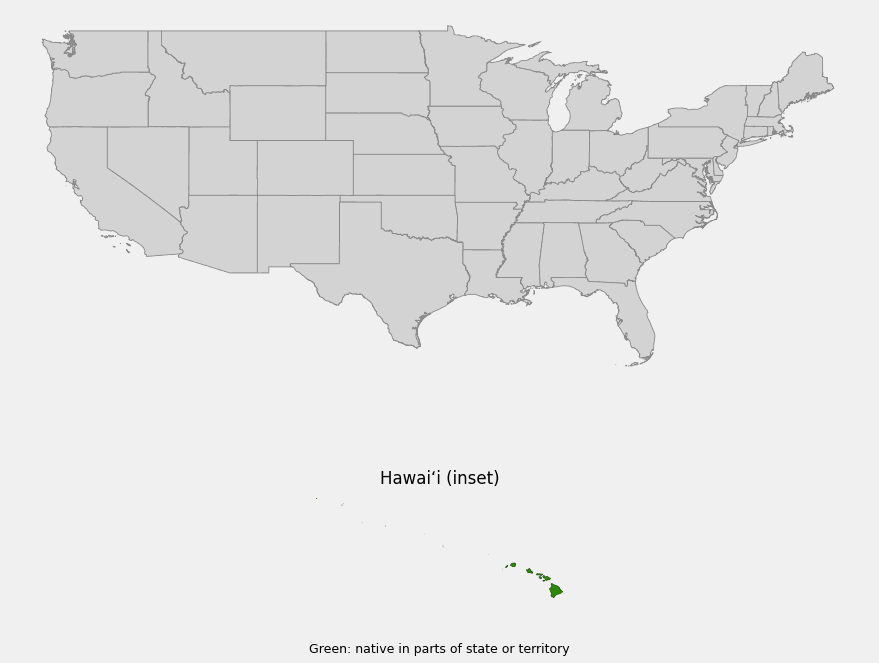
📋 Regional plant lists featuring Mt. Kaala Cyanea: Hawaii
Can You Grow It?
No. Mt. Kaala cyanea is not available from nurseries, and as a federally endangered species it may not be collected, sold or moved without permits. All existing plants are part of managed conservation collections, and their seeds are banked as insurance against the species’ loss. It is not a garden plant, and buying or trading one would be illegal and harmful.
What follows describes how conservation growers care for it, which explains why it struggles in the wild.
Light
In the forest it grew in the partial shade of the canopy and in small gaps. Conservation plantings are placed under or beside native trees, where young plants are protected from strong sun and wind.
Soil & Water
It needs constantly moist but well-drained, rich forest soil and steady humidity. It does not tolerate drought, waterlogging or the dry, open conditions created when invasive grasses and fire move into a forest.
Planting Tips
Plants grown from seed in conservation nurseries are moved to fenced sites free of feral pigs and goats. Field crews weed out invasive plants around them, set bait stations or traps for rats, and control slugs, which can kill seedlings outright.
Pruning & Maintenance
Outplanted trees need no pruning. Ongoing care means keeping fences intact, controlling weeds, rats and slugs, monitoring flowering and fruiting, and guarding against wildfire.
Propagation
Seeds from fruits of protected plants are sown in controlled nursery conditions and also stored in seed banks. Seed has been the main way of rebuilding the population, and the U.S. Army program alone has stored tens of thousands of seeds.
Where to See It
- Conservation outplantings: fenced, managed sites in the Waiʻanae Mountains hold most of the living trees; most are not open to the public
- Botanical gardens and conservation nurseries: some Hawaii gardens grow rare lobelioids for display and education; check current displays before visiting
- Volunteer programs: conservation agencies and land trusts on Oʻahu run volunteer weeding and planting days in native forest
- Photographs and herbarium collections: historical specimens and photographs document the wild plants that are now gone
- Your own garden: grow common, legally propagated native Hawaiian plants instead, to support native birds and insects
Wildlife & Ecological Value
Mt. Kaala cyanea belongs to an island ecosystem that has lost many of its original members. Its story shows how closely Hawaiian plants were tied to native birds, and what happens when those partners disappear.
For Pollinators
The long, curved white flowers fit the down-curved bills of Hawaiian honeycreepers, and botanists believe nectar-feeding forest birds were its main pollinators. Most of those birds are now rare or gone from Oʻahu’s lowland forests. Introduced birds such as the Japanese white-eye visit some lobelioid flowers today and may now do part of this job.
For Birds
Its fleshy fruits were almost certainly eaten by native forest birds, which spread the seeds through the forest. With most of those birds gone, dispersal now depends largely on people collecting and planting seed.
For Mammals
Hawaii has no native land mammals besides a bat. Introduced mammals have been among its worst enemies: feral pigs uproot seedlings and churn the forest floor, goats browse young plants, and rats eat fruits, seeds and the soft stems.
Ecosystem Role
As a large-leaved understory tree, it was part of the layered native forest of the Waiʻanae Mountains, where its flowers and fruits fed native birds and insects. Its recovery depends on restoring that forest: removing invasive trees such as silk oak and Christmas berry, keeping pigs and goats out, and controlling rats and slugs.
Cultural & Historical Uses
The plant was first described in the early nineteenth century by Adelbert von Chamisso, the poet-naturalist of the Russian Rurik expedition, from material collected on Oʻahu. Asa Gray later placed it in Cyanea. Hawaiians call Cyanea species hāhā, and some lobelioids were used for food or other purposes, but little is recorded specifically about this species.
Hawaiian lobelioids are one of the great examples of evolution on islands. Descended from a single ancestor that reached the islands millions of years ago, they diversified into more than 100 species of trees, shrubs and vines, with flowers shaped to fit the bills of different native birds. Many of them, including Cyanea superba, have become extremely rare or extinct since people brought pigs, goats, rats and invasive plants to the islands.
Cyanea superba is now a symbol of plant conservation in Hawaii. It went extinct in the wild and still exists only because of seed collection, nursery propagation and years of careful field work. For visitors and residents, the best way to help is to support native plant conservation groups, clean boots and gear before hiking to avoid spreading weeds and slugs, and plant common native Hawaiian species at home.
Frequently Asked Questions
Is Mt. Kaala cyanea extinct?
It is extinct in the wild in the sense that no naturally occurring plants remain; the last one died in 2002. It survives in conservation nurseries, seed banks and protected outplantings on Oʻahu, some of which now produce seedlings on their own. One of its two subspecies, subsp. regina, has not been seen since 1932 and is considered extinct.
Can I buy or grow Cyanea superba?
No. It is a federally endangered species, all plants are part of managed conservation programs, and it is not sold. Plant common native Hawaiian species instead, such as ʻōhiʻa lehua, from licensed nurseries.
Why does it look like a palm?
Many Hawaiian lobelioids grow as a single unbranched stem with a crown of large leaves at the top, an arrangement botanists call a rosette tree. Similar shapes evolved independently in other island and mountain plants, such as the giant lobelias of Africa.
What does “hāhā” mean?
Hāhā is the Hawaiian name for Cyanea species in general. The English name Mt. Kaala cyanea refers to Mount Kaʻala, Oʻahu’s highest mountain, in the Waiʻanae Range where the last wild plants grew.
What threatens it today?
Feral pigs and goats, rats that eat its fruits and stems, introduced slugs that kill seedlings, invasive trees that shade out native forest, and wildfire. Protected sites are fenced, weeded and baited to keep these threats in check.

Looking for a nursery that carries Mt. Kaala Cyanea?
Browse our native plant nursery directory: Hawaii

