Noble Fir (Abies procera)
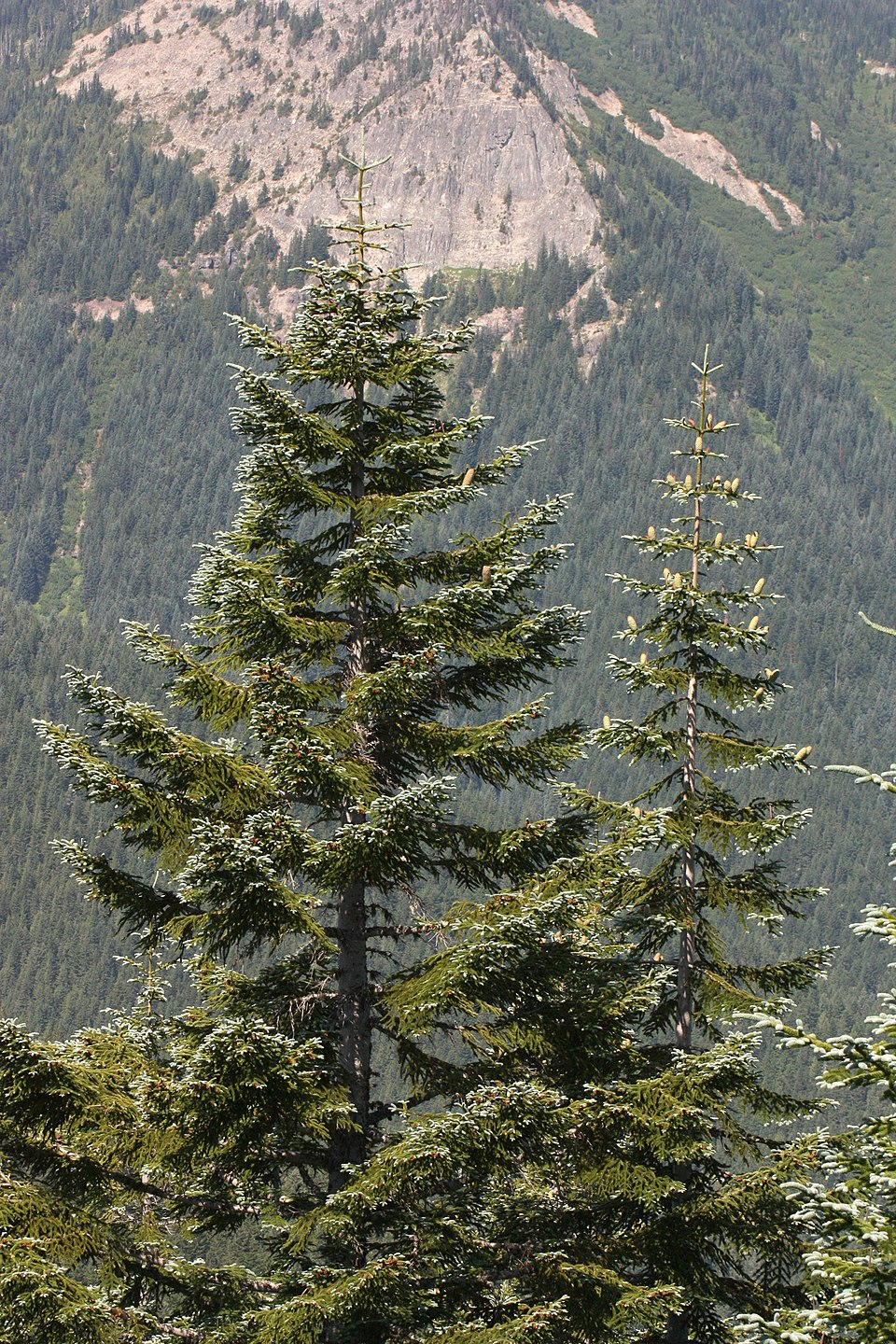
Abies procera, commonly known as Noble Fir, stands as one of North America’s most magnificent and distinctive coniferous trees. Also called Red Fir (though this name can cause confusion with its close relative Abies magnifica), this remarkable species is renowned as the world’s tallest true fir, capable of reaching heights up to 295 feet. Native exclusively to the Cascade Range and Pacific Coast Ranges of the Pacific Northwest, Noble Fir inhabits high-elevation forests where its distinctive large cones with prominent yellow-green bracts make it unmistakable among the region’s conifers. The species name “procera” aptly means “tall,” while “noble” reflects the majestic character that early botanist David Douglas recognized when he first encountered these towering giants in the 1820s. Beyond its natural grandeur, Noble Fir has gained widespread recognition as one of the premium Christmas tree species, valued for its strong branches, excellent needle retention, and distinctive blue-green foliage.
Quick Facts
| Scientific Name | Abies procera |
| Plant Type | Evergreen coniferous tree |
| Height | 150-230 feet (45-70 m), rarely to 295 feet (90 m) |
| Sun Exposure | Full Sun |
| Water Needs | Moderate to high; requires consistent moisture |
| Soil Type | Well-draining, moist soils; tolerates rocky conditions |
| Soil pH | 5.0-6.5 (acidic to slightly acidic) |
| Bloom Time | Spring (April-May) |
| Cone Color | Purple scales with prominent yellow-green bracts |
| USDA Hardiness Zones | 5-7 |
Identification
Noble Fir is unmistakable among Pacific Northwest conifers, displaying a combination of size, distinctive needle arrangement, and spectacular cones that make identification straightforward even from a distance. As the world’s tallest true fir, mature specimens command attention in any forest setting.
Overall Form and Size
Noble Fir develops a classic narrow conic crown that becomes more cylindrical with age. Young trees display the symmetrical Christmas tree shape that has made them so popular for holiday use, while mature forest giants can tower 150-230 feet tall with trunk diameters of 3-6 feet. Exceptional specimens have been recorded at nearly 300 feet tall with trunks approaching 9 feet in diameter. The tree maintains a strong central leader throughout its life, with relatively short branches creating the characteristic narrow profile.
Bark
The bark provides excellent identification features that change dramatically with age. Young Noble Fir bark is smooth and gray, characterized by prominent resin blisters that pop when pressed. As trees mature, the bark transitions to a distinctive red-brown color that becomes deeply furrowed and plated. The inner bark reveals a striking reddish color when scratched, earning the species one of its alternative common names, “Red Fir.” Bark thickness rarely exceeds 2 inches even on large trees, making the species somewhat fire-sensitive.
Needles
The needles are perhaps the most distinctive vegetative feature of Noble Fir. Measuring 1-3.5 cm (½-1½ inches) long, they display a unique blue-green to glaucous color both above and below, with strong stomatal bands giving them a frosted appearance. The needles are arranged spirally around the branch but twist into an S-shaped curve, creating an upswept appearance that exposes the branch above. Each needle has a blunt to slightly notched tip and lacks the groove on the upper surface that characterizes the closely related red fir (Abies magnifica). This needle arrangement creates a dense, brush-like appearance on the branches.
Cones
The cones of Noble Fir are truly spectacular and unlike any other North American conifer. Standing upright on upper branches like purple candles, they measure 11-22 cm (4¼-8¾ inches) long and about 6 cm (2¼ inches) thick. What makes them unmistakable are the prominent yellow-green bracts that extend well beyond the purple cone scales, creating a distinctive three-pronged appearance at each scale. These bracts are so prominent they nearly hide the purple scales beneath, creating one of the most recognizable cone structures in the conifer world.
Seeds and Reproduction
The cones ripen brown in fall and disintegrate while still on the tree to release winged seeds. Like many firs, Noble Fir produces viable seeds only every few years in “mast” years, when conditions are optimal for reproduction. The seeds are relatively large with prominent wings that aid in wind dispersal.
Native Range
Noble Fir occupies one of the most restricted native ranges of any major Pacific Northwest conifer, being endemic to the Cascade Range and Pacific Coast Ranges of Oregon, Washington, and extreme northwestern California. This narrow distribution reflects the species’ specific requirements for cool, humid mountain conditions.
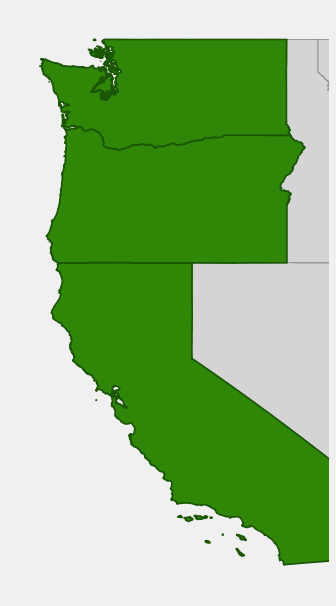
Within this limited range, Noble Fir occurs primarily at middle to high elevations, typically between 2,000-4,900 feet elevation. It rarely extends to treeline, preferring the cool, humid conditions found in the montane and subalpine zones. The species occupies similar ecological niches to Pacific silver fir but generally occurs at slightly lower elevations and in areas with better drainage.
At middle elevations, Noble Fir commonly associates with Douglas-fir and western hemlock, forming mixed-conifer forests of exceptional grandeur. At higher elevations, it shares space with Pacific silver fir, mountain hemlock, and occasionally subalpine fir. The tree tends to grow best on north-facing slopes where snow persists longer and summer temperatures remain moderate.
📋 Regional plant lists featuring Noble Fir: Western Oregon & Western Washington
Growing & Care Guide
Successfully growing Noble Fir requires understanding its mountain origins and specific environmental needs. While challenging outside its native range, the species can thrive in suitable climates with proper care and attention to its particular requirements.
Climate Requirements
Noble Fir demands cool, humid conditions similar to its native mountain environment. The species performs best in areas with mild, wet winters and cool, relatively dry summers—the Mediterranean mountain climate pattern of the Pacific Northwest. High humidity is crucial, making the species difficult to grow in continental climates or areas with hot, humid summers. Successful cultivation generally requires at least 30-40 inches of annual precipitation or consistent supplemental irrigation.
Light Requirements
Unlike many firs that tolerate deep shade, Noble Fir is shade-intolerant and requires full sun to partial shade for optimal growth. Young trees can tolerate some shade but will become spindly and weak without adequate light. This sun requirement, combined with its need for cool conditions, makes siting crucial for successful cultivation.
Soil Preferences
The species prefers well-draining, acidic to slightly acidic soils (pH 5.0-6.5) with high organic matter content. While it can tolerate rocky soils as long as moisture is adequate, it performs best in deep, fertile forest soils. Drainage is critical—the tree cannot tolerate waterlogged conditions despite its need for consistent moisture. Adding organic matter such as compost or aged bark can improve both drainage and moisture retention in less suitable soils.
Water Requirements
Consistent moisture is essential, particularly during the establishment period. Young trees should never be allowed to completely dry out, but soil should not remain saturated. Deep, infrequent watering is preferable to frequent shallow irrigation. Mulching around the base with organic matter helps retain soil moisture and regulate soil temperature.
Planting and Establishment
Plant Noble Fir in early spring or fall when temperatures are cool and moisture is adequate. Choose a site with morning sun and afternoon protection in warmer climates, or full sun in cooler regions. Space trees at least 15-20 feet apart to accommodate their eventual size and narrow crown. Young trees have slow root development, making them vulnerable to wind damage and drought stress during their first few years.
Maintenance and Care
Once established, Noble Fir requires minimal pruning beyond removal of dead, damaged, or crossing branches. The tree naturally maintains a strong central leader and symmetrical form. Avoid topping or major crown reduction, which can ruin the tree’s natural architecture and make it susceptible to disease and insect problems.
Growth Rate and Longevity
Noble Fir is a relatively slow-growing species, typically adding 12-18 inches of height per year under good conditions. Trees can live 200 years or more, reaching impressive size given sufficient time and suitable conditions. The slow growth rate means patience is required, but the eventual majesty of a mature specimen makes the wait worthwhile.
Wildlife & Ecological Value
Despite its restricted native range, Noble Fir plays crucial ecological roles in Pacific Northwest mountain ecosystems. From providing habitat structure to supporting specialized wildlife communities, this species contributes significantly to the biodiversity and functioning of high-elevation forest systems.
Birds
The large cones of Noble Fir provide important food sources for several bird species, particularly during seed production years. Pine siskins, red crossbills, and Clark’s nutcrackers are among the species that actively seek out Noble Fir cones. The large, sturdy branches provide excellent nesting sites for larger birds, including raptors such as northern spotted owls and great horned owls. The dense foliage offers thermal cover during harsh mountain winters.
Mammals
Small mammals, particularly red squirrels and various chipmunk species, heavily utilize Noble Fir cones and seeds. These animals often cache cones and seeds, inadvertently aiding in seed dispersal when cached supplies are forgotten or abandoned. Black bears occasionally feed on the inner bark, though this is not their preferred food source. The tree’s massive trunk and root systems create important habitat features for various small mammals.
Forest Ecosystem Role
As one of the dominant canopy species in its elevation range, Noble Fir significantly influences forest structure and microclimate. Its narrow crown allows more light to reach the forest floor compared to broader-crowned species, supporting diverse understory communities. The tree’s longevity makes it an important component of old-growth forest systems, where it can persist for centuries and eventually become valuable coarse woody debris after death.
Disturbance Ecology
Noble Fir demonstrates interesting responses to natural disturbances. While fire-sensitive due to its thin bark, the species benefits from occasional disturbances that create openings in the forest canopy. The 1980 eruption of Mount St. Helens provided valuable insights into Noble Fir’s response to major disturbance, with surviving trees showing remarkable resilience and growth increases following the event.
Climate Change Considerations
As a high-elevation species with specific climate requirements, Noble Fir faces particular challenges from changing climate conditions. Rising temperatures and shifting precipitation patterns may push suitable habitat to even higher elevations, potentially fragmenting populations and limiting the species’ long-term viability. Conservation efforts focus on protecting existing populations and understanding the species’ adaptive capacity.
Commercial and Cultural Uses
Beyond its ecological importance, Noble Fir has gained significant commercial value and cultural recognition, particularly in the Christmas tree industry and specialty wood markets.
Christmas Tree Industry
Noble Fir has become the premium Christmas tree species in many markets, prized for its excellent needle retention, strong branches capable of supporting heavy ornaments, distinctive blue-green color, and light, pleasant fragrance. The tree’s naturally symmetrical form requires minimal shaping, making it easier for growers to produce high-quality specimens. Its superior characteristics command premium prices in the holiday market.
Timber Uses
The species produces high-quality lumber with excellent strength-to-weight ratios. Historically called “larch” by loggers to distinguish it from inferior fir species, Noble Fir wood has been used for aircraft construction (including potentially the frames of World War II Mosquito bombers), ladders, structural applications, and specialized millwork. The wood’s light weight and strength make it valuable for applications where these properties are crucial.
Traditional Uses
Indigenous peoples, particularly the Paiute, traditionally used Noble Fir foliage to treat respiratory ailments including coughs and colds. The resinous properties of the needles and bark likely provided genuine medicinal benefits, though modern medical applications have not been extensively studied.
Looking for a nursery that carries Noble Fir?
Browse our native plant nursery directory: Oregon · Washington
Frequently Asked Questions
How fast does Noble Fir grow?
Noble Fir exhibits a moderate to fast growth rate under favorable conditions, typically establishing well within the first few growing seasons. Growth rate varies significantly based on site conditions, with optimal growth occurring in locations that closely mimic the plant’s natural habitat preferences. In suitable conditions with adequate moisture and appropriate light levels, you can expect steady annual growth.
Is Noble Fir deer resistant?
Like most Pacific Northwest natives, Noble Fir may be browsed by deer and elk, particularly in areas with high wildlife pressure or limited alternative food sources. However, as a native species that co-evolved with these herbivores, it typically recovers well from browsing damage. In areas with consistently heavy deer pressure, young plants may benefit from temporary protection during establishment.
What wildlife does Noble Fir support?
Noble Fir provides valuable habitat and food resources for a wide variety of Pacific Northwest wildlife, including native birds, beneficial insects, small mammals, and pollinators. The plant’s role in supporting biodiversity makes it an excellent choice for wildlife gardens, restoration projects, and any landscape designed to provide ecosystem services.
When is the best time to plant Noble Fir?
In the Pacific Northwest, fall planting (September through November) is typically most successful for native plants, as it allows root system establishment during the mild, wet winter months. Spring planting (March through May) can also be successful, though plants may require supplemental watering during their first summer dry season.
Where can I buy Noble Fir?
Noble Fir is available from native plant nurseries throughout Oregon and Washington. When possible, seek out locally-sourced stock grown from regional seed sources, as these plants will be better adapted to your specific area’s climate, soil conditions, and wildlife communities. Many restoration supply nurseries also carry the species for larger-scale projects.