Northern California Black Walnut (Juglans hindsii)
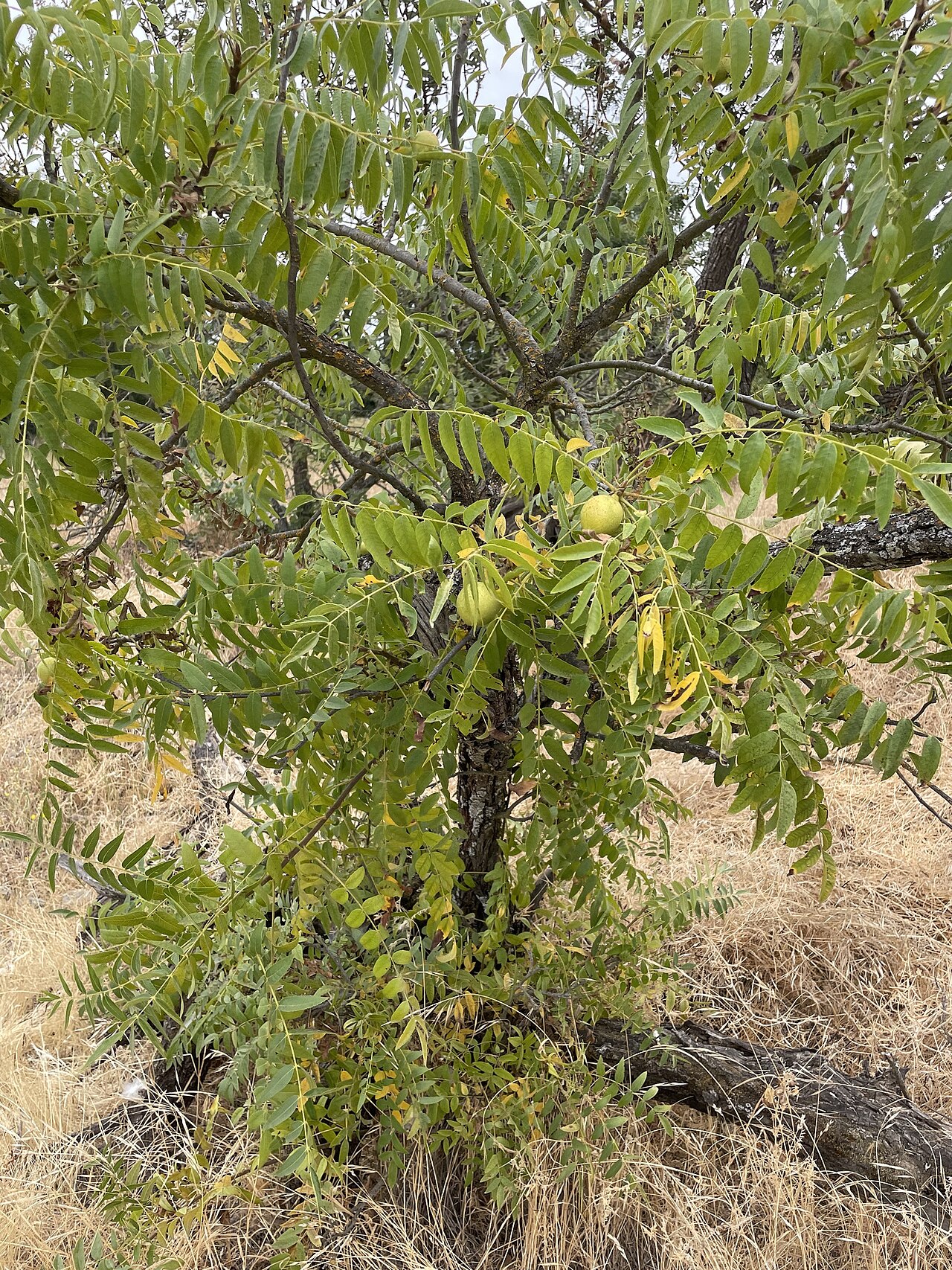
Juglans hindsii, commonly known as the Northern California black walnut or Hinds’s black walnut, is a sturdy, round-headed tree endemic to California, with a second, genetically distinct population confirmed in southwestern Oregon. Woodworkers and the lumber trade know it as “claro walnut” for the rich chocolate-brown heartwood prized in furniture and gunstocks. For gardeners it is a tough, long-lived shade tree that produces heavy crops of thick-husked nuts relished by squirrels, scrub jays, and woodpeckers.
This species has an unusually tangled history. For over a century, nurserymen grafted English walnut (Juglans regia) scionwood onto Northern California black walnut rootstock because of its vigor and resistance to root pathogens, and the resulting rootstock suckers and orchard escapes were planted or naturalized far outside the tree’s original range. That practice, combined with a long history of planting by Native Californians near village sites along the Sacramento and lower San Joaquin river systems, left botanists uncertain for decades about which groves were truly wild. A 2018 genetic study using microsatellite markers (Potter et al., Madroño 65:131–140) resolved much of that confusion, confirming that genetically pure, naturally occurring J. hindsii populations are far more widespread across California’s Coast Ranges, Central Valley margins, and the Sierra Nevada foothills than earlier botanists believed, with a distinct native population also present in southwestern Oregon.
In the garden or on a restoration site, this walnut is valued for its broad, dense canopy, its tolerance of heavy clay and seasonally wet soils, and its wildlife value. It casts heavy shade and drops a steady litter of nuts and husks, so it is best sited away from patios, driveways, and understory plantings sensitive to juglone, the allelopathic compound walnuts are known for.
Identification
Northern California black walnut is a medium to large deciduous tree, typically 30 to 60 feet tall with an equally broad, rounded crown, though old specimens in favorable sites can top 75 feet. It most often develops a short trunk that divides low into several wide-spreading limbs, giving open-grown trees a broad, umbrella-like silhouette; trunk diameters of 4 to 6 feet are not unusual on old individuals.
Bark
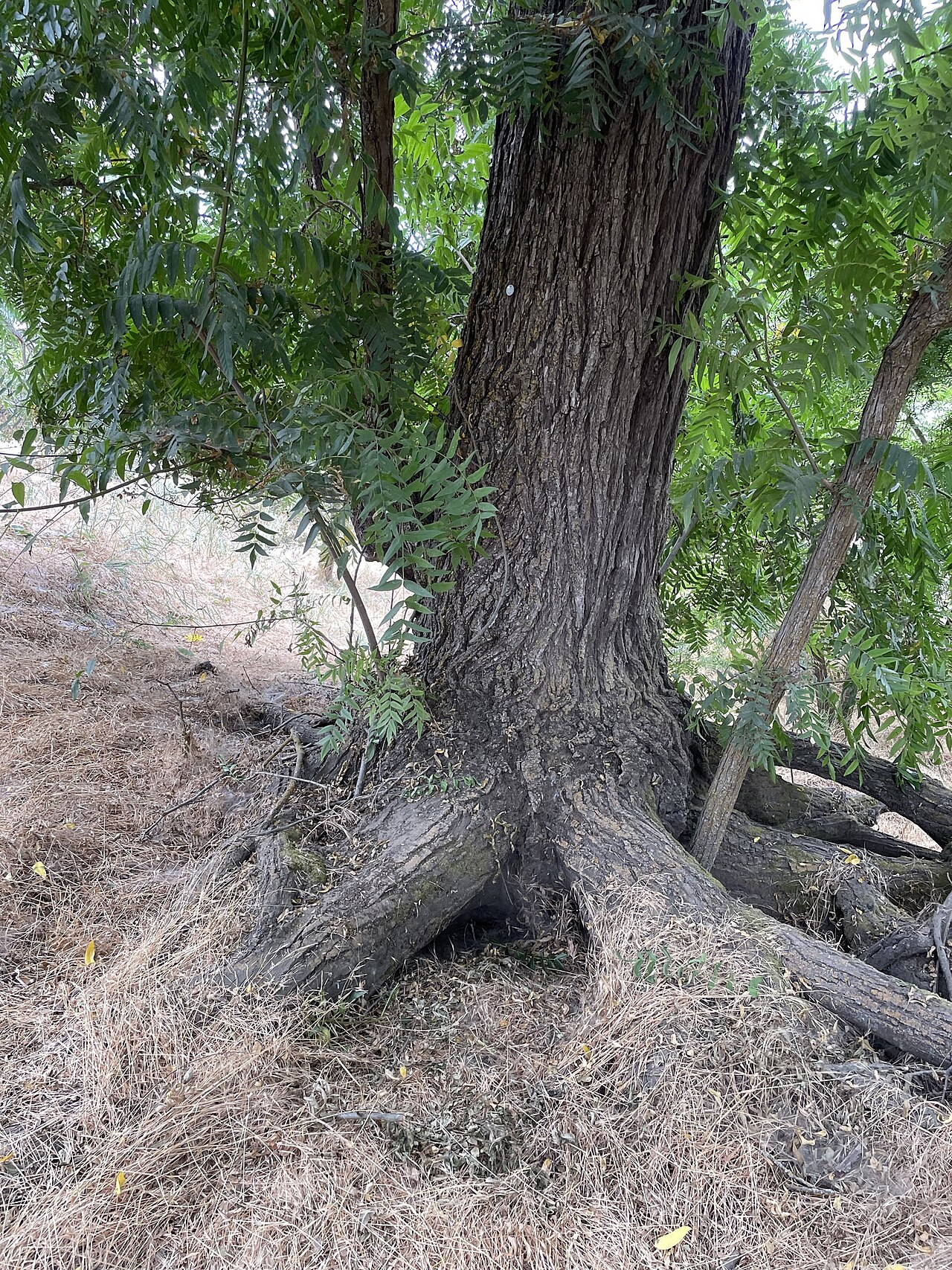
Young bark is smooth and gray-brown, becoming deeply furrowed with age into thick, dark gray-brown ridges separated by narrow fissures — a rugged, deeply checkered texture similar to other black walnuts but generally a shade lighter and less blocky than eastern black walnut (Juglans nigra). The furrows deepen noticeably on trees over several decades old, and the base often flares into broad surface roots.
Leaves
Leaves are pinnately compound, roughly 12 inches long, with 13 to 21 lance-shaped leaflets, each 2 to 5 inches long with finely toothed margins. Leaflets are yellow-green and somewhat glossy above, paler beneath, with small tufts of hair in the vein axils on the underside — a detail that distinguishes this species from the related Southern California black walnut (Juglans californica), whose leaflets are narrower and more numerous. Foliage turns a clear yellow in autumn before dropping.
Flowers & Fruit
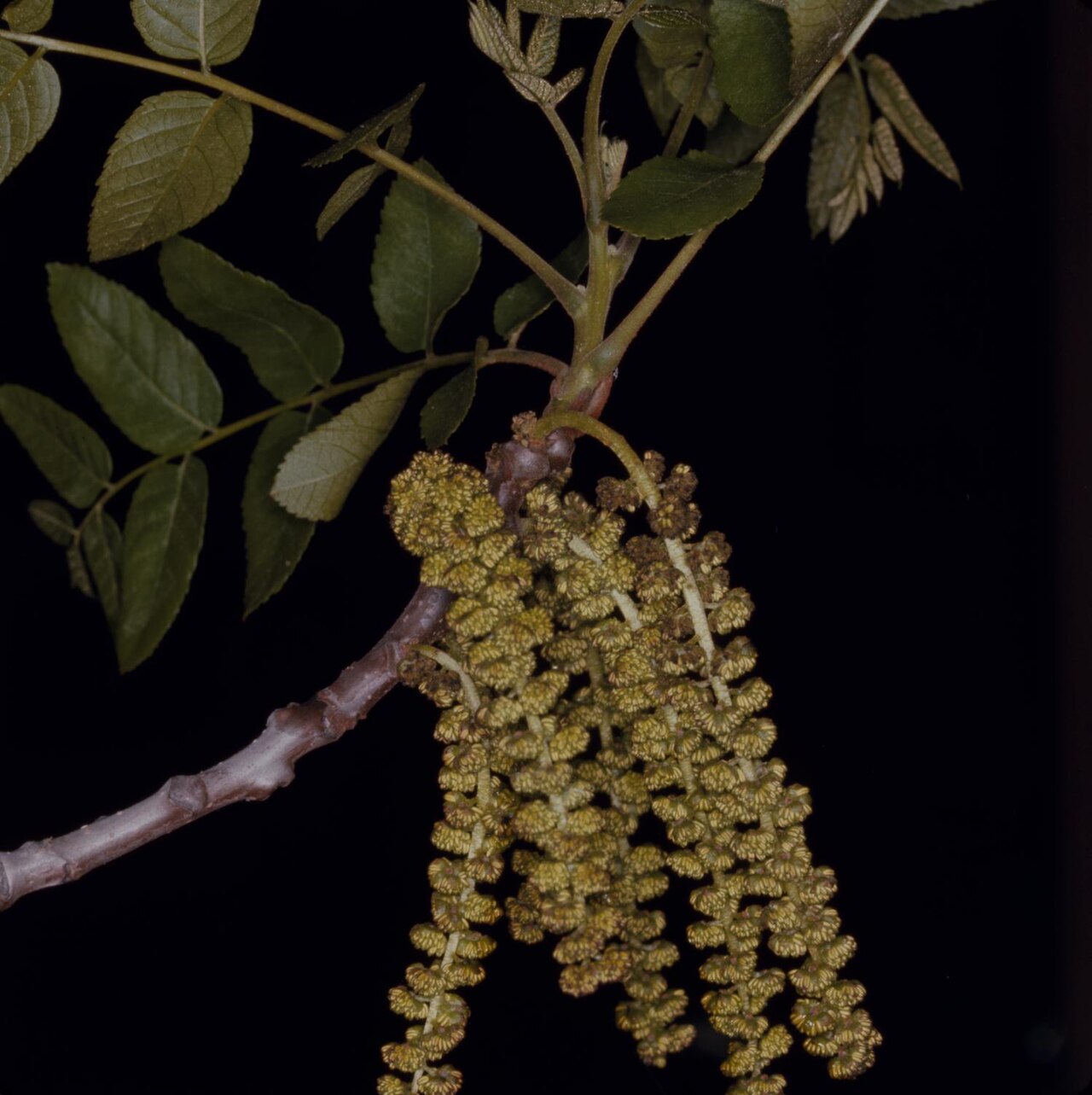
Like other walnuts, this species is monoecious, bearing separate male and female flowers on the same tree. Male flowers hang in drooping yellow-green catkins up to 6 inches long, appearing from the previous year’s wood as new leaves emerge in spring. Female flowers are inconspicuous, borne in small clusters of one to three at the tips of new growth, each maturing into a round fruit.
The nut is enclosed in a thick, fleshy green husk about 1.5 inches across that does not split open at maturity (indehiscent), darkening and softening as it falls in autumn. Inside is a hard, deeply sculptured, thick-shelled nut with a smaller, more strongly flavored kernel than the commercial English walnut. Nuts ripen from September into October and are an important fall food source for tree squirrels and scrub jays, which cache them and inadvertently plant new trees.
Quick Facts
| Scientific Name | Juglans hindsii |
| Family | Juglandaceae (Walnut) |
| Plant Type | Deciduous Tree |
| Mature Height | 30–60 ft (occasionally to 75 ft) |
| Mature Spread | 30–60 ft, often as wide as tall |
| Growth Rate | Moderate to fast |
| Sun Exposure | Full Sun |
| Water Needs | Moderate; tolerates seasonal flooding |
| Soil Type | Deep alluvial loam or clay; adaptable |
| Soil pH | 6.0–8.0 |
| Bloom Time | March – April |
| Flower Color | Yellow-green |
| Fall Color | Yellow |
| Fruit | Round, thick-husked nut, ripens September–October |
| Deer Resistant | Yes |
| USDA Hardiness Zones | 7–9 |
Native Range
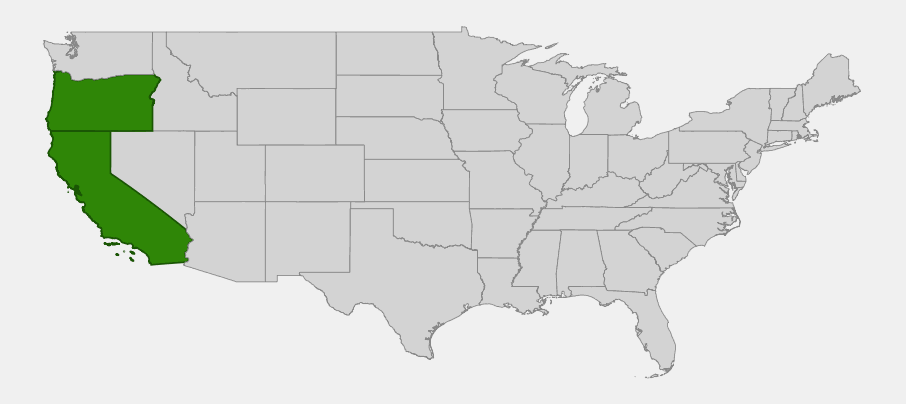
Northern California black walnut is native to California, where it occurs mainly around the margins of the Central Valley, in the inner Coast Ranges, and in valleys draining the Sierra Nevada foothills, with scattered stands along the Sacramento, American, and lower San Joaquin rivers. A second, genetically distinct native population grows in southwestern Oregon’s Umpqua and Rogue river drainages. Because the species was long propagated as orchard rootstock and because Native Californians are thought to have planted groves near village and camp sites, many 20th-century botanists doubted how much of the tree’s modern range was truly wild; genetic testing has since confirmed extensive naturally occurring populations rather than orchard escapes alone.
Typical habitat is streamside woodland and valley floor terrain with deep, well-watered alluvial soil — riverbanks, floodplain terraces, and the lower slopes of foothill canyons where winter rains collect. It is usually found growing singly or in small groves rather than forming extensive pure stands, often alongside valley oak, Fremont cottonwood, and Oregon ash in riparian corridors.
Outside this native range, Northern California black walnut has been widely planted as an ornamental shade tree and, far more significantly, propagated by the millions as rootstock for commercial English walnut orchards throughout California’s Central Valley. Gardeners in those orchard regions should note that many walnut trees seen along roadsides and old farmland are rootstock suckers or hybrids rather than true wild J. hindsii, and that the species should not be considered native outside California and southwestern Oregon.
📋 Regional plant lists featuring Northern California black walnut: California & Nevada · Western Oregon & Western Washington
Growing & Care Guide
Northern California black walnut is an undemanding, long-lived tree once established, well suited to large properties, parks, and riparian restoration where its mature size and heavy litter will not be a problem near paving or delicate garden beds.
Light
Plant in full sun. Young trees tolerate light shade but develop their best broad, rounded form and heaviest nut crops in open, sunny sites.
Soil & Water
This walnut thrives in deep, well-drained alluvial soils but is notably tolerant of heavy clay and seasonal flooding, reflecting its natural habitat along valley rivers. Established trees are fairly drought tolerant thanks to a deep taproot, though regular deep watering during the first several years speeds establishment and produces a healthier canopy. As with all walnuts, the roots, leaves, and husks contain juglone, a compound toxic to tomatoes, apples, azaleas, and many other garden plants, so avoid underplanting sensitive species within the tree’s root zone.
Planting Tips
Give this tree plenty of room — 40 feet or more from structures, pavement, septic lines, and other trees — since mature specimens develop a wide canopy and an aggressive, far-reaching root system. Plant bare-root or container stock in fall or winter. Because taproots resent transplanting once established, choose the permanent site carefully and plant young.
Pruning & Maintenance
Prune while dormant in winter to establish a strong scaffold structure, removing crossing or weak-angled limbs while the tree is young. Mature trees need little pruning beyond removing dead or damaged wood. Expect an annual litter of husks, nut debris, and leaves in fall, which is heaviest directly under the canopy.
Landscape Uses
Good uses for this adaptable native tree include:
- Shade tree for large lawns, parks, and open properties
- Riparian restoration along rivers and seasonal creeks
- Wildlife habitat plantings where mast crops benefit squirrels and birds
- Windbreaks in rural and agricultural settings
- Specimen tree where its broad winter silhouette and furrowed bark can be appreciated
Wildlife & Ecological Value
As a riparian mast tree, Northern California black walnut supports a range of wildlife through its nut crop, canopy structure, and association with healthy river corridors.
For Birds
Acorn Woodpeckers and Scrub-Jays cache and feed on the nuts, while the broad canopy offers nesting sites for raptors and songbirds. The catkins draw small insects in spring, which in turn attract insectivorous birds working the canopy.
For Mammals
Western Gray Squirrels and California Ground Squirrels are the tree’s primary dispersers, burying far more nuts than they recover and unintentionally planting new seedlings along riverbanks. Black-tailed Deer browse young foliage, though the tree’s size and bitter, juglone-laden leaves make it largely deer resistant once established.
For Pollinators
Walnuts are wind-pollinated rather than insect-pollinated, so the flowers offer little nectar; however, the pollen-rich catkins are visited incidentally by some native bees, and the tree’s spring bloom overlaps with other riparian flowering species that support pollinator communities nearby.
Ecosystem Role
This walnut helps anchor riparian corridors, its deep root system stabilizing streambanks and its canopy providing summer shade that moderates water temperatures for fish and aquatic invertebrates. Fallen leaves and husks slowly break down into the soil, and the tree’s longevity makes it an important structural element of valley riparian woodland over many decades.
Cultural & Historical Uses
Indigenous peoples of California’s Central Valley and Sierra foothills, including Patwin, Nisenan, and Miwok communities, gathered the nuts of this walnut as a food source, cracking the hard shells for the smaller, richly flavored kernel inside. Early botanists such as Willis Linn Jepson noted that many wild-looking groves coincided with the sites of Native villages and seasonal camps, a pattern consistent with intentional planting or tending of favored nut trees over generations, though the full extent of that practice remains debated.
Beginning in the late 1800s, California’s growing commercial walnut industry adopted this species almost exclusively as a rootstock for grafted English walnut orchards, prized for its vigor, disease resistance, and compatibility with the thinner-shelled commercial nut. Millions of Northern California black walnut seedlings were raised in nursery rows for this purpose, and rootstock suckers and seedlings that escaped cultivation spread the tree well beyond its original wild range, which is part of what long obscured its true native distribution from botanists.
The wood, marketed as “claro walnut,” remains highly valued by furniture makers and gunstock crafters for its rich, dark, often figured grain, and veneer-quality logs from old specimen trees can fetch high prices. The nuts, while edible, have a thick shell and modest kernel compared to the commercial English walnut, so the tree has never been grown commercially for its nuts alone.
Frequently Asked Questions
Is Northern California black walnut the same as the walnuts sold in stores?
No. Commercial walnuts come from English walnut (Juglans regia), which is usually grafted onto Northern California black walnut rootstock. This species’ own nuts are edible but have thicker shells and smaller kernels, so they are not grown commercially.
Why was this species’ native range so uncertain for so long?
Because it was propagated by the millions as orchard rootstock and because many groves were historically associated with Native village sites, botanists struggled to tell wild populations from planted or escaped ones. A 2018 genetic study using microsatellite markers resolved much of this, confirming widespread naturally occurring populations across California and in southwestern Oregon.
Can I plant other natives beneath this tree?
Be cautious. Like other walnuts, this species produces juglone, a compound that is toxic to many garden plants, including tomatoes and some ornamentals. Choose juglone-tolerant companions and avoid planting sensitive species within the root zone.
How much space does it need?
Plenty. Mature trees commonly reach 30 to 60 feet tall and equally wide, with a far-reaching root system, so keep it at least 40 feet from structures, pavement, and septic systems.
Is it the same tree as the “claro walnut” used in furniture?
Yes. Claro walnut is the lumber-industry name for wood from this species, prized for its rich brown color and often dramatic figured grain, especially in old trees grown from rootstock orchard plantings.

Looking for a nursery that carries Northern California black walnut?
Browse our native plant nursery directory: California · Oregon