Red Willow (Salix laevigata)
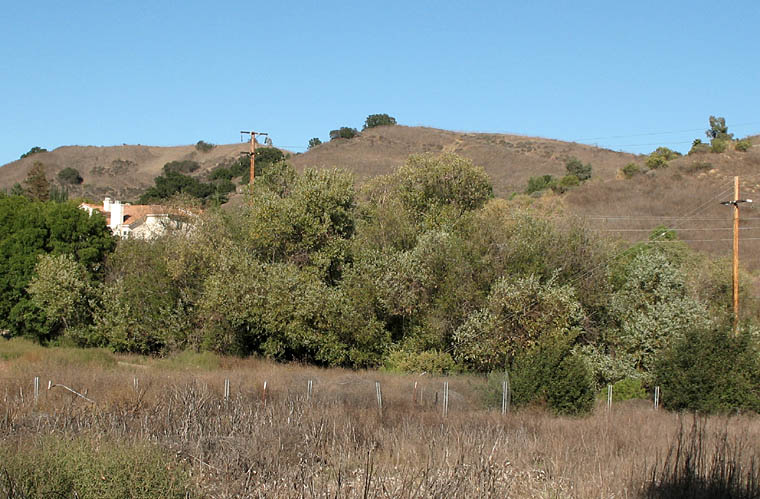
Salix laevigata, commonly known as red willow or polished willow, is a fast-growing, water-loving small tree native to riverbanks and washes across the southwestern United States. Found from the California coast east to the Grand Canyon and the Virgin River canyon of Utah, it is one of the most reliable markers of surface or near-surface water in an otherwise dry landscape — where you see red willow, there is usually a stream, spring, or high water table nearby.
True to its common name, red willow often develops reddish young twigs and, on older specimens, bark that takes on a warm reddish-brown cast rather than the plain gray of many other willows. Its Latin species name, laevigata, means “smooth” or “polished,” a nod to the glossy upper leaf surface that helps distinguish it from several similar-looking willows sharing its riparian habitat.
In the garden, red willow is best suited to restoration plantings, streambank stabilization, and wildlife habitat projects rather than small, dry residential yards, since it wants consistently moist soil and will send roots searching for water if conditions dry out. Where a site can offer that moisture, few native trees match its speed of growth or wildlife value.
Identification
Red willow is a small, often multi-trunked tree reaching up to 45 feet tall, though many wild specimens are considerably shorter and shrubbier depending on site conditions. Its form is notably variable and informal: trunks are often winding rather than straight, and branches sometimes grow out and lie along a creek bottom before turning upward again, giving older stands a tangled, picturesque structure.
Bark
Bark is ridged and grayish on most trees, but frequently takes on a reddish cast with age, especially on sun-exposed trunks and larger branches — one of the features behind the common name. Young twigs are reddish and notably flexible.
Leaves
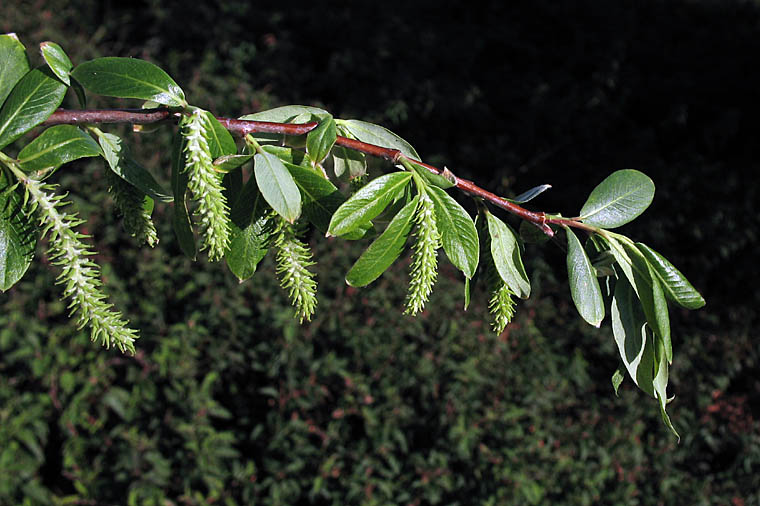
Leaves are lance-shaped (lanceolate), 3 to 4 inches long, with a glossy, shiny green upper surface and a duller, whitish-green underside — the “polished” look referenced in the species name. The tree is mostly deciduous through winter but can leaf out early during warm winter spells in mild climates.
Flowers & Fruit
Like other willows, red willow is dioecious, with separate male and female trees. Yellow flowers are borne in drooping catkins from December through June depending on elevation and latitude. On female trees, catkins mature into tufts of cottony, wind-borne seed that can fill the air in large quantities for two to three weeks each spring, a familiar sight along Southwestern waterways in late spring.
Quick Facts
| Scientific Name | Salix laevigata |
| Family | Salicaceae (Willow) |
| Plant Type | Deciduous Tree |
| Mature Height | Up to 45 ft, often shorter |
| Mature Spread | 15–30 ft, often multi-trunked and irregular |
| Growth Rate | Fast |
| Sun Exposure | Full Sun to Part Shade |
| Water Needs | High; needs consistent moisture |
| Soil Type | Moist alluvial, sandy or loamy streambank soils |
| Soil pH | 6.0–8.0 |
| Bloom Time | December – June (varies by elevation) |
| Flower Color | Yellow |
| Fall Color | Pale yellow, often brief |
| Fruit | Cottony wind-borne seed (female trees only) |
| Deer Resistant | No (readily browsed) |
| USDA Hardiness Zones | 7–10 |
Native Range
Red willow is native to the southwestern United States and northern Baja California. It occurs along the California coast from Cape Mendocino south, through the lower-elevation western foothills of the Sierra Nevada east of the San Joaquin Valley (it is notably absent from the Central Valley floor itself), and south through much of California into Baja California. Smaller, more scattered occurrences extend into southwestern Oregon, Nevada, New Mexico, the central transition zone of Arizona’s Mogollon Rim and the central Grand Canyon, and the Virgin River canyon of extreme southwestern Utah.
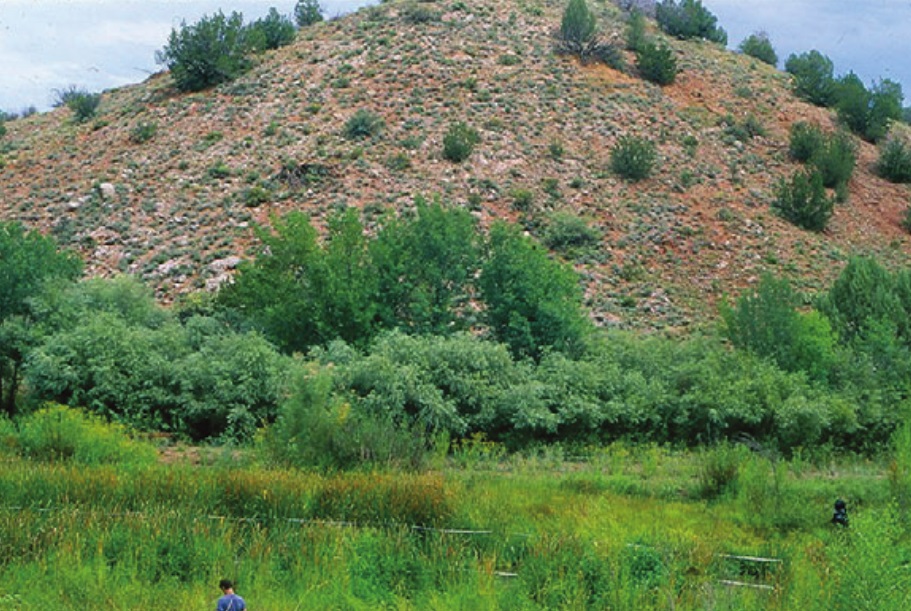
True to its riparian habit, red willow is found almost exclusively along riverbanks, streams, washes, and other sites with consistently high soil moisture or a shallow water table. It frequently grows alongside Fremont Cottonwood, Arroyo Willow, and Goodding’s Willow in mixed riparian gallery forest and streamside thickets, forming dense stands that stabilize banks and shade the water below.
Because it depends on reliable moisture, red willow is a useful bioindicator: healthy stands typically signal perennial or near-perennial water, while declining or stressed stands can flag falling water tables or stream dewatering in the arid Southwest.
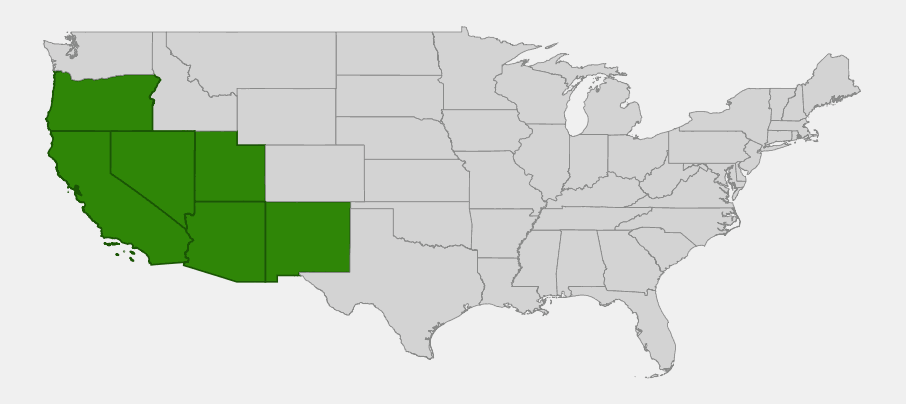
📋 Regional plant lists featuring red willow: California & Nevada · Western Oregon & Western Washington · Utah & Western Colorado · Arizona & New Mexico
Growing & Care Guide
Red willow is an easy, fast-growing tree for the right spot — essentially any site that stays consistently moist or sits near a water table. It is a poor match for ordinary dry garden beds but an outstanding choice for streambank, pond-edge, and wet-meadow restoration.
Light
Plant in full sun to light part shade. Trees grow fastest and densest in full sun along open watercourses, though they tolerate light shade from taller riparian canopy trees like cottonwoods.
Soil & Water
Consistent moisture is essential. Red willow thrives in sandy or loamy alluvial soils typical of active floodplains and can tolerate periodic flooding and saturated soil far better than drought. In landscape settings away from a natural water source, plan on regular irrigation; this is not a xeriscape tree. Roots are aggressive and will seek out water, so keep it well away from irrigation lines, septic systems, and foundations.
Planting Tips
Willows are among the easiest native trees to propagate — dormant hardwood cuttings taken in winter root readily when pushed directly into moist soil, a technique widely used in bank stabilization and restoration work. Plant or cut in fall or winter dormancy for best results, and set plants where roots can reach permanent or near-permanent moisture.
Pruning & Maintenance
Red willow tolerates hard pruning and will resprout vigorously from cut stems, making it useful for coppicing or basketry material production. Remove damaged or crossing branches in winter dormancy; otherwise this fast-growing tree needs little upkeep beyond occasional shaping if a tidier form is desired.
Landscape Uses
Good uses for this fast-growing riparian native include:
- Streambank and wash stabilization using live cuttings or container stock
- Riparian restoration plantings alongside cottonwood and other willows
- Wildlife habitat plantings around ponds, wetlands, and water features
- Erosion control on consistently moist slopes and creek edges
- Basketry and craft material for gardeners interested in traditional fiber crafts
Wildlife & Ecological Value
As a foundational riparian tree across much of the arid Southwest, red willow supports an outsized share of wildlife relative to its modest stature, simply by providing shade, structure, and food along scarce watercourses.
For Birds
Dense willow thickets provide essential nesting habitat for riparian songbirds, including willow flycatchers, yellow warblers, and various vireos, several of which are species of conservation concern tied directly to healthy Southwestern riparian corridors. The canopy also hosts abundant insect life that feeds insectivorous birds through the nesting season.
For Mammals
Deer and other browsers readily eat young shoots and foliage, and beavers favor willow bark and branches both as food and construction material where their ranges overlap. Dense thickets along banks also provide cover for small mammals moving along riparian corridors.
For Pollinators
Willow catkins are an important early-season nectar and pollen source for native bees and other pollinators, particularly valuable because red willow can flower as early as December in mild-winter areas, offering forage when few other plants are blooming.
Ecosystem Role
Red willow’s dense root systems stabilize streambanks and reduce erosion during seasonal flood pulses, while its canopy shades the water below, moderating stream temperatures for fish and aquatic invertebrates. As one of the Southwest’s most dependable riparian indicator species, its presence and health are commonly used by land managers as a proxy for the condition of the stream or wash it occupies.
Cultural & Historical Uses
Red willow held significant value for Indigenous peoples across its range. The Kutenai, who knew the species as mukwuʔk, used its wood in basketry, while Chumash weavers of coastal and interior California used red willow for open-twined openwork baskets called chiquihuites and for fine willow sticks used as seed beaters. Some Central California weavers, however, considered the wood too thick, branching, and brittle for finer basketry compared to other willow species.
The Chumash also developed a specialized process for extracting bast fiber from red willow bark. Bark was harvested in March, when rising sap made it easiest to peel, using a horizontal cut at the base of the stem to pull long strips free. This bark was then processed into a soft fiber used for a variety of woven and cordage applications, representing a sophisticated fiber-craft tradition tied closely to the plant’s seasonal growth cycle.
Today, red willow continues to be valued by Indigenous basket weavers and native plant restoration practitioners alike, and its ease of propagation from cuttings has made it a workhorse species in modern streambank stabilization and riparian restoration projects throughout the Southwest.
Frequently Asked Questions
Why is it called “red willow” if the leaves and most of the bark are green or gray?
The name refers to the reddish young twigs and the reddish-brown cast that bark develops with age, especially on sun-exposed wood, as well as reddish tones sometimes visible in the wood itself — distinct from the plainer gray bark of some other willows.
Can I grow red willow in a regular garden without a stream or pond?
Only with regular supplemental irrigation. This species needs consistently moist soil and is not drought tolerant, so it performs poorly in typical dry garden beds unless you can provide reliable water, ideally near a natural or constructed water feature.
How is red willow different from arroyo willow or Goodding’s willow?
Red willow has glossy, “polished” dark green leaves on top with a duller whitish-green underside and often reddish young twigs. Arroyo willow has narrower, grayer, more uniformly fuzzy leaves, while Goodding’s willow tends to grow larger with more deeply furrowed, dark bark. All three often grow together in the same riparian corridors.
Is red willow good for erosion control?
Yes. Its fast growth, extensive root system, and ability to root easily from cuttings make it a standard choice for stabilizing streambanks, washes, and other consistently moist, erosion-prone slopes.
Do both male and female red willows produce the cottony seed fluff?
No, only female trees. Red willow is dioecious, meaning individual trees are either male or female; only female trees produce the catkins that mature into cottony, wind-dispersed seed each spring.

Looking for a nursery that carries red willow?
Browse our native plant nursery directory: California · Oregon · Nevada & New Mexico · Utah · Arizona