
Painted Buckeye (Aesculus sylvatica)
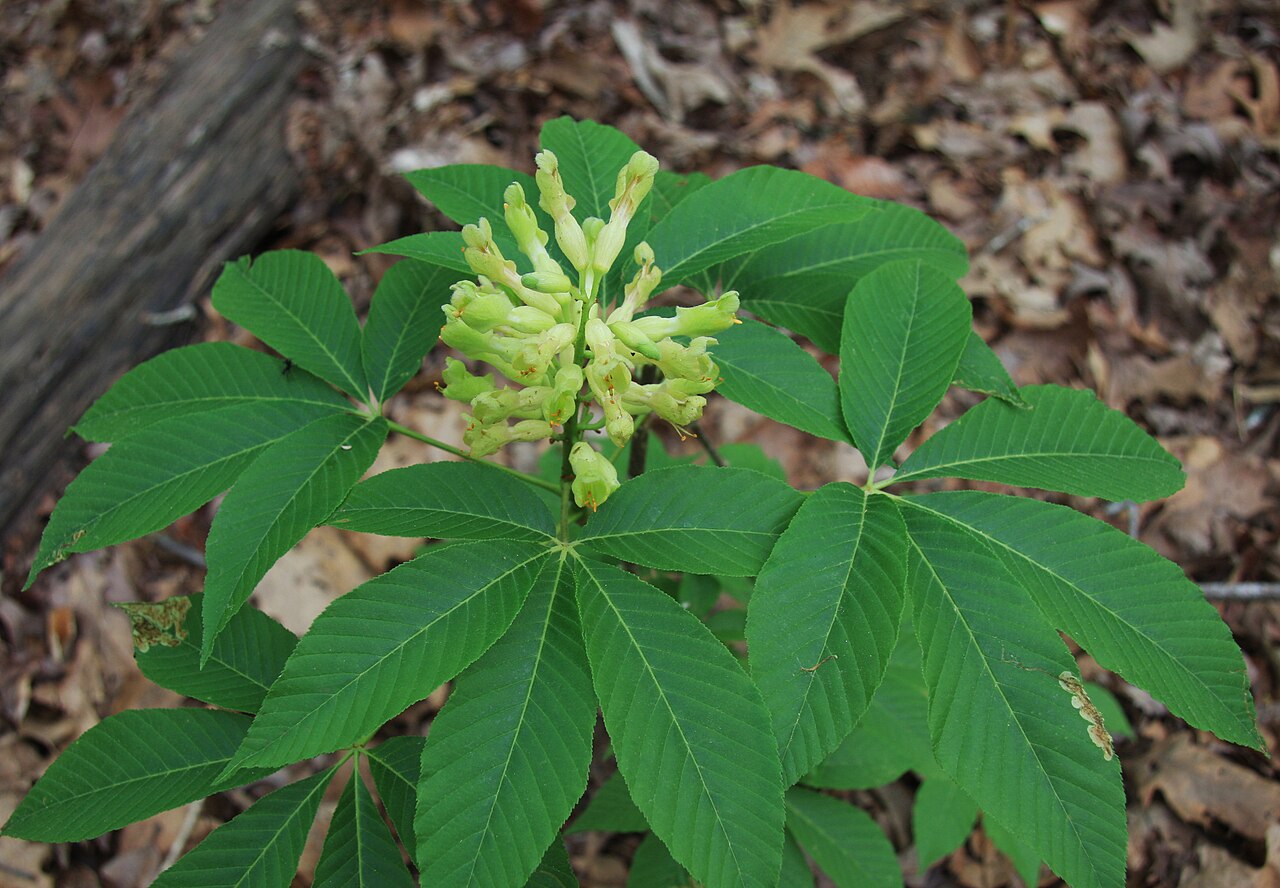
Aesculus sylvatica, commonly called Painted Buckeye or Dwarf Buckeye, is a small native understory tree or large shrub of the Piedmont and inner coastal plain of the Southeast, among the earliest native woody plants to leaf out each spring. Its common name reflects the variable, sometimes multicolored palette of its flowers, which can range from pale yellow-green to soft pink and even bicolor combinations on different individuals, making it one of the more visually variable native buckeyes. It belongs to the soapberry family (Sapindaceae, formerly classified in Hippocastanaceae), the same family as the related and better-known yellow buckeye and Ohio buckeye.
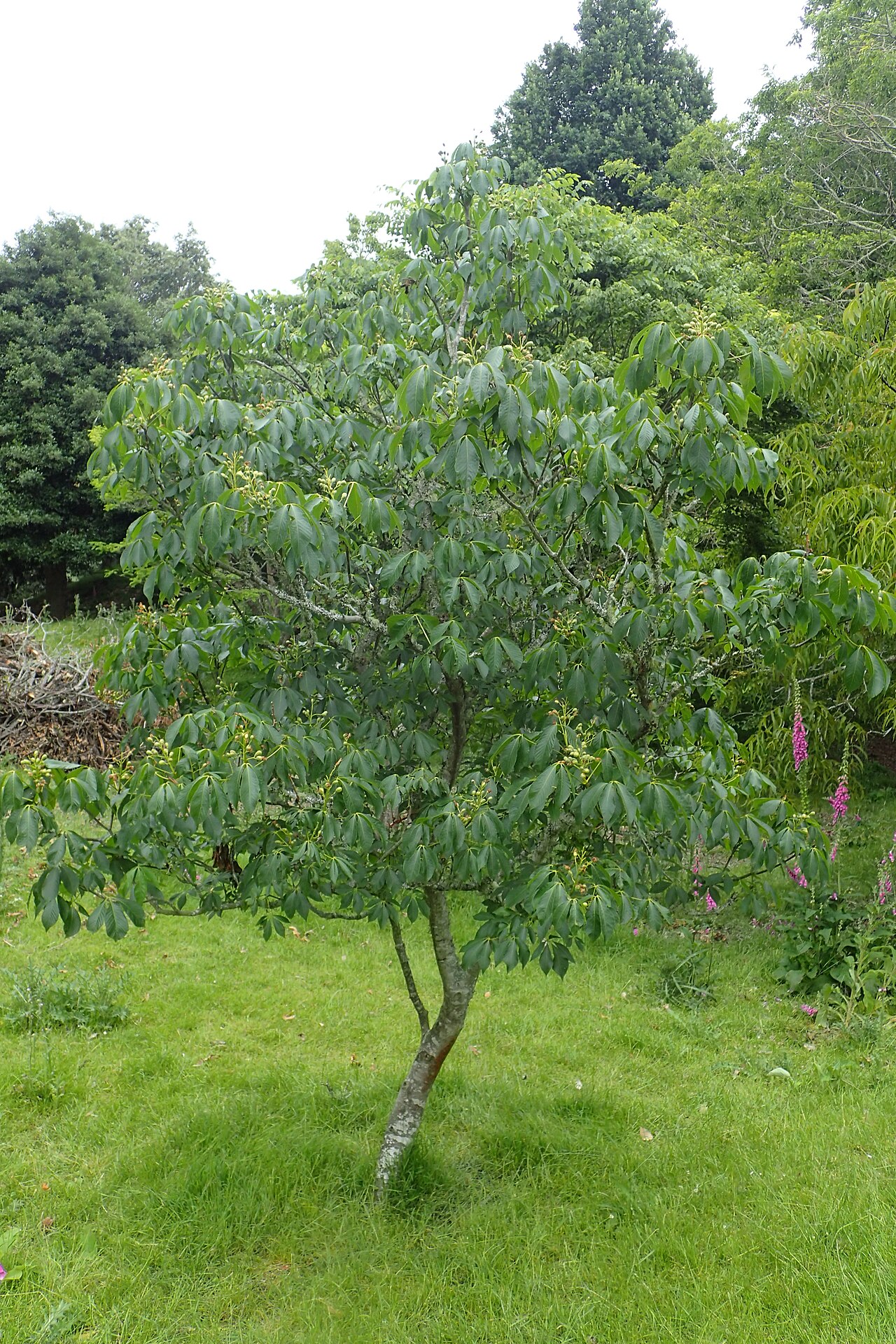
Painted Buckeye typically grows as a multi-stemmed shrub or small tree, 10 to 20 feet tall, with a rounded form and distinctive palmately compound leaves — five leaflets radiating from a central point, much like a hand — that emerge strikingly early in late winter to earliest spring, often the first understory plant to leaf out in its forest habitat. It favors the rich, moist, well-drained soils of mesic hardwood forests, floodplain edges, and lower slopes across the Piedmont of the Carolinas, Georgia, and Alabama, with outlying populations reaching into Virginia.
As with all buckeyes, every part of Painted Buckeye — seeds, leaves, and flowers — contains compounds that are toxic if ingested by people or livestock. This is an important landscaping and safety consideration, not a deterrent to using the plant, since it is a valuable and attractive native shrub for shaded gardens when sited thoughtfully away from areas where children or grazing animals might be tempted to sample the shiny, chestnut-like seeds.
Identification
Painted Buckeye is most easily recognized by its palmately compound leaves with five leaflets, its very early spring leaf-out, and its variably colored flower spikes, which can shift from yellow-green to pink on the same plant or between individuals in the same population.
Bark & Stems
Bark is smooth and gray on young stems, becoming slightly rougher and more fissured with age, though the plant rarely develops the thick, deeply furrowed bark of larger forest trees given its typical shrub to small-tree stature. Stems are multiple, often forming a rounded thicket from the base.
Leaves
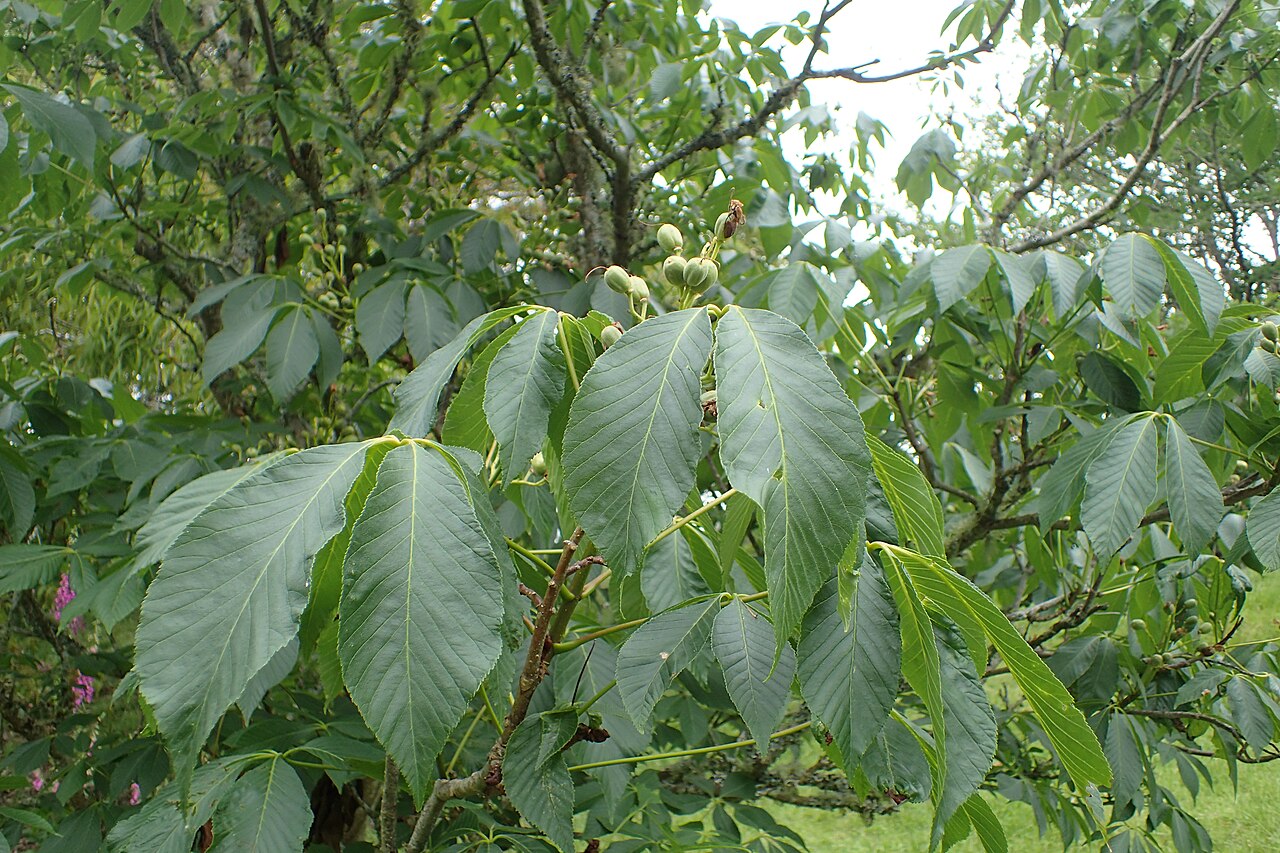
Leaves are opposite and palmately compound, with five (occasionally seven) elliptical to obovate leaflets radiating from a central point, each leaflet 3 to 6 inches long with finely toothed margins. Painted Buckeye is notable for leafing out extremely early, often in late winter, well before most other native trees and shrubs, giving it a head start on photosynthesis in the still-open forest understory. Foliage often shows some yellow fall color before dropping, and the plant frequently goes summer-dormant by mid to late summer in drier years, dropping its leaves early.
Flowers
Flowers are borne in upright spikes (panicles) 4 to 8 inches long at branch tips in early to mid-spring, with individual tubular flowers that vary noticeably in color from pale yellow-green to pink, sometimes with both colors appearing on the same spike or across different plants in the same stand. This flower color variability is one of the species’ most distinctive and horticulturally interesting traits.
Fruit & Seeds
The fruit is a smooth or lightly textured, leathery husk (unlike the spiny husk of Ohio buckeye) containing one to three glossy, dark brown seeds with a pale circular scar, the classic “buckeye” appearance shared across the genus. All parts of the seed are toxic if eaten raw, containing glycosides that cause gastrointestinal and neurological symptoms in people, pets, and livestock.
Quick Facts
| Scientific Name | Aesculus sylvatica |
| Family | Sapindaceae (Soapberry) |
| Plant Type | Deciduous shrub or small tree |
| Mature Height | 10–20 ft |
| Mature Spread | 10–15 ft |
| Growth Rate | Moderate |
| Sun Exposure | Part shade to shade |
| Water Needs | Moderate |
| Soil Type | Rich, moist, well-drained woodland soil |
| Soil pH | Slightly acidic |
| Bloom Time | Early to mid-spring |
| Flower Color | Yellow-green to pink, variable |
| Fall Color | Yellow; often summer-dormant by late summer |
| Fruit | Smooth leathery husk with 1–3 toxic seeds |
| Deer Resistant | Yes |
| USDA Hardiness Zones | 6–9 |
Native Range
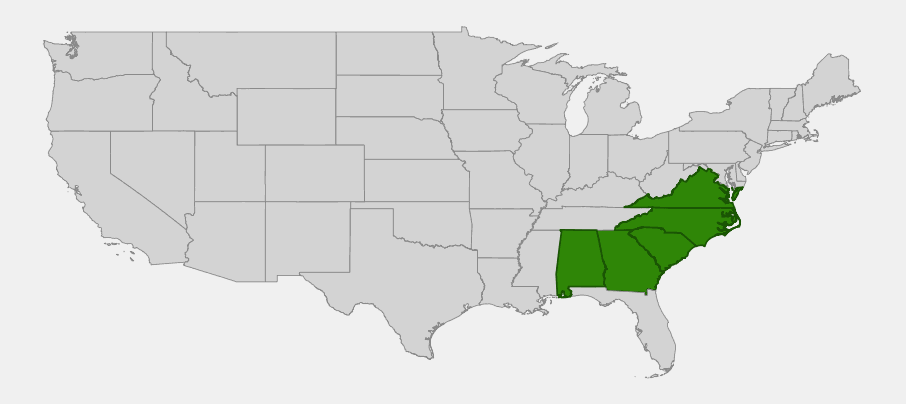
Painted Buckeye is primarily a Piedmont species, most abundant across the Piedmont of North Carolina, South Carolina, Georgia, and Alabama, with its range also reaching into the inner coastal plain in parts of those states and extending north into southern Virginia. Within this range it favors rich, mesic hardwood forests on lower slopes, bluffs, and floodplain margins, often forming dense understory thickets beneath a taller oak-hickory or mixed hardwood canopy.
The species is less common in the mountains, where it occurs only at lower elevations if at all, and is generally absent from the outer coastal plain and barrier-island habitats of the Atlantic Southeast, which favor different vegetation entirely. Painted Buckeye’s early spring leaf-out and tendency toward summer leaf drop in dry years are both adaptations well matched to the Piedmont’s characteristic rich-but-seasonal hardwood forest conditions.
Painted Buckeye is not native to the Midwest, the Gulf coastal plain west of Alabama, Florida, or anywhere outside the Piedmont and adjacent inner coastal plain of the Carolinas, Georgia, Alabama, and southern Virginia; plantings elsewhere should be understood as garden introductions.
Native Range
| U.S. States | Alabama, Georgia, North Carolina, South Carolina, Virginia |
| Mexico or Canadian Provinces | None |
| Ecoregion | Piedmont and inner coastal plain of the southeastern U.S. |
| Elevation Range | 100–1,500 ft |
| Habitat | Rich mesic hardwood forest, floodplain margins, lower slopes |
| Common Associates | White oak, tulip poplar, American beech, flowering dogwood |
📋 Painted Buckeye is native to parts of the areas covered by Maryland, Virginia, and West Virginia, North Carolina and South Carolina, and Georgia, Alabama and Mississippi.
Growing & Care Guide
Light
Painted Buckeye is adapted to the dappled to deep shade of a hardwood forest understory and performs best in part shade to shade; too much direct sun, especially in summer, can scorch its foliage and accelerate the plant’s natural tendency toward early leaf drop.
Soil & Water
This shrub wants rich, moist, well-drained, slightly acidic soil typical of Piedmont hardwood forest. It appreciates consistent moisture through spring and early summer but is naturally adapted to going dormant and dropping leaves in response to late-summer drought, a survival strategy rather than a sign of poor health.
Planting Tips
Site Painted Buckeye beneath taller shade trees where it will receive filtered light, mimicking its natural understory position. Because the entire plant, especially the seeds, is toxic if ingested, avoid planting where children or grazing animals have easy access to fallen seeds, and consider this when choosing a location in a family or farm landscape.
Pruning & Maintenance
Little pruning is required beyond removing dead or damaged stems. Do not be alarmed by the species’ characteristic early summer leaf drop in dry years; this is a normal drought-avoidance strategy rather than disease, though consistent watering during establishment will extend the plant’s green season.
Propagation
Propagate from seed collected in fall as soon as the husks split; buckeye seeds lose viability quickly if allowed to dry out and should be planted promptly or stored moist and cool over winter for spring germination. Root cuttings and division of naturally suckering clumps are also used to propagate selected flower-color forms.
Landscape Uses
- Understory shrub for shaded native woodland gardens
- Early-spring interest planting beneath deciduous shade trees
- Naturalizing shrub for Piedmont restoration plantings
- Deer-resistant shrub border in wooded landscapes
- Specimen shrub valued for variable flower color
Wildlife & Ecological Value
For Pollinators
Painted Buckeye’s early spring flower spikes are an important nectar source for native bees and, especially, migrating ruby-throated hummingbirds arriving in the Southeast just as the flowers open, making it a valuable early-season resource in woodland gardens.
Birds
Hummingbirds are the standout visitor, drawn to the tubular flowers during spring migration. Other songbirds use the shrub’s dense branching for nesting cover and foraging for insects.
Mammals
While the seeds are toxic to most mammals including humans, squirrels and some other wildlife have developed tolerance and will cache or feed on buckeye seeds in small amounts; deer generally avoid browsing the foliage, making Painted Buckeye a reliably deer-resistant landscape choice.
Ecosystem Role
As one of the earliest native plants to leaf out each spring, Painted Buckeye plays an outsized role in early-season photosynthesis and nectar availability in Piedmont hardwood forests, and its dense understory thickets provide structural diversity and cover in forest communities that might otherwise have a sparser shrub layer.
Cultural & Historical Uses
Like other buckeyes, Painted Buckeye’s seeds were historically processed by some Indigenous peoples using extended leaching to remove toxic compounds before use as an emergency food source in times of scarcity, a labor-intensive practice not recommended today given the availability of safer food sources and the real risk of improper preparation. The seeds have also long been carried informally as “lucky buckeyes,” a folk tradition shared across the buckeye genus in the eastern United States.
Painted Buckeye has been in cultivation in American gardens since the 19th century, valued by Piedmont gardeners for its very early spring leaf-out and its unusual, variably colored flowers — traits that made it a subject of interest among regional plant collectors well before it became more widely available commercially.
Today the species is grown primarily as an ornamental and ecological landscaping shrub, appreciated for extending the native garden’s season of interest into the earliest weeks of spring and for its role supporting migrating hummingbirds and early-emerging native bees.
Frequently Asked Questions
Is Painted Buckeye toxic?
Yes. All parts of the plant, especially the seeds, contain glycosides toxic to people, pets, and livestock if ingested raw. It should never be treated as a food source without traditional, extensive processing, which is not a casual or recommended practice today.
Why do Painted Buckeye’s flowers vary in color?
The species shows natural variation in flower pigmentation from pale yellow-green to pink, sometimes within the same flower spike, a distinctive trait of the species and part of what inspired its common name.
Why did my Painted Buckeye drop its leaves in midsummer?
This is a normal drought-avoidance adaptation. Painted Buckeye often goes summer-dormant and drops its leaves early in dry years, especially in full sun; it is not necessarily a sign of disease or poor health.
Is Painted Buckeye deer resistant?
Yes, deer generally avoid browsing its foliage, likely due to the same toxic compounds that make the plant unsafe to eat, making it a reliable choice in landscapes with heavy deer pressure.
How much sun does Painted Buckeye need?
It is adapted to forest understory conditions and performs best in part shade to shade; it is not well suited to full, all-day sun exposure, particularly in hot summer climates.
Looking for a nursery that carries native plants for your area? Visit our regional nursery directories: Pennsylvania to Virginia (includes Virginia & South Carolina), Nebraska to Oklahoma (includes North Carolina), Colorado to Hawaii (includes Georgia), and Alabama to Arkansas for growers near Painted Buckeye’s native range.

