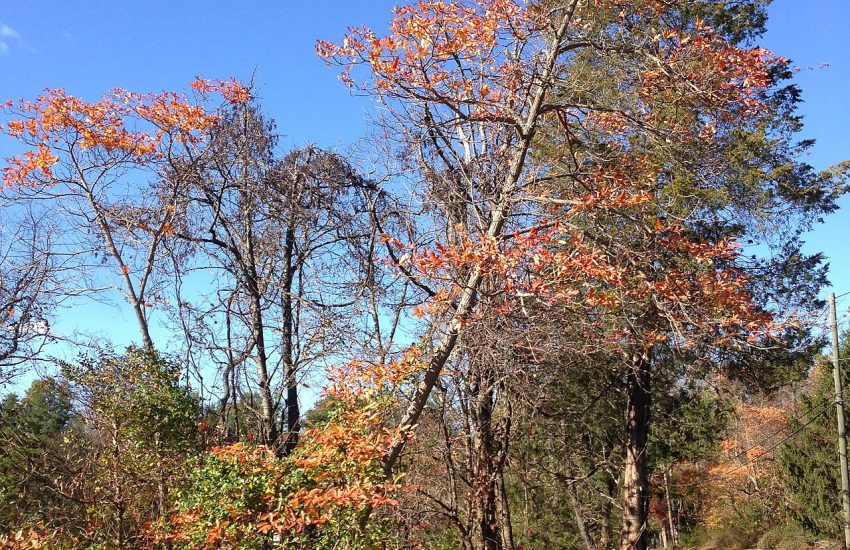
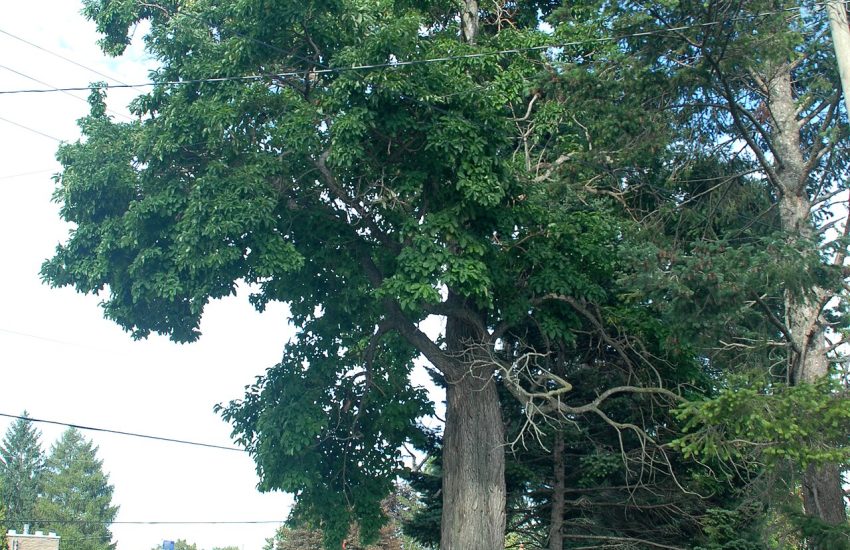
Pear Hawthorn (Crataegus calpodendron)
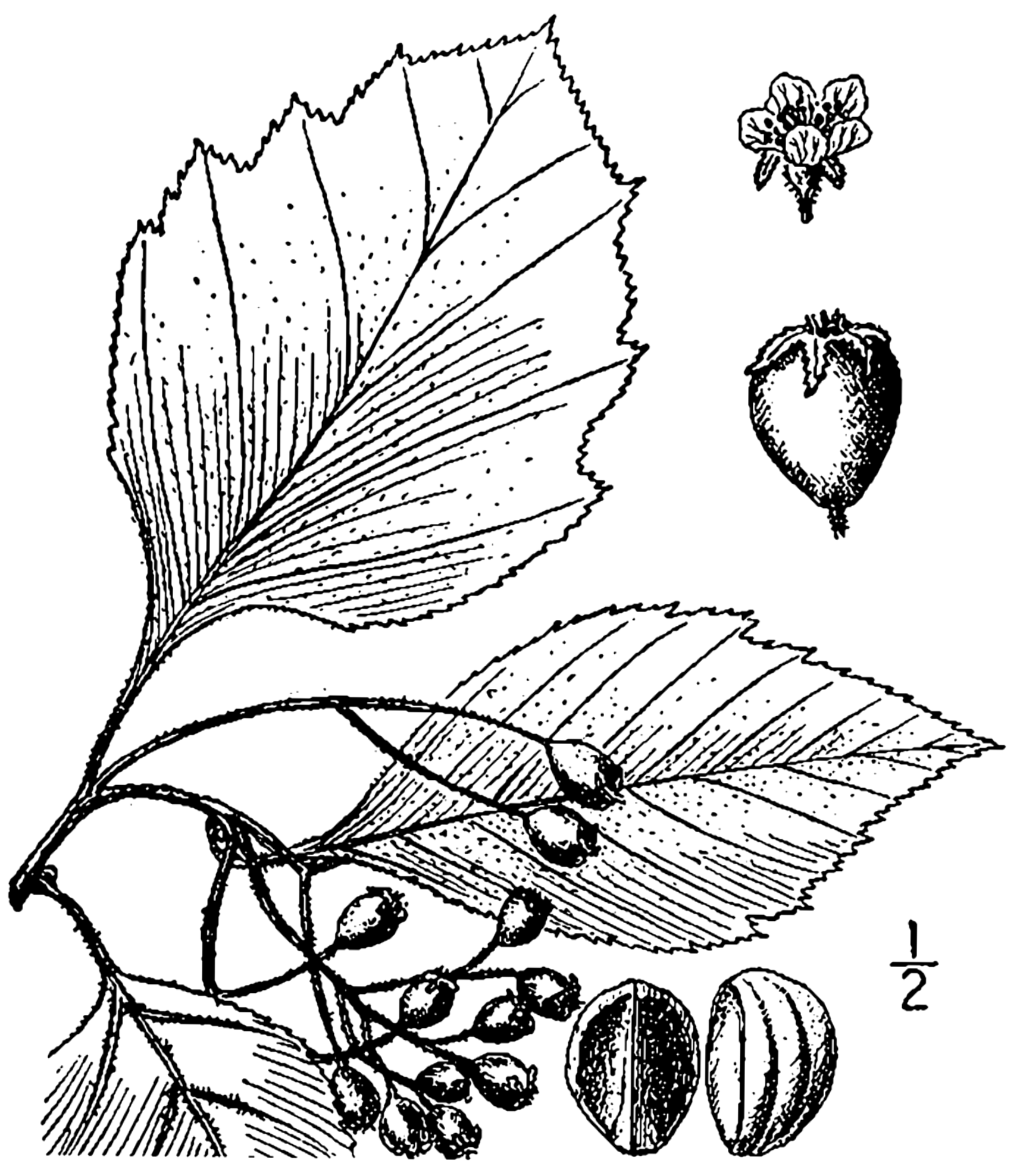
Crataegus calpodendron, commonly called pear hawthorn or late hawthorn, is a small native tree of the Rosaceae (rose) family found through much of the eastern and midwestern United States and into southern Ontario. The common name “late hawthorn” refers to its distinctive bloom time — it flowers noticeably later in spring than most other North American hawthorns, a trait that helps separate it from its many close relatives in this notoriously variable genus.
Pear hawthorn typically grows as a small, round-headed tree or large shrub, with slender branches, relatively few but stout thorns compared to many hawthorn relatives, and clusters of white spring flowers that give way to small, pear-shaped orange-red fruit in fall. It is most common and grows most tree-like in the northern and Appalachian portions of its range, where it often appears in open woodlands and along forest edges, while in the southern part of its range it tends to be a smaller, shrubbier, less common plant.
Like other native hawthorns, pear hawthorn is a quietly excellent wildlife plant: its flowers feed early pollinators, its fruit persists into winter for hungry birds, and its thorny, twiggy structure provides secure nesting cover. For gardeners willing to accept a tree with real character rather than a tidy nursery silhouette, it is a tough, long-lived native worth seeking out.
Identification
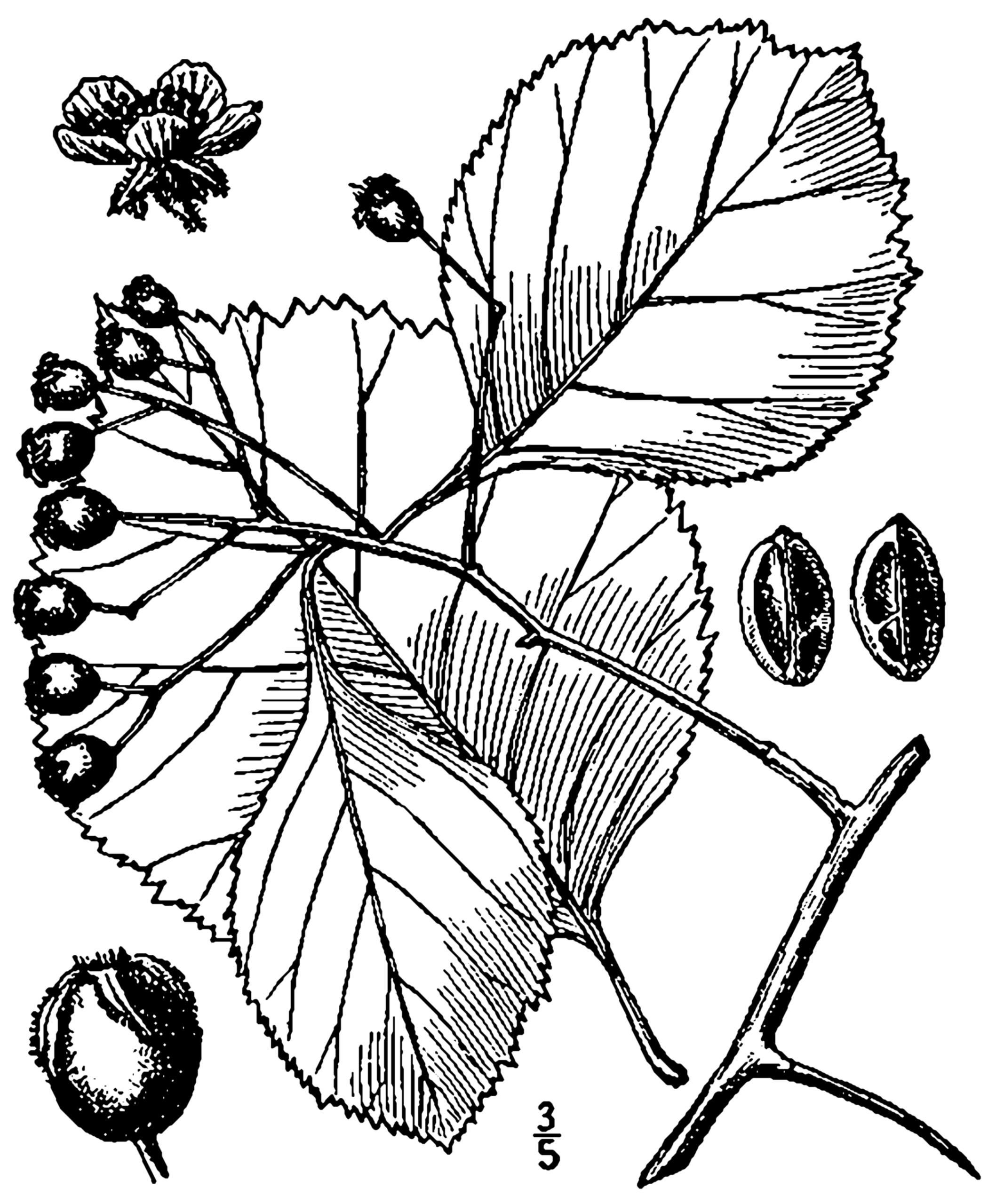
Pear hawthorn usually grows as a small tree or large shrub 15 to 25 feet tall, occasionally more in open, favorable sites, with a short trunk, slender spreading branches, and a rounded crown. Compared to many Crataegus species, it tends to be less densely thorny, with fewer, stouter spines 1 to 2 inches long scattered along the branches.
Bark & Stems
Bark on young stems is smooth and grayish-brown, becoming more scaly and furrowed with age. Twigs are slender and zigzag slightly between nodes, armed with occasional stout, straight thorns. The overall branching pattern is looser and more open than many thicket-forming hawthorns.
Leaves
Leaves are simple, alternate, broadly oval to obovate, 2 to 4 inches long, with sharply toothed margins and a texture that is notably soft and slightly fuzzy on the underside — another trait that distinguishes it from many smooth-leaved hawthorn relatives. The leaf surface often bears small dark dots, and leaves turn a modest yellow to bronze in autumn.
Flowers & Fruit
Clusters of white, five-petaled flowers about ½ inch across open in late spring, noticeably later than most other native hawthorns — the trait behind the common name “late hawthorn.” The flowers have an odor many people find unpleasant up close, typical of the genus, though it goes unnoticed from a short distance. By early fall, the tree bears small, pear-shaped (not round) orange to dull red fruit about ⅓ to ½ inch long, borne in loose, drooping clusters that often persist on the tree into winter.
Quick Facts
| Scientific Name | Crataegus calpodendron |
| Family | Rosaceae (Rose) |
| Plant Type | Deciduous Small Tree / Large Shrub |
| Mature Height | 15–25 ft |
| Mature Spread | 12–20 ft |
| Growth Rate | Slow to Moderate |
| Sun Exposure | Full Sun to Part Shade |
| Water Needs | Moderate |
| Soil Type | Well-drained loam or rocky soils; adaptable |
| Soil pH | 6.0–7.5 |
| Bloom Time | Late May – June (later than most hawthorns) |
| Flower Color | White |
| Fall Color | Yellow to bronze |
| Fruit | Small, pear-shaped orange-red pomes, persisting into winter |
| Deer Resistant | Yes (thorns deter browsing) |
| USDA Hardiness Zones | 4–8 |
Native Range
Pear hawthorn is native to much of the eastern and midwestern United States, from the Great Plains margin in Kansas and Nebraska east through the Midwest and Appalachians to the mid-Atlantic, and north into the Great Lakes states and southern Ontario. It also extends south in scattered populations through the Gulf states. The species is most common, and grows into its most tree-like form, in the northern and Appalachian parts of its range; farther south it becomes increasingly uncommon and tends to stay smaller and shrubbier.
Typical habitat includes open mixed hardwood forests, woodland edges, dry to mesic upland slopes, and wooded ravines, often over calcareous or otherwise base-rich rock. It also turns up along streamsides and in old fields reverting to woodland, where its thorny, sun-loving habit lets it establish ahead of larger canopy trees.
Because it tolerates a wide range of soils, including rocky or thin ones, and does not demand consistent moisture, pear hawthorn is a good choice for difficult, well-drained upland sites where many other small native trees struggle.
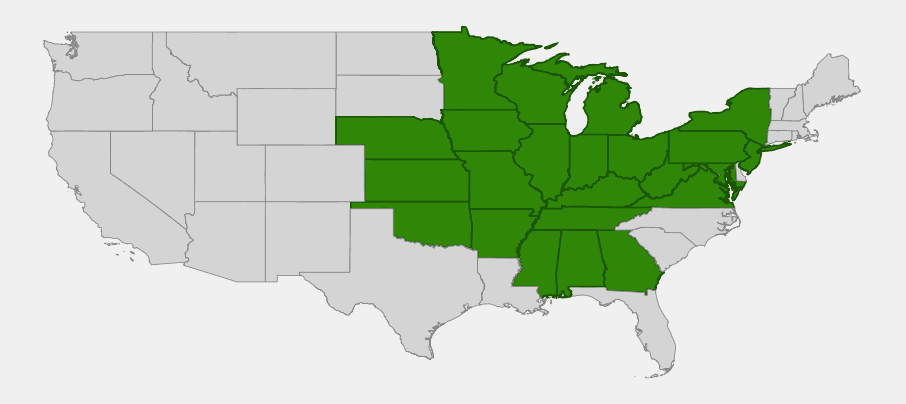
📋 Regional plant lists featuring Pear Hawthorn: Georgia, Alabama & Mississippi · Arkansas, Louisiana, Eastern Oklahoma & Eastern Texas · Illinois, Iowa & Missouri · Ohio & Indiana · Nebraska, Kansas & Eastern Colorado · Kentucky & Tennessee · Maryland, Virginia & West Virginia · Michigan, Wisconsin & Eastern Minnesota · New York, Pennsylvania & Northern New Jersey
Growing & Care Guide
Pear hawthorn is an easygoing small tree once established, tolerant of poorer soils and drier sites than many flowering natives. For general hawthorn care tips that also apply here, see our hawthorn tree growing guide.
Light
Performs best in full sun to light shade. In more shaded woodland-edge sites it grows taller and more open in search of light; in full sun it stays more compact and flowers and fruits more heavily.
Soil & Water
Adaptable to a range of well-drained soils, including rocky, thin, or clay-based ground, and tolerant of the calcareous soils it often favors in the wild. It does not need consistent moisture and handles moderate drought once established, though it is not suited to permanently wet sites.
Planting Tips
Plant balled-and-burlapped or container stock in spring or fall in a sunny, well-drained spot. Because the thorns can be considerable on some individuals, site it away from paths, patios, and play areas. Pear hawthorn transplants best while young; older field-collected specimens resent disturbance.
Pruning & Maintenance
Prune in late winter while dormant to remove dead, crossing, or low branches and to maintain clearance if planted near a walkway (see our general guide to pruning trees and shrubs for technique). Like other hawthorns, it can be susceptible to cedar-hawthorn rust where eastern redcedar grows nearby, as well as occasional fire blight; neither is usually serious on an otherwise healthy tree.
Landscape Uses
Pear hawthorn fits well into naturalistic and wildlife-focused plantings:
- Wildlife and bird gardens — persistent winter fruit is valuable late-season food
- Woodland edge and savanna restoration
- Dry, rocky, or poor-soil sites where few other small trees thrive
- Thorny security hedge or barrier planting
- Naturalized old-field and reclamation plantings
Wildlife & Ecological Value
As with most native hawthorns, pear hawthorn supports wildlife well beyond what its modest stature suggests.
For Pollinators
The late-spring flowers, blooming after most other hawthorns have finished, extend the available nectar and pollen season for native bees and other early-summer pollinators, including many small native bee species and flies.
For Birds
The small, pear-shaped fruits persist on the tree well into winter, providing an important late-season food source for robins, cedar waxwings, and other fruit-eating birds after many other wild fruits have already been consumed or dropped. The thorny branch structure also offers secure nesting sites.
For Mammals
Small mammals feed on fallen fruit, and the dense, thorny growth provides cover from predators. Like other hawthorns, foliage and twigs are browsed by deer, though the thorns offer the tree some protection.
Ecosystem Role
Crataegus species as a group are important larval host plants for several moths and butterflies, including various hairstreaks, and pear hawthorn’s open, sun-loving habit makes it a useful early-successional tree on disturbed or reclaimed upland sites, helping stabilize soil and provide structure ahead of longer-lived canopy trees.
Cultural & Historical Uses
Like many native hawthorns, pear hawthorn has received relatively little historical attention compared to the more widely planted ornamental hawthorn species, though it shares the broader ethnobotanical history of the genus — hawthorn fruits and flowers have long been associated with traditional heart-health preparations in European and American folk herbalism. These are historical uses, not modern medical advice, and the fruit of pear hawthorn specifically has not been widely documented for food or medicinal use.
The genus name Crataegus derives from the Greek word for strength, a reference to the famously hard, dense wood common to hawthorns, which has occasionally been used for small tool handles and other items requiring a tough, fine-grained wood, though the small size of most hawthorn trunks limits practical lumber use.
Today pear hawthorn is primarily of interest to native plant enthusiasts, restoration ecologists, and taxonomists — the genus Crataegus is notoriously complex, with pear hawthorn’s distinctive late bloom time serving as one of the more reliable field characters for separating it from its many regional relatives.
Frequently Asked Questions
Why is it called “late hawthorn”?
Pear hawthorn blooms noticeably later in spring than most other native hawthorn species, often by several weeks, which is the origin of both the common name and a useful identification clue in areas where multiple hawthorn species grow together.
Can I eat pear hawthorn fruit?
The small fruits are not toxic, but they are mealy and not considered good eating compared to some other hawthorn species; they are best left for birds, which rely on them as a persistent winter food source.
How is pear hawthorn different from other native hawthorns?
Its late bloom time, pear-shaped (rather than round) fruit, softer and somewhat fuzzy leaf undersides, and relatively sparse thorns compared to thicket-forming hawthorn relatives are the main distinguishing traits, though the genus overall is difficult even for botanists.
Does pear hawthorn get hawthorn rust?
It can, where eastern redcedar grows nearby, since the rust fungus needs both a juniper and a hawthorn host to complete its life cycle. The disease is usually cosmetic on an otherwise healthy, well-sited tree.
Is pear hawthorn a good choice for a small yard?
Yes, for an informal wildlife garden — it stays modest in size, tolerates poor soil, and rewards patience with reliable fall and winter fruit for birds. Avoid planting it right along paths because of the thorns.

Looking for a nursery that carries Pear Hawthorn?
Browse our native plant nursery directory: Alabama & Arkansas · Georgia · Illinois, Indiana, Iowa & Kansas · Kentucky, Maryland, Michigan, Minnesota, Mississippi & Missouri · Nebraska, New Jersey & New York · Ohio, Oklahoma, Pennsylvania & Tennessee · West Virginia & Wisconsin