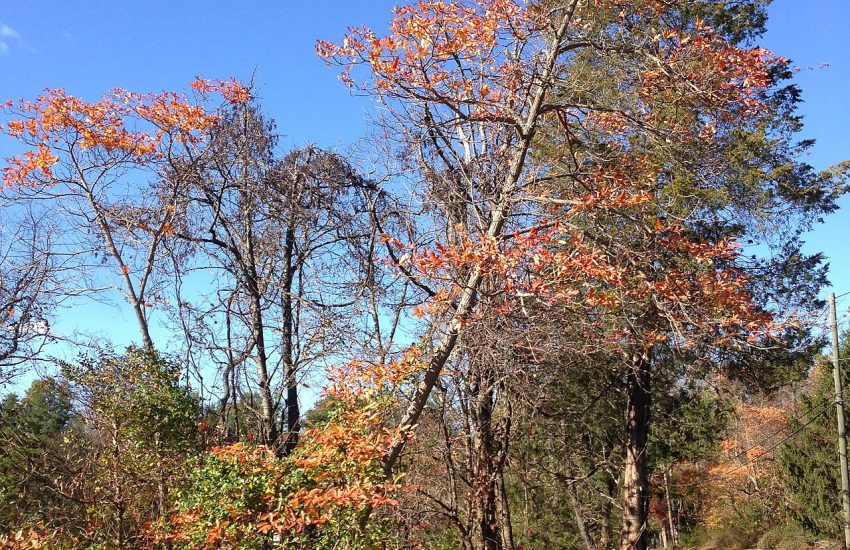
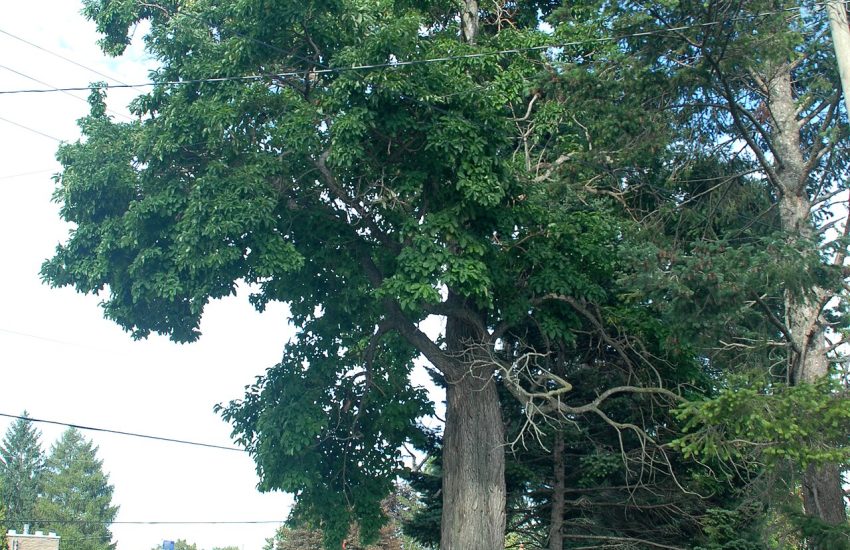
Prickly Ash (Zanthoxylum americanum)
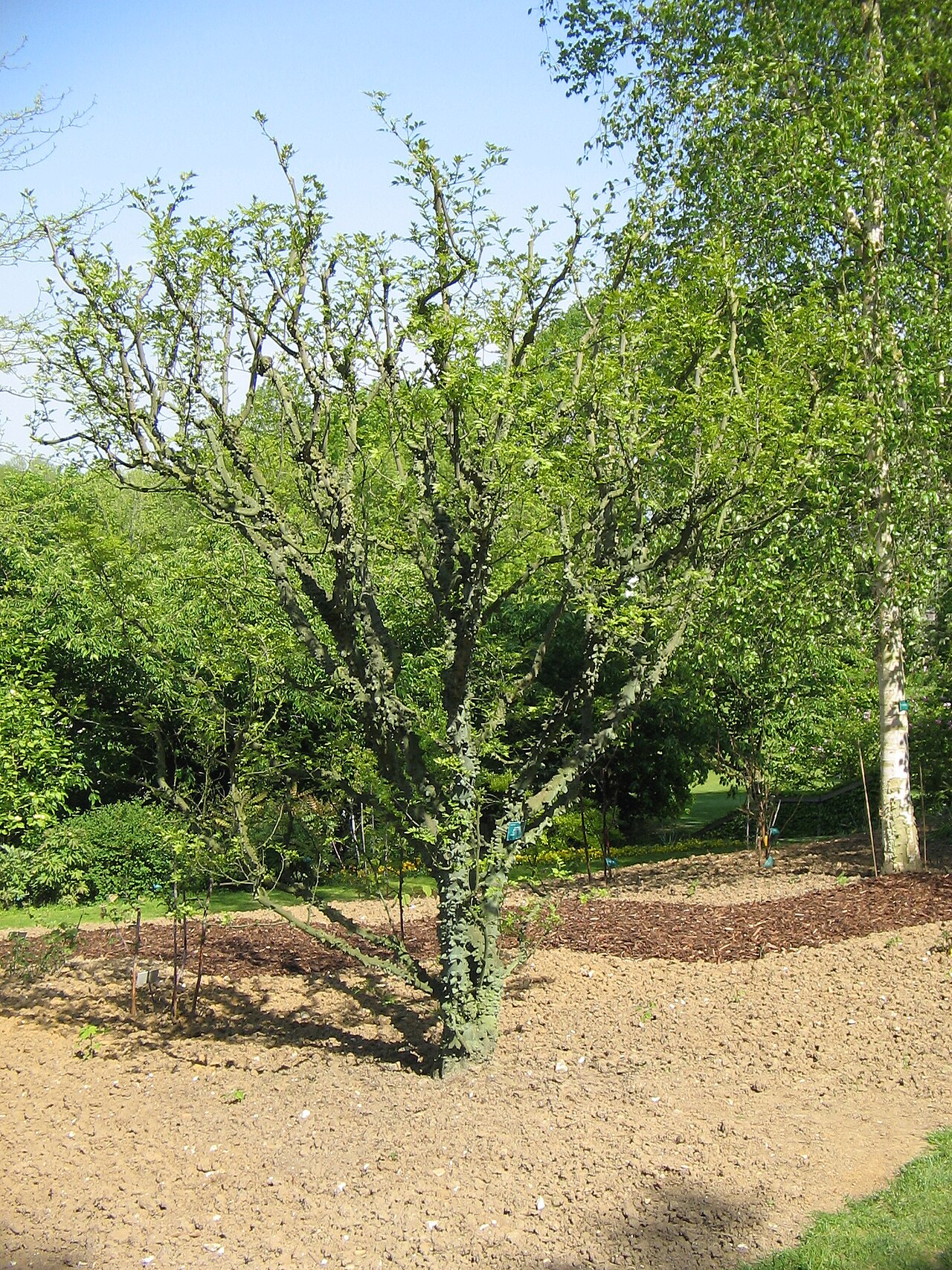
Zanthoxylum americanum, commonly called prickly ash, northern prickly ash, or toothache tree, is a thorny native shrub or small tree of the Rutaceae (citrus) family — making it the northernmost member of the citrus family in the New World, and a surprising relative of oranges, lemons, and Sichuan pepper. It grows across the central and eastern United States and into southern Ontario and Quebec, usually as a thicket-forming understory shrub in mesic woodlands, fencerows, and limestone bluffs.
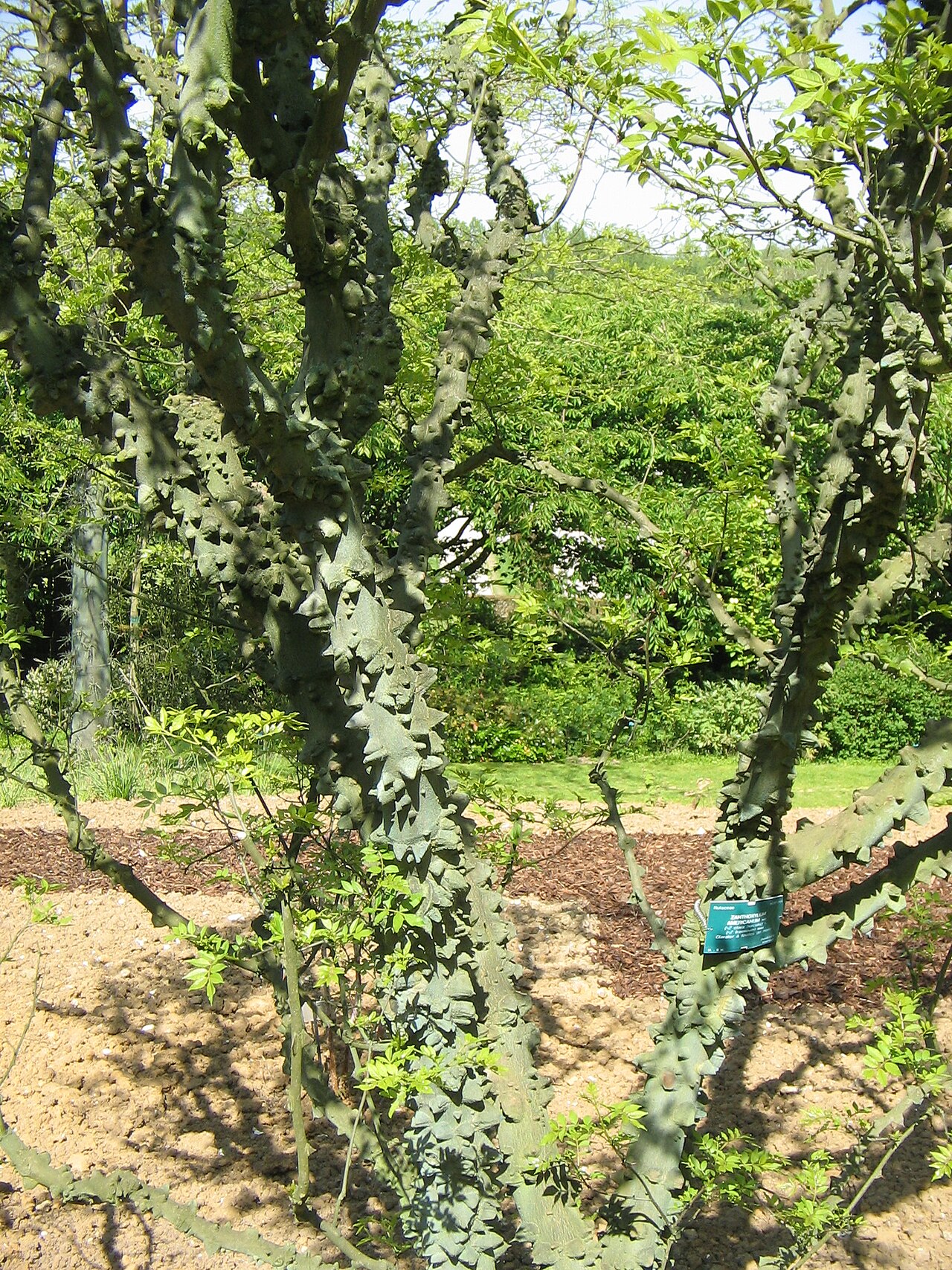
Every part of prickly ash is armed: paired, stout thorns line the twigs at each leaf node, and the trunk of older stems develops corky, wart-like spines of its own. Aromatic, lemon-scented compound leaves and small clusters of yellow-green flowers appear in early spring before the leaves fully expand, followed by red-brown seed capsules that split open to reveal shiny black seeds. The common name “toothache tree” comes from the numbing, tingling sensation produced by chewing the bark or berries — a use documented among Indigenous peoples and early settlers alike.
Though rarely planted ornamentally because of its thorns and suckering habit, prickly ash is an ecologically valuable native shrub: it is the primary host plant for the giant swallowtail butterfly across much of its range, and its dense, thorny thickets provide excellent nesting cover for songbirds. For wildlife gardens, hedgerows, or naturalized woodland edges where a tidy appearance is not the goal, it is a tough, low-maintenance native worth including.
Identification
Prickly ash is usually a many-stemmed, thicket-forming shrub 6 to 15 feet tall, occasionally developing into a small single-trunked tree up to about 25 feet with a trunk diameter of 4 to 6 inches. It spreads by root suckers, often forming dense, impenetrable colonial thickets over time.
Bark & Stems
Young twigs are reddish-brown and armed with paired, stout, flattened thorns about ¼ to ½ inch long at each leaf node. The gray-brown bark of older trunks is studded with corky, wart-like projections, and crushed twigs or bark release a strong citrus-like aroma. The combination of paired node-thorns and lemony scent is a reliable way to distinguish prickly ash from superficially similar thorny shrubs like hawthorn or hardy orange.
Leaves
Leaves are alternate, pinnately compound, 4 to 10 inches long, with 5 to 11 oval leaflets that are shiny dark green above and paler below, each leaflet 1 to 2 inches long with finely toothed or wavy margins. Leaflets and leaf stalks are dotted with tiny translucent oil glands, visible when held up to light, that release a strong citrus scent when crushed — a quick way to confirm identification.
Flowers & Fruit
Prickly ash is dioecious, with small, petal-less, yellow-green flowers borne in dense clusters directly on the previous year’s twigs in early spring, typically opening before the leaves. Flowers are inconspicuous but a valuable early nectar source for small native bees and flies. Female plants produce clusters of small, warty, reddish-brown seed capsules that ripen in late summer and split open to expose one or two shiny black seeds, which are strongly aromatic and dispersed by birds.
Quick Facts
| Scientific Name | Zanthoxylum americanum |
| Family | Rutaceae (Citrus) |
| Plant Type | Deciduous Thicket-Forming Shrub / Small Tree |
| Mature Height | 6–15 ft (occasionally to 25 ft) |
| Mature Spread | Forms colonial thickets by root suckers |
| Growth Rate | Moderate |
| Sun Exposure | Part Shade to Full Shade |
| Water Needs | Moderate |
| Soil Type | Moist, well-drained loam; tolerates limestone soils |
| Soil pH | 6.0–7.5 (neutral to alkaline) |
| Bloom Time | April – May, before leaves emerge |
| Flower Color | Yellow-green |
| Fall Color | Yellow |
| Fruit | Small red-brown capsules with black seeds |
| Deer Resistant | Yes (thorns deter browsing) |
| USDA Hardiness Zones | 3–7 |
Native Range
Prickly ash is native to the central and eastern United States, from the Great Plains east through the Midwest, Great Lakes, and Appalachians to the Atlantic Seaboard, and north into southern Ontario and Quebec. It is most common and abundant in the northern part of its range — the Midwest, Great Lakes states, and Northeast — and becomes increasingly rare toward the southern edge of its distribution in the Gulf states, where it is listed as endangered or of special concern in several states.
Across its range, prickly ash typically grows as an understory shrub in mesic deciduous woodlands, along fencerows and woodland edges, on rocky or limestone-influenced slopes and bluffs, and in floodplain forests. It tolerates a fair amount of shade and often forms dense colonies beneath a canopy of oaks, hickories, or maples, spreading steadily outward by root suckers.
Because it suckers aggressively and tolerates disturbance, prickly ash can become a thicket-forming nuisance in pastures and old fields within its native range, but this same toughness makes it valuable for naturalizing difficult woodland-edge sites where little else will establish and persist.
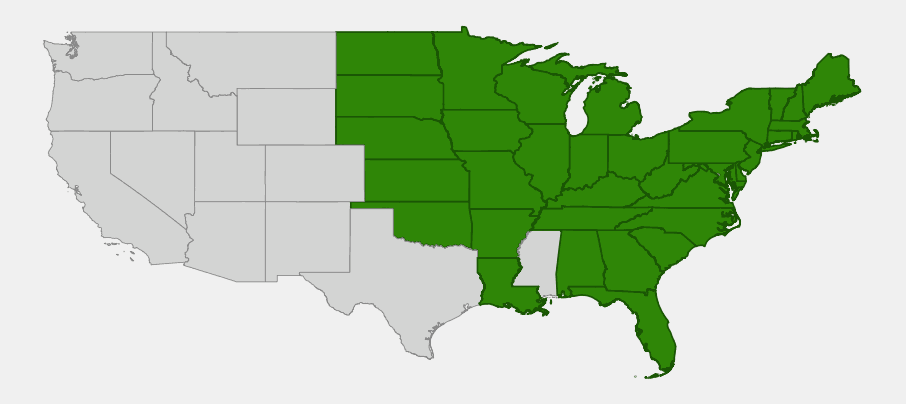
📋 Regional plant lists featuring Prickly Ash: Georgia, Alabama & Mississippi · Arkansas, Louisiana, Eastern Oklahoma & Eastern Texas · Connecticut, Massachusetts & Rhode Island · Delaware, Southern New Jersey & Long Island · Illinois, Iowa & Missouri · Ohio & Indiana · Nebraska, Kansas & Eastern Colorado · Kentucky & Tennessee · Maryland, Virginia & West Virginia · New Hampshire, Maine & Vermont · Michigan, Wisconsin & Eastern Minnesota · North Carolina & South Carolina · North Dakota, South Dakota & Western Minnesota · New York, Pennsylvania & Northern New Jersey
Growing & Care Guide
Prickly ash is tough, shade-tolerant, and nearly carefree once established — the challenge is usually keeping it contained, not keeping it alive.
Light
Grows well from part shade to full shade, making it one of the few thorny native shrubs suited to a woodland understory planting. It tolerates some sun but tends to look its best and stay most compact with afternoon shade.
Soil & Water
Prickly ash prefers moist, well-drained, fertile soil and is notably tolerant of limestone and other alkaline soils, reflecting its frequent occurrence on calcareous bluffs and outcrops in the wild. Established plants tolerate average garden moisture and short dry spells without special care.
Planting Tips
Plant container stock in spring or fall, siting it away from paths, play areas, and foot traffic because of the thorns. Because it spreads by root suckers, give it room — a woodland edge, fencerow, or naturalized area — rather than a tight foundation bed.
Pruning & Maintenance
Remove unwanted root suckers regularly if a contained specimen is desired, wearing heavy gloves. Established thickets need little other maintenance; occasional thinning of old, overcrowded stems in late winter keeps a planting open and vigorous. Prickly ash is generally free of serious pests and diseases.
Landscape Uses
Prickly ash suits naturalistic, wildlife-first plantings rather than formal garden beds:
- Wildlife hedgerows — thorny thickets provide secure nesting cover for songbirds
- Butterfly gardens — essential host plant for giant swallowtail caterpillars
- Woodland edge and understory plantings in shaded native gardens
- Living security hedge where its thorns discourage foot traffic
- Naturalized restoration on limestone or rocky, disturbed sites
Wildlife & Ecological Value
Prickly ash punches well above its weight ecologically, especially for one particular group of insects.
For Pollinators
The small, early-spring flowers, blooming before most other woodland plants, attract native bees, flies, and other small pollinators at a time when nectar sources are scarce. Both male and female plants contribute pollen and nectar to early-season foraging insects.
For Birds
The dense, thorny thickets formed by prickly ash provide exceptionally secure nesting sites for songbirds, since few predators can penetrate the tangle of spines. Birds also eat the aromatic seeds in late summer and fall, helping disperse them to new sites.
For Mammals
The thorns effectively deter browsing by deer and other mammals, which is one reason prickly ash can persist and spread in heavily browsed woodlands where more palatable shrubs are eliminated.
Ecosystem Role
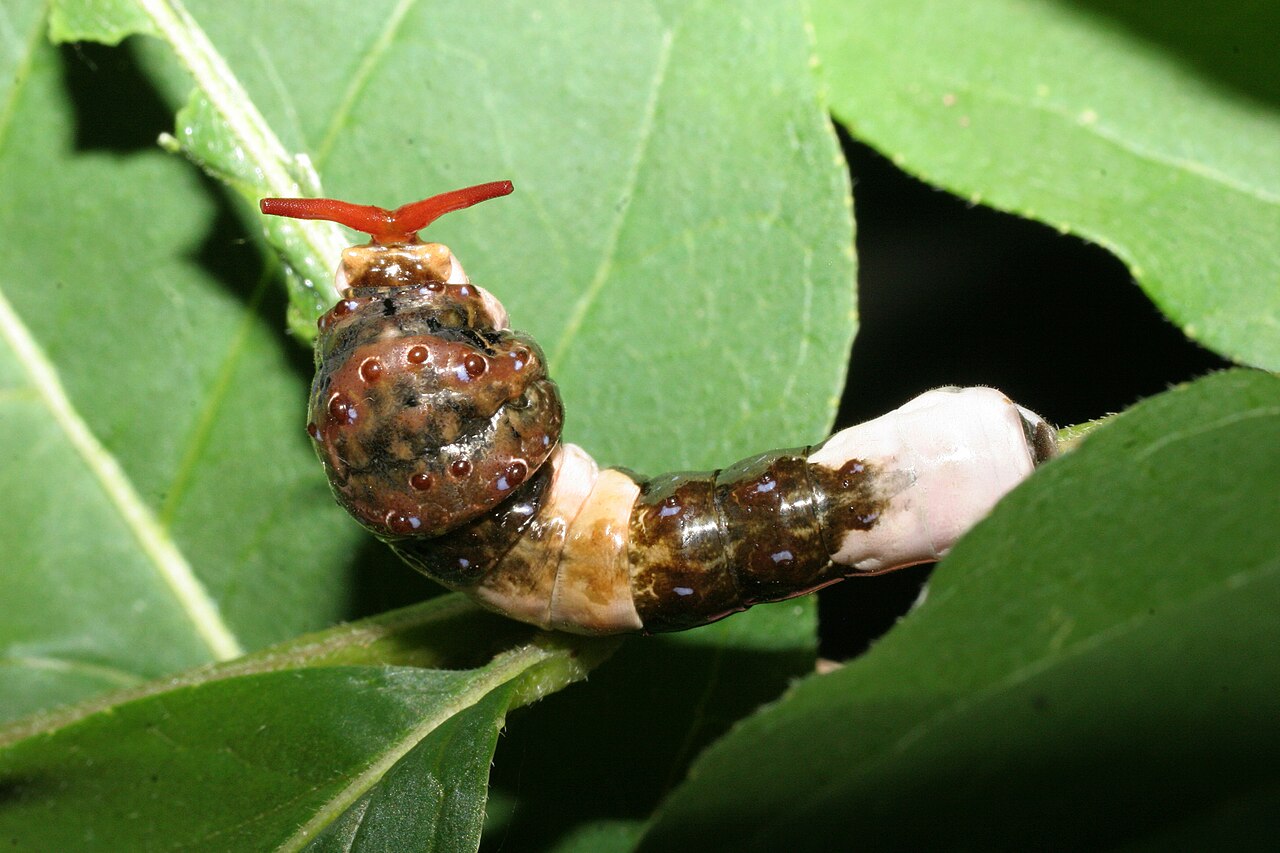
Prickly ash is the principal host plant for the giant swallowtail (Papilio cresphontes), North America’s largest butterfly, across much of its northern range; it is also used by the eastern tiger swallowtail and spicebush swallowtail. Gardeners focused on attracting butterflies should treat it as a specialty host plant alongside more familiar nectar sources. Without prickly ash and its relatives, giant swallowtail populations in the Midwest and Northeast would have far fewer host plants available. Its thicket-forming habit also provides important structural diversity in forest understories, especially on disturbed or browsed sites.
Cultural & Historical Uses
Prickly ash has a long history of use among Indigenous peoples of eastern North America, who chewed the bark or berries to numb toothaches and sore gums — the origin of the common name “toothache tree.” The plant was also used in traditional preparations for various ailments by numerous tribes and later adopted into 19th-century American folk and eclectic medicine as “toothache bark” or “Hercules’ club” bark, sold commercially for a time as a traditional remedy. These are historical uses, not modern medical recommendations, and self-treatment with any wild plant bark is not advised.
The aromatic, numbing compounds in the bark and seeds are related to those found in Sichuan pepper (Zanthoxylum species used in Chinese cuisine), reflecting the close relationship between prickly ash and its Asian relatives. Early settlers also noted the citrus-like fragrance of the crushed foliage, and the wood, though too small and gnarled for lumber, was occasionally used for small turned items.
Today, prickly ash is mostly valued by native plant gardeners and restoration practitioners for its wildlife benefits rather than any practical use, a reminder that a plant’s ecological value does not always depend on its usefulness to people.
Frequently Asked Questions
Why is it called “toothache tree”?
Chewing the bark, leaves, or berries produces a numbing, tingling sensation in the mouth, a traditional remedy for toothache among Indigenous peoples and early settlers. This is a historical use, not a medical recommendation.
Is prickly ash the same as Hercules’ club?
“Hercules’ club” is sometimes used as a common name for prickly ash, but it more often refers to Zanthoxylum clava-herculis, a related, more southern species with similar thorns and citrus-scented foliage. The two are closely related but distinct species.
Will prickly ash take over my yard?
It can spread by root suckers and form expanding thickets if left unchecked, so it is best planted where some spread is welcome — a woodland edge or wildlife hedgerow — rather than a small, tidy bed. Remove unwanted suckers regularly to keep it contained.
What butterflies use prickly ash?
It is the primary host plant for the giant swallowtail across much of the Midwest and Northeast, and is also used by eastern tiger swallowtail and spicebush swallowtail caterpillars.
Are the thorns dangerous?
The paired thorns are sharp enough to cause painful scratches and should be respected, but they are not toxic. Plant it away from paths and wear sturdy gloves when pruning or working nearby.

Looking for a nursery that carries Prickly Ash?
Browse our native plant nursery directory: Alabama & Arkansas · Connecticut, Delaware, Florida & Georgia · Illinois, Indiana, Iowa & Kansas · Kentucky, Louisiana, Maine, Maryland, Massachusetts, Michigan, Minnesota & Missouri · Nebraska, New Hampshire, New Jersey & New York · North Carolina, Ohio, Oklahoma, Pennsylvania, Rhode Island, South Carolina, South Dakota, Tennessee & Vermont · Wisconsin & West Virginia