
Piratebush (Buckleya distichophylla)
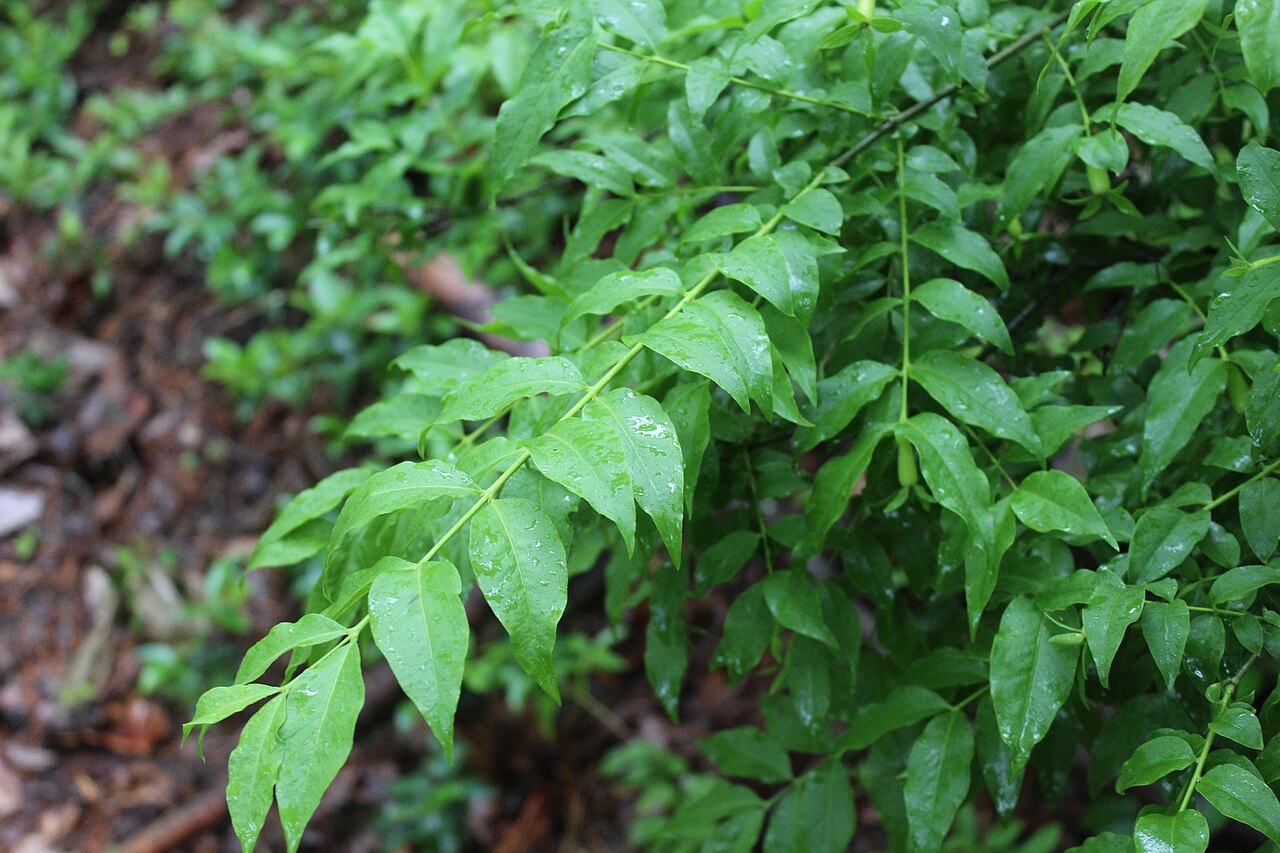
Buckleya distichophylla, the Piratebush, is one of the rarest and most unusual shrubs of the southern Appalachians. It is a member of the sandalwood family and grows only in a few scattered sites in the mountains of Virginia, North Carolina and Tennessee, with its largest known population on Poor Mountain near Roanoke, Virginia.
Piratebush is a root hemiparasite: it makes its own food by photosynthesis but also taps into the roots of neighboring trees and shrubs with small structures called haustoria, “pirating” water and nutrients. It was long thought to parasitize only hemlocks, but it is now known to attach to many host species.
It is a graceful, deciduous shrub with narrow leaves in two flat rows, tiny greenish flowers and olive-like fruits. Because it is rare and depends on host plants, this page is an identification and appreciation guide. Never dig up or collect piratebush; it cannot be transplanted successfully and must be protected where it grows.
Identification
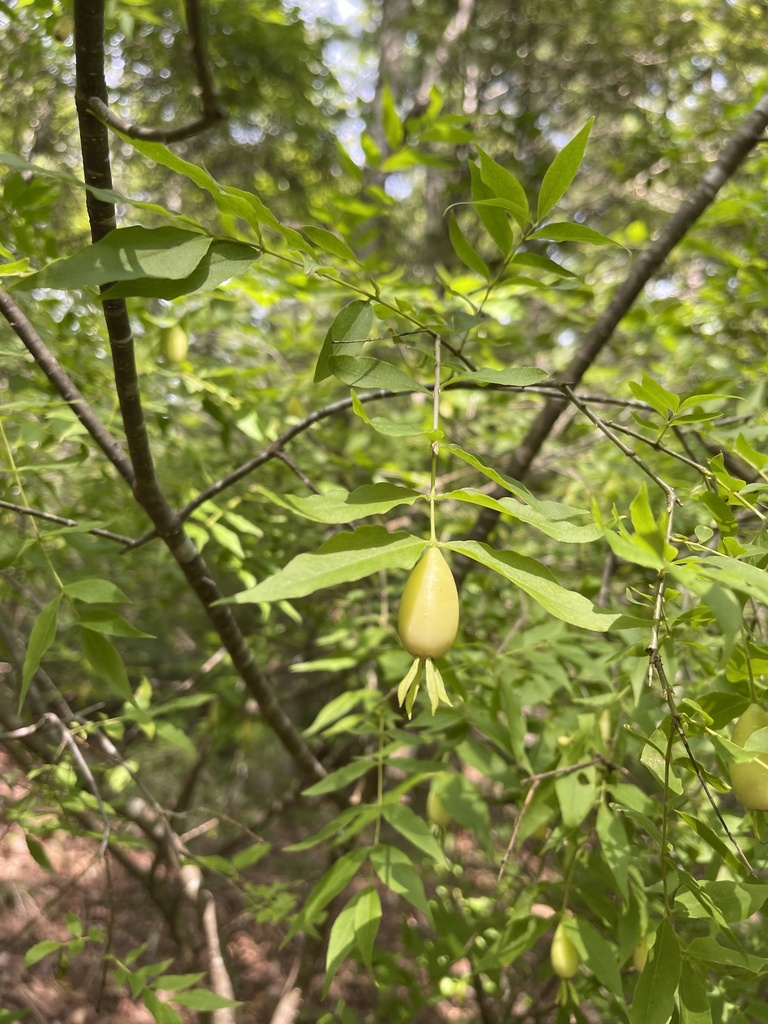
Piratebush is a loose, spreading shrub with slender, arching branches, narrow, pointed leaves in two rows, inconspicuous greenish flowers and olive-shaped fruits with four narrow bracts at the tip.
Form & Leaves
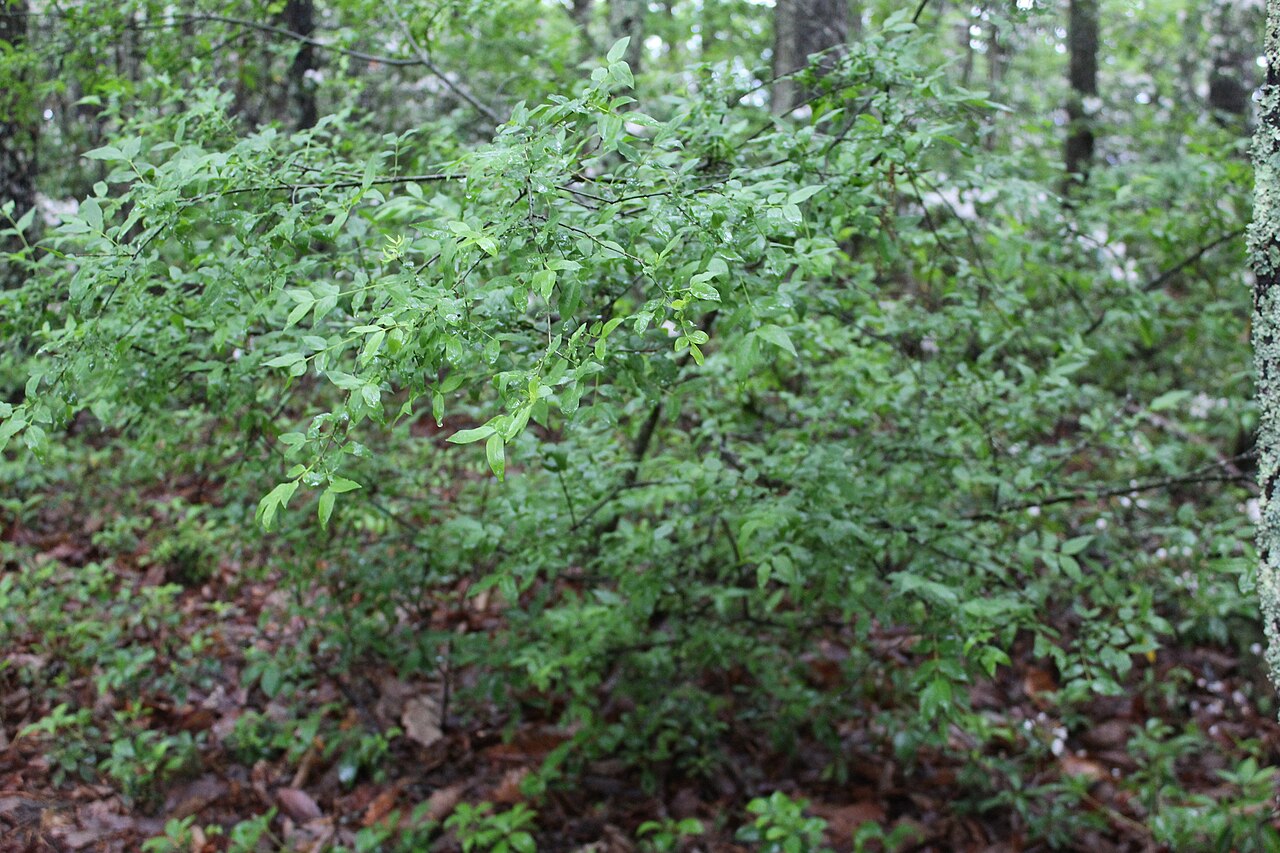
It usually grows 3 to 12 feet tall, occasionally to about 15 feet, with slender, arching, often zigzag branches. The leaves are opposite, narrowly lance-shaped, about 1 to 3 inches long, thin, smooth-edged and pointed, and are held in two flat rows along the twigs, like the leaflets of a compound leaf. They are often a pale or yellowish green.
Flowers
Male and female flowers grow on separate plants and appear in spring, around April and May. They are small, greenish and easy to overlook: male flowers in small clusters at the tips of short shoots, and female flowers single at the branch tips.
Fruit
Female plants produce a single, olive-shaped drupe about ¾ to 1 inch long at the tips of branches, pale green to yellowish, crowned by four long, narrow, leaf-like bracts. The fruit ripens in late summer and fall.
Look-alikes
Its two-ranked leaves make it look like a compound-leaved shrub, but each “leaflet” is a separate leaf. Its relative Buffalo Nut (Pyrularia pubera), another root-parasitic shrub of the Appalachians, has broader, alternate leaves and pear-shaped fruit.
Quick Facts
| Scientific Name | Buckleya distichophylla (Nutt.) Torr. |
| Family | Santalaceae (sandalwood family) |
| Plant Type | Deciduous root-hemiparasitic shrub; rare |
| Mature Height | 3–12 ft (occasionally to 15 ft) |
| Mature Spread | 3–8 ft |
| Growth Rate | Slow |
| Sun Exposure | Partial shade to sun |
| Water Needs | Low to moderate |
| Soil Type | Dry to moist, rocky, acidic woodland soils |
| Soil pH | Acidic |
| Bloom Time | April–May |
| Flower Color | Greenish |
| Fall Color | Yellow |
| Fruit | Olive-shaped drupe with four narrow bracts |
| Deer Resistant | Unknown |
| USDA Hardiness Zones | Not applicable; not cultivated |
Native Range
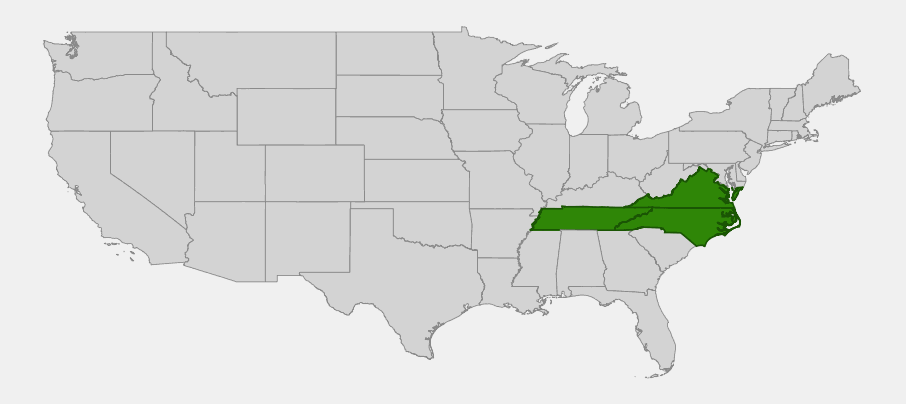
Piratebush is endemic to the southern and central Appalachian Mountains. USDA PLANTS lists it in Virginia, North Carolina and Tennessee, where it is known from only a small number of scattered sites, many of them along the Blue Ridge and in the mountains near the North Carolina–Tennessee border.
The largest known population is on Poor Mountain in Roanoke County, Virginia, protected in the Poor Mountain Natural Area Preserve. This single mountain has more piratebush plants than all other known sites combined. Smaller populations grow in the mountains of western North Carolina and eastern Tennessee, including parts of the Cherokee National Forest.
It grows in dry to moist, open oak, pine and hemlock woods, on rocky slopes, bluffs and ridges and along streams, often on acidic soils. Why it is so rare when similar habitat seems widespread remains a puzzle, though its parasitic lifestyle, separate male and female plants and limited seed dispersal may all play a part.
📋 Regional plant lists featuring Piratebush: North & South Carolina · Kentucky & Tennessee · Maryland, Virginia & West Virginia
Can You Grow It?
Piratebush cannot be grown from nursery stock and should never be dug up or transplanted. It is a rare root hemiparasite that needs living host plants, and wild plants are protected. A few botanical institutions have studied its propagation for conservation, but it is not available to gardeners. The best way to enjoy it is to visit it where it grows and to support the protection of its habitat.
Light
In the wild it grows in open woods and on slopes with partial shade to fairly sunny conditions, and it appears to need more light than many understory shrubs.
Soil & Water
It grows in acidic, rocky, well-drained woodland soils, from dry ridges to moist stream banks, where it can connect to the roots of host trees and shrubs.
Planting Tips
Do not plant or transplant piratebush. Its survival depends on attaching to the roots of suitable host plants, and removing it from its site will almost certainly kill it.
Pruning & Maintenance
In the wild it needs only protection. Land managers may control invasive plants and maintain open woodland conditions around populations.
Propagation
Seed propagation has been attempted by researchers for conservation. Never collect seeds or plants from wild populations.
Where to See It
- Poor Mountain Natural Area Preserve, Virginia: home to the largest known population; stay on the trail and view plants without disturbing them
- National forests in Tennessee and North Carolina: scattered populations in mountain woods
- Botanical education: a striking example of a hemiparasitic shrub
- Conservation volunteering: support protection of rare Appalachian plants
Wildlife & Ecological Value
Piratebush is a rare but intriguing part of Appalachian forest ecosystems.
For Pollinators
Its small, greenish flowers are visited by small bees, flies and other insects in spring.
For Birds
The fleshy fruits may be eaten by some birds and mammals, although little is known about which animals disperse the seeds.
For Mammals
Deer may browse the foliage, which can harm small populations.
Ecosystem Role
As a root hemiparasite, it draws water and nutrients from neighboring plants through its roots. Like its relatives in the sandalwood family, it is part of a hidden underground network that links plants in the forest.
Cultural & Historical Uses
Thomas Nuttall first found the plant in 1818 along the French Broad River in western North Carolina and described it in a different genus. It was rediscovered in 1843 by the botanist Samuel Botsford Buckley, and John Torrey named the new genus Buckleya in his honor.
The species name distichophylla means “with leaves in two rows,” describing its neatly arranged foliage. The common name piratebush refers to its habit of stealing water and nutrients from other plants.
The genus Buckleya has a famous East Asian–North American split: its other species grow in China and Japan, a pattern shared by many Appalachian plants, such as the tulip tree.
Frequently Asked Questions
Why is it called piratebush?
It is a root hemiparasite that “pirates” water and nutrients from the roots of neighboring plants, while also making its own food by photosynthesis.
Where does piratebush grow?
Only in a few scattered sites in the mountains of Virginia, North Carolina and Tennessee. The largest population is on Poor Mountain near Roanoke, Virginia.
Can I grow piratebush?
No. It is rare, needs host plants and does not survive transplanting. It is not available from nurseries and should never be dug from the wild.
What does piratebush parasitize?
It was once thought to parasitize only hemlocks, but it can attach to the roots of many trees and shrubs.
Is piratebush rare?
Yes. It is known from only a small number of sites in three states and is considered rare throughout its range.

Looking for a nursery that carries Piratebush?
Browse our native plant nursery directory: North Carolina · Tennessee & Virginia

