
Silverleaf Sunflower (Helianthus argophyllus)
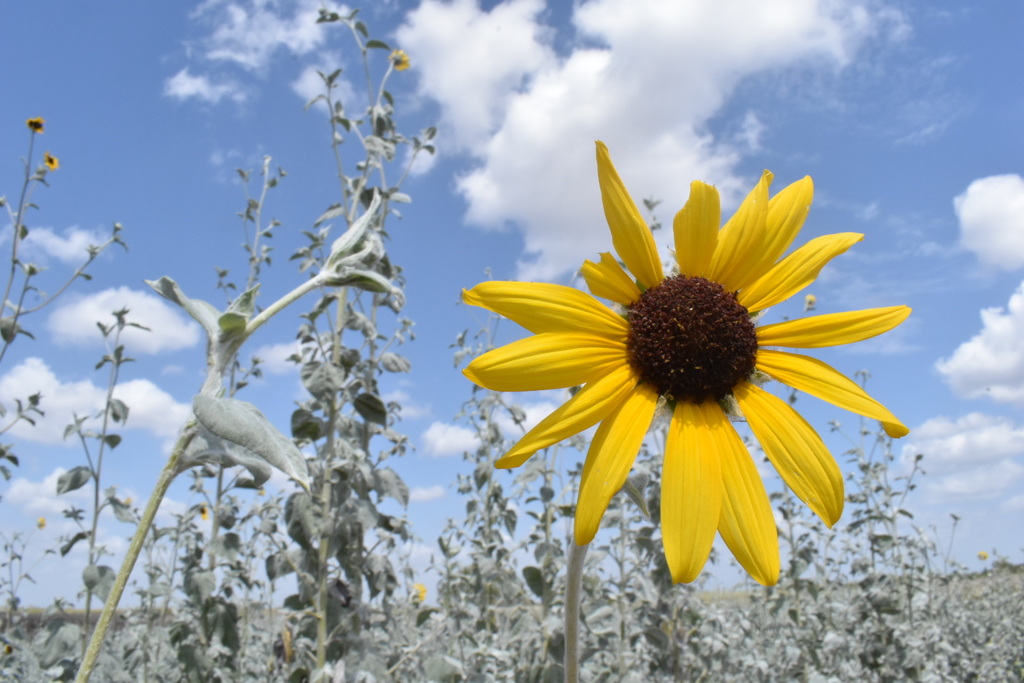
Helianthus argophyllus, known as Silverleaf Sunflower, is a tall annual sunflower native to the sandy coast and sand plains of South Texas. Its leaves and stems are covered with dense, silky white hairs that make the whole plant shimmer silver, a striking backdrop for its bright yellow flower heads. Plants commonly reach 4 to 8 feet and can top 10 feet in good soil.
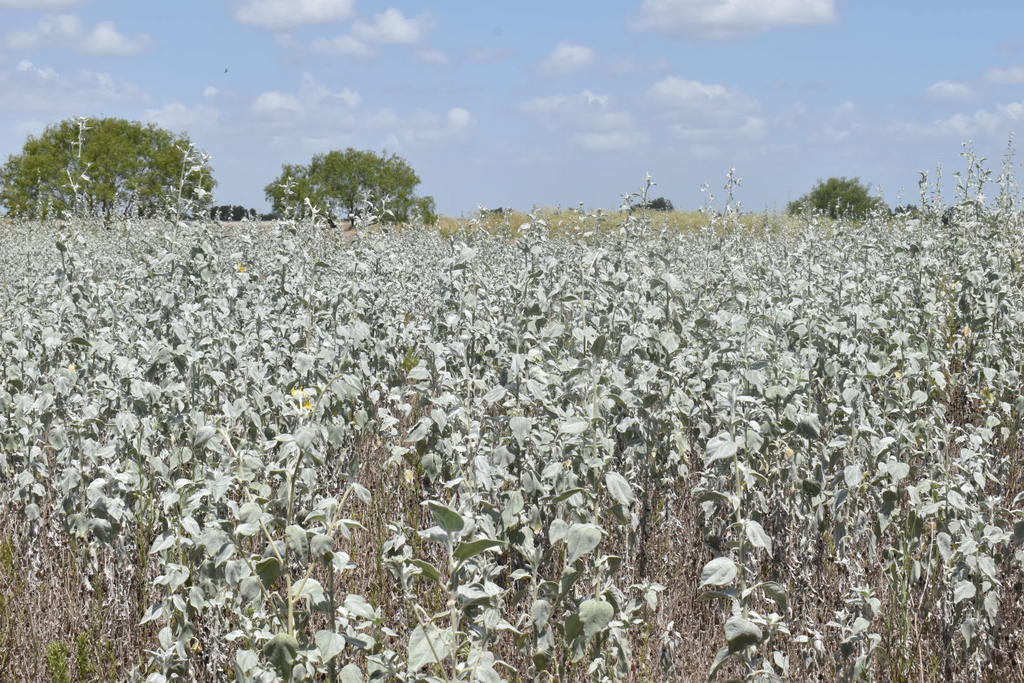
In the wild it grows on barrier island dunes and grasslands, such as Mustang and Padre Islands, and on the deep sands of the South Texas Sand Sheet. It blooms mostly from late summer into late fall, though on the mild Gulf Coast it can be found in flower in nearly every month. It is a close relative of the Common Sunflower and hybridizes with it where the two meet.
Silverleaf sunflower is increasingly popular as a garden annual for its silver foliage, and it is important to plant breeders as a source of disease resistance and drought tolerance for cultivated sunflowers. Outside Texas, including in Florida and North Carolina, it occurs only as an introduced plant. This guide covers how to identify it, where it grows, how to grow it, and its value to wildlife.
Identification
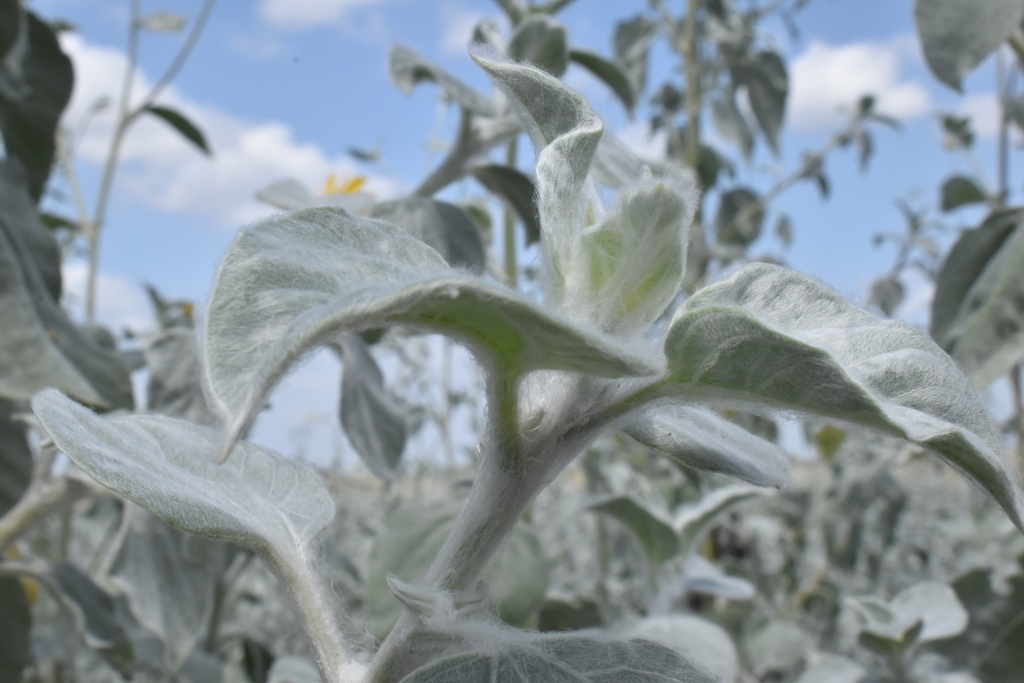
Silverleaf sunflower is the only tall Texas sunflower with entirely silvery-white, silky-hairy foliage.
Leaves & Growth Habit
A tall, single-stemmed or branched annual, 3 to 10 feet tall. The leaves are mostly alternate, broadly oval to heart-shaped, 4 to 8 inches long, with long stalks and smooth or slightly toothed edges. Leaves and stems are densely covered with long, soft, silky white hairs that give the plant a silvery, velvety look. Lower leaves drop as the plant grows tall.
Flowers
Flower heads are 2 to 3 inches across, with 15 to 20 or more bright yellow ray florets around a disc of 150 or more small disc florets that are reddish-purple to brown. The bracts beneath the head are silvery-hairy. Each plant may carry one to several heads, opening from late summer to late fall, or nearly year-round on the coast.
Fruit
The fruits are small, flattened, wedge-shaped achenes (technically cypselae), gray to brown, ripening in the central disc in fall. Like those of other sunflowers, they are eagerly eaten by finches and other seed-eating birds.
Look-alikes
Common Sunflower is greener and coarsely hairy rather than silky, with rough leaves. Beach Sunflower is a low, sprawling plant with green leaves. Prairie Sunflower is smaller, with narrower, grayish leaves. Hybrids between silverleaf and common sunflower occur in South Texas and can be intermediate in hairiness.
Quick Facts
| Scientific Name | Helianthus argophyllus |
| Family | Asteraceae (aster family) |
| Plant Type | Annual wildflower |
| Mature Height | 3–10 ft |
| Mature Spread | 2–3 ft |
| Growth Rate | Fast |
| Sun Exposure | Full sun |
| Water Needs | Low to moderate; drought tolerant |
| Soil Type | Deep sand, sandy loam; well-drained |
| Soil pH | Slightly acidic to alkaline |
| Bloom Time | August–November; longer on the coast |
| Flower Color | Yellow rays with a reddish-purple to brown disc |
| Fall Color | Silver foliage persists until frost |
| Fruit | Small gray-brown achenes |
| Deer Resistant | Moderately; hairy foliage is less palatable |
| USDA Hardiness Zones | Annual; grown in all zones |
Native Range
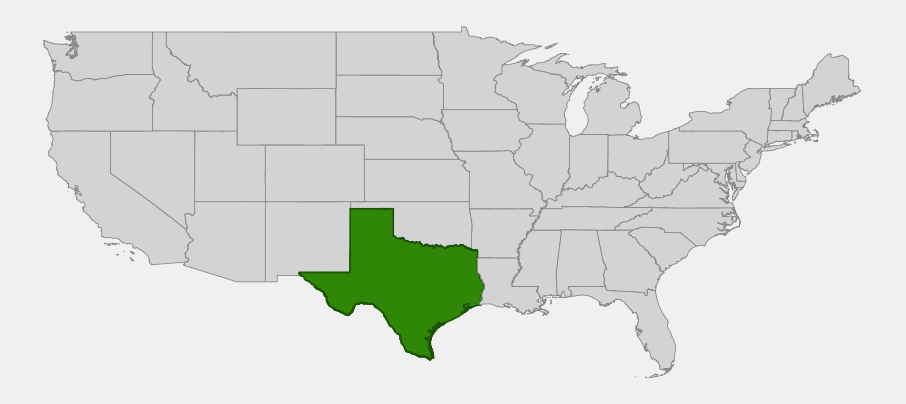
Silverleaf sunflower is native only to Texas. Its natural range is the South Texas coast, centered on the Coastal Bend around Corpus Christi and extending south toward the Lower Rio Grande Valley, including the barrier islands, and inland across the deep sands of the South Texas Sand Sheet in counties such as Brooks, Kenedy and Jim Hogg.
USDA PLANTS also lists it in Florida and North Carolina, but there it is an introduced plant that has escaped on coastal dunes and disturbed sandy sites, so those states are not shown on the native range map. It has also been introduced in Argentina, Africa and Australia.
In its native range it grows on coastal dunes and back-dune grasslands, sandy prairies, sandy roadsides, old fields and other open, disturbed sandy ground. Populations on the coast and inland differ genetically in flowering time and other traits, an example of local adaptation that has made the species a subject of evolutionary research.
📋 Regional plant lists featuring Silverleaf Sunflower: South & West Texas · Arkansas, Louisiana, Eastern Oklahoma & Eastern Texas
Growing & Care Guide
Silverleaf sunflower is easy to grow from seed, which is sold by native seed companies and many garden seed catalogs. It grows quickly in warm weather and reseeds where it is happy. In Texas it is a native wildflower; elsewhere it is grown as an ornamental annual, and outside its native range gardeners near coastal dunes should deadhead it to avoid spreading it.
Light
Full sun. In shade it becomes leggy and less silvery.
Soil & Water
It thrives in deep, sandy, well-drained soil and tolerates poor, dry ground and salt spray. Water seedlings until they are established; after that it needs little water. Rich, wet soil gives tall, floppy growth.
Planting Tips
Sow seed directly in spring after the last frost, ½ inch deep, thinning seedlings to 2 to 3 feet apart. In South Texas it can also be sown in late winter. Because lower leaves drop as plants grow, place it behind lower plants such as Texas Rock Rose or Texas Lantana to hide its bare lower stems. Tall plants may need staking in windy sites.
Pruning & Maintenance
Pinching young plants produces bushier, more branched plants with more flower heads. Leave some heads to ripen for the birds, and pull spent plants after frost or in winter.
Propagation
Grow it from seed; it germinates readily in warm soil within one to two weeks. Seeds from plants grown near common sunflowers may produce hybrids.
Landscape Uses
- Silver foliage accent: tall summer and fall back-of-border annual
- Coastal and xeriscape gardens: for sandy, dry, salty sites in South Texas
- Bird and pollinator gardens: seeds for finches; nectar and pollen for bees
- Cut flowers: long-lasting stems with silver leaves
Wildlife & Ecological Value
Like other wild sunflowers, silverleaf sunflower is a valuable source of nectar, pollen and seeds.
For Pollinators
Its flower heads attract native bees, including sunflower specialist bees such as long-horned bees (Melissodes), along with bumblebees, butterflies and other insects. Its late bloom makes it a useful fall nectar source for butterflies, including migrating monarchs, on the Texas coast.
For Birds
Lesser goldfinches, American goldfinches and other finches, sparrows and doves feed on the seeds. On the coast, the tall stems give perches and shelter to migrant songbirds.
For Mammals
Rodents eat the fallen seeds, and the dense stands give cover to small mammals. Deer browse it less than many green-leaved plants.
Ecosystem Role
It is a pioneer of open, disturbed sand, helping stabilize dunes and sandy fields after storms and droughts. Its silky hairs reflect sunlight and reduce water loss, adaptations to the hot, dry, sandy habitats where it lives.
Cultural & Historical Uses
John Torrey and Asa Gray described silverleaf sunflower in 1842 from specimens collected in Texas. The name argophyllus means “silver-leaved,” from the Greek argyros, “silver,” and phyllon, “leaf.”
Plant breeders have used silverleaf sunflower as a source of useful genes for the cultivated sunflower, including resistance to diseases such as downy mildew and rust, and tolerance of drought. It crosses readily with the common sunflower, and it is among the wild sunflowers most often used in breeding programs.
It is also a model plant in evolutionary biology. Genome studies of wild sunflowers have found large blocks of genes that separate early-flowering coastal forms from later-flowering inland forms of silverleaf sunflower, showing how plants adapt to local environments.
Frequently Asked Questions
Where is silverleaf sunflower native?
Only in Texas, along the South Texas coast and barrier islands and on the deep sands of the South Texas Sand Sheet. Populations in Florida, North Carolina and other places are introduced.
Is silverleaf sunflower an annual or a perennial?
It is an annual. It grows from seed each year, but it reseeds readily in sandy, sunny spots.
How tall does silverleaf sunflower get?
Usually 4 to 8 feet, and sometimes more than 10 feet in good soil with plenty of water.
Why are the leaves silver?
The leaves and stems are covered with dense, silky white hairs. The hairs reflect sunlight and reduce water loss, helping the plant survive the heat and drought of sandy South Texas habitats.
Can I grow silverleaf sunflower outside Texas?
Yes, as an annual in full sun and well-drained soil almost anywhere. Outside its native range, especially near coastal dunes, deadhead it so it does not spread into natural areas.

Looking for a nursery that carries Silverleaf Sunflower?
Browse our native plant nursery directory: Texas

