
Pohe Hiwa (Viola kauaensis)
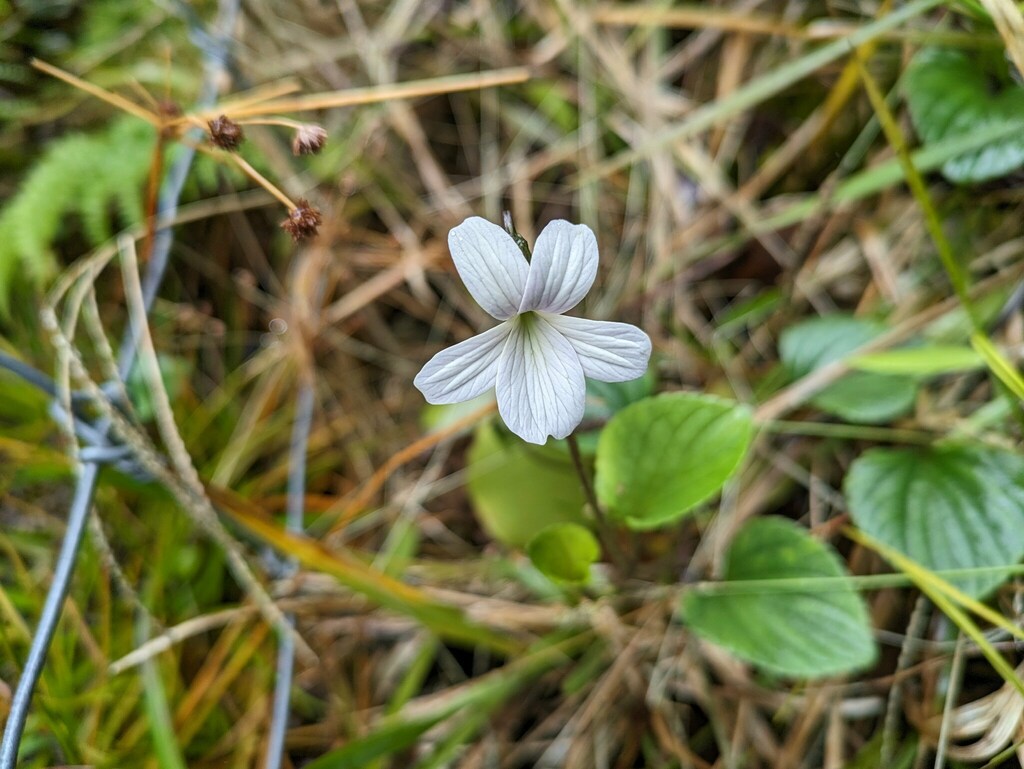
Viola kauaensis, known in Hawaiian as pohe hiwa and in English as the Kauaʻi violet, is a small native violet of the violet family (Violaceae). Unlike the shrubby violets found elsewhere in Hawaiʻi, it is a low, creeping herb with rounded, heart-shaped leaves and white flowers veined with purple, very much like the violets of mainland woodlands.
Pohe hiwa is endemic to Hawaiʻi. It grows in bogs, boggy openings and cloud forest on Kauaʻi, and a rare variety grows in the wet Koʻolau Range on Oʻahu. One variety, Viola kauaensis var. wahiawaensis (nani waiʻaleʻale), known from very few plants in southern Kauaʻi, is federally listed as Endangered. The species as a whole is not federally listed but is uncommon and ranked imperiled, threatened by feral pigs and invasive plants in its wet habitats.
It is rarely grown, and it needs the cool, constantly moist conditions of Hawaiian wet forest and bogs. Never collect plants or seed from the wild, especially the endangered variety. This guide covers how to identify pohe hiwa, where it grows, what it needs in cultivation, and the surprising origin of Hawaiʻi’s violets.
Identification
Pohe hiwa looks like a familiar woodland violet: a low plant with heart-shaped leaves and small, five-petaled white flowers with purple veins. In Hawaiʻi, that combination in a bog or wet forest is distinctive.
Growth Habit
A low perennial herb with slender stems that creep, lean or grow upright, up to about 20 inches long but usually much shorter. Plants often form small, loose patches among sedges, mosses and ferns.
Leaves
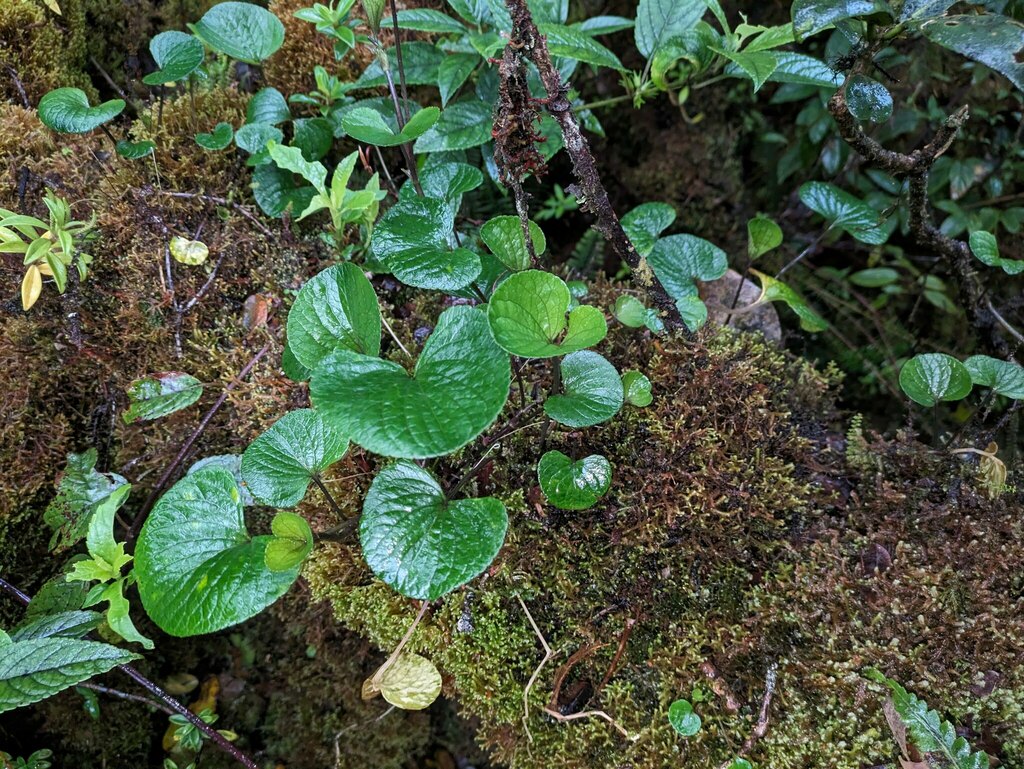
Leaves are rounded to kidney- or heart-shaped, about ½ to 1½ inches across, with scalloped or finely toothed edges, on long stalks. They are bright green and slightly glossy.
Flowers
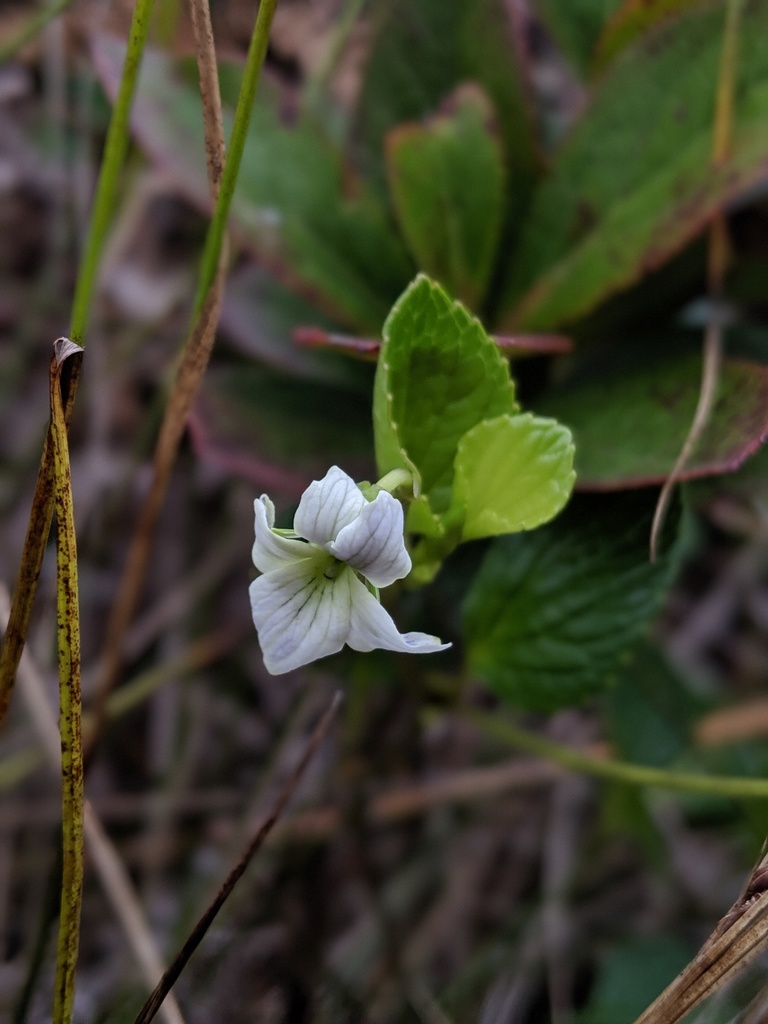
Plants produce two kinds of flowers. Showy open flowers are white, about ½ inch across, with purple veins (nectar guides) on the lower petals and a short spur at the back. Small, closed flowers that never open also form and pollinate themselves, producing seed without insects. Flowering can happen throughout the year.
Fruit & Look-alikes
The fruit is a small capsule that splits into three parts to release tiny seeds. Hawaiʻi’s other native violets, such as Viola chamissoniana and V. helenae, are upright shrubs or subshrubs with narrow leaves. Introduced violets grown in gardens, such as sweet violet (Viola odorata), have purple flowers and are not found in native bogs.
Quick Facts
| Scientific Name | Viola kauaensis A. Gray |
| Family | Violaceae (violet family) |
| Plant Type | Low perennial herb; Hawaiian endemic |
| Mature Height | 2–8 in (stems up to 20 in long) |
| Mature Spread | 6–12 in |
| Growth Rate | Slow to moderate |
| Sun Exposure | Partial shade to bright, cloudy light |
| Water Needs | High; constantly moist to wet soil |
| Soil Type | Acidic, organic, peaty or mossy soil |
| Soil pH | Acidic |
| Bloom Time | Year-round |
| Flower Color | White with purple veins |
| Fall Color | None; evergreen |
| Fruit | Small three-parted capsule |
| Deer Resistant | No; feral pigs damage its habitat |
| USDA Hardiness Zones | 10–12; needs cool, wet, frost-free conditions |
Native Range
Pohe hiwa is endemic to the Hawaiian Islands, and USDA PLANTS lists it as native only in Hawaiʻi. Most plants grow on Kauaʻi, in the bogs, boggy openings and cloud forests of the island’s wet uplands, including the Alakaʻi region of northwestern Kauaʻi. A rare variety, var. hosakae, grows in wet forest in the Koʻolau Range of Oʻahu.
Three varieties are recognized. Var. kauaensis is the most widespread, in the bogs and cloud forests of northwestern Kauaʻi. Var. wahiawaensis, called nani waiʻaleʻale, is known only from a few sites in the Wahiawa area of southern Kauaʻi and is federally listed as Endangered. Var. hosakae is the Oʻahu form and is also rare.
All of its habitats are very wet, cool and often cloud-covered, with acidic, waterlogged or mossy soils. Feral pigs that root up bogs and wet forest, invasive plants that crowd small herbs, and landslides are the main threats. Fencing and pig removal in Kauaʻi’s upland watersheds help protect it.
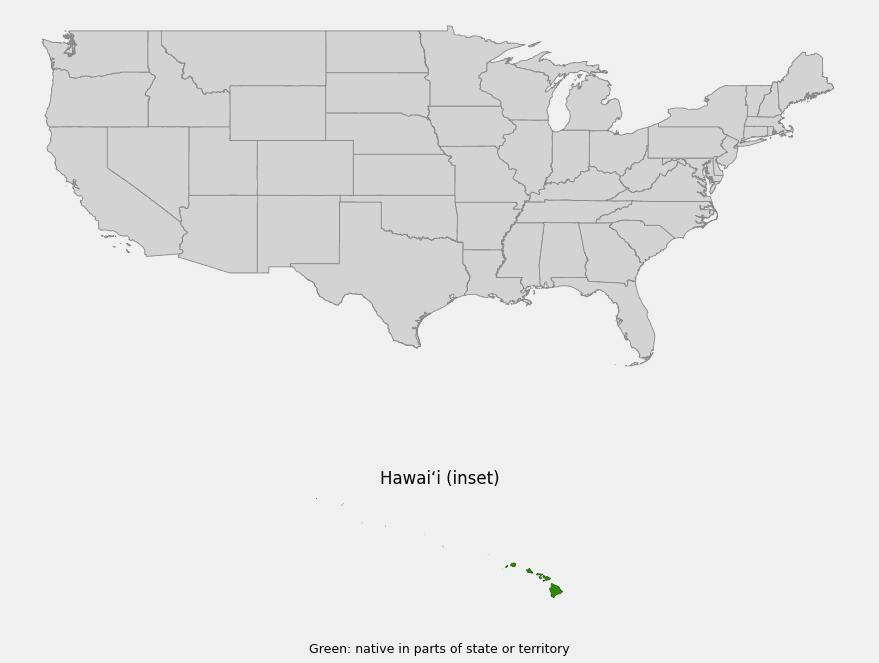
📋 Regional plant lists featuring Pohe Hiwa: Hawaii
Growing & Care Guide
Pohe hiwa is not a common garden plant, and it is hard to keep healthy outside the cool, constantly wet conditions of Hawaiian bogs and cloud forest. It can be grown by experienced growers at upper elevations in Hawaiʻi, or in a cool, humid shadehouse, but it struggles in hot, dry lowland gardens. Plants are rarely offered for sale. Buy only nursery-propagated plants from Hawaiʻi native plant growers, and never collect plants or seed from the wild; the endangered var. wahiawaensis may only be handled under permit. Hawaiʻi also restricts bringing plants in from other states, so source plants within the islands.
Light
Partial shade or bright, filtered light. In the wild it grows under frequent cloud; direct hot sun scorches the leaves and dries the soil.
Soil & Water
A moist, acidic, organic mix, such as peat or fine bark with some perlite or cinder. Keep it evenly moist to wet at all times, with high humidity. It tolerates saturated soil better than drought, but stagnant, warm water encourages rot.
Planting Tips
Grow it in a shady, sheltered, humid corner of a mid- or high-elevation garden, on a mossy bank, or in a shallow pot set in a tray of water in a shadehouse. Keep it away from vigorous groundcovers and weeds that will smother it.
Pruning & Maintenance
No pruning is needed. Remove yellowed leaves, and watch for slugs, snails and mites. Avoid strong fertilizers; bog plants are adapted to very poor soils.
Propagation
It reproduces readily from seed, including seed from the self-pollinating closed flowers, and creeping stems can be divided or rooted. Conservation growers propagate the endangered variety under permit for safeguarding and outplanting.
Landscape Uses
- Bog and wet-forest restoration: part of the low native herb layer in protected Kauaʻi uplands
- Shadehouse and specialist collections: for growers who can provide cool, wet conditions
- Education: a Hawaiian violet that looks like a mainland woodland violet
- Conservation safeguarding: propagation of the endangered var. wahiawaensis under permit
Wildlife & Ecological Value
Pohe hiwa is a small but telling part of Hawaiʻi’s bog and wet-forest flora, with a family history that reaches back to the Arctic.
For Pollinators
The open, purple-veined white flowers guide small insects to nectar in the spur. Its self-pollinating closed flowers mean it can set seed even where pollinators are scarce, which helps in remote, rainy bogs.
For Birds
Hawaiian violets are thought to have reached the islands as seeds carried by birds from the far north. Today the plant provides little direct food for birds, but it is part of habitat where native forest birds forage.
For Mammals
Hawaiʻi’s only native land mammal, the Hawaiian hoary bat (ʻōpeʻapeʻa), forages over wet forest. Feral pigs are the main mammal threat, rooting up the bogs and wet banks where pohe hiwa grows.
Ecosystem Role
It is part of the low herb layer that covers wet soils in bogs and cloud forest, helping protect the ground from erosion along with mosses, sedges and ferns.
Cultural & Historical Uses
Hawaiʻi’s native violets have a remarkable origin. DNA studies indicate that they descend from an Arctic violet related to Viola langsdorffii of the North Pacific region, whose seeds were probably carried to the islands by migrating birds. Once there, the lineage evolved into a range of forms, from shrubby violets several feet tall to small bog herbs like pohe hiwa.
The American botanist Asa Gray described Viola kauaensis in the 19th century. Its name refers to Kauaʻi, the island where most plants grow. The Hawaiian name pohe hiwa is used for this species, and the endangered var. wahiawaensis is known as nani waiʻaleʻale.
The U.S. Fish and Wildlife Service lists Viola kauaiensis var. wahiawaensis as Endangered (ECOS uses the spelling kauaiensis). Protection of the Wahiawa bogs and other upland watersheds on Kauaʻi, through fencing, pig control and weed removal, is the main recovery work for this and many other rare Kauaʻi plants.
Frequently Asked Questions
Is pohe hiwa endangered?
The species as a whole is not federally listed, but it is uncommon and ranked imperiled. One variety, var. wahiawaensis (nani waiʻaleʻale) from southern Kauaʻi, is federally listed as Endangered.
Where does pohe hiwa grow?
Mostly on Kauaʻi, in bogs, boggy openings and cloud forest, with a rare variety in the Koʻolau Range of Oʻahu.
What do the flowers look like?
Small white flowers with purple veins on the lower petals and a short spur, like a classic woodland violet. It also makes tiny closed flowers that pollinate themselves.
Can I grow it?
Only with cool, shady, constantly moist and acidic conditions, such as an upland garden or a humid shadehouse. Plants are rarely sold; never collect from the wild.
How did violets get to Hawaii?
DNA studies suggest that Hawaiian violets descend from an Arctic violet whose seeds were carried to the islands by birds, then diversified into many forms.

Looking for a nursery that carries Pohe Hiwa?
Browse our native plant nursery directory: Hawaii

