
Hinahina (Geranium cuneatum)
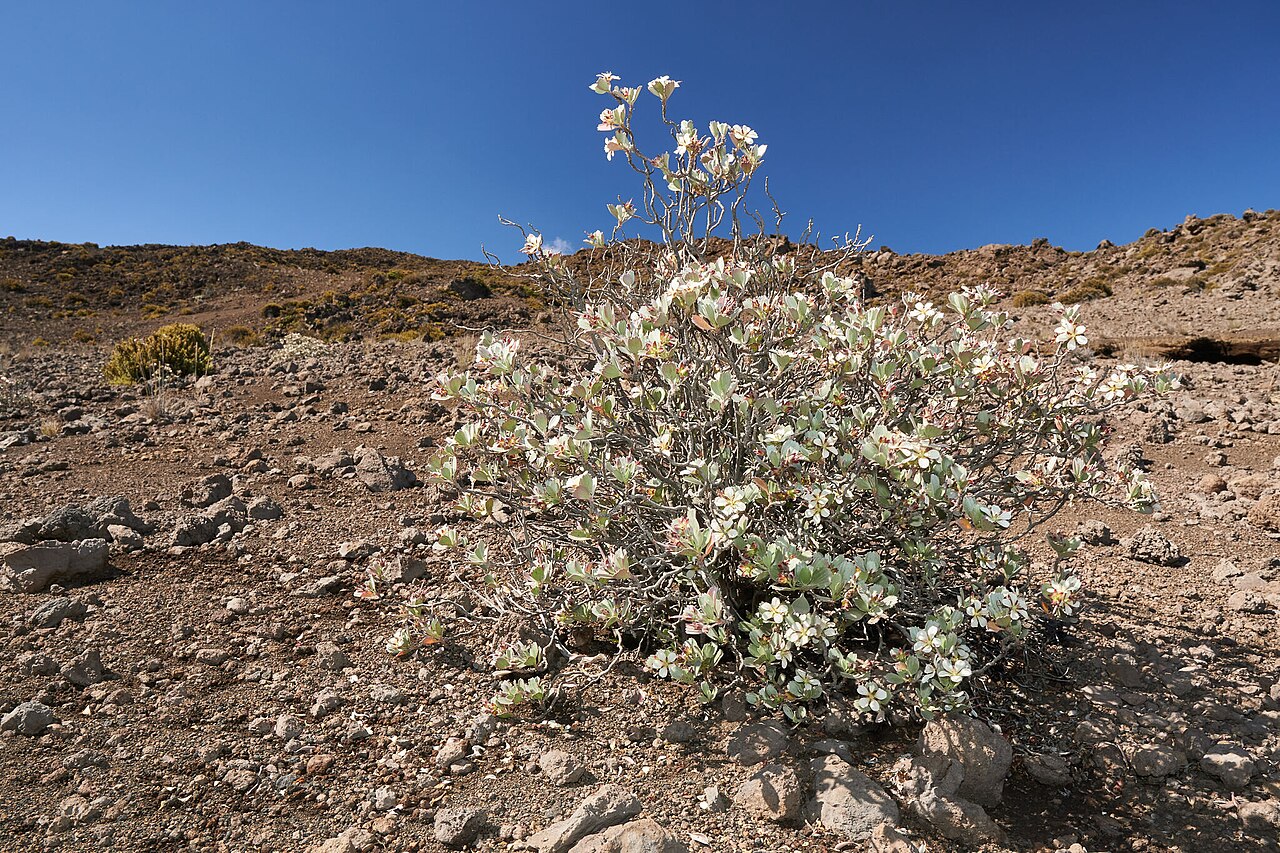
Geranium cuneatum, known in Hawaiian as Hinahina and also as nohoanu, and in English as the Hawaiian silver geranium, is a rounded, many-branched shrub of the high mountains of Maui and Hawaiʻi Island. Its silvery, wedge-shaped leaves glint in the strong alpine sun, and through much of the year it carries white flowers veined with pink or purple.
Hinahina is one of six native Hawaiian geraniums, all endemic to the islands and all descended from a single ancestor that arrived from the Americas. It grows near and above the treeline on Haleakalā, Mauna Kea, Mauna Loa and Hualālai, in a harsh world of cinder, frost, intense sunlight and drying winds. The name hinahina, meaning gray or silvery, is shared with other silver-leaved Hawaiian plants.
This is a plant for cool, high-elevation gardens; it is difficult to keep in warm lowland conditions. This guide covers how to recognize hinahina, where it grows, what it needs in cultivation, and its place in Hawaiʻi’s alpine ecosystems.
Identification
Hinahina is easy to spot in Hawaiʻi’s subalpine shrublands because its silvery-gray foliage stands out against dark cinder and green shrubs.
Growth Habit
Hinahina is a compact, densely branched evergreen shrub, usually 1 to 3 feet tall and about as wide, forming a rounded mound. On exposed cinder slopes it can be low and cushion-like.
Leaves
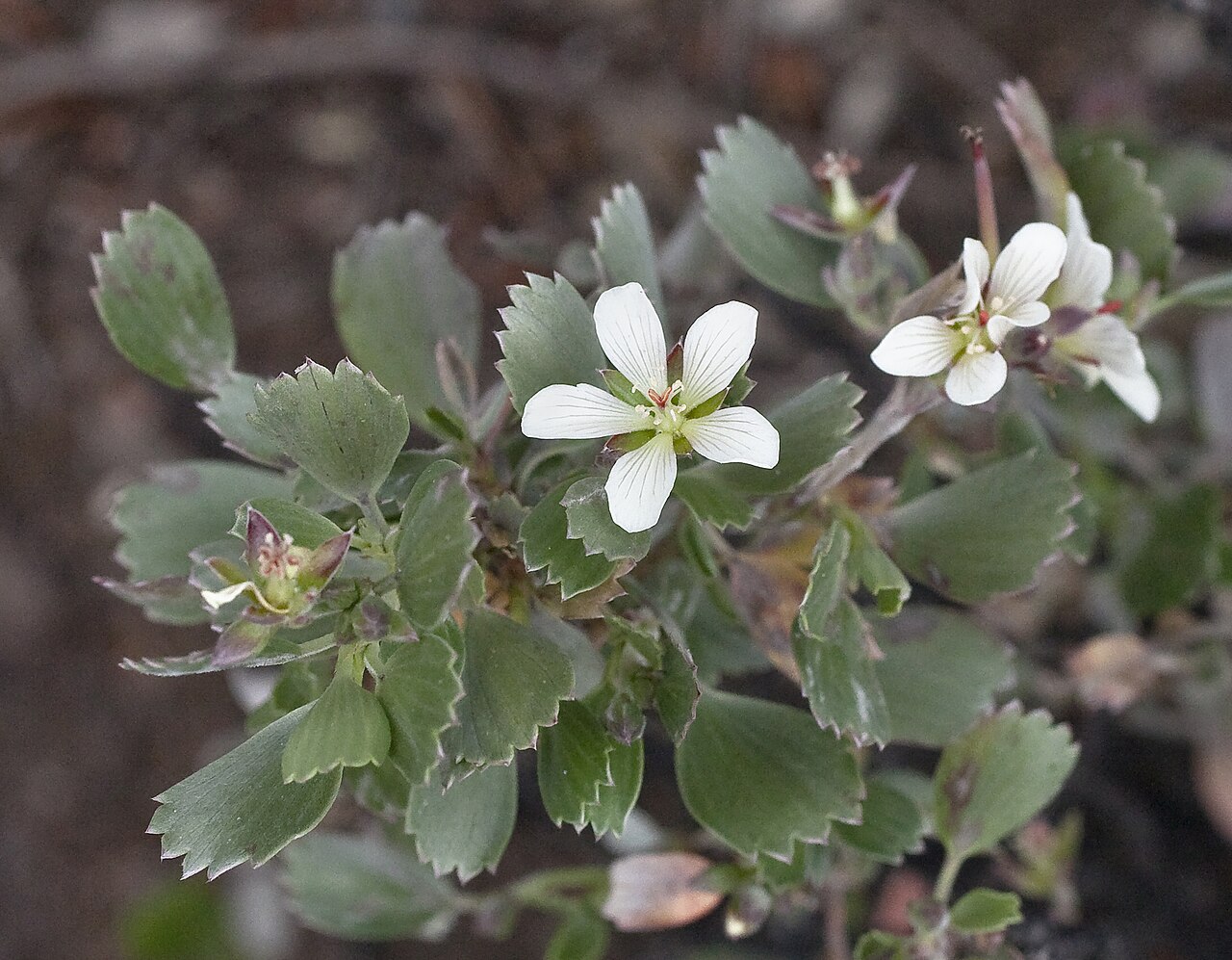
The leaves are small, about half an inch to an inch long, and wedge-shaped (cuneate), narrowing to the base and toothed across the broad tip. Subspecies tridens of Haleakalā usually has three teeth at the tip. The leaves are covered with fine, flattened silky hairs that reflect sunlight and give the plant its silvery color; some forms are greener.
Flowers
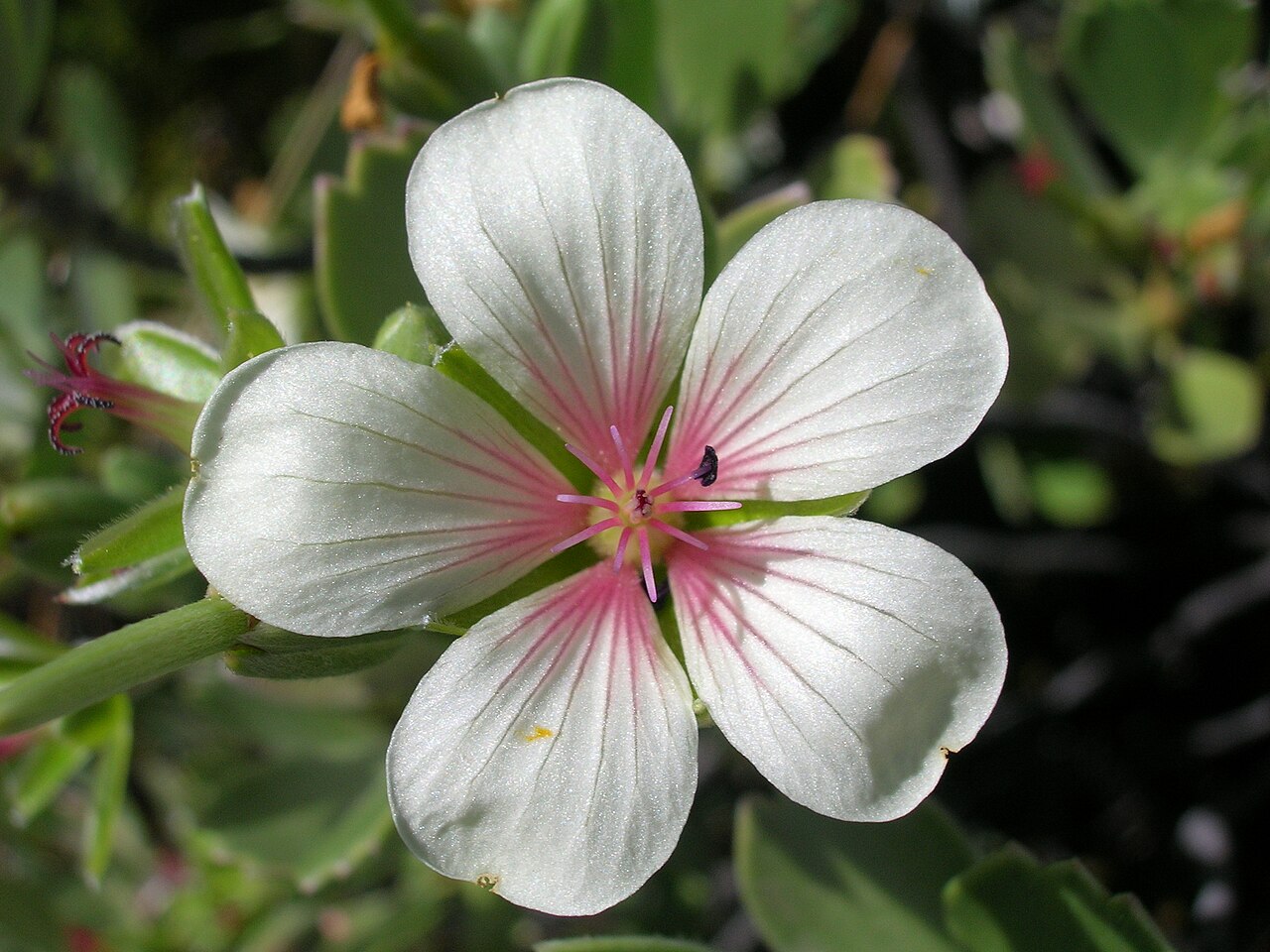
The flowers are about 1 inch across, with five white petals marked with pink to purple veins, and often a magenta center. They are borne in small clusters at the branch tips. Plants can flower in almost any month, with most bloom in summer and fall.
Fruit
Like other geraniums, the fruit has a long beak, the “crane’s bill,” made of five segments. When ripe the segments curl up and fling the seeds away from the parent plant.
Similar Species
The ʻĀhinahina (Haleakalā Silversword) is also silvery but forms a spherical rosette of sword-shaped leaves. Other native geraniums, such as Geranium arboreum of Haleakalā, have red flowers or green leaves. Pūkiawe, which grows alongside it, has tiny needle-like leaves and small berries.
Quick Facts
| Scientific Name | Geranium cuneatum Hook. |
| Family | Geraniaceae (geranium family) |
| Plant Type | Evergreen subalpine shrub; endemic to Hawaiʻi |
| Mature Height | 1–3 ft |
| Mature Spread | 1–3 ft |
| Growth Rate | Slow to moderate |
| Sun Exposure | Full sun |
| Water Needs | Low; needs sharp drainage |
| Soil Type | Cinder, ash or rocky volcanic soil |
| Soil pH | About 5.0–7.0 |
| Bloom Time | Much of the year, mainly summer and fall |
| Flower Color | White with pink to purple veins |
| Fall Color | None; evergreen, silvery foliage |
| Fruit | Beaked “crane’s bill” capsule that flings seeds |
| Deer Resistant | No; browsed by goats, sheep and mouflon where present |
| USDA Hardiness Zones | 9–11 (cool, high-elevation conditions; tolerates light frost) |
Native Range
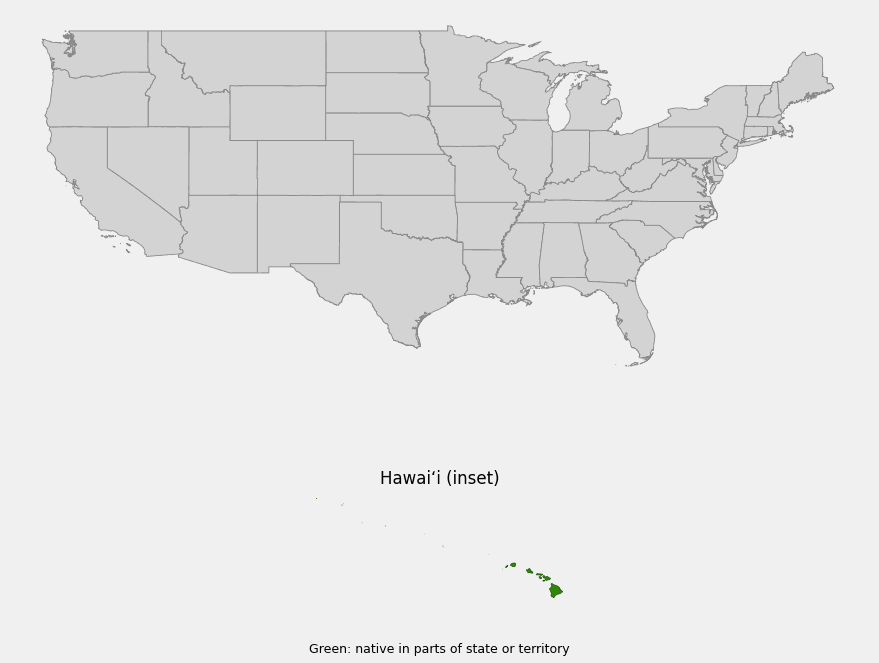
Hinahina is endemic to the Hawaiian Islands, where it grows only on East Maui and Hawaiʻi Island. Four subspecies are recognized: subsp. tridens on Haleakalā, and subspecies cuneatum, hololeucum and hypoleucum on the mountains of Hawaiʻi Island, including Mauna Kea, Mauna Loa and Hualālai.
It grows in subalpine and alpine shrubland, on cinder cones, lava flows and open ash slopes, from roughly 6,000 feet to about 10,500 feet (3,200 meters). There it shares the landscape with Pūkiawe, Māmane, ʻōhelo, Dubautia and native grasses, often above the clouds that blanket lower slopes.
Hinahina is not federally listed and is common in protected areas such as Haleakalā National Park and the upper slopes of Mauna Kea. Historically, feral goats, sheep and mouflon browsed it heavily; fencing and ungulate removal have helped it recover in many areas. Fire, invasive grasses and climate change are ongoing concerns for high-elevation plants.
📋 Regional plant lists featuring Hinahina: Hawaii
Growing & Care Guide
Hinahina is best suited to cool, sunny upland gardens in Hawaiʻi, such as those in Kula, Waimea or Volcano, generally above about 3,000 feet. In hot, humid lowland gardens it usually declines, because its roots rot in warm, wet soil. Buy only nursery-propagated plants from Hawaiʻi native plant nurseries, and never collect plants or seed in national parks or other protected areas. Hawaiʻi restricts bringing plants in from other states.
Light
Give it full, bright sun. In shade it loses its silvery color and becomes weak and leggy.
Soil & Water
Plant in cinder, crushed lava or a very gritty, fast-draining mix. Water moderately while it establishes, then sparingly; in its native habitat it depends on fog and occasional rain. Avoid rich soil, fertilizer and frequent irrigation, which lead to rot.
Planting Tips
Plant on a mound or slope of cinder, among rocks, where air moves freely around the stems. It combines well with pūkiawe, ʻōhelo, māmane and native bunchgrasses in an upland native garden. In a container, use a deep pot of pure cinder mix and keep it in full sun.
Pruning & Maintenance
Little pruning is needed. Lightly tip-prune after flowering to keep plants dense. Remove any dead branches promptly. Protect plants from slugs when young.
Propagation
Grow it from seed collected (with permission) from cultivated plants; fresh seed germinates fairly readily in a gritty mix, and some growers nick the seed coat to speed germination. Semi-hardwood cuttings can also be rooted in a well-drained medium.
Landscape Uses
- Upland native gardens: a silvery shrub for cool, sunny, high-elevation gardens
- Rock and cinder gardens: thrives in lean, fast-draining volcanic soils
- Restoration: used in restoring subalpine shrubland after ungulate removal
- Pollinator plantings: flowers feed native bees, moths and flies
- Education: an example of island evolution in Hawaiian geraniums
Wildlife & Ecological Value
Hinahina is a key shrub of Hawaiʻi’s high-elevation ecosystems, where few plants can survive.
For Pollinators
The pink-veined white flowers are visited by native yellow-faced bees (Hylaeus), moths and flies. The veins act as nectar guides, leading insects into the center of the flower.
For Birds
Native birds such as the ʻamakihi and the endangered palila (on Mauna Kea) forage in subalpine shrubland, and nēnē feed on plants in these high-elevation habitats.
For Mammals
Hawaiʻi’s only native land mammal, the Hawaiian hoary bat, hunts insects over the subalpine zone. Introduced goats, sheep and mouflon browse hinahina heavily, and excluding them is key to its protection.
Ecosystem Role
Hinahina helps stabilize cinder and ash slopes, traps windblown soil and moisture, and provides shelter and food for native insects, including seed bugs and moths, that are part of the alpine food web.
Cultural & Historical Uses
The name hinahina means gray or silvery in Hawaiian, and it is shared with other silver-leaved plants, such as the beach heliotrope and the Haleakalā silversword (ʻāhinahina). Nohoanu is another Hawaiian name used for native geraniums.
The species was named by William Jackson Hooker in the 19th century from specimens collected in Hawaiʻi. Its name, cuneatum, refers to its wedge-shaped leaves.
Scientists have found that Hawaiʻi’s six native geraniums descend from a single colonist, probably from the Americas, that reached the islands by bird dispersal. From that ancestor evolved the white-flowered, silver-leaved hinahina of the alpine zone, bog-dwelling species, and the red-flowered Geranium arboreum, which is pollinated by birds.
Frequently Asked Questions
Is hinahina native to Hawaiʻi?
Yes. Hinahina (Geranium cuneatum) is endemic to Hawaiʻi and grows only on East Maui and Hawaiʻi Island.
Where can I see hinahina?
It is common along the trails of Haleakalā National Park, such as the Halemauʻu and Supply trails, and on the upper slopes of Mauna Kea and Mauna Loa.
Why are hinahina leaves silver?
The leaves are covered with fine silky hairs that reflect intense sunlight and reduce water loss, an adaptation to the high-elevation environment.
Can I grow hinahina in my garden?
Yes, in cool, sunny upland gardens with very well-drained cinder soil. In hot, humid lowland gardens it usually struggles and rots.
Is hinahina related to garden geraniums?
It is a true geranium (Geranium), related to the cranesbills of temperate gardens. The common garden “geraniums” with bright red flowers are actually Pelargonium, a different genus.

Looking for a nursery that carries Hinahina?
Browse our native plant nursery directory: Hawaii

