
Greensword (Argyroxiphium grayanum)
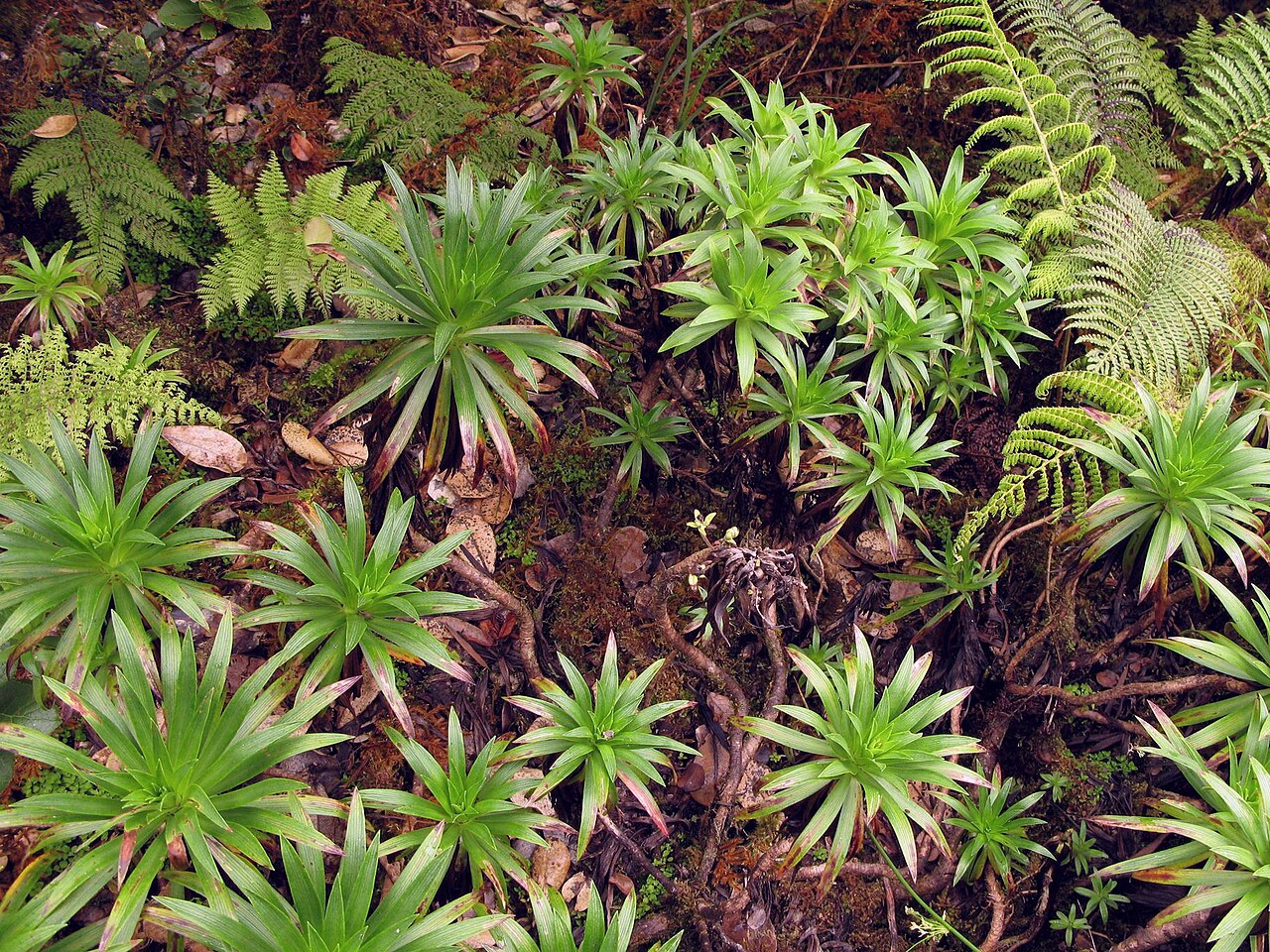
Argyroxiphium grayanum, the Greensword, also called the Hāna Forest silversword, is a rare shrub found only on the island of Maui. It is a close relative of the famous ʻĀhinahina (Haleakalā Silversword), but where the silversword lives in a dry, sunny alpine desert, the greensword grows in some of the wettest places on Earth: the cloud-forest bogs near the summit of Puʻu Kukui on West Maui and along the upper rim of Kīpahulu Valley on East Maui.
Its rosettes of narrow, green, sword-shaped leaves look like a softer, greener silversword. In the open interior of bogs it stays a dwarf shrub under a foot tall, while at bog edges and in wet forest it can grow into a branched shrub up to about 6 feet. Unlike the silversword, which flowers once and dies, a greensword has many rosettes and flowers only occasionally, with just the flowering rosettes dying back.
This is a rare plant that is essentially not grown outside conservation programs. It needs constant rain, mist and cool temperatures and is raised only in specialized rare plant facilities on Maui. This guide covers how to recognize it, where it grows, its role in one of the world’s great examples of evolution, and what it takes to grow it.
Identification
The greensword belongs to the Hawaiian silversword alliance, a group of about 50 species in three genera (Argyroxiphium, Dubautia and Wilkesia) that descend from a single tarweed-like ancestor from western North America. A second greensword, A. virescens of East Maui, is now apparently extinct.
Growth Habit
Greenswords are perennial shrubs with one to many stems, each ending in a dense rosette of leaves. In the open interior of bogs they are dwarf shrubs, often under 1 foot tall; at bog margins and in the surrounding wet forest they can reach about 6 feet. Plants branch, so a single individual may carry several rosettes.
Leaves
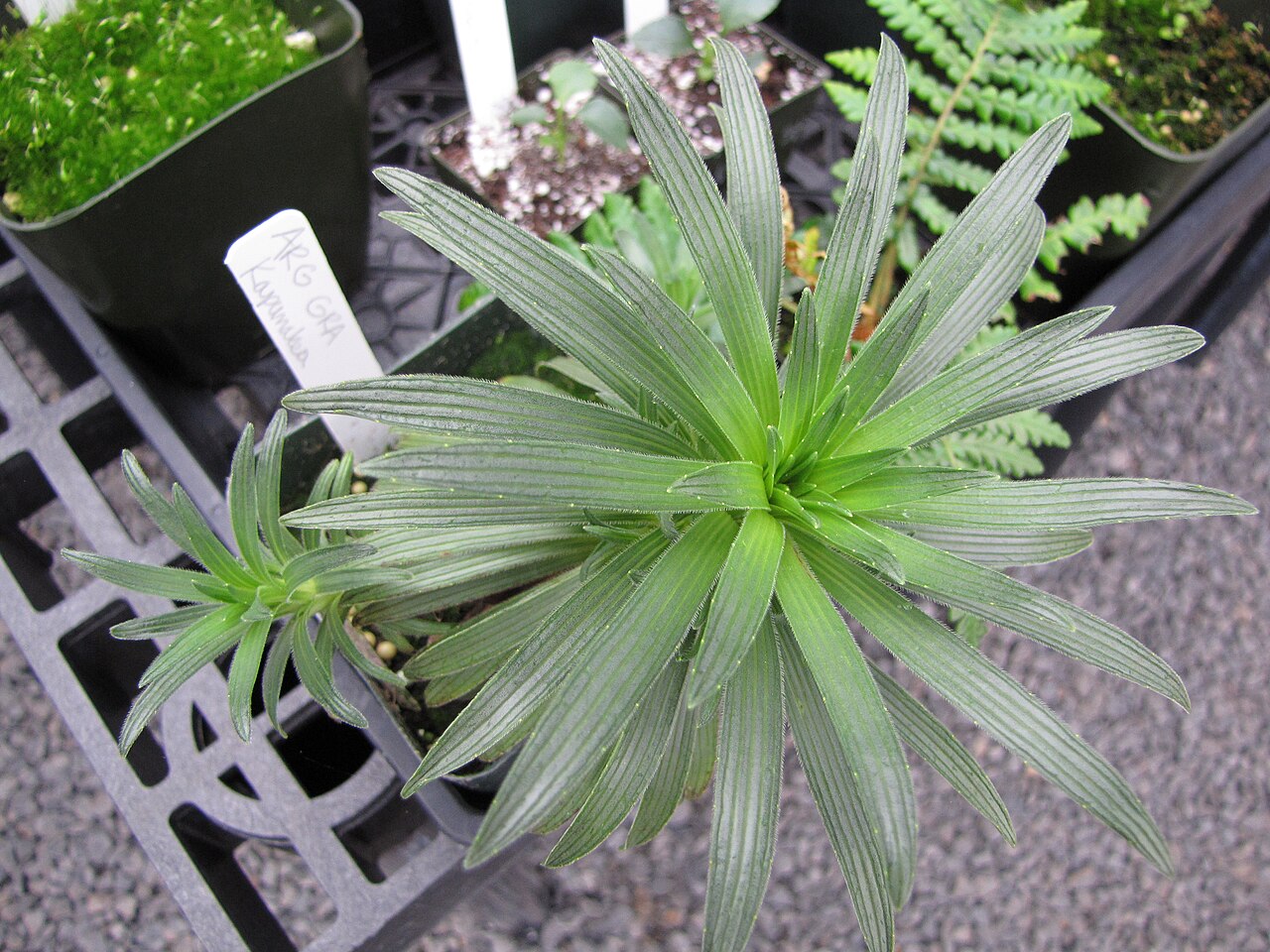
The leaves are narrow, sword- or strap-shaped, broadest above the middle, and arranged in a spiral rosette. They are green, not silvery, with 5 to 11 parallel veins, and are thin and non-succulent, unlike the water-storing silver leaves of the alpine silversword. Leaf bases may be tinged red.
Flowers
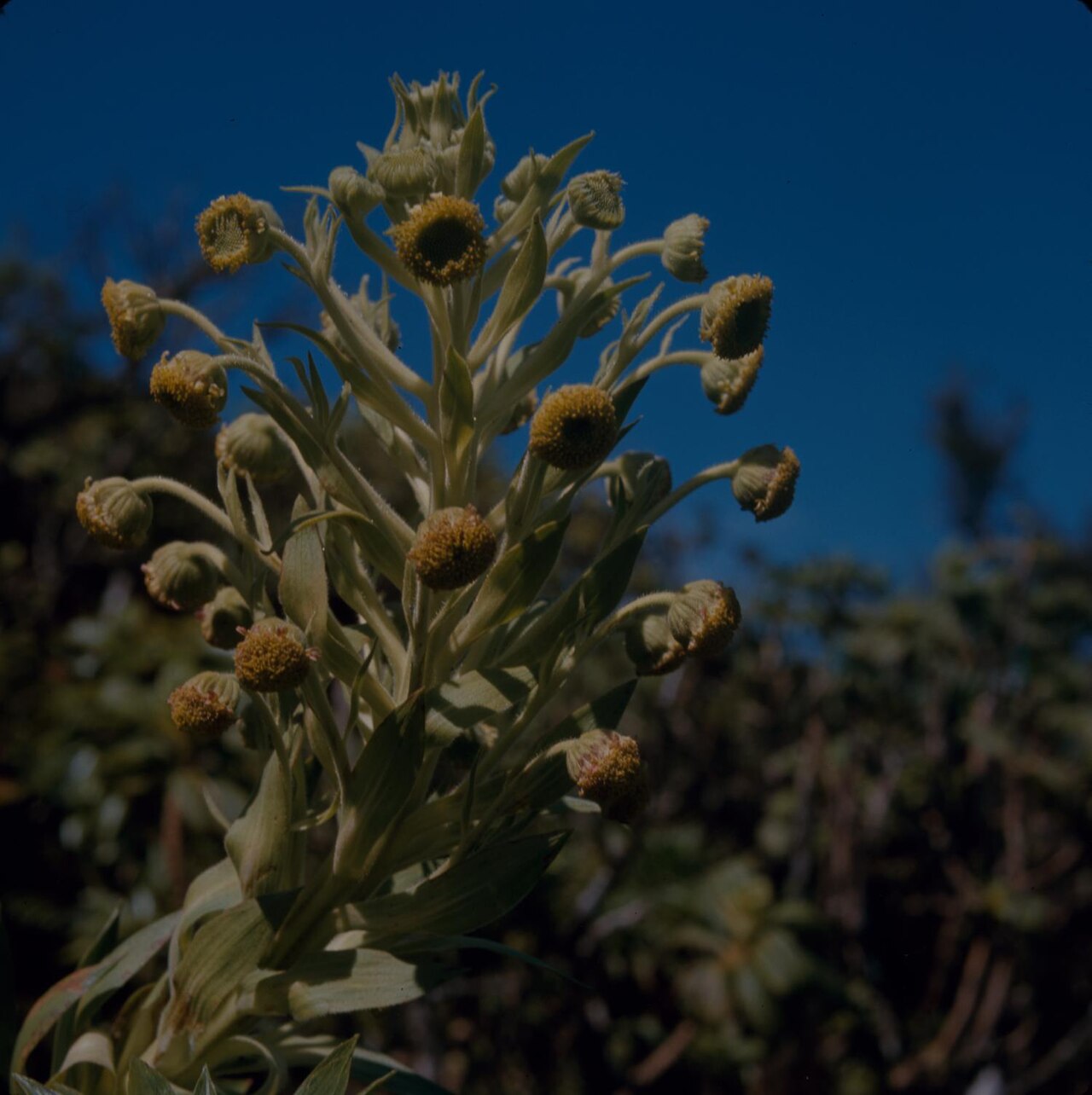
Flowering is infrequent. A rosette sends up a branched flowering stalk carrying numerous nodding to upright, button-like flower heads, yellowish to yellow-green, with no showy ray petals. After flowering, that rosette dies back, but the rest of the plant continues to grow.
Fruit
Like other members of the daisy family, the greensword produces small, dry, one-seeded fruits (achenes) in each head. Seed set is often low, partly because flowering is irregular and plants are few.
Similar Species
The ʻEke silversword (A. caliginis) grows in the same West Maui bogs but is smaller, with silvery, sheen-covered leaves and creeping, rooting stems. ʻĀhinahina grows only in dry alpine cinder, on Haleakalā and Mauna Kea, and has dense silver hairs. Some Dubautia shrubs in the same bogs and forests have similar narrow leaves but grow as typical leafy shrubs without rosettes.
Quick Facts
| Scientific Name | Argyroxiphium grayanum (Hillebr.) O. Deg. |
| Family | Asteraceae (aster family) |
| Plant Type | Rosette shrub; endemic to Maui |
| Mature Height | Under 1 ft in open bogs; to about 6 ft at bog edges |
| Mature Spread | 1–4 ft |
| Growth Rate | Slow |
| Sun Exposure | Full sun to part shade, under frequent cloud and mist |
| Water Needs | Very high; constantly wet |
| Soil Type | Waterlogged, acidic, peaty bog soils and wet organic forest soils |
| Soil pH | Strongly acidic, about 4.0–5.5 |
| Bloom Time | Infrequent and irregular |
| Flower Color | Yellowish to yellow-green |
| Fall Color | None; evergreen |
| Fruit | Small dry achenes |
| Deer Resistant | No; damaged by feral pigs and deer |
| USDA Hardiness Zones | 10–11 (cool, constantly wet montane conditions only) |
Native Range
The greensword is endemic to the island of Maui. USDA PLANTS records it only from Hawaiʻi. It is most abundant near the summit of Puʻu Kukui in the West Maui Mountains and along the upper rim of Kīpahulu Valley on East Maui, with scattered plants in other high-elevation bogs and wet forests on Haleakalā’s windward slopes.
It grows only in and around montane cloud-forest bogs and the surrounding wet forest, at roughly 3,900 to 6,700 feet (1,200–2,050 m). These sites receive from about 120 to more than 390 inches of rain a year, and are almost constantly wrapped in cloud. Bog vegetation is low and open, dominated by sedges, mosses, dwarf ʻŌhiʻa Lehua and small shrubs.
The greensword is not federally listed under the Endangered Species Act; it does not appear among the listed Argyroxiphium on the USFWS ECOS database. It is, however, ranked critically imperiled (S1) because it grows in only a few bogs on one island. Feral pigs, which root up bogs, are the biggest threat, along with invasive plants and climate change. Most of its habitat is protected in the Puʻu Kukui Watershed Preserve, Haleakalā National Park and fenced state reserves.
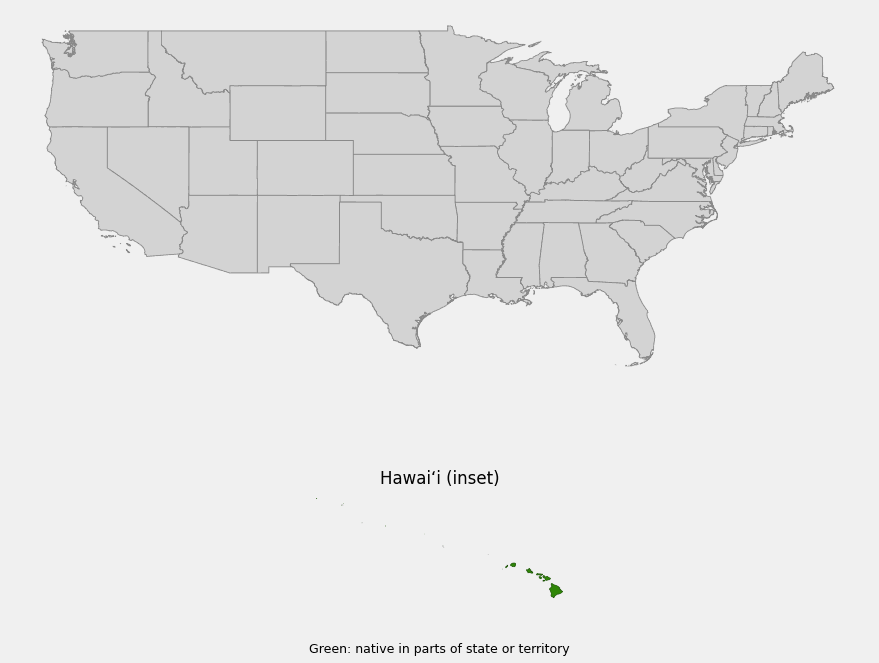
📋 Regional plant lists featuring Greensword: Hawaii
Growing & Care Guide
Honestly, the greensword is essentially not grown outside conservation programs. It is not sold by nurseries, and its natural home, cold, cloud-wrapped bogs with constant rain, is almost impossible to reproduce in a garden. The few plants in cultivation are raised by specialized facilities on Maui, such as the Olinda Rare Plant nursery and Haleakalā National Park, for research and reintroduction. Never collect plants or seeds from the wild, and do not enter bogs, where a single footprint can damage plants and peat for years. Hawaiʻi also restricts plants brought in from other states, and no legal source exists for gardeners elsewhere. The notes below describe the conditions it needs.
Light
In the wild it grows in open bogs and at forest edges, in bright light filtered by almost constant cloud and mist. In conservation nurseries it is grown in bright, cool, humid greenhouses or shade houses.
Soil & Water
It needs constantly wet, acidic, low-nutrient soil, like the peaty, waterlogged soils of Hawaiian bogs. Nurseries use acidic, organic mixes kept continually moist. Drying out even briefly can kill it, yet stagnant, warm water also causes rot. Fertilizer is rarely needed, as bog plants are adapted to very poor soils.
Planting Tips
Outplanting is done only by conservation agencies into protected, fenced bogs and wet forests on Maui at about 4,000 to 6,700 feet, where temperatures stay cool and rainfall is extreme. Warm lowland conditions, heat and dry air quickly kill it.
Pruning & Maintenance
No pruning is needed. Remove dead flowering rosettes carefully. In the wild, the most important maintenance is fencing out feral pigs and controlling invasive plants around the bogs.
Propagation
Conservation nurseries grow greenswords from seed collected under permit, and sometimes by rooting side shoots. Seed set is often low, and seedlings grow slowly. Germination and growth require cool, humid conditions.
Landscape Uses
- Conservation: a focus species for bog protection and reintroduction on Maui
- Education: a striking example of adaptive radiation in the silversword alliance
- Where to see it: guided trips into the Puʻu Kukui and Kīpahulu areas, which are closed to general access
- Botanical gardens: occasionally displayed by research and rare-plant facilities on Maui
- Photography: the related ʻāhinahina is easy to see at Haleakalā National Park
Wildlife & Ecological Value
The greensword is one of the signature plants of Maui’s high bogs, a rare and fragile ecosystem found almost nowhere else in the United States.
For Pollinators
Silverswords are pollinated mainly by native insects such as yellow-faced bees (Hylaeus); little has been published on greensword pollinators specifically. Because greenswords flower infrequently, each flowering event matters for seed production.
For Birds
Native forest birds forage for insects around bog vegetation, and the surrounding wet forests are home to some of Maui’s rarest native honeycreepers.
For Mammals
Hawaiʻi’s only native land mammal, the Hawaiian hoary bat, hunts over the forests near the bogs. Feral pigs are the greatest threat to greenswords: their rooting destroys plants and turns bogs into muddy wallows that invasive plants then colonize.
Ecosystem Role
Bogs act like sponges, soaking up enormous amounts of rain and releasing it slowly into streams that supply water to Maui. Greenswords and other bog plants help hold the peat in place. Their presence is a sign of a healthy, pig-free bog.
Cultural & Historical Uses
The silversword alliance, which includes the greensword, is one of the world’s best-known examples of adaptive radiation. From a single tarweed-like ancestor that arrived from western North America, its descendants evolved into rosette plants of alpine deserts, trees and shrubs of rain forest, vines and cushion plants of bogs. The greensword represents the wet extreme of the genus Argyroxiphium, the silversword its dry extreme.
The species was first described by the German physician and botanist William Hillebrand in the 19th century under the name Wilkesia grayana, honoring the American botanist Asa Gray, and later moved to Argyroxiphium by Otto Degener. Spontaneous hybrids between members of the alliance have been observed in the wild, supporting their close relationship.
The greensword’s survival depends on conservation work. Watershed partnerships, landowners and park staff have fenced the Puʻu Kukui and East Maui bogs to keep out pigs, and rare plant facilities on Maui grow greenswords for reintroduction, so that Maui’s cloud-forest bogs keep this living link to its famous silver cousin.
Frequently Asked Questions
What is the difference between a greensword and a silversword?
Both belong to the genus Argyroxiphium. The silversword lives in dry alpine cinder and has silver-haired, succulent leaves; the greensword lives in wet bogs and has thin green leaves. Silverswords flower once and die, while greenswords branch and only their flowering rosettes die.
Can I grow a greensword?
Realistically, no. It is not sold, and it needs constantly cold, wet, misty bog conditions found only in Maui’s high mountains. It is grown only by rare plant facilities for conservation.
Where can I see a greensword?
Its habitat in the Puʻu Kukui Watershed Preserve and the upper Kīpahulu area is closed to general access to protect the bogs. Occasional guided or volunteer trips with conservation groups are the main way to see it in the wild.
Is the greensword endangered?
It is not federally listed, but it is critically imperiled because it grows only in a few bogs on Maui. A related species, A. virescens, is believed extinct.
Is the greensword the same as the ʻEke silversword?
No. The ʻEke silversword (A. caliginis) shares the West Maui bogs but is a separate, smaller species with silvery leaves and creeping stems.

Looking for a nursery that carries Greensword?
Browse our native plant nursery directory: Hawaii

