
Pua ʻala (Brighamia rockii)
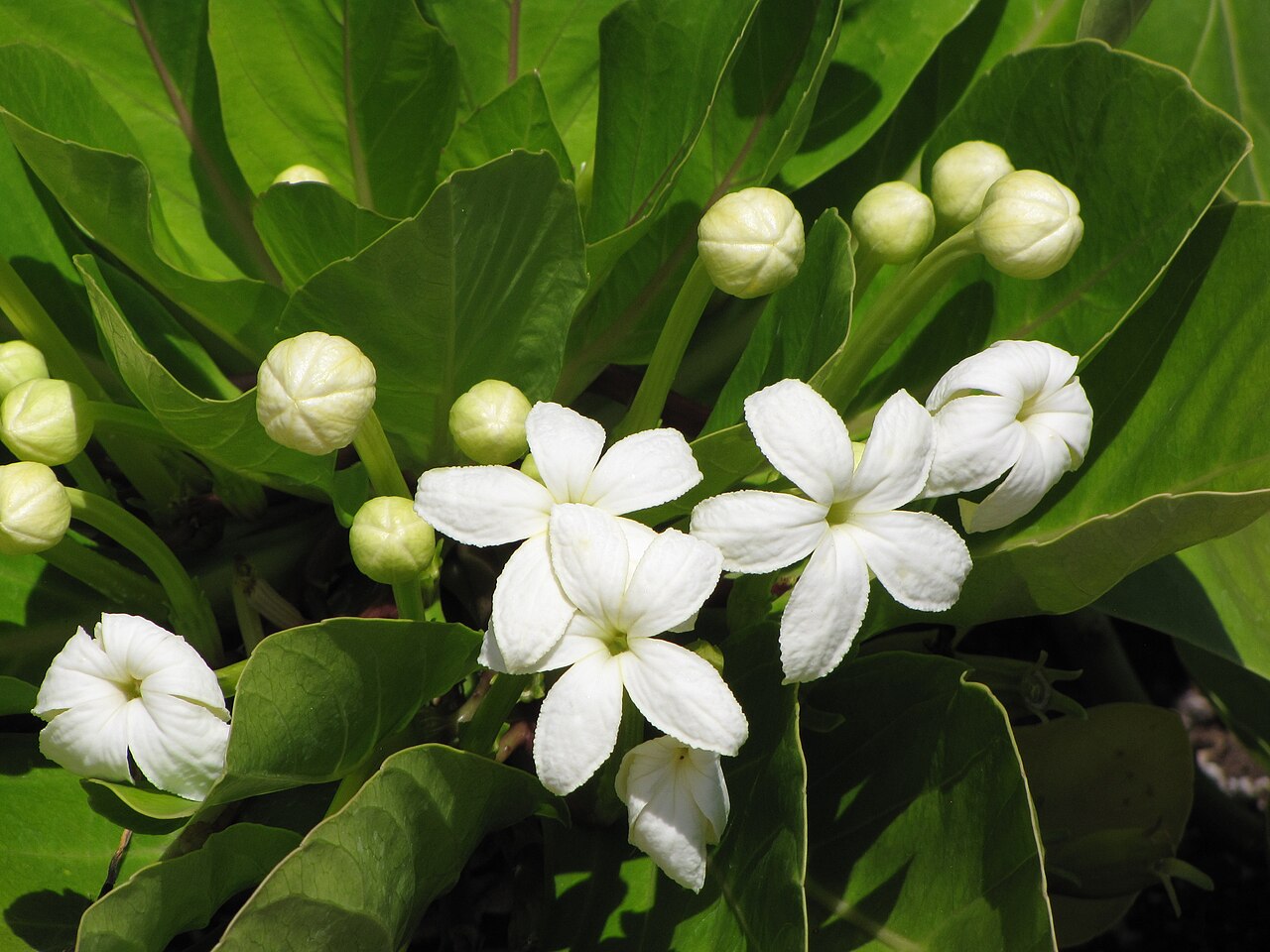
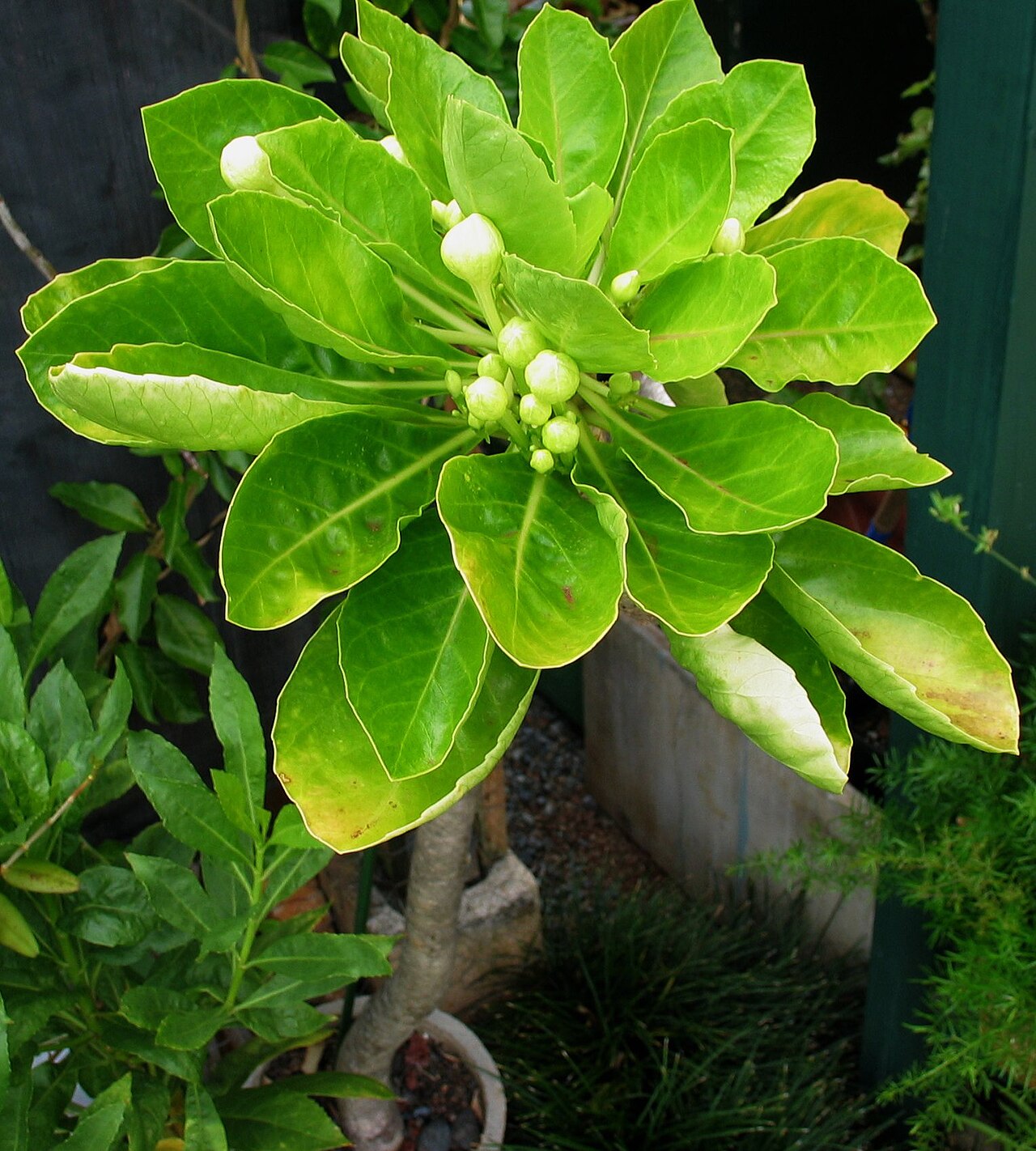
Brighamia rockii, known in Hawaiian as pua ʻala (“fragrant flower”) and also as ʻālula, hāhā or Molokaʻi ʻōhāhā, is one of the strangest and rarest plants in Hawaiʻi. It is a succulent member of the bellflower family (Campanulaceae) with a single thick, unbranched stem topped by a rosette of glossy leaves, earning it the nicknames “cabbage on a stick” and “cabbage on a baseball bat.” In fall it bears clusters of fragrant, white, star-shaped flowers.
Pua ʻala is endemic to Hawaiʻi and today grows wild only on the windward sea cliffs of Molokaʻi, from Kalaupapa to Hālawa, and on a few offshore islets. It once also grew on Lānaʻi and probably Maui. It is federally listed as endangered (since 1992), and only a small number of wild plants remain, by one count fewer than 200. Its natural pollinator appears to be gone, so wild plants set little seed.
Conservation nurseries and botanical gardens have rescued it through hand pollination and seed banking, and nursery-grown plants are now available in Hawaiʻi. It is easy to grow in a well-drained pot. Buy only nursery-propagated plants from a Hawaiʻi native plant nursery, and never collect plants or seeds from the wild, which is illegal for this protected species.
Identification
There is nothing else quite like a Brighamia: a smooth, swollen, succulent trunk with a tuft of leaves only at the top. Pua ʻala is told from its Kauaʻi relative by its white rather than yellow flowers.
Growth Habit
A succulent, usually unbranched plant, typically 3 to 16 feet tall, with a thick, smooth, gray-green stem that is widest at the base and tapers upward. The swollen base lets plants rock in strong winds while their roots grip crevices in the cliff. Leaves grow only in a rosette at the top.
Leaves
Leaves are spoon-shaped to broadly oval, fleshy, glossy, light to medium green, about 5 to 8 inches long, and arranged in a dense spiral rosette. Old leaves drop and leave scars on the stem.
Flowers
Flowers are borne in clusters among the leaves. Each has a long, slender, white to greenish-white tube, 3 to 5 inches long, that opens into five white, star-like lobes. They are sweetly fragrant; early botanist George Munro compared the scent to violets. In the wild it flowers mainly in September and October, but cultivated plants can be brought into flower at other times.
Fruit & Look-alikes
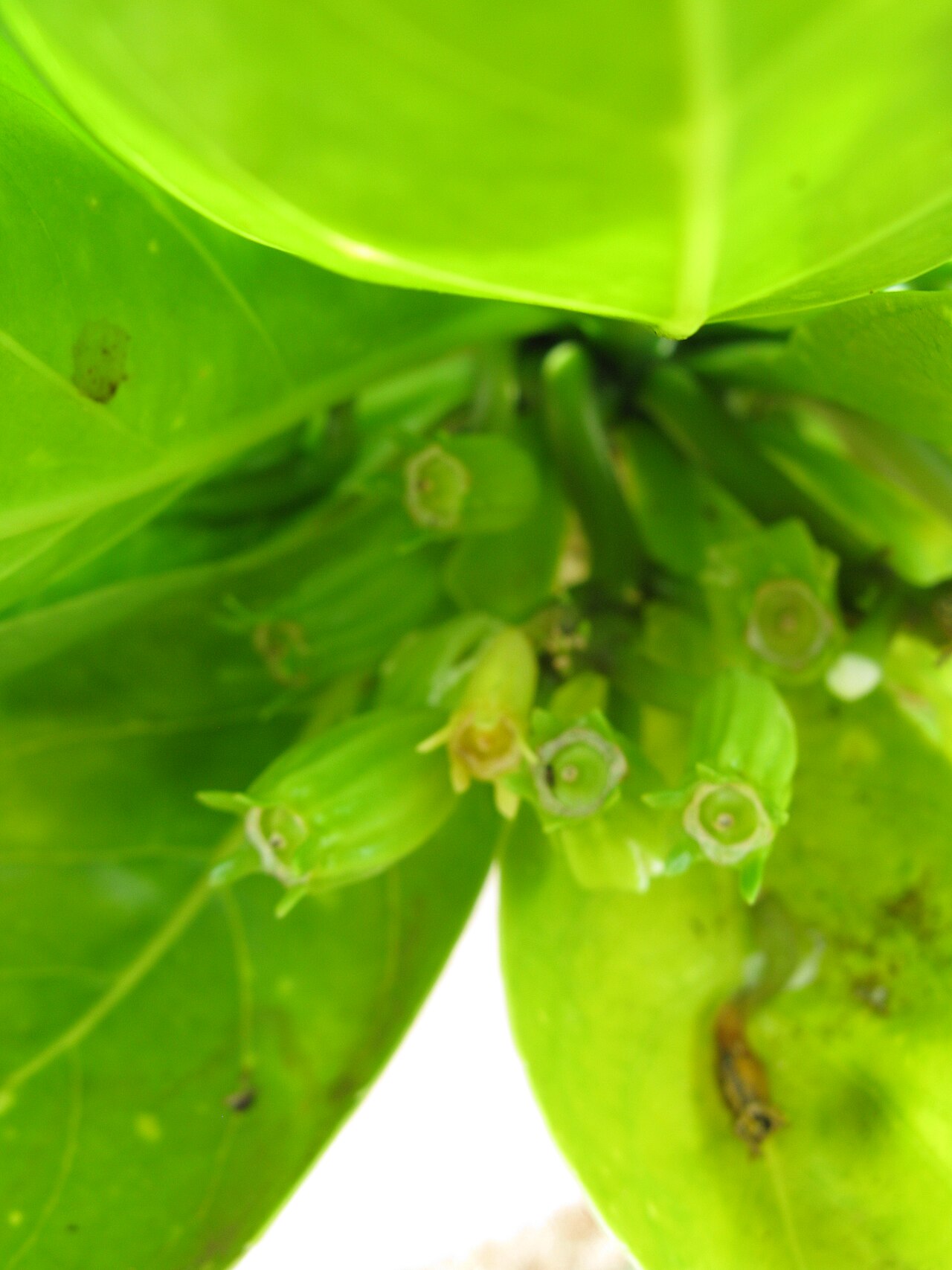
The fruit is a ribbed capsule about ½ inch long that splits along its sides to release many tiny seeds. The only look-alike is ʻōlulu (Brighamia insignis) of Kauaʻi and Niʻihau, which has yellow flowers and tends to grow larger. Both are often sold as houseplants called “Hawaiian palm,” though neither is a palm.
Quick Facts
| Scientific Name | Brighamia rockii H. St. John |
| Family | Campanulaceae (bellflower family) |
| Plant Type | Succulent unbranched shrub; Hawaiian endemic; federally endangered |
| Mature Height | 3–16 ft (smaller in pots) |
| Mature Spread | 1–3 ft |
| Growth Rate | Slow to moderate |
| Sun Exposure | Partial sun to full sun; best with some shade |
| Water Needs | Low; let soil dry between waterings |
| Soil Type | Very well-drained cinder or cactus mix |
| Soil pH | Slightly acidic to neutral |
| Bloom Time | September–October in the wild; variable in cultivation |
| Flower Color | White to greenish white |
| Fall Color | None; evergreen |
| Fruit | Ribbed capsule about ½ in long with many tiny seeds |
| Deer Resistant | No; goats and deer browse it |
| USDA Hardiness Zones | 10–12 (outdoors); houseplant elsewhere |
Native Range
Pua ʻala is endemic to the Hawaiian Islands. USDA PLANTS lists it as native only in Hawaiʻi. The Smithsonian’s Flora of the Hawaiian Islands records it from windward Molokaʻi, from Haʻupu Bay to Wailau, and notes that it has been lost from Lānaʻi (Maunalei Valley) and Maui.
It grows on steep, windward sea cliffs from sea level to about 1,500 feet, where strong trade winds and salt spray are constant, and on offshore islets such as Huelo. These cliffs are among the few places goats and deer cannot easily reach. On the islets it grows with loulu palms (Pritchardia hillebrandii) and other coastal cliff plants.
The U.S. Fish and Wildlife Service listed pua ʻala as endangered on October 8, 1992. Threats include goats and deer, rats that eat the fruit and seeds, slugs, competition from invasive plants, and rockslides and erosion on its cliffs. Critical habitat has been designated on the Molokaʻi offshore islets of Mōkapu and Keōpuka, and rat eradication on Mōkapu in 2008 opened the way to reintroducing it there.
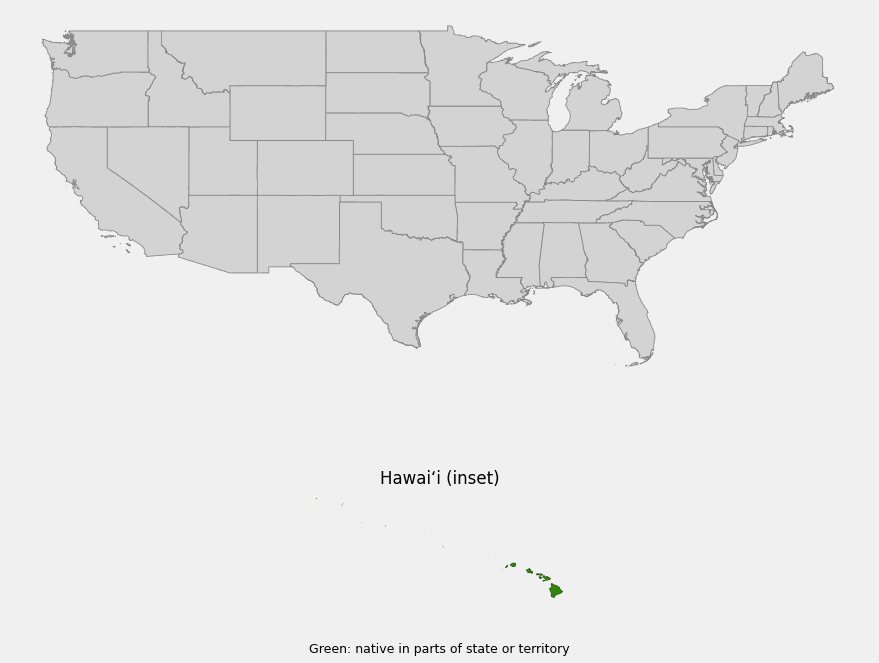
📋 Regional plant lists featuring Pua ʻala: Hawaii
Growing & Care Guide
Pua ʻala is rarer in gardens than its Kauaʻi cousin ʻōlulu, but native plant growers say it is easy to grow and flower if its needs are met: bright light, excellent drainage and protection from slugs and snails. It grows outdoors in frost-free climates, about USDA zones 10–12, and makes a striking container plant on a lanai. Buy only nursery-propagated plants from a Hawaiʻi native plant nursery; as a federally endangered species, wild plants and seeds are protected by law. Hawaiʻi also restricts bringing plants in from other states.
Light
Partial sun is best; it tolerates full sun in mild coastal sites. Indoors, give it the brightest window available.
Soil & Water
Use a fast-draining succulent or cactus mix with plenty of black cinder. Let the soil dry between waterings; overwatering quickly causes root rot. It tolerates drought, wind and salt spray.
Planting Tips
Growers recommend heavy cement, terra cotta or ceramic pots, which improve aeration and keep the top-heavy plants from tipping in wind. If planting in the ground, give it very sharp drainage and protect it from slugs and African snails, which can kill young plants.
Pruning & Maintenance
No pruning is needed; just remove old, yellowed leaves. Carmine spider mites can be a serious pest, especially indoors and in dry air; rinse the leaves and treat early. Leafminers are an occasional problem. Regular foliar feeding or a slow-release fertilizer twice a year keeps plants vigorous, and a high-phosphorus fertilizer about three months ahead can encourage flowering.
Propagation
Plants rarely set seed without help, because the natural pollinator is gone. Growers transfer pollen by hand between flowers with a small brush, and sow the tiny seeds on a fine, well-drained mix. Home gardeners should propagate only from their own nursery-bought plants.
Landscape Uses
- Container specimens: a sculptural succulent for pots on a sunny lanai
- Coastal native gardens: tolerates wind and salt spray where drainage is sharp
- Houseplant: a bright-window plant similar to the “Hawaiian palm” ʻōlulu
- Conservation and education: a living example of a plant saved by hand pollination
Wildlife & Ecological Value
Pua ʻala is a cliff specialist whose survival now depends on people.
For Pollinators
The long, white, fragrant flowers suggest a specialized pollinator, possibly a native hawk moth or nectar-feeding birds. Whatever it was, it no longer visits, and wild plants set little seed without hand pollination.
For Birds
Its sea-cliff and islet habitats are shared with nesting seabirds. Rats, which eat its fruits and seeds, also prey on seabird eggs, so rat removal helps both.
For Mammals
Hawaiʻi’s only native land mammal is the Hawaiian hoary bat. Introduced goats, deer and rats are among the main threats to wild plants.
Ecosystem Role
As one of the cliff-dwelling plants of windward Molokaʻi, it is part of a coastal plant community that survives mostly on inaccessible cliffs and islets.
Cultural & Historical Uses
Hawaiians of Wailau Valley on Molokaʻi once grew pua ʻala around their homes to enjoy its sweetly scented flowers, and the name itself means “fragrant flower.” Botanist Otto Degener recorded that Brighamia was eaten raw as a supposed remedy for consumption and other illnesses, and residents of Kalaupapa are said to have grown it in gardens.
The genus Brighamia is named for William Tufts Brigham, the first director of Honolulu’s Bishop Museum, and rockii honors Joseph F. Rock, the Austrian-American botanist whose work laid much of the foundation for Hawaiian botany. Early botanist William Hillebrand compared the plant to “a big cabbage on a naked pole.”
Pua ʻala belongs to the Hawaiian lobelioids, a group of about 130 endemic species in the bellflower family that also includes Clermontia, Cyanea and Lobelia. It is one of the plants that conservation programs have kept alive largely by hand pollination, seed storage and outplanting onto predator-free islets.
Frequently Asked Questions
Is pua ʻala endangered?
Yes. Brighamia rockii was federally listed as endangered on October 8, 1992, and only a small number of wild plants remain on Molokaʻi’s sea cliffs and islets.
What is the difference between pua ʻala and ʻōlulu?
Pua ʻala (B. rockii) is from Molokaʻi and has white flowers. ʻŌlulu (B. insignis) is from Kauaʻi and Niʻihau and has yellow flowers.
Can I grow it as a houseplant?
Yes, in a bright window in a fast-draining cactus mix, watering only when the soil dries. Watch for spider mites. Buy only nursery-propagated plants.
Why doesn’t my plant make seeds?
Its natural pollinator has disappeared. To get seed, transfer pollen between flowers by hand with a small brush.
Is it a palm?
No. It is sometimes sold as “Hawaiian palm,” but it is a succulent in the bellflower family.

Looking for a nursery that carries Pua ʻala?
Browse our native plant nursery directory: Hawaii

