
Pōkalakala (Polyscias lallanii)
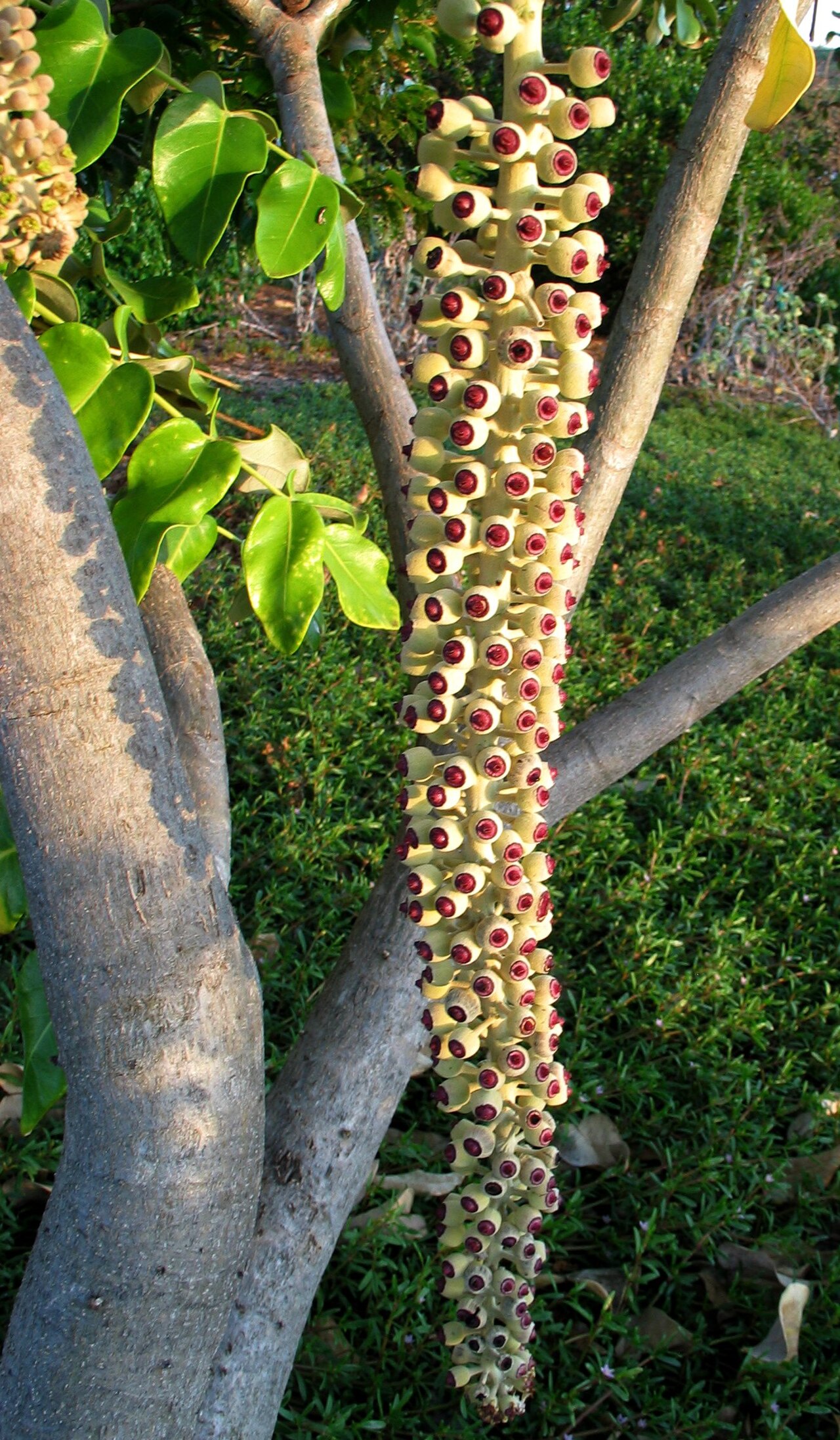
Pōkalakala (Polyscias lallanii), also called pōkūlakalaka, false ʻohe and munroidendron, is a rare small tree in the ginseng family with one of the most spectacular flower displays of any Hawaiian plant: long, unbranched strings of flowers that hang from the branches like ponytails, followed by strings of downy white fruits. It is endemic to Kauaʻi, where it grows on steep cliffs and ridges in coastal and lowland mesic forest.
For decades it was the only species in its own Hawaiian genus, Munroidendron, and USDA PLANTS still lists it as Munroidendron racemosum. It was later moved into the large genus Polyscias, first as Polyscias racemosa, the name used by the U.S. Fish and Wildlife Service and Native Plants Hawaiʻi, and iNaturalist and Plants of the World Online now call it Polyscias lallanii. All of these names refer to the same tree.
Pōkalakala is listed as Endangered under the federal Endangered Species Act (listed in 1994), and only a few natural populations remain on Kauaʻi. Yet it is one of the easiest native Hawaiian trees to grow in hot, dry lowland gardens, and nursery-grown trees are widely planted. This guide covers how to recognize it, where it grows, how to grow it, and its history.
Identification
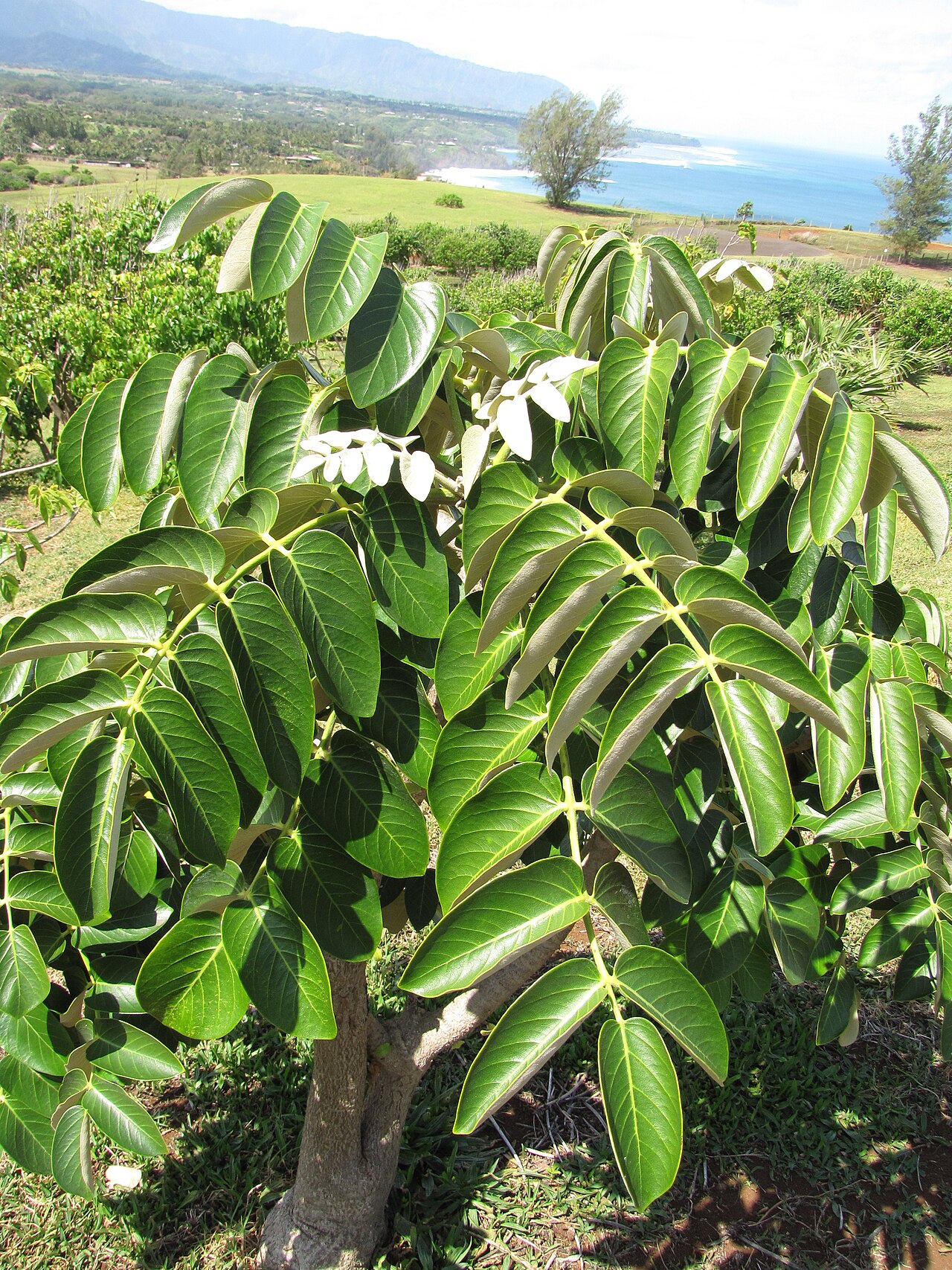
Pōkalakala is unmistakable in flower or fruit. Out of flower, look for a small, pale-barked tree with large compound leaves that are fuzzy and golden on the underside.
Trunk & Growth Habit
It is a small tree, usually 15 to 30 feet tall, with a stout, smooth, pale gray trunk and a rounded, fairly open crown. It grows fairly quickly and often flowers and fruits while still young.
Leaves
The leaves are alternate and pinnately compound, about 6 to 12 inches long, with five to nine oval to elliptic leaflets each 3 to 7 inches long. The upper surface is smooth and dark to medium green, and the underside is covered with dense golden-yellow fuzz. New leaves unfold from fuzzy buds that look like small clasping hands. Trees may drop many of their leaves during a dry summer.
Flowers
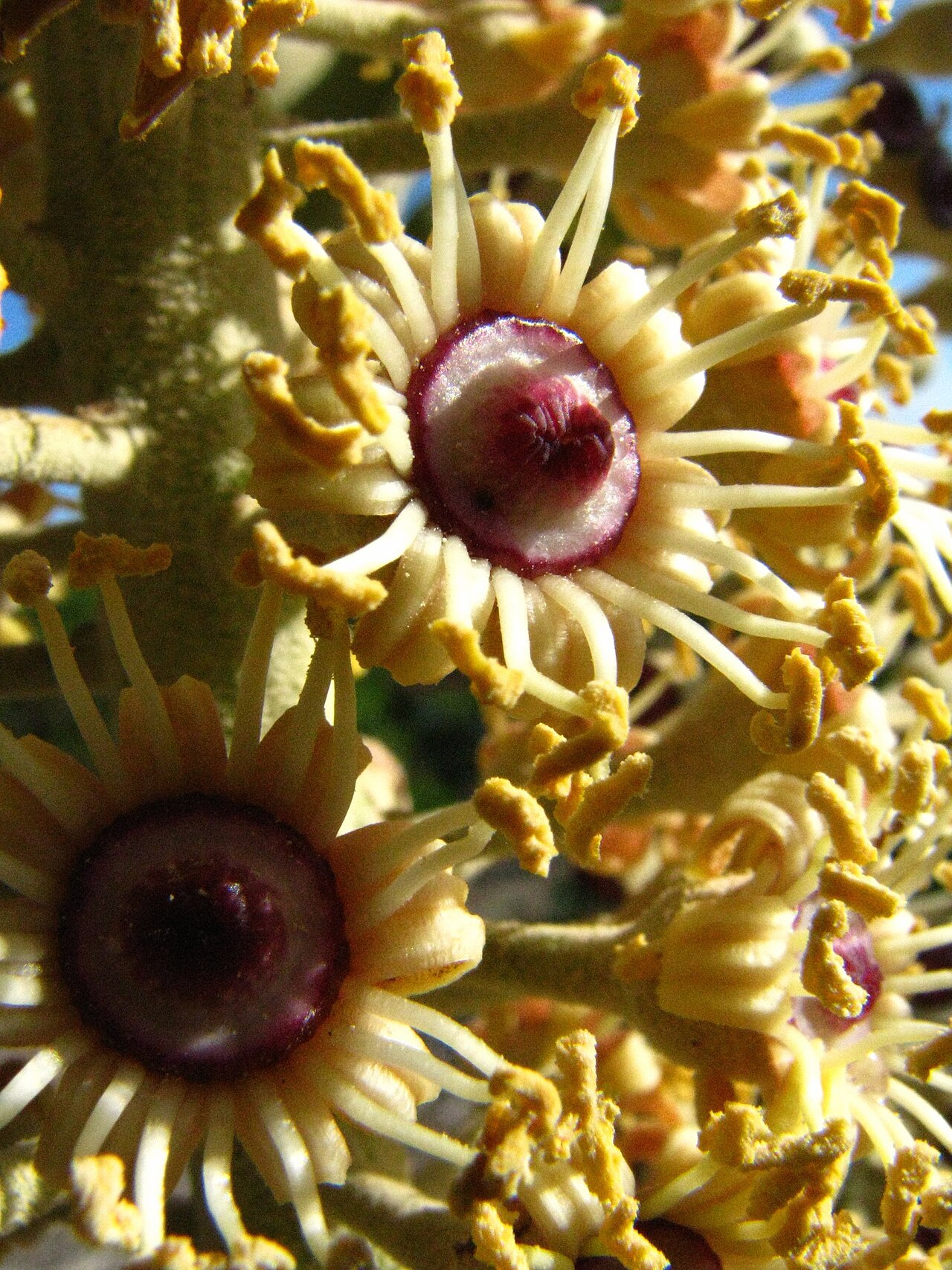
The flowers grow on long, unbranched, hanging racemes 10 to 24 inches long, each carrying around 250 small flowers. Each flower has pale yellow, curled-back petals, yellow stamens and a dark red to purplish center. Flowering is sporadic through the year.
Fruit
The fruits are egg-shaped drupes under an inch long, covered in white down, packed along the hanging stalk. Inside they are deep purple, with flat seeds. The fruit stalk remains on the tree for some time, extending the display.
Similar Species
Its relatives ʻOhe Makai (Polyscias sandwicensis) and ʻOhe Mauka have branched flower clusters, not single long racemes. The invasive octopus tree (Schefflera actinophylla), in the same family, has palmately compound leaves with leaflets radiating from one point.
Quick Facts
| Scientific Name | Polyscias lallanii; syn. Munroidendron racemosum (C.N. Forbes) Sherff (USDA), Polyscias racemosa |
| Family | Araliaceae (ginseng family) |
| Plant Type | Small tree; endemic to Kauaʻi |
| Mature Height | 15–30 ft |
| Mature Spread | 10–20 ft |
| Growth Rate | Moderate to fast |
| Sun Exposure | Full sun to part sun |
| Water Needs | Low to moderate; drought tolerant once established |
| Soil Type | Well-drained cinder, rocky or organic soils |
| Soil pH | About 6.0–7.5 |
| Bloom Time | Sporadic year-round |
| Flower Color | Pale yellow with dark red centers |
| Fall Color | None; may drop leaves in dry summers |
| Fruit | Downy white egg-shaped drupes, deep purple inside |
| Deer Resistant | Unknown; seedlings browsed by goats in the wild |
| USDA Hardiness Zones | 10b–12 |
Native Range
Pōkalakala is endemic to Kauaʻi, and USDA PLANTS records it only from Hawaiʻi. It is very rare in the wild and is known from only a handful of natural sites, most of them on steep, exposed cliffs and ridge slopes in coastal and lowland mesic forest from about 400 to a little over 1,300 feet elevation.
Some populations grow in mesic forest dominated by Hala, and others persist in shrubland and grassland now dominated by alien plants. Its cliff habitats have protected the last wild trees from some grazing, but they also make natural reproduction and seedling survival difficult.
The U.S. Fish and Wildlife Service listed pōkalakala as Endangered on February 25, 1994 (under the name Polyscias racemosa). Threats include feral goats, invasive plants, fire, rats that eat the fruit, and the small number of wild trees. Conservation plantings, such as those at Kīlauea Point National Wildlife Refuge, and widespread cultivation help secure the species.
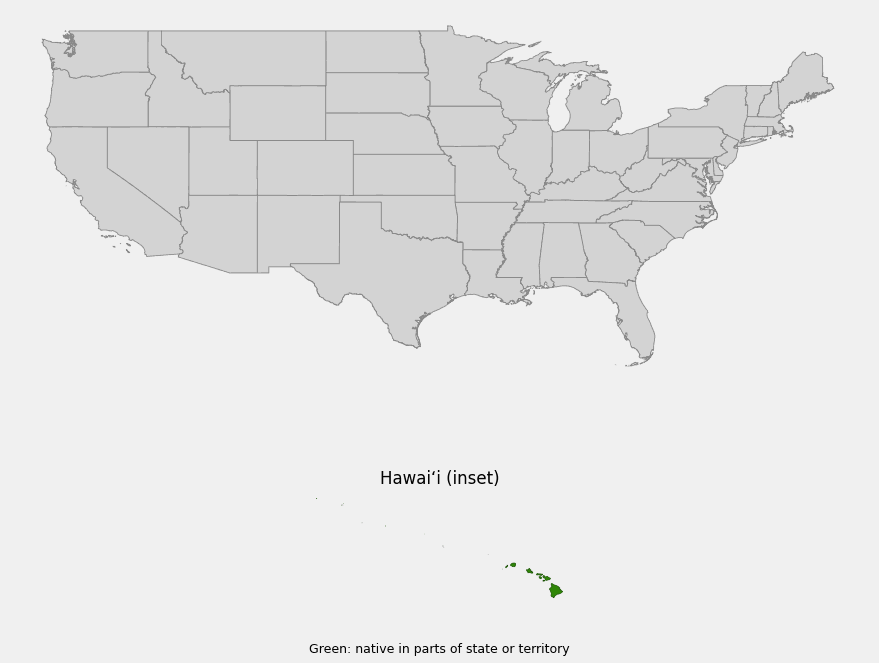
📋 Regional plant lists featuring Pōkalakala: Hawaii
Growing & Care Guide
Though one of the rarest members of its family in the wild, pōkalakala is one of the easiest native trees to grow in lowland and urban gardens in Hawaiʻi. It tolerates heat, drought, wind and salt spray. Buy only nursery-propagated trees from Hawaiʻi native plant nurseries, and never collect plants or seed from the wild. Hawaiʻi restricts bringing plants in from other states.
Light
Plant in full sun to partial sun. Trees in full sun are more compact and flower more heavily.
Soil & Water
Pōkalakala needs well-drained soil and does well in cinder, rocky ground and soils with organic matter. Water weekly until it is established, which you can tell by new leaves forming at the branch tips. After that, moderate watering keeps it healthy, and it survives dry spells, sometimes by dropping leaves.
Planting Tips
Use it as a specimen or shade tree, in a screen, or near a patio where the hanging flowers and fruits can be seen up close. It also grows in a large container in part shade to full sun with fertilizer at half strength. Feed young trees with a balanced slow-release fertilizer about every six months.
Pruning & Maintenance
Little pruning is needed beyond removing dead branches and old fruit stalks. Watch for ants, spider mites and leafhoppers. Boring insects can kill a mature tree quickly: if you see sawdust-like material coming from tiny holes, act right away by cutting out infested wood or treating the tree.
Propagation
Pōkalakala is grown from seed cleaned from ripe fruits and sown fresh. Use seed only from cultivated trees; propagation from wild trees is done by permitted conservation programs.
Landscape Uses
- Specimen tree: spectacular hanging flower and fruit strands
- Lowland and urban gardens: tough, drought- and wind-tolerant small tree
- Coastal plantings: tolerates salt spray
- Containers: can be grown in large pots for years
- Restoration and conservation: plantings help secure an endangered Kauaʻi endemic
Wildlife & Ecological Value
Pōkalakala is a survivor from Kauaʻi’s lowland forests, most of which have disappeared, and each garden tree adds to the species’ safety net.
For Pollinators
The flowers produce nectar and pollen. In gardens, Japanese white-eyes and other birds sip nectar from the hanging racemes, and insects visit the flowers.
For Birds
Bulbuls and spotted doves eat the ripe fruits in urban gardens. Native birds likely dispersed the seeds in the past.
For Mammals
Hawaiʻi’s only native land mammal, the Hawaiian hoary bat, forages over Kauaʻi’s lowlands. Introduced rats eat the fruits and seeds, and goats browse young plants.
Ecosystem Role
As a small tree of lowland mesic forest and cliff communities, pōkalakala adds structure and food for birds and insects to habitats that have lost much of their native diversity.
Cultural & Historical Uses
The former genus name Munroidendron honors George C. Munro (1866–1963), a Molokaʻi Ranch and Lānaʻi Ranch manager, ornithologist and botanist. The species epithet racemosa refers to the spectacular hanging raceme.
The Hawaiian name pōkalakala suggests the tree was known to early Hawaiians, though how they used it is not recorded. The same name is also used for the Hawaiian prickly poppy (Argemone glauca).
Today, kapa makers have tested the fruits as a dye source: they give a rich purple when wet that dries to a lighter plum color.
Frequently Asked Questions
Is pōkalakala endangered?
Yes. It has been listed as Endangered by the U.S. Fish and Wildlife Service since February 25, 1994, and only a few natural populations remain on Kauaʻi. Buy only nursery-propagated trees.
Is pōkalakala easy to grow?
Yes. It is one of the easiest native Hawaiian trees for hot, dry lowland gardens. Give it well-drained soil and sun, water until established, and watch for boring insects.
Why does it have so many scientific names?
It was long known as Munroidendron racemosum, the only species in its genus, and USDA still uses that name. It was later moved into Polyscias, first as P. racemosa, and is now called Polyscias lallanii by iNaturalist and Plants of the World Online.
How big does pōkalakala get?
Usually 15 to 30 feet tall with a rounded crown, which makes it a good small shade or specimen tree.
Can it grow by the ocean?
Yes. It tolerates wind and salt spray and grows naturally in coastal mesic forest on Kauaʻi, so it suits coastal gardens in Hawaiʻi.

Looking for a nursery that carries Pōkalakala?
Browse our native plant nursery directory: Hawaii

