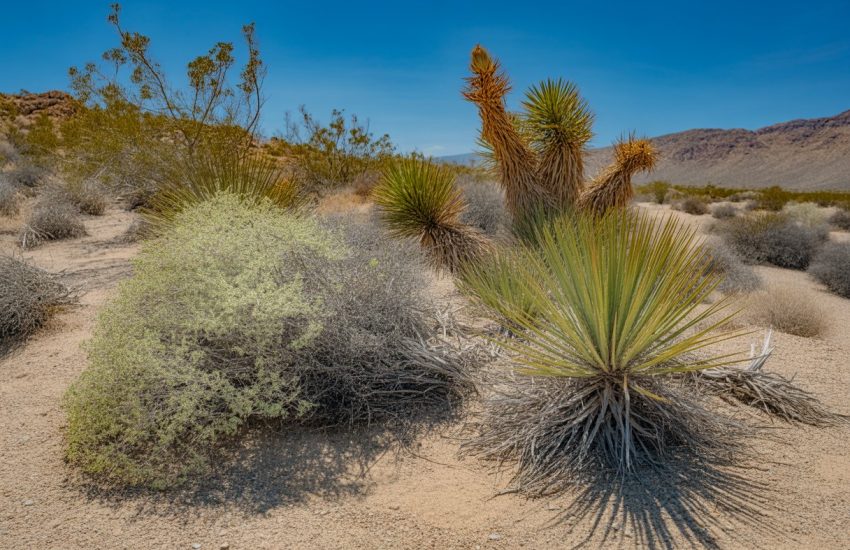
Robust Oak (Quercus robusta)
⚠️ An extremely rare, single-location tree. Robust Oak (Quercus robusta) is known only from the Chisos Mountains of Big Bend National Park, Texas. No photographs of wild specimens are currently available under a usable license; the native range map below shows its only confirmed U.S. location.
Quercus robusta, commonly called Robust Oak, is one of the rarest native trees in the United States, known to grow only in the Chisos Mountains inside Big Bend National Park, Texas. First described by botanist Cornelius Herman Muller in a 1934 paper on new oaks from western Texas, it has never been documented growing wild anywhere else — not elsewhere in Texas, not across the border in Mexico, nowhere.
Despite its name, Robust Oak is not a giant: it is a deciduous tree reaching up to about 43 feet (13 meters) tall, with black or brown bark and dark reddish-brown twigs, growing in the moist wooded canyons that cut through the otherwise arid Chisos range. Those canyons function as a kind of refuge — cooler, shadier, and moister than the surrounding Chihuahuan Desert lowlands — and they are part of why the Chisos Mountains harbor an unusual cluster of oak species, including Robust Oak and the even rarer Lateleaf Oak, found nowhere else on Earth.
Because its entire known range sits within a protected national park and it has no history of cultivation, Robust Oak is not a plant available for home gardens. This page exists to document the species and its conservation significance rather than to suggest it for landscaping; anyone encountering it on a Big Bend hike should observe and photograph it without disturbing or collecting from it.
Identification
Robust Oak belongs to the red oak group (section Lobatae) and is a deciduous tree, distinguishing it from some of its rare, evergreen Chisos Mountains neighbors. Confirming an identification in the field should rely on official Big Bend National Park or botanical references given how little this species has been studied and how easily it could be confused with other Trans-Pecos oaks growing in similar canyon habitat.
Bark & Stems
The bark is black to brown, and the young twigs are a distinctive dark reddish-brown — a combination noted in the original 1934 species description and still one of the more useful identification characters for this little-studied tree.
Leaves
Leaves grow up to about 4¾ inches (12 cm) long, with a few teeth or small lobes along the margin — a relatively simple, lightly toothed leaf outline compared to the deeply lobed leaves of many red oaks found farther east and north in the United States.
Growth Habit & Habitat
Robust Oak grows as a single-trunked deciduous tree reaching up to roughly 43 feet (13 m) in height, rooted in the moist, wooded canyon bottoms of the Chisos Mountains rather than the drier, more exposed slopes favored by some of the range’s shrubbier oak species.
Quick Facts
| Scientific Name | Quercus robusta |
| Family | Fagaceae (Beech/Oak) |
| Plant Type | Deciduous tree (critically rare, single-site endemic) |
| Mature Height | Up to 43 ft (13 m) |
| Growth Rate | Unknown (insufficient study) |
| Sun Exposure | Part Shade (moist canyon understory to partial canopy) |
| Water Needs | Moderate (moist canyon sites within a semi-arid region) |
| Soil Type | Rocky canyon soils with better moisture retention than surrounding slopes |
| Bloom Time | Spring (wind-pollinated catkins) |
| Flower Color | Greenish-yellow |
| Fall Color | Yellow to brown (typical of Trans-Pecos canyon red oaks) |
| Fruit | Acorn (red oak group) |
| Conservation Status | Critically rare; IUCN Data Deficient; known from a single mountain range |
| USDA Hardiness Zones | 7–8 (estimated, based on Chisos Mountains elevation) |
Native Range
Robust Oak is a true single-mountain-range endemic: every confirmed record of this species comes from the Chisos Mountains inside Big Bend National Park, in the Trans-Pecos region of far western Texas. Unlike several of its rare oak neighbors in the same range, it has not been documented across the border in Mexico, making its entire known global range a cluster of moist canyons within one national park.
Within the Chisos Mountains, Robust Oak favors moist, wooded canyon environments — pockets of the range where water collects and persists longer than on the surrounding exposed desert-mountain slopes, creating a cooler, shadier microclimate that supports a richer mix of trees than the Chihuahuan Desert lowlands below. This kind of canyon refuge habitat is part of why the Chisos Mountains support such an unusual concentration of rare, range-restricted oak species.
Because it has never been found anywhere outside this one protected mountain range, Robust Oak has no history of cultivation or planting beyond its native habitat. There is no evidence of the species naturalizing or spreading outside Big Bend National Park, and it should be treated strictly as a wild, protected, single-site native rather than a landscaping candidate.
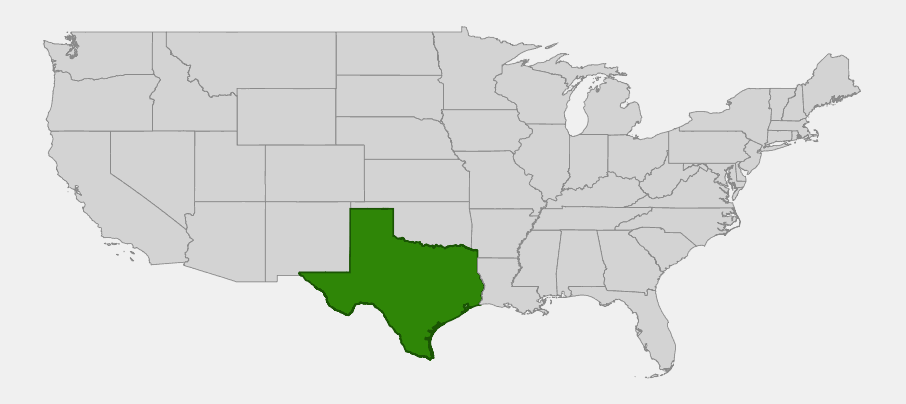
📋 Regional plant lists featuring Robust Oak: South and West Texas
Growing & Care Guide
Robust Oak has no history of cultivation anywhere, and with its entire known population confined to protected canyons within Big Bend National Park, there is no legitimate source of seed, cuttings, or nursery stock. The notes below describe its known natural growing conditions for context, not as planting instructions.
Natural Growing Conditions
In the wild, Robust Oak grows in moist, shaded-to-partly-sunny canyon bottoms where water is more available than on the surrounding exposed slopes of the Chisos Mountains — a microhabitat pattern shared by several of the range’s other locally rare trees, including Texas madrone and bigtooth maple.
Conservation Considerations
Because Robust Oak is known from such a small area, any disturbance to its canyon habitat — from trail erosion to drought and wildfire intensified by climate change — carries outsized risk to the species as a whole. Big Bend National Park’s ongoing rare-oak conservation work, which has also focused on the critically imperiled Lateleaf Oak found in the same mountain range, is the most direct way this species’ future is being safeguarded.
What You Can Do
- Stay on designated trails when hiking in Chisos Mountains canyons to avoid disturbing rare, localized plant populations
- Never collect acorns, cuttings, or plant material from Big Bend National Park — it is illegal and threatens an already vulnerable population
- Support oak conservation programs run by botanical institutions working on Trans-Pecos Texas species
- Choose other native canyon-adapted oaks, such as Gray Oak or Chinquapin Oak where regionally appropriate, for home landscaping instead
Wildlife & Ecological Value
As one of several oak species restricted to the moist canyon microhabitats of the Chisos Mountains, Robust Oak contributes to a small but ecologically important pocket of canopy diversity within an otherwise arid desert-mountain landscape. Like other oaks, it would be expected to produce acorns valuable to the Chisos Mountains’ wildlife community, including gray fox, ringtail, and numerous resident and migratory bird species that pass through this sky-island range.
Ecosystem Role
The moist canyons where Robust Oak grows function as biodiversity refuges within the Chihuahuan Desert, supporting a disproportionate share of the region’s tree diversity, including several species found nowhere else in the United States. Protecting these canyon habitats protects not just Robust Oak but the broader community of rare plants and animals that depend on the same pockets of shade and water.
Cultural & Historical Uses
Robust Oak has no documented history of use by Indigenous peoples or settlers, consistent with its extremely limited range in remote, high-elevation canyon terrain far from historic population centers. It was formally described in 1934 by botanist Cornelius Herman Muller in a paper on newly recognized oaks of western Texas, part of a broader mid-20th-century effort to document the Trans-Pecos region’s unusually rich and poorly known oak flora.
Today, its significance is primarily scientific and conservation-related. Along with Lateleaf Oak and Coahuila Scrub Oak, Robust Oak is part of what makes the Chisos Mountains one of the most important — and most fragile — centers of oak diversity in North America, a status recognized by ongoing gap-analysis and conservation planning efforts for U.S. oak species.
Its continued survival depends entirely on the protection of the specific canyon habitats within Big Bend National Park where it grows, underscoring how much biodiversity can be concentrated in a small, carefully protected area.
Frequently Asked Questions
Is Robust Oak endangered?
It is listed as Data Deficient by the IUCN, meaning there is not yet enough population data for a full threat assessment, but its restriction to a single mountain range within one national park makes it a species of serious conservation concern regardless of its formal listing status.
Can I plant Robust Oak in my yard?
No. It has no history of cultivation and no commercial nursery source exists. Its entire known population grows wild within protected canyons of Big Bend National Park.
How is Robust Oak different from Lateleaf Oak, which also grows in the Chisos Mountains?
Robust Oak is deciduous with a simpler, lightly toothed leaf margin and grows in moist canyon bottoms, while Lateleaf Oak is evergreen with woolly, shallowly lobed leaves and has been reduced to a single known wild tree. Both were described by the same botanist, Cornelius Herman Muller, and both are found only in the Chisos Mountains.
Why does the Chisos Mountains have so many rare oaks?
The range functions as a “sky island” — a cooler, moister mountain range rising out of the surrounding Chihuahuan Desert — which has allowed oak species to persist and diversify in isolated canyon pockets, some of them found nowhere else in the United States.
Where can I see Robust Oak in the wild?
It grows in moist canyon habitat within the Chisos Mountains of Big Bend National Park. Because exact locations of rare individuals are sensitive, visitors should enjoy the park’s general oak woodland habitat on designated trails rather than seeking out specific rare trees.

Looking for a nursery that carries other native Trans-Pecos oaks?
Browse our native plant nursery directory: Texas