Rough Agave (Agave scabra)
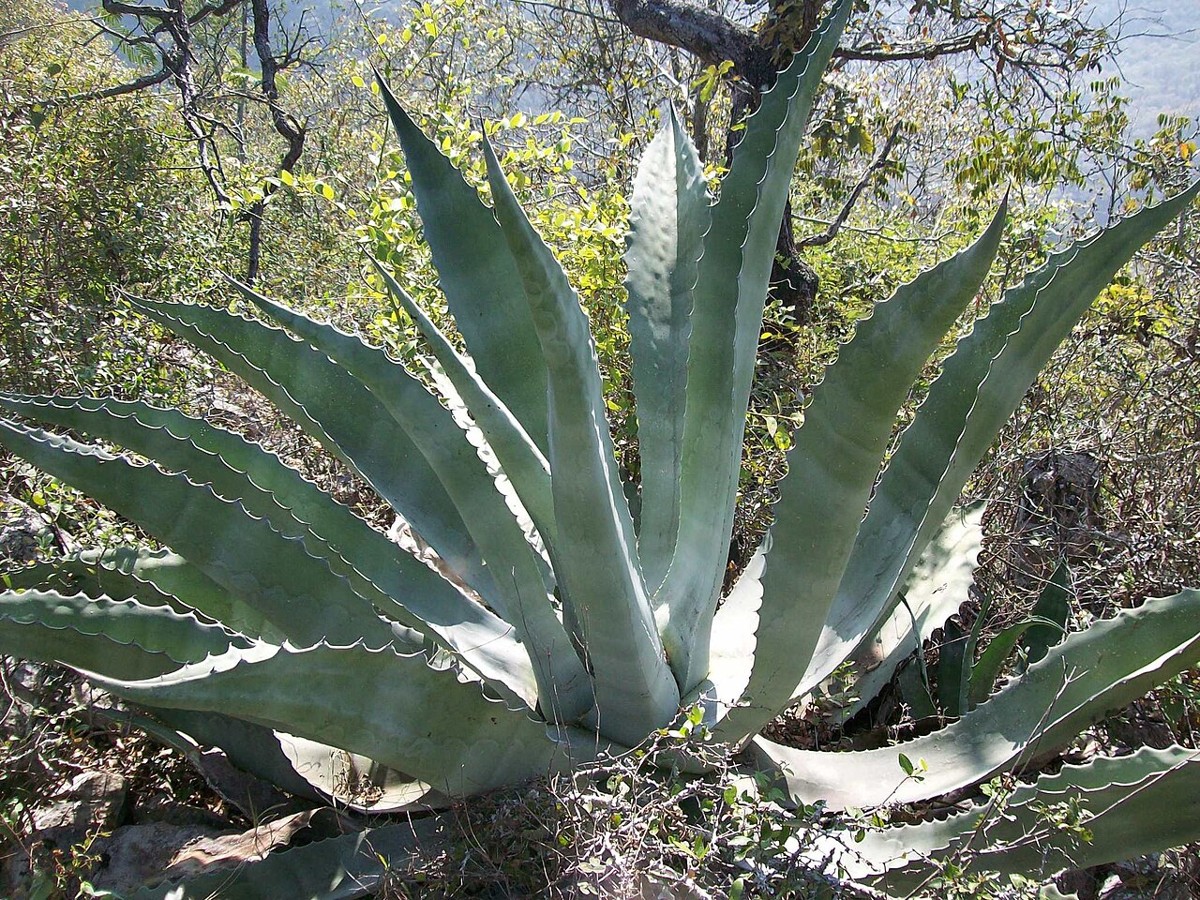
Agave asperrima (long sold and still widely known under the older name Agave scabra), commonly called Rough Agave or rough century plant, is a large, solitary rosette-forming succulent native to the brushlands of far south Texas and the adjoining Chihuahuan Desert of northeastern Mexico. Its common name refers to the sandpapery texture of the broad, blue-gray leaves, a texture you can feel as well as see.
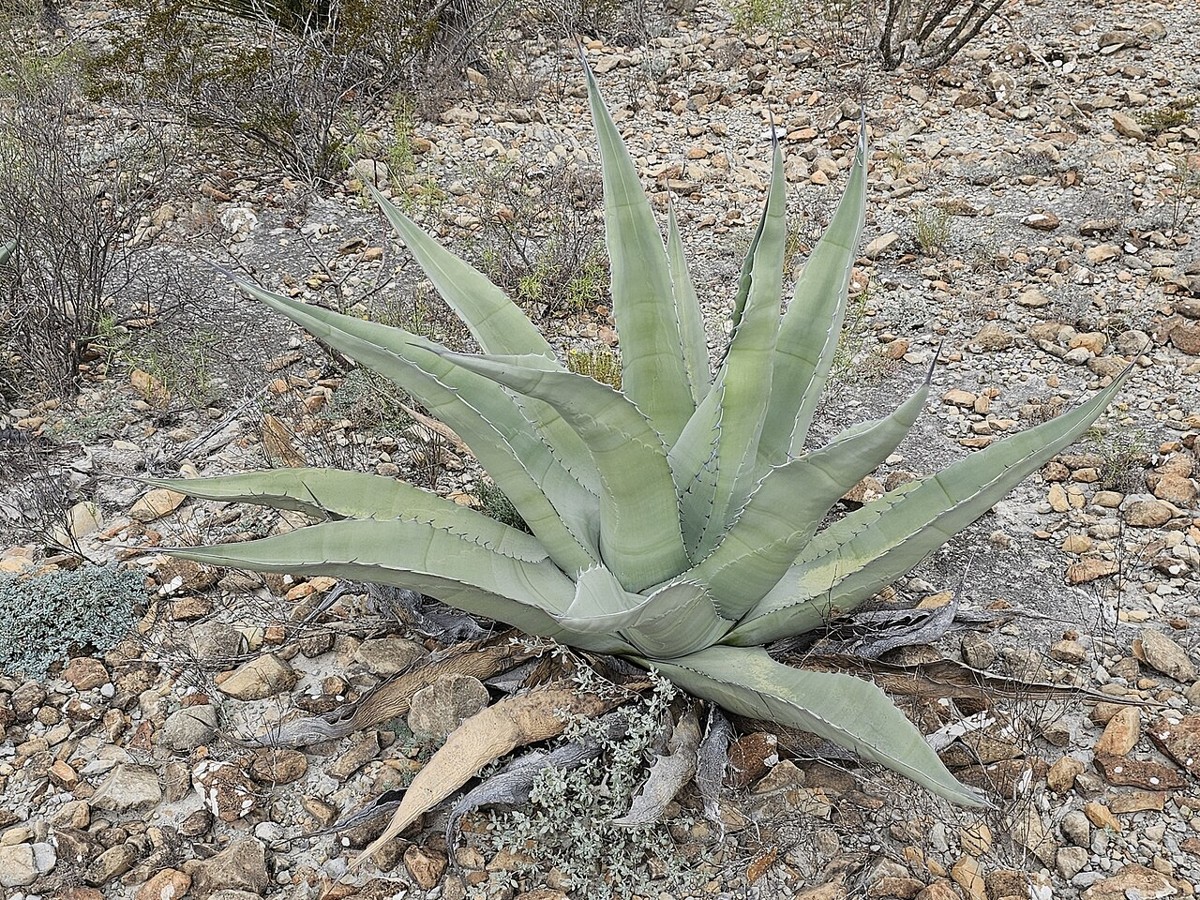
Rough Agave is one of the bigger agaves reliably native to U.S. soil, with mature rosettes that can reach 3 to 6 feet across. Each thick, reflexed leaf is armed with coarse, wavy teeth along the margin and a stout terminal spine, giving the whole plant a formidable, sculptural presence that works as a single specimen or massed with other Chihuahuan Desert succulents.
Like all agaves, Rough Agave is monocarpic: a single rosette grows for years or decades, then sends up a tall branched flower stalk once in its life, blooms spectacularly, and dies — but not before producing offsets (pups) around its base that carry the clone forward. For South Texas gardeners this trade-off is well worth it: the flowering event is dramatic, and the basal pups keep the planting going indefinitely.
Identification
Rough Agave forms a single, broad rosette, usually solitary or suckering sparingly into small clusters, 2 to 3 feet tall and 3 to 6 feet across at maturity.
Leaves
Leaves are thick, rigid, and glaucous blue-gray to gray-green, lance-shaped, reflexed outward and slightly cupped, typically 20 to 30 inches long. The surface has a distinctly rough, sandpaper-like texture — the source of both the Latin epithet scabra/asperrima (“rough”) and the common name. Margins carry coarse, wavy, closely spaced teeth in alternating sizes, ending in a sharp, dark terminal spine up to 1½ inches long.
Flowers
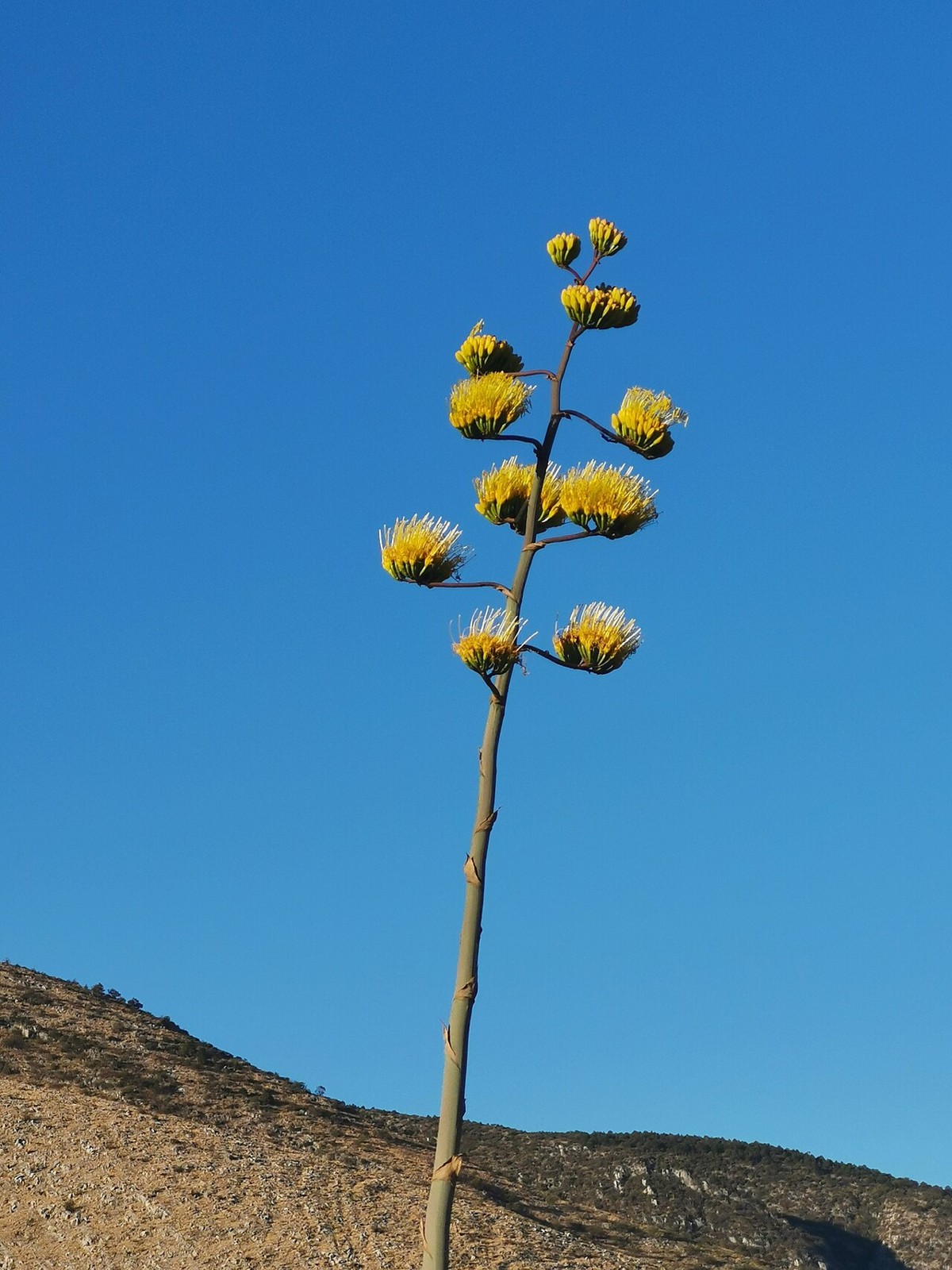
Once mature, a single plant sends up a tall, branched flowering stalk 10 to 15 feet high in summer, bearing dense clusters of yellow, tubular flowers on the upper branches. The display lasts several weeks and draws a heavy concentration of pollinators before the rosette that produced it dies back.
Fruit & Offsets
Flowers are followed by dry, three-chambered capsules containing flat black seeds. More reliably for propagation, mature rosettes produce basal offsets (pups) throughout their life, which can be separated and replanted once they have their own roots, ensuring the planting persists after the parent rosette flowers and dies.
Quick Facts
| Scientific Name | Agave asperrima (syn. Agave scabra) |
| Family | Asparagaceae (Agavoideae) |
| Plant Type | Evergreen rosette succulent, monocarpic (cacti & succulents) |
| Mature Height | 2–3 ft rosette; flower stalk 10–15 ft |
| Mature Spread | 3–6 ft |
| Growth Rate | Slow to moderate |
| Sun Exposure | Full sun |
| Water Needs | Low |
| Soil Type | Rocky, sandy or limestone; sharply drained |
| Soil pH | Neutral to alkaline |
| Bloom Time | Summer (once per rosette, at maturity) |
| Flower Color | Yellow |
| Fall Color | Evergreen (no change) |
| Fruit | Dry, three-chambered capsule |
| Deer Resistant | Yes |
| USDA Hardiness Zones | 8–10 |
Native Range
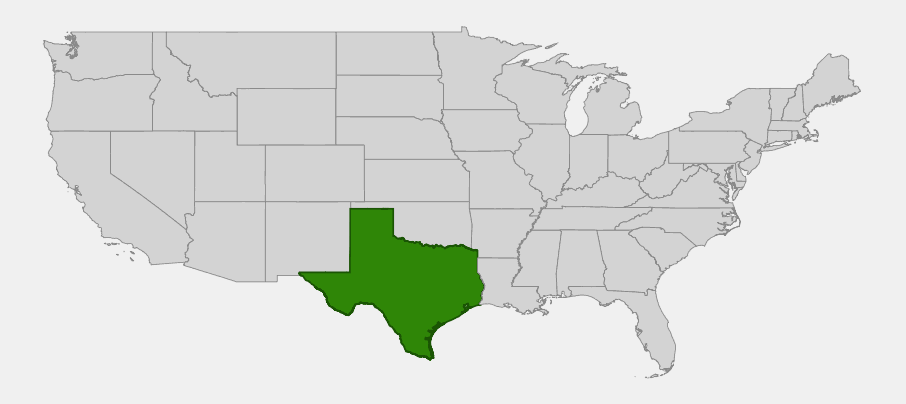
Rough Agave is native to far south Texas and ranges south through the Chihuahuan Desert scrub of northeastern Mexico, including Nuevo León, Coahuila and San Luis Potosí. In the United States it reaches only the southern tip of Texas, making it one of the more range-restricted agaves available to U.S. gardeners.
It grows on rocky limestone hillsides, in desert scrub and thorn woodland, typically at moderate elevations in the Chihuahuan Desert’s hill country. Plants are often scattered as single rosettes rather than in dense colonies, tucked among other desert shrubs that offer young offsets some protection from browsing.
Rough Agave is sometimes planted well north of its native range as an ornamental, where it performs reliably in warm, dry gardens but should not be presented as locally native outside far south Texas.
📋 Regional plant lists featuring Rough Agave: South and West Texas
Growing & Care Guide
Rough Agave rewards an owner who gives it heat, sun and good drainage, and otherwise asks for very little.
Light
Full sun produces the tightest, most compact and most colorful rosettes. In partial shade the leaves stretch and the rosette loses its symmetrical form.
Soil & Water
Sharp drainage is non-negotiable — rocky, caliche or sandy soils suit it best, and raised beds help where native soil is heavier clay. Once established it needs no supplemental irrigation across most of its range and is far more likely to rot from standing water than to suffer from drought.
Planting Tips
Plant container-grown offsets in spring, giving each rosette 4 to 6 feet of room to reach mature size. Handle plants with heavy gloves and keep the sharp terminal spines well away from paths, patios and play areas.
Pruning & Maintenance
Little maintenance is needed beyond removing dried lower leaves. After a rosette flowers and dies — typically after many years — remove the spent rosette and allow its basal offsets to take over the space.
Landscape Uses
- Bold specimen plant in xeriscape and rock gardens
- Chihuahuan Desert plant combinations with lechuguilla, ocotillo and sotol
- Security or barrier planting along fences and property edges, thanks to the sharp spines
- Large container culture for patios in warm climates
- Low-water foundation beds in full-sun South Texas landscapes
Wildlife & Ecological Value
For Pollinators
The towering summer flower stalk is a magnet for native bees and a wide range of other insect pollinators drawn to its dense clusters of yellow blooms, which offer a significant nectar resource during the once-in-a-lifetime flowering event.
Birds
Hummingbirds and orioles are frequent visitors to the nectar-rich flower clusters, and the tall stalk itself offers an elevated perch in otherwise low desert scrub.
Mammals
The dense, spine-tipped rosette offers cover and protection for small desert mammals, while the sharp leaves generally deter browsing by deer and livestock, contributing to the plant’s high deer-resistance rating.
Ecosystem Role
As a long-lived, slow-growing succulent, Rough Agave adds structural diversity to sparse Chihuahuan Desert and thornscrub plant communities, and its basal offsets help stabilize rocky slopes over time.
Cultural & Historical Uses
Across its range in northeastern Mexico, agaves of this type have long been used by local communities for fiber (ixtle) extracted from the leaves, and for traditional fermented beverages produced from the sugary sap of the flowering stalk — uses documented as regional history and craft tradition rather than a modern recommendation for this particular species.
The plant’s two common scientific names reflect a long taxonomic history: Agave scabra Salm-Dyck was long the name used in Texas and U.S. floras, while Agave asperrima Jacobi is the name now accepted by Plants of the World Online, Tropicos and the USDA PLANTS Database. Both names translate roughly to “rough,” referencing the sandpapery leaf texture that is the plant’s most distinctive field character.
Today Rough Agave is grown primarily as a dramatic, low-water ornamental in South Texas and similar warm, dry climates, valued for its bold form and the spectacle of its once-in-a-lifetime bloom.
Frequently Asked Questions
Why does my agave look like it’s dying after it flowers?
That is normal. Agaves are monocarpic — each rosette flowers once, then dies. The basal offsets (pups) that have already formed around the base will carry the planting forward; simply remove the spent rosette.
How long does Rough Agave take to bloom?
It varies with growing conditions, but typically well over a decade, and often two or more, before a rosette reaches flowering size. “Century plant” is a folk exaggeration, not a literal lifespan.
Is Agave scabra the same plant as Agave asperrima?
Yes, in the sense gardeners mean it. Agave scabra Salm-Dyck is treated as a synonym of the accepted name Agave asperrima Jacobi by Plants of the World Online, Tropicos and USDA PLANTS. (A different, unrelated plant named Agave scabra Ortega also exists in older Mexican botanical literature, which is a separate source of name confusion.)
Is Rough Agave native to Texas or just planted there?
It is genuinely native to the far southern tip of Texas, though it is far more common in its core range across the border in northeastern Mexico, and is planted as an ornamental well beyond either area.
Are the spines dangerous?
Yes — the terminal spine is sharp and rigid enough to cause a deep puncture wound. Site plants away from walkways and areas where people or pets brush past, and wear thick gloves when working around them.

Looking for a nursery that carries Rough Agave?
Browse our native plant nursery directory: Texas