
Scarlet Calamint (Calamintha coccinea)
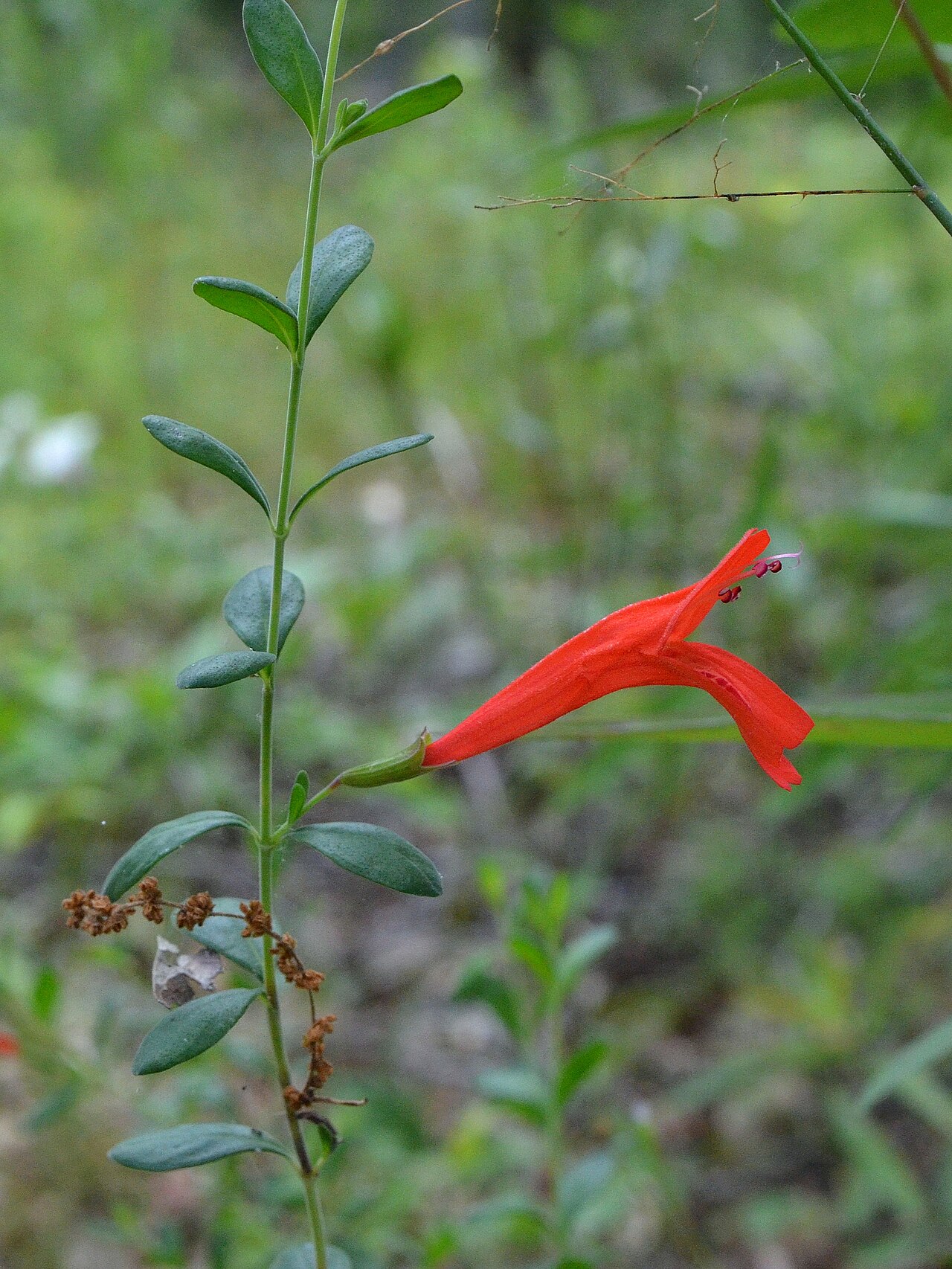
Calamintha coccinea, the Scarlet Calamint (also called red basil or scarlet wild basil), is a small, wiry evergreen shrub of the dry sands of the Deep South with some of the brightest hummingbird flowers in eastern North America. Its tubular scarlet to red-orange blossoms, 1½ to 2 inches long, can appear in almost any month, peaking in summer and fall. It belongs to the mint family (Lamiaceae), and its small leaves have a mild, minty scent.
USDA PLANTS lists it under the name Clinopodium coccineum, following botanists who merged Calamintha into the larger genus Clinopodium. Most nurseries, the Florida Native Plant Society and many gardeners still use Calamintha coccinea, which is the name used on this page. Both names refer to the same plant.
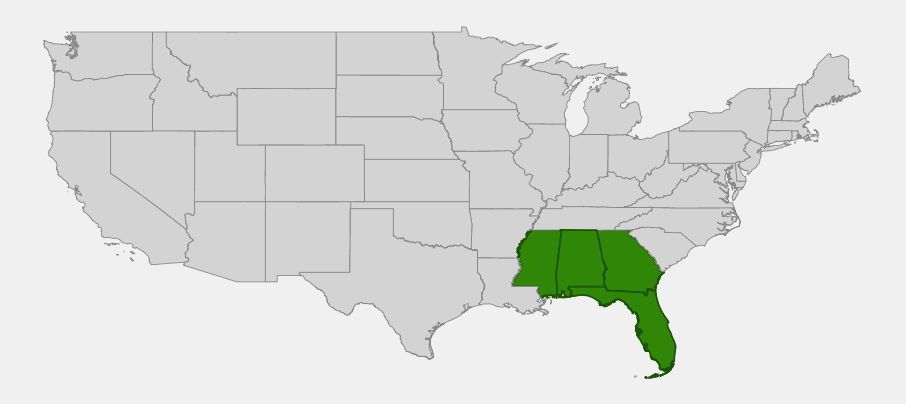
Scarlet calamint grows in sandhills, scrub, sandy pine flatwoods and coastal dunes from southern Georgia and southern Mississippi to central Florida. This guide covers how to identify it, where it grows and how to grow it in a sunny, sandy garden for hummingbirds.
Identification
In flower, scarlet calamint is unmistakable: a low, open shrublet of thin stems and tiny leaves, decorated with large, brilliant red tubes that seem far too big for the plant.
Form & Stems
It is a small, much-branched shrub, usually 1 to 3 feet tall and sometimes taller, with thin, wiry, upright to spreading stems. Older stems become woody, with gray to reddish-brown, shredding bark, while young twigs are green to purplish and finely hairy. Plants often look sparse and open, especially in dry, sunny sand.
Leaves
The leaves are opposite, small, about ¼ to ¾ inch long, and obovate to spoon-shaped, with smooth or slightly toothed edges. They are thick, gray-green to bright green and dotted with tiny glands. Crushed, they have a mild minty scent. Smaller leaves are often clustered in the leaf axils, giving the stems a bushy look.
Flowers
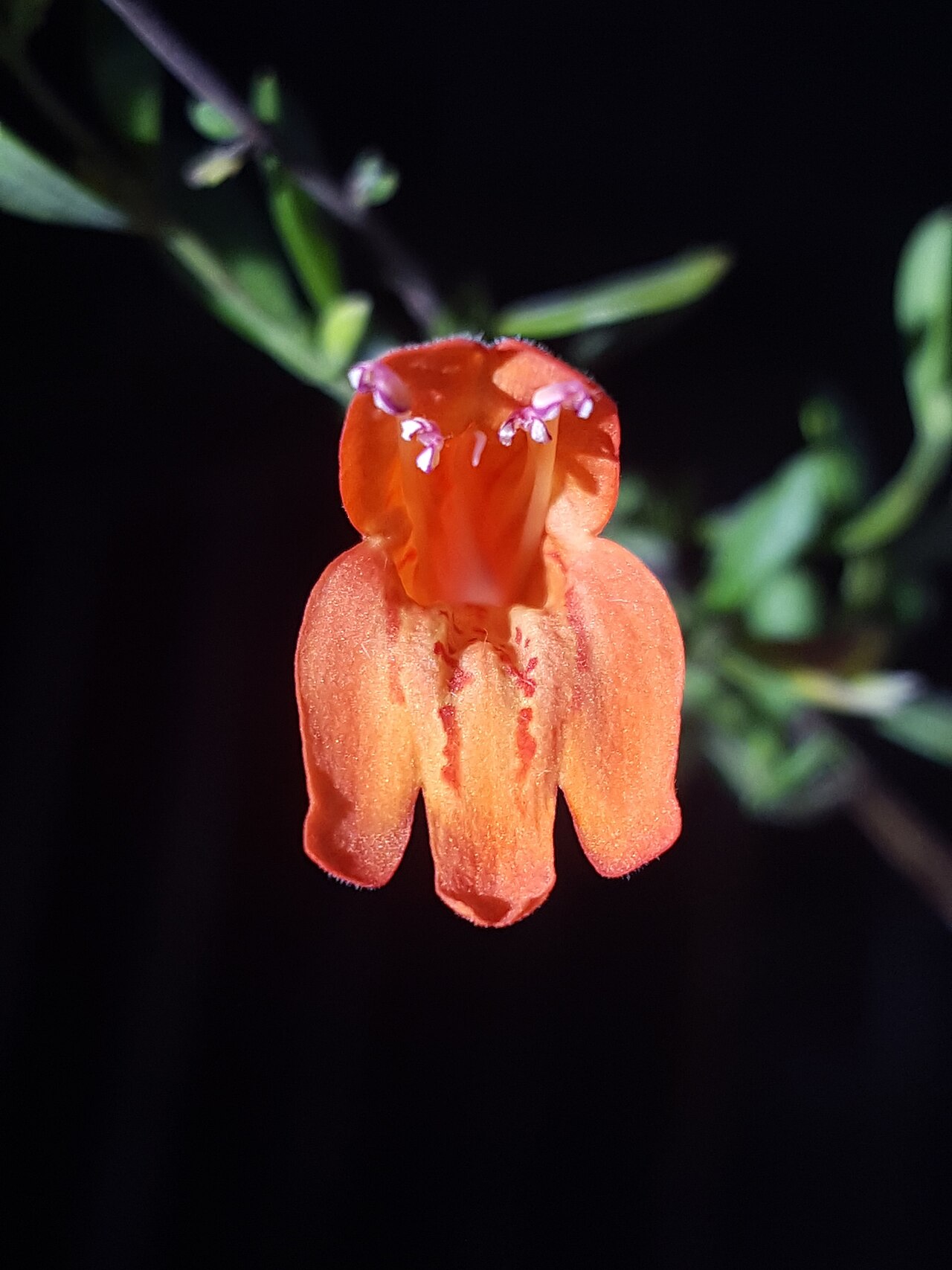
The flowers grow singly or in small groups in the upper leaf axils. Each is a long, slightly curved tube, 1½ to 2 inches long, that flares into two lips: a short, upright upper lip and a three-lobed lower lip. Color ranges from scarlet to red-orange, with darker red spots inside the throat. Four stamens and the style project from the mouth of the flower. Rare yellow-flowered forms have been reported.
Fruit
Each flower produces four tiny, dark nutlets in the persistent calyx. They are small and inconspicuous and are rarely noticed.
Similar Species
Other Calamintha species in the Southeast, such as Ashe’s calamint (C. ashei) and Georgia calamint (C. georgiana), have small lavender to pink flowers. No other native shrub of Florida sandhills has such large red tubular flowers on such small, minty-scented foliage.
Quick Facts
| Scientific Name | Calamintha coccinea (syn. Clinopodium coccineum; USDA symbol CLCO10) |
| Family | Lamiaceae (mint family) |
| Plant Type | Small evergreen shrub |
| Mature Height | 1–3 ft; occasionally to 4 ft |
| Mature Spread | 1–3 ft |
| Growth Rate | Moderate |
| Sun Exposure | Full sun to part shade |
| Water Needs | Low once established; drought tolerant |
| Soil Type | Deep, well-drained sand |
| Soil pH | About 4.5–6.5 (acidic) |
| Bloom Time | Year-round in mild areas; peaks in summer and fall |
| Flower Color | Scarlet to red-orange; rarely yellow |
| Fall Color | None; evergreen |
| Fruit | Tiny dark nutlets |
| Deer Resistant | Yes; aromatic foliage is rarely browsed |
| USDA Hardiness Zones | 8–10 |
Native Range
Scarlet calamint is a plant of the Southeastern Coastal Plain. USDA PLANTS and the Lady Bird Johnson Wildflower Center list it from four states: Florida, Georgia, Alabama and Mississippi. Its range runs from southern Georgia west through southern Alabama to southern Mississippi and south into central Florida.
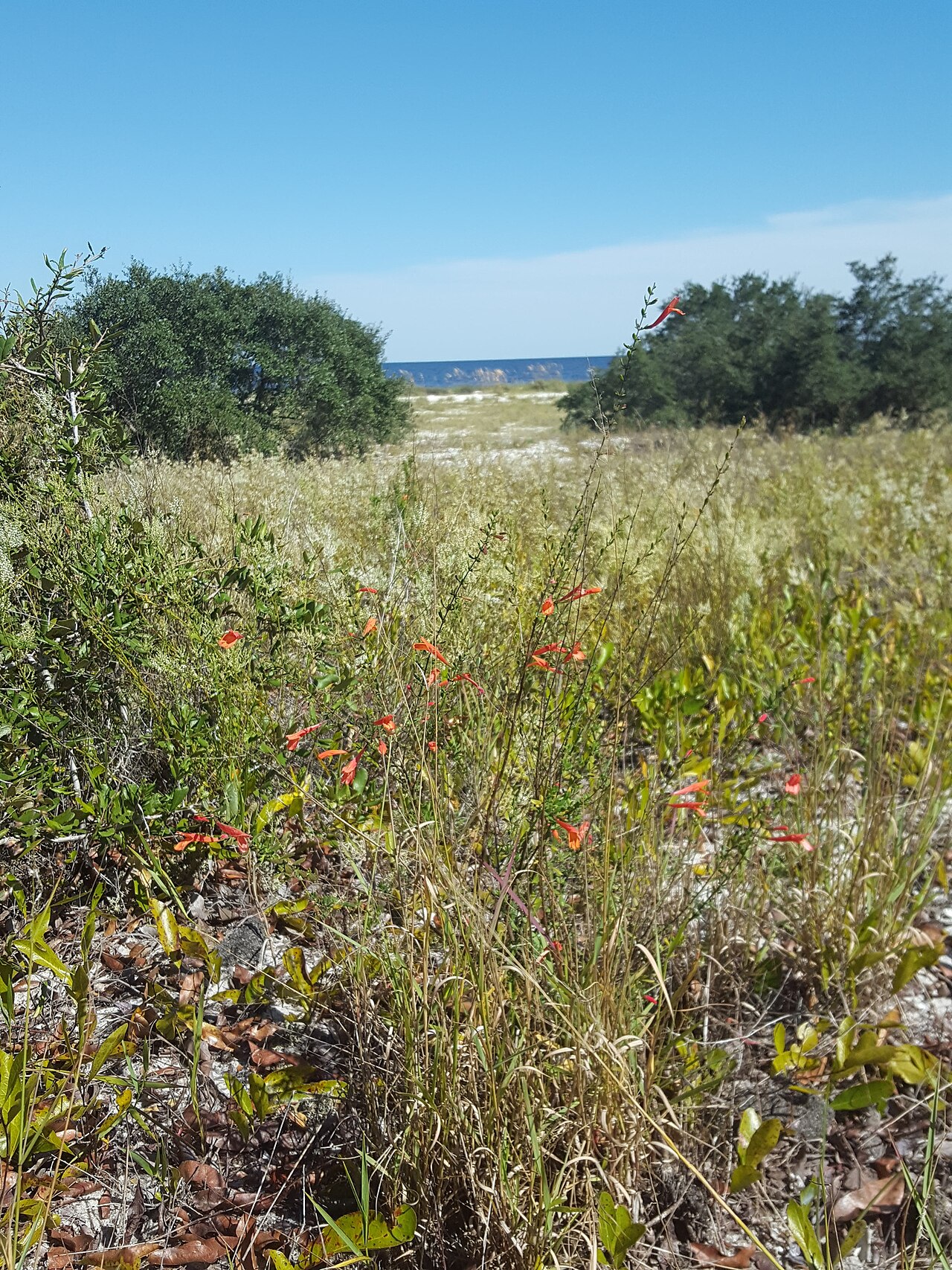
In Florida, the Atlas of Florida Plants records it in the panhandle and the northern and central peninsula. It grows in sandhills, scrub, sandy pine flatwoods, coastal dunes and the edges of sandy woods, often in very dry, nutrient-poor sand where few other flowering shrubs grow. Along the Gulf Coast it is a common shrub of stabilized dunes.
Fire and other natural disturbance keep its habitat open and sunny. It is not listed as threatened or endangered, but it has declined with the loss of sandhill and coastal scrub habitat to development and pine plantations.
📋 Regional plant lists featuring Scarlet Calamint: North & South Florida · Alabama, Georgia & Mississippi
Growing & Care Guide
Scarlet calamint is a popular plant with Florida and Gulf Coast native gardeners because it is easy to grow, small enough for any garden and almost always in flower. It is widely available from native nurseries in Florida.
Light
Full sun gives the most compact plants and the most flowers. It tolerates part shade, especially afternoon shade in hot inland areas, but in heavy shade it becomes leggy and flowers sparsely.
Soil & Water
The most important requirement is sharp drainage. It grows best in deep, sandy, acidic soil. In heavy, rich or poorly drained soil it is prone to root rot. Water regularly until established, usually for the first few months. After that it needs little or no supplemental water and tolerates long dry spells. Overwatering is a more common problem than drought.
Planting Tips
Plant container plants in spring or fall. Place them in a sunny, well-drained spot, such as a sandy bed, a rock garden, a dry slope or a coastal garden. On heavier soils, plant on a raised mound of sand. Do not add rich compost or fertilizer to the planting hole. Space plants about 2 to 3 feet apart.
Pruning & Maintenance
Scarlet calamint responds well to pruning. A light shearing after a heavy flush of flowers, or in late winter, keeps plants dense and encourages new flowering growth. Remove dead or straggly stems as needed. Plants are naturally somewhat short-lived and may need to be replaced every several years, so keep a few rooted cuttings on hand.
Propagation
It roots easily from semi-hardwood or softwood cuttings taken in early summer. Seed can be collected in spring or fall and sown in a sandy mix; germination can be erratic. Older clumps can sometimes be divided.
Landscape Uses
- Hummingbird gardens: long, red tubular flowers through much of the year
- Dry sandy beds and rock gardens: thrives where most plants struggle
- Coastal gardens: suited to sandy, salt-tolerant plantings on stabilized dunes
- Small gardens and containers: compact size and long bloom season
- Sandhill and scrub restoration: for open, sunny sand within its native range
Wildlife & Ecological Value
Scarlet calamint is one of the most important native hummingbird plants of the Gulf Coast, especially because it blooms in seasons when few other red flowers are available.
For Pollinators
The long, red, tubular flowers are adapted for pollination by ruby-throated hummingbirds, which feed on its nectar in summer and during spring and fall migration. Along the Gulf Coast its long bloom season also offers nectar to hummingbirds that spend the winter there. Large butterflies such as swallowtails and some long-tongued bees visit the flowers too, and bees often steal nectar by biting through the base of the tube.
For Birds
Besides hummingbirds, small birds use the dense twigs of larger plants for cover in open sandhills and dunes. The nutlets are too small to be an important bird food.
For Mammals
The aromatic foliage is rarely browsed by deer or rabbits.
Ecosystem Role
Scarlet calamint is part of the low shrub layer of fire-maintained sandhills and scrub, where it resprouts after fire from its woody base. On dunes, its roots help stabilize loose sand. Its near year-round flowering makes it a reliable nectar source in habitats where flowers are scarce in some seasons.
Cultural & Historical Uses
Thomas Nuttall described this plant in the early nineteenth century from specimens collected in the Southeast, and William Jackson Hooker published it in his botanical works. Over the years it has been placed in several genera, including Calamintha and Clinopodium, which is why its scientific name differs among references. The species name coccinea means “scarlet.”
The names red basil and scarlet wild basil refer to its minty, basil-like foliage and its relationship to other aromatic mints, but it is not a culinary herb. There is little documented traditional use of this species.
Today scarlet calamint is one of the most recommended native plants for hummingbird gardens in Florida and the Gulf Coast. The Lady Bird Johnson Wildflower Center notes that it should be more widely cultivated because it blooms throughout the year and the flowers are especially colorful.
Frequently Asked Questions
Is Calamintha coccinea the same as Clinopodium coccineum?
Yes. USDA PLANTS lists the plant as Clinopodium coccineum, while most nurseries and the Florida Native Plant Society still use Calamintha coccinea. Both names refer to scarlet calamint.
Does scarlet calamint attract hummingbirds?
Yes. Its long red tubular flowers are adapted for hummingbird pollination, and it blooms through much of the year, making it valuable to resident, migrating and wintering hummingbirds along the Gulf Coast.
Why did my scarlet calamint die?
The most common causes are poor drainage and overwatering. It needs deep, well-drained sand and very little water once established. Plants are also naturally short-lived, so propagate a few cuttings to replace older plants.
Can I prune scarlet calamint?
Yes. A light shearing after bloom or in late winter keeps it dense and encourages more flowers. Avoid cutting deeply into old, leafless wood.
Is scarlet calamint deer resistant?
Generally yes. Its aromatic foliage is rarely browsed by deer or rabbits.

Looking for a nursery that carries Scarlet Calamint?
Browse our native plant nursery directory: Alabama · Florida & Georgia · Mississippi