
Shadblow (Amelanchier canadensis)
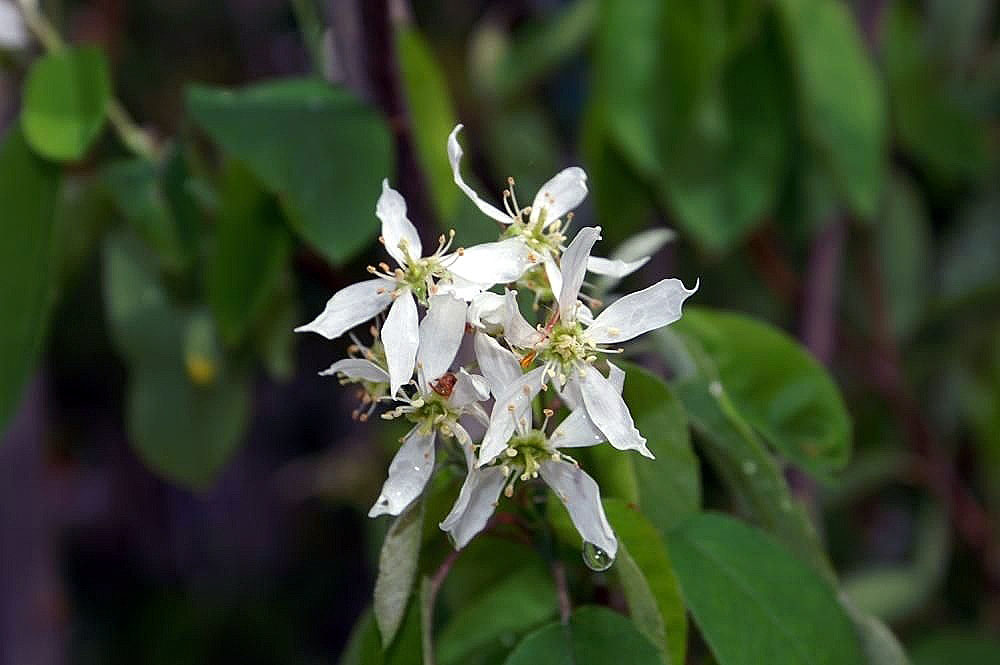
Amelanchier canadensis, commonly known as Shadblow, Shadbush, Serviceberry, or Canadian Serviceberry, is one of the most beloved native shrubs and small trees of the northeastern United States. Its common name “Shadblow” comes from the timing of its spectacular early-spring bloom — coinciding precisely with the spring migration of shad fish up Atlantic coastal rivers, a timing so reliable that early settlers used the plant as a natural calendar. The explosion of white flowers in March and April, often before any other woody plant has leafed out, makes Shadblow one of the most breathtaking sights of the early spring landscape.
Shadblow is a multi-stemmed, suckering shrub to small tree that varies widely in form — from a compact 1-foot colony-forming ground cover on exposed coastal heaths to a graceful 20-foot tree in moist woodland edges. This variability has made the taxonomy of northeastern serviceberries contentious, with some botanists recognizing several species in the Amelanchier canadensis complex. For practical landscape purposes, the plant offered as A. canadensis is a moderate to large multi-stemmed shrub or small tree, typically 8 to 20 feet, suited to a wide range of conditions.
Beyond the spectacular spring bloom, Shadblow delivers beauty across all four seasons: burgundy-red new leaves in spring, edible purple-black berries in June and July, excellent orange-red-yellow fall color, and attractive smooth gray bark and branch structure in winter. For wildlife value, the early white flowers support the season’s first native bees, while the June berries — sweet, juicy, and beloved by both birds and people — make it one of the most productive native food plants available. Few native shrubs rival Shadblow for multi-season beauty, versatility, and ecological contribution.
Identification
Shadblow is a suckering shrub to small tree, typically 8 to 20 feet (2.4–6 m) tall, often forming multi-stemmed clumps that spread into colonies. The bark is smooth and gray, often striped with darker gray vertical lines — attractive in winter when the plant is bare. New growth in spring is often covered with dense, white, woolly hairs before the leaves expand.
Leaves
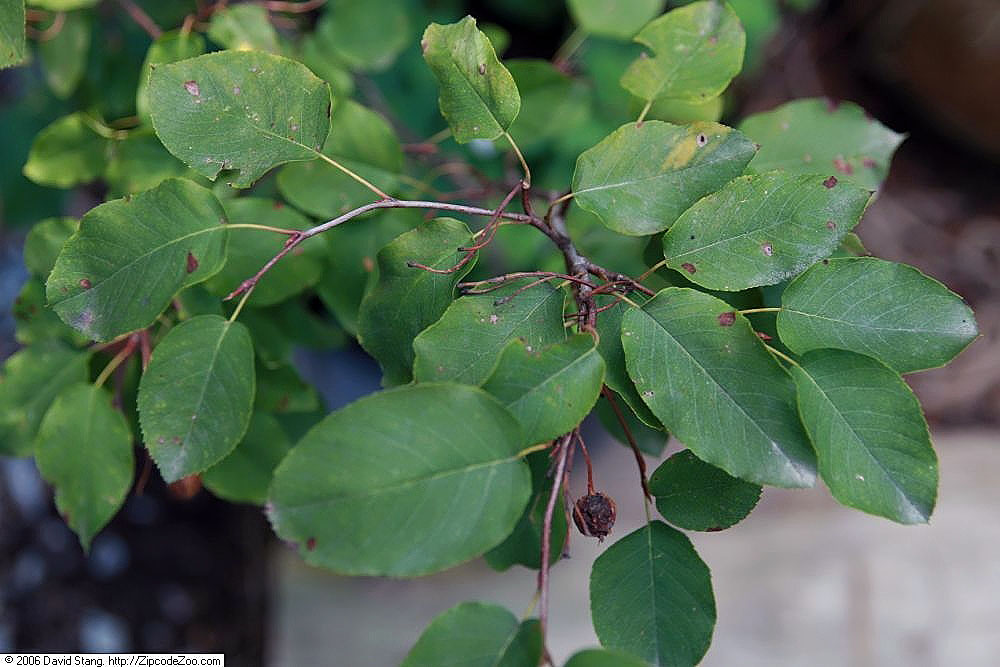
Leaves are alternate, simple, oval to elliptic, 1 to 2.5 inches (3–6 cm) long, with finely serrate margins. When young, leaves are covered in dense white woolly hairs — a key identifying feature of A. canadensis compared to other serviceberries. As they mature, the upper surface becomes smooth and medium to dark green; the underside remains slightly hairy. Fall color is excellent — orange, red, and yellow tones that develop reliably each autumn. Leaves emerge bronze-red in spring, providing additional seasonal interest.
Flowers
The flowers are among the earliest of any native woody plant — appearing in March to April (depending on latitude) before or simultaneously with leaf emergence, when the landscape is still largely bare. Each flower has 5 narrow, strap-like white petals, about ¾ to 1 inch long, borne in loose, drooping racemes of 4 to 12 flowers. The massed display of white blossoms against gray-brown bare branches in early spring is one of the most striking natural spectacles of the northeastern landscape.
Fruit
The fruits are small pome (apple-like) fruits, ¼ to ½ inch in diameter, ripening from red to deep purple-black in June and July. They are sweet, juicy, and mild-flavored — similar to blueberries but with a distinctive almond-like note from the seeds. The June berry crop is one of the most productive native food sources in the landscape: birds consume them eagerly within days of ripening, and people enjoy them fresh, in pies, jams, and wines. “Serviceberry” as a common name reportedly derives from the fact that the berries ripen in time for early summer church services in pioneer communities.
Quick Facts
| Scientific Name | Amelanchier canadensis |
| Family | Rosaceae (Rose) |
| Plant Type | Deciduous Shrub to Small Tree |
| Mature Height | 1–20 ft |
| Sun Exposure | Full Sun |
| Water Needs | Low (Drought Tolerant) |
| Bloom Time | March – April (earliest native woody plant) |
| Flower Color | White |
| Fruit | Purple-black edible berries (June–July) |
| Fall Color | Orange, red, yellow (excellent) |
| Salt Tolerance | Moderate (coastal sites) |
| USDA Hardiness Zones | 3–7 |
Native Range
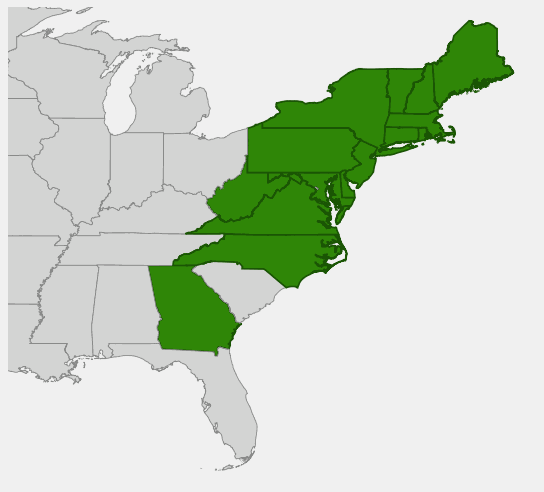
Shadblow (Amelanchier canadensis) is native primarily to the northeastern United States and adjacent Canada, from Maine, New Hampshire, Vermont, and southern Quebec south through New England and the mid-Atlantic states (New York, New Jersey, Pennsylvania, Delaware, Maryland) and along the Atlantic Coastal Plain into the Carolinas and northern Georgia. It is most abundant and ecologically prominent in the coastal regions of New England, Long Island, the New Jersey Pine Barrens, and the mid-Atlantic coastal plain.
Within its natural range, Shadblow grows in a diverse array of habitats: the edges of bogs, swamps, and stream banks (where it tolerates periodic flooding), open slopes of coastal heaths, rocky outcrops, pine-oak woodlands, and the edges of moist upland forests. It is especially characteristic of the ecotone between wetland and upland — the zone that botanists call “swamp edge” or “wet thicket” — where soil moisture is moderate to seasonally high. In coastal heath communities of Cape Cod and Long Island, it grows as a low, sprawling shrub just a few feet tall; in moist, protected woodland edges it becomes a small tree to 20 feet.
The serviceberry complex in northeastern North America includes several closely related species that hybridize freely, making identification sometimes challenging. Amelanchier canadensis is distinguished from its close relative A. arborea (Downy Serviceberry) primarily by its colonial (suckering) habit, its affinity for wetter habitats, its woolly leaves that emerge with the flowers, and its more coastal distribution. Both provide excellent wildlife and landscape value and are often used interchangeably in native plantings.
📋 Regional plant lists featuring Shadblow: New York, Pennsylvania & New Jersey
Growing & Care Guide
Shadblow is an outstanding four-season native plant for the northeastern landscape. It is adaptable, reliably beautiful, and provides exceptional ecological value with minimal care. Its drought tolerance (noted in the batch data as “Low” moisture needs) means it performs well in a wide range of site conditions once established.
Light
Shadblow performs best in full sun, where it develops the densest form, most prolific flowering, and best fall color. It tolerates part shade and will flower in dappled light, but bloom intensity and berry production decrease in shadier conditions. The early spring flowers are most dramatic in open sites where there are no competing plants to obscure the bare-branched floral display. In a woodland edge position — morning sun, afternoon shade — it strikes an excellent balance of productivity and natural habitat mimicry.
Soil & Water
Shadblow is noted for its drought tolerance (Low moisture needs per the batch data) and adaptability to well-drained, acidic soils — particularly the sandy, acidic soils of the Atlantic Coastal Plain where it naturally thrives. It also tolerates wetter conditions and periodic flooding along stream banks and bog edges. The key is well-drained to moderately moist soil with good structure; heavy, permanently wet clay is not ideal. Soil pH should be acidic to neutral (5.0–6.5). No irrigation is needed once established on suitable sites.
Planting Tips
Plant in fall or early spring. Container-grown plants establish readily. Space plants 4 to 6 feet apart for mass plantings or natural hedges; single specimens can be given 8 to 10 feet of space to develop into graceful multi-stemmed small trees. Shadblow spreads by suckers to form colonies over time — a natural landscape feature, but remove suckers if single-specimen form is desired. Mulch well to retain moisture and suppress weeds during establishment. Shadblow can also be grown from seed: stratify seeds for 60–90 days at 40°F before sowing.
Pruning & Maintenance
Minimal pruning is needed. Remove dead or crossing branches in late winter. If a tree-like form is desired, gradually remove lower suckers and branches to reveal the smooth gray trunk. Shadblow is susceptible to several pests and diseases common to the rose family — notably fire blight, cedar-apple rust (if Eastern Red Cedar is nearby), and leaf miners — but these rarely cause significant long-term damage in healthy plants on appropriate sites. Good air circulation and avoiding wet foliage help minimize disease pressure.
Landscape Uses
- Specimen tree or shrub for four-season ornamental interest
- Edible landscaping — sweet, nutritious June berries for people and wildlife
- Woodland edge planting for naturalistic understory effect
- Riparian planting along streams, pond edges, and rain gardens
- Mass planting for spring floral effect and wildlife habitat
- Pollinator garden — one of the earliest nectar and pollen sources
- Fall color — reliable orange-red tones in October
Wildlife & Ecological Value
Shadblow is a cornerstone plant for wildlife in northeastern North America. It provides food, cover, and habitat resources from early spring through late summer, making it one of the most seasonally productive native plants available.
For Birds
The June berries of Shadblow are consumed by over 40 species of birds — one of the highest wildlife values of any fruiting native plant. American Robins, Cedar Waxwings, Gray Catbirds, Brown Thrashers, Eastern Bluebirds, Scarlet Tanagers, Baltimore Orioles, Rose-breasted Grosbeaks, and many others compete eagerly for the sweet fruit. In good years, a mature shrub can feed birds for a week or more before the crop is exhausted. The early spring flowers provide pollen and nectar for the season’s first native bees and early butterflies. The dense, multi-stemmed structure provides nesting habitat for many songbird species.
For Pollinators
Shadblow blooms earlier than almost any other native woody plant — often before willows, maples, or any other blooming shrub in the landscape. This early bloom provides a critical, often sole source of early spring nectar and pollen for queen bumblebees emerging from winter dormancy, native mining bees, and early native butterflies including Eastern Commas and Mourning Cloaks. In years with cold springs, a flowering Shadblow may be the only insect food source available for miles around — making its ecological contribution in early spring disproportionate to its size.
For Mammals
White-tailed Deer browse Shadblow foliage, and Black Bears, Foxes, Raccoons, and various small mammals consume the berries. Eastern Chipmunks and Gray Squirrels cache the seeds. The dense, multi-stemmed thicket structure provides escape cover for rabbits, small mammals, and ground-nesting birds.
Ecosystem Role
As one of the earliest flowering native woody plants, Shadblow plays an irreplaceable role in the spring phenology of northeastern ecosystems. Its early flowers bridge the gap between late-winter and early spring when pollinators are most vulnerable to food shortages. Its June berries come at a critical time — early summer — before many other native fruiting shrubs ripen, providing a “first course” in the season-long buffet of native fruits. The combination of early flower and early fruit, reliable colonial growth, and broad site adaptability make Shadblow a plant of exceptional ecological value.
Cultural & Historical Uses
Shadblow and other serviceberries have a long and well-documented history of use by Indigenous peoples across North America. In the Northeast, various Algonquian nations — including the Wampanoag, Potawatomi, Ojibwe, and Iroquois — used the berries as a staple food, eaten fresh, dried for winter use, or mixed with other ingredients to make pemmican — a high-energy food made from dried meat, fat, and berries. The berries were also pressed into cakes and dried for storage. The Cree name for the plant gave rise to the common name “Saskatoon” used for serviceberries in the prairie provinces of Canada.
The early spring flowering of Shadblow was used as a practical timing signal by both Indigenous peoples and European settlers. In New England, the flowering of Shadbush (“shadblow”) coincided reliably with the upstream migration of shad fish (Alosa sapidissima) in Atlantic coastal rivers — a major food source and cultural event for coastal communities. Fishermen watched for the white flowers as a signal to prepare their nets and set out on the spring shad run. This phenological relationship is documented in colonial-era New England journals and reflects centuries of environmental observation.
In traditional herbal medicine, the bark and berries of serviceberries were used by various Indigenous nations for medicinal purposes. The Ojibwe used the bark in preparations for treating stomach ailments and as a postpartum tonic for women. Various nations used berry-based preparations as a general tonic. The wood of serviceberry, though small in diameter, is extremely hard and dense — it was prized for making tool handles, bows, and other items requiring strong, tough material. Today, Shadblow is widely cultivated both as a native ornamental and for its edible berries, which are sold commercially in Canada under the name “saskatoon berry.”
Frequently Asked Questions
Are Shadblow berries edible?
Yes — serviceberry fruits are delicious and highly nutritious. They resemble blueberries in taste but with a distinctive mild almond-like flavor from the seeds. They can be eaten fresh off the plant, made into jam, jelly, pies, muffins, or wine. In Canada, they are sold commercially as “saskatoon berries.” The challenge is competition from birds — if you want berries for yourself, be ready to pick them quickly when they ripen in June, as birds will consume the entire crop within days.
What is the difference between Shadblow and regular Serviceberry?
“Serviceberry” is a general common name applied to several Amelanchier species. “Shadblow” or “Shadbush” refers specifically to Amelanchier canadensis, which is distinguished by its multi-stemmed, suckering colonial habit, its preference for moist and coastal habitats, its woolly young leaves that emerge with the flowers, and its northeastern distribution. Downy Serviceberry (A. arborea) tends to be single-trunked and more inland. Both are excellent native plants; the distinction matters mainly for precise habitat matching.
How do I prevent birds from eating all the berries?
Birds are highly competitive for Shadblow berries, often stripping plants in days. For personal harvest, you can drape bird netting over small plants in late May when fruit is almost ripe. In naturalistic plantings, consider this fruit-sharing as the primary purpose of the plant — it is one of the most productive native food plants for wildlife. Planting multiple specimens ensures enough berries for both birds and people.
Does Shadblow spread?
Yes — Amelanchier canadensis spreads by root suckers (suckers from the base) to form multi-stemmed colonies. This is a natural growth habit that creates attractive, naturalistic mass plantings. If a single-stemmed tree form is preferred, remove suckers as they appear. In open naturalistic landscapes, allow the colonial spread — the resulting thicket provides excellent habitat structure for nesting birds and small mammals.
When is the best time to plant Shadblow?
Fall planting (September–November) is ideal, allowing roots to establish during the cool, moist season before spring growth. Spring planting before bud break is also successful. Container-grown stock can be planted almost any time with adequate irrigation during the first season. Bare-root transplants (available from native plant nurseries in early spring) establish well if planted before leaf emergence.

Looking for a nursery that carries Shadblow?
Browse our native plant nursery directory: New York · Pennsylvania