
Shipman’s Cyanea (Cyanea shipmanii)
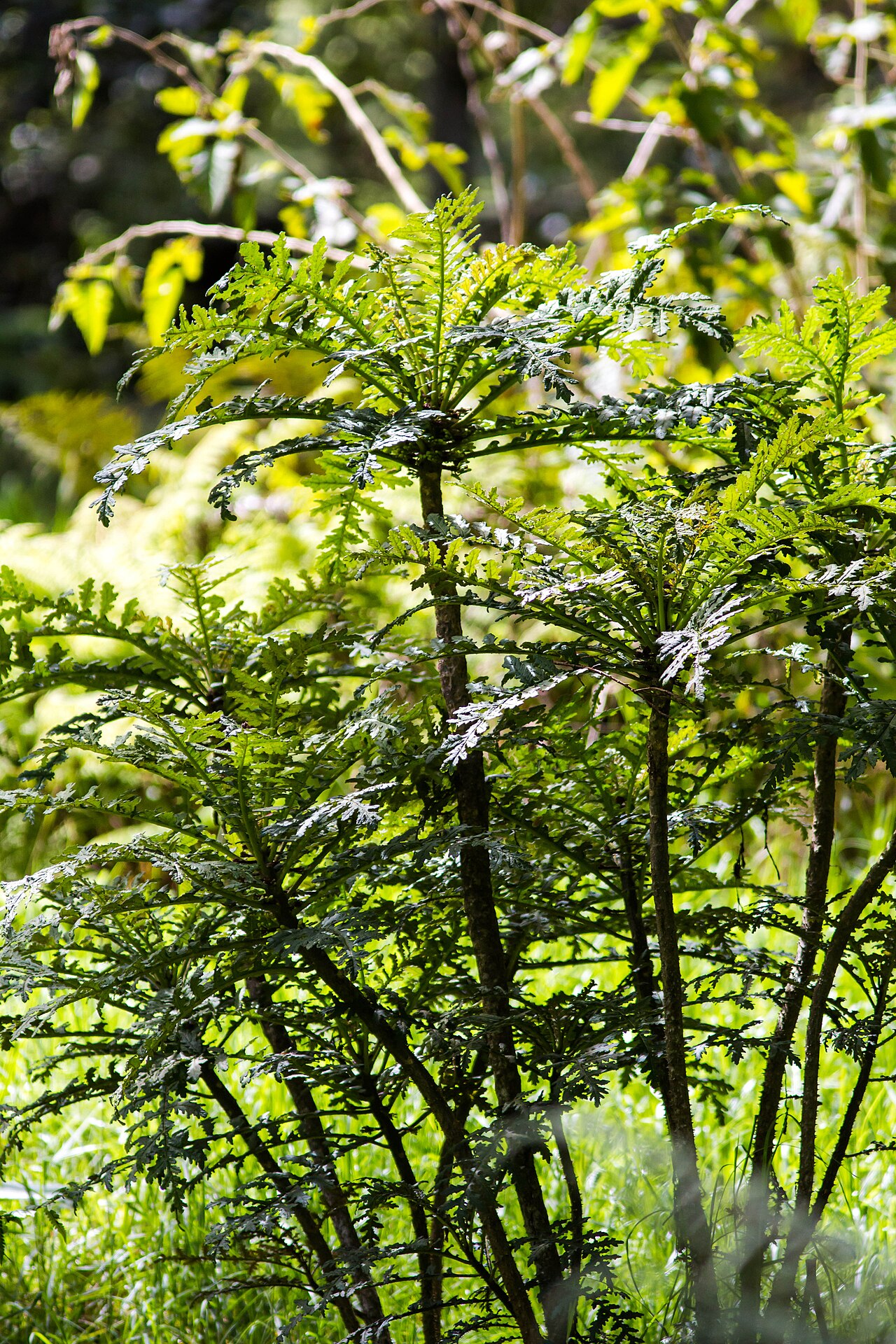
Shipman’s cyanea (Cyanea shipmanii), known in Hawaiian as haha, the name shared by all Hawaiian Cyanea, is a rare, slender shrub with leaves so finely divided that they look like fern fronds. It belongs to the Hawaiian lobelioids, a spectacular group of more than 100 species in the bellflower family that evolved in the islands from a single ancestor.
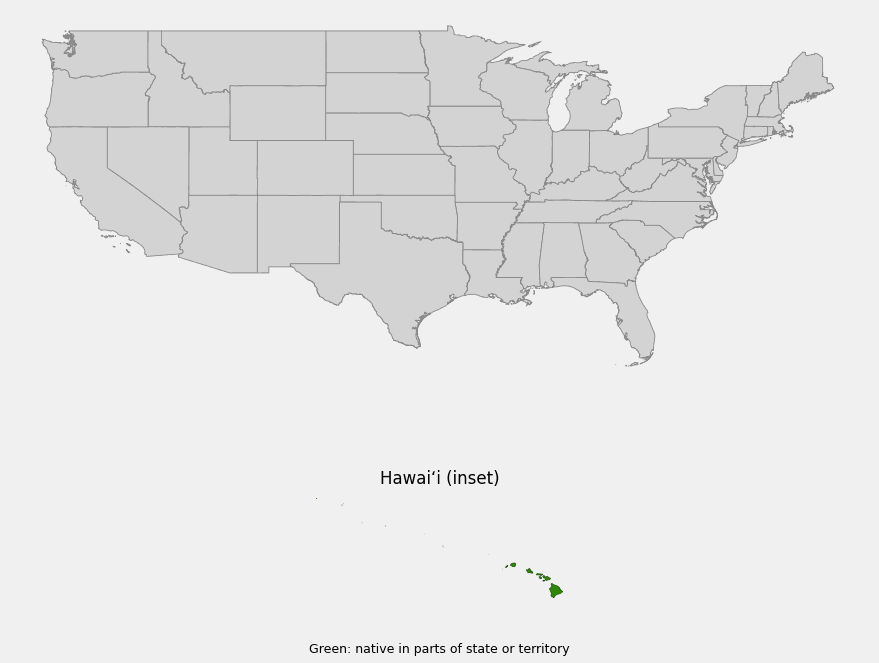
It is endemic to Hawaiʻi Island, where it grows only in moist native forest on the windward slopes of Mauna Kea and Mauna Loa, around 5,000 to 6,000 feet elevation. It is listed as Endangered under the federal Endangered Species Act (listed in 1994). Wild plants are few and widely scattered, and conservation programs have planted hundreds of nursery-raised plants back into protected forest.
Shipman’s cyanea is not a garden plant: it is grown only by permitted conservation nurseries and needs the cool, wet conditions of Hawaiʻi Island’s upland forests. This guide covers how to recognize it, where it grows, what it needs in cultivation, and why it is endangered.
Identification
Shipman’s cyanea is easy to recognize among Hawaiian lobelioids by its finely dissected, fern-like leaves, carried on slender, palm-like stems.
Stems & Growth Habit
It is a fragile, sparingly branched shrub up to about 13 feet tall, with one or a few slender stems. The leaves are crowded in a tuft at the top of each stem, giving it a palm-like or tree-fern-like look. Young plants and the lower stems of older plants are covered with weak, thorn-like bristles, a feature shared by many Cyanea.
Leaves
The leaves are large and deeply divided, then divided again into many small lobes, so that each leaf resembles a fern frond. Young plants are especially bristly and can easily be mistaken for ferns.
Flowers
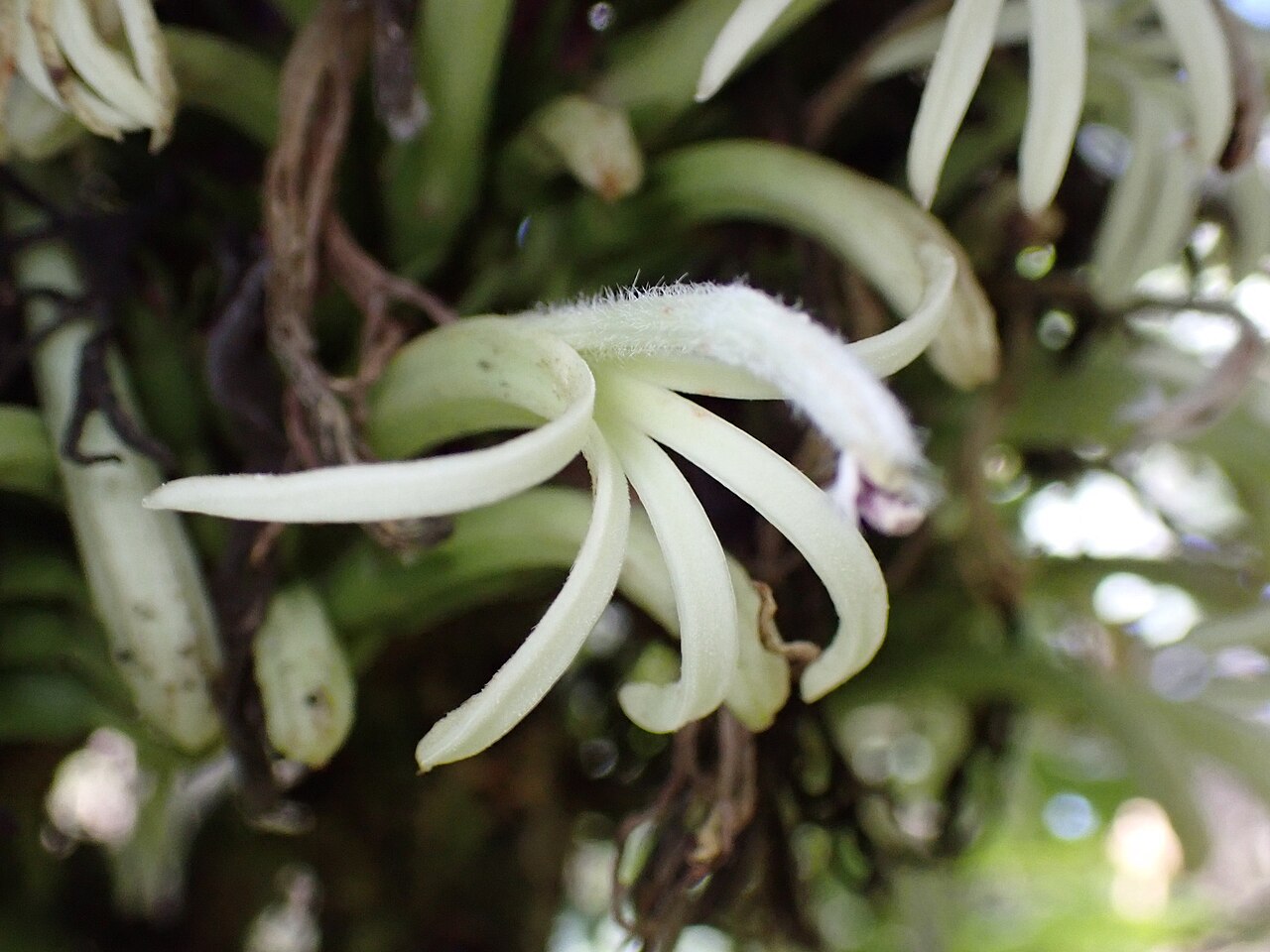
The flowers are curved, tubular and greenish white, with five narrow, backward-curving lobes, and they grow in clusters on the stem below the leaves. Their curved shape is typical of Hawaiian lobelioids, which are thought to have been pollinated by native honeycreepers with curved bills.
Fruit
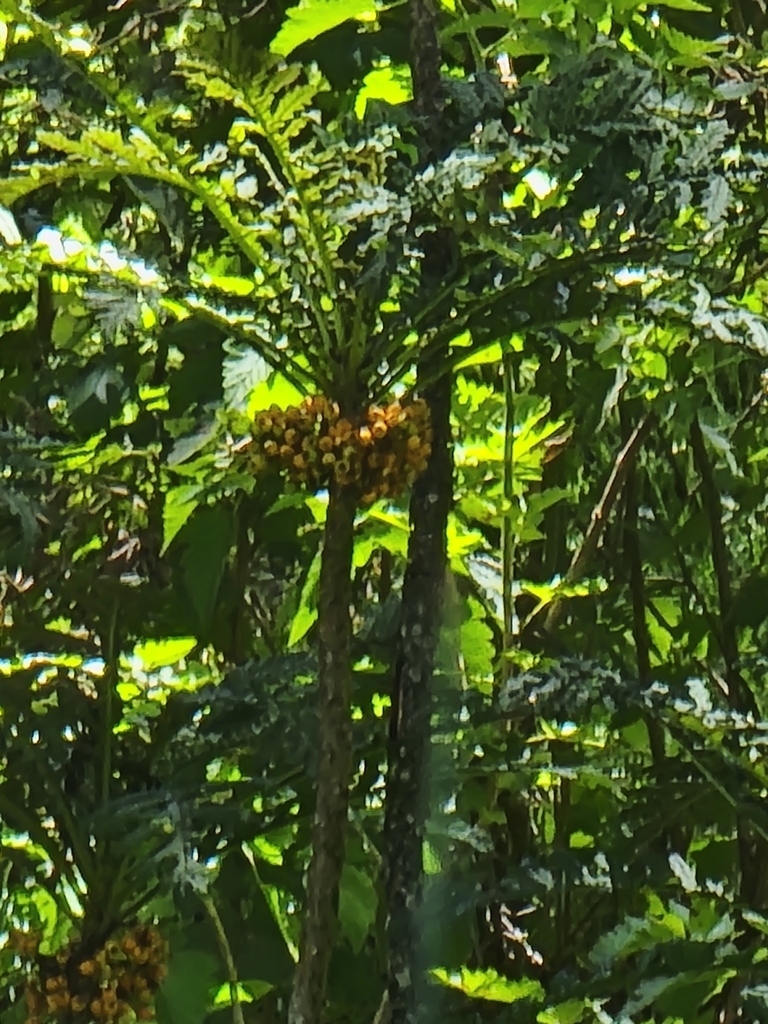
The fruits are small, round, orange berries in dense clusters on the stem, each containing many tiny seeds. Fruit-eating native birds likely spread the seeds in the past.
Similar Species
Other Cyanea on Hawaiʻi Island have broader, less divided leaves. Native ferns such as Hāpuʻu Pulu and ʻAmaʻu can look similar at a glance, but they have true fern fronds with spores and no flowers or berries.
Quick Facts
| Scientific Name | Cyanea shipmanii Rock |
| Family | Campanulaceae (bellflower family) |
| Plant Type | Sparingly branched shrub; endemic to Hawaiʻi Island |
| Mature Height | Up to about 13 ft |
| Mature Spread | 3–6 ft |
| Growth Rate | Moderate |
| Sun Exposure | Part shade to filtered light |
| Water Needs | High; constant moisture and humidity |
| Soil Type | Deep, moist, well-drained volcanic soils rich in organic matter |
| Soil pH | Acidic forest soils (about 5.0–6.5) |
| Bloom Time | Variable |
| Flower Color | Greenish white |
| Fall Color | None; evergreen |
| Fruit | Small orange berries in clusters |
| Deer Resistant | No; damaged by cattle and feral pigs |
| USDA Hardiness Zones | Cool montane Hawaiʻi only |
Native Range
Shipman’s cyanea is endemic to Hawaiʻi Island, and USDA PLANTS records it only from Hawaiʻi. It grows on the windward (eastern) slopes of Mauna Kea and Mauna Loa, at about 5,000 to 6,000 feet elevation. New wild plants are still occasionally found, usually just a few at a time, at widely scattered sites in native forest.
Its habitat is moist native forest on well-developed volcanic soils, typically montane mesic to wet forest of Koa and ʻŌhiʻa Lehua with an understory of tree ferns, ʻŌlapa, Kōlea Lau Nui and other native shrubs.
The U.S. Fish and Wildlife Service listed Cyanea shipmanii as Endangered on March 4, 1994. Logging, cattle ranching, feral pigs and invasive plants have destroyed or degraded much of its forest, and rats and slugs eat the plants and fruits. Hundreds of nursery-raised plants have been outplanted into protected areas, but they descend from very few wild plants, so genetic diversity is low and their long-term survival is uncertain.
📋 Regional plant lists featuring Shipman’s Cyanea: Hawaii
Growing & Care Guide
Shipman’s cyanea is very hard to grow outside its upland forest habitat and is not sold to the public. As a federally endangered species, it may not be collected, sold or moved without permits; never take plants, cuttings or seed from the wild. It is grown by permitted conservation nurseries on Hawaiʻi Island for outplanting into protected forest, and the notes below describe what it needs there.
Light
It grows in the understory and openings of moist forest, so it needs part shade or bright, filtered light. Strong, direct sun scorches the soft leaves.
Soil & Water
It needs deep, moist, well-drained soil rich in organic matter, constant moisture, high humidity and cool temperatures like those of the 5,000- to 6,000-foot forests where it grows. It does poorly in hot, dry lowland conditions.
Planting Tips
Outplantings are made only in fenced, protected native forest within its natural range, where pigs and cattle are excluded. Young plants are protected from slugs and rats, which are major causes of seedling loss. Survival of outplanted seedlings has been modest, so planting is done in numbers and monitored.
Pruning & Maintenance
No pruning is needed. Care consists of weeding invasive plants, controlling slugs and rats, maintaining fences, and protecting the brittle stems from damage.
Propagation
Conservation nurseries grow it from the many tiny seeds in its berries, sown on a fine, moist medium, and seed is also stored in seed banks as insurance. Pollen and seed are collected from as many wild plants as possible to broaden genetic diversity. All propagation is done under federal and state permits.
Landscape Uses
- Conservation outplanting: nursery-raised plants are restored to protected forest on Hawaiʻi Island
- Seed banking: seeds are stored to protect against extinction
- Education: a striking example of the Hawaiian lobelioid radiation
- Forest restoration: part of efforts to rebuild Hawaiʻi Island upland forest
- Responsible viewing: seen only in protected areas; never collect or disturb
Wildlife & Ecological Value
Hawaiian lobelioids like Shipman’s cyanea evolved alongside Hawaiʻi’s native forest birds, and their story is closely tied to the fate of those birds.
For Pollinators
The curved, tubular flowers are thought to have evolved for pollination by nectar-feeding honeycreepers, many of which are now rare or extinct. Insects may also visit the flowers.
For Birds
Native fruit-eating birds likely dispersed the seeds of the orange berries. The loss of many native birds may limit the plant’s ability to spread on its own today.
For Mammals
Hawaiʻi’s only native land mammal, the Hawaiian hoary bat, forages over upland forests. Introduced pigs, cattle and rats damage the plants and eat the fruit.
Ecosystem Role
Shipman’s cyanea is part of the understory of Hawaiʻi Island’s upland koa–ʻōhiʻa forests, and its flowers and fruits are part of the food web of the native forest.
Cultural & Historical Uses
All Hawaiian Cyanea are called haha in Hawaiian. The genus name comes from the Greek kyaneos, dark blue, after the flower color of some species.
The species was described by Joseph Rock, the botanist who documented much of Hawaiʻi’s flora in the early 20th century. The prickly, fern-like young leaves of many Cyanea are thought to be a legacy of defense against browsing by now-extinct flightless birds.
The Hawaiian lobelioids, with about 125 species, are the largest plant group to evolve from a single colonist in any island archipelago. Many are now extinct or endangered, and Shipman’s cyanea is one of many that survive only with active protection.
Frequently Asked Questions
Is Shipman’s cyanea endangered?
Yes. It has been listed as Endangered by the U.S. Fish and Wildlife Service since March 4, 1994. Wild plants are few and scattered, and conservation programs have outplanted hundreds of nursery-raised plants.
Can I grow Shipman’s cyanea?
Not as a home gardener. It is not sold to the public, may not be collected without permits, and needs the cool, wet upland forest conditions of Hawaiʻi Island. It is grown only by conservation nurseries.
Is it a fern?
No. Its deeply divided leaves look like fern fronds, but it is a flowering plant in the bellflower family that produces curved white flowers and orange berries.
Where does it grow?
Only on Hawaiʻi Island, in moist native forest on the windward slopes of Mauna Kea and Mauna Loa, at about 5,000 to 6,000 feet.
What does haha mean?
Haha is the Hawaiian name used for all species of Cyanea, the largest genus of Hawaiian lobelioids.

Looking for a nursery that carries Shipman’s Cyanea?
Browse our native plant nursery directory: Hawaii

