
Siskiyou Lewisia (Lewisia cotyledon)
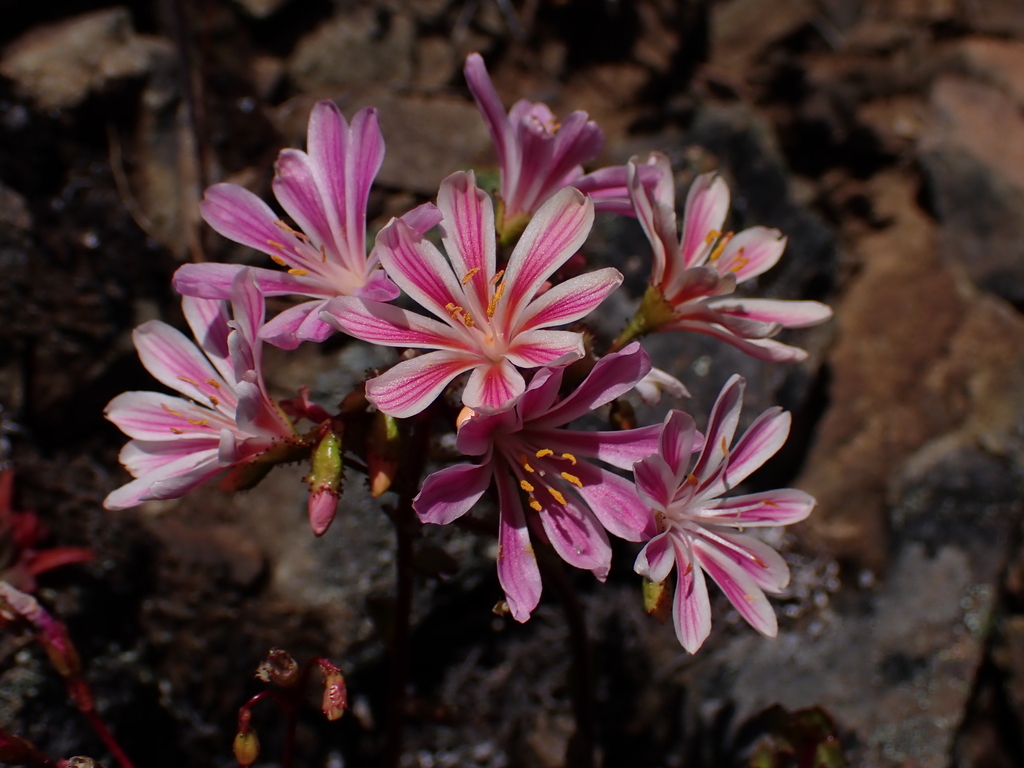
Lewisia cotyledon, known as Siskiyou Lewisia, cliff maids or broadleaf lewisia, is an evergreen succulent perennial in the miner’s lettuce family (Montiaceae). It forms flat rosettes of thick, glossy, spoon-shaped leaves and, from late spring into summer, sends up branched stems crowded with striped flowers in white, pink, magenta, apricot or yellow. It is one of the most admired rock garden plants in the world.
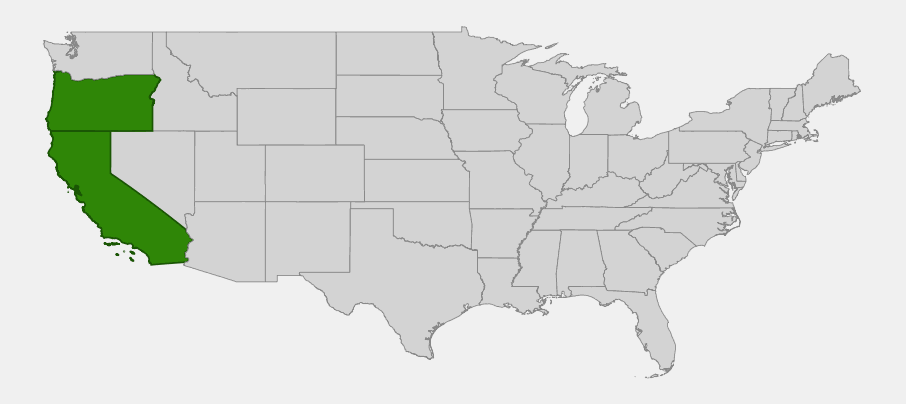
This is a true Western native with a small natural range. USDA PLANTS lists it in California and Oregon, where it grows almost entirely in the Klamath and Siskiyou Mountains of southwestern Oregon and northwestern California. There it clings to cliffs, rock crevices and steep, rocky slopes, often where water drains away instantly from its roots and crown.
The colorful lewisias sold at garden centers, including the ‘Sunset Strain’ and ‘Elise’, were bred from this species. This guide covers how to recognize wild Siskiyou lewisia, its native range, and the key to growing it: perfect drainage.
Identification
Look for a flat, evergreen rosette of thick, smooth, spoon-shaped leaves in a rock crevice, topped in late spring by branched stems of many-petaled, candy-striped flowers.
Growth Habit
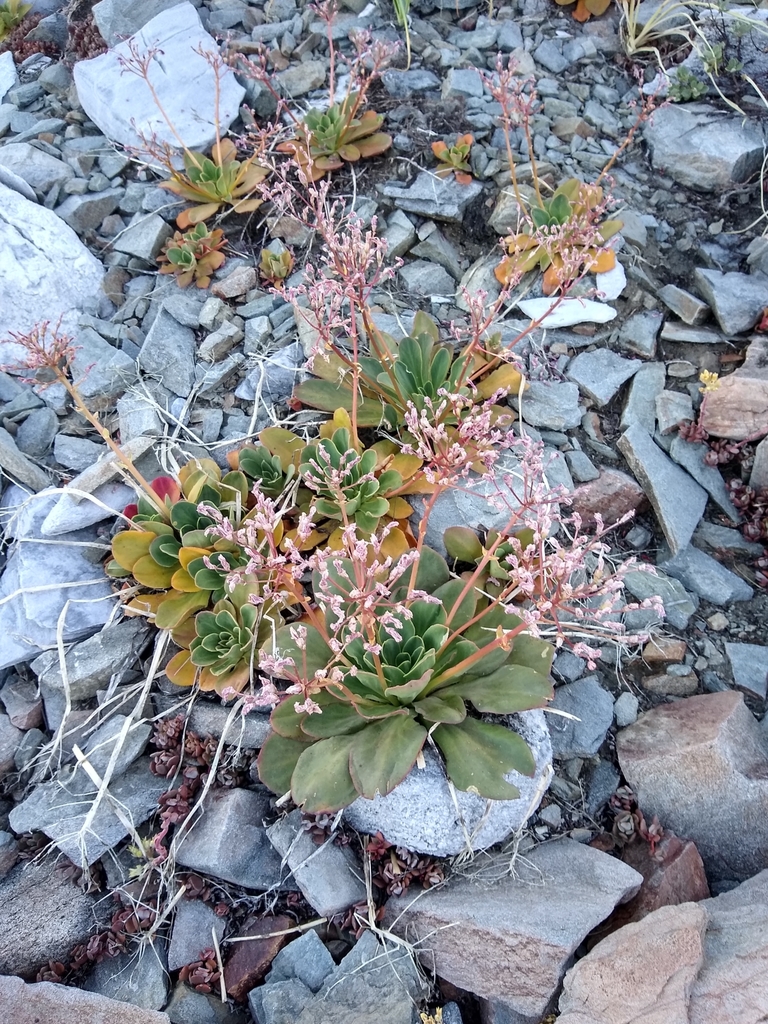
Siskiyou lewisia grows from a thick, fleshy taproot and a short, branching crown that produces one or several tight rosettes, each 4 to 12 inches across. The leafless flowering stems rise 4 to 12 inches above the rosette. Plants are long-lived in the right conditions.
Leaves
The leaves are evergreen, thick and succulent, spoon-shaped to oblong, 1 to 5 inches long and up to an inch wide, usually smooth and glossy green, sometimes tinged red. The edges vary between varieties: smooth in var. cotyledon, toothed in var. heckneri and wavy or crisped in var. howellii.
Flowers
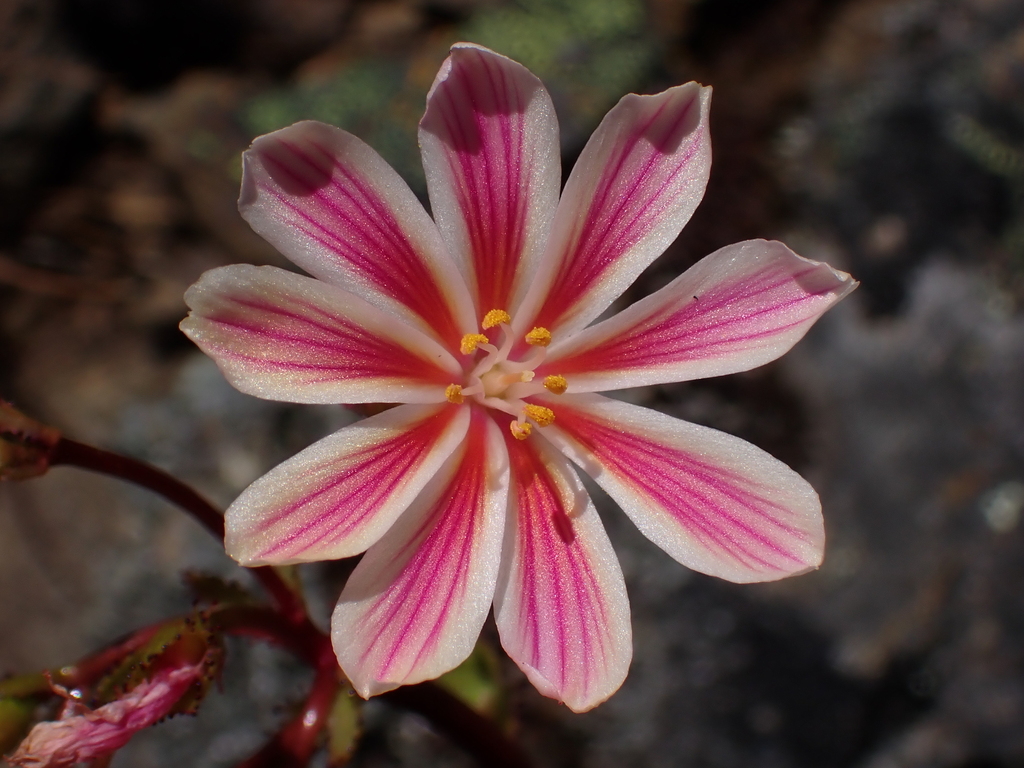
Each flowering stem carries a branched, many-flowered cluster. The flowers are about 3/4 to 1 1/4 inches across, with seven to eleven (usually eight to ten) petals. In the wild they are most often white to pale pink with darker pink or magenta stripes, but plants with pink, rose, apricot, yellowish or pure white flowers also occur. Bloom time is May to July, depending on elevation.
Fruit & Seeds
The fruit is a small, rounded capsule that splits to release several shiny, black, rounded seeds. The seeds ripen in summer and are scattered by gravity and water down the rocks.
Look-alikes
Bitterroot (Lewisia rediviva) has narrow, cylindrical leaves that wither before its large, single flowers open on short stems. Other lewisias in the region, such as L. leeana and L. columbiana, have narrow leaves and smaller flowers. Dudleyas also form rock rosettes, but they have five-parted, tubular flowers.
Quick Facts
| Scientific Name | Lewisia cotyledon |
| Family | Montiaceae (miner’s lettuce family) |
| Plant Type | Evergreen succulent perennial (rosette) |
| Mature Height | 4–12 in in flower |
| Mature Spread | 6–12 in |
| Growth Rate | Slow |
| Sun Exposure | Full sun to part shade |
| Water Needs | Low to moderate; sharp drainage essential |
| Soil Type | Gritty, rocky, very well-drained soil; rock crevices |
| Soil pH | Slightly acidic to neutral (about 5.5–7.0) |
| Bloom Time | May–July |
| Flower Color | White to pink with magenta stripes; also apricot and yellow |
| Fall Color | None (evergreen) |
| Fruit | Small capsule with shiny black seeds |
| Deer Resistant | Moderately |
| USDA Hardiness Zones | 6–8 |
Native Range
Siskiyou lewisia is endemic to the Klamath-Siskiyou region of southwestern Oregon and northwestern California. USDA PLANTS lists it as native in California and Oregon. In Oregon it grows in the southwestern counties, including Josephine, Jackson and Curry, and in California mainly in Siskiyou, Del Norte, Humboldt and Trinity counties.
It grows on cliffs, rock outcrops, crevices, talus and steep, rocky slopes in mixed conifer forest and montane chaparral, from about 500 feet in river canyons to about 7,000 feet in the mountains. It is found on granite, metamorphic and other rock types. Plants often face north or east, where the rock stays cooler, and grow where snowmelt and rain drain away quickly.
The three varieties have somewhat different ranges, and some local forms are uncommon. Heckner’s lewisia (var. heckneri) is included in the California Native Plant Society’s rare plant inventory. Never dig lewisias from the wild; they rarely survive transplanting, and nursery plants and seed are easy to find.
📋 Regional plant lists featuring Siskiyou Lewisia: California & Nevada · Western Oregon & Western Washington
Growing & Care Guide
Siskiyou lewisia is not hard to grow if you copy its cliff-side home. The most common cause of failure is water sitting around the crown. It is hardy to about zone 6 and does best where summers are not extremely hot and humid.
Light
Full sun in cool climates and along the coast. In hot inland areas, give it morning sun and afternoon shade, or a north- or east-facing position. It flowers poorly in deep shade.
Soil & Water
Plant it in a very gritty, fast-draining mix, such as equal parts coarse sand or crushed rock, pumice and a small amount of loam or compost. It does best planted on its side in a vertical crevice, a dry stone wall or a steep slope, so that water runs off the rosette. Surround the crown with a collar of gravel or grit. Water regularly in spring while it grows and blooms, then less in summer once flowering is done. Keep it fairly dry in winter; in rainy climates, a pane of glass or an overhang helps.
Planting Tips
Plant in spring or early fall with the crown slightly above the soil line. It grows beautifully in troughs, crevice gardens, rock gardens and containers. In a pot, use a deep container with a gritty mix and tilt the plant so water drains away. Avoid rich soil and heavy fertilizer, which make it soft and prone to rot.
Pruning & Maintenance
Cut off spent flower stems after blooming unless you want seed. Remove dead leaves from around the rosette to keep it dry. Watch for slugs and snails, which love the fleshy leaves, and for aphids on the flower stems.
Propagation
Sow fresh seed in fall on the surface of a gritty mix and leave it outdoors over winter; cold, moist conditions help germination. Seedlings flower in two to three years. Mature plants produce offset rosettes that can be removed in early summer and rooted in pure grit. Plants grown from mixed garden strains vary in flower color.
Landscape Uses
- Rock & crevice gardens: a classic, long-blooming crevice plant
- Dry stone walls: thrives planted sideways between stones
- Troughs & containers: grows well in deep pots of gritty mix
- Native West Coast gardens: pairs with stonecrops, buckwheats and lip ferns
- Pollinator gardens: early-summer nectar for bees and flies
Wildlife & Ecological Value
On the rocky cliffs of the Klamath-Siskiyou region, Siskiyou lewisia is one of the brightest spring and early-summer flowers.
For Pollinators
The open, many-petaled flowers offer easy access to nectar and pollen. They are visited by native bees, including small sweat bees and mining bees, and by flies and beetles.
For Birds
It is not a significant bird food, but birds may pick up seeds that fall on ledges and in crevices.
For Mammals
Deer and rodents rarely reach plants growing on steep cliffs. In gardens, deer may nibble plants occasionally.
Ecosystem Role
Siskiyou lewisia is part of the rich cliff and outcrop flora of the Klamath-Siskiyou region, one of the most botanically diverse temperate areas in North America. Its rosettes help trap soil and organic matter in rock crevices, creating tiny habitats for mosses and other plants.
Cultural & Historical Uses
The genus Lewisia honors Meriwether Lewis of the Lewis and Clark expedition, who collected the related bitterroot in Montana in 1806. The species name cotyledon compares its fleshy leaves to those of the succulent genus Cotyledon.
Siskiyou lewisia has been grown in European and American rock gardens since the late 19th and early 20th centuries. British and American nurseries selected and crossed its color forms, producing the mixed seed strains and named cultivars common in garden centers today. Most garden plants are hybrids between its varieties, and sometimes with other lewisias.
Its home region, the Klamath-Siskiyou Mountains, is known worldwide for its many endemic plants and old, varied rocks. Siskiyou lewisia is one of the best-known of these endemics and a symbol of the region’s botanical richness.
Frequently Asked Questions
Where is Siskiyou lewisia native?
It is native to the Klamath and Siskiyou Mountains of southwestern Oregon and northwestern California, mainly on cliffs, rock outcrops and rocky slopes.
Why does my lewisia rot?
Almost always because water sits in the crown. Plant it on its side or on a slope, use a gritty, fast-draining mix, add a gravel collar and keep it drier in winter.
Is Siskiyou lewisia evergreen?
Yes. Unlike bitterroot, which dies back after blooming, Siskiyou lewisia keeps its rosettes of fleshy leaves all year.
Can I grow lewisia in a pot?
Yes. Use a deep pot with a gritty succulent or alpine mix, tilt the plant slightly so water drains away from the crown, and give it bright light.
Are garden lewisias the same as the wild plant?
Most garden lewisias are selections and hybrids of Lewisia cotyledon, bred for brighter and more varied colors. The wild plant usually has white to pale pink flowers with magenta stripes.

Looking for a nursery that carries Siskiyou Lewisia?
Browse our native plant nursery directory: California · Oregon

