
Skyflower (Hydrolea corymbosa)
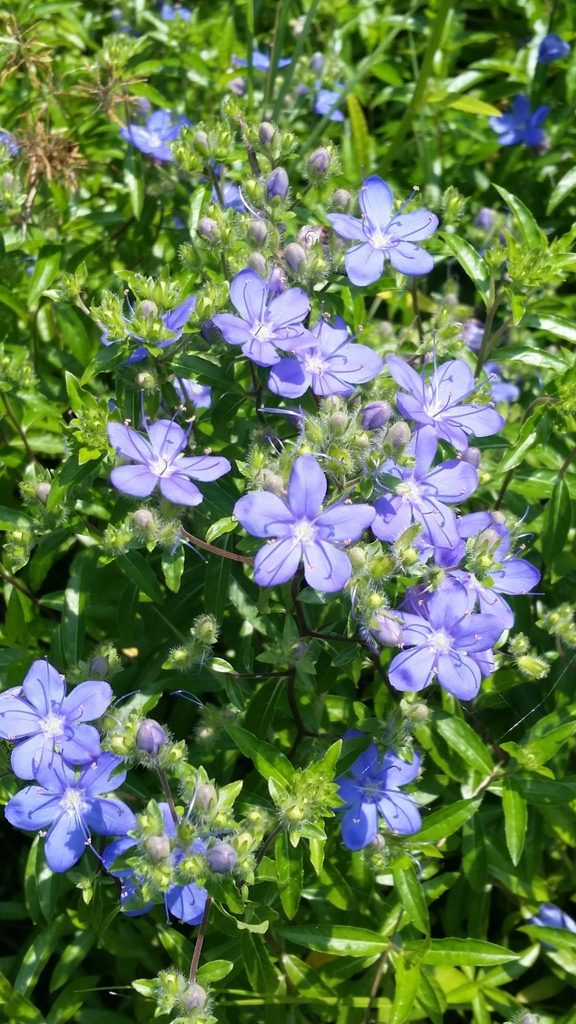
Hydrolea corymbosa, known as Skyflower or tall hydrolea, is a perennial wildflower of marshes, wet prairies, wet flatwoods and ditches on the southeastern Coastal Plain. From late spring through fall it opens clusters of brilliant blue, five-petaled flowers about an inch across, a shade of blue that is uncommon among native wildflowers. It is an upright, somewhat glandular-hairy plant 1 to 2 feet tall that grows in shallow water or saturated soil.
Skyflower belongs to the small family Hydroleaceae. Older references place Hydrolea in the waterleaf family (Hydrophyllaceae), and the Lady Bird Johnson Wildflower Center still describes it that way, but modern studies have shown that the genus is more closely related to the nightshade and morning glory families. Unlike several other Southeastern Hydrolea species, which have sharp spines in the leaf axils, skyflower is spineless, which makes it pleasant to handle in a garden.
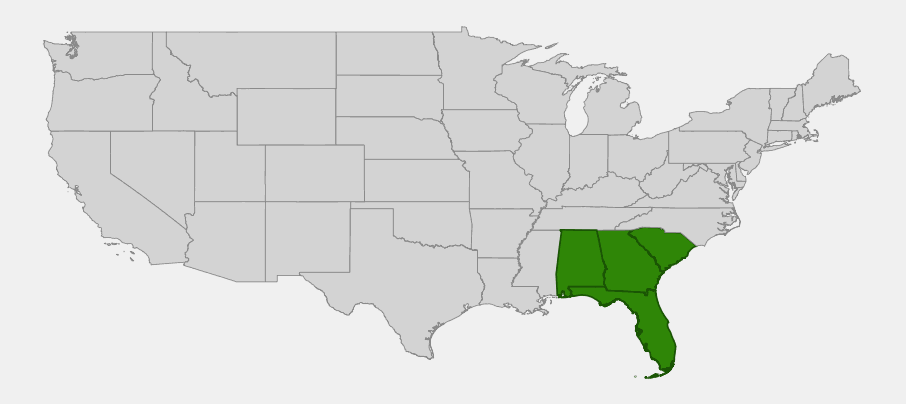
Skyflower grows in Florida, southern Georgia, southern Alabama and coastal South Carolina. It is fairly common in Florida’s wetlands and is occasionally sold by Florida native nurseries for pond edges and rain gardens. This guide covers how to identify it, where it grows, and how to use it in a wet, sunny native garden. Note that the leaves can cause nausea if eaten, so it should not be planted where small children might sample it.
Identification
Skyflower is easiest to spot in bloom, when its pure blue flowers stand out against green marsh vegetation. Out of flower, look for an upright, unbranched or sparingly branched stem with narrow, alternate leaves and sticky glandular hairs, growing in shallow water or wet soil.
Stems & Growth Habit
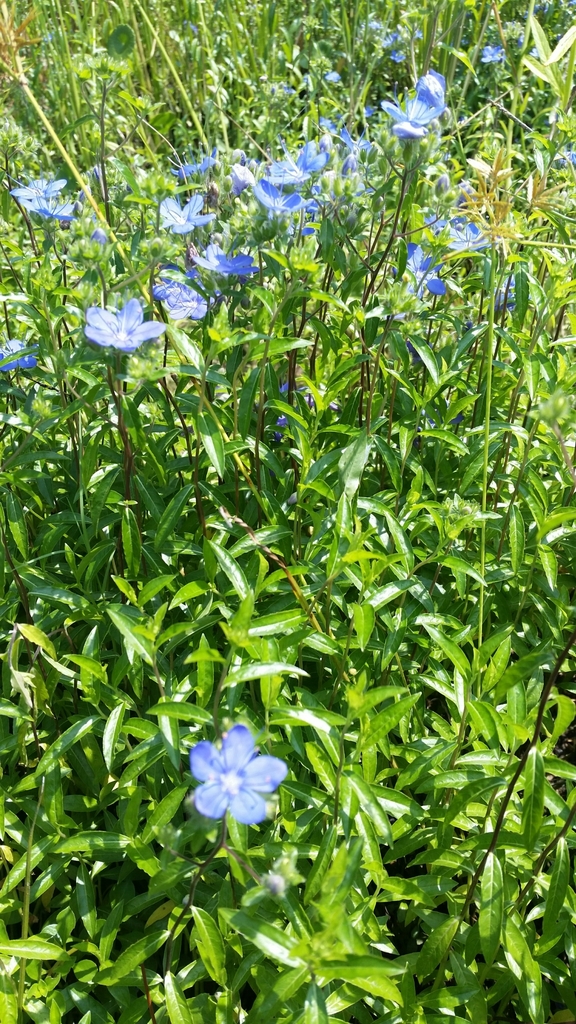
Skyflower is a perennial that often forms loose colonies, spreading by creeping underground stems. Its stems are upright, 1 to 2 feet tall (occasionally taller), and branch mainly near the top where the flower clusters form. The upper stems are covered with short glandular hairs that feel slightly sticky.
Leaves
The leaves are alternate, lance-shaped to narrowly elliptic, about 1 to 3 inches long, with smooth margins and little or no leaf stalk. They are mid-green and slightly hairy. There are no spines in the leaf axils, an important difference from other Hydrolea species in the region.
Flowers
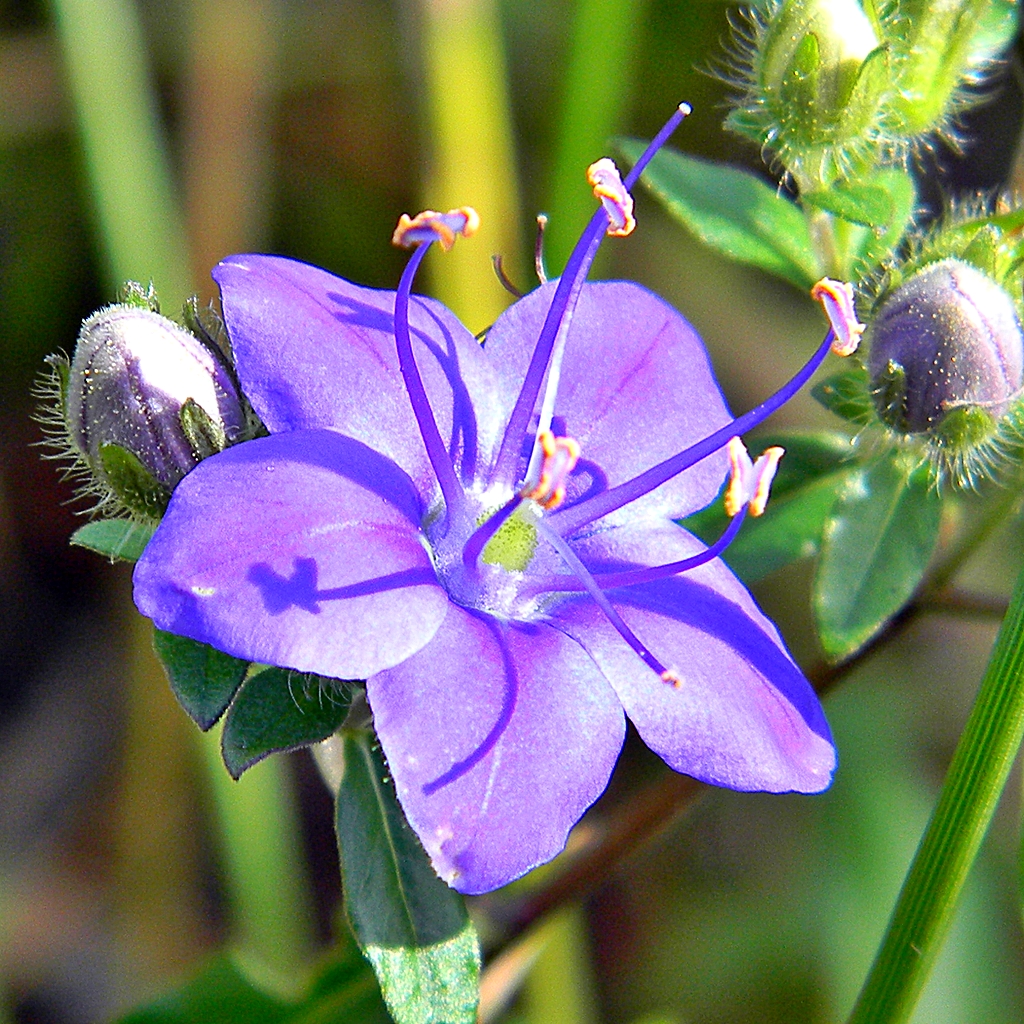
Flowers are borne in flat-topped or rounded clusters (corymbs, hence the species name corymbosa) at the tops of the stems. Each flower is about ¾ to 1 inch across, with five spreading, rounded petals of bright sky blue to blue-violet, often with a paler center. Five stamens with blue-purple filaments and two slender styles project from the center. The sepals and flower stalks are glandular-hairy. Flowering continues from about May into October.
Fruit & Seeds
The fruit is a small, rounded capsule enclosed by the persistent sepals. It splits open when ripe to release many tiny seeds.
Similar Species
Other Hydrolea species in the Southeast, such as H. ovata (ovate false fiddleleaf) and H. quadrivalvis (waterpod), also have blue flowers but carry sharp spines in the leaf axils. Blue flowers of a similar shade in Florida wetlands include Pickerelweed, which has heart-shaped leaves and dense spikes of flowers, and the much smaller blue-eyed grasses.
Quick Facts
| Scientific Name | Hydrolea corymbosa (accepted by USDA PLANTS and the Atlas of Florida Plants) |
| Family | Hydroleaceae (formerly placed in Hydrophyllaceae) |
| Plant Type | Herbaceous perennial wetland wildflower |
| Mature Height | 1–2 ft (occasionally taller) |
| Mature Spread | 1–2 ft; spreads slowly to form loose colonies |
| Growth Rate | Moderate |
| Sun Exposure | Full sun to part shade |
| Water Needs | High; wet soil or shallow standing water |
| Soil Type | Wet sand, peat or muck |
| Soil pH | About 5.0–7.0 (acidic to neutral) |
| Bloom Time | May–October |
| Flower Color | Bright sky blue to blue-violet |
| Fall Color | None notable |
| Fruit | Small capsule with many tiny seeds |
| Deer Resistant | Moderate; the glandular-hairy foliage is not a favorite |
| USDA Hardiness Zones | 8–10 |
Native Range
Skyflower is native to the southeastern Coastal Plain. USDA PLANTS and the Lady Bird Johnson Wildflower Center record it from four states: South Carolina, Georgia, Alabama and Florida. Outside Florida it is uncommon and limited to the outer Coastal Plain, and it reaches its northern limit in South Carolina.
Florida is the heart of its range. The Atlas of Florida Plants lists it as native, and records come from the Panhandle and the Big Bend region through the whole peninsula south to the Everglades and Big Cypress. It is especially familiar in the wet prairies, marshes and cypress-pine flatwoods of southwest Florida, around Corkscrew Swamp and the Big Cypress, and in wetlands from Palm Beach and Martin counties to the St. Johns River marshes in central Florida.
Its habitats are sunny and wet: freshwater marshes, wet prairies, the margins of ponds, lakes and cypress domes, wet flatwoods, and roadside ditches that hold water for much of the year. It is an obligate wetland plant (OBL) in the National Wetland Plant List, meaning it almost always grows in wetlands.
📋 Regional plant lists featuring Skyflower: North & South Florida · Alabama, Georgia & Mississippi · North & South Carolina
Growing & Care Guide
Skyflower is easy to grow if you can give it what it needs most: sun and constant moisture. It is a fine choice for the edge of a pond, a bog garden, a wet swale or the lowest part of a rain garden. It is occasionally sold by Florida native nurseries and at native plant sales; buy nursery-grown plants rather than digging them from wetlands.
Light
Plant in full sun for the most flowers. It tolerates part shade, such as the edge of a cypress dome, but blooms less in shade.
Soil & Water
Skyflower needs wet soil. It grows well in saturated sand, peat or muck and in a few inches of standing water at the edge of a pond. In a garden bed, it will not survive if the soil dries out for long. Average to slightly acidic soils are fine, and it does not need fertilizer. It is not salt tolerant.
Planting Tips
Plant in spring or early summer, 12 to 18 inches apart. At a pond edge, set plants so the crown is at or just below the water line. It combines well with pickerelweed, duck potato, blue flag iris and other native wetland plants. In a container water garden, grow it in a pot of heavy soil submerged so the soil surface is just below the water.
Pruning & Maintenance
Cut back old stems in winter. It may spread slowly by underground stems to form a patch; if it moves beyond where you want it, pull out the extra shoots. Thin crowded clumps every few years. It is otherwise low maintenance.
Propagation
Propagate by dividing clumps or separating rooted shoots in spring, or from seed sown on the surface of constantly moist soil. Plants grown from division flower more quickly.
Landscape Uses
- Pond and lake margins: a vivid blue accent for sunny, shallow water
- Rain gardens and wet swales: thrives in the wettest part of a sunny rain garden
- Bog gardens: pairs well with other sun-loving wetland plants
- Wetland restoration: a common component of marshes and wet prairies in Florida, using nursery-grown plants
- Pollinator gardens near water: long-blooming flowers for bees and butterflies
Wildlife & Ecological Value
Skyflower is a showy part of Florida’s marsh and wet-prairie flora, and its long bloom season makes it a dependable food source for insects in wetlands.
For Pollinators
The open blue flowers are visited by native bees, including bumble bees, carpenter bees and smaller solitary bees, as well as butterflies and skippers. Blue flowers like these are especially attractive to bees.
For Birds
Skyflower has little direct food value for birds, but it is part of the dense marsh vegetation that wading birds, rails and marsh wrens use for cover and foraging.
For Mammals
Deer rarely browse the glandular-hairy foliage. The Lady Bird Johnson Wildflower Center notes that eating the leaves may cause nausea in people, so it should be considered mildly toxic.
Ecosystem Role
As an obligate wetland plant, skyflower is part of the herbaceous layer of Florida’s marshes, wet prairies and flatwoods ponds. Its colonies help bind wet soil at the edges of ponds and ditches.
Cultural & Historical Uses
The genus name Hydrolea comes from the Greek hydor, water, a reference to the wet habitats of these plants. The species name corymbosa refers to the flat-topped flower clusters (corymbs).
The placement of Hydrolea has changed over time. It was long included in the waterleaf family, Hydrophyllaceae, but botanists now place it in its own family, Hydroleaceae, in the same order (Solanales) as the nightshade and morning glory families.
There is little recorded traditional use of skyflower. Its appeal today is mainly as a beautiful wildflower of Florida wetlands. Visitors to places like Corkscrew Swamp Sanctuary and the Big Cypress often notice its blue flowers along boardwalks and roadside ditches in summer and fall.
Frequently Asked Questions
Does skyflower need standing water?
It does best in saturated soil or shallow water, such as the edge of a pond or a wet ditch. It can grow in a garden bed only if the soil stays consistently wet.
Is skyflower toxic?
The Lady Bird Johnson Wildflower Center warns that eating the leaves may cause nausea. It is not dangerous to touch, but do not eat it, and keep it away from children and pets that might.
Does skyflower have spines?
No. Unlike some other Hydrolea species in the Southeast, skyflower has no spines. Its stems and flower clusters are glandular-hairy and slightly sticky.
Will skyflower spread in my garden?
It can spread slowly by underground stems to form a loose colony in wet soil, but it is not considered aggressive. Extra shoots are easy to pull.
When does skyflower bloom?
Mostly from May through October, with the heaviest flowering in summer and early fall. Each plant blooms over a long period.

Looking for a nursery that carries Skyflower?
Browse our native plant nursery directory: Alabama · Florida & Georgia · South Carolina