
Snow Dwarf Bramble (Rubus nivalis)
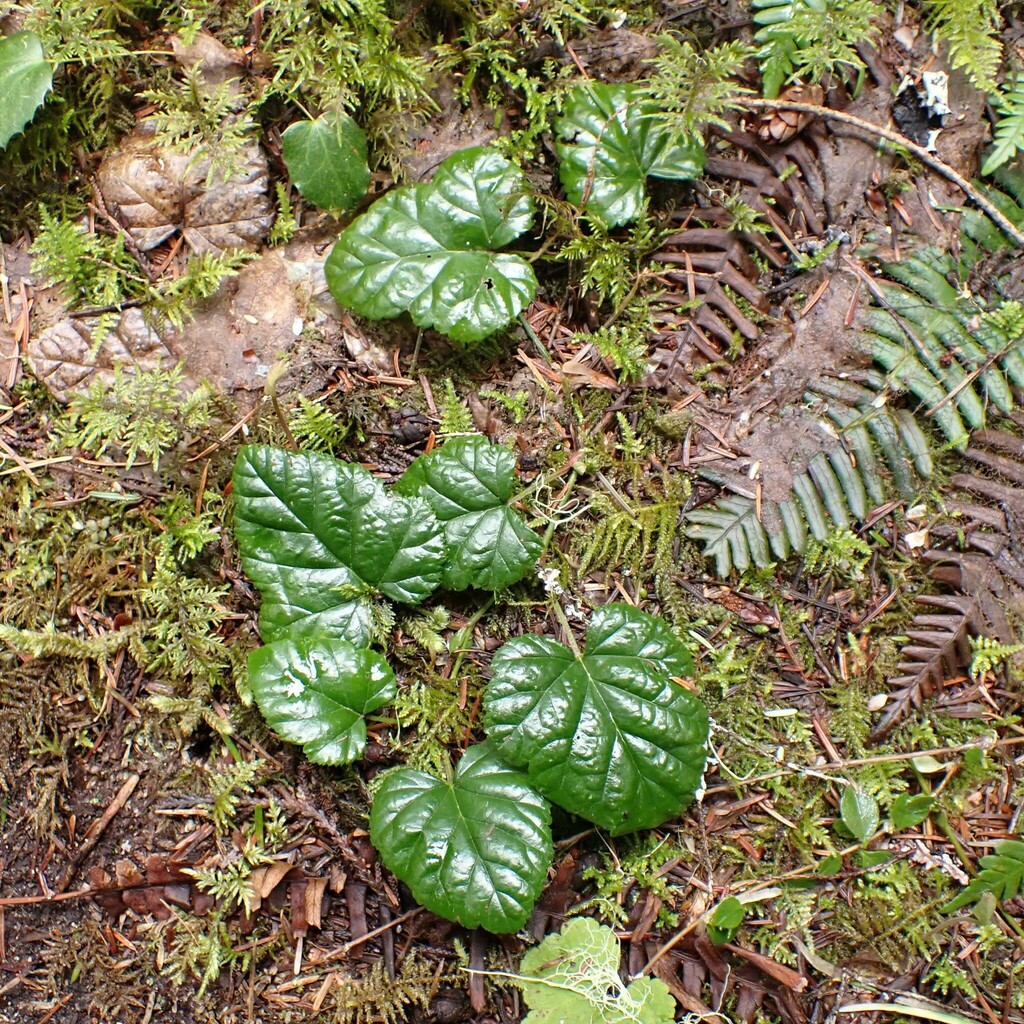
Rubus nivalis, known as Snow Dwarf Bramble or snow raspberry, is a small, trailing relative of the raspberries that creeps across the floor of Pacific Northwest conifer forests. Its slender, prickly stems run along the ground and root as they go, carrying glossy, dark green, heart-shaped leaves that often stay green through winter under the snow, which may be where its name nivalis (“of the snow”) comes from.
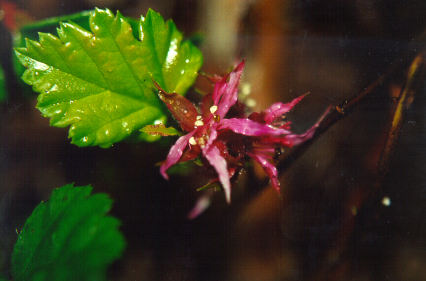
It is easy to walk past. The leaves look a bit like small, shiny ivy or blackberry leaves lying flat on the duff, and the flowers are small and hidden. Look closely in early summer, though, and you may find its unusual deep pink to reddish purple flowers with narrow, pointed petals, followed by a few small red raspberries.
It is one of three small trailing brambles of Northwest forests, along with Five-leaf Dwarf Bramble and Roughfruit Berry. This guide explains how to tell them apart, where snow dwarf bramble grows, and how it fits into a native woodland garden.
Identification
Look for long, thin, trailing stems lying on the forest floor, armed with small curved prickles, carrying glossy, leathery, heart-shaped to shallowly three-lobed leaves on upright stalks.
Stems & Leaves
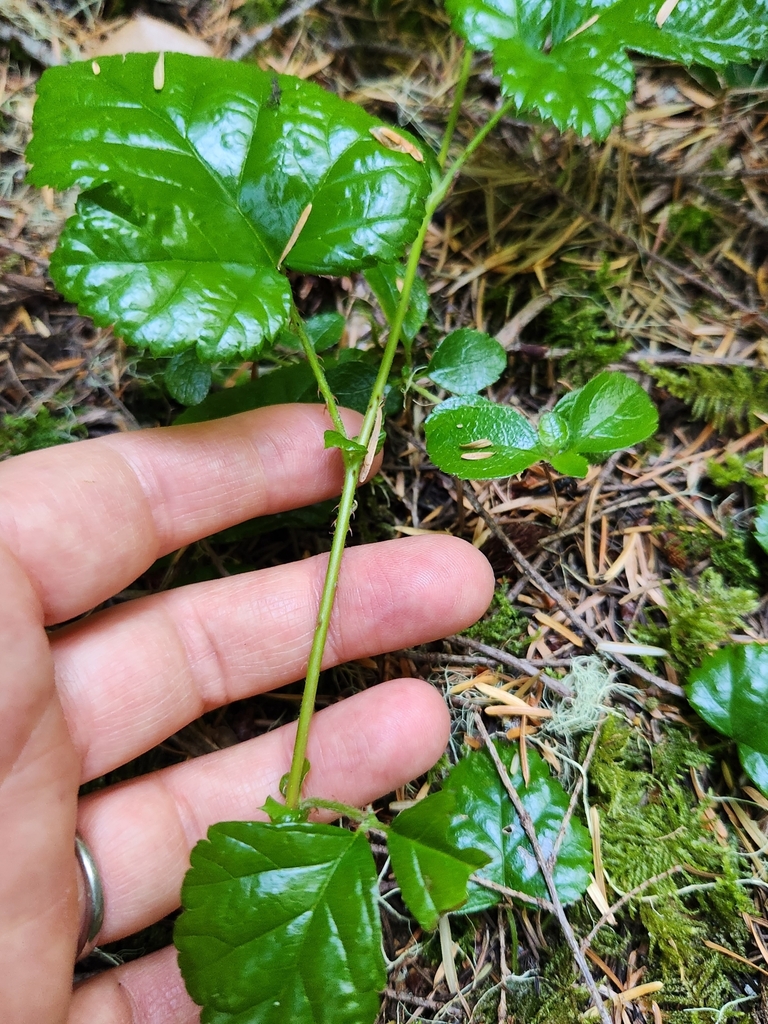
The stems are slender, trailing and often several feet long, rooting at the nodes, with small, hooked prickles. Because they are slightly woody, it is often called a subshrub. The leaves are mostly simple, 1 to 3 inches long, heart-shaped to broadly oval and often shallowly three-lobed (occasionally divided into three leaflets), with toothed edges. They are dark green, glossy and somewhat leathery, and many persist through winter.
Flowers
The flowers are borne singly or in pairs on short side shoots, from late spring to midsummer (mostly May through July). They are about ½ inch across, with five narrow, pointed, pink to deep reddish purple petals and reflexed sepals, quite unlike the round white petals of most raspberries.
Fruit
The fruit is a small, red raspberry, about ¼ to ⅓ inch across, made of relatively few drupelets. It is edible but usually sparse and small, so it is seldom gathered.
Look-alikes
Five-leaf dwarf bramble (Rubus pedatus) has leaves divided into five leaflets, no prickles and white flowers. Roughfruit berry (dwarf bramble, R. lasiococcus) has thinner, dull, more deeply lobed leaves, no prickles, white flowers and hairy fruit. Trailing blackberry and Himalayan blackberry are much larger and more heavily armed, with compound leaves.
Quick Facts
| Scientific Name | Rubus nivalis Douglas ex Hook. |
| Family | Rosaceae (rose family) |
| Plant Type | Trailing, evergreen to semi-evergreen subshrub |
| Mature Height | 2–4 in |
| Mature Spread | Stems trail 1–4 ft or more, rooting as they go |
| Growth Rate | Slow to moderate |
| Sun Exposure | Part shade to full shade |
| Water Needs | Moderate; evenly moist forest soil |
| Soil Type | Humus-rich, well-drained forest duff and loam |
| Soil pH | About 5.0–6.5 (acidic) |
| Bloom Time | May–July |
| Flower Color | Pink to deep reddish purple |
| Fall Color | Leaves may bronze or redden in cold weather |
| Fruit | Small red raspberry |
| Deer Resistant | Moderate; low and prickly |
| USDA Hardiness Zones | 5–8 |
Native Range
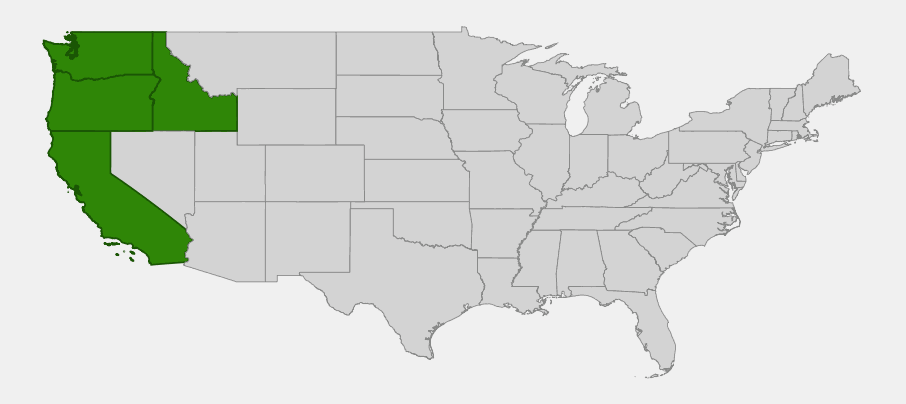
USDA PLANTS lists snow dwarf bramble as native in Washington, Oregon, Idaho and California, and it also grows in southern British Columbia, including Vancouver Island. It is a Pacific Northwest forest plant, most common in the Cascade Range, the Olympic Mountains and the Oregon Coast Range.
Most records are from west of the Cascade crest, in the Olympics, the western Cascades and the Coast Range, but it also grows on the east slope of the Cascades in Washington and in the mountains of northern Idaho. In California it reaches its southern limit in the Klamath region of Del Norte and Siskiyou Counties, where it is uncommon.
It grows in moist to fairly dry coniferous forests and forest openings, especially under Douglas-fir, western hemlock, Pacific silver fir and noble fir, often on old logs, mossy banks and trailsides. It is mostly found at middle elevations, from the foothills up into the subalpine zone.
📋 Regional plant lists featuring Snow Dwarf Bramble: Western Oregon & Western Washington · Idaho, Eastern Oregon & Eastern Washington · California & Nevada
Growing & Care Guide
Snow dwarf bramble is rarely sold, but it can make an interesting, low, evergreen groundcover for a shady native woodland garden in the Pacific Northwest. Look for it at native plant sales and specialist nurseries. Do not dig plants from the forest; if you have it on your land, take a few rooted runner tips instead.
Light
Part shade to full shade, like the conifer forests where it grows. It tolerates some morning sun in cool, moist sites but scorches in hot afternoon sun.
Soil & Water
Give it humus-rich, acidic, well-drained soil with plenty of leaf litter or conifer needle mulch. Keep it evenly moist, especially in the first summer; established plants tolerate the dry summers of Northwest forests in shade.
Planting Tips
Plant in fall or spring, under conifers or among ferns and other woodland groundcovers. Let it trail over mossy logs, rocks or banks, where its glossy leaves show best.
Pruning & Maintenance
It needs little care. Trim straying stems if needed and leave fallen needles and leaves in place as mulch. Wear gloves, since the stems have small prickles.
Propagation
The easiest method is to pot up rooted runners (stem tips that have rooted at the nodes). It can also be grown from seed, which, like that of other Rubus, usually needs a period of cold, moist stratification to germinate.
Landscape Uses
- Woodland groundcover: a low, evergreen mat under conifers in Northwest shade gardens
- Logs, banks and rock edges: trailing over mossy logs and stones
- Native plant collections: an unusual pink-flowered raspberry relative
- Forest restoration: part of the native forest-floor community
Wildlife & Ecological Value
Snow dwarf bramble is a small but persistent member of the Northwest forest floor, providing evergreen cover, a little fruit and early summer flowers.
For Pollinators
Its flowers are visited by bumble bees, small native bees and flies, like those of other brambles.
For Birds
Ground-feeding birds such as grouse, thrushes and juncos may eat the small fruits. Its mats offer cover for small birds foraging on the forest floor.
For Mammals
Small mammals such as chipmunks and mice eat the fruit and seeds. Deer and elk may nibble the evergreen leaves in winter.
Ecosystem Role
Its trailing, rooting stems help hold soil and duff on forest slopes and trail banks, and its persistent leaves add evergreen cover to the forest floor.
Cultural & Historical Uses
The Scottish botanist David Douglas collected snow dwarf bramble during his travels in the Pacific Northwest in the 1820s, and William Jackson Hooker published the name Rubus nivalis from his material in Flora Boreali-Americana. The name nivalis means “of the snow,” likely referring to the mountain habitats where it was found.
It has no well-documented history of special use, but its small berries, like those of other wild raspberries in the Northwest, are edible. Because it is so low and its fruit so sparse, it is mostly a plant hikers and botanists enjoy for its unusual flowers.
Today it is appreciated as part of the rich forest-floor flora of the Cascades and Olympics, where several small brambles grow together and are a favorite identification puzzle for naturalists.
Frequently Asked Questions
What is snow dwarf bramble?
A small, trailing, slightly woody raspberry relative of Pacific Northwest conifer forests, with glossy heart-shaped leaves, small prickles, deep pink flowers and small red raspberries.
How is snow dwarf bramble different from five-leaf dwarf bramble?
Snow dwarf bramble has simple, glossy, heart-shaped leaves, prickles and pink flowers. Five-leaf dwarf bramble has leaves divided into five leaflets, no prickles and white flowers.
Are snow dwarf bramble berries edible?
Yes, the small red raspberries are edible, but plants usually produce only a few, so they are not worth gathering in quantity. Leave them for wildlife.
Where does snow dwarf bramble grow?
In conifer forests of the Cascades, Olympics and Oregon Coast Range, and in northern Idaho and the far northwestern corner of California, as well as southern British Columbia.
Can I grow snow dwarf bramble in my garden?
Yes, as a groundcover in a shady, moist Northwest woodland garden with acidic, humus-rich soil. Use nursery plants or rooted runners rather than digging plants from the wild.

Looking for a nursery that carries Snow Dwarf Bramble?
Browse our native plant nursery directory: California · Idaho · Oregon · Washington

