
Smaller White Snakeroot (Ageratina aromatica)
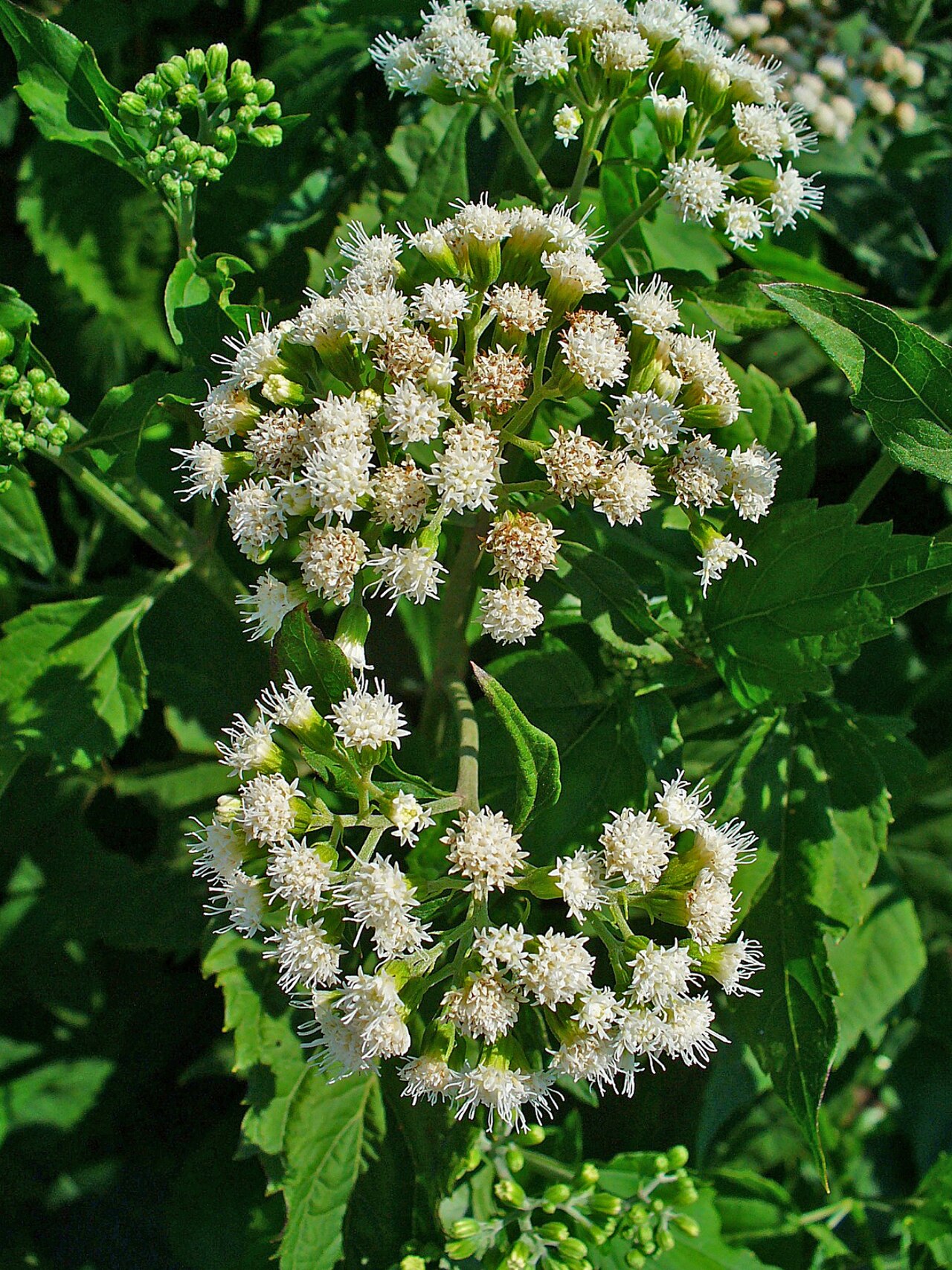
Ageratina aromatica, Smaller White Snakeroot (also lesser snakeroot or aromatic thoroughwort), is a late-blooming wildflower of dry, sunny woodlands and barrens in the eastern United States. In late summer and fall it carries flat-topped clusters of fuzzy, bright white flower heads above opposite pairs of thick, blunt-toothed leaves.
It is the dry-ground cousin of the much more familiar White Snakeroot (A. altissima), which grows in shady, moist woods. Smaller white snakeroot is shorter and stiffer, with smaller, firmer leaves on short stalks, and it prefers open oak and pine woods, sandhills, pine barrens, serpentine barrens and clearings, mostly on the Atlantic and Gulf coastal plains and the Piedmont.
For gardeners in the East it is a tough, drought-tolerant native for dry shade or part sun, and a valuable source of nectar for late-season butterflies, bees and other pollinators. This guide covers how to recognize it, where it grows, and how to grow it.
Identification
Smaller white snakeroot belongs to the boneset and thoroughwort group of the aster family, with fuzzy white heads of disc flowers and no rays. Leaf shape, texture and stalk length separate it from its relatives.
Stems & Habit
Plants grow from a short, knotty, aromatic rootstock and produce one to several upright stems 1 to 3 feet tall. The stems are finely hairy, especially near the top, and branch only in the flower cluster.
Leaves
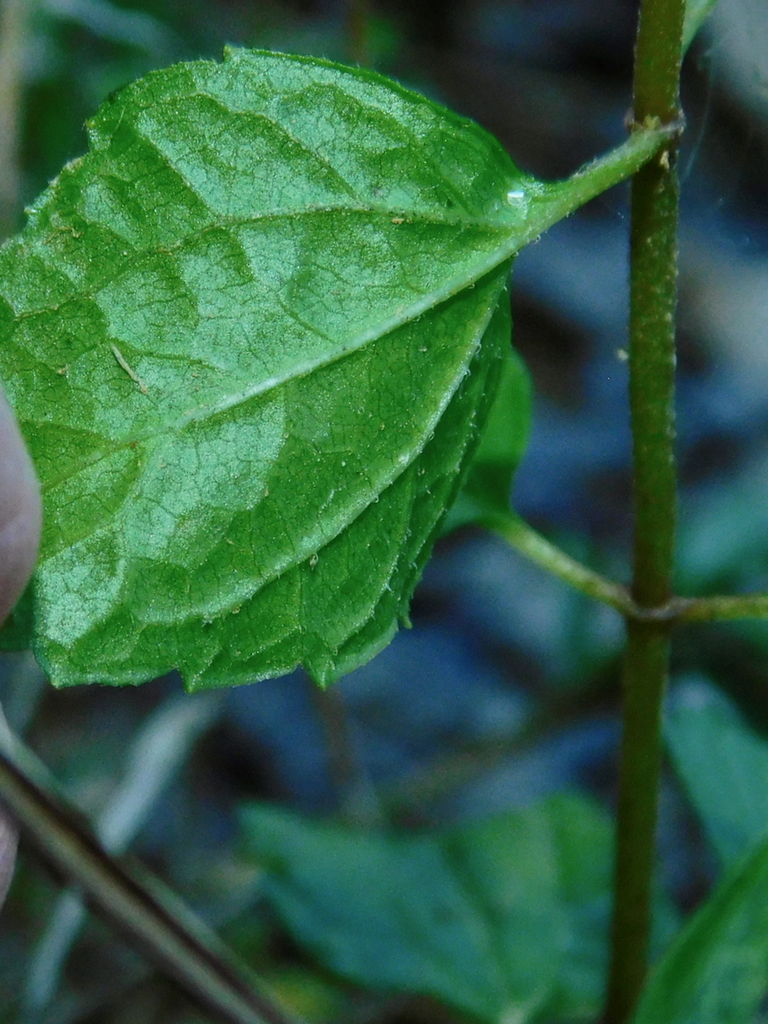
Leaves are opposite, egg-shaped to lance-shaped, usually 1 to 3 inches long, thick and firm, with blunt or rounded teeth along the edges. They have short stalks, usually less than ½ inch, or are nearly stalkless, and the upper surface is often slightly rough. Leaves tend to get smaller toward the top of the stem.
Flowers
Flower heads are arranged in a loose, flat-topped or slightly rounded cluster at the top of the plant. Each head is about ¼ inch across and holds 10 to 20 or more small, bright white tubular disc flowers, with long white styles that give the heads a fuzzy look. Bloom is from late August into October.
Seeds
Each flower produces a small, black, ribbed seed (cypsela) topped with a tuft of white bristles that carries it on the wind.
Look-alikes
White Snakeroot is taller, with thinner, larger, sharply toothed leaves on long stalks (often more than ½ inch), and grows in moister, shadier woods. Boneset and other Eupatorium species have leaves that are stalkless, often joined around the stem or narrow, and grow mostly in wetter, sunnier places. Some botanists treat the coastal plain plants with narrower leaves as a separate variety or species (A. jucunda, hammock snakeroot, in Florida and Georgia).
Quick Facts
| Scientific Name | Ageratina aromatica (L.) Spach (syn. Eupatorium aromaticum) |
| Family | Asteraceae (aster family) |
| Plant Type | Herbaceous perennial |
| Mature Height | 1–3 ft |
| Mature Spread | 1–2 ft |
| Growth Rate | Moderate |
| Sun Exposure | Full sun to partial shade |
| Water Needs | Low to moderate; drought-tolerant |
| Soil Type | Dry, sandy, rocky or loamy, well-drained soil |
| Soil pH | About 4.5–7.0 (acidic) |
| Bloom Time | Late August–October |
| Flower Color | Bright white |
| Fall Color | Fluffy seed heads; foliage may turn purplish |
| Fruit | Small black cypsela with white bristles |
| Deer Resistant | Generally yes; bitter, aromatic foliage |
| USDA Hardiness Zones | 5–9 |
Native Range
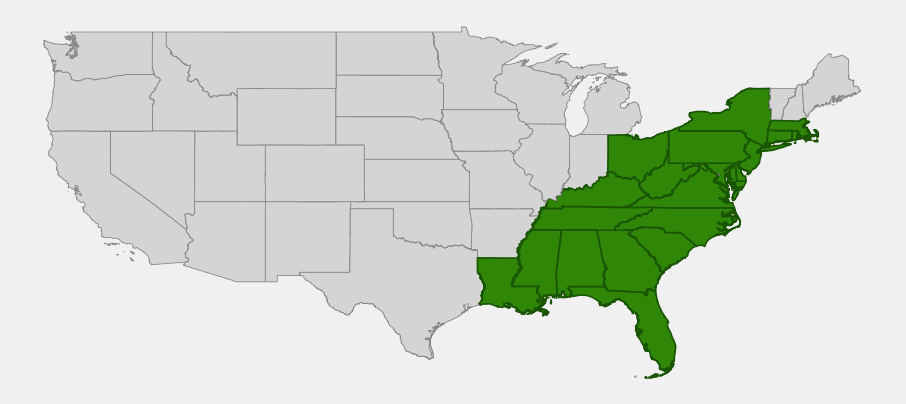
USDA PLANTS lists smaller white snakeroot as native in 20 eastern states: Massachusetts, Rhode Island, Connecticut, New York, New Jersey, Pennsylvania, Delaware, Maryland, Virginia, West Virginia, Ohio, Kentucky, Tennessee, North Carolina, South Carolina, Georgia, Florida, Alabama, Mississippi and Louisiana.
It is most common on the Atlantic and Gulf coastal plains and the Piedmont, from southern New England and Long Island through the New Jersey Pine Barrens and the Chesapeake region to the Carolinas, Georgia, north Florida and west to Louisiana. Inland it reaches the Appalachian foothills of Tennessee, Kentucky, West Virginia and southern Ohio, where it is local. At the northern edge of its range in New England it is rare.
Typical habitats are dry, open oak and pine woods, sandhills, pine barrens and pine flatwoods, serpentine barrens, rocky and shale slopes, woodland edges, powerline cuts and old fields. It thrives where fire, mowing or poor soil keep the forest canopy open.
📋 Regional plant lists featuring Smaller White Snakeroot: New York, Pennsylvania & Northern New Jersey · Ohio & Indiana · Kentucky & Tennessee · Connecticut, Massachusetts & Rhode Island · New Hampshire, Maine & Vermont · Maryland, Virginia & West Virginia · Delaware, Southern New Jersey & Long Island · Alabama, Georgia & Mississippi · North & South Florida · North & South Carolina · Arkansas, Louisiana, Eastern Oklahoma & Eastern Texas
Growing & Care Guide
Smaller white snakeroot is offered by native plant nurseries in the mid-Atlantic and Southeast, sometimes under its old name Eupatorium aromaticum. A variegated selection is also sold. It is easy to grow in average to poor, well-drained soil and asks for very little care.
Safety note: its close relative, white snakeroot, contains tremetol, a toxin that poisons livestock and once caused “milk sickness” in people who drank milk from cows that had grazed on it. Smaller white snakeroot is much less studied, so treat it as potentially toxic: don’t eat it, and keep it out of pastures and hay fields.
Light
Full sun to partial shade. It flowers best with at least a half day of sun, and in hot southern gardens it appreciates light afternoon shade. It is one of the better natives for dry, partly shaded spots under oaks and pines.
Soil & Water
Plant it in well-drained sandy, gravelly or loamy soil of low to moderate fertility. It tolerates acidic soil and drought once established and should not need summer watering in most of its range. Rich, wet soil leads to weak, floppy growth and root rot.
Planting Tips
Space plants 12 to 18 inches apart in spring or fall. Combine it with little bluestem, goldenasters, blazing stars and fall asters for a late-season meadow or woodland-edge planting. Its white flowers brighten dry shade under trees in September and October.
Pruning & Maintenance
Leave the stems standing over winter for seed-eating birds and overwintering insects, and cut them back in late winter. It may self-sow lightly; remove unwanted seedlings in spring. No fertilizer is needed.
Propagation
Sow fresh seed in fall or cold-moist stratify it for about 30 days before spring sowing; the seed needs light to germinate, so press it onto the soil surface. Clumps can also be divided in early spring.
Landscape Uses
- Dry shade and woodland edges: under oaks and pines where few late-blooming plants thrive
- Pollinator gardens: late-season nectar for butterflies, bees, wasps and flies
- Sandhill, pine barrens and meadow restoration: a native fall bloomer for dry, acidic sites
- Low-maintenance borders: drought-tolerant once established, with no need for fertilizer
Wildlife & Ecological Value
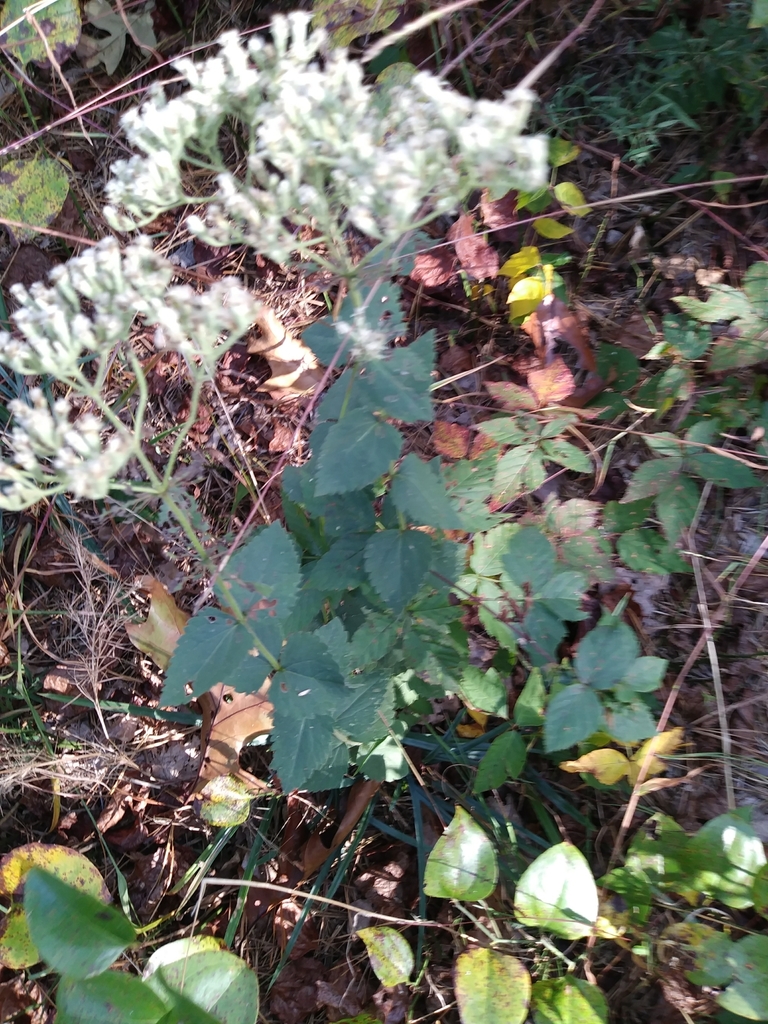
Blooming from late summer into fall, smaller white snakeroot provides nectar when many pollinators are fueling up for migration or winter.
For Pollinators
The fuzzy white flowers attract a wide range of insects: butterflies such as skippers, hairstreaks and migrating monarchs, native bees, honey bees, wasps, flower flies and beetles. In dry pine and oak woods it is one of the few white flowers blooming in early fall.
For Birds
Small seed-eating birds such as goldfinches and sparrows may feed on the seeds in fall and winter, and the insects drawn to the flowers feed insect-eating birds.
For Mammals
Its bitter, aromatic foliage is rarely browsed by deer or rabbits.
Ecosystem Role
As part of the herb layer of fire-maintained oak and pine woodlands and barrens, it contributes to the diverse late-season flowering that supports pollinators. It also hosts plant-feeding insects such as the larvae of some moths that specialize on thoroughworts.
Cultural & Historical Uses
Linnaeus described this plant as Eupatorium aromaticum in 1753, from specimens sent from eastern North America. In the 19th century it was moved to Ageratina, a genus of mainly Mexican and tropical American plants, although many field guides used the old name until recently. The species name aromatica refers to the aromatic rootstock.
The roots were used in 19th-century American herbal medicine, and the plant is listed in some homeopathic references. Because it is closely related to the toxic white snakeroot, it should not be used medicinally without professional guidance.
The name “snakeroot” was applied to many plants whose roots were once believed to treat snakebite. Today smaller white snakeroot is valued mostly as a handsome, tough native wildflower for dry woodland gardens and as a food source for fall pollinators.
Frequently Asked Questions
How is smaller white snakeroot different from white snakeroot?
Smaller white snakeroot is shorter (1 to 3 feet), with thicker, smaller, blunt-toothed leaves on short stalks, and grows in dry, open woods and barrens. White snakeroot is taller, with thin, sharply toothed leaves on long stalks, and grows in moist, shady woods.
Is smaller white snakeroot poisonous?
Its close relative, white snakeroot, is toxic to livestock and caused “milk sickness” in the past. Smaller white snakeroot is less studied, so treat it as potentially toxic: don’t eat it and keep it out of pastures.
When does smaller white snakeroot bloom?
From late August through October, with bright white, fuzzy flower clusters.
Does smaller white snakeroot grow in shade?
It tolerates partial shade and is a good choice for dry shade under oaks and pines, but it flowers best with at least a half day of sun.
Is it good for pollinators?
Yes. Its late-season flowers attract butterflies, including migrating monarchs, as well as bees, wasps and flies.

Looking for a nursery that carries Smaller White Snakeroot?
Browse our native plant nursery directory: Alabama · Connecticut, Delaware, Florida & Georgia · Kentucky, Louisiana, Maryland, Massachusetts & Mississippi · New Jersey, New York, North Carolina & Ohio · Pennsylvania, Rhode Island, South Carolina, Tennessee & Virginia · West Virginia

