
Water Lobelia (Lobelia dortmanna)
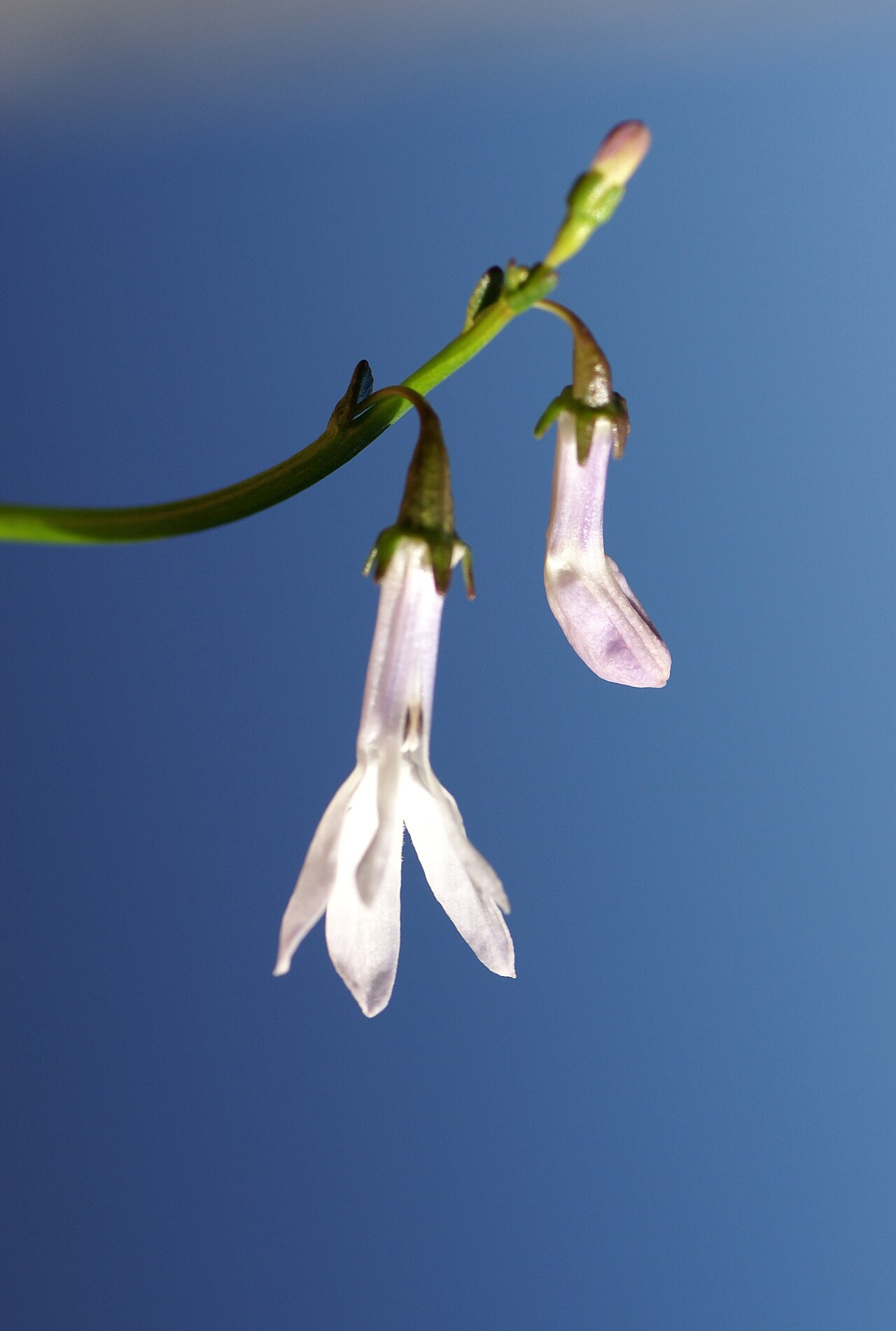
Lobelia dortmanna, known as Water Lobelia or Dortmann’s cardinal flower, is a small aquatic perennial that lives on the sandy and gravelly bottoms of clear, cold, nutrient-poor lakes and ponds. Its rosette of thick, hollow leaves stays underwater all year, and in mid to late summer it sends up a slender, nearly leafless stalk that holds a few small, nodding, pale lavender or white flowers just above the water.
It grows across the northern parts of North America and Europe. In the United States it is found in the Northeast, the Great Lakes states, the Pacific Northwest and Alaska. It is a classic member of the “isoetid” community of soft-water lakes, together with quillworts, pipewort and shoreweed, and is a sign of clean, low-nutrient water.
This page covers how to recognize water lobelia, where it grows (including states where it is rare or only historical), why it is so difficult to grow, its role in lake ecosystems and a safety note: like other lobelias, it contains toxic alkaloids.
Identification
Water lobelia is easy to miss. Look in shallow, clear water near lake shores for small, grass-like rosettes on the bottom and, in summer, thin stalks with a few pale flowers poking out of the water.
Size & Form
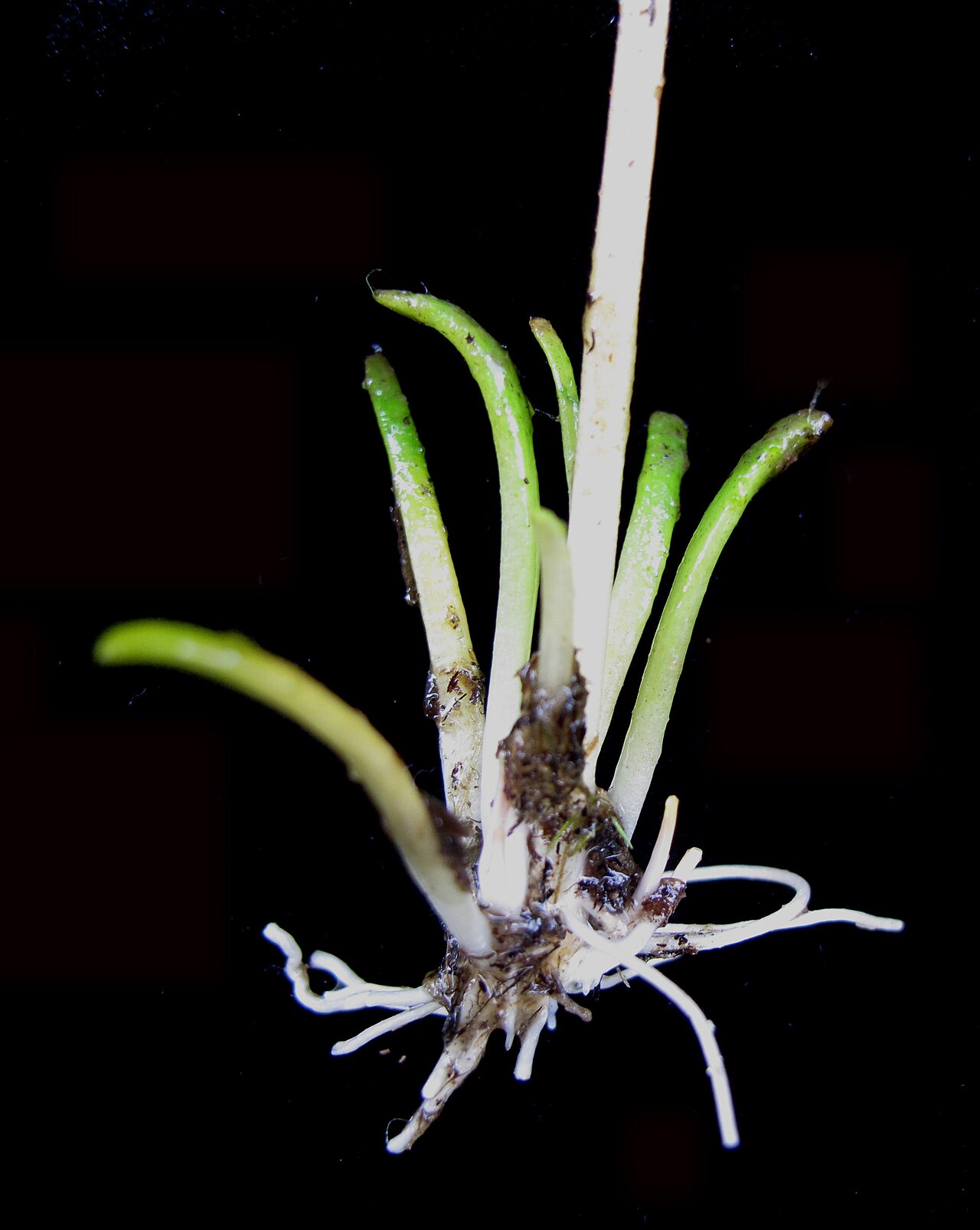
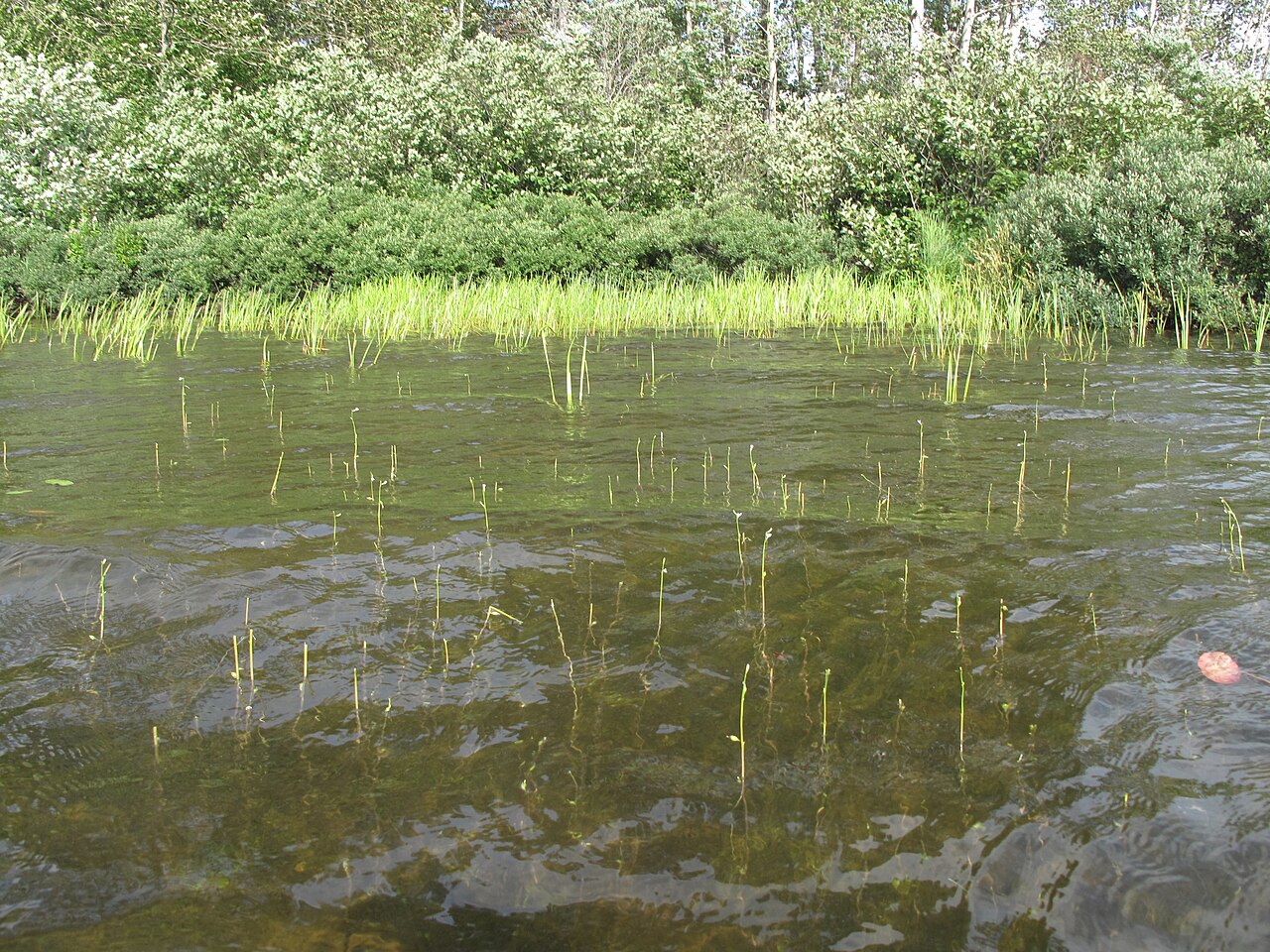
The plant is a perennial rosette, usually 1 to 3 inches across, rooted in sand or gravel in water a few inches to about 3 feet deep. Plants spread by short offshoots to form loose underwater lawns. The flowering stem is hollow, 6 to 30 inches tall depending on water depth, and rises above the surface.
Leaves
The leaves are all basal, linear, about 1 to 3 inches long, thick, smooth and blunt-tipped, often curving outward. In cross section each leaf has two hollow air channels, which help move oxygen to the roots. A few tiny scale-like bracts are scattered on the flowering stem.
Flowers
From about July to September, the stalk carries 3 to 10 widely spaced flowers. Each is about 1/2 inch long, pale lavender, bluish or white, two-lipped like other lobelias, with two small upper lobes and three larger lower lobes, and nods or hangs from a short stalk.
Fruit
The fruit is a small, many-seeded capsule. Flowers that do not reach the surface can self-pollinate underwater while still closed.
Similar Species
Out of flower, the rosettes look like those of other isoetids. Quillworts (Isoetes) have narrow, tapering leaves with swollen bases that hold spores. Pipewort (Eriocaulon aquaticum) has flat, translucent leaves with a checkered pattern and a white, button-like flower head. American shoreweed (Littorella americana) has narrow, solid leaves. Water lobelia’s leaves are thicker, blunter and have two hollow tubes inside.
Quick Facts
| Scientific Name | Lobelia dortmanna L. |
| Family | Campanulaceae (bellflower family) |
| Plant Type | Submerged aquatic perennial herb |
| Mature Height | Rosette 1–3 in; flower stalk 6–30 in |
| Mature Spread | 1–3 in per rosette |
| Growth Rate | Slow |
| Sun Exposure | Full sun (clear water) |
| Water Needs | Aquatic; submerged in shallow water |
| Soil Type | Sand or gravel lake bottoms; nutrient-poor |
| Soil pH | About 4.5–6.5 (soft, acidic water) |
| Bloom Time | July–September |
| Flower Color | Pale lavender, bluish or white |
| Fall Color | None; evergreen underwater rosette |
| Fruit | Small capsule with many tiny seeds |
| Deer Resistant | Not applicable (aquatic) |
| USDA Hardiness Zones | 2–7 |
Native Range
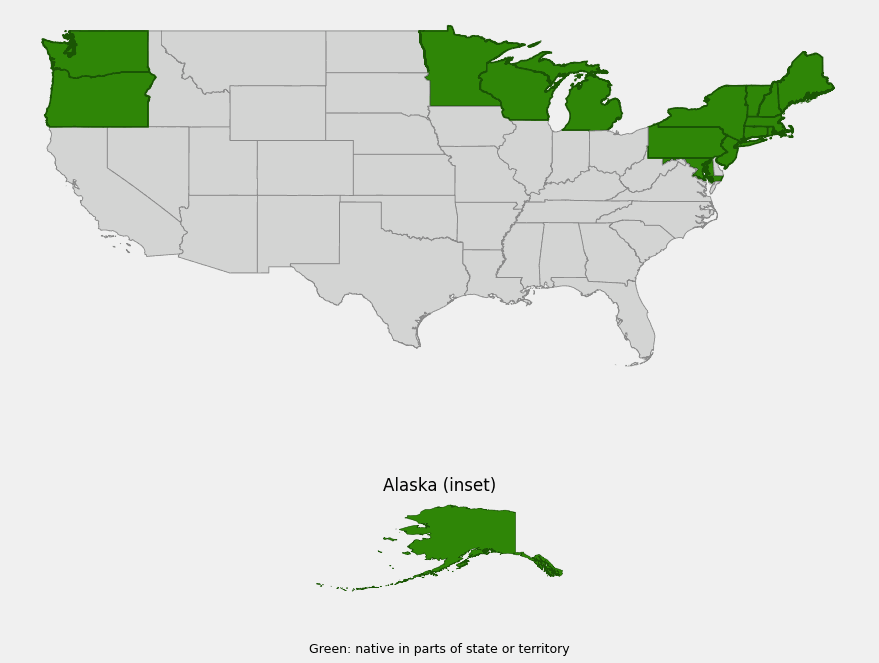
USDA PLANTS lists water lobelia as native in Alaska, Connecticut, Maine, Maryland, Massachusetts, Michigan, Minnesota, New Hampshire, New Jersey, New York, Oregon, Pennsylvania, Rhode Island, Vermont, Washington and Wisconsin. It is most common in the glacial lakes of Maine, New Hampshire, Vermont, the Adirondacks, northern Michigan, Wisconsin and Minnesota, and in lakes of western Washington and Oregon. In Canada it ranges from British Columbia to Newfoundland and Labrador, and it also grows in northern and western Europe.
At the southern edge of its range it is rare. NatureServe ranks it as historical in New Jersey (not seen in many years) and imperiled in Pennsylvania and Rhode Island, critically imperiled in Oregon, and critically imperiled to imperiled in Alaska. Maryland’s record is an outlying one at the far southern edge of the range, and the plant is not known to be common there. These states are shown on the map because USDA lists them, but the plant should be considered absent or very rare there.
Water lobelia grows only in clear, soft, acidic, low-nutrient water, usually 4 inches to 3 feet deep, on sandy or gravelly bottoms in lakes and ponds. It disappears when lakes become enriched with nutrients from fertilizer, septic systems or runoff, when shorelines are disturbed, or when water becomes murky.
📋 Regional plant lists featuring Water Lobelia: Alaska · Delaware, Southern New Jersey & Long Island · Maryland, Virginia & West Virginia · Michigan, Wisconsin & Eastern Minnesota · New Hampshire, Maine & Vermont · Connecticut, Massachusetts & Rhode Island · New York, Pennsylvania & Northern New Jersey · Western Oregon & Western Washington · Idaho, Eastern Oregon & Eastern Washington
Growing & Care Guide
Can you grow it? Water lobelia is rarely grown and is not sold by nurseries. It needs cold, crystal-clear, soft, nutrient-poor water and a sandy bottom, conditions that are very hard to reproduce in a garden pond, where fertile water and algae smother it. It should never be dug from the wild, especially where it is rare. The best way to “grow” water lobelia is to protect the lakes where it lives.
Light
It needs clear water that lets plenty of light reach the lake bottom. Murky or algae-filled water shades it out.
Soil & Water
It requires soft, acidic (pH roughly 4.5 to 6.5), low-nutrient water over clean sand or gravel. Any fertilizer, rich soil or nutrient-laden runoff favors algae and other plants that crowd it out.
Planting Tips
Specialist growers and researchers have kept it in cold aquariums or tubs with sand and rainwater, but it is not a practical garden plant. If you have a lake with water lobelia, avoid fertilizing lawns near the shore, keep septic systems in good repair, and leave native shoreline vegetation in place.
Pruning & Maintenance
No maintenance is needed in the wild. Avoid raking, dredging or adding sand beaches in shallow areas where it grows, and do not use aquatic herbicides there.
Propagation
In nature it spreads by short offshoots and seed. Seeds need cold and light, and seedlings grow slowly. Propagation is only appropriate in conservation programs.
Landscape Uses
- Lake health indicator: its presence signals clear, low-nutrient, soft water
- Shoreline conservation: a reason to protect undeveloped, unfertilized lake shores
- Wildflower viewing: look for its flowers from a canoe or kayak in late summer
- Education: a good example of aquatic plant adaptations such as hollow leaves
- Habitat restoration: part of soft-water lake plant communities
Wildlife & Ecological Value
Water lobelia is a small but important part of the underwater meadows that cover the shallow bottoms of clean northern lakes.
For Pollinators
Flowers above the water are visited by small bees and flies. Many flowers self-pollinate, especially those that stay underwater.
For Birds
Ducks and other waterbirds forage in the shallow, plant-covered lake bottoms where it grows, eating plants and the invertebrates that live among them.
For Mammals
Muskrats and moose feed on aquatic plants in shallow lake margins.
Ecosystem Role
Water lobelia and other isoetids release oxygen from their roots into the sediment. This keeps the lake bottom oxygenated, helps bind phosphorus in the sediment and slows nutrient release into the water, so these plants help keep their lakes clear.
Cultural & Historical Uses
The species was named by Carl Linnaeus in honor of Dortmann, an apothecary of Groningen in the Netherlands, which is why it is also called Dortmann’s cardinal flower or Dortmann’s lobelia. The genus honors the Flemish botanist Matthias de l’Obel.
Because it vanishes from lakes that become enriched with nutrients, ecologists in Europe and North America use water lobelia and other isoetids as indicators of soft-water lake health, and its loss has been documented in lakes affected by fertilizer runoff and shoreline development.
Safety note: like other lobelias, water lobelia contains piperidine alkaloids related to lobeline, which can cause nausea, vomiting, dizziness and, in larger amounts, serious poisoning. Do not eat any part of the plant or use it as a herbal remedy.
Frequently Asked Questions
Where does water lobelia grow?
It grows in shallow water of clear, cold, nutrient-poor lakes and ponds in the northern United States (Northeast, Great Lakes, Pacific Northwest, Alaska), across Canada and in northern Europe.
Can I grow water lobelia in my pond?
Not easily. It needs soft, clear, nutrient-poor water and a sandy bottom, conditions that most garden ponds lack, and it is not sold by nurseries. Never collect it from the wild.
Is water lobelia rare?
It is common in many northern lakes but rare at the edges of its range. NatureServe ranks it as historical in New Jersey and imperiled or critically imperiled in Pennsylvania, Rhode Island, Oregon and Alaska.
Is water lobelia poisonous?
Yes. Like other lobelias, it contains toxic alkaloids. It should not be eaten or used medicinally.
Why does water lobelia disappear from lakes?
It needs clear, low-nutrient water. Fertilizer and septic runoff, shoreline development and murky water favor algae and faster-growing plants that shade it out.

Looking for a nursery that carries Water Lobelia?
Browse our native plant nursery directory: Alaska · Connecticut · Maine, Maryland, Massachusetts, Michigan & Minnesota · New Hampshire, New Jersey & New York · Oregon · Pennsylvania, Rhode Island & Vermont · Washington · Wisconsin

