
Stink Currant (Ribes bracteosum)
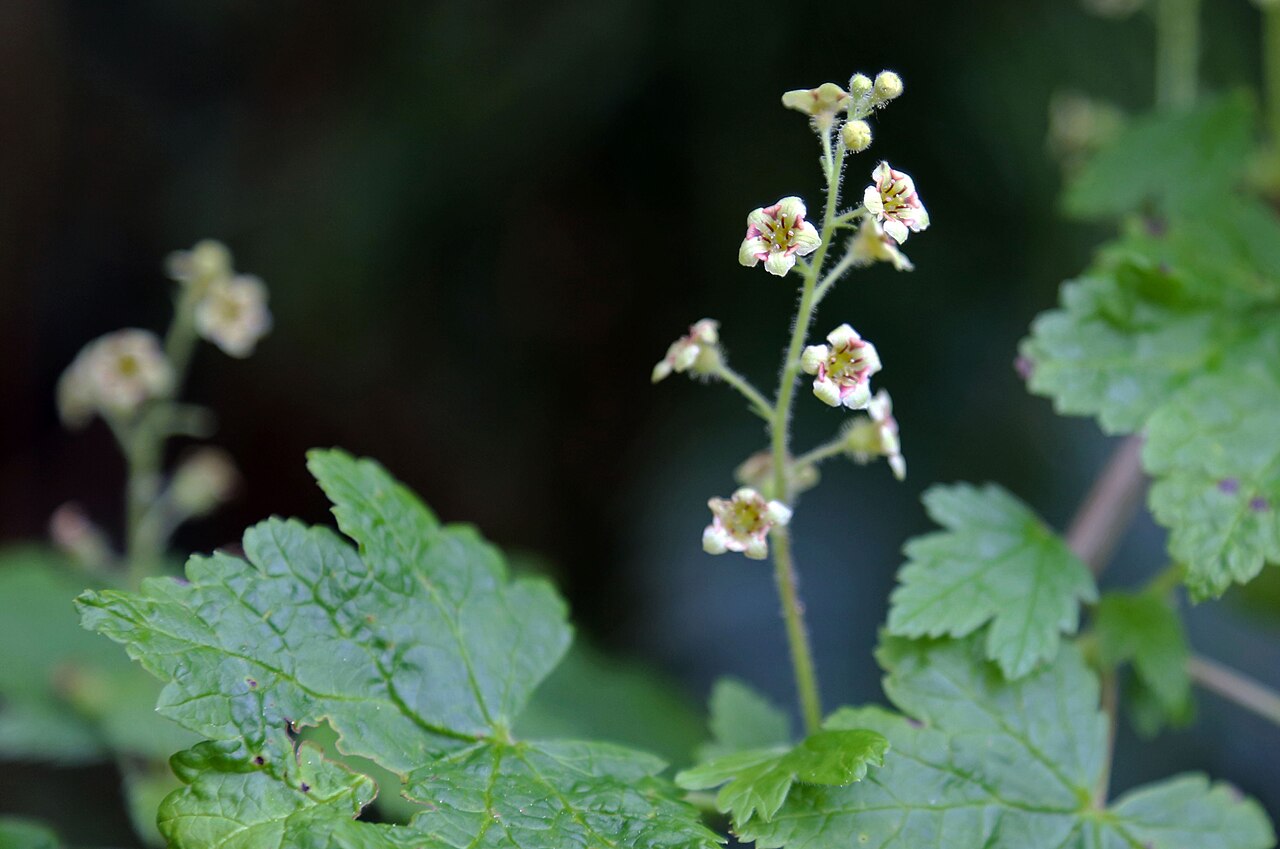
Ribes bracteosum, known as Stink Currant or blue currant, is a large, thornless deciduous shrub of wet forests and streambanks along the Pacific Coast from southern Alaska to northwestern California. It grows 3 to 10 feet tall, with big, maple-like leaves up to 8 inches across, and in spring it holds up long, erect spikes of small, greenish-white flowers.
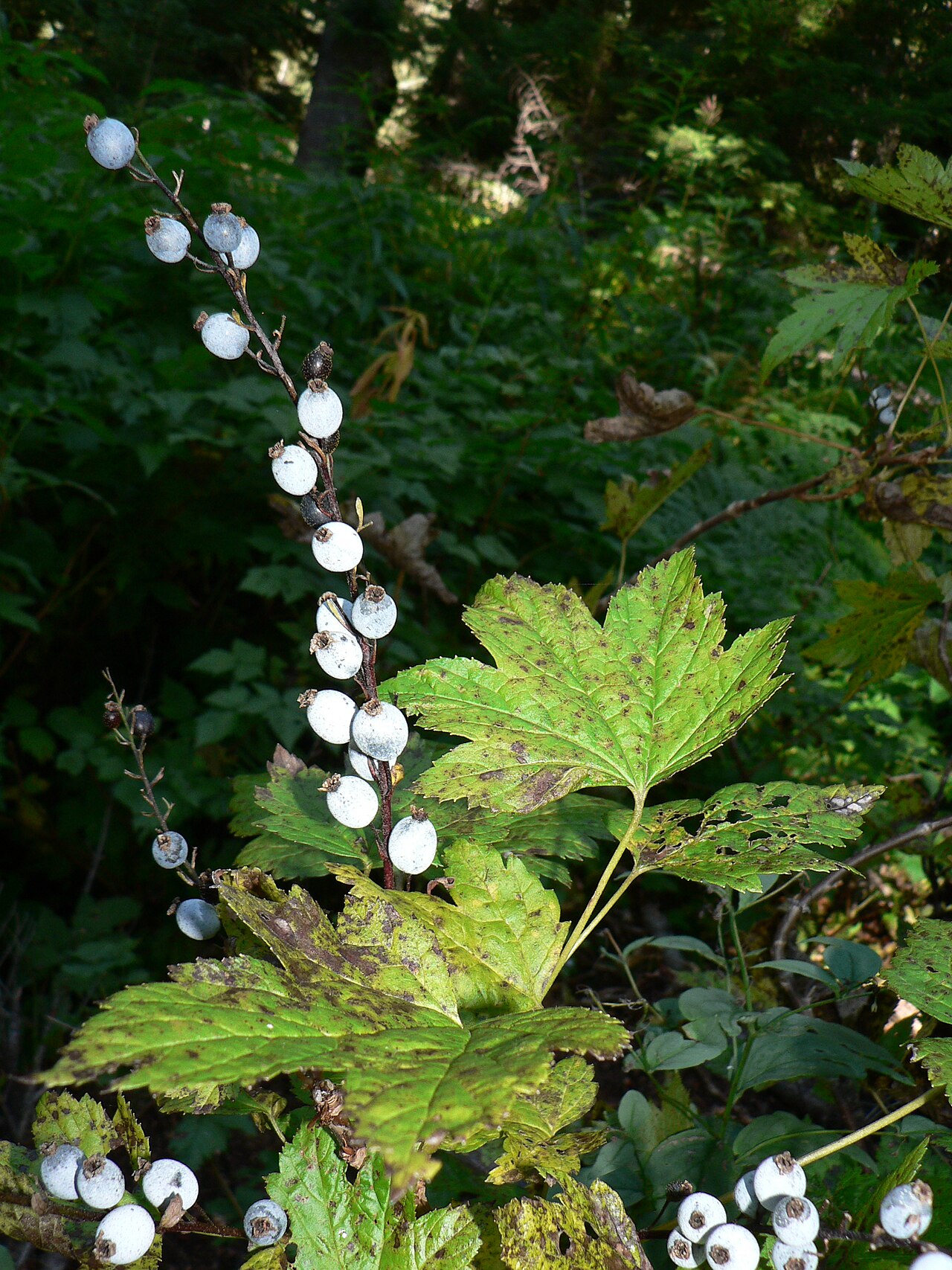
The common name comes from the strong, skunky or “catty” smell of the leaves and stems, which are dotted with tiny yellow resin glands. The berries that follow are blue-black with a whitish bloom, borne in long strings, and are edible, though their flavor varies from pleasant to rank. It belongs to the currant and gooseberry family (Grossulariaceae).
Stink currant is a natural choice for shady, moist native gardens, rain gardens and streamside restoration in the Pacific Northwest. This guide covers how to identify it, where it grows, how to grow it, its value to wildlife, and its long use as a food plant by coastal peoples.
Identification
Stink currant is easy to recognize: a thornless shrub of wet woods with very large, deeply lobed, maple-like leaves, long upright flower or berry spikes, and a strong odor when you brush or crush the foliage.
Growth Habit
It is an upright to spreading, multi-stemmed deciduous shrub, usually 3 to 10 feet tall. The stems are unarmed, without the prickles found on many gooseberries, and the bark of older stems is grayish brown.
Leaves
The leaves are alternate, large, about 2 to 8 inches across, and palmately lobed into five to seven sharply pointed, toothed lobes, much like a maple leaf. The undersides are dotted with small, yellow resin glands, and crushed leaves give off a strong, skunky smell. Leaves turn yellow before dropping in fall.
Flowers
The flowers are borne in long, erect racemes, often 6 to 12 inches long, with 20 to 50 or more blossoms. Each flower is small, about 1/4 inch across, saucer-shaped and greenish white to cream, sometimes tinged with purple or brown. Small, leaflike bracts at the base of the lower flower stalks give the species its name, bracteosum. Bloom runs from about April into June.
Fruit
The berries are round, about 1/4 to 3/8 inch across, blue-black and covered in a whitish bloom, often dotted with resin glands. They ripen from July into September in long strings along the stalks.
Look-alikes
Devil’s club has similar huge, maple-like leaves in the same wet habitats, but its stems and leaves are covered in sharp spines and its berries are bright red. Trailing black currant (Ribes laxiflorum) is a sprawling shrub with reddish-purple flowers in short, drooping clusters. Vine maple has opposite leaves and winged maple seeds, and no odor.
Quick Facts
| Scientific Name | Ribes bracteosum Douglas ex Hook. |
| Family | Grossulariaceae (currant family) |
| Plant Type | Deciduous, thornless shrub |
| Mature Height | 3–10 ft |
| Mature Spread | 3–8 ft |
| Growth Rate | Moderate to fast |
| Sun Exposure | Part shade to full shade |
| Water Needs | High; moist to wet soil |
| Soil Type | Rich, moist to wet loam or alluvium |
| Soil pH | About 5.0–7.0 |
| Bloom Time | April–June |
| Flower Color | Greenish white to cream, sometimes purplish-tinged |
| Fall Color | Yellow |
| Fruit | Blue-black berries with a whitish bloom, edible |
| Deer Resistant | Moderately; strong-smelling foliage is browsed lightly |
| USDA Hardiness Zones | 5–9 |
Native Range
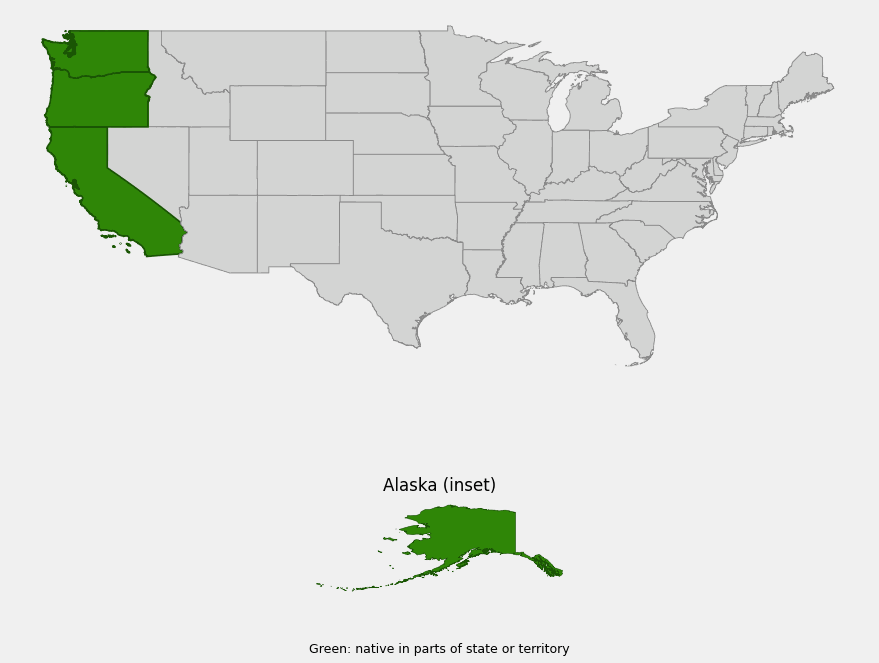
Stink currant is native to the Pacific Coast of North America. USDA PLANTS lists it in Alaska, Washington, Oregon and California, and it also grows throughout coastal British Columbia. In Alaska it ranges along the southern coast from the Panhandle into south-central Alaska, and in California it reaches only the northwestern corner of the state.
It is most common west of the Cascade crest, in the rain forests and wet lowlands of the coast and in the western Cascades and Olympic Mountains, from sea level into the subalpine zone. It is much less common east of the Cascades.
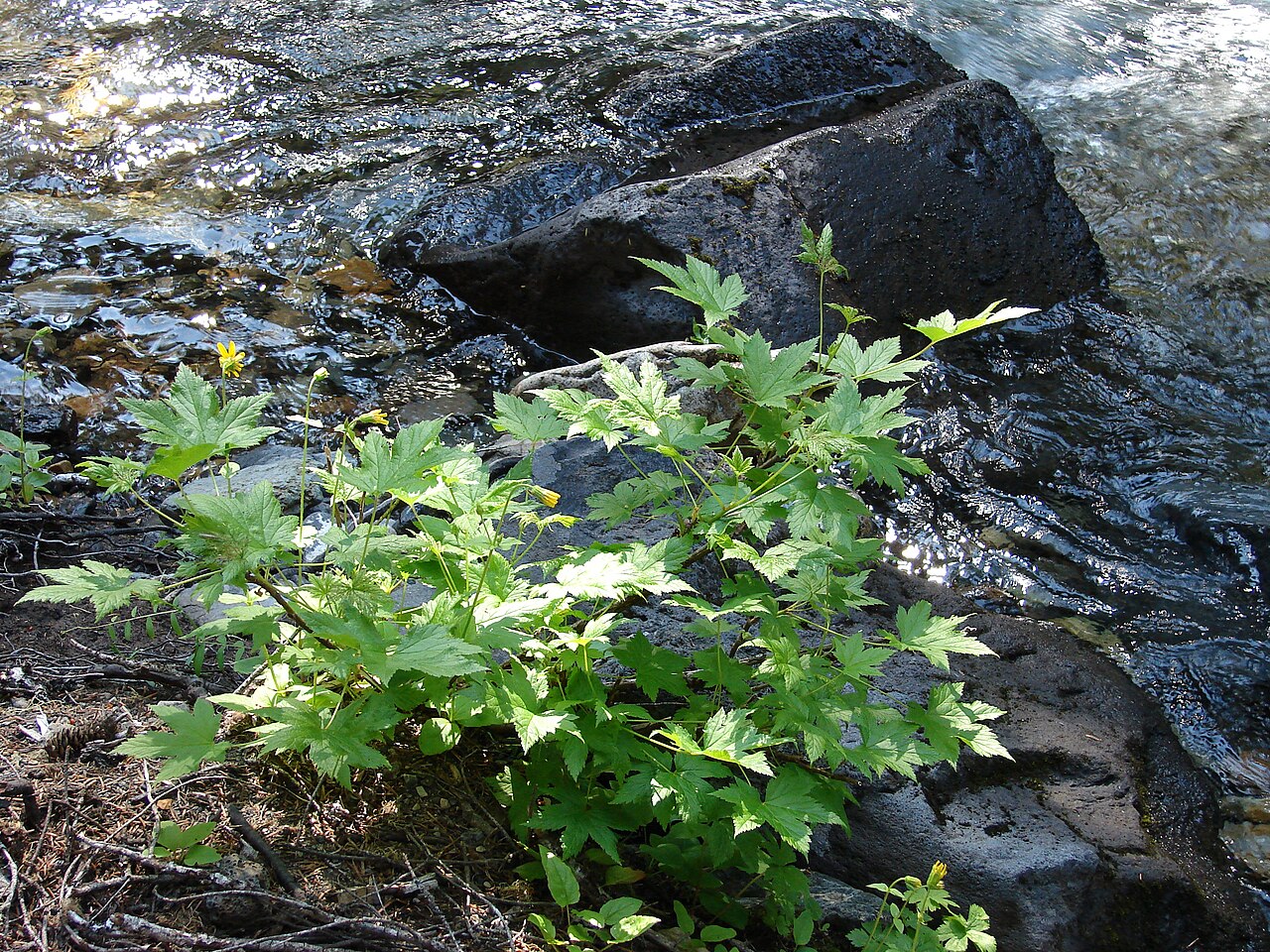
It grows in moist to wet sites: streambanks, wet forests and forest openings, seepage areas, swamps, avalanche tracks and the edges of beaver ponds, often in partial shade under red alder, western redcedar and Sitka spruce.
📋 Regional plant lists featuring Stink Currant: Alaska · Western Oregon & Western Washington · California & Nevada · Idaho, Eastern Oregon & Eastern Washington
Growing & Care Guide
Stink currant is a bold, lush native shrub for moist, shady gardens in the Pacific Northwest and coastal Alaska. Its large leaves give a tropical look in the woodland garden, and it thrives in wet spots where many shrubs fail. Place it where its scent will not be a nuisance: the smell is noticeable when the foliage is brushed, not from a distance.
Light
It does best in part to full shade. It tolerates sun only where the soil stays constantly moist and summers are cool.
Soil & Water
Give it rich, moist to wet soil, such as streamside loam or the low, soggy corner of a garden. It tolerates seasonal flooding and poorly drained soils. Water regularly through dry summers, especially when young; it will not tolerate drought.
Planting Tips
Plant it in fall or early spring, 4 to 6 feet apart, along a stream, pond edge, rain garden or shady woodland border. It pairs naturally with sword fern, lady fern, salmonberry and skunk cabbage. Avoid planting near paths where people will brush against it often.
Pruning & Maintenance
Prune lightly in late winter to remove dead or crowded stems. Old stems can be cut to the ground to renew the shrub. Like other Ribes, it can be an alternate host for white pine blister rust, so check local rules before planting near commercial five-needle pine stands.
Propagation
Grow it from hardwood cuttings taken in late fall or winter, or softwood cuttings in early summer; both root readily. Seeds need a long cold, moist stratification of about three to four months. Buy plants from native nurseries rather than digging them from the wild.
Landscape Uses
- Shade and woodland gardens: bold, maple-like foliage for moist shade
- Rain gardens and wet spots: tolerates saturated soil and seasonal flooding
- Streamside restoration: stabilizes banks in riparian plantings
- Wildlife gardens: berries for birds and mammals; spring flowers for pollinators
- Edible landscapes: berries can be eaten fresh, dried or cooked
Wildlife & Ecological Value
Stink currant is a valuable food and cover plant in the wet coastal forests of the Pacific Northwest and Alaska.
For Pollinators
The spring flowers attract bumble bees, other native bees, flies and wasps. They are a nectar source early in the season, when many forest shrubs have not yet flowered.
For Birds
Thrushes, robins, waxwings, grouse and other birds eat the berries, and the dense shrubs give cover and nesting sites to songbirds along streams.
For Mammals
Black bears and grizzly bears eat the berries, and small mammals eat fallen fruit. Deer and elk browse the foliage lightly.
Ecosystem Role
As a streamside shrub, stink currant helps shade and cool small streams and hold banks together, which benefits salmon and other fish. Its leaves fall into the water each autumn and feed the aquatic insects at the base of the stream food web.
Cultural & Historical Uses
Coastal peoples from Alaska to Oregon gathered stink currant berries, eating them fresh or drying them, often mixed with other berries or with oil. Some groups also used the leaves and bark medicinally. The flavor varies a great deal between plants, and many people find the berries better cooked or mixed than raw.
The plant was first collected for science by the Scottish botanist David Douglas during his travels in the Pacific Northwest in the 1820s, and it was described by William Jackson Hooker from his specimens. The name Ribes comes from an old Arabic word for a sour-tasting plant, later applied to currants.
Despite its name, the odor of stink currant is not offensive to everyone: some describe it as resinous or sweet-skunky. For hikers in coastal rainforests, its huge leaves and the scent released on a wet trail are an unmistakable part of the forest.
Frequently Asked Questions
Why is it called stink currant?
The leaves and stems are covered in tiny resin glands that release a strong, skunky or catty smell when the plant is brushed or crushed.
Are stink currant berries edible?
Yes. Coastal peoples have long eaten them fresh, dried or cooked. The flavor varies from plant to plant and can be rank raw, so many people prefer them cooked or mixed with other berries.
Does stink currant have thorns?
No. Unlike gooseberries, it has smooth, unarmed stems. Devil’s club, which has similar leaves, is very spiny.
Where does stink currant grow?
Along the Pacific Coast from southern Alaska through British Columbia, Washington and Oregon to northwestern California, mostly in wet forests and along streams west of the Cascades.
Can I grow stink currant in my garden?
Yes, in moist to wet soil and part to full shade in the Pacific Northwest or similar cool, humid climates. It is a good choice for rain gardens, pond edges and woodland gardens.

Looking for a nursery that carries Stink Currant?
Browse our native plant nursery directory: Alaska · California · Oregon · Washington

