
Stinkbells (Fritillaria agrestis)
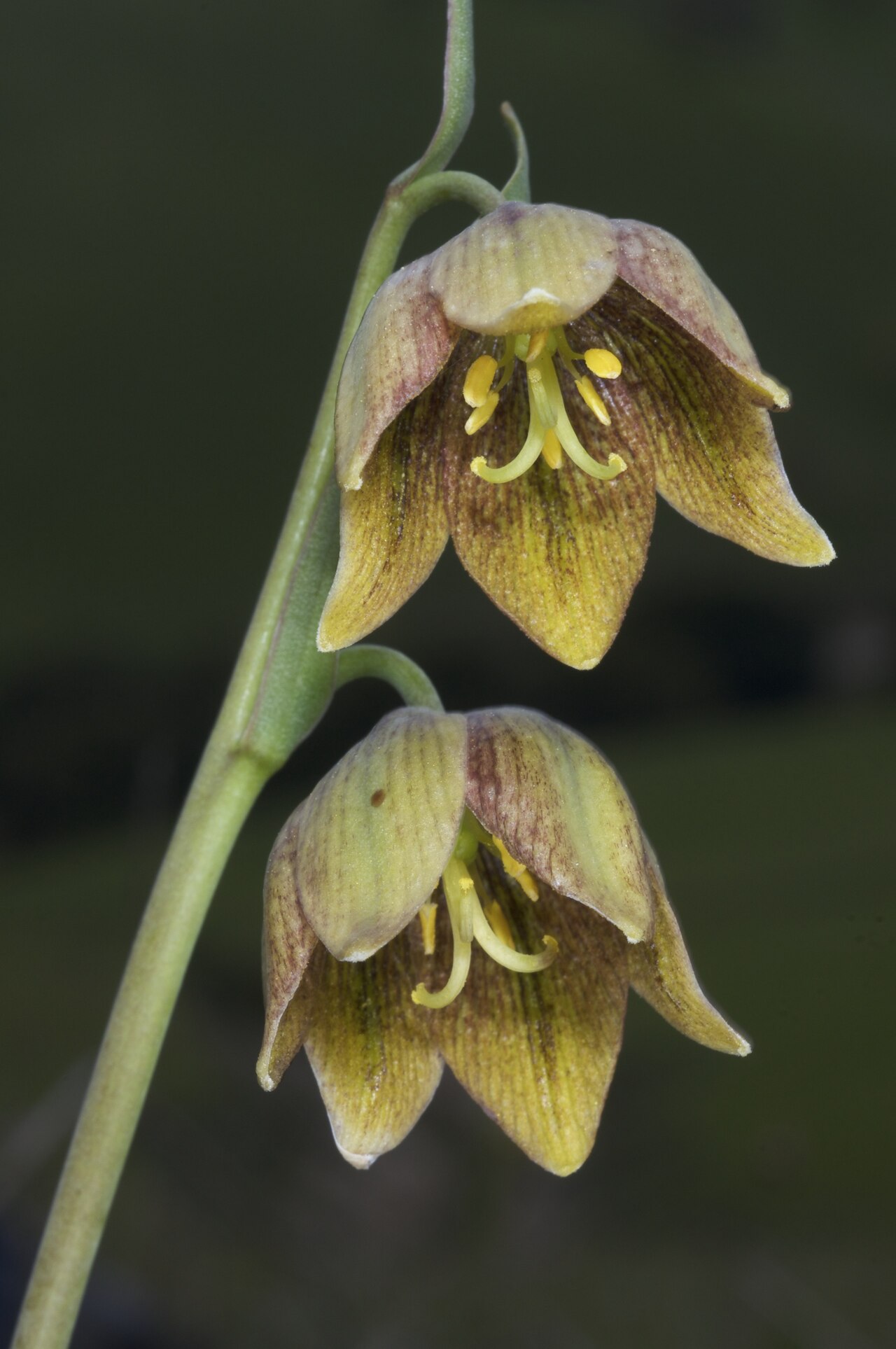
Fritillaria agrestis, known as Stinkbells, is a spring-blooming bulb of the lily family (Liliaceae) found only in California. In March and April it sends up a stem 1 to 2 feet tall with a few nodding, bell-shaped flowers, greenish to yellowish white on the outside with purple-brown markings within. The name is honest: the flowers have an unpleasant odor, a reminder that not every wildflower is meant to smell sweet.
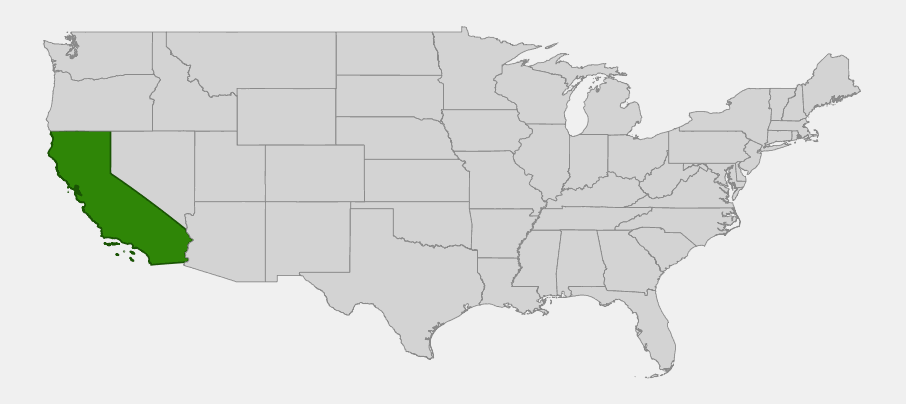
Stinkbells grows on heavy clay soils in grasslands, open oak woodlands and the edges of chaparral, in scattered populations from Mendocino and Butte counties south through the Coast Ranges and Sierra Nevada foothills to Ventura County. It is uncommon, and the California Native Plant Society includes it in its Inventory of Rare and Endangered Plants at California Rare Plant Rank 4.2, its watch list for plants of limited distribution.
It is sometimes searched for as “fragrant fritillary,” but that name belongs to a different, rarer species, Fritillaria liliacea, whose white flowers really are fragrant. This guide covers how to identify stinkbells, where it grows and how to protect it. As with all rare bulbs, never dig stinkbells from the wild.
Identification
California has about 20 native fritillaries, and several grow in similar clay grasslands. Stinkbells is recognized by its basal cluster of narrow leaves, its pale, purple-marked bells and especially its smell.
Bulb & Leaves
Each plant grows from a small, scaly bulb buried in heavy soil. It produces 5 to 12 narrow, lance-shaped, slightly fleshy leaves clustered near the base of the stem, with only a few smaller leaves higher up. Young plants that are not yet ready to flower make only a single leaf for several years.
Stems
The flowering stem is upright, unbranched and smooth, usually 1 to 2 feet tall, carrying 1 to several flowers near the top. The whole plant withers by early summer, and the bulb then stays dormant through California’s dry season.
Flowers
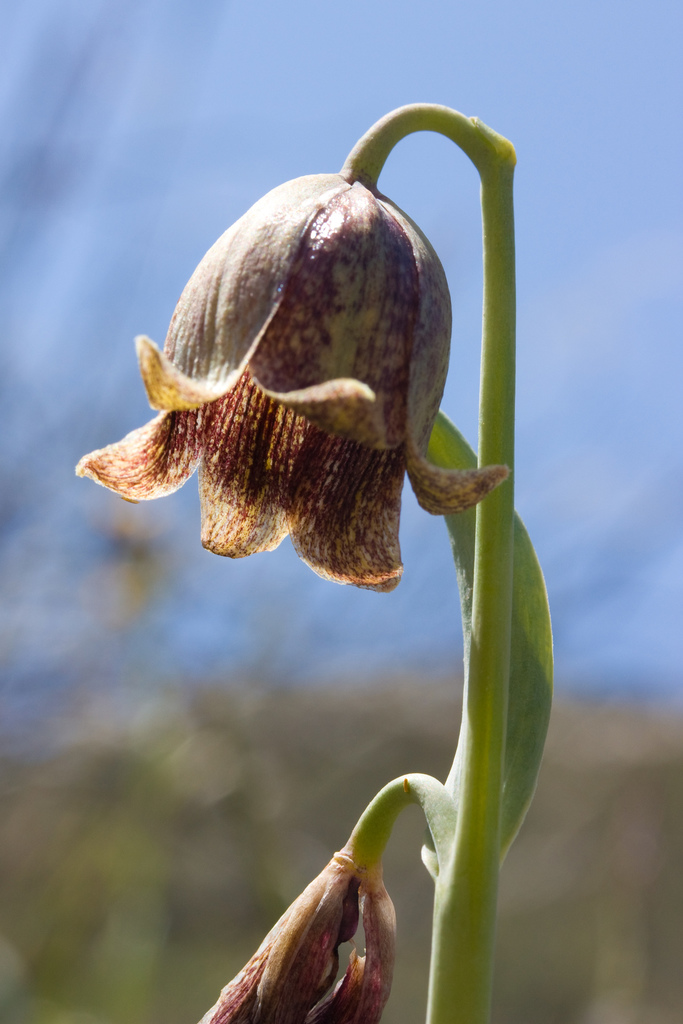
The nodding, bell-shaped flowers have six tepals (petals and sepals that look alike), each about ½ to 1¼ inches long, sometimes curving outward at the tips. They are greenish white to yellowish outside, often with green or pinkish markings, and purple-brown inside. Inside each tepal is a long, prominent nectary. The flowers have a strong, unpleasant odor. Plants bloom mainly in March and April.
Fruit & Seeds
After flowering, each pollinated flower forms an upright, six-angled capsule that splits at the top when dry and releases many flat, papery seeds. Seedlings take several years to reach flowering size.
Look-alikes: fragrant fritillary (F. liliacea) is smaller, with white, sweet-scented flowers and green veins. Chocolate lily (F. biflora), of which stinkbells was once treated as a variety, has dark brown to purplish flowers.
Quick Facts
| Scientific Name | Fritillaria agrestis (syn. F. biflora var. agrestis) |
| Family | Liliaceae (lily family) |
| Plant Type | Bulbous herbaceous perennial; summer-dormant |
| Mature Height | 1–2 ft in flower |
| Mature Spread | 4–8 in |
| Growth Rate | Slow (several years from seed to flower) |
| Sun Exposure | Full sun to light shade |
| Water Needs | Moist in winter and spring; dry in summer dormancy |
| Soil Type | Heavy clay, including clay depressions and adobe soils |
| Soil pH | Not well documented; grows in heavy clay soils |
| Bloom Time | March–April |
| Flower Color | Greenish to yellowish white with purple-brown inside |
| Fall Color | None; dormant from early summer to winter |
| Fruit | Upright six-angled capsule with flat, papery seeds |
| Deer Resistant | Not reliably; bulbs and shoots may be eaten by rodents |
| USDA Hardiness Zones | 8–10 (dry-summer climates) |
Native Range
Stinkbells is endemic to California. It grows in scattered populations from Mendocino and Butte counties in the north, through the Coast Ranges around the San Francisco Bay Area and the Sierra Nevada foothills, south to Ventura County. It is not known from any other state.
Its habitat is heavy, often seasonally wet clay: valley and foothill grasslands, clay flats and depressions, open blue oak and foothill woodlands, and openings in chaparral. Calscape (California Native Plant Society) describes it as a plant of clay depressions in grassland, foothill woodland and chaparral. Many of these habitats have been converted to farmland, vineyards and housing.
The California Native Plant Society ranks stinkbells as California Rare Plant Rank 4.2: a plant of limited distribution (watch list) that is moderately threatened in California. The California Department of Fish and Wildlife’s Special Vascular Plants list gives it a NatureServe rank of G3/S3 (vulnerable). It is not listed under the state or federal endangered species acts.
📋 Regional plant lists featuring Stinkbells: California & Nevada
Growing & Care Guide
Stinkbells is a rare plant, so the first rule is simple: never dig bulbs from the wild. Wild bulbs rarely survive transplanting, and collecting harms populations that are already limited. A few specialist growers of native bulbs raise stinkbells from seed, and that is the only responsible source for gardens. It is best suited to gardeners in California’s dry-summer climate who want to restore clay grassland or grow native bulbs in containers.
Light
Full sun to light shade, as in open grassland or the edge of oak woodland. In hot inland gardens, a little afternoon shade during spring growth is helpful.
Soil & Water
It is adapted to heavy clay that is wet in winter and dry and hard in summer. In gardens, use a well-drained mix with some clay, or grow it in deep pots. Water during the winter and spring growing season if rain is short, then keep it completely dry from late spring until fall rains. Summer water causes bulb rot.
Planting Tips
Plant nursery-grown bulbs in fall, about 3 to 4 inches deep. In pots, use a deep container so the bulb has room and the soil does not overheat. Mark the location, because the plant disappears for half the year. Grow it among low native grasses and annual wildflowers rather than under irrigated garden plants.
Pruning & Maintenance
Let the leaves wither naturally after bloom so the bulb can store energy. Protect bulbs from gophers with wire baskets. In restoration sites, light grazing or mowing after seed set and control of tall invasive grasses help keep the habitat open.
Propagation
Sow fresh seed in fall in deep pots of gritty mix and leave them outdoors for winter rain. Seedlings grow a single leaf for several years and need dry summer dormancy each year. Flowering usually takes four years or more. Mature bulbs may produce small offsets.
Landscape Uses
- Clay grassland restoration: within its native range, using locally sourced, nursery-grown stock
- Native bulb collections: an unusual fritillary for specialist growers in dry-summer climates
- Containers: deep pots kept dry in summer suit its dormancy cycle
- Nature study and photography: a spring wildflower of California clay grasslands
- Conservation education: an example of a rare California bulb threatened by habitat loss
Wildlife & Ecological Value
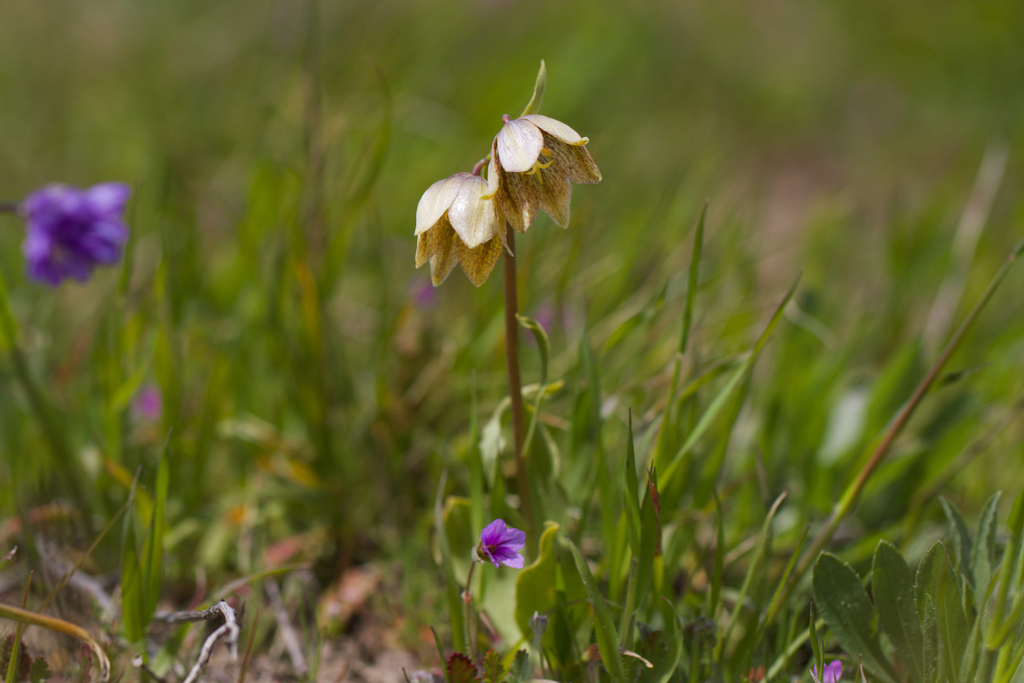
Stinkbells is part of California’s rich flora of spring-flowering bulbs, which once covered valley and foothill grasslands.
For Pollinators
Flowers with strong, foul odors and dark inner markings are often visited by flies, and native bees also visit fritillaries for nectar and pollen. Little has been published about the specific pollinators of stinkbells.
For Birds
It has no direct food value for birds, but its grassland habitat supports meadowlarks, grasshopper sparrows and other grassland birds.
For Mammals
Gophers and other rodents eat lily-family bulbs, and California ground squirrels and gophers turn over the soil of grasslands where it grows.
Ecosystem Role
Like other native bulbs, stinkbells grows during the cool, wet season and becomes dormant underground through the long dry summer. Its decline is linked to the conversion of clay grasslands to farms, vineyards and housing, and to dense invasive annual grasses that crowd out native wildflowers.
Cultural & Historical Uses
The botanist Edward Lee Greene first described stinkbells in 1894 as a variety of chocolate lily (Fritillaria biflora var. agrestis) in his manual of San Francisco Bay plants, and in 1895 he raised it to a full species. The species name agrestis means “of the fields,” fitting a plant of open grasslands.
The genus name Fritillaria comes from the Latin fritillus, a dice box, perhaps for the checkered pattern on the flowers of some species. California is a center of diversity for the genus in North America, with about 20 native species, many of them rare.
Native bulbs were an important food for many California Indian peoples, who tended and harvested them for generations. The rarity of stinkbells today is due to habitat loss. Protect it by leaving wild plants alone, reporting sightings to the California Natural Diversity Database or iNaturalist, and supporting the protection of clay grasslands.
Frequently Asked Questions
Is stinkbells the same as fragrant fritillary?
No. Fragrant fritillary is Fritillaria liliacea, a rarer species with sweet-scented white flowers. Stinkbells (F. agrestis) has greenish-white, purple-marked flowers with an unpleasant odor. Both are California natives that grow in clay grasslands.
Is stinkbells rare?
Yes. It is endemic to California, and the California Native Plant Society lists it at California Rare Plant Rank 4.2 (a watch-list plant of limited distribution). It is not listed under state or federal endangered species laws.
Can I dig up stinkbells bulbs?
No. Never dig bulbs from the wild. They rarely survive, and collecting harms rare populations. Buy only nursery-grown bulbs or seed-raised plants from specialist native bulb growers.
Why do stinkbells smell bad?
The flowers produce a strong, unpleasant odor that probably attracts flies and other insects as pollinators. Other plants with foul-smelling flowers use the same strategy.
When does stinkbells bloom?
Mainly in March and April. After flowering it sets seed and goes dormant by early summer, surviving the dry season as a bulb underground.

Looking for a nursery that carries Stinkbells?
Browse our native plant nursery directory: California

