
Sugarcane Plumegrass (Saccharum giganteum)
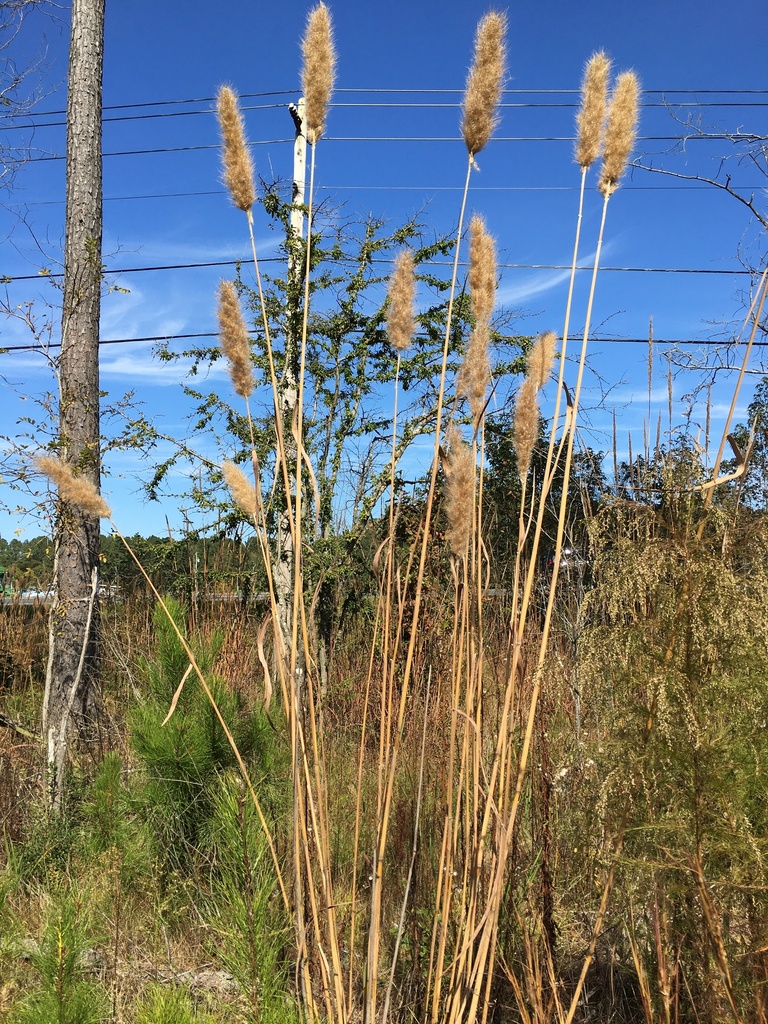
Saccharum giganteum, known as Sugarcane Plumegrass or giant plumegrass, is one of the tallest native grasses of the eastern United States. In fall, its stout stems rise 5 to 10 feet from a leafy clump and end in dense, silky plumes that open coppery-rose and fade to fluffy tan. Backlit by low autumn sun along a ditch or bog, a stand of it is one of the most striking sights of the Southern coastal plain. It belongs to the grass family (Poaceae) and is a wild relative of cultivated sugarcane.
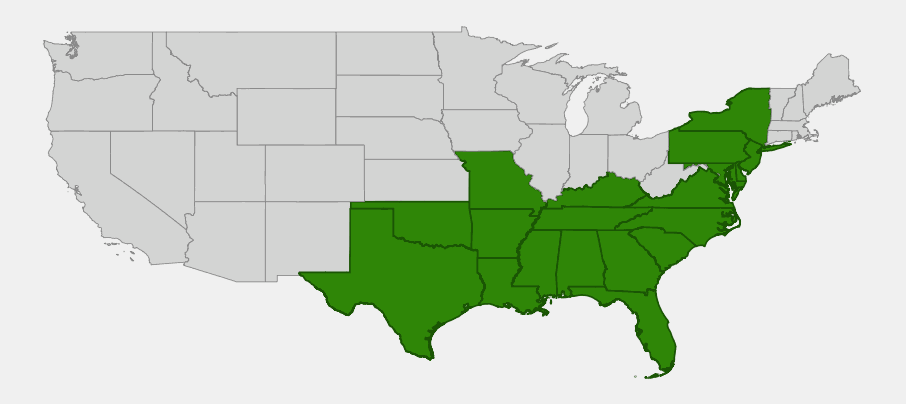
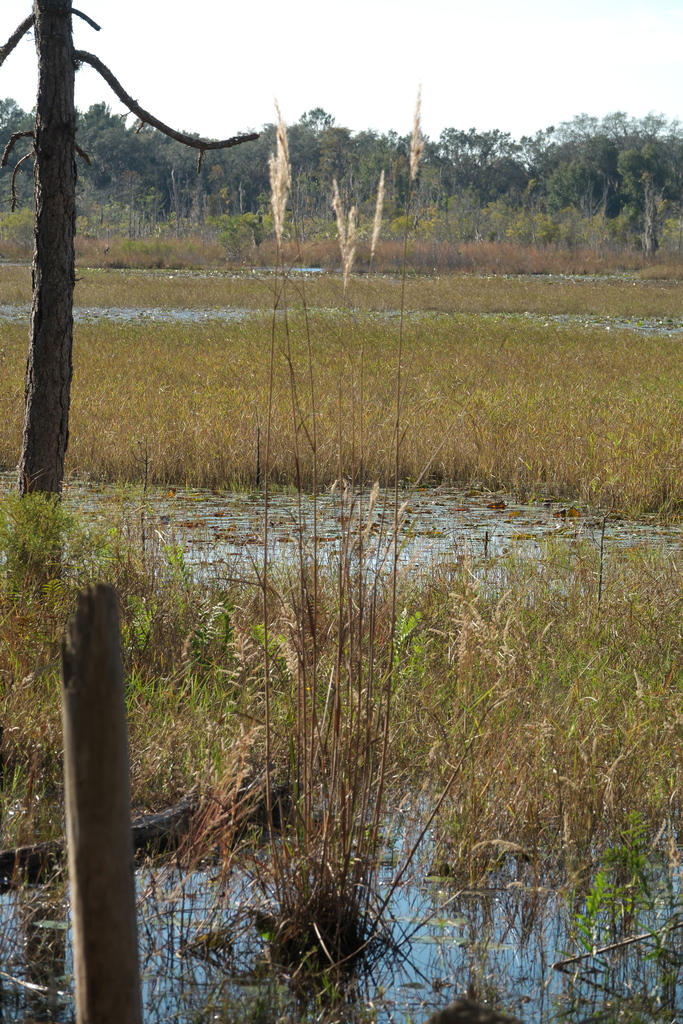
Sugarcane plumegrass grows in wet, open, usually sandy places: pine savannas and flatwoods, bogs, marsh edges, swales, wet meadows, ditches and damp roadsides. Its range runs from Long Island and the coastal plain of New Jersey south to Florida and west to Missouri, Oklahoma and eastern Texas, though it is mostly absent from the Appalachian mountains.
Many older books and the iNaturalist database still list it as Erianthus giganteus, the name used before botanists merged Erianthus into Saccharum. For gardeners it is a native alternative to pampas grass for wet, sunny sites, and this guide covers how to identify it, where it grows, how to grow it, and its role in wetland wildlife habitat.
Identification
In summer, sugarcane plumegrass is a large, leafy clump that is easy to mistake for other tall grasses. It is unmistakable once the plumes appear in late summer and fall. A few related native plumegrasses grow in the same region, and they are best separated by the hairs and awns of the spikelets.
Stems & Habit
It is a perennial bunchgrass that grows from short, knotty rhizomes and forms a dense clump. The flowering stems (culms) are stout, upright and usually 5 to 10 feet tall, occasionally taller. The joints (nodes) of the stem are bearded with stiff hairs, and the upper stem just below the plume is often densely hairy as well.
Leaves
The leaves are long and flat, up to 2 feet long and about ½ to 1 inch wide, with a pale midrib. The leaf sheaths and the base of the blade are often hairy. In winter the foliage turns tan to reddish-brown and stays upright for months.
Flowers
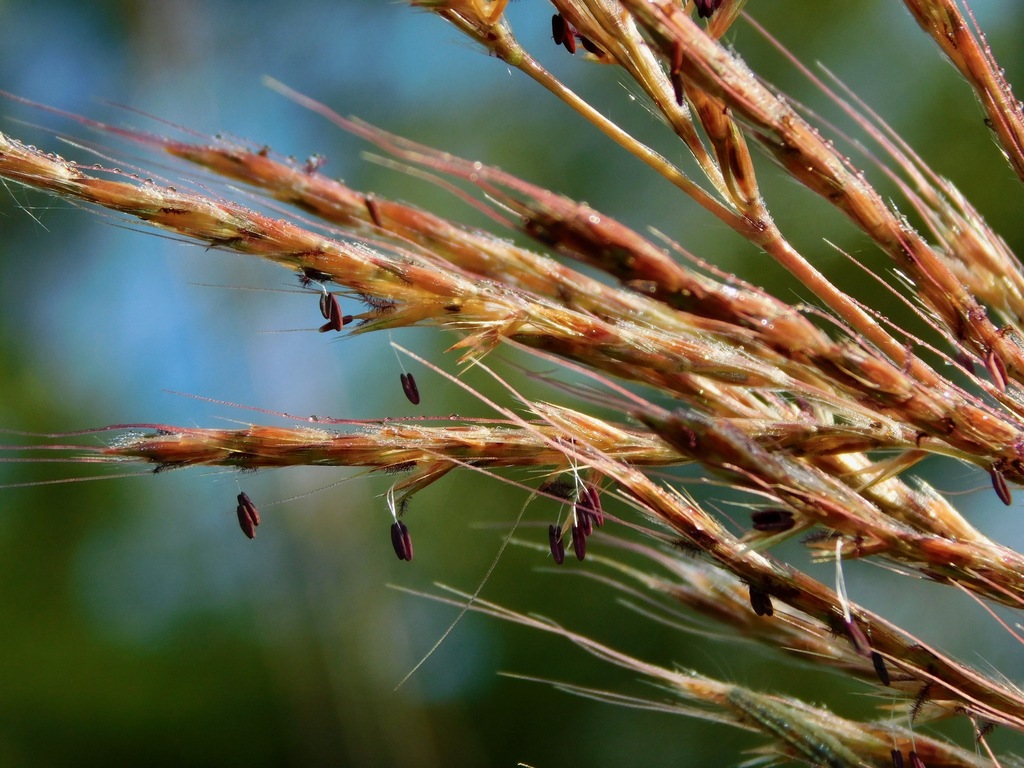
The flower head is a dense, narrow, plume-like panicle about 6 to 16 inches long. It is made up of many small spikelets, each surrounded by long, silky hairs that are longer than the spikelet itself. The hairs give the plume its rose, copper or purplish color when fresh, fading to tan or silvery buff. Each spikelet carries a straight to slightly twisted awn about ½ to 1 inch long. Flowering is mainly September through November, earlier in the north.
Silver plumegrass (Saccharum alopecuroides) of drier woods and old fields has silvery-white plumes and twisted awns, and shortbeard and bentawn plumegrasses (S. brevibarbe and S. contortum) have much shorter hairs, so their plumes look less fluffy. The non-native Ravenna grass (Saccharum ravennae) and pampas grass (Cortaderia selloana) form much larger, coarser clumps with long, arching leaves.
Fruit & Seeds
Each fertile spikelet produces a single small grain. When ripe, the spikelets break away with their tuft of hairs attached, and the hairs act as a parachute that carries the seed on the wind. By early winter the plumes are thinned and ragged.
Quick Facts
| Scientific Name | Saccharum giganteum (Walter) Pers. (syn. Erianthus giganteus) |
| Family | Poaceae (grass family) |
| Plant Type | Warm-season perennial bunchgrass |
| Mature Height | 5–10 ft in flower; leafy clump 3–4 ft |
| Mature Spread | 2–3 ft |
| Growth Rate | Moderate |
| Sun Exposure | Full sun |
| Water Needs | High; moist to wet soil, tolerates shallow seasonal flooding |
| Soil Type | Wet sand, sandy loam, peaty soils, also loam and clay |
| Soil pH | Acidic (about 4.5–6.5) |
| Bloom Time | September–November |
| Flower Color | Rose to coppery plumes, aging to tan or silvery buff |
| Fall Color | Tan to reddish-brown foliage through winter |
| Fruit | Small grain carried on wind by long silky hairs |
| Deer Resistant | Yes; mature foliage is coarse and rarely browsed |
| USDA Hardiness Zones | 6–10 |
Native Range
Sugarcane plumegrass is a grass of the Atlantic and Gulf Coastal Plain and the lower Mississippi Valley. USDA PLANTS and the Lady Bird Johnson Wildflower Center record it from 19 states and the District of Columbia: New York, New Jersey, Pennsylvania, Delaware, Maryland, Virginia, North Carolina, South Carolina, Georgia, Florida, Alabama, Mississippi, Louisiana, Texas, Oklahoma, Arkansas, Missouri, Tennessee and Kentucky. The Wildflower Center summarizes its range as New York to Kentucky, south to Florida and eastern Texas, and mostly absent from the Appalachians.
It is most common on the coastal plain from Virginia to east Texas, especially in wet pine savannas, flatwoods and roadside ditches. In Florida it occurs through most of the state. At the northern and western edges of its range it is local, limited to scattered sandy wetlands, and in Texas and Oklahoma it is confined to the eastern part of the state.
Sugarcane plumegrass depends on open, sunny conditions. In fire-maintained savannas and flatwoods it flowers most heavily after a burn, and it readily colonizes mowed, wet roadside ditches, which today hold many of its most visible stands.
📋 Regional plant lists featuring Sugarcane Plumegrass: North & South Florida · Alabama, Georgia & Mississippi · North & South Carolina · Maryland, Virginia & West Virginia · Kentucky & Tennessee · Arkansas, Louisiana, Eastern Oklahoma & Eastern Texas · Illinois, Iowa & Missouri · New York, Pennsylvania & Northern New Jersey · Delaware, Southern New Jersey & Long Island
Growing & Care Guide
Sugarcane plumegrass is easy to grow in the right place: full sun and soil that stays moist. Some native nurseries and native seed companies in the Southeast offer it, and it gives the large-scale autumn effect of pampas grass without the risk of spreading an invasive exotic.
Light
Plant it in full sun. In shade it grows thin and floppy and may not flower at all.
Soil & Water
It does best in moist to wet, acidic soil, including wet sand, sandy loam and peaty soils, and it tolerates heavier loam and clay. It handles seasonal flooding and saturated soil well. Once established it can survive in average garden soil, but in dry spots it stays smaller and flowers less. Fertilizer is unnecessary.
Planting Tips
Set out container plants in spring or early summer, about 3 feet apart, along a pond edge, rain garden, swale or wet meadow. Give it room: a mature clump in flower is taller than most people. It looks best in groups of three or more where the plumes can catch the low sun of late afternoon.
Pruning & Maintenance
Leave the stems and plumes standing through winter for color, wildlife cover and seed. Cut the clump back to a few inches in late winter, before new growth begins. In meadows and savannas, a late-winter burn or mowing does the same job. Clumps can be divided every few years if the center thins out.
Propagation
Divide established clumps in late winter or early spring, using a sharp spade or saw to cut the tough crown. It can also be grown from seed collected from ripe plumes in late fall. Sow on the surface of moist soil in spring, since the seed needs light and warmth to germinate. Seedlings usually flower in their second or third year.
Landscape Uses
- Rain gardens and stormwater basins: tolerates both standing water and dry spells once established
- Pond and lake edges: for tall, sunny shoreline screens
- Native alternative to pampas grass: large fall plumes without the invasive risk of Cortaderia or Ravenna grass
- Wet meadow and savanna restoration: in fire-managed coastal plain wetlands within its native range
- Erosion control: its clumps help hold soil on wet ditch banks and swales
Wildlife & Ecological Value
Sugarcane plumegrass is a structural plant: tall, dense and long-lasting through winter. Its main wildlife value is the cover it provides in open wetlands.
For Pollinators
Like other grasses, it is wind-pollinated and offers no nectar. Bees occasionally collect its pollen. Its stems and leaves support grass-feeding insects such as leafhoppers, grasshoppers and caterpillars, which in turn feed birds.
For Birds
Dense clumps give cover to sparrows, wrens, rails and other birds of wet meadows and savannas, especially in winter when the stems stand tall above lower vegetation. Small seed-eating birds feed on the grains in fall and winter.
For Mammals
Rabbits, cotton rats and other small mammals shelter in the clumps. Deer may graze the young spring shoots, but they rarely eat the coarse mature foliage.
Ecosystem Role
In pine savannas and flatwoods, sugarcane plumegrass is part of the dense grass layer that carries frequent low-intensity fire, which keeps these habitats open. Its deep, fibrous roots help hold soil along wet ditches and stream margins.
Cultural & Historical Uses
The plant was first described by Thomas Walter in his Flora Caroliniana (1788), based on plants from the South Carolina low country. Christiaan Hendrik Persoon moved it to Saccharum in 1805. For most of the twentieth century American botanists placed it in Erianthus, a genus separated from Saccharum by its awned spikelets. More recent treatments, including USDA PLANTS, return it to Saccharum, though some floras and databases still use Erianthus giganteus.
The genus Saccharum also includes cultivated sugarcane (S. officinarum), and the common name reflects the resemblance of the leafy stems to sugarcane. The stems of sugarcane plumegrass are not sweet in any useful way.
Because it is native, large and showy, sugarcane plumegrass is increasingly recommended in place of pampas grass and Ravenna grass. Both of those plants have escaped from cultivation in parts of the United States, while sugarcane plumegrass gives a similar autumn display in wet, sunny gardens within its natural range.
Frequently Asked Questions
Is sugarcane plumegrass invasive?
No. It is native to the eastern and southern United States and does not behave like the invasive exotic Ravenna grass or pampas grass. It may self-seed lightly onto bare, wet ground.
How tall does sugarcane plumegrass get?
The leafy clump is usually 3 to 4 feet tall, and the flowering stems reach 5 to 10 feet in fall.
Can it grow in standing water?
It tolerates shallow, seasonal flooding and saturated soil well, which makes it a good choice for rain gardens and pond edges. It does not grow as a true aquatic in permanent deep water.
Is Erianthus giganteus the same plant?
Yes. Erianthus giganteus is an older name for the same species. USDA PLANTS now places it in Saccharum, but iNaturalist and some field guides still use Erianthus.
When should I cut it back?
In late winter, before new shoots appear. Leaving the stems standing through fall and winter provides color and cover for birds.

Looking for a nursery that carries Sugarcane Plumegrass?
Browse our native plant nursery directory: Alabama & Arkansas · Delaware, Florida & Georgia · Kentucky, Louisiana, Maryland, Mississippi & Missouri · New Jersey, New York, North Carolina & Oklahoma · Pennsylvania, South Carolina, Tennessee, Texas & Virginia