
Pinkscale Blazing Star (Liatris elegans)
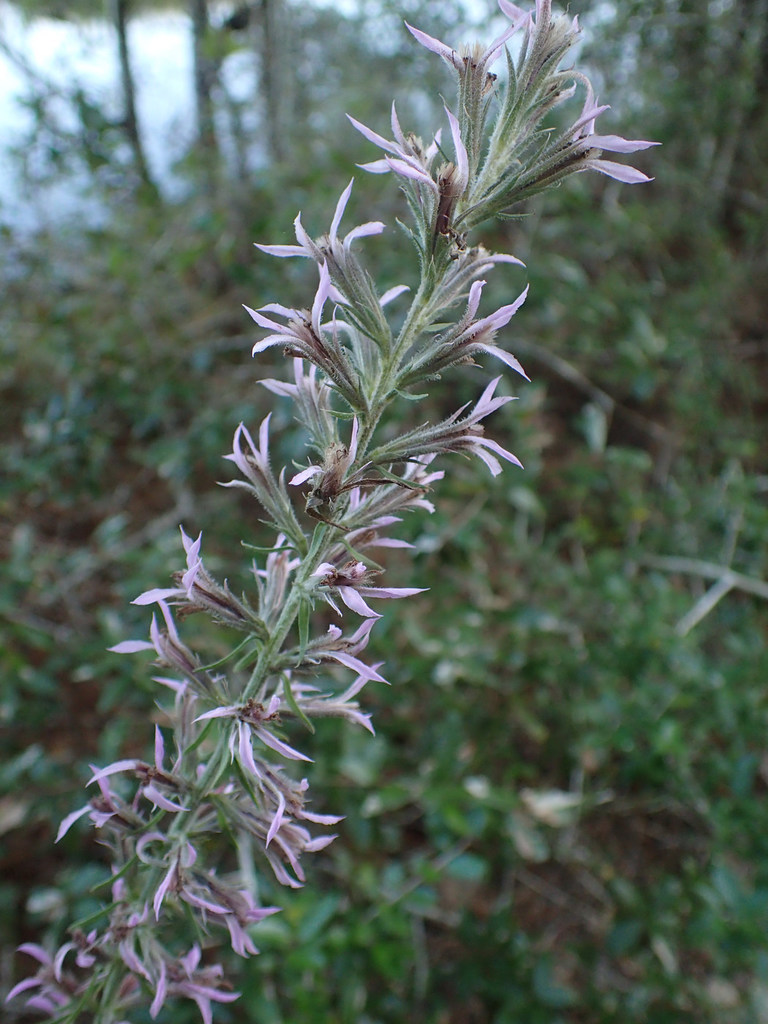
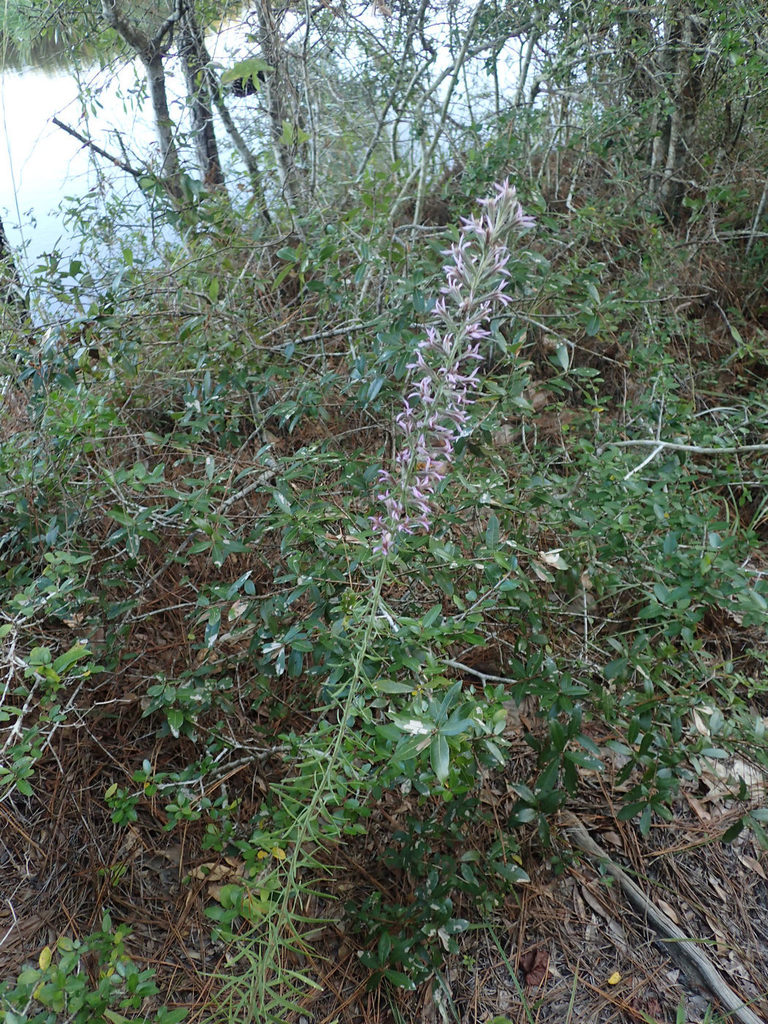
Liatris elegans, known as Pinkscale Blazing Star (also pink-scale gayfeather or elegant blazing star), is a late-season wildflower of the sandy pinelands and sandhills of the Deep South. In late summer and fall it sends up a slender, unbranched stem 1 to 4 feet tall, clothed in narrow, needle-like leaves and topped by a long wand of soft pink to pale lavender flower heads. It belongs to the aster family (Asteraceae), and like all blazing stars it grows from a rounded underground corm.
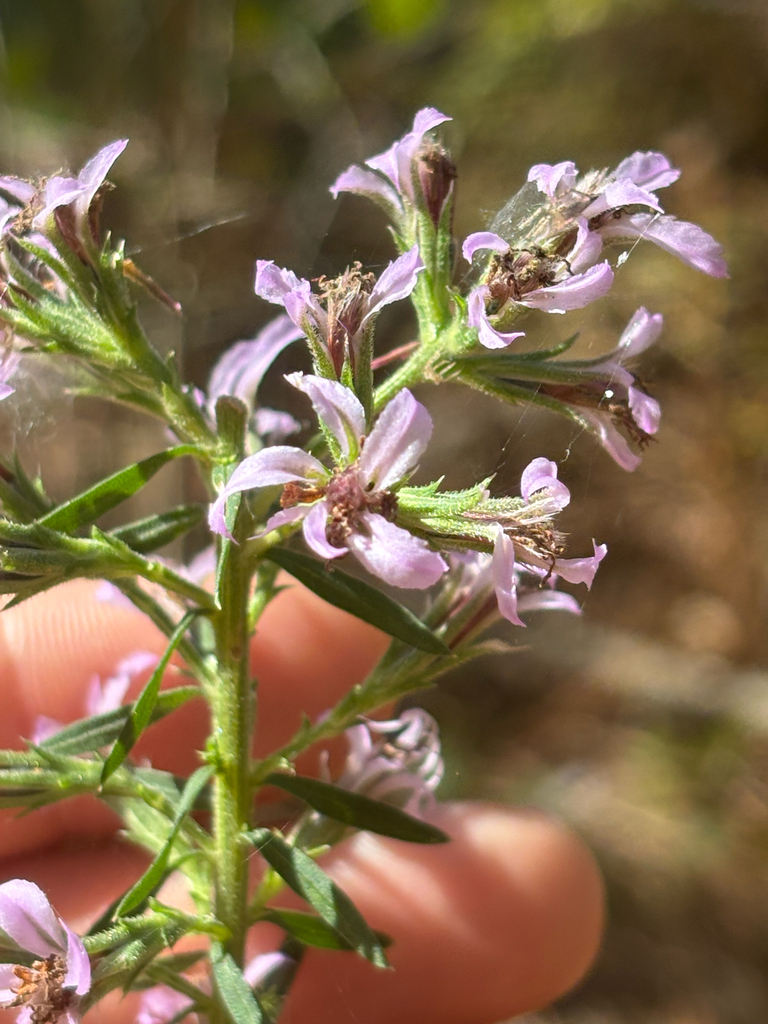
What sets this species apart from the other blazing stars is where its color comes from. In most Liatris the purple color is in the tiny tubular florets. In pinkscale blazing star the innermost bracts of each flower head end in long, petal-like, pink to lavender (sometimes whitish) tips that flare outward around the florets. Each small head looks a bit like a tiny shaving brush ringed with pink scales, and the whole spike has a feathery, almost frosted look that is quite different from the solid purple bottlebrush of dense blazing star.
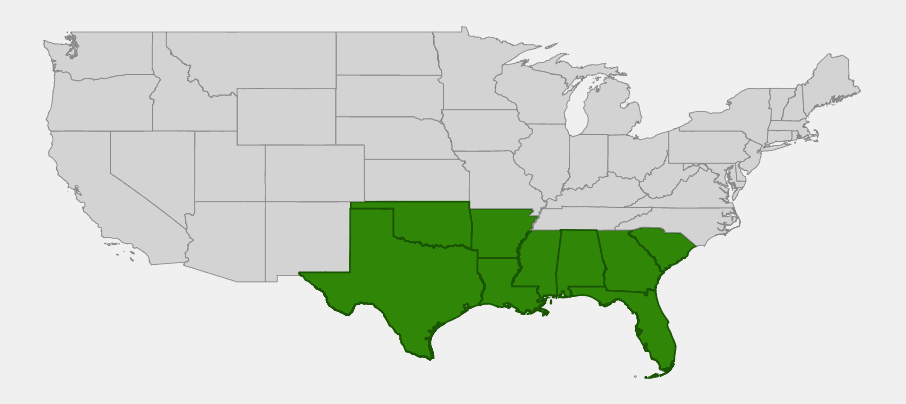
Pinkscale blazing star is native from South Carolina and Florida west along the Coastal Plain to eastern Texas, and inland to Arkansas and Oklahoma. In Florida it grows through the Panhandle and much of the peninsula in dry, sunny, fire-maintained habitats. It is a valuable late-season nectar plant for butterflies and native bees, and a good choice for dry, sandy native gardens where few other plants flower so late in the year.
Identification
Out of flower, pinkscale blazing star looks like a small stiff stem of pine needles poking up through wiregrass, and it is easily missed. In bloom from August into October, its pale pink, scaly flower heads make it one of the more distinctive blazing stars of the Southeast.
Corm & Stems
The plant grows from a rounded, somewhat flattened corm buried in sandy soil. From it rises usually a single stiff, unbranched stem, occasionally two or three. Stems are green to purplish and covered with short, fine hairs, especially in the upper part. Typical plants are 1 to 3 feet tall, and vigorous ones in rich spots can reach about 4 feet.
Leaves
The leaves are numerous, narrow and linear, crowded along the stem in a spiral and often looking almost whorled. The lowest ones are the longest, about 3 to 5 inches, and they become steadily shorter up the stem until they grade into small bracts among the flower heads. They are dotted with tiny resin glands. Before flowering the leafy stem resembles a young pine seedling or a bottlebrush of needles, which is a useful clue in the field.
Flowers
The flower heads are borne in a long, narrow spike or slender raceme that can take up most of the upper half of the stem, often 6 to 20 inches long. As in other blazing stars, the heads open from the top of the spike downward, so a plant often has fresh flowers at its tip and buds lower down. Each head contains only a few (usually about four or five) small tubular disk florets, which are pale pink to lavender or creamy white. Around them, the inner bracts of the head end in broad, petal-like, pointed tips that are pink, rose or lavender, sometimes nearly white. These colorful “scales” are the source of the common name and give each head a frilly, star-like look. There are no true ray flowers.
Bloom time runs mainly from August through October. In Florida flowering peaks in September and October, which makes pinkscale blazing star one of the last blazing stars to bloom.
Fruit & Seeds
After flowering each floret ripens into a small, ribbed, dark seed (an achene) topped by a tuft of fine bristles. When ripe, the heads turn fluffy tan, and the seeds drift away on the wind in late fall. The dried spikes remain standing into winter.
Quick Facts
| Scientific Name | Liatris elegans (USDA symbol LIEL) |
| Family | Asteraceae (aster family) |
| Plant Type | Herbaceous perennial from a corm |
| Mature Height | 1–3 ft (occasionally to 4 ft) |
| Mature Spread | 6–12 in |
| Growth Rate | Moderate |
| Sun Exposure | Full sun |
| Water Needs | Low; well-drained, dry sandy soil |
| Soil Type | Deep sand, sandy loam, or rocky soil |
| Soil pH | Acidic to near neutral (about 4.5–7.0) |
| Bloom Time | August–October |
| Flower Color | Pink to lavender petal-like bracts; pale pink to creamy florets |
| Fall Color | Stems and leaves turn tan to bronze after flowering |
| Fruit | Small ribbed achene with a tuft of bristles; wind-dispersed |
| Deer Resistant | Moderate; young shoots are sometimes browsed |
| USDA Hardiness Zones | 7–10 |
Native Range
Pinkscale blazing star is a plant of the southeastern Coastal Plain. USDA PLANTS and the Lady Bird Johnson Wildflower Center record it in nine states: South Carolina, Georgia, Florida, Alabama, Mississippi, Louisiana, Texas, Arkansas and Oklahoma. It follows the sandy coastal and inner Coastal Plain from South Carolina south into peninsular Florida and west to the pine woods of eastern Texas, and it reaches inland along sandy uplands into southern Arkansas and southeastern Oklahoma.
In Florida, the Atlas of Florida Plants maps it across the Panhandle and through much of the northern and central peninsula, thinning out toward the south. It is a characteristic fall wildflower of longleaf pine sandhills, dry pine flatwoods, scrubby flatwoods and open turkey oak woods, and it also turns up on sandy roadsides and old fields that are mowed or burned often enough to stay open.
Botanists sometimes divide the species into varieties based on the hairiness of the stem and the color and shape of the bract tips. Plants with whitish rather than pink bract tips occur here and there across the range. For gardeners the differences are minor, and all forms need the same dry, sunny, sandy conditions.
📋 Regional plant lists featuring Pinkscale Blazing Star: North & South Florida · Alabama, Georgia & Mississippi · North & South Carolina · Arkansas, Louisiana, Eastern Oklahoma & Eastern Texas
Growing & Care Guide
Pinkscale blazing star is easy to grow if you give it the dry, sunny, lean conditions it gets in the wild. It is not a plant for rich, irrigated flower beds, where it tends to flop and its corms can rot. In a sandy native garden, a pine savanna planting or a meadow, it needs almost no care once established.
Light
Plant it in full sun. In partial shade stems grow weak and lean, and flowering is sparse. In the wild it fades out when pinelands become overgrown with shrubs and hardwoods.
Soil & Water
Use deep, well-drained sand or sandy loam. Poor soil is better than rich soil, and no fertilizer is needed. Water new plants regularly during their first few weeks, then only during long droughts in the first season. Established plants are very drought tolerant. Avoid heavy clay and low spots that stay wet in winter, because wet, cold soil is the main cause of corm rot.
Planting Tips
Set container plants or dormant corms in fall through early spring, with the top of the corm about 1 to 2 inches below the surface. Group several plants 8 to 12 inches apart so the pink spikes make a visible show. They look best rising through low native grasses such as wiregrass or little bluestem, which also help hold the slender stems upright.
Pruning & Maintenance
Little care is needed. Leave the seed heads standing into winter for birds and for self-sowing, then cut the old stems to the ground in late winter. A late-winter burn or mowing of the surrounding planting imitates natural fire and keeps competing shrubs out. Pull aggressive weeds and taller grasses that would shade the plants.
Propagation
Grow it from seed. Collect seed when the heads have turned fluffy and tan, and sow it outdoors in fall, or store it dry and give it a few weeks of cold, moist stratification before spring sowing. Seedlings form small corms the first year and usually flower in their second or third year. Large old corms can sometimes be divided in winter, but seed is simpler and gentler on the plants.
Landscape Uses
- Sandhill and dry pineland gardens: with wiregrass, golden aster and other drought-tolerant natives
- Butterfly and pollinator gardens: an excellent fall nectar source when few other flowers are blooming
- Meadows and savanna plantings: combined with native bunchgrasses in full sun
- Restoration: in longleaf pine sandhill and flatwoods restoration within its native range
- Cut and dried flowers: the spikes hold their color well in arrangements
Wildlife & Ecological Value
Pinkscale blazing star flowers in the season when many pineland wildflowers have finished, so it fills an important gap for insects that are fattening up for migration or winter.
For Pollinators
Like other blazing stars, it is a magnet for butterflies. Skippers, sulphurs, swallowtails, gulf fritillaries and migrating monarchs visit the heads in fall. Bumble bees, sweat bees, leafcutter bees and other native bees gather nectar and pollen from the florets. The Xerces Society lists it as having special value to native bees.
For Birds
Seed-eating birds such as sparrows and finches pick seeds from the dry heads in late fall and winter. In sandhill and flatwoods habitats it is part of the open, grassy ground layer that birds such as Bachman’s sparrows and northern bobwhite depend on.
For Mammals
Deer and rabbits occasionally browse young shoots, and small rodents may dig and eat the corms. The plant is not a major food source for mammals.
Ecosystem Role
Pinkscale blazing star is adapted to frequent, low-intensity fire. Its corm survives underground while fire clears away litter and competing shrubs, and plants often flower well in the season after a burn. It is a reliable indicator of healthy, open sandhill and flatwoods ground cover.
Cultural & Historical Uses
The species was first described in the 18th century as Staehelina elegans and later moved to Liatris, a genus name of uncertain origin used by the German botanist Johann von Schreber. The epithet elegans means elegant and refers to the graceful, frilly flower spikes.
Blazing stars in general were used by Native Americans and early settlers, mainly as medicinal plants; the corms of several species were used for various remedies. There is little specific record for Liatris elegans, and this guide does not recommend any medicinal use.
Today pinkscale blazing star is grown mainly by native plant enthusiasts and is offered by native nurseries in Florida and the Gulf states. It is a good reminder that the southern pinelands have a second, autumn flowering season, and that a garden designed with fall natives can feed pollinators well past the end of summer.
Frequently Asked Questions
How is pinkscale blazing star different from other blazing stars?
Its color comes mainly from the pink, petal-like tips of the inner bracts around each flower head rather than from the florets, and each head holds only a few florets. The result is a softer, frillier spike than the dense purple bottlebrush of Liatris spicata. It also blooms later, mostly from August to October.
When does pinkscale blazing star bloom?
Mainly from late August through October. In Florida flowering usually peaks in September and October.
Will it grow in clay soil?
Not reliably. It needs sharp drainage, and corms tend to rot in heavy, wet soil, especially in winter. If you have clay, grow it in a raised bed or berm of sandy soil.
Does it attract butterflies?
Yes. It is an excellent late-season nectar plant for skippers, sulphurs, swallowtails and migrating monarchs, and it is also visited by many native bees.
How do I grow it from seed?
Collect seed when the heads are fluffy and tan, then sow it outdoors in fall or cold-stratify it for several weeks before spring sowing. Expect flowers in the second or third year.

Looking for a nursery that carries Pinkscale Blazing Star?
Browse our native plant nursery directory: Alabama & Arkansas · Florida & Georgia · Louisiana & Mississippi · Oklahoma · South Carolina & Texas