Swamp Post Oak (Quercus similis)
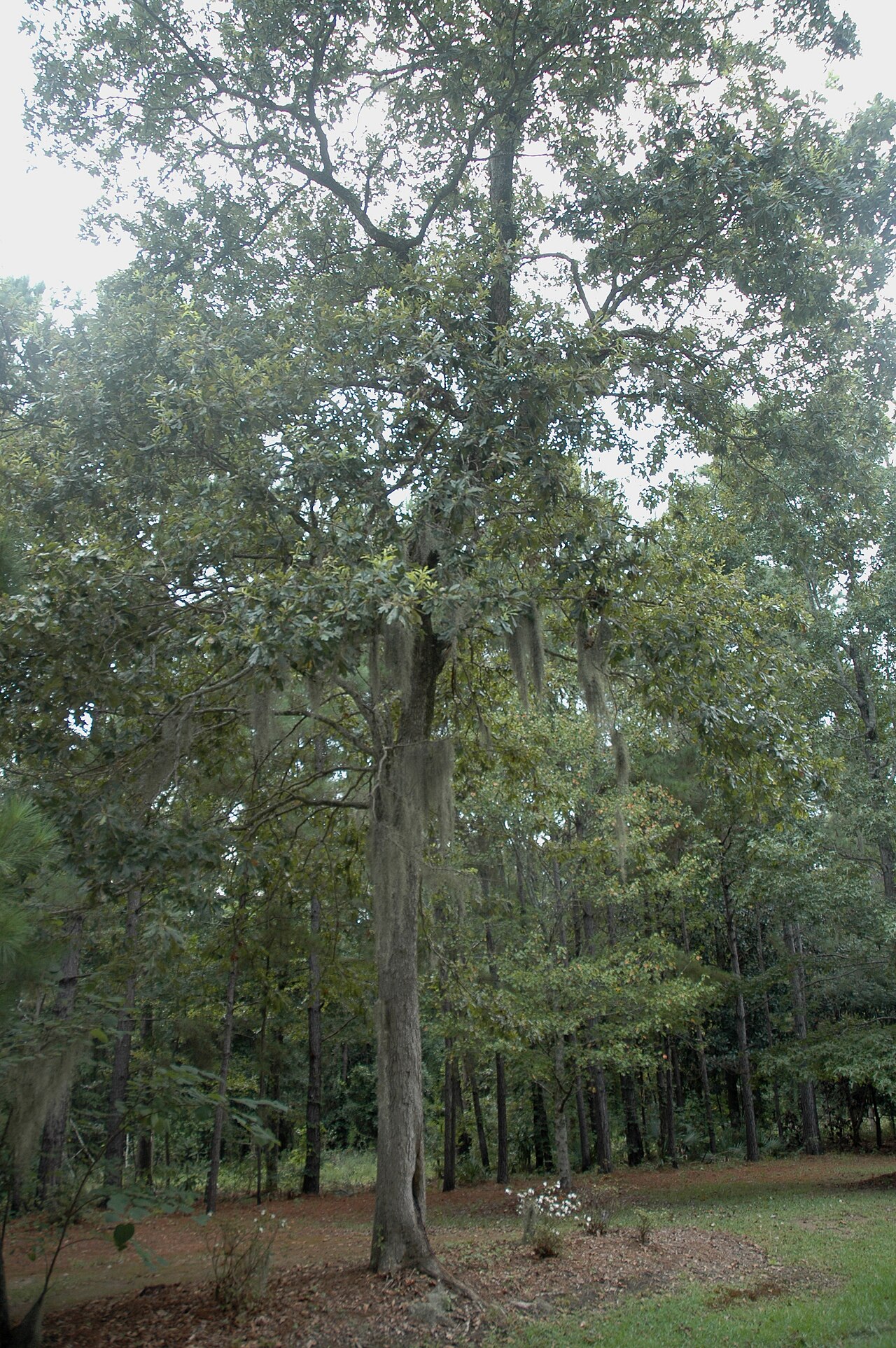
Quercus similis, commonly called Swamp Post Oak or Bottomland Post Oak (and sometimes Delta Oak), is a medium to large deciduous tree of the white oak group found scattered through bottomland hardwood forests and wet flatwoods of the south-central and southeastern United States. For many years it was treated as a variety or form of the familiar upland Post Oak (Quercus stellata), and the two still look much alike in their foliage and acorns. Swamp Post Oak, however, is a tree of wetter ground — seasonally flooded river bottoms, sloughs and calcareous flatwoods — rather than the dry rocky ridges and clay barrens where upland Post Oak thrives.
Where it occurs, Swamp Post Oak tends to grow taller and straighter than its upland relative, often reaching 60 to 80 feet in good bottomland soil, with a broad, rounded crown and the same deeply furrowed, blocky gray bark typical of the post oak group. The leaves share the distinctive cross- or Maltese-cross-shaped lobing that makes post oaks easy to recognize from a distance, though Swamp Post Oak’s leaves tend to be a bit larger and glossier than typical upland Post Oak foliage.
This is a regional specialty rather than a widely planted shade tree — nursery stock is uncommon, and most people who grow it collect acorns locally or transplant small seedlings from bottomland sites. For a native-plant restoration or a large low-lying lot in its home range, though, Swamp Post Oak is a long-lived, structurally important tree that belongs in the same conversation as Overcup Oak, Water Hickory and Swamp Chestnut Oak as a classic bottomland hardwood.
Identification
Swamp Post Oak is a single-trunked deciduous tree, typically 50 to 80 feet tall at maturity with a broad, rounded to irregular crown. The trunk is usually straighter and the overall form more upright than the often-gnarled habit of upland Post Oak, reflecting competition for light in closed bottomland forest.
Bark & Stems
Bark is light gray to gray-brown, thick and broken into square or rectangular blocks or ridges, very similar in texture to upland Post Oak and to White Oak. Young twigs are stout, often with a fine yellowish-brown pubescence, and the winter buds are small, rounded and chestnut-brown, clustered at the twig tips in the pattern typical of oaks.
Leaves
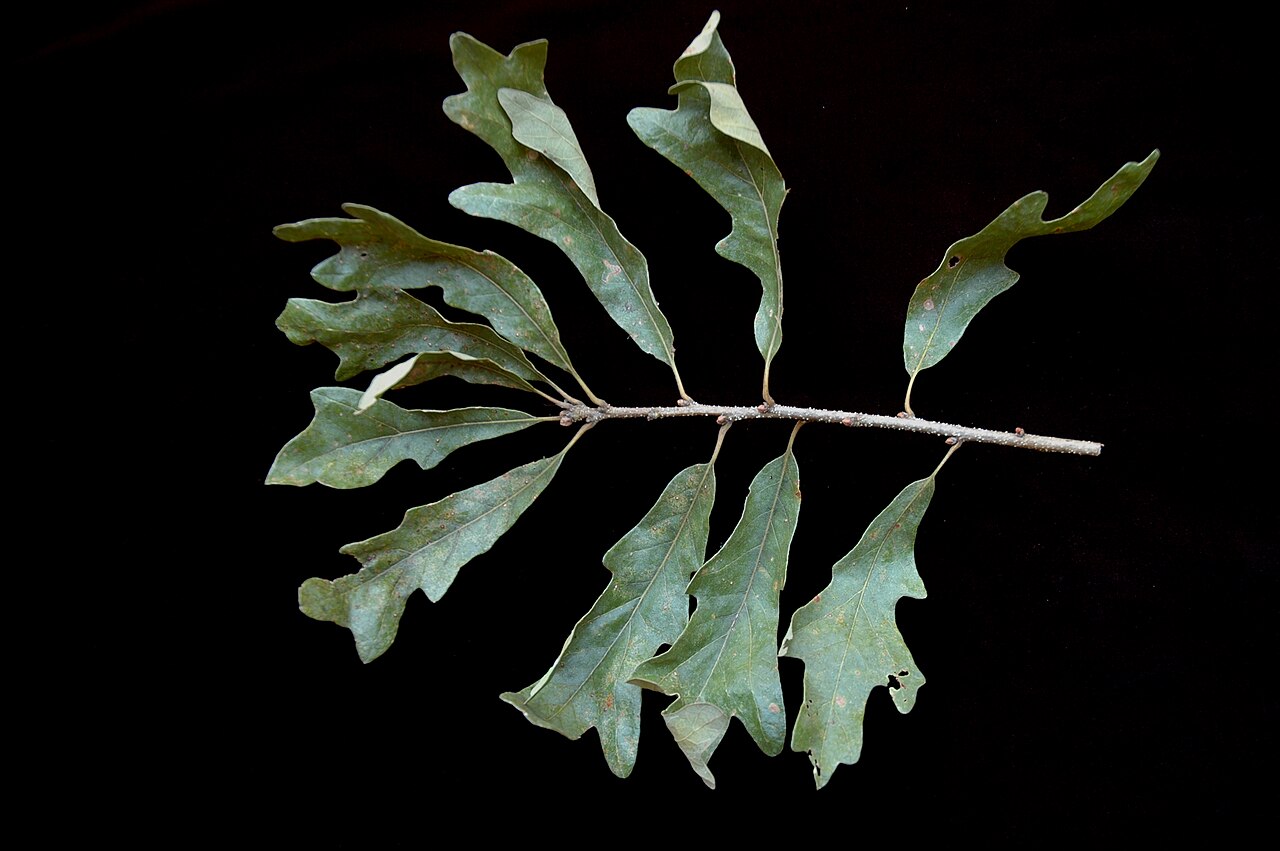
Leaves are alternate, simple, 4 to 8 inches long, leathery and glossy dark green above with a paler, finely hairy underside. The classic field mark of the post oak group is the leaf shape: three large, rounded lobes near the leaf tip spread out in a cross or Maltese-cross pattern, with a narrower, often lobed base. Swamp Post Oak’s leaves run slightly larger and less deeply sinused than typical Quercus stellata, but the cross-shaped silhouette is unmistakable in both. Fall color is a muted yellow-brown, and like many oaks some marcescent leaves may cling to lower branches into winter.
Flowers
Like all oaks, Swamp Post Oak is wind-pollinated and monoecious, with male and female flowers on the same tree. Male flowers hang in slender yellow-green catkins 2 to 4 inches long as the leaves emerge in spring; female flowers are tiny, reddish and easy to overlook, borne singly or in small clusters near the new growth.
Fruit & Seeds
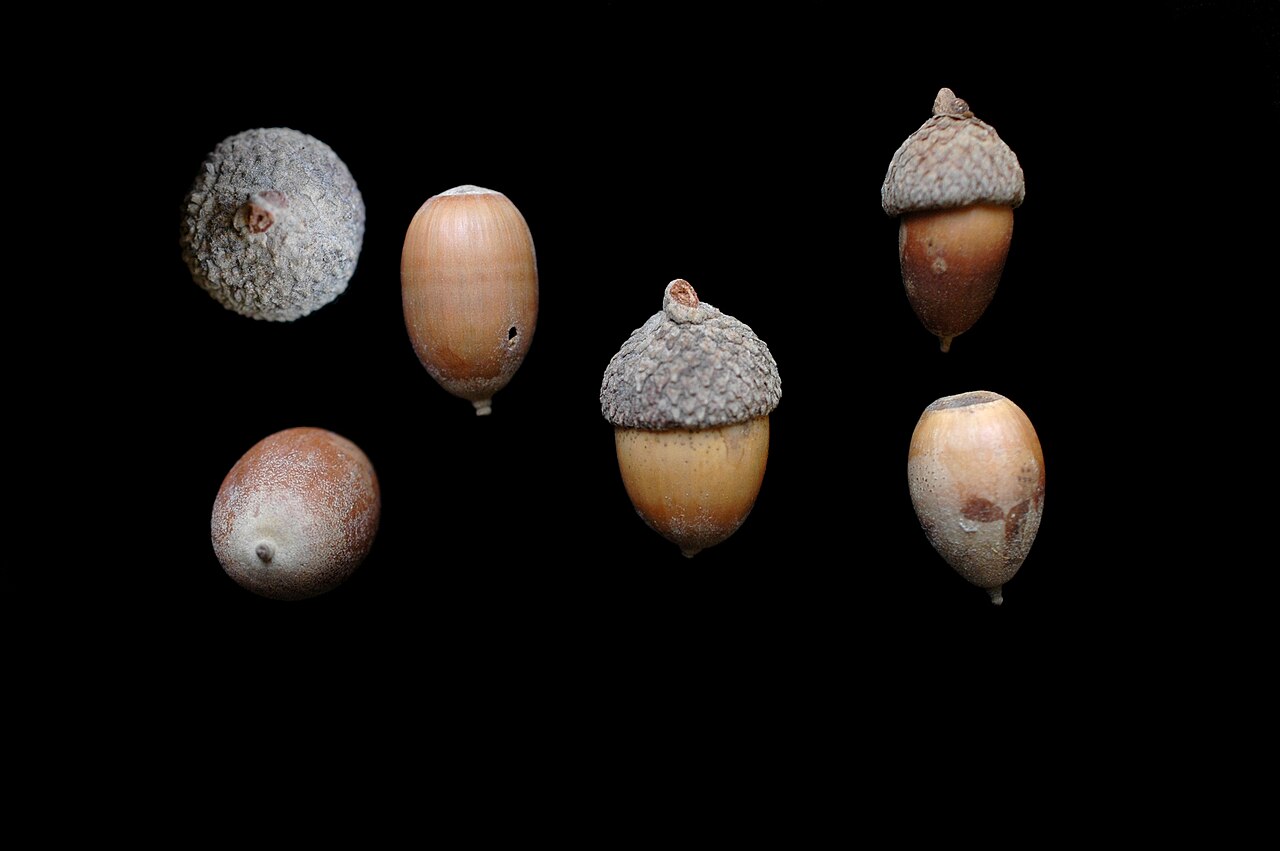
Acorns mature in a single growing season, as in all white oaks. They are oval to egg-shaped, about ¾ to 1 inch long, roughly a third to half enclosed by a bowl-shaped, warty-scaled cap. Acorns ripen in fall and germinate readily the following spring; they are an important hard-mast crop for wildlife in the bottomland forests where this tree grows.
Quick Facts
| Scientific Name | Quercus similis |
| Family | Fagaceae (Beech/Oak) |
| Plant Type | Deciduous Tree |
| Mature Height | 50–80 ft |
| Mature Spread | 40–60 ft |
| Growth Rate | Slow to moderate |
| Sun Exposure | Full sun |
| Water Needs | Moist to seasonally wet; tolerates occasional flooding |
| Soil Type | Heavy, poorly drained bottomland soils, often over calcareous subsoil |
| Soil pH | Neutral to slightly alkaline, tolerates acidic |
| Bloom Time | April |
| Flower Color | Yellow-green (inconspicuous) |
| Fall Color | Muted yellow-brown |
| Fruit | Acorns, ¾–1 in, mature in one season, fall |
| Deer Resistant | Moderate (seedlings browsed; mature trees generally untouched) |
| USDA Hardiness Zones | 7–9 |
Native Range
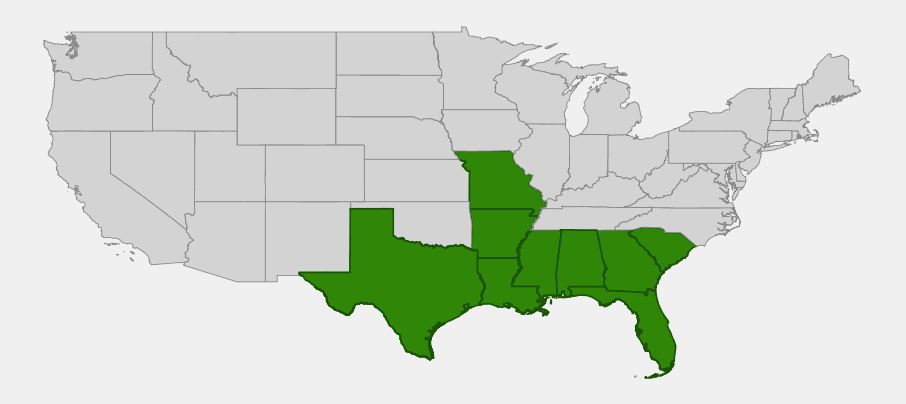
Swamp Post Oak is native to the lower Mississippi River Valley and the Gulf and South Atlantic Coastal Plains. Its core range runs through Arkansas, Louisiana, Mississippi and eastern Texas, with the species also documented in Missouri and scattered, more isolated populations in Alabama, Georgia, South Carolina and the Florida Panhandle (notably Leon County). It is nowhere abundant; even within its range it occurs as scattered individuals or small stands rather than extensive pure forests.
Typical habitat is hardwood flatwoods and bottomland hardwood forest on seasonally wet, often calcareous or subcalcareous soils — the kind of heavy, poorly drained ground that floods for part of the year and dries out in summer. It grows alongside other bottomland oaks and hardwoods such as Water Oak, Willow Oak, Overcup Oak, Swamp Chestnut Oak, Sweetgum and Blackgum, usually on slightly higher ground within the floodplain than the most flood-tolerant species.
Because Swamp Post Oak has long been confused with or lumped into upland Post Oak, its true distribution has probably been under-recorded in some areas; botanists continue to refine its known range as herbarium specimens are re-examined. Gardeners outside its native range should not substitute it for ordinary landscape plantings — it is a wetland specialist, not a general-purpose shade tree.
📋 Regional plant lists featuring Swamp Post Oak: Arkansas, Louisiana, Eastern Oklahoma & Eastern Texas · Georgia, Alabama & Mississippi · North Carolina & South Carolina · Illinois, Iowa & Missouri
Growing & Care Guide
Swamp Post Oak is a specialist for wet, heavy soils, and it rewards gardeners who have the right low-lying site with a long-lived, structurally handsome shade tree that few neighbors will be growing.
Light
Give it full sun for the strongest growth and best acorn production. Young trees can tolerate light shade in the understory while they establish, but they need increasing sun as they grow toward the canopy.
Soil & Water
This is a bottomland tree at heart: it wants heavy, poorly drained soil that floods or stays saturated for part of the year and dries out in summer. It handles neutral to slightly alkaline soils well, reflecting its affinity for calcareous flatwoods, but also grows in ordinary acidic Coastal Plain soils. Avoid planting it on dry, sandy uplands or well-drained garden beds, where it will struggle compared with upland Post Oak or Live Oak.
Planting Tips
Start from a small container-grown seedling or acorns collected locally, since nursery stock is uncommon outside specialty native plant growers. Plant in fall or late winter in a low spot that collects runoff or sits near a pond, ditch or floodplain. Like most oaks, it develops a deep taproot early and transplants best while young and small; avoid disturbing the roots of an established tree.
Pruning & Maintenance
Prune only to remove dead, damaged or crossing branches, ideally during the dormant season. Established trees need little attention and are not notably prone to the pests and diseases that trouble some faster-growing oaks, though they share the general susceptibility of the white oak group to oak wilt in areas where that disease occurs.
Propagation
Propagate from fresh acorns collected in fall; like other white oaks, they do not store well and should be planted soon after collection or kept cold and moist over winter. Acorns germinate readily the following spring without special pretreatment.
Landscape Uses
Swamp Post Oak fits a narrow but valuable niche:
- Wet-site shade tree for low spots, floodplain lots and pond margins
- Bottomland hardwood restoration plantings alongside Overcup Oak and Swamp Chestnut Oak
- Wildlife plantings where acorn production supports game and songbirds
- Rain garden or detention basin shade tree where it can handle periodic inundation
Wildlife & Ecological Value
Like other oaks, Swamp Post Oak is a keystone species for wildlife wherever it grows, supplying both hard mast and habitat structure in bottomland forests.
For Pollinators
The wind-pollinated catkins are not a nectar source, but oaks as a group host an enormous number of caterpillar and insect species — among the most of any North American tree genus — which in turn feed birds and other pollinator-dependent wildlife throughout the growing season.
For Birds
Wood Ducks, Wild Turkeys and numerous songbirds eat the acorns, and the tree’s open, broad crown provides nesting sites and foraging habitat. In flooded bottomland seasons, acorns that fall into standing water become an important food source for waterfowl.
For Mammals
White-tailed Deer, squirrels, raccoons and other mammals rely on the acorn crop, especially in years when other mast trees fail. Deer also browse young seedlings, which can limit natural regeneration in heavily browsed areas.
Ecosystem Role
As a canopy tree in bottomland hardwood forest, Swamp Post Oak contributes to the structural complexity and flood resilience of these increasingly rare wetland forest communities. Bottomland hardwood forests filter floodwater, stabilize soil and store carbon, and long-lived oaks like this one are central to that function.
Cultural & Historical Uses
Swamp Post Oak has no major documented history of use distinct from other bottomland oaks; its wood, like that of upland Post Oak, is dense, strong and rot-resistant, and historically oaks of this type were cut locally for fence posts, railroad ties and rough lumber where they grew in harvestable stands.
Because the species was long treated taxonomically as part of Quercus stellata, it does not have a separate documented record of Indigenous or settler use; any traditional uses of “post oak” wood and acorns in its native range likely applied to this tree as well as to upland Post Oak, without the two being distinguished.
Today its chief value is ecological and horticultural — as a durable, long-lived tree for restoring bottomland hardwood habitat and as an interesting, little-grown native for gardeners with the right wet site.
Frequently Asked Questions
Is Swamp Post Oak the same tree as Post Oak?
No, though they are closely related and look similar. Quercus similis (Swamp Post Oak) was long treated as a form of Quercus stellata (Post Oak), but it is now recognized as a distinct species that grows in wetter bottomland soils, typically reaching a larger size than upland Post Oak.
Can Swamp Post Oak tolerate standing water?
It tolerates seasonal flooding and saturated soil for part of the year, which is typical of its bottomland habitat, but it is not a true swamp species like Bald Cypress or Water Tupelo that can stand in water year-round. It needs the soil to dry out for at least part of the growing season.
How fast does it grow?
Growth is slow to moderate, similar to other white oaks. Expect steady but unhurried growth over decades rather than a fast-growing shade tree; the payoff is a long-lived, structurally strong tree.
Where can I find Swamp Post Oak for my landscape?
It is not commonly sold in the nursery trade. Look for specialty native plant nurseries within its range, or collect and grow acorns from a known wild tree with landowner permission, since local-source stock is best adapted to regional conditions.
Is Swamp Post Oak rare or protected?
It is not federally listed, but because it was historically lumped with Post Oak, it has likely been under-recorded, and it is nowhere common even within its known range. Avoid removing acorns or seedlings from wild bottomland populations in excess, and favor nursery-propagated stock for restoration plantings.

Looking for a nursery that carries Swamp Post Oak?
Browse our native plant nursery directory: Arkansas & Alabama · Louisiana, Mississippi & Missouri · Texas & South Carolina · Georgia & Florida