
Sweetscented Pigeonwings (Clitoria fragrans)
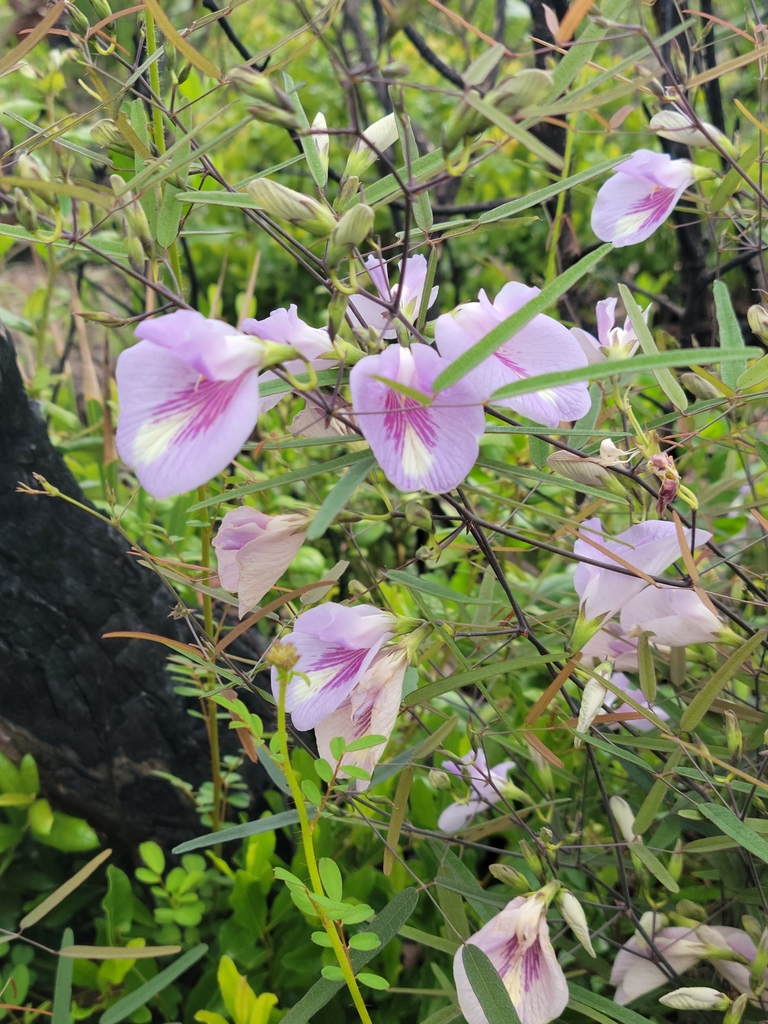
Clitoria fragrans, Sweetscented Pigeonwings (also called pigeon wings or scrub pigeon-wing), is a rare wildflower of the pea family found only in central Florida. It grows in the sunny openings of Florida scrub and sandhill on the ancient sand ridges of the peninsula, especially the Lake Wales Ridge in Polk and Highlands counties. In spring and early summer its wiry stems carry large, fragrant, pale lavender-pink flowers streaked with darker rose-purple.
Most of the Florida scrub where it lived has been cleared for citrus groves and housing, and the remaining plants are scattered among a limited number of sites. The U.S. Fish and Wildlife Service lists it as a federally threatened species, and it is also protected under Florida law. Many of the remaining populations are on protected lands such as state forests, state parks, the Lake Wales Ridge National Wildlife Refuge and the Avon Park Air Force Range.
This is an identification and appreciation page. Sweetscented pigeonwings is not a garden plant: it is not sold in ordinary nurseries, and wild plants must never be dug, picked or collected. This guide covers how to tell it from its more common relatives, where it grows, why it depends on fire and how its habitat is being protected.
Identification
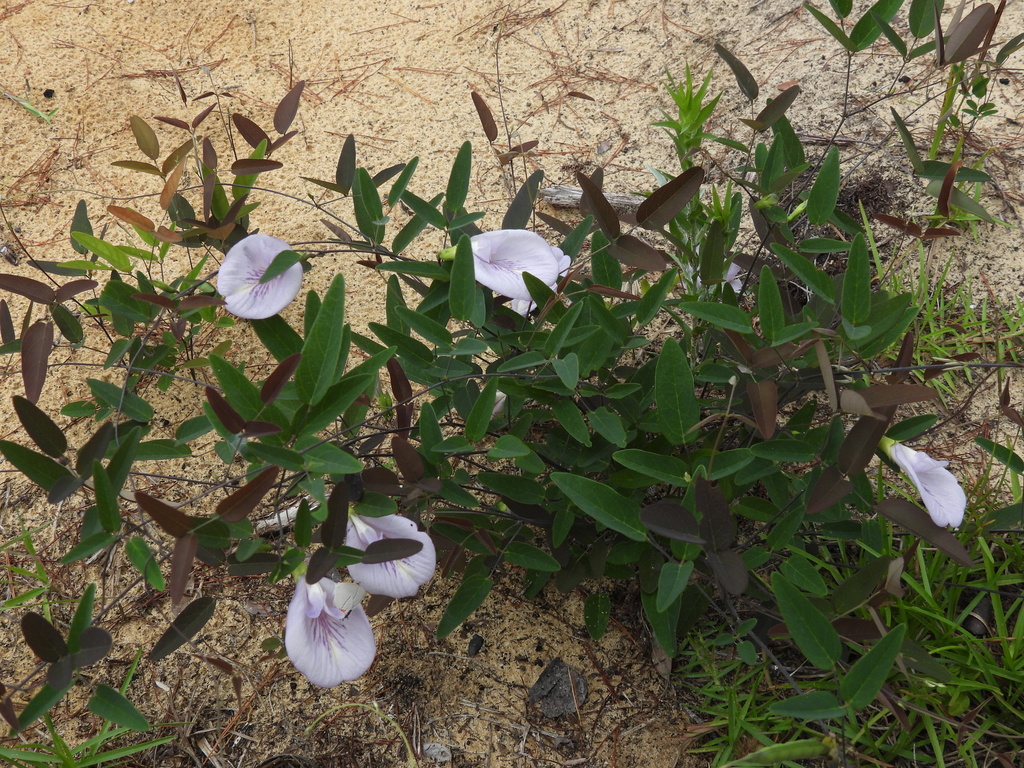
Sweetscented pigeonwings is an upright, non-climbing perennial herb with three-part leaves and large, upside-down pea flowers. It is often visible only after a fire or in open, sunny sand, where it resprouts from a deep woody taproot.
Stems & Leaves
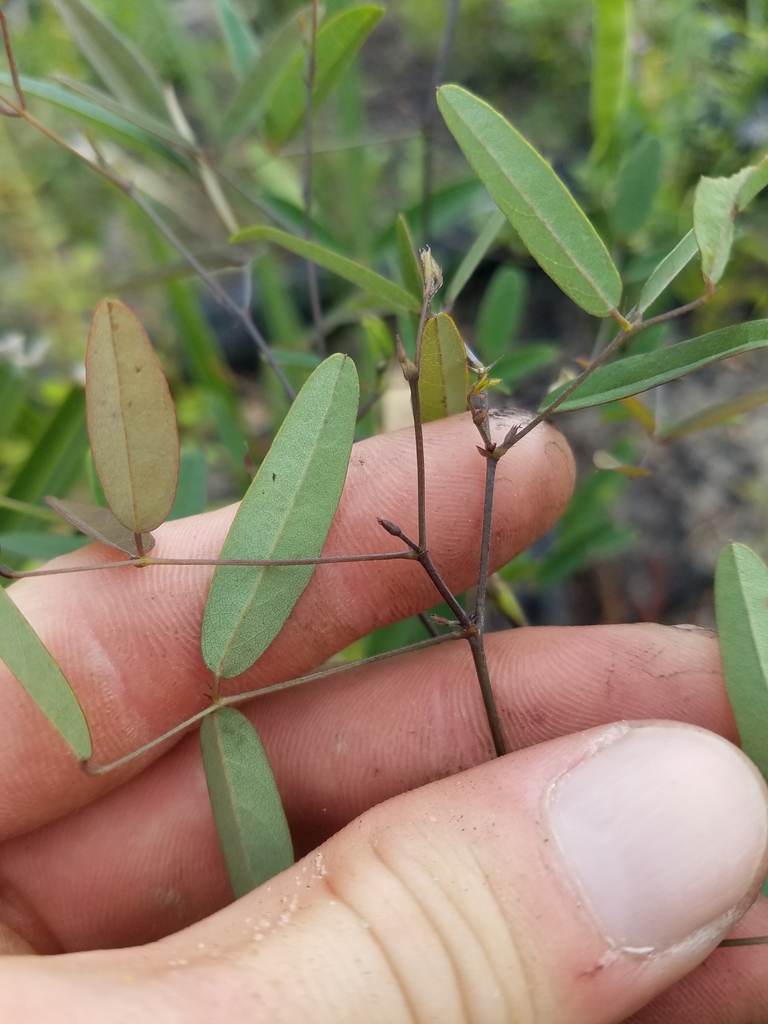
Plants grow from a deep, woody taproot and send up one or several slender, wiry stems, usually under 20 inches tall (occasionally to about 3 feet). The stems are purplish and slightly waxy. The leaves are alternate and divided into three narrow, oblong to lance-shaped leaflets up to about 1¾ inches long, with a tiny bristle at the tip. They are leathery and often bluish- or grayish-green.
Flowers
From about April to June, flowers appear in the leaf axils, one or two at a time. They are up to about 2 inches long, pale pinkish purple to lavender with darker rose-pink streaks at the center and a white spot, and are pleasantly fragrant. Like other Clitoria, the flowers are “upside down” (resupinate): the large banner petal faces downward, and the reproductive parts curve so that a visiting insect brushes against them. The plant also produces small, closed, self-pollinating (cleistogamous) flowers, which are often more common than the showy ones, while open flowers tend to be more abundant after fire.
Fruit
Both kinds of flowers produce a narrow legume pod up to about 2 inches long containing up to nine small, reddish, sticky seeds that can cling to passing animals.
Look-alikes
Atlantic Pigeonwings (C. mariana) is a twining vine with broader, thinner leaflets, and it grows across much of the eastern United States. Spurred Butterfly Pea (Centrosema virginianum) is also a twining vine, with a short spur on the back of the flower. Sweetscented pigeonwings is upright and not vining, with narrow, bluish-green leaflets, and is limited to central Florida scrub and sandhill.
Quick Facts
| Scientific Name | Clitoria fragrans Small |
| Family | Fabaceae (pea family) |
| Plant Type | Herbaceous perennial from a woody taproot |
| Mature Height | 8–20 in (occasionally to 3 ft) |
| Mature Spread | 6–12 in |
| Growth Rate | Slow; resprouts after fire |
| Sun Exposure | Full sun in open scrub and sandhill |
| Water Needs | Dry; deep, excessively drained sand |
| Soil Type | White, yellow or gray sands of scrub and sandhill |
| Soil pH | Acidic (about 4.5–6.0) |
| Bloom Time | About April–June |
| Flower Color | Pale lavender-pink with darker rose-purple streaks |
| Fall Color | Not notable; stems may die back |
| Fruit | Narrow legume pod with sticky reddish seeds |
| Deer Resistant | No; deer and rabbits eat it |
| USDA Hardiness Zones | 9 (native range in central Florida) |
Native Range
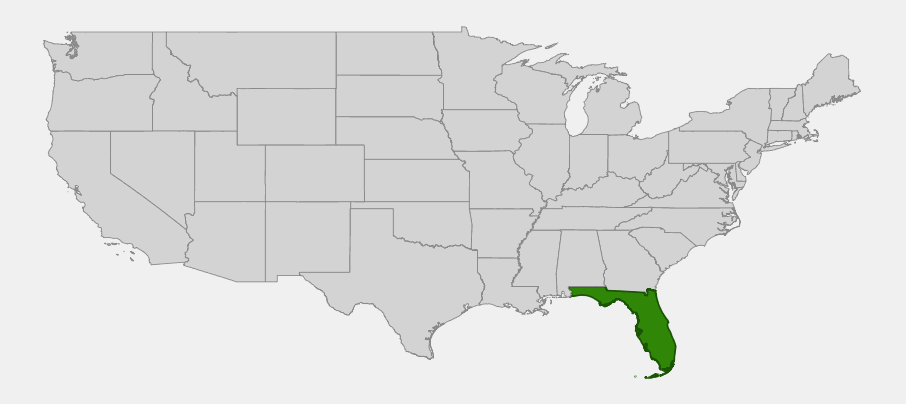
Sweetscented pigeonwings is endemic to central Florida. USDA PLANTS lists it only in Florida, and it is not known from any other state or country. Most populations are on the Lake Wales Ridge, the long, ancient line of sand dunes running down the center of the peninsula through Polk and Highlands counties. Scattered populations also occur farther north, including in Seminole State Forest in Lake County.
Its habitat is dry, open upland: Florida scrub, sandhill and the transition zone between them, on deep white, yellow and gray sands. It needs full sun and does poorly where tall shrubs and trees close in. Many sites are protected, including Lake Wales Ridge State Forest, the Lake Wales Ridge National Wildlife Refuge, Allen David Broussard Catfish Creek Preserve State Park, Seminole State Forest and the Avon Park Air Force Range, where the military monitors the plant.
Fire is part of its life. Natural lightning fires once burned scrub and sandhill every few years to decades, clearing taller vegetation. Sweetscented pigeonwings survives fire with its deep taproot and resprouts afterward, often flowering more freely in the following seasons. Without fire, scrub becomes overgrown and the plants decline. Habitat loss to citrus groves and development, fire suppression and browsing by deer and rabbits are its main threats.
📋 Regional plant lists featuring Sweetscented Pigeonwings: North & South Florida
Can You Grow It?
Not in a normal garden. Sweetscented pigeonwings is federally threatened and is not sold by ordinary nurseries. It is grown only in conservation collections by botanical gardens and agencies working on its recovery, such as rare-plant programs in central Florida. Never dig, pick or collect seed from wild plants; this harms the species and may break federal and Florida law. If you live near the Lake Wales Ridge, the best way to help it is to protect and properly manage native scrub and sandhill.
Light
In the wild it needs full sun in open patches of sand. Shade from overgrown scrub oaks, sand pine or planted trees causes it to decline.
Soil & Water
It grows only in deep, excessively drained, nutrient-poor sands that dry quickly after rain. Garden soil, irrigation and fertilizer are the opposite of what it needs.
Planting Tips
There is no legitimate source for home gardeners. For a pea-family wildflower in Florida yards, grow nursery-propagated Atlantic Pigeonwings or Spurred Butterfly Pea, which are widely available from Florida native nurseries.
Pruning & Maintenance
In natural areas, the key “maintenance” is prescribed fire or mechanical clearing at the right intervals to keep scrub and sandhill open, plus protection from development and off-road vehicles.
Propagation
Only by authorized conservation programs, from seed or plants under permits. Researchers have studied how fire, seed bank and browsing affect its populations to guide recovery.
Where to See It
- Lake Wales Ridge State Forest: open scrub and sandhill in Polk and Highlands counties
- Catfish Creek Preserve State Park: Allen David Broussard Catfish Creek Preserve, Polk County
- Seminole State Forest: scattered populations in Lake County
- Viewing tips: look in spring and early summer in recently burned scrub; stay on trails and photograph only
Wildlife & Ecological Value
Sweetscented pigeonwings is part of the Florida scrub, one of the most endangered ecosystems in North America and home to many plants and animals found nowhere else.
For Pollinators
The large, fragrant open flowers are visited by bees, which are guided by the upside-down flower to contact the anthers and stigma. The plant is a host for skipper butterflies, including the long-tailed skipper (Urbanus proteus) and southern cloudywing (Thorybes bathyllus), whose caterpillars feed on legume leaves.
For Birds
The scrub it shares is home to the Florida scrub-jay, a threatened bird found only in Florida, and protecting scrub habitat for one benefits the other.
For Mammals
White-tailed deer and eastern cottontails find the plant very palatable and browse it heavily, which can reduce flowering and seed set. Its sticky seeds can be carried on animal fur.
Ecosystem Role
As a legume, it hosts nitrogen-fixing bacteria in its roots, adding nitrogen to the poor scrub sands. Its seeds are often eaten by insects such as beetles, and its fire-adapted, resprouting habit is typical of the scrub flora.
Cultural & Historical Uses
John Kunkel Small, a botanist at the New York Botanical Garden who explored Florida extensively in the early 20th century, described Clitoria fragrans. The species name means “fragrant,” for its sweet-scented flowers. The genus name Clitoria refers to the shape of the flower.
The Lake Wales Ridge is made of ancient beach and dune sands that stood as islands when sea levels were higher. Isolation on these “islands” allowed many plants and animals to evolve into species found nowhere else, such as sweetscented pigeonwings, Florida ziziphus, scrub plum and the Florida scrub-jay.
Because so much of the ridge was converted to citrus groves and housing in the 20th century, the U.S. Fish and Wildlife Service listed sweetscented pigeonwings as threatened in 1993, along with several other scrub plants. Land purchases by the state, conservation organizations and the federal government since then have protected many of its remaining populations.
Frequently Asked Questions
Is sweetscented pigeonwings endangered?
It is federally listed as threatened under the U.S. Endangered Species Act and is protected in Florida. It grows only in central Florida, and much of its scrub habitat has been lost to development and agriculture.
Where does sweetscented pigeonwings grow?
Only in central Florida, mostly on the Lake Wales Ridge in Polk and Highlands counties, with scattered populations farther north, such as in Seminole State Forest. It grows in open scrub and sandhill on deep sand.
Can I grow sweetscented pigeonwings?
No, not in a typical garden. It is not sold by ordinary nurseries and must never be collected from the wild. For a similar native pea, grow Atlantic pigeonwings or spurred butterfly pea from a Florida native nursery.
How is it different from Atlantic pigeonwings?
Atlantic pigeonwings is a climbing vine with broader leaflets and a wide range in the eastern U.S. Sweetscented pigeonwings is upright and non-vining, with narrow, bluish-green leaflets, and grows only in central Florida scrub.
Why does it need fire?
Fire keeps scrub open and sunny. Sweetscented pigeonwings survives fires with its deep taproot, resprouts quickly and often flowers more after a burn, while long periods without fire let shrubs shade it out.

Looking for a nursery that carries Sweetscented Pigeonwings?
Browse our native plant nursery directory: Florida

