
Tallowwood (Ximenia americana)
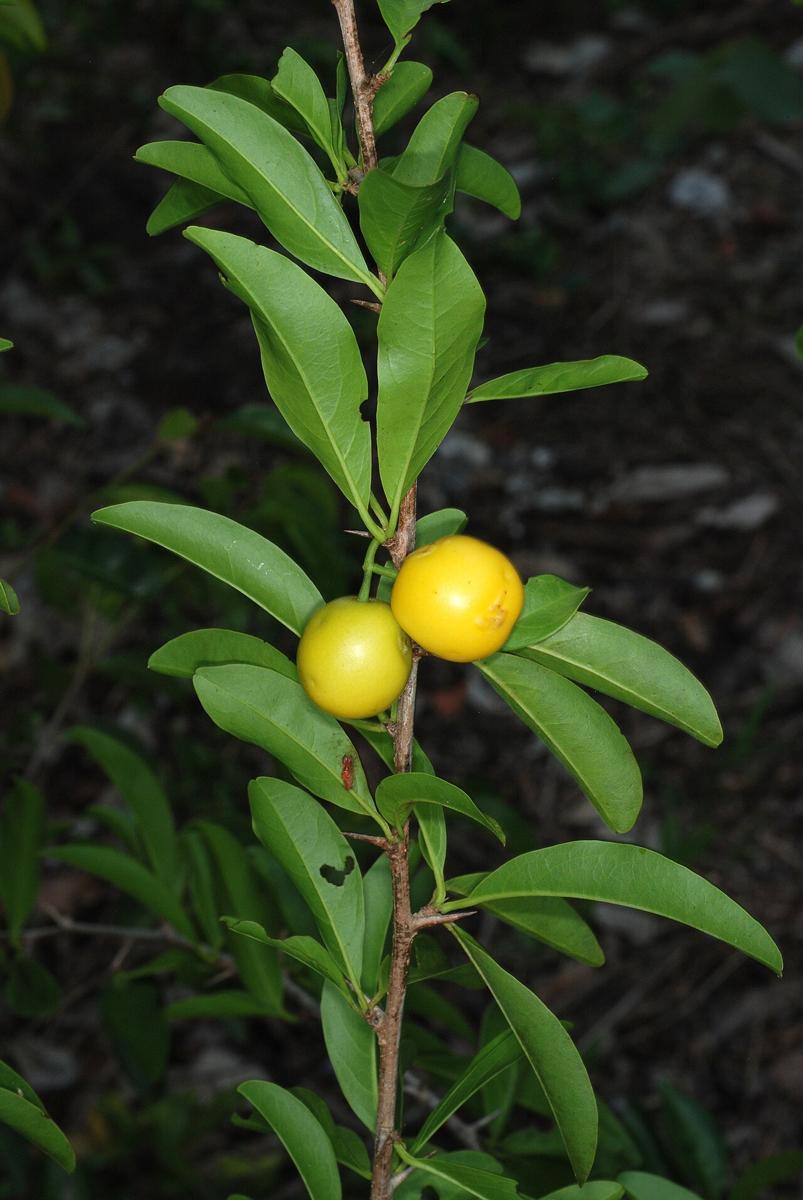
Ximenia americana, commonly known as Tallowwood (also called hog plum), is a thorny, sprawling shrub or small tree native to the dry hammocks, pine flatwoods, scrub and coastal berms of peninsular Florida. A pantropical species found across Africa, Asia and the Americas, it reaches the northern edge of its New World range in Florida, where it forms a tough, drought-tolerant thicket armed with sharp spines and studded, in season, with small golden fruit.
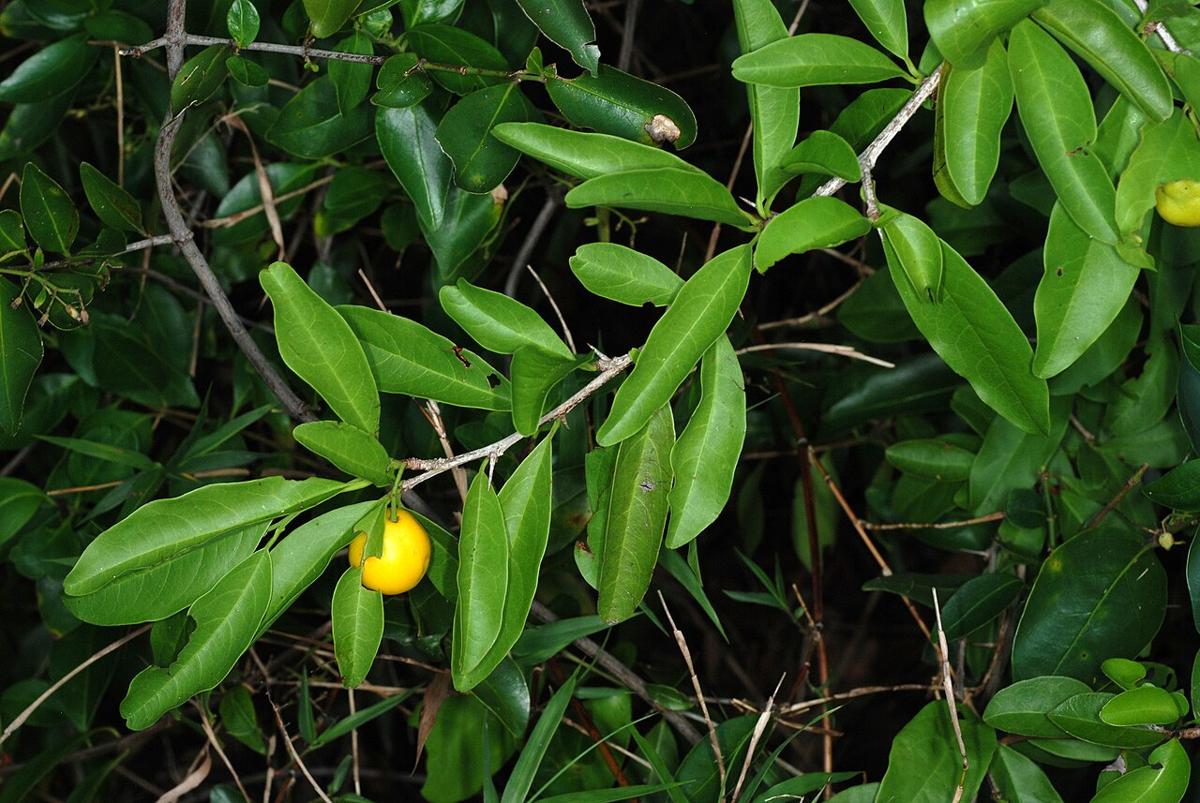
Tallowwood typically grows 6 to 20 feet tall as a many-branched, often leaning or sprawling shrub, sometimes developing into a small single-trunked tree with age. Its narrow, blue-green leaves and wickedly thorny twigs make it an effective thicket-forming plant for wildlife cover and informal barrier hedges, while its tart, plum-like fruit is a traditional, though minor, wild food across its range.
Identification
Tallowwood is best recognized by the combination of narrow, pale olive-green leaves, straight sharp spines at the leaf axils, and small round fruit that ripens from green through yellow to orange. Its often crooked, sprawling branching habit sets it apart from more upright native shrubs.
Bark & Stems
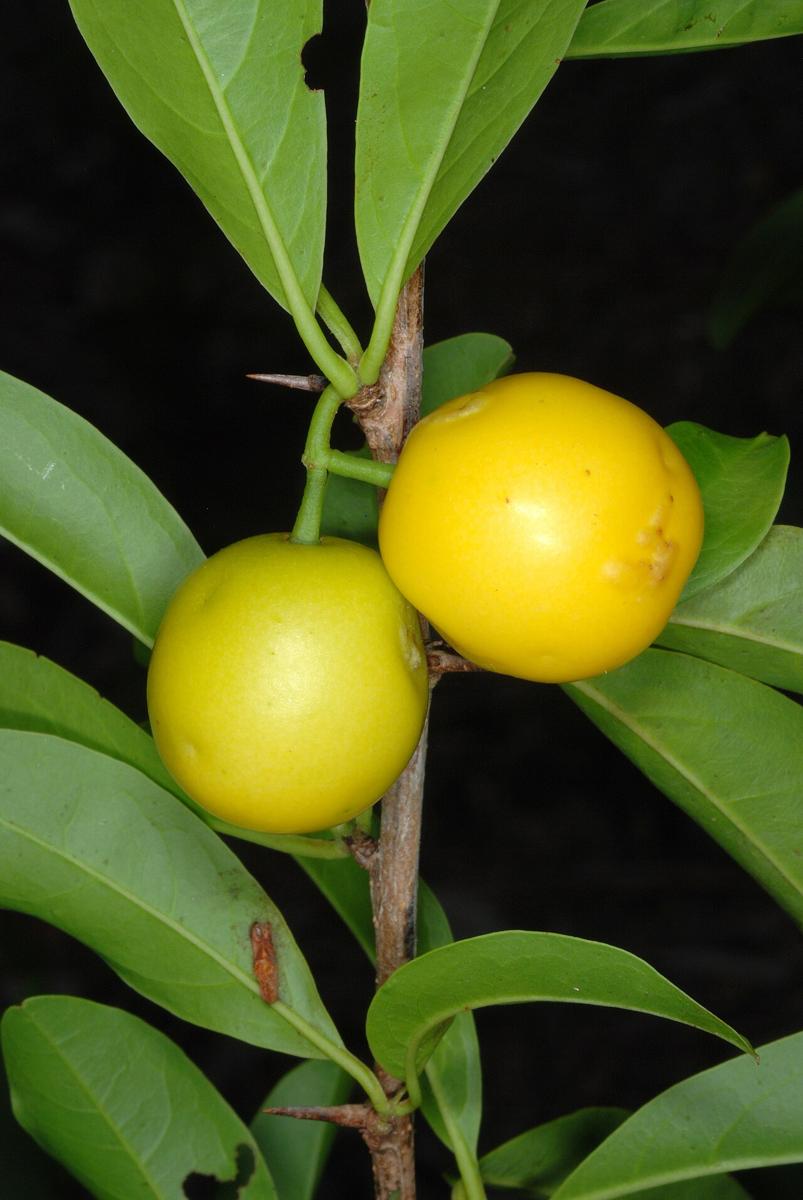
Young twigs are slender, gray-brown and armed with stiff, straight spines up to an inch long at the nodes — a key identification feature and a good reason to handle the plant carefully when pruning or harvesting fruit. Older stems develop smooth to slightly fissured gray bark.
Leaves
Leaves are simple, alternate or clustered, narrowly elliptic to lance-shaped, 1 to 3 inches long, with a leathery texture and a dull, pale blue-green to olive color on both surfaces. They are evergreen, persisting through the dry season when many associated scrub plants go deciduous.
Flowers
Small, fragrant, greenish-white to cream flowers are borne in short clusters at the leaf axils in spring, inconspicuous compared to the fruit but attractive to small pollinating insects. Flowering is often tied to seasonal rainfall and can occur more than once a year.
Fruit & Seeds
The fruit is a small, oval to round drupe about an inch long, ripening from green to yellow to orange, with a thin, waxy skin and a single large hard seed inside. The tart, plum-like flesh is edible when fully ripe, but the seed kernel inside — like those of many Olacaceae relatives — contains cyanogenic compounds and should never be cracked open and eaten; discard seeds rather than chewing them.
Quick Facts
| Scientific Name | Ximenia americana |
| Family | Olacaceae (Tallowwood family) |
| Plant Type | Evergreen thorny shrub or small tree |
| Mature Height | 6–20 ft |
| Mature Spread | 8–15 ft |
| Growth Rate | Slow to moderate |
| Sun Exposure | Full Sun to Part Shade |
| Water Needs | Low once established |
| Soil Type | Sandy, well-drained; scrub and flatwoods soils |
| Soil pH | Wide tolerance |
| Bloom Time | Spring, with sporadic rebloom |
| Flower Color | Greenish-white to cream |
| Fall Color | Evergreen; no seasonal color change |
| Fruit | Small yellow-orange plum-like drupe |
| Deer Resistant | Yes, thorny growth discourages browsing |
| USDA Hardiness Zones | 9b – 11 |
Native Range
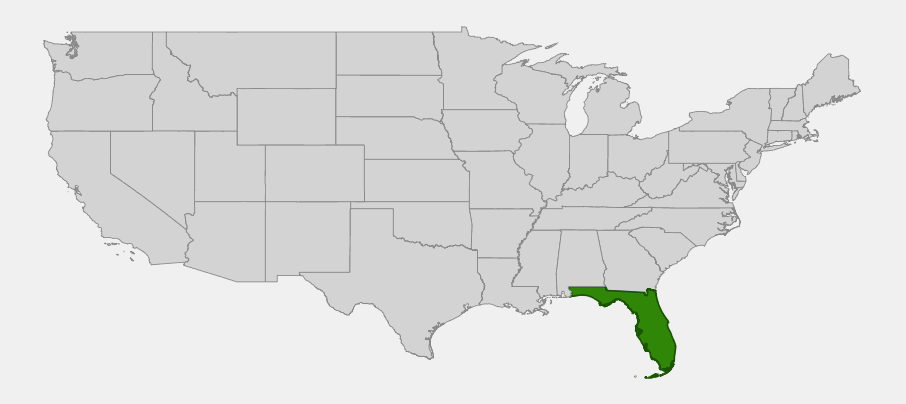
Tallowwood is native to peninsular and coastal Florida, where BONAP county records show it concentrated in the central and southern parts of the state, including scattered counties along both coasts. It is a pantropical species, also occurring naturally in the Caribbean, Mexico, Central and South America, and across tropical Africa and Asia, making it one of the most widely distributed native woody plants found in Florida. Within the continental U.S. it does not range beyond Florida.
It grows in a range of dry, well-drained native plant communities: tropical hardwood hammocks, pine flatwoods, Florida scrub, and coastal berms, usually in full sun to light shade on sandy soils that stay dry for extended periods. As a facultative root hemiparasite, it can draw some water and nutrients from the roots of neighboring plants, which may help explain its persistence on especially lean, sandy sites.
📋 Regional plant lists featuring Tallowwood: none yet — Tallowwood is native only to peninsular Florida, and no plantnative.org regional list currently covers that area; see our full native plant directory for other Florida natives.
Growing & Care Guide
Tallowwood is an exceptionally tough, low-maintenance plant for dry, sandy Florida sites, tolerating drought, poor soil and salt-influenced coastal conditions with little care once established — but like many hammock and scrub natives, it has essentially no cold tolerance outside the warmest parts of the state.
Light
Plant in full sun to light, dappled shade; growth is denser and fruiting heavier in sunnier spots, while part shade produces a more open, sprawling form.
Soil & Water
Tallowwood thrives in the lean, fast-draining sandy soils typical of Florida scrub and flatwoods and needs little supplemental water beyond the establishment period. Avoid heavy or poorly drained soils, which this species does not tolerate well.
Planting Tips
Site tallowwood away from walkways and play areas given its sharp spines, and give it room to sprawl — 8 to 15 feet of space works well for an informal thicket or barrier planting. Because it can act as a facultative root hemiparasite, it often grows and fruits best when planted near other established native shrubs or trees rather than in isolation.
Pruning & Maintenance
Minimal pruning is needed; remove dead or damaged wood and shape lightly if a tidier form is desired, wearing gloves to handle the thorny stems safely. Left alone, it naturally forms a dense, tangled thicket valuable for wildlife cover.
Landscape Uses
Tallowwood’s toughness and thorny structure make it useful in several Florida landscape roles:
- Wildlife thickets providing dense, protective cover for small animals and birds
- Living barrier hedges, where its spines discourage foot traffic
- Dry, sandy or coastal sites where few other fruiting shrubs thrive
- Scrub and flatwoods restoration plantings
- Informal naturalistic borders in low-water Florida landscapes
Wildlife & Ecological Value
Tallowwood supports Florida scrub and flatwoods wildlife through both its fruit and its dense, thorny structure.
For Birds
Ripe fruit is eaten by a variety of birds, which help disperse the seeds, while the thorny, tangled branching offers excellent predator-resistant nesting and shelter sites for small songbirds in open scrub and flatwoods habitats.
For Mammals
Small mammals forage on fallen fruit and use the dense thorny thickets for cover from predators, a valuable trait in the relatively open understory of Florida scrub and pine flatwoods.
For Pollinators
The small, fragrant flowers attract bees and other pollinating insects, providing a nectar source in dry scrub habitats where blooming plants can be sparse for stretches of the year.
Ecosystem Role
As a facultative root hemiparasite, tallowwood plays a somewhat unusual ecological role among Florida natives, tapping into the root systems of neighboring plants for part of its water and nutrient needs while still photosynthesizing normally — a trait shared with other members of the sandalwood order (Santalales) and one that likely helps it persist on Florida’s leanest, driest sandy soils.
Cultural & Historical Uses
Across its pantropical range, tallowwood fruit has long been gathered as a wild food, eaten fresh once fully ripe for its tart, plum-like flavor, and the oily kernel inside the seed has historically been pressed for lamp oil and soap-making in parts of Africa — uses tied to its waxy, tallow-like seed fat, which gives the plant its common name. In Florida, these uses are chiefly of historical and ethnobotanical interest rather than modern practice.
A caution on the seed: while the ripe fruit pulp is traditionally eaten, the seed kernel itself contains cyanogenic glycosides characteristic of several Olacaceae relatives, and should not be cracked open and chewed; treat tallowwood strictly as an ornamental and wildlife plant rather than a home food source, and never rely on historical foraging accounts as modern safety guidance.
Frequently Asked Questions
Can you eat tallowwood fruit?
The ripe yellow-orange pulp has traditionally been eaten fresh in parts of its range, but the hard seed inside contains cyanogenic compounds and should never be cracked open and eaten. Treat it as a wildlife and ornamental plant rather than a garden food source.
Why does tallowwood have thorns?
The stiff, straight spines at its leaf nodes are a natural defense against browsing animals and are a useful identification feature; they also make the plant valuable as a living barrier hedge and predator-resistant wildlife thicket.
Is tallowwood really a root parasite?
It’s a facultative root hemiparasite, meaning it can tap into neighboring plants’ roots for supplemental water and nutrients while still carrying out normal photosynthesis itself — it does not need a host to survive, but may grow more vigorously near one.
How cold hardy is tallowwood?
It is reliably hardy only in USDA zones 9b–11 and has limited frost tolerance, restricting it to central and southern Florida.
Does tallowwood make a good wildlife hedge?
Yes — its dense, thorny, sprawling growth forms an effective barrier planting that also provides fruit and predator-resistant shelter for birds and small mammals, making it a strong choice for naturalistic Florida wildlife gardens.

Looking for a nursery that carries Tallowwood?
Browse our native plant nursery directory: Florida
For another dry-site South Florida native that pairs well with tallowwood, see our page on Florida Silver Palm. If you’re building out a Florida wildlife thicket, check our guides to native hedgerows for birds, privacy trees for Florida, and shade trees for South Florida.

