
Tampa Mock Vervain (Glandularia tampensis)
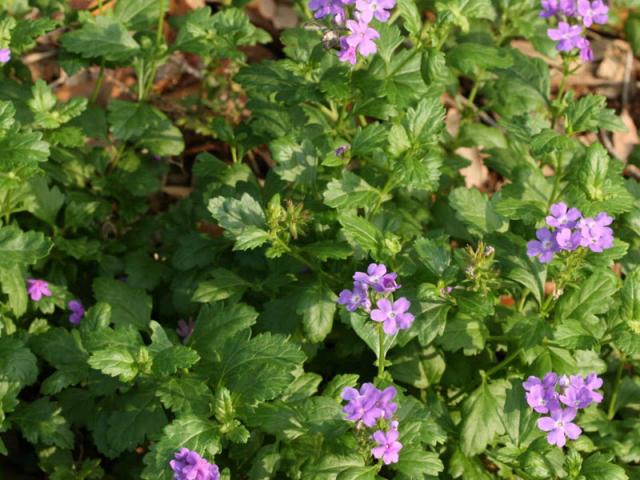
Glandularia tampensis, Tampa Mock Vervain (also called Tampa vervain or Tampa verbena), is a low, sprawling perennial wildflower with rounded clusters of bright pink-purple flowers and broad, coarsely toothed leaves. It belongs to the verbena family (Verbenaceae). It is endemic to Florida per the Atlas of Florida Plants, meaning it grows wild nowhere else in the world, and it is listed as Endangered by the State of Florida (FDACS Regulated Plant Index).
In the wild it is a plant of sandy, partly shaded woodland edges near the coasts of central Florida, in live oak and cabbage palm hammocks, pine flatwoods with saw palmetto, and open, somewhat disturbed ground where the canopy is broken. Much of that coastal habitat has been converted to housing and roads, and the remaining populations are small and scattered, which is why the state lists it as Endangered.
Fortunately, Tampa mock vervain is easy to propagate, and Florida native nurseries grow it widely. It has become a popular native groundcover and butterfly plant in Florida gardens. Always buy nursery-propagated plants and never collect plants, cuttings or seed from the wild. Garden plants are one of the simplest ways to enjoy this rare Florida endemic without harming the populations that remain.
Identification
Tampa mock vervain is best recognized by its broad, coarsely toothed, triangular to ovate leaves, its sprawling habit in partly shaded sandy woods, and its rounded heads of pink-purple flowers that look much like those of garden verbenas. Coastal mock vervain (Glandularia maritima), which grows on Atlantic beach dunes, has narrower, thicker leaves and lives in full sun on open sand.
Growth Form
It is a short-lived perennial, usually 1 to 2 feet tall, with weak, hairy, four-angled stems that sprawl or lean on other plants and then turn upward at the tips. Stems that touch the ground can root at the nodes, so a single plant can slowly spread into a loose patch. The Lady Bird Johnson Wildflower Center describes it as sprawling.
Leaves
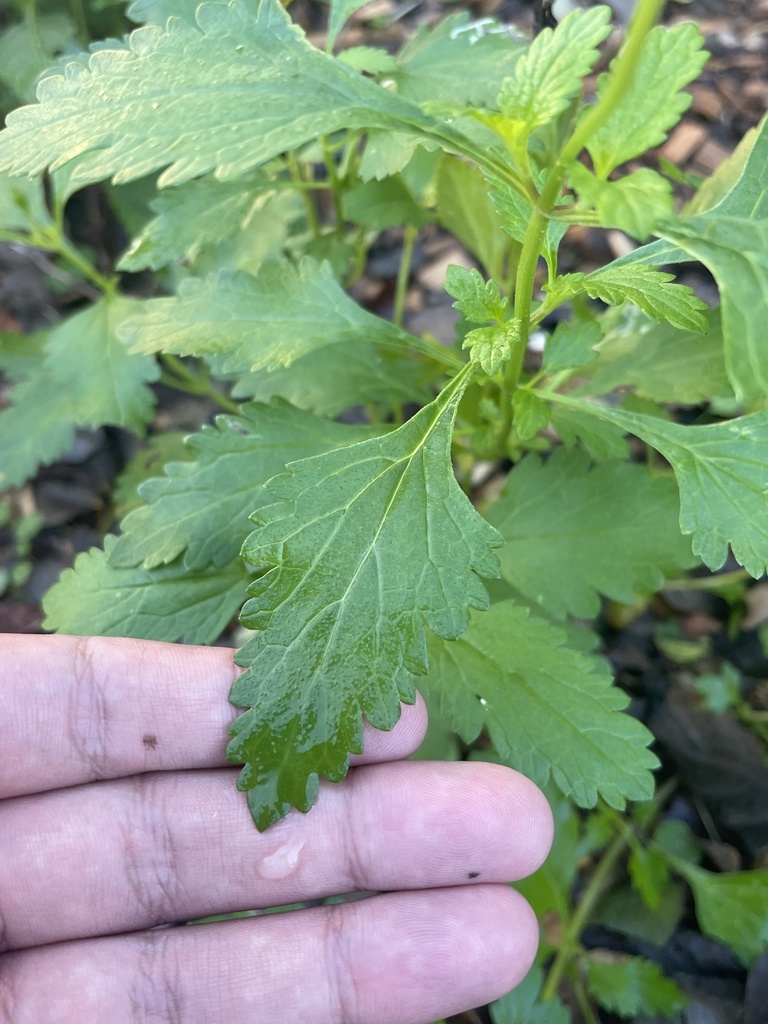
Leaves are opposite, ovate to triangular (deltoid), about 1 to 3 inches long, with coarse, rounded or sharp teeth along the edge and a netted pattern of veins. They are bright green, slightly hairy and somewhat rough to the touch.
Flowers
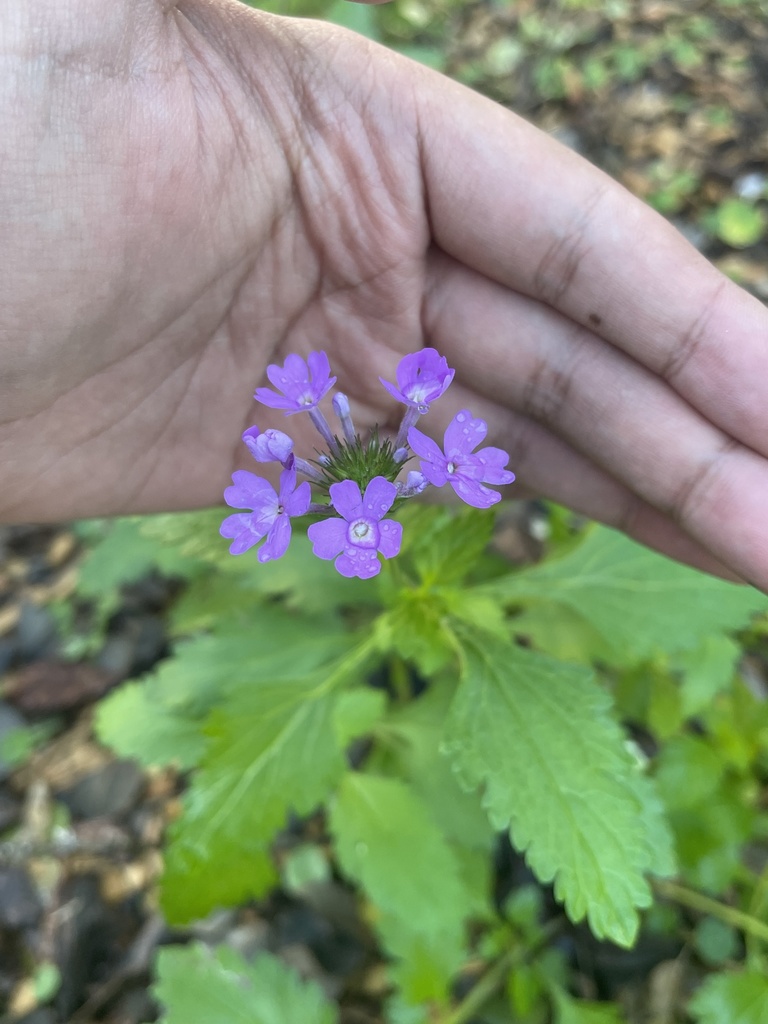
Flowers are borne in dense, rounded to flat-topped clusters at the ends of the stems. Each flower is a slender tube ending in five spreading, notched lobes, about ½ inch across, colored rose-pink to lavender-purple, often with a paler eye. As the cluster ages it lengthens into a short spike, with flowers opening at the top and seeds ripening below. In Florida it can bloom in any month, most heavily from spring into summer.
Fruit
Each flower produces a small dry fruit that splits into four narrow nutlets. Plants self-sow modestly in gardens.
Quick Facts
| Scientific Name | Glandularia tampensis (syn. Verbena tampensis) |
| Family | Verbenaceae (verbena family) |
| Plant Type | Short-lived herbaceous perennial; sprawling groundcover |
| Mature Height | 1–2 ft |
| Mature Spread | 1–3 ft |
| Growth Rate | Fast |
| Sun Exposure | Part shade to full sun |
| Water Needs | Moderate; drought tolerant once established |
| Soil Type | Well-drained sand or sandy loam |
| Soil pH | Acidic to neutral (about 5.0–7.0) |
| Bloom Time | Year-round in Florida; heaviest spring–summer |
| Flower Color | Rose-pink to lavender-purple |
| Fall Color | None; evergreen in mild winters |
| Fruit | Small dry fruit splitting into four nutlets |
| Deer Resistant | Moderately |
| USDA Hardiness Zones | 9–10 |
Native Range
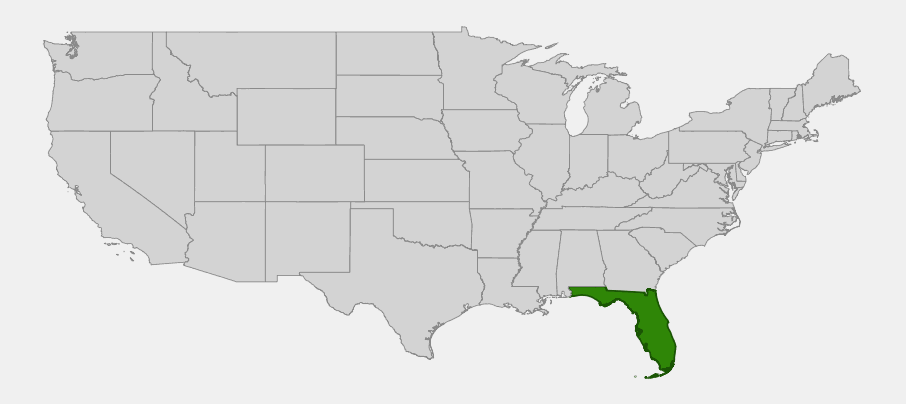
Tampa mock vervain is native only in Florida. The Atlas of Florida Plants lists it as a Florida endemic, and USDA PLANTS and the Lady Bird Johnson Wildflower Center also record it only from Florida. The Wildflower Center describes its habitat as disturbed, sandy, live oak and saw palmetto and pine and saw palmetto woodlands near the Atlantic and Gulf coasts of central Florida.
Its name refers to Tampa, and the Tampa Bay region is at the heart of its small range. It favors sandy soils under a broken canopy, at hammock edges and in openings, and it often appears after light disturbance such as fire, storm damage or clearing.
The State of Florida lists Tampa mock vervain as Endangered on the FDACS Regulated Plant Index. Under Florida law, endangered plants may not be harvested from the wild without permission from the landowner and the appropriate state permits. Populations remain at risk from coastal development, fire suppression, and the dense shade and competition that follow when natural disturbances are excluded.
📋 Regional plant lists featuring Tampa Mock Vervain: North & South Florida
Growing & Care Guide
Tampa mock vervain is one of the easiest Florida endemics to grow, and it rewards gardeners with nearly continuous flowers. Because it is state-listed as Endangered, buy plants only from nurseries that propagate them, and never dig, cut or collect seed from wild plants. Many Florida native nurseries carry it, often under the name Tampa verbena.
Light
It does best in part shade or filtered sun, especially afternoon shade, as under high pines or at the edge of oaks. It also grows in full sun if the soil does not dry out completely, but it may look stressed in the hottest months.
Soil & Water
Plant it in well-drained sandy soil. It does not need rich soil or fertilizer. Water regularly for the first few weeks after planting. Established plants tolerate dry spells but flower more steadily with occasional watering during long droughts. Avoid soggy soil, which causes root rot.
Planting Tips
Plant nursery-grown plants 18 to 24 inches apart as a groundcover, or in small groups in a butterfly garden or at the edge of a woodland bed. It mixes well with other part-shade natives such as scarlet sage and beautyberry. Planting Tampa mock vervain from nursery stock is encouraged, but never collect it from the wild; it is listed as Endangered by the State of Florida.
Pruning & Maintenance
Trim back leggy stems after a heavy flush of bloom to encourage fresh, compact growth and more flowers. Individual plants are short-lived, often lasting only two or three years, but they reseed and root along their stems. Let some seedlings grow or root a few cuttings each year to keep a planting going.
Propagation
Stem cuttings root easily in a moist, well-drained mix, and stems that have rooted where they touch the ground can be cut off and replanted. Seed can be sown in spring. Propagate only from garden or nursery plants, not from wild populations.
Landscape Uses
- Butterfly and pollinator gardens: nearly year-round nectar in Florida
- Part-shade groundcover: under high pines or at the edge of oak canopies
- Woodland edges: informal, sprawling plantings with other native wildflowers
- Containers and hanging baskets: its trailing stems spill over edges
- Conservation gardens: growing a state-listed Florida endemic from nursery stock
Wildlife & Ecological Value
Like other verbenas, Tampa mock vervain is a dependable nectar plant, and its long blooming season makes it especially valuable in Florida gardens.
For Pollinators
The tubular flowers are visited by butterflies, including swallowtails, sulphurs, skippers and hairstreaks, and by long-tongued bees and day-flying moths. Because it blooms in almost every month in Florida, it provides nectar when few other plants are flowering.
For Birds
Small seed-eating birds may take the nutlets, but it is not a significant bird food. Hummingbirds occasionally visit the flowers.
For Mammals
It has little value to mammals and is not a preferred browse plant.
Ecosystem Role
In its natural habitat it is an early colonizer of sunny gaps and lightly disturbed sandy soil, flowering heavily in the first years after an opening appears and fading as shade and competition return. It depends on periodic fire and other disturbances that keep coastal woodlands open.
Cultural & Historical Uses
The American botanist George Valentine Nash described this plant in the 1890s as Verbena tampensis, naming it for the Tampa area of Florida. John Kunkel Small later moved it to Glandularia, the genus of mock vervains that differ from true Verbena in their showier, flat-topped flower clusters and other technical features. Some references still list it under Verbena.
Because it is so narrowly distributed, Tampa mock vervain has been a focus of conservation interest in Florida for decades. It is listed as Endangered by the State of Florida, and conservation groups and botanical gardens have helped keep it in cultivation.
Today it is one of the best-known examples of a rare Florida plant that has become a common garden plant through nursery propagation. Growing it from nursery stock spreads awareness of Florida’s endemic flora without taking anything from wild populations.
Frequently Asked Questions
Is Tampa mock vervain endangered?
Yes. It is listed as Endangered by the State of Florida (FDACS Regulated Plant Index) and is endemic to Florida per the Atlas of Florida Plants. It is legal and encouraged to grow nursery-propagated plants, but never collect plants, cuttings or seed from the wild.
Is Tampa mock vervain the same as Tampa verbena?
Yes. Tampa verbena and Tampa vervain are other common names for Glandularia tampensis, which is also listed in some references as Verbena tampensis.
Does it need full sun?
No. It grows best in part shade or filtered light, especially with shade in the afternoon. In full sun it needs more consistent moisture.
Why do my plants die after a couple of years?
Tampa mock vervain is naturally short-lived. Keep a planting going by letting it reseed, allowing stems to root where they touch the ground, or rooting a few cuttings each year.
Will it attract butterflies?
Yes. Its long-tubed flowers are a reliable nectar source for many butterflies, including swallowtails, sulphurs and skippers, and it blooms almost year-round in Florida.

Looking for a nursery that carries Tampa Mock Vervain?
Browse our native plant nursery directory: Florida