
Leavenworth’s Goldenrod (Solidago leavenworthii)
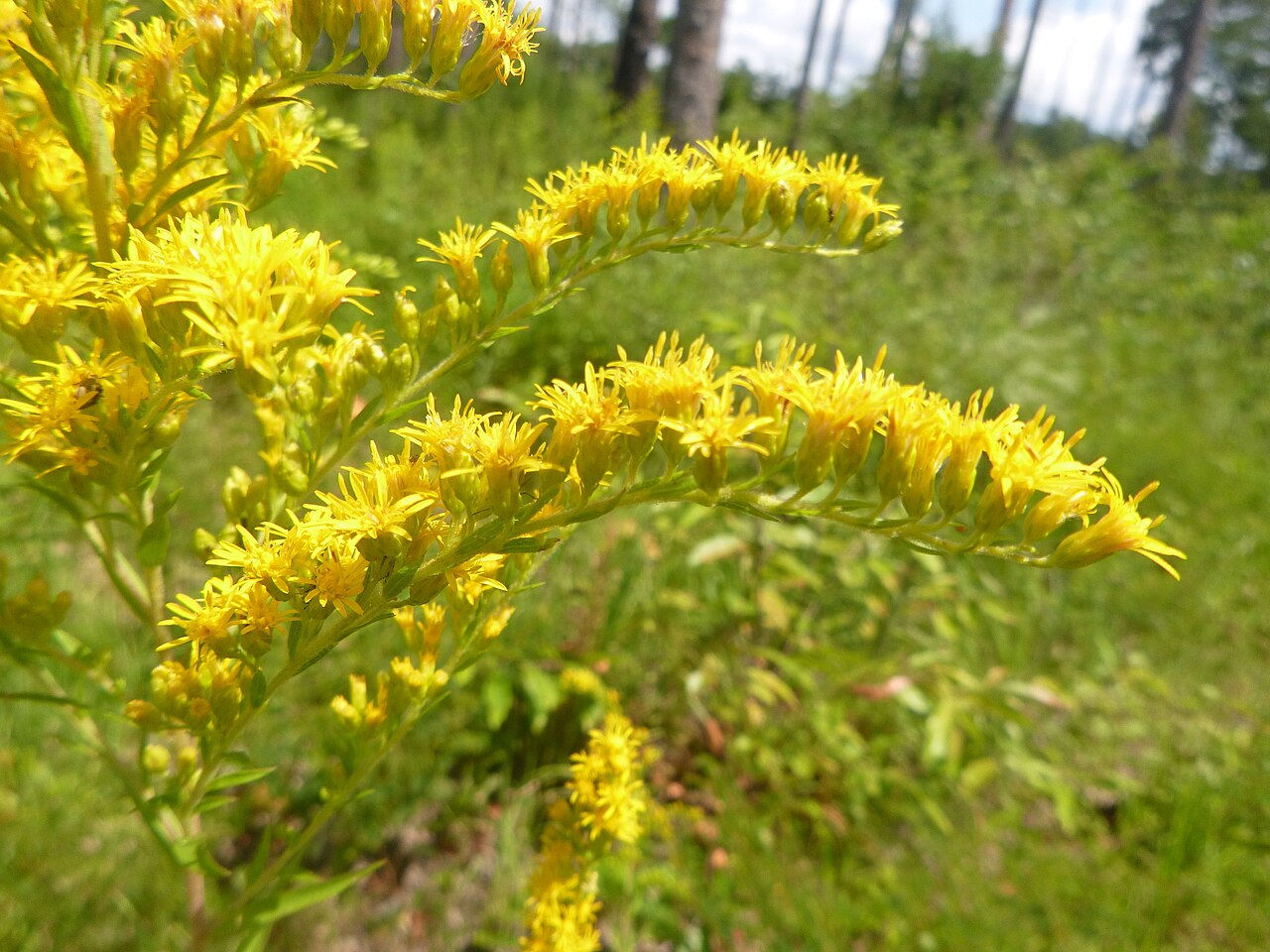
Solidago leavenworthii, Leavenworth’s Goldenrod, is a tall, late-blooming goldenrod of the southeastern Coastal Plain. From late summer into early winter, its leafy stems, 3 to 6 feet tall, end in large, arching plumes of small golden-yellow flower heads. It belongs to the aster family (Asteraceae) and grows in moist, sunny places: wet pine savannas and flatwoods, pond-cypress savannas, marsh and pond edges, wet prairies, and old fields and roadsides with damp soil.
Leavenworth’s goldenrod is the southern counterpart of the widespread giant goldenrod (Solidago gigantea). Goldenrod expert John Semple of the University of Waterloo notes that it replaces that species on the outer Atlantic Coastal Plain and in Florida, and that its leaves have a distinctive dark, somewhat olive-green color. It spreads by rhizomes into small clonal patches, and in Florida it grows nearly statewide, south to Miami-Dade County.
Like other goldenrods, it is an outstanding plant for pollinators, especially in fall, when its flowers feed native bees, wasps, butterflies and migrating monarchs. It does not cause hay fever: goldenrod pollen is heavy and sticky and carried by insects, not by the wind. This guide covers how to identify it, where it grows, how to use it in Florida and Southeastern gardens, and the surprising story of Thomas Edison’s goldenrod rubber.
Identification
Florida has many goldenrods, and several can be confusing. Leavenworth’s goldenrod is one of the tall, leafy-stemmed species with plume-like flower clusters. Look for its narrow, dark olive-green, mostly finely toothed leaves, its lack of a basal rosette at flowering, its moist habitat, and its late bloom.
Stems
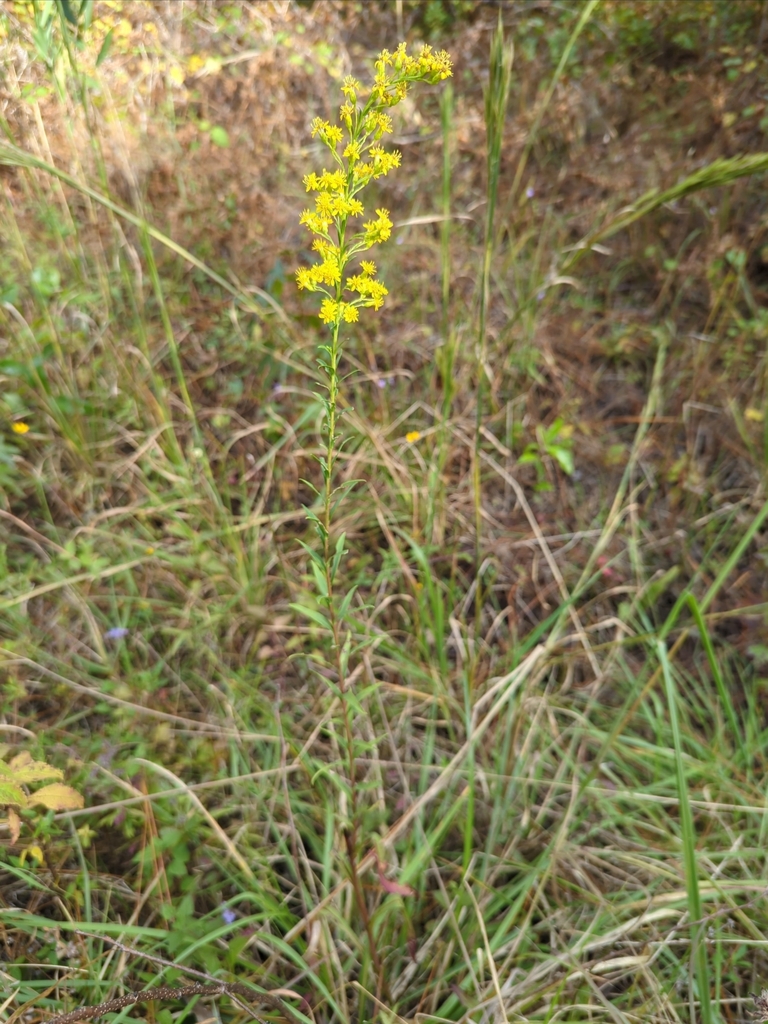
Stems are erect, usually 3 to 4 feet tall and sometimes up to 6 feet, often reddish or purplish toward the base, and finely hairy, especially in the upper part. They grow from creeping rhizomes, so plants form small colonies of several to many stems. Stems often bear round galls caused by goldenrod gall insects.
Leaves
The leaves are alternate, narrowly lance-shaped and pointed, 2 to 5 inches long, and crowded along the stem, becoming smaller toward the top. They are a dark, somewhat olive green. The Flora of North America describes the mid and upper stem leaves as finely toothed, with 1 to 10 small teeth, while some leaves may be untoothed. Lower leaves usually wither before flowering.
Flowers
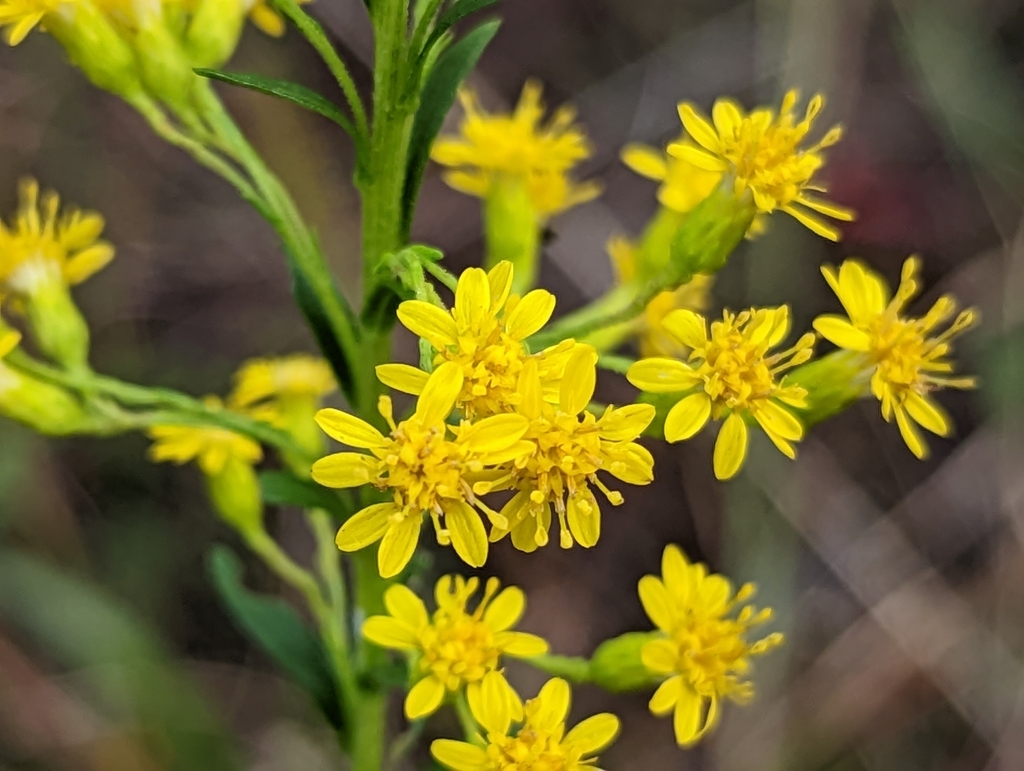
The flower heads are small, about ¼ inch long, and crowded along the upper sides of spreading, arching branches, forming a broad, plume-like cluster (a secund panicle) at the top of the stem. Each head has several short, bright yellow ray florets and a few yellow disk florets. The Lady Bird Johnson Wildflower Center lists bloom from August through December, and in South Florida some plants flower into winter.
Fruit & Seeds
After flowering, each floret forms a tiny, slightly hairy achene topped with a tuft of white bristles (pappus) that carries it on the wind. Seed heads are fluffy and whitish in late fall and winter.
Similar Species
Tall goldenrod (Solidago altissima), common on dry roadsides and old fields, has grayish, more hairy leaves with prominent veins. Twistleaf goldenrod (S. tortifolia) has narrow, often twisted leaves and grows in drier, sandy sites. Seaside goldenrod (S. sempervirens) has thick, fleshy, smooth leaves and grows near salt water.
Quick Facts
| Scientific Name | Solidago leavenworthii Torr. & A. Gray |
| Family | Asteraceae (aster family) |
| Plant Type | Herbaceous perennial wildflower; spreads by rhizomes |
| Mature Height | 3–4 ft (up to about 6 ft) |
| Mature Spread | 2–3 ft; slowly forms small colonies |
| Growth Rate | Fast |
| Sun Exposure | Full sun to light shade |
| Water Needs | Moderate to high; moist to wet soil |
| Soil Type | Sandy, loamy or mucky soils; tolerates poor soil |
| Soil pH | Acidic to near neutral (about 5.0–7.0) |
| Bloom Time | August–December |
| Flower Color | Golden yellow |
| Fall Color | Fluffy whitish seed heads in late fall and winter |
| Fruit | Tiny achenes with a tuft of white bristles |
| Deer Resistant | Moderate |
| USDA Hardiness Zones | 8–10 |
Native Range
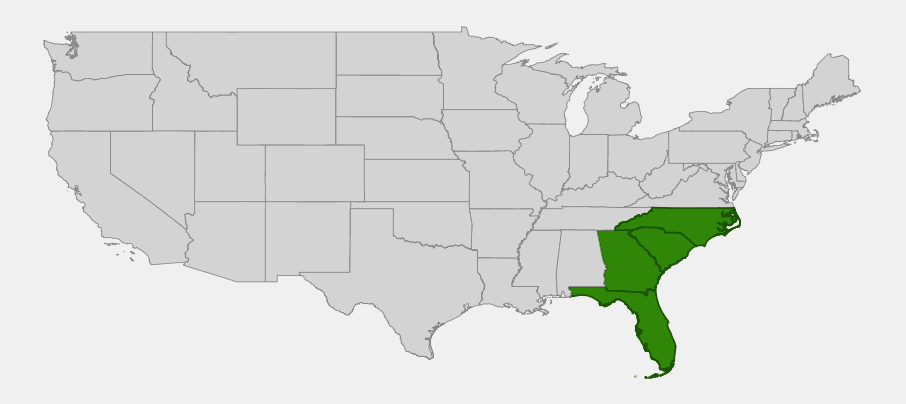
Leavenworth’s goldenrod is a southeastern Coastal Plain species. USDA PLANTS and the Lady Bird Johnson Wildflower Center record it from North Carolina, South Carolina, Georgia and Florida. NatureServe describes it as a plant of the outer Coastal Plain from southeastern North Carolina south to Florida.
Florida is the center of its range. It grows through most of the state, from the Panhandle and the Big Bend south through the peninsula, and the Institute for Regional Conservation records it south to Miami-Dade County and the Monroe County mainland, including the Big Cypress region. In the Carolinas and Georgia it is mainly found in the lower Coastal Plain, close to the coast.
The Flora of the Southeastern United States lists its habitats as wet pine savannas, wet pine flatwoods, pond-cypress savannas, pond margins and marshes, and also many other wet and dry habitats, including disturbed areas in pine flatwoods. It is a frequent plant of damp roadsides, ditches and old fields, and it responds well to fire, sending up vigorous new shoots from its rhizomes after a burn.
📋 Regional plant lists featuring Leavenworth’s Goldenrod: North & South Florida · Alabama, Georgia & Mississippi · North & South Carolina
Growing & Care Guide
Leavenworth’s goldenrod is an easy, fast-growing perennial for moist, sunny gardens in Florida and the coastal Southeast. The Institute for Regional Conservation notes that it is grown by enthusiasts and occasionally by native plant nurseries, and it can be found at Florida native plant sales. It is best for natural landscapes, wildflower meadows, rain gardens and habitat restorations, where its spreading habit is an asset.
Light
Full sun gives the strongest stems and the heaviest bloom. It tolerates light shade, but in more shade it flops and flowers less.
Soil & Water
It prefers moist to wet, sandy or loamy soil low in nutrients, and it tolerates periodic flooding. Once established it can survive short dry spells, but it does best where the soil stays moist most of the year. The Institute for Regional Conservation rates its drought tolerance as moderate and its salt-wind tolerance as high, but it does not tolerate flooding by salt or brackish water. Fertilizer is unnecessary and makes the stems weak.
Planting Tips
Plant in spring through early summer, spacing plants 2 to 3 feet apart. Place it at the back of a wildflower bed or in a meadow, rain garden, or along a pond or ditch edge, where its height and spread are welcome. Pair it with other late bloomers such as blazing stars, asters and mistflower for a long fall show.
Pruning & Maintenance
If you want shorter, bushier plants, cut the stems back by about a third in early summer. Leave the seed heads standing through winter for birds, and cut the old stems to the ground in late winter. Remove unwanted shoots at the edges of the colony each spring if it spreads beyond its space.
Propagation
Divide clumps in late winter or early spring, or dig rooted rhizome sections from the edge of a colony. It also grows easily from seed sown on the soil surface in fall or spring; seedlings may flower in their first or second year.
Landscape Uses
- Pollinator and butterfly gardens: a major late-season nectar source for bees, wasps and butterflies
- Rain gardens and pond edges: in moist, sunny spots that flood briefly
- Wildflower meadows: with grasses, blazing stars and asters for fall color
- Habitat restoration: in wet flatwoods and savannas within its native range
- Back of the border: a tall, bold plant for the rear of informal beds
Wildlife & Ecological Value
Goldenrods are among the most valuable native plants for insects, and Leavenworth’s goldenrod blooms when few other plants in Florida and the coastal Southeast are flowering.
For Pollinators
The abundant fall flowers attract a wide range of native bees, including bumblebees, sweat bees and mining bees, as well as wasps, flies, beetles and butterflies. The Institute for Regional Conservation notes that it attracts native bees and other beneficial insects. Migrating monarchs and other fall butterflies use goldenrod nectar along the coast. Goldenrods are also host plants for many moth caterpillars.
For Birds
The many insects drawn to the flowers and leaves are an important food source for birds, which the Institute for Regional Conservation highlights. In winter, the seeds feed sparrows, finches and other seed-eating birds, and the dense colonies give cover to ground-feeding birds.
For Mammals
Rabbits and deer may graze young shoots, but mature plants are not a preferred food. Small mammals use the dense stands for cover.
Ecosystem Role
Goldenrod stems host a community of gall-making insects, such as goldenrod gall flies, and the larvae inside the galls feed woodpeckers and chickadees in winter. Because it spreads by rhizomes and recovers quickly after fire, Leavenworth’s goldenrod helps stabilize soil in disturbed, wet flatwoods and is a useful plant in restoration.
Cultural & Historical Uses
The species was named by John Torrey and Asa Gray in the 1840s in honor of Melines Conkling Leavenworth (1796–1862), a U.S. Army surgeon and botanist who collected plants in the South, including Florida, while serving at military posts.
Leavenworth’s goldenrod has an unusual place in the history of American industry. In the late 1920s, Thomas Edison, Henry Ford and Harvey Firestone set up the Edison Botanic Research Corporation to find a domestic source of natural rubber. After testing thousands of plants at his winter estate in Fort Myers, Florida, Edison focused on goldenrods, and the Waterloo Astereae Lab notes that Edison experimentally bred plants of this species for rubber. His selections produced giant plants with much higher rubber content, but goldenrod rubber was never commercially viable, and the work wound down in the years after Edison’s death in 1931.
Goldenrods are often unfairly blamed for fall hay fever, which is usually caused by ragweeds that bloom at the same time. Today Leavenworth’s goldenrod is valued mainly as a pollinator plant, and it is a regular in Florida native wildflower plantings and restoration projects.
Frequently Asked Questions
Does Leavenworth’s goldenrod cause allergies?
Rarely. Goldenrod pollen is heavy and sticky and is carried by insects, not the wind, so little of it reaches people’s noses. Fall hay fever is usually caused by wind-pollinated ragweeds that bloom at the same time.
Will it spread in my garden?
It spreads slowly by rhizomes into small colonies, and it can reseed. It is not as aggressive as tall goldenrod, but give it room, or remove shoots at the edges each spring.
When does it bloom?
Mainly from late summer through fall, roughly August to December. In South Florida some plants keep flowering into winter.
What conditions does it need?
Full sun and moist to wet soil. It grows well in rain gardens, along ponds and ditches, and in damp meadows, and it tolerates poor, sandy soil.
Did Thomas Edison really use this goldenrod for rubber?
Yes. Around 1927 to 1931, Edison bred goldenrods, including this species, in Fort Myers, Florida, as a possible domestic rubber source. The rubber yield was too low to be practical, and the project was abandoned.

Looking for a nursery that carries Leavenworth’s Goldenrod?
Browse our native plant nursery directory: Florida & Georgia · North Carolina · South Carolina