Texas Hercules’ Club (Zanthoxylum hirsutum)
Zanthoxylum hirsutum, commonly called Texas Hercules’ Club, Texas Prickly-ash, Tickletongue, Tingletongue, or Toothache Tree, is a small, thorny, aromatic shrub-tree native to the limestone hills and brush country of central and south Texas. It belongs to the Rutaceae, the citrus family, and like its relatives it carries pungent, citrus-scented foliage and bark that contains compounds capable of producing a tingling, numbing sensation on the tongue when chewed — the source of nearly all its common names. This is a tough, unglamorous native with real value in a wildlife or restoration planting: thorny cover for nesting birds, aromatic foliage that is a key host plant for one of North America’s largest butterflies, and a tolerance for rocky, droughty ground that few ornamentals can match.
Texas Hercules’ club typically grows as a dense, many-branched shrub or small tree 6 to 15 feet tall, armed with stout, paired, curved prickles along the stems — a trait shared with its larger Southeastern cousin, Hercules’ club (Zanthoxylum clava-herculis), from which it can be distinguished by its smaller stature, hairier new growth (hirsutum means “hairy” in Latin), and more western, drier range. Small greenish flowers appear in spring on separate male and female plants, followed in fall by small reddish-brown follicles that split open to reveal a single glossy black seed — a detail distinctive enough that one Texas naturalist writer built an entire essay around the plant’s unmistakable fruit.
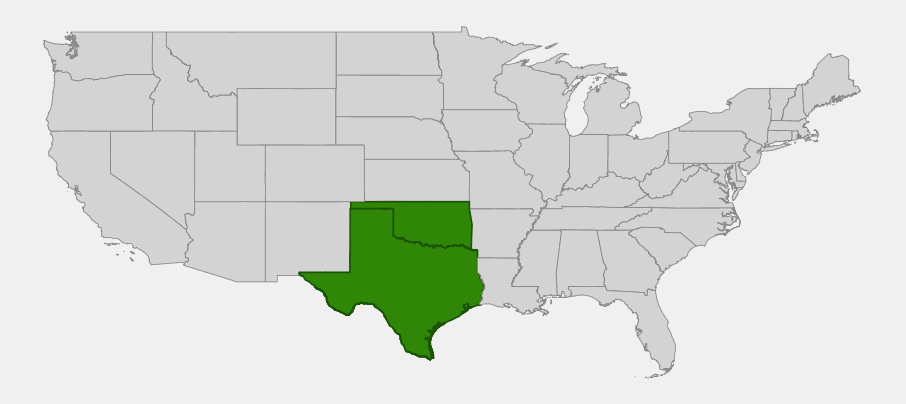
Within its native range — the Edwards Plateau, the Rio Grande Plains, and a narrow finger of territory reaching north along the Red River into southern Oklahoma — Texas Hercules’ club is a common, if easily overlooked, component of limestone canyon understories and brushland thickets. It deserves wider recognition as a low-maintenance native for difficult, rocky sites, and as one of the best host plants a Texas gardener can offer the giant swallowtail butterfly.
Identification
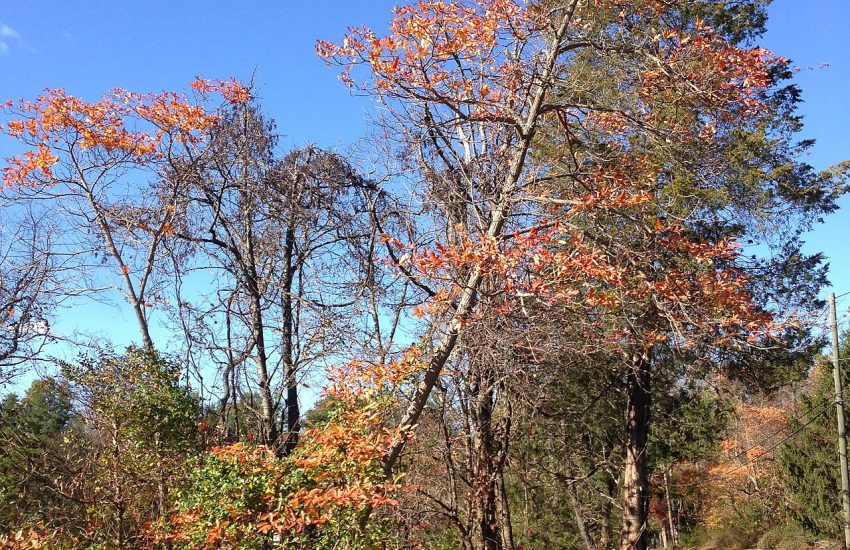
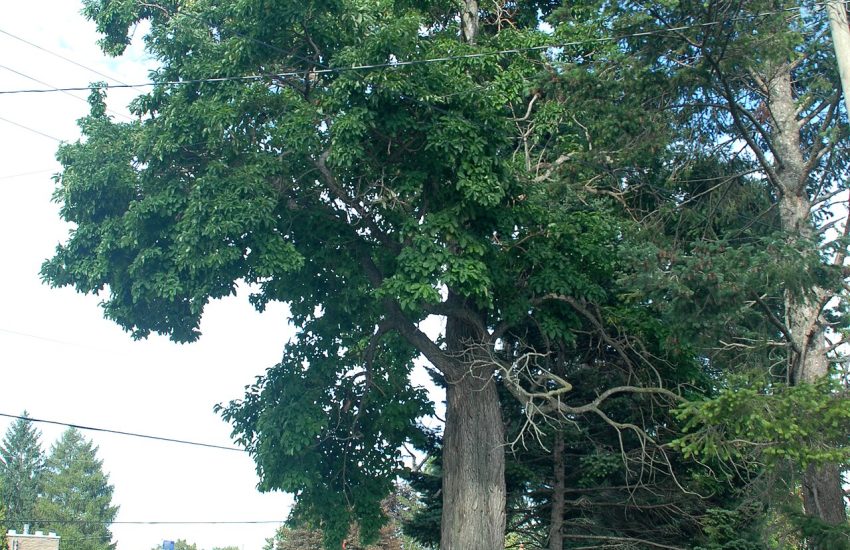
Texas Hercules’ club is a deciduous, multi-stemmed shrub to small tree, usually 6 to 15 feet tall, occasionally taller in sheltered sites. Its dense, twiggy, thorny growth habit makes it instantly recognizable once you know to look for the paired prickles at each node — a feature it shares with few other Texas woody plants outside its own genus.
Bark & Stems
Young stems are gray-brown and covered in fine, soft hairs (hence hirsutum), armed with stout, flattened, curved prickles in pairs at the nodes. Older bark becomes gray and roughened but generally stays thinner and less corky than the much larger Southeastern Hercules’ club. The stems, like the leaves, release a sharp citrus-pepper fragrance when bruised or crushed.
Leaves
Leaves are odd-pinnately compound, 3 to 6 inches long, with 5 to 9 small, oval to elliptic leaflets with finely toothed or scalloped margins. The leaf rachis is often narrowly winged between the leaflets, and both the rachis and young leaflets are covered in fine hairs, giving the foliage a slightly fuzzy texture compared to the smoother-leaved Z. clava-herculis. Crushed leaves release the same lemony, peppery scent as the bark — a reliable field identification clue.
Flowers
Small, greenish-yellow flowers appear in tight axillary clusters in early to mid spring, before or with the new leaves. The species is dioecious, with male and female flowers borne on separate plants; only female plants produce fruit. The flowers are inconspicuous but are visited by small native bees and other insects drawn to the mild fragrance.
Fruit & Seeds
Fruits are small, warty, reddish-brown follicles about ¼ inch across, maturing in late summer to fall and splitting open to expose a single shiny black seed that often hangs briefly from the open follicle by a thin thread before dropping — a distinctive sight on female plants in autumn. The dried fruit, like the bark and leaves, carries the same tongue-numbing compounds.
Quick Facts
| Scientific Name | Zanthoxylum hirsutum |
| Family | Rutaceae (Citrus/Rue family) |
| Plant Type | Deciduous Shrub / Small Tree |
| Mature Height | 6–15 ft |
| Mature Spread | 6–12 ft |
| Growth Rate | Slow to moderate |
| Sun Exposure | Full Sun to Partial Shade |
| Water Needs | Low once established |
| Soil Type | Rocky, limestone, or caliche; well-drained |
| Soil pH | Neutral to alkaline |
| Bloom Time | March – May |
| Flower Color | Greenish-yellow |
| Fall Color | Yellow-green, not showy |
| Fruit | Small reddish-brown follicles with glossy black seed (female plants only) |
| Deer Resistant | Poor — highly palatable and sensitive to browsing pressure |
| USDA Hardiness Zones | 7–9 |
Native Range
Texas Hercules’ club is native to central, south-central, and south Texas, ranging from the Edwards Plateau and Blackland Prairie margins through the Rio Grande Plains, with a narrow northward extension along the Red River valley into a small part of southern Oklahoma. South of the border, it continues into adjacent northeastern Mexico. It does not occur naturally in East Texas, the Texas coast, or the Panhandle.
It grows as an understory shrub in the moist-to-dry woodlands of limestone canyons on the Edwards Plateau, and as a component of thorny brushland in the South Texas plains, often tucked beneath or alongside larger trees and other spiny shrubs. It also turns up along fencerows and disturbed edges within its range, where birds have dropped seed from perches.
The species is listed as globally secure (G4) and is common within central Texas, but NatureServe notes it is extremely sensitive to browsing pressure — in areas with heavy deer populations, young plants are readily eaten back and the species can become locally scarce despite its broad range. Gardeners and land managers protecting young plants from deer during establishment will have the best success.
📋 Regional plant lists featuring Texas Hercules’ Club: South and West Texas
Growing & Care Guide
Texas Hercules’ club rewards low-maintenance gardening on rocky, well-drained soil and asks very little once its root system is established — the main challenge is protecting young plants from deer.
Light
Plant in full sun to partial shade. In the wild it often grows as an understory shrub beneath larger trees, so it tolerates filtered light well, though flowering and fruiting (on female plants) are heaviest with more direct sun.
Soil & Water
This species thrives on thin, rocky, alkaline soils — limestone, caliche, or gravelly ground where many other shrubs fail — and requires sharp drainage. It is highly drought tolerant once established, needing supplemental water only during the first growing season or two. Avoid heavy, poorly drained clay soils and low spots that collect water.
Planting Tips
Install from container stock in fall or early spring. Because young plants are a favorite deer browse, protect new transplants with wire cages or tree tubes until they are tall and woody enough to withstand grazing pressure. If you want fruit (and the butterfly activity that comes with it), plant more than one individual to improve the odds of having both male and female plants, since the species is dioecious.
Pruning & Maintenance
Little pruning is needed beyond removing dead wood and shaping a wayward branch here and there — remember the stems are armed with stout prickles, so wear heavy gloves and long sleeves when working around the plant. It is naturally pest- and disease-resistant and, once past the vulnerable seedling stage, requires minimal upkeep.
Landscape Uses
Despite its thorns — or because of them — Texas Hercules’ club has real landscape value:
- Wildlife thicket or barrier hedge — the prickly growth deters foot traffic and offers secure nesting cover for songbirds
- Butterfly gardens as a larval host plant for the giant swallowtail
- Rock gardens and caliche slopes where few other shrubs will establish
- Native hedgerows in South Texas brush-country restoration
- Understory planting beneath larger native trees on the Edwards Plateau
Wildlife & Ecological Value
Texas Hercules’ club is a disproportionately important plant for its size, chiefly through one remarkable relationship with a very large butterfly.
For Pollinators & Butterflies
Texas Hercules’ club is a primary larval host plant for the giant swallowtail (Papilio cresphontes), North America’s largest butterfly. The caterpillars — which famously mimic bird droppings for camouflage — feed exclusively on the foliage of citrus-family plants like this one, and in parts of its range this prickly ash is one of the few native larval hosts available outside cultivated citrus. The small spring flowers also draw native bees and other small pollinating insects.
For Birds
The dense, thorny branching provides excellent protected nesting sites for small songbirds, sheltering nests from predators that larger, more open shrubs cannot. Birds also consume the small seeds and help disperse them along fencerows and field edges.
For Mammals
White-tailed deer readily browse young foliage and stems, which — while valuable forage — is also the species’ chief vulnerability; heavy deer pressure can suppress regeneration in some areas even though the plant remains common across its overall range.
Ecosystem Role
As a thorny, rocky-soil specialist, Texas Hercules’ club adds structural diversity to Edwards Plateau canyon understories and South Texas thornscrub, filling a niche among the region’s spiny shrub community alongside agarita and elbowbush. Its tolerance of thin, droughty, alkaline soils lets it occupy ground too harsh for less specialized plants.
Cultural & Historical Uses
The common names of this plant — Tickletongue, Tingletongue, and Toothache Tree — all point to the same historical use: chewing a small piece of the bark, leaf, or fruit produces a distinctive tingling, numbing sensation in the mouth, caused by compounds related to those found in Sichuan pepper, a cultivated relative in the same genus. Early settlers and, before them, Indigenous peoples of the region are reported to have chewed the bark to relieve toothache pain, giving the plant its most enduring common name.
The genus name Zanthoxylum comes from Greek words meaning “yellow wood,” a reference to the pale yellowish inner bark and wood shared across the genus. While Texas Hercules’ club was never a significant commercial or medicinal plant on the scale of some of its relatives, its folk use as a homemade remedy for dental pain persisted in rural Texas well into the twentieth century.
Today the plant’s main cultural relevance is ecological rather than medicinal: Texas native-plant gardeners increasingly seek it out specifically to support giant swallowtail populations, reviving interest in a once-overlooked, thorny little tree that was long dismissed as a nuisance in pastures and fencerows.
Frequently Asked Questions
Why is it called Toothache Tree?
Chewing the bark, leaves, or fruit produces a tingling, numbing sensation in the mouth, a trait shared across the Zanthoxylum genus (which includes culinary Sichuan pepper). Historically, people chewed small amounts of the bark to numb the pain of a toothache — hence the name, along with Tickletongue and Tingletongue.
Is Texas Hercules’ club the same as Hercules’ club?
No. They are closely related sibling species in the same genus. Zanthoxylum clava-herculis (“Hercules’ club”) is a larger tree of the southeastern U.S. coastal plain, while Zanthoxylum hirsutum (“Texas Hercules’ club”) is a smaller, hairier-leaved shrub restricted to central and south Texas, a sliver of southern Oklahoma, and northeastern Mexico.
Does it need both male and female plants to fruit?
Yes. The species is dioecious, meaning individual plants are either male or female. Only female plants produce the reddish follicles and black seeds; a male plant nearby is needed for pollination and fruit set.
Is it safe to touch?
Handle with care — the stems carry stout, curved prickles capable of scratching skin and snagging clothing. The numbing effect from chewing the bark or leaves is a historical folk remedy, not a recommendation; it is not a food plant and should not be ingested without expert guidance.
What butterfly relies on this plant?
The giant swallowtail, North America’s largest butterfly, uses Texas Hercules’ club as a larval host plant. Its caterpillars, which resemble bird droppings, feed on the aromatic citrus-family foliage, making this an excellent addition to a Texas butterfly garden.

Looking for a nursery that carries Texas Hercules’ Club?
Browse our native plant nursery directory: Texas
Related reading and associate species: Cedar Elm · Texas Persimmon · Best Shade Trees to Grow in San Antonio