
Thurber’s Sandpaper Plant (Petalonyx thurberi)
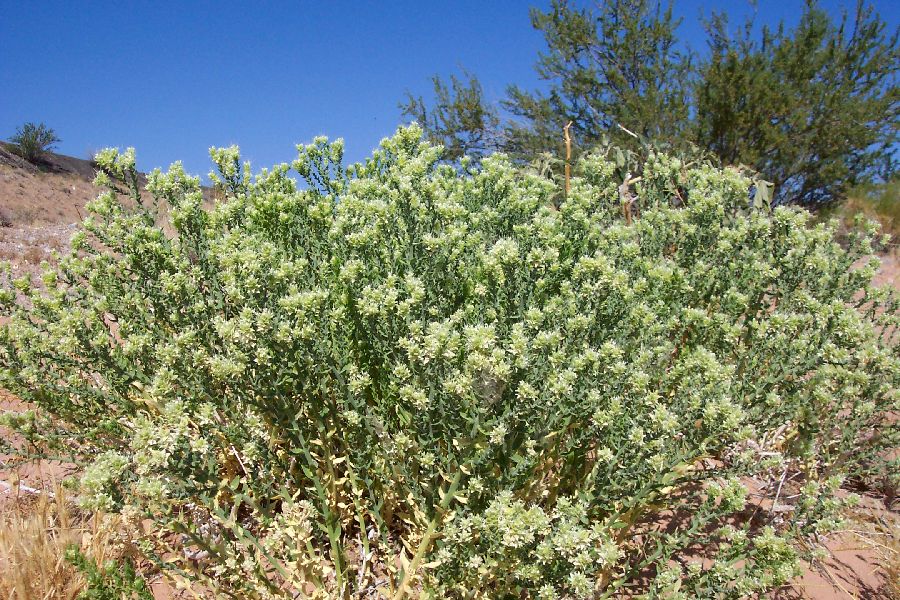
Petalonyx thurberi, known as Thurber’s Sandpaper Plant or common sandpaper plant, is a low, rounded subshrub of sandy washes, dunes and desert flats in the Mojave and Sonoran deserts. Its name describes it well: the stems and leaves are covered in stiff, barbed hairs that make them feel like fine sandpaper, and the leaves cling to cloth much like Velcro. From late spring well into fall it carries crowded clusters of small, creamy white, faintly fragrant flowers at the tips of its many stems.
Sandpaper plant belongs to the stickleaf family (Loasaceae), the same family as the blazing stars (Mentzelia), which share its rough, clinging hairs. In the United States it grows in southeastern California, southern Nevada and western and southern Arizona, and it extends south into Sonora and Baja California in Mexico. It is common in its habitat, and NatureServe ranks the species as globally secure.
Because it flowers through the hottest part of the year, sandpaper plant is an important late-season nectar source for desert bees and other insects. It is rarely sold in nurseries but can be grown from seed in hot, very dry, sandy gardens. This guide covers how to identify it, where it grows, and how it fits into desert landscapes and wildlife habitat.
Identification
Sandpaper plant is easiest to recognize by touch: run a finger along a stem or leaf and it feels harsh, and the leaves tend to stick to clothing. Look for a rounded, gray-green clump of many upright stems topped with dense heads of small white flowers.
Stems & Growth Habit
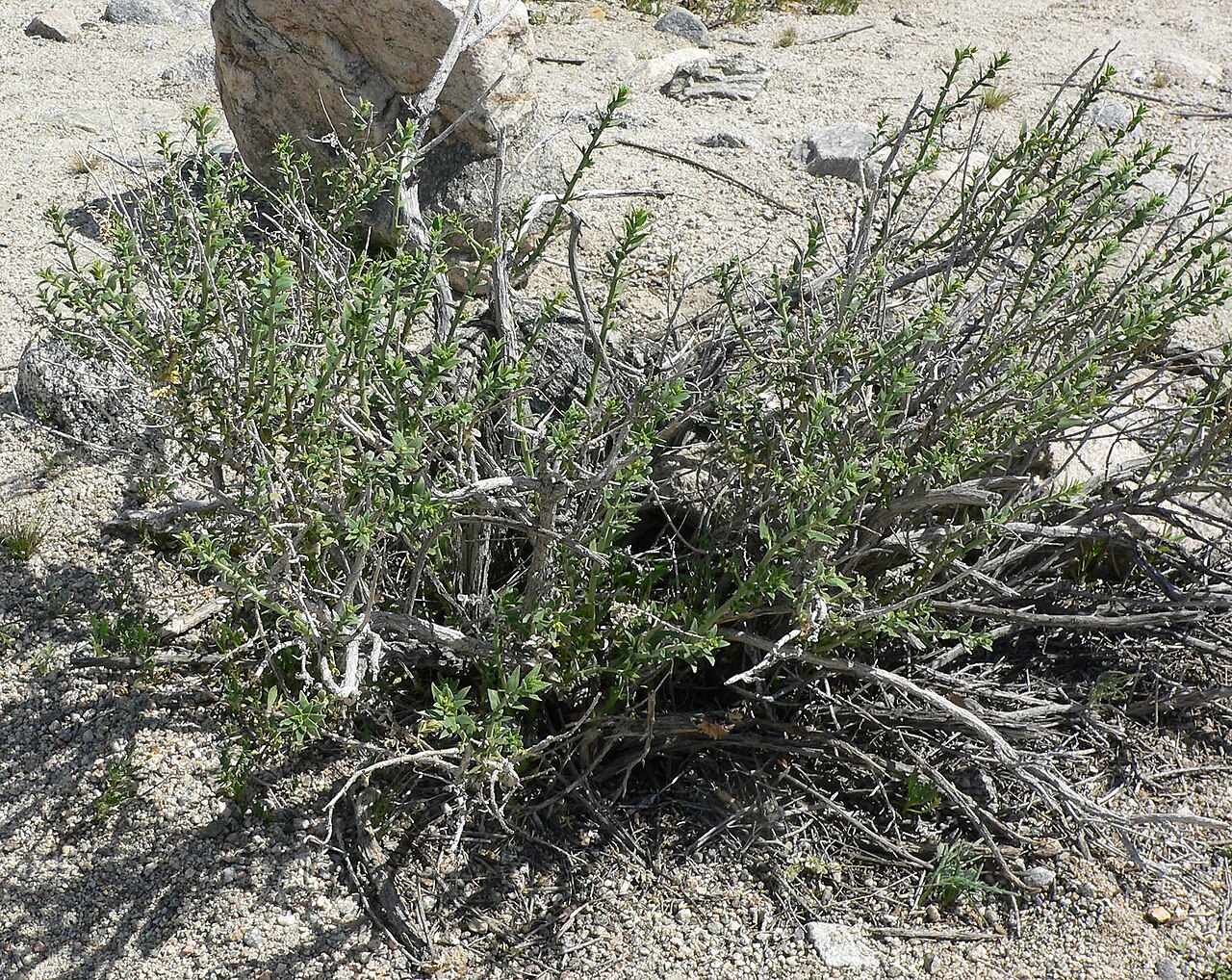
It is a perennial subshrub with a woody base and many slender, branching stems, forming a rounded or spreading clump usually 1 to 3 feet tall and as wide. The stems are pale green to whitish and densely covered with short, rough, barbed hairs. In drought or after frost the plant may die back to its woody base and look like a tangle of dry, straw-colored stems until new growth appears.
Leaves
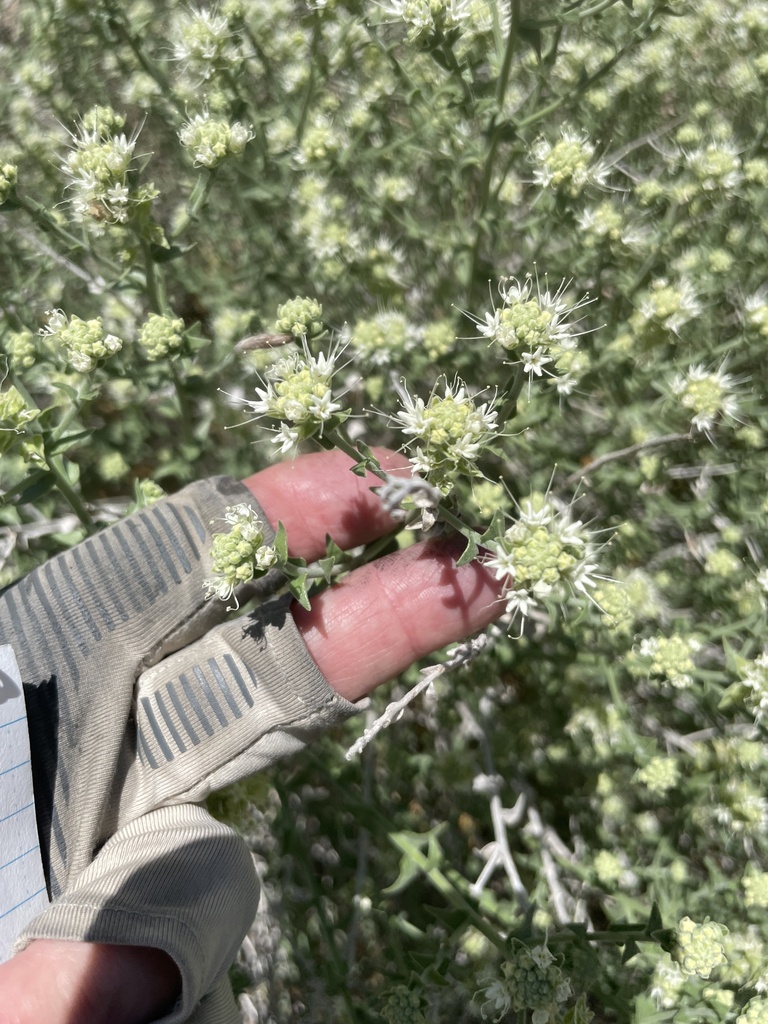
The leaves are alternate, stalkless and often clasping the stem, roughly ½ to 1 inch long. Their shape varies from lance-shaped to triangular or oval, and the edges are smooth or have a few teeth. Like the stems, they are gray-green and rough with barbed hairs that catch on fabric and fur. Leaves near the flower clusters become smaller and bract-like.
Flowers
The flowers are small, about ¼ inch long, white to cream, and packed into short, crowded clusters (racemes) at the stem tips. Each flower has five petals with long, narrow bases (claws) that stay separate near the base but press together toward the tip, so the flower looks tubular. The five stamens poke out through the gaps between the petal claws rather than from the mouth of the flower, an unusual arrangement that gives the genus its name: Petalonyx means “petal claw.” The flowers have a light, sweet scent.
Bloom Season
Flowering begins in spring and can continue into November, with the heaviest bloom from about May to October. Plants in washes that receive summer runoff often flower longest.
Fruit & Seeds
Each flower produces a small, dry, one-seeded fruit enclosed by the persistent calyx. The fruits ripen and fall over a long season, and the rough hairs on the old flower parts can help them catch on animals or wash downstream with runoff.
Similar Species
Narrowleaf sandpaper plant (Petalonyx linearis) has narrow, linear leaves and grows in rocky desert canyons. Shiny-leaved sandpaper plant (P. nitidus) has glossier, less hairy leaves and grows at higher elevations in the Mojave Desert and Great Basin. The rare Death Valley sandpaper plant (P. thurberi subsp. gilmanii) is densely soft-hairy rather than rough and is restricted to the Death Valley region.
Quick Facts
| Scientific Name | Petalonyx thurberi A. Gray |
| Family | Loasaceae (stickleaf family) |
| Plant Type | Perennial subshrub |
| Mature Height | 1–3 ft |
| Mature Spread | 1–3 ft |
| Growth Rate | Moderate |
| Sun Exposure | Full sun |
| Water Needs | Very low; drought tolerant |
| Soil Type | Deep sand or sandy gravel; excellent drainage |
| Soil pH | About 7.0–8.5 |
| Bloom Time | Spring to fall, mainly May–October |
| Flower Color | White to cream |
| Fall Color | None; gray-green to straw-colored stems |
| Fruit | Small one-seeded dry fruit enclosed by the calyx |
| Deer Resistant | Yes; rough, clinging foliage is seldom browsed |
| USDA Hardiness Zones | 8–11 |
Native Range
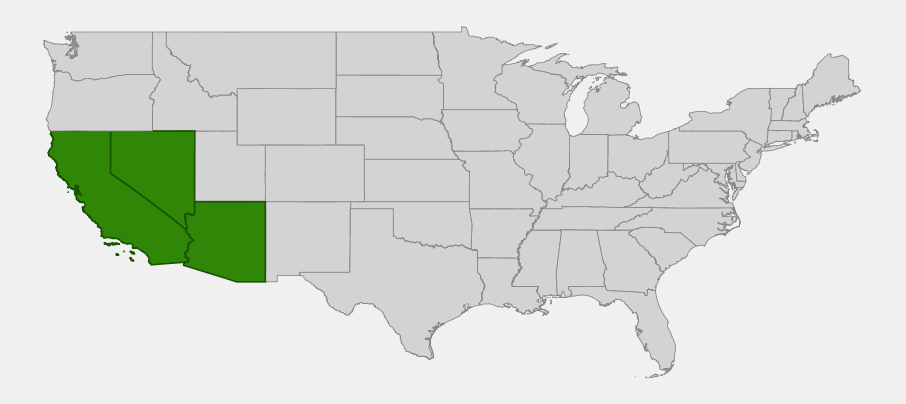
Thurber’s sandpaper plant is native to the Mojave and Sonoran deserts. USDA PLANTS lists it in Arizona, California and Nevada. In California it is widespread in the Mojave and Colorado deserts, from the Death Valley region and eastern Mojave south through Joshua Tree, the Coachella Valley and the Anza-Borrego area. In Nevada it grows in the southern part of the state around Clark and southern Nye counties, and in Arizona it occurs across the western and southern deserts, from the lower Colorado River valley east to the Phoenix and Tucson areas. Its range continues into northwestern Mexico in Sonora and Baja California.
It is a plant of loose, deep sand and sandy gravel: dry washes, sandy flats, dunes and dune margins, alluvial fans and sandy roadsides, mostly at low desert elevations. It is often one of the most noticeable green plants in sandy washes during summer, growing among creosote bush, bursage and other desert scrub. Its deep roots reach moisture stored beneath the sand, which lets it keep growing and flowering long after the spring annuals are gone.
Botanists recognize two subspecies. The typical subsp. thurberi covers most of the range. Subsp. gilmanii, the Death Valley sandpaper plant, is a softer-haired form limited to sandy areas in and around Death Valley and is considered rare in California. Wild plants of either subspecies should be left in place.
📋 Regional plant lists featuring Thurber’s Sandpaper Plant: California & Nevada · Arizona & New Mexico
Growing & Care Guide
Sandpaper plant is a tough, low-maintenance choice for desert gardens with sandy soil, valued for its long summer bloom and its appeal to native bees. It is seldom offered by nurseries, so most gardeners grow it from purchased or responsibly collected seed. Never dig plants from the wild; their deep roots rarely survive transplanting.
Light
Plant it in full sun. In shade it becomes thin and floppy and flowers poorly. It handles reflected heat from walls and paving well.
Soil & Water
It needs deep, loose sand or sandy gravel with fast drainage, like the washes where it grows wild. Avoid clay and any spot where water stands. Water young plants occasionally through their first summer, then rely mostly on rainfall. An occasional deep soak in a long summer drought extends flowering, but frequent watering shortens its life.
Planting Tips
Sow seed or set out small plants in fall or winter so roots grow with the cool-season rains. Plant it in a dry wash garden, on a sandy berm or along a hot, dry path edge with other desert natives. Gravel or sand mulch suits it better than organic mulch.
Pruning & Maintenance
Cut stems back by about half in late winter if the plant has become leggy or has frozen back; it regrows from the woody base. Do not fertilize. Wear gloves when handling it, because the barbed hairs cling to skin and clothing and can be mildly irritating.
Propagation
Grow it from seed sown in fall or winter in sandy, well-drained soil or deep containers, kept barely moist until seedlings appear. Germination can be uneven, so sow generously. Stem cuttings of new growth may also root in pure sand, but seed is the usual method.
Landscape Uses
- Desert wash and sand gardens: one of the few shrubs that thrives in deep, loose sand
- Pollinator gardens: long summer and fall nectar supply for native bees and other insects
- Low-water landscapes: needs little or no supplemental water once established
- Habitat restoration: for sandy washes, dune margins and disturbed sandy ground within its range
- Erosion control: its spreading stems and roots help hold loose sand
Wildlife & Ecological Value
Sandpaper plant is one of the dependable summer bloomers of sandy desert habitats, so it supports insects at a time when few other flowers are available.
For Pollinators
Its small, fragrant white flowers are visited heavily by native bees, especially small solitary bees, as well as wasps, flies and small butterflies. Because it blooms from late spring into fall, it bridges the gap between the spring wildflower season and the late-summer monsoon bloom.
For Birds
Insect-eating birds such as verdins, gnatcatchers and wrens forage among its stems for the insects attracted to the flowers. The clumps also give some low cover for ground-dwelling birds like quail.
For Mammals
The harsh, clinging hairs make the foliage unappealing to most browsers, so deer and rabbits seldom eat it. Small rodents such as kangaroo rats and pocket mice forage for seeds in the sandy habitats where it grows.
Ecosystem Role
Sandpaper plant colonizes open, shifting sand in washes and on dune edges, and its stems trap blowing sand and organic debris. That helps stabilize the ground and creates small sheltered spots where annual wildflowers and other plants can germinate.
Cultural & Historical Uses
Asa Gray described Petalonyx thurberi in the 1850s from specimens collected by George Thurber, a botanist who served with the Mexican Boundary Survey that mapped the new border between the United States and Mexico after 1848. Several desert plants, including Thurber’s cotton and the organ pipe cactus (Stenocereus thurberi), carry his name.
The genus name Petalonyx combines the Greek words for “petal” and “claw,” referring to the long, narrow petal bases through which the stamens emerge. The common name “sandpaper plant” comes from the rough texture of the leaves and stems, a trait shared with other members of the stickleaf family, whose barbed hairs help them cling to passing animals.
For desert travelers, sandpaper plant is a familiar sight in sandy washes along highways through the Mojave and Colorado deserts, often still green and blooming in the heat of August. It is a good reminder that desert sand supports a rich community of plants adapted to heat, drought and shifting ground.
Frequently Asked Questions
Why is it called sandpaper plant?
Its stems and leaves are covered with stiff, barbed hairs that feel rough like fine sandpaper. The same hairs make the leaves cling to clothing and fur.
When does Thurber’s sandpaper plant bloom?
It can flower from spring into November, with the main bloom from about May to October. That long summer bloom makes it valuable for desert pollinators.
Can I grow sandpaper plant in my garden?
Yes, in hot, dry gardens with deep sandy or gravelly soil and full sun within its desert range. It is seldom sold as plants, so most gardeners start it from seed. Do not dig wild plants.
Is sandpaper plant rare?
The species is common and ranked secure by NatureServe. One subspecies, the Death Valley sandpaper plant (subsp. gilmanii), is limited to the Death Valley region and is considered rare in California.
Does sandpaper plant need water in summer?
Not once established. It roots deeply into sand to reach stored moisture. An occasional deep watering in a very long drought can extend flowering, but regular watering tends to shorten its life.

Looking for a nursery that carries Thurber’s Sandpaper Plant?
Browse our native plant nursery directory: Arizona · California · Nevada

