Tiger Lily (Lilium columbianum)
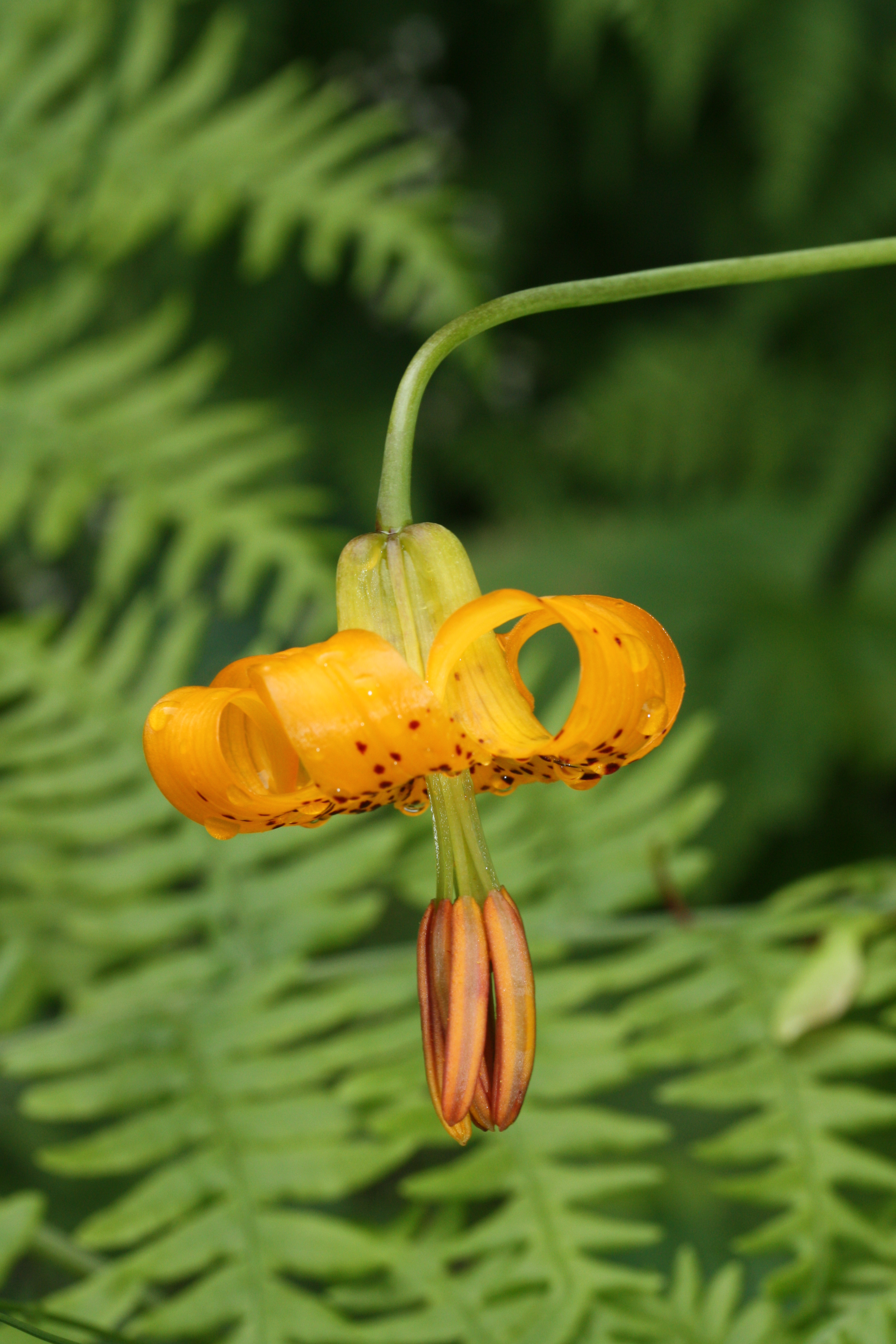
Lilium columbianum, commonly known as Tiger Lily, Columbia Lily, or Oregon Lily, stands as one of the Pacific Northwest’s most spectacular and beloved native wildflowers. This stunning perennial lily captivates observers with its brilliant orange, reflexed petals adorned with bold purple-black spots, creating one of nature’s most dramatic color combinations. Rising gracefully from forest floors and mountain meadows throughout the region, Tiger Lily represents the wild beauty and ecological richness that makes the Pacific Northwest flora so distinctive.
Found naturally from southern British Columbia to northern California and east to Montana, Tiger Lily occupies a special place in both natural ecosystems and cultural traditions. Indigenous peoples throughout its range have long valued this lily not only for its stunning beauty but also as an important traditional food source, carefully harvesting and preparing its nutritious bulbs as part of seasonal subsistence practices that sustained communities for thousands of years.
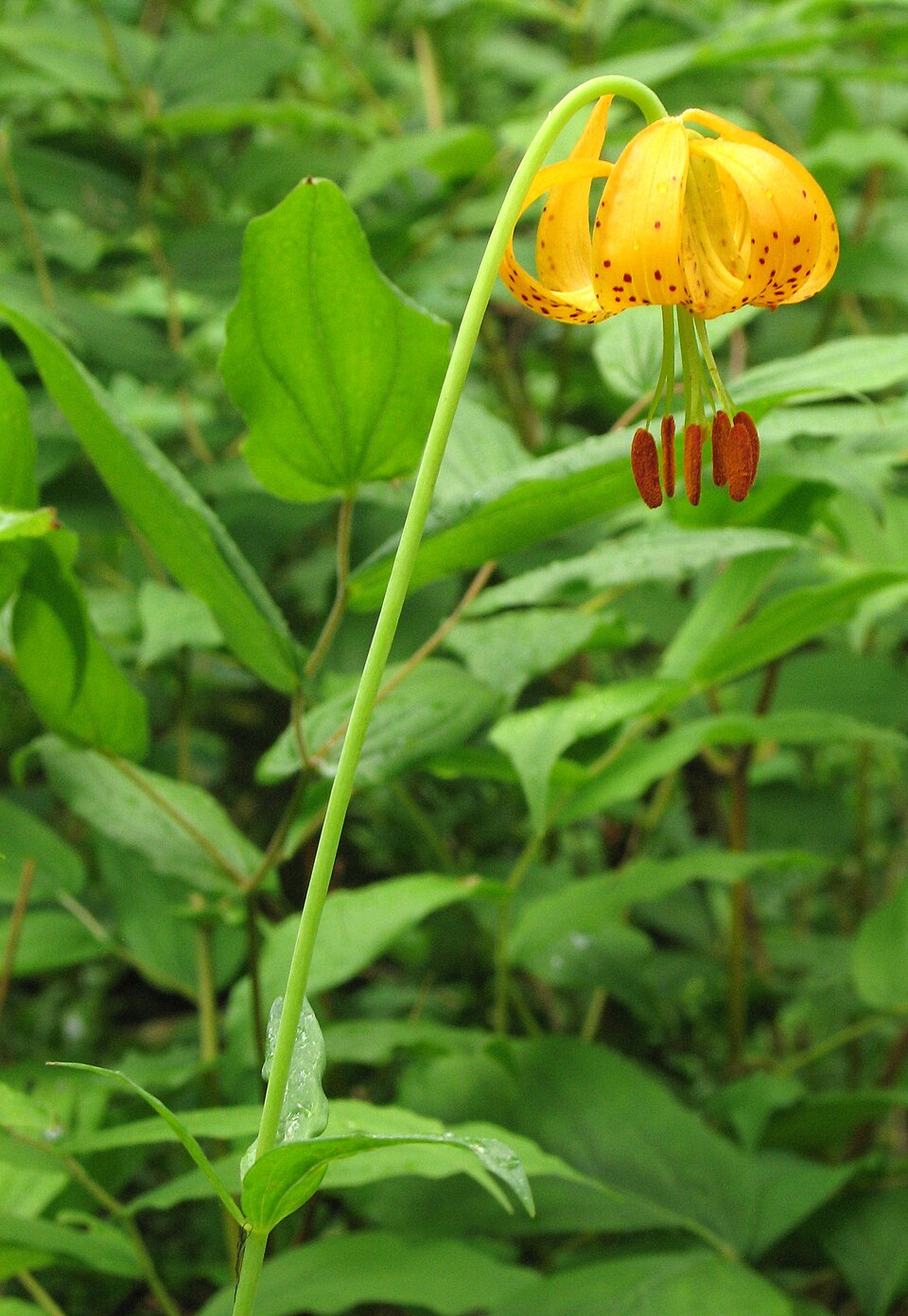
In the modern landscape, Tiger Lily serves as both a symbol of wild Pacific Northwest beauty and an increasingly important component of native plant gardens, restoration projects, and conservation efforts. Its ability to thrive in both forested understories and open meadows, combined with its spectacular summer blooms, makes it a treasure for anyone seeking to cultivate authentic Pacific Northwest landscapes that support local wildlife and preserve our region’s natural heritage.
Quick Facts
| Scientific Name | Lilium columbianum |
| Family | Liliaceae (Lily) |
| Plant Type | Herbaceous Perennial (bulbous) |
| Mature Height | 2–4 feet (occasionally to 6 feet) |
| Growth Rate | Slow (3-5 years from seed to bloom) |
| Sun Exposure | Full Sun |
| Water Needs | Moderate (moist but well-drained) |
| Soil Type | Rich, well-drained woodland soils |
| Soil pH | 5.5–7.0 (slightly acidic to neutral) |
| Bloom Time | June – August |
| Flower Color | Bright orange with dark purple spots |
| Flower Size | 3–4 inches across |
| Fragrance | Lightly scented |
| Fruit | Erect seed capsules |
| Dormancy | Dies back to underground bulb in winter |
| USDA Hardiness Zones | 4–8 |
Identification
Tiger Lily is unmistakable when in bloom, but several key features help identify this distinctive native lily throughout its growing season.
Leaves
The leaves are arranged in distinctive whorls around the stem, a characteristic feature of many true lilies that immediately distinguishes Tiger Lily from other Pacific Northwest wildflowers. Each whorl typically contains 6-12 lance-shaped leaves that measure 2-4 inches long and about 1 inch wide. The leaves are bright green, smooth, and have prominent parallel venation running from base to tip.
The whorled leaf arrangement creates a distinctive tiered appearance on the stem, with 3-6 whorls spaced at regular intervals along the plant’s height. This pattern is particularly noticeable on mature plants and helps identify Tiger Lily even when not in bloom.
Flowers
The flowers are Tiger Lily’s most spectacular and distinctive feature. Each bloom is a masterpiece of natural design, with six reflexed petals (technically tepals) that curve backward to reveal the flower’s interior. The petals are brilliant orange-red to scarlet-orange, heavily spotted with dark purple to nearly black markings that create a dramatic leopard-like pattern.
Each flower measures 3-4 inches across when fully open, with prominent stamens extending well beyond the petals. The anthers are large and dusty with orange pollen, while the style is three-parted. Most plants produce 1-12 flowers, though exceptional specimens in ideal conditions may produce up to 20 or more blooms.
The flowers are turk’s-cap style, meaning the petals are strongly reflexed (curved backward) rather than forming a cup or trumpet shape. This reflexed form is a key identifying characteristic that separates Tiger Lily from other orange lilies.
Stem & Growth Form
The stem is typically 2-4 feet tall, though exceptional specimens can reach 6 feet in ideal conditions. The stem is sturdy, unbranched, and emerges directly from the underground bulb each spring. The stem is green to purplish-green and may have some fine hairs, particularly near the top where the flowers emerge.
The overall growth form is distinctly lily-like: a single, straight stem with whorled leaves and terminal flowers. This architecture is quite different from other Pacific Northwest wildflowers and makes Tiger Lily easy to recognize even from a distance.
Fruit & Seeds
After flowering, Tiger Lily produces erect seed capsules that are smooth, three-chambered, and about 1-2 inches long. The capsules are initially green, turning brown as they mature in late summer. When ripe, they split open along three lines to release numerous flat, disk-shaped seeds arranged in six neat stacks within the capsule.
The seeds are light brown, papery, and equipped with a narrow wing that helps them disperse on the wind. This wind-dispersal mechanism helps explain how Tiger Lily can colonize suitable habitats across the landscape.
Native Range
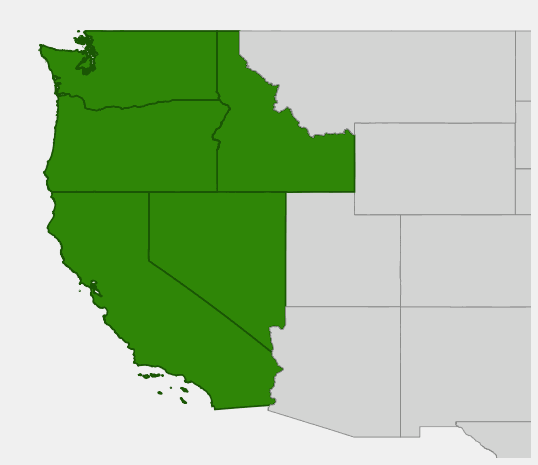
Native range of Tiger Lily. USDA (County-Level Data)
Tiger Lily has a broad distribution across the Pacific Northwest and into the northern Rocky Mountains, reflecting its adaptability to diverse forest and meadow conditions throughout the region.
The species ranges from southern British Columbia south to northern California, with the bulk of its population occurring in Washington and Oregon. Eastward, it extends through the Cascade Range and into the northern Rocky Mountains of Idaho and western Montana. There are also scattered populations in the Sierra Nevada of California, extending as far south as Fresno County in isolated high-elevation sites.
Elevational distribution is quite broad, from near sea level in coastal areas to over 6,600 feet in montane locations, though most populations occur below 4,000 feet elevation. This broad elevational tolerance reflects the species’ ability to thrive in diverse Pacific Northwest ecosystems.
Tiger Lily typically grows in forest openings, meadows, and woodland edges where it receives filtered sunlight. Common habitats include clearings in Douglas fir and mixed conifer forests, mountain meadows, stream margins, and areas recovering from fire or other disturbances. The species often appears in transitional zones between dense forest and open areas.
📋 Regional plant lists featuring Tiger Lily: Western Oregon & Western Washington · Idaho, Montana & Eastern Washington
Growing & Care Guide
Tiger Lily can be successfully cultivated in Pacific Northwest gardens, though it requires specific conditions and patience to establish properly. Understanding its natural habitat requirements is key to successful cultivation.
Light Requirements
Tiger Lily prefers filtered sunlight or partial shade conditions that mimic its natural forest opening habitat. It performs best with morning sun and afternoon shade, or in locations that receive dappled sunlight throughout the day. Full sun can be tolerated in cooler, moister locations but may cause stress in hotter, drier sites. Deep shade typically results in poor flowering and weak growth.
Soil Conditions
The species requires well-drained but moisture-retentive soil rich in organic matter. In nature, Tiger Lily grows in forest soils with deep leaf litter and organic matter accumulated over decades. Garden soils should be amended with compost, leaf mold, or other organic materials to approximate these conditions.
Drainage is critical — the bulbs are susceptible to rot in waterlogged soils, especially during winter dormancy. However, the soil should never become completely dry during the growing season. A soil pH between 5.5-7.0 is ideal, matching the slightly acidic to neutral conditions typical of Pacific Northwest forest soils.
Planting & Establishment
Tiger Lily can be grown from seed, bulbs, or bulb scales, each method having distinct advantages and timelines. Seeds require patience — plants typically take 3-5 years to reach blooming size from seed. However, seed-grown plants often establish better and live longer than transplanted bulbs.
If planting bulbs, choose healthy, firm specimens and plant them 4-6 inches deep (about three times the bulb height) in fall or early spring. Space bulbs 12-18 inches apart to allow for natural spreading. Mulch around plantings with 2-3 inches of organic mulch to maintain soil moisture and moderate temperatures.
Water Requirements
Consistent moisture during the growing season is essential, but allow the soil to dry somewhat during winter dormancy. Tiger Lily has evolved with Pacific Northwest precipitation patterns and appreciates winter moisture followed by progressively drier conditions through summer. Supplemental irrigation may be needed during extended dry periods, especially for newly planted specimens.
Maintenance
Tiger Lily requires minimal maintenance once established. Allow foliage to die back naturally after flowering to replenish the bulb’s energy reserves. Avoid cutting back foliage until it has yellowed and begun to wither naturally, typically in late summer or fall.
The species may go dormant earlier in dry years, which is a natural adaptation. Resist the urge to water dormant plants excessively, as this can lead to bulb rot.
Wildlife & Ecological Value
Tiger Lily plays important ecological roles in Pacific Northwest forest and meadow ecosystems, providing nectar for pollinators and contributing to biodiversity in native plant communities.
Pollinators
The large, bright orange flowers are primarily adapted for hummingbird pollination, with the reflexed petals and prominent stamens positioned to dust visiting hummingbirds with pollen. Rufous hummingbirds, Anna’s hummingbirds, and other regional species are important pollinators, attracted by the bright color and sweet nectar.
Large butterflies, including swallowtails and fritillaries, also visit the flowers for nectar. The prominent anthers make pollen easily accessible to various flying insects, including bees and beetles that may serve as secondary pollinators.
Seeds & Wildlife
The flat, winged seeds are dispersed primarily by wind, but various small mammals and birds may also consume them. The seed capsules provide food for some bird species during late summer and fall when they split open to reveal their contents.
Habitat Value
Tiger Lily contributes to the structural diversity of forest understory and meadow communities. Its presence often indicates healthy, diverse plant communities with appropriate soil and moisture conditions for supporting sensitive native species.
The species serves as an indicator of ecological integrity — healthy Tiger Lily populations typically indicate undisturbed or properly managed forest and meadow ecosystems.
Cultural & Historical Uses
Tiger Lily holds deep cultural significance for Indigenous peoples throughout the Pacific Northwest, representing one of the most important traditional plant foods in many tribal cultures.
Coast Salish, Nuu-chah-nulth, and many other Pacific Northwest tribes traditionally harvested Tiger Lily bulbs as a significant food source. The bulbs were typically collected in late summer or fall after the foliage died back, when the bulbs had stored maximum energy from the growing season.
Preparation methods varied among tribes but commonly included steaming, boiling, or pit-roasting. The bulbs have a somewhat bitter or peppery flavor and were often used as a seasoning in soups with meat or fish rather than eaten as a primary food. Some tribes developed sophisticated earth ovens specifically for cooking lily bulbs and other root vegetables.
The sustainable harvesting practices developed by Indigenous peoples involved taking only a portion of bulbs from any population, ensuring regeneration and long-term productivity. These traditional management practices represent thousands of years of accumulated knowledge about maintaining healthy Tiger Lily populations.
In some cultures, Tiger Lily also held ceremonial or spiritual significance, with the brilliant flowers symbolizing strength, renewal, or connection to the natural world.
Modern Conservation Efforts
Today, Tiger Lily populations face various pressures including habitat loss, development, and over-collection. Many land management agencies and native plant societies work to protect existing populations and restore Tiger Lily to appropriate habitats.
Conservation efforts focus on habitat protection, seed collection and propagation, and education about sustainable practices. Some restoration projects specifically include Tiger Lily as a target species for reestablishing diverse native plant communities in recovering forest and meadow systems.
Cultivation Challenges & Rewards
Growing Tiger Lily in cultivation presents both challenges and exceptional rewards for dedicated native plant gardeners.
Common Challenges
The slow growth from seed to flowering maturity requires patience and consistent care over several years. Bulb rot during winter dormancy is a common problem in poorly drained soils or areas with excessive winter watering. Deer and rodents may browse both foliage and bulbs, particularly in areas with high wildlife populations.
Establishing the right balance of moisture — adequate during growing season but not excessive during dormancy — can be tricky for beginning growers. The species may also be sensitive to disturbance once established, and transplanting mature plants is often unsuccessful.
Exceptional Rewards
Successfully grown Tiger Lily provides unmatched beauty and satisfaction for native plant enthusiasts. The spectacular summer flowers create dramatic focal points in shade gardens and woodland settings. The plant’s deep cultural significance and ecological value add layers of meaning beyond mere ornamental appeal.
Once established, Tiger Lily can persist and slowly spread for decades, creating increasingly impressive displays over time. The knowledge that you’re preserving and propagating one of the Pacific Northwest’s most magnificent native plants provides deep satisfaction for conservation-minded gardeners.
Garden Design Applications
Tiger Lily works beautifully in several garden settings when its specific requirements are met:
Woodland Gardens: Perfect for naturalizing in shade gardens alongside trilliums, vanilla leaf, and native ferns. Creates spectacular summer color in forest-like settings.
Native Plant Collections: Essential for comprehensive Pacific Northwest native plant gardens, representing one of our most spectacular wildflowers.
Restoration Projects: Valuable for reestablishing diverse native plant communities in appropriate forest and meadow habitats.
Educational Gardens: Excellent for demonstrating traditional Indigenous plant uses and the importance of native plant conservation.
Pollinator Gardens: Provides critical nectar sources for hummingbirds and butterflies during the mid-summer flowering period.
Frequently Asked Questions
Are Tiger Lily bulbs edible?
Yes, Tiger Lily bulbs are edible and have been used as food by Indigenous peoples for centuries. However, proper identification is crucial, as some lily species have toxic bulbs. Never harvest wild bulbs without expert knowledge, and be aware that collecting native plants may be regulated or prohibited in many areas.
How deep should I plant Tiger Lily bulbs?
Plant Tiger Lily bulbs at a depth of 3 times their diameter — typically 4-6 inches deep for mature bulbs. Choose a location with good drainage, as bulbs can rot in waterlogged soil. Plant in fall for spring emergence, or in early spring before growth begins.
When do Tiger Lilies bloom?
Tiger Lilies typically bloom from mid to late summer (July through August in most areas), though timing can vary with elevation and local climate. Each flower lasts only a few days, but each stem produces multiple flowers that open in sequence, extending the blooming period.
Can Tiger Lilies spread and naturalize?
Yes, Tiger Lilies can spread through underground bulblets and, in some cases, through the small dark bulbils that form in the leaf axils. This spreading habit allows them to form natural colonies over time, though the process is relatively slow. In suitable habitat, they can naturalize and form beautiful wild displays.
Are Tiger Lilies deer resistant?
Tiger Lilies are not particularly deer resistant — deer will browse both the flowers and foliage when other food sources are scarce. In areas with heavy deer pressure, you may need to protect plants with fencing or repellents, or choose more deer-resistant native alternatives.
Why didn’t my Tiger Lily bloom this year?
Several factors can prevent blooming: insufficient sunlight (they need at least 4-6 hours of direct sun), bulbs that are too small or young (newly planted bulbs may take 2-3 years to bloom), excessive shade from competing vegetation, or stress from drought or poor drainage. Ensure optimal growing conditions and be patient with young plantings.

Looking for a nursery that carries Tiger Lily?
Browse our native plant nursery directory: Oregon · Washington