
Turtlehead (Chelone glabra)
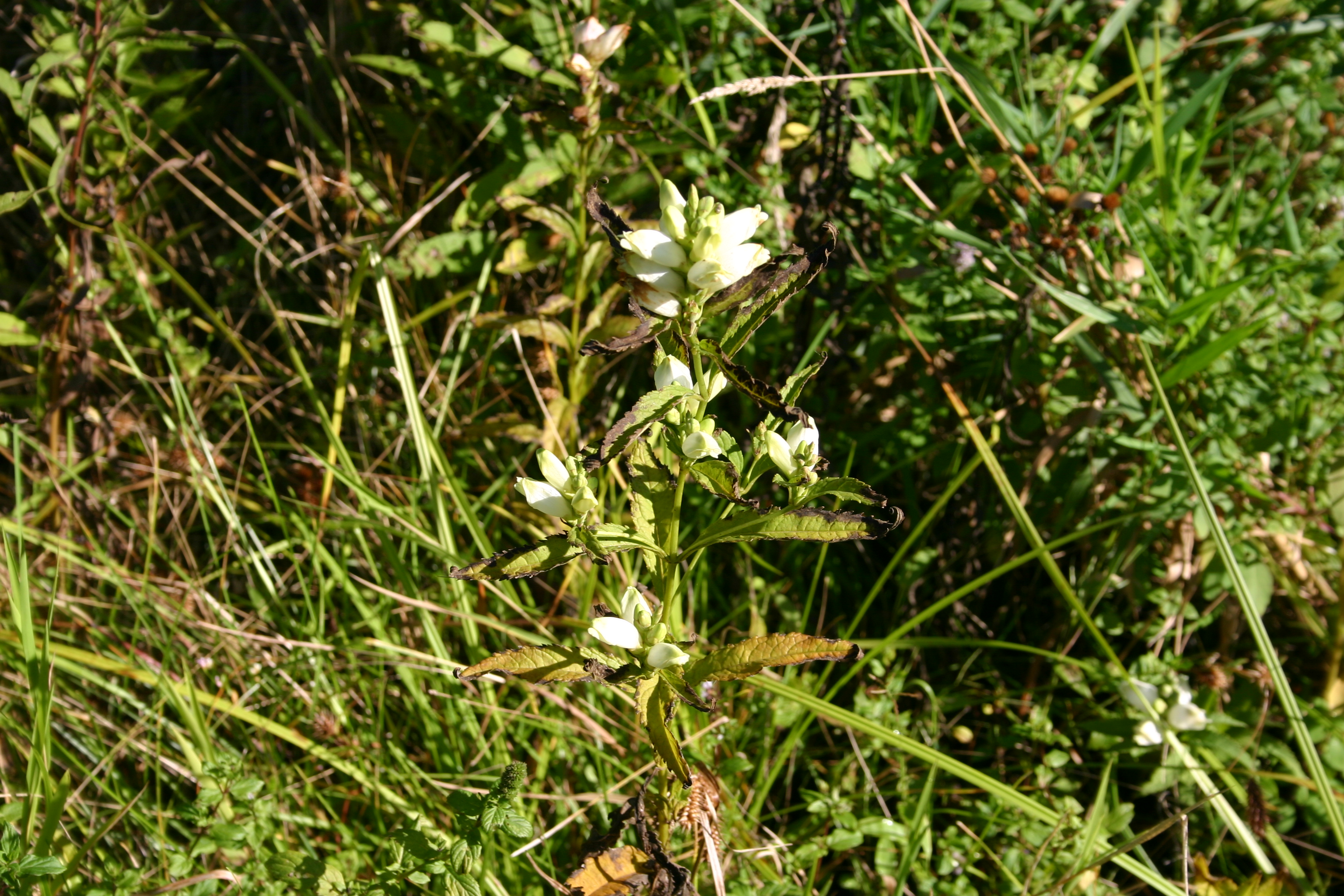
Chelone glabra, the White Turtlehead or Turtlehead, is one of the most architecturally distinctive native wildflowers of eastern North American wetlands. A member of the Plantaginaceae (plantain) family, it produces striking white, two-lipped flowers in late summer and early fall — a season when few other native wetland plants are in bloom — along erect 2 to 4-foot stems that rise from the moist, boggy ground of stream margins, pond edges, and wet meadows. The common name perfectly describes the flowers: each tubular, hooded bloom resembles a turtle’s head with closed mouth, a feature so distinctive that it makes Chelone glabra unmistakable at a glance.
Turtlehead blooms from August through September, filling an important late-season ecological niche as a nectar source when many summer flowers have faded. Its primary pollinator is the bumblebee — specifically, the queen bumblebee, which is large and strong enough to force open the tightly closed lips of the flower and access the nectar within. Smaller bees cannot enter, giving bumblebees near-exclusive access to this valuable late-season nectar resource. Turtlehead is also the exclusive larval host plant of the Baltimore Checkerspot butterfly (Euphydryas phaeton), one of the most visually striking native butterflies of northeastern wetlands.
In the garden, Turtlehead is an excellent choice for rain gardens, wet meadow plantings, pond edges, and any area with consistently moist to wet soil. It naturalizes readily in appropriate conditions, spreads into attractive clumps, and provides late-season color that extends the garden’s bloom season well into fall. Its upright form, attractive dark green foliage, and long bloom season make it a valuable and underused native perennial for water-wise and wildlife-friendly landscape designs throughout the eastern United States.
Identification
Turtlehead is an upright, clump-forming perennial 2 to 4 feet (60–120 cm) tall. The stems are square in cross-section (a characteristic of the Plantaginaceae/Scrophulariaceae alliance), smooth (glabra = smooth), and bear opposite pairs of toothed leaves. The most distinctive feature is the flower: a tightly closed, two-lipped tube that closely resembles a turtle’s head with its mouth closed.
Leaves
Leaves are opposite, lance-shaped to broadly lance-shaped, 3 to 6 inches long and 1 to 2 inches wide, with sharply serrated (toothed) margins. The upper surface is smooth and dark green; the lower surface is paler. Leaves taper to a pointed tip and have a short petiole (stalk). The combination of opposite arrangement, lanceolate shape, and toothed margins is consistent throughout the plant and useful for identification in the vegetative state before flowering.
Flowers & Fruit
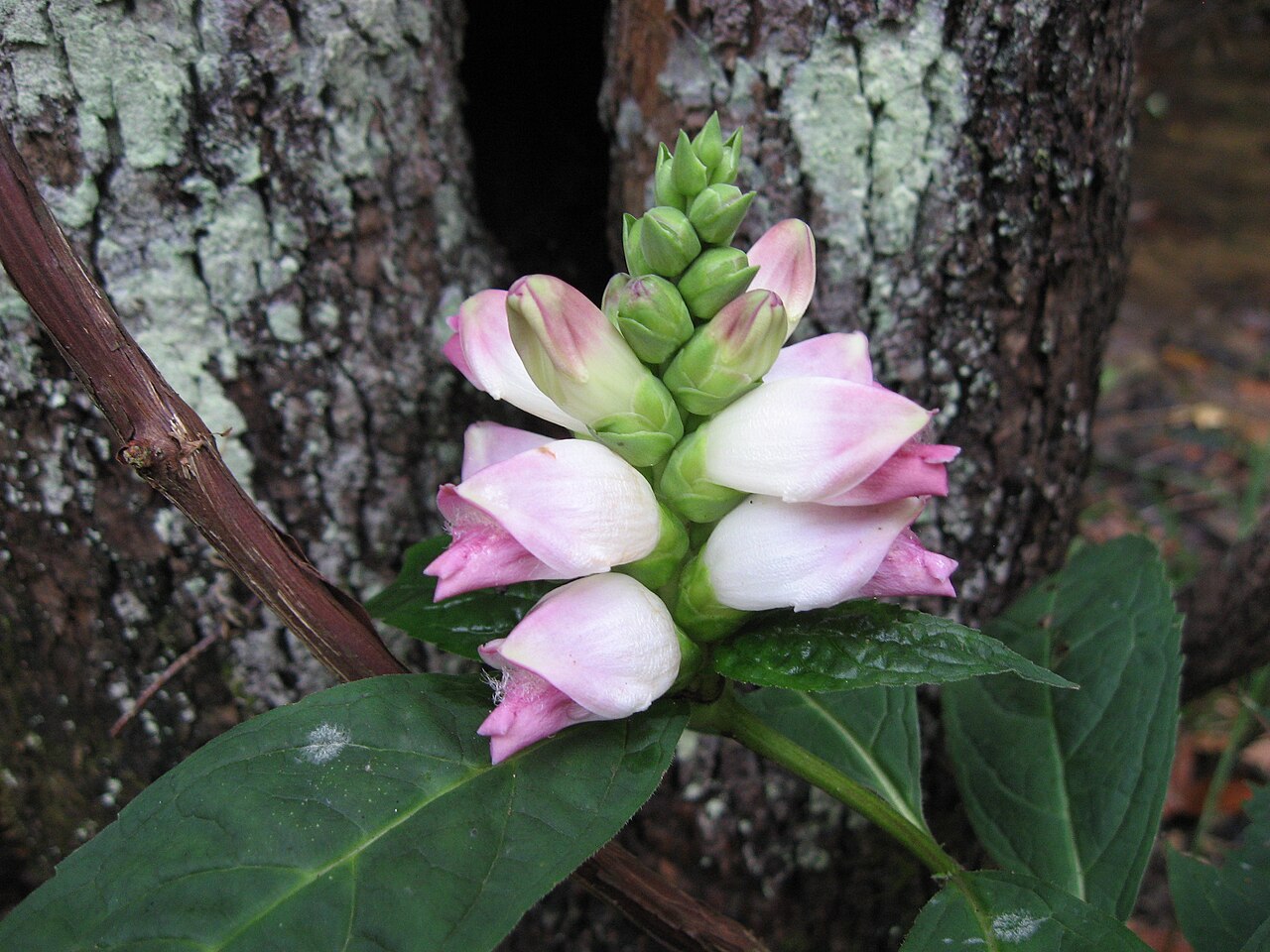
Flowers are borne in dense terminal spikes at the top of each stem. Individual flowers are tubular and strongly bilaterally symmetrical (zygomorphic), with two lips: the upper lip forms a rounded hood, and the lower lip has three lobes, the central one typically bearded with white hairs and often marked with yellow at the throat. Flowers are white, sometimes tinged with pink or lilac, 1 to 1½ inches long. The closed lips create the turtle-head silhouette that gives the plant its name. A sterile stamen (staminode) with a yellow bearded tip protrudes slightly from the corolla throat.
Flowers bloom from August through September (sometimes into October in the southern part of the range). After pollination, the flowers produce oval seed capsules that split to release flat, papery, winged seeds. The brown seed capsules persist on the stems through winter and remain decorative, providing subtle winter interest in the landscape.
Quick Facts
| Scientific Name | Chelone glabra |
| Family | Plantaginaceae (Plantain Family) |
| Plant Type | Herbaceous Perennial |
| Mature Height | 2–4 ft |
| Sun Exposure | Full Sun to Part Shade |
| Water Needs | High |
| Bloom Time | August – September |
| Flower Color | White (sometimes pink-tinged) |
| Soil Type | Moist to wet; tolerates seasonal flooding |
| Deer Resistant | Yes (generally avoided by deer) |
| USDA Hardiness Zones | 3–8 |
Native Range
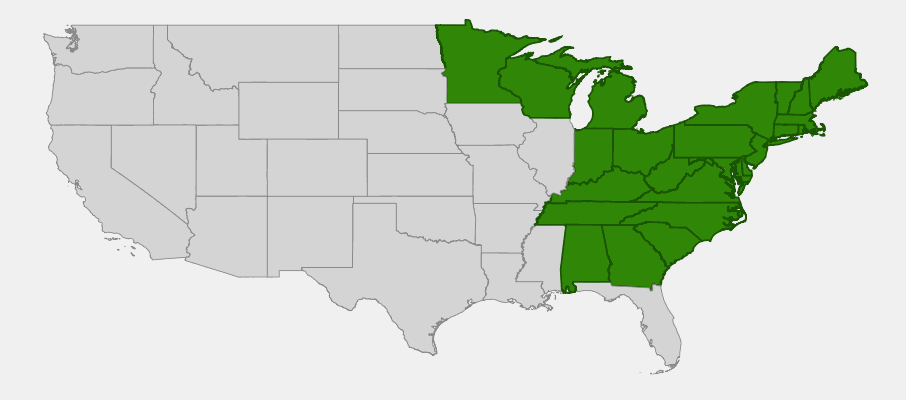
White Turtlehead is native to eastern North America, with a range extending from Newfoundland and the Maritime Provinces of Canada southward through the entire eastern United States to Georgia and Alabama, and westward through the Midwest to Minnesota and Missouri. In the eastern portion of its range, it is most abundant in the northeastern states and the Appalachian highlands. It grows from sea level to elevations above 5,000 feet in the southern Appalachians, where it is a common component of high-elevation wet meadows and streamside vegetation.
Turtlehead is a strict wetland associate in the wild, found almost exclusively in moist to wet habitats: the banks and margins of streams and rivers, pond and lake edges, wetland margins, seeps, forested swamps, and wet meadows. It tolerates seasonal flooding and brief periods of standing water. In the Appalachians, it is a characteristic species of the rich cove forest stream margins and high-elevation wet areas. In the Northeast, it often grows alongside cardinal flower (Lobelia cardinalis), swamp milkweed (Asclepias incarnata), Joe-Pye weed (Eupatorium spp.), and various willows and alders.
The species’ range in the wild closely coincides with the historical range of the Baltimore Checkerspot butterfly (Euphydryas phaeton), which depends on Turtlehead as its primary larval host plant. As Turtlehead populations have declined due to wetland drainage and development, Baltimore Checkerspot populations have also declined over much of the species’ historical range — illustrating the tight ecological linkage between these two species. Conservation of Turtlehead habitat is directly linked to conservation of this spectacular butterfly.
📋 Regional plant lists featuring Turtlehead: Southeastern U.S.
Growing & Care Guide
Turtlehead is an excellent garden perennial for wet sites, rain gardens, and stream-edge plantings. It is easy to grow when its moisture requirements are met, and its late-season bloom, attractive foliage, and wildlife value make it one of the most rewarding native wetland plants for eastern gardens.
Light
Turtlehead grows best in full sun to partial shade. In full sun with adequate moisture, it produces the most robust, upright growth and abundant flowering. In partial shade, it grows well but may become slightly taller and more open in form as it reaches for available light. Avoid deep shade, which results in weak stems, reduced flowering, and increased susceptibility to disease. In warmer climates (Zones 6–8), afternoon shade helps reduce heat stress and maintain the moist soil conditions the plant requires.
Soil & Water
Consistently moist to wet soil is the single most important requirement for Turtlehead. It thrives in the saturated soils of stream banks, pond edges, and wet meadows, tolerating brief periods of flooding. In the garden, it performs best in areas with naturally high soil moisture — low spots that collect water, edges of water features, or areas with a high water table. It will also succeed with regular irrigation in any well-amended garden soil, but requires more frequent watering than typical garden perennials. Soil pH should be slightly acidic to neutral (5.5–7.0). Heavy clay soils that retain moisture are acceptable as long as they do not remain waterlogged for extended periods.
Planting Tips
Plant in spring or fall in moist, amended soil. Container-grown plants establish readily. Space 18–24 inches apart for individual plants or 12–18 inches for mass plantings. Turtlehead naturalizes effectively, spreading by rhizome division to form larger clumps over time. Division of established clumps every 3–4 years in spring helps maintain vigor and provides propagation material. Seeds can be direct-sown in fall or cold-stratified and planted in spring — germination is reliable with proper stratification.
Pruning & Maintenance
Cut back stems to within a few inches of the ground in late winter or early spring before new growth emerges. Alternatively, leave the attractive brown seed capsules standing through winter for seasonal interest and wildlife value. Turtlehead is largely deer-resistant, which is a significant advantage in gardens with deer pressure. It has few pest or disease problems when grown with adequate moisture; powdery mildew can occur in dry conditions, but this is easily prevented by ensuring consistent soil moisture. Division every few years keeps plants vigorous.
Landscape Uses
- Rain garden centerpiece or accent plant
- Stream bank and pond edge naturalistic plantings
- Wet meadow restoration alongside Joe-Pye Weed and swamp milkweed
- Late-season pollinator garden — vital bumblebee resource in August–September
- Baltimore Checkerspot butterfly garden — essential larval host plant
- Moist border with Cardinal Flower, Blue Vervain, and Swamp Rose
- Bioswale planting for stormwater management
Wildlife & Ecological Value
Turtlehead’s ecological importance extends far beyond its attractive flowers. It is a cornerstone species of northeastern wetland plant communities, providing critical resources for multiple wildlife species — most notably the endangered Baltimore Checkerspot butterfly.
For Birds
While Turtlehead’s flowers do not directly attract birds, the plant’s seed capsules provide seeds for finches and sparrows in fall. More importantly, the insects supported by Turtlehead — including caterpillars of the Baltimore Checkerspot and other herbivorous insects — are essential food for insectivorous birds and their nestlings. The dense clumps of Turtlehead also provide cover and nesting habitat for birds utilizing streamside and wetland vegetation.
For Mammals
White-tailed deer generally avoid Turtlehead — a significant ecological and practical benefit. The plant’s relative palatability to deer appears to be low, possibly due to bitter compounds in the foliage. This deer resistance makes Turtlehead especially valuable in gardens and restoration areas with heavy deer pressure, where many other native plants are severely browsed.
For Pollinators
Turtlehead’s primary pollinators are queen bumblebees and large worker bumblebees of multiple species, including Bombus bimaculatus, B. griseocollis, and B. impatiens. The tightly closed flower tube requires a large, strong bee to force open the lips and reach the nectar inside — effectively excluding smaller bees and concentrating the nectar resource for bumblebees. The late-season bloom (August–September) is critical for bumblebee colonies in the final weeks before they produce their overwintering queens. Ruby-throated hummingbirds occasionally probe the flowers for nectar as well.
For Butterflies (Larval Host)
Turtlehead is the primary, and in most of its range the exclusive, larval host plant of the Baltimore Checkerspot butterfly (Euphydryas phaeton), one of the most visually striking and ecologically specialized butterflies of the eastern United States. Female Baltimore Checkerspots lay eggs in clusters on the upper surface of Turtlehead leaves in July. The newly hatched caterpillars feed communally and build a silken nest in which they overwinter as a group, emerging in spring to continue feeding before pupating. The striking orange-and-white-checkered adult butterflies are among the few butterflies that can be found reliably in open wetland areas of the Northeast wherever Turtlehead grows. The Baltimore Checkerspot has been designated the state insect of Maryland in recognition of its ecological significance and connection to the state’s wetland heritage.
Ecosystem Role
Turtlehead is a keystone wetland plant species in the eastern United States. Its contributions to wetland ecosystem function include stabilizing stream banks with its fibrous root system, providing late-season nectar when bumblebee colonies are producing their overwintering queens, hosting the Baltimore Checkerspot butterfly at a critical life-history stage, and contributing to the diverse plant structure of wetland margins. The conservation of Turtlehead populations is directly linked to the conservation of Baltimore Checkerspot populations — making protection of Turtlehead habitat a priority butterfly conservation action across the northeastern states.
Cultural & Historical Uses
White Turtlehead has a notable history of use in traditional medicine among Indigenous peoples of eastern North America. Various nations used the plant primarily for its bitter, tonic properties. The Cherokee prepared a decoction of the plant as a tonic and bitter digestive medicine, and also used it externally for skin conditions. The Iroquois (Haudenosaunee) used preparations of Turtlehead for fever, as a tonic, and in treatments related to liver and kidney function. The Algonquian-speaking peoples of the Northeast incorporated the plant into their pharmacopoeia as well, using it as a treatment for fatigue and general weakness.
European herbal tradition also used related Chelone species as bitter tonics and digestives. The dried aerial parts of Turtlehead were listed in some 19th century American pharmacopeias as a cathartic (laxative) and tonic agent. It was used by eclectic physicians as a treatment for constipation, liver complaints, and as a general tonic for digestive weakness. These uses fell out of mainstream medicine with the development of more reliable pharmaceutical alternatives, though some modern herbalists still reference Turtlehead as a bitter tonic.
Turtlehead’s connection to the Baltimore Checkerspot butterfly has given it cultural significance in modern conservation circles. The butterfly — named for the orange-and-black livery of Lord Baltimore, the 17th-century founder of Maryland — is closely watched as an indicator of wetland health in the northeastern states. Declines in both Turtlehead populations (due to wetland drainage and development) and Baltimore Checkerspot populations (directly linked to host plant availability) have spurred conservation efforts to protect and restore wetland plant communities throughout the species’ range. Planting Turtlehead in home gardens and restoration areas is a tangible way to support this butterfly’s recovery.
Frequently Asked Questions
Why is Turtlehead called that?
The common name “Turtlehead” directly describes the shape of the flowers: the two-lipped, tightly closed tubular flower closely resembles a turtle’s head with its mouth shut. The upper lip forms a rounded dome (the top of the turtle’s head) and the lower lip is pressed against it (the lower jaw). When the flower is viewed from the side or front, the resemblance is striking and unmistakable. The genus name Chelone is the Greek word for tortoise, confirming that botanists have long recognized this distinctive resemblance.
Will Turtlehead grow in my rain garden?
Yes — Turtlehead is an excellent rain garden plant, particularly for the wettest, lowest zones of a rain garden that receive the most water. It tolerates brief flooding during heavy rain events and thrives in the consistently moist conditions of a well-designed rain garden. Its late-season bloom (August–September) fills a gap when many other rain garden plants have finished flowering, extending the visual and ecological interest of the planting into fall.
How do I attract Baltimore Checkerspots to my garden?
Plant Turtlehead! Baltimore Checkerspots are highly dependent on Turtlehead as their larval host, and planting it in your garden in areas where the butterfly occurs is the most effective way to support the species. Female butterflies actively seek Turtlehead for egg-laying in July — watch for the distinctively patterned orange-and-white adult butterflies near your Turtlehead plants at that time. It is important to avoid pesticide use near the plants, as the caterpillars are highly sensitive to insecticides.
Can Turtlehead grow in dry soil if watered regularly?
With regular, consistent watering, Turtlehead can succeed in ordinary garden soil that is not naturally wet. The key is never allowing the soil to dry out completely — Turtlehead is intolerant of drought stress. Mulching heavily with 3–4 inches of wood chips or shredded leaves helps retain moisture in drier sites. In climates with hot, dry summers, drip irrigation is recommended to maintain consistent soil moisture without wetting the foliage (which reduces disease risk).
Does Turtlehead spread aggressively?
Turtlehead spreads moderately by rhizome to form expanding clumps, and it also self-seeds in favorable conditions. It is not aggressive or invasive, but in ideal moist conditions it can gradually spread beyond its original planting area. If desired, contain expansion by dividing clumps every few years. The spreading habit is generally welcome in naturalistic wet meadow or streamside plantings where colonization is desired.

Looking for a nursery that carries Turtlehead?
Browse our native plant nursery directory: Virginia · North Carolina · Georgia